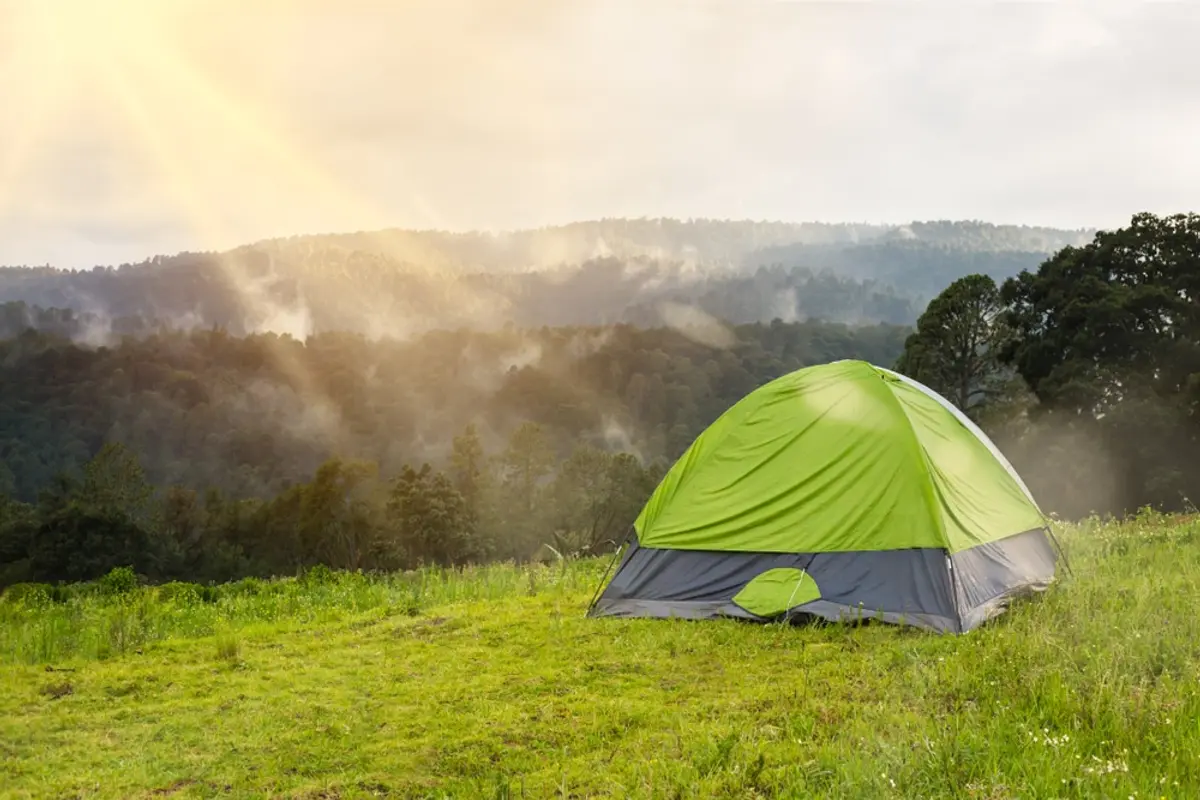
20 Best Camping Places in Mexico in 2026
The best camping places in Mexico are Bahía Concepción for free beach camping, El Chico National Park for a safe first trip, and the Huasteca Potosina or Chiapas for waterfall camping. Most established campsites cost about $5 to $20 USD per night, while Baja beach boondocking and some mountain spots can still be free.
Mexico works unusually well for camping because the country gives you several very different trips in one map: Sea of Cortez beaches, pine forests near Mexico City, high-altitude observatory country in Baja, and warm jungle-waterfall bases in the south. The smartest move is not picking the most famous campsite, it is picking the right region for your weather, road access, and camping style.
This guide covers 20 of the best camping spots in Mexico, organized by terrain, with quick answers on cost, safety, road access, and the kind of traveler each place fits best.
Best Camping Places in Mexico in 30 Seconds
| If you want… | Go here | Why it stands out |
|---|---|---|
| Free beach camping | Bahía Concepción, Baja California Sur | The easiest classic Baja boondocking stretch with calm Sea of Cortez water |
| A safe first camping trip | El Chico National Park, Hidalgo | Marked trails, organized campgrounds, ranger presence, and easy access from central Mexico |
| The best camping near Mexico City | San Nicolás Totolapan or Tepoztlán | Fast weekend escape with established camping infrastructure |
| Waterfalls and swimming | Huasteca Potosina or Agua Azul, Chiapas | Warm-weather camping near some of Mexico’s best cascades |
| Cool mountain forest camping | Sierra Gorda or Las Palomas | Better temperatures, big views, and quieter campsites |
| Dark-sky stargazing | San Pedro Mártir, Baja California | High-altitude camping beside Mexico’s national observatory |
| Van life and RV travel | Bahía Concepción or Boca Paila | Easy coastal routes, known traveler infrastructure, and strong overlanding demand |
Best Camping Place in Mexico by Trip Style
| Trip style | Best pick | Why |
|---|---|---|
| First-timer who wants the least friction | El Chico National Park | Organized camping, easy logistics, and ranger presence |
| Couple who wants scenery without a hard expedition | Avándaro or Tepoztlán | Pretty mountain setting with easy food and supply access |
| Van-lifer chasing free nights | Bahía Concepción | Reliable Baja boondocking with a well-known overlander route |
| Family weekend from a big city | San Nicolás Totolapan or Avándaro | Simple road access plus more services than remote beach camps |
| Swimmer who wants waterfalls, not surf | Huasteca Potosina | The strongest mix of cascades, rivers, and low-cost camping |
| Serious stargazer | San Pedro Mártir | Among the darkest and highest camping areas in Mexico |
| Traveler escaping winter | Baja California Sur or Maruata | Dry-season beach camping with warm days and open shoreline |
How to Choose the Right Camping Region
- Choose Baja California if you want the easiest mix of free beach camping, van-life logistics, and dry weather.
- Choose central Mexico if you want cooler temperatures, organized campgrounds, and short trips from major cities.
- Choose southern Mexico if your priority is waterfalls, jungle scenery, cenotes, and warm water.
- Choose the Copper Canyon or high mountains if you care most about scenery and stargazing and can handle colder nights.
Types of Camping in Mexico
Before diving into specific locations, it helps to understand the four main camping styles you’ll encounter across Mexico:
Boondocking (Free Camping)
Mexico — especially Baja California — is a boondocking paradise. You can camp for free on most beaches unless an established campsite exists. Inland, many rural areas and lakeshores allow free camping. No facilities, no fees, just you and the landscape.
- Cost: Free
- Facilities: None
- Best for: Self-contained vans, overlanders, adventurous tent campers
Established Campgrounds
At popular beaches and natural areas, locals have set up basic campgrounds with palapas (palm shelters), toilets, and sometimes a small restaurant. These provide safety in numbers and a social atmosphere at minimal cost.
- Cost: $5-15 USD (100-300 MXN) per night
- Facilities: Toilets, palapas, sometimes showers and a restaurant
- Best for: Budget travelers who want basic amenities
RV Parks
Full-service RV parks with electrical hookups, dump stations, hot showers, laundry, and Wi-Fi exist throughout Baja and along major travel corridors. Quality varies, but many rival what you’d find in the American Southwest.
- Cost: $12-40 USD (250-800 MXN) per night
- Facilities: Full hookups, showers, laundry, Wi-Fi, sometimes a pool
- Best for: RV travelers, families, those wanting comfort
Glamping
Mexico’s glamping scene has exploded in recent years. Safari tents, yurts, treehouses, and eco-lodges with proper beds, hot water, and gourmet food bring camping comfort to stunning natural settings.
- Cost: $50-200 USD (1,000-4,000 MXN) per night
- Facilities: Full amenities including beds, bathrooms, restaurants
- Best for: Couples, luxury travelers, those new to outdoor stays
Mountain and Forest Camping
Mexico’s mountain camping ranges from pine forests at 2,700 meters above sea level to volcanic slopes and misty cloud forests. Nights get cold — often dropping to near freezing — but the stargazing and sunrise views make it worth every layer.
1. Sierra Gorda, Querétaro
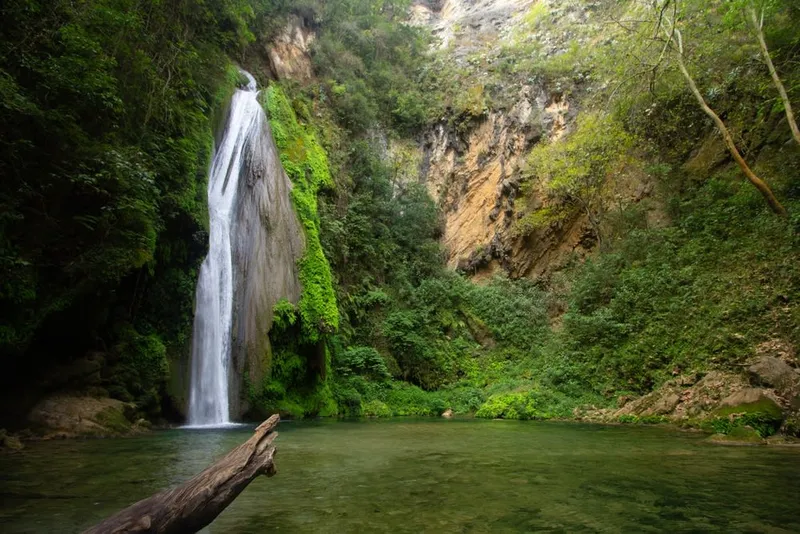
The Sierra Gorda Biosphere Reserve covers 383,000 hectares of ecosystems ranging from semi-desert scrubland to cloud forests. Cuatro Palos is the standout camping spot — at 2,700 meters, you set up your tent at a viewpoint called El Observatorio and wake above the clouds.
What to do: Hike to Puente de Dios, swim at Chuveje Waterfall, photograph cave paintings, explore Jalpan de Serra’s Franciscan missions (UNESCO World Heritage Site)
Practical info:
- Hire a local guide for the Cuatro Palos trail — the paths are unmarked
- Nearest town: Jalpan de Serra, about 1 hour
- Best season: October–April (dry season, clear skies)
- Cost: Free to camp; guided tours around $15-30 USD (300-600 MXN)
2. El Chico National Park, Hidalgo
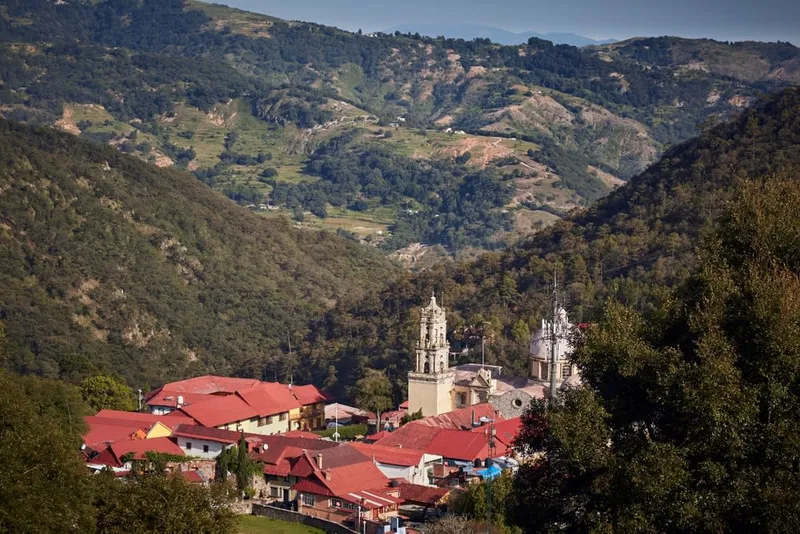
Mexico’s oldest national park (established 1898) spreads across 2,739 hectares of pine and oak forest studded with dramatic rock formations — Las Ventanas, La Peña del Cuervo, and Las Monjas are favorites with climbers.
This is one of the safest camping destinations in Mexico, with organized campgrounds, marked trails, and ranger presence.
What to do: Rock climbing, rappelling, mountain biking, hiking. Visit the Magical Town of Real del Monte with its Cornish-influenced pastes and silver mining history
Practical info:
- Camping zones have fire pits, basic restrooms, and designated tent areas
- 20 minutes from Mineral del Chico village
- Best season: November–March (cold but clear)
- Cost: Entry $2 USD (40 MXN); camping $5-8 USD (100-150 MXN)
- Bring warm layers — nighttime temperatures drop to 0-5°C (32-41°F)
3. Las Palomas Natural Reserve, Guanajuato
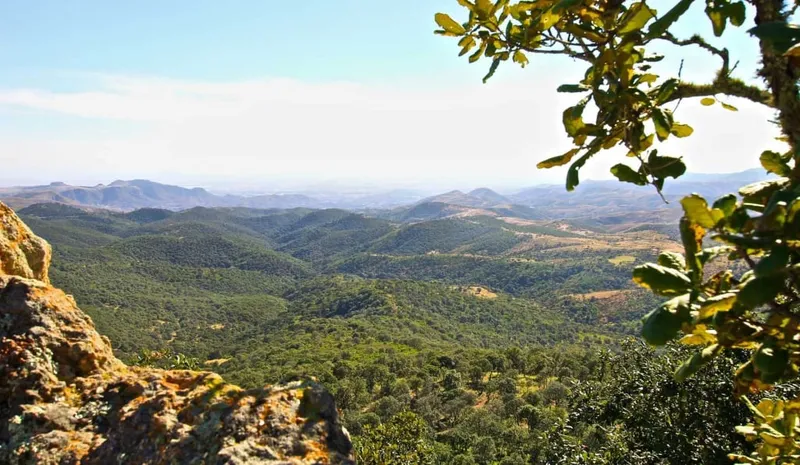
A quiet oak forest reserve with organized camping, birding trails, and an ideal climate — warm days, cool nights, low humidity. It’s a great base for combining nature with culture: Guanajuato City and the Magical Town of Dolores Hidalgo are day-trip distance.
What to do: Hiking, birdwatching (look for regional and migratory species), trekking, stargazing
Practical info:
- Well-maintained facilities with restrooms and designated fire areas
- Best season: Year-round (mild climate), but October–February for birding
- Cost: $3-5 USD (60-100 MXN) camping fee
4. Avándaro, State of Mexico
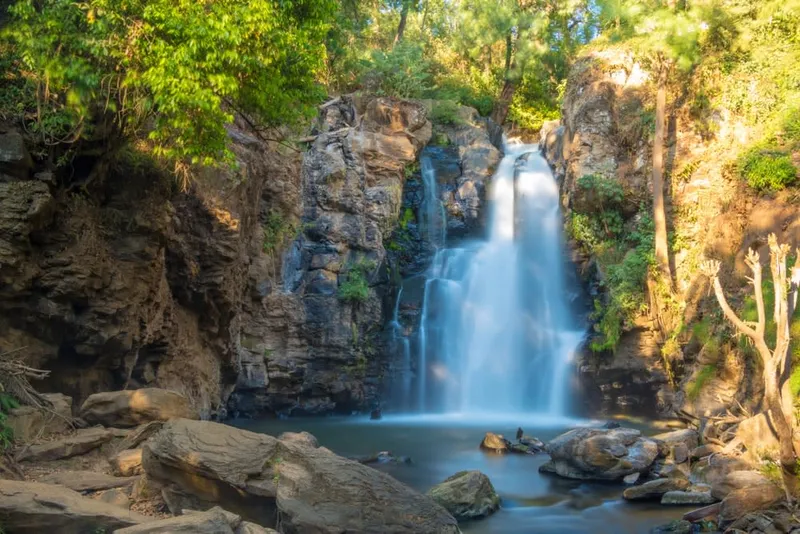
About 2 hours west of Mexico City, Avándaro combines a picturesque lake with pine-oyamel forests and a 35-meter waterfall called Velo de Novia (Bridal Veil). It’s popular with families from the capital looking for a weekend escape.
What to do: Swimming, kayaking on the lake, horseback riding, hiking to the waterfall, barbecue areas at campgrounds
Practical info:
- Multiple organized campgrounds with BBQ facilities and restrooms
- Family-friendly with activities for kids
- Best season: Year-round; weekends get busy — arrive Friday evening or go midweek
- Cost: $5-10 USD (100-200 MXN) per night
- 15 minutes from Valle de Bravo town (restaurants, ATMs, supplies)
5. San Pedro Mártir National Park, Baja California
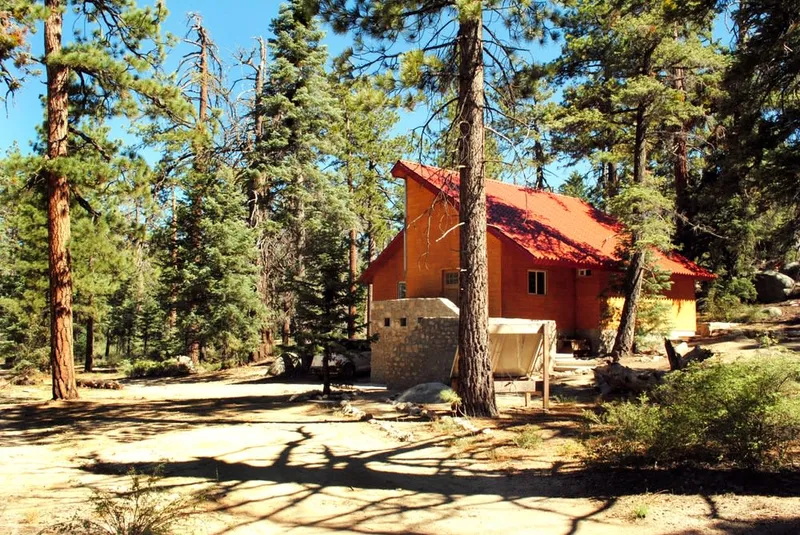
The highest point in Baja California at 3,096 meters, San Pedro Mártir is a conifer forest island surrounded by desert — utterly unique. The National Astronomical Observatory sits at the summit, taking advantage of some of the darkest skies in North America.
This is raw, backcountry camping. No services, no cell signal, no other people (most days). Just you, Jeffery pines, and the Milky Way.
What to do: Stargazing (truly world-class), hiking, wildlife observation (California condors have been reintroduced here), visit the National Astronomical Observatory if conditions allow
Practical info:
- About 70 km from San Felipe on the coast
- Closed during snow season — check conditions before going
- Bring ALL supplies: water, food, fuel, firewood. Nearest town is 2+ hours away
- Best season: April–October (snow-free months)
- Cost: Free (national park, no fee booth)
6. San Nicolás Totolapan, Mexico City
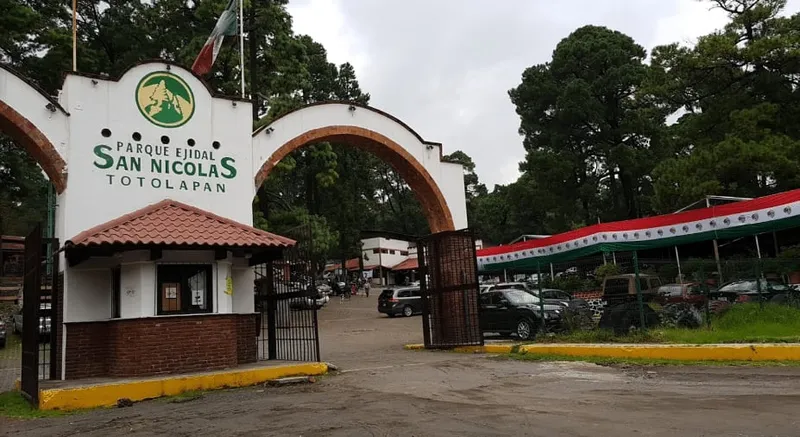
Yes, you can go camping inside Mexico City. San Nicolás Totolapan is a 2,300-hectare nature reserve at the foot of Cerro del Ajusco in the south of the city, operated as an eco-tourism site since 1998.
It’s heavily forested with pines, has full camping services, and offers spectacular views of the volcanic range that frames the Valley of Mexico.
What to do: Mountain biking (one of Mexico City’s top MTB spots), hiking, horseback riding, evening campfires
Practical info:
- Full facilities: restrooms, fire pits, parking, designated tent areas
- Accessible via public transport from CDMX
- Best season: October–March (dry season, cold clear nights)
- Cost: Entry $3 USD (50 MXN); camping $5-8 USD (100-150 MXN)
7. Copper Canyon (Barrancas del Cobre), Chihuahua
Copper Canyon isn’t a single canyon — it’s a network of six canyons that are collectively deeper and wider than the Grand Canyon. The iconic Chepe train runs through it, but camping puts you where trains can’t go: on the canyon rim at sunrise, beside Rarámuri communities, and in forests of pine and oak.
What to do: Multi-day rim hikes, visit Rarámuri communities (with respectful local guides), ride the Chepe, swim at Basaseachi waterfall (the second highest in Mexico), explore Batopilas and Creel
Practical info:
- Multiple campgrounds around Creel and along canyon rims
- Hire local Rarámuri guides for canyon descents — they know every trail
- Temperatures vary wildly: canyon floor 35°C+ (95°F), rim 5°C (41°F) at night
- Best season: October–November (warm but not extreme) or March–April
- Cost: $3-10 USD (50-200 MXN) at organized sites; free dispersed camping along trails
- Guachochi is a good base town with supplies
8. Huasteca Potosina, San Luis Potosí
The Huasteca Potosina is Mexico’s adventure capital, packed with turquoise waterfalls, jungle rivers, and limestone caves — and some of the country’s best camping happens right beside the water.
At Grutas de Tolantongo, you can camp on terraced hillsides above thermal rivers. At Tamasopo, you pitch your tent next to crystalline waterfalls. At Puente de Dios, natural rock formations create cathedral-like swimming holes.
What to do: Swimming in thermal rivers, waterfall jumping at Cascada de Micos, caving, rappelling, rafting on the Río Tampaón. Visit all the waterfalls: Minas Viejas, Tamul, and the Huasteca Potosina waterfalls circuit
Practical info:
- Tolantongo has organized camping with restrooms and hot spring pools — $10-20 USD (200-400 MXN) including pool access
- Tamasopo and Puente de Dios have basic campgrounds — $3-5 USD (50-100 MXN)
- Camping is NOT allowed at all sites in the Huasteca Potosina — check locally
- Best season: October–May (dry season; rivers are clearest)
- Rainy season (June–September) brings floods — avoid river camping
9. Tepoztlán Mountains, Morelos
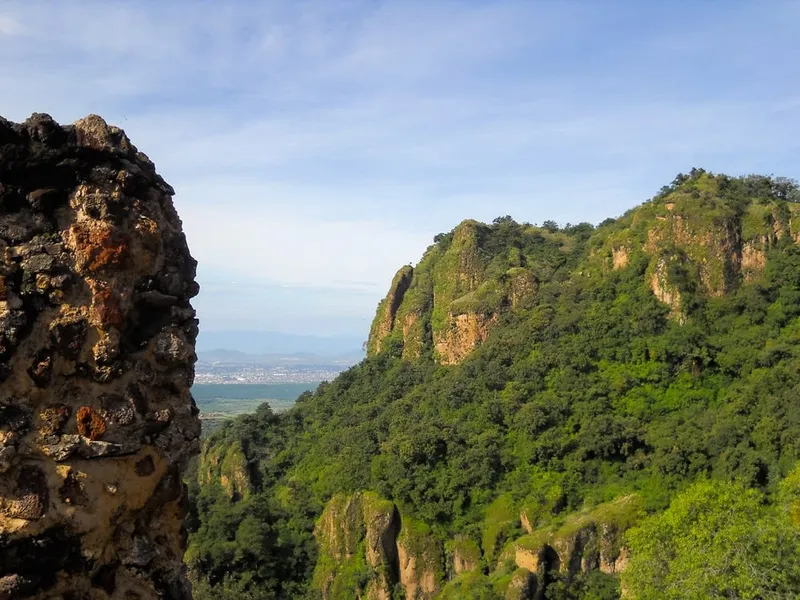
Tepoztlán sits in a valley surrounded by dramatic cliffs. The Meztitla National Park within the area serves as a historical scout camping school and has designated camping zones with trail access to Cerro del Tepozteco — the pyramid at the summit is the reward.
What to do: Climb to El Tepozteco pyramid, rappelling at El Dado and El Dadito, hiking to cave paintings, exploring Tepoztlán’s weekend market and mezcal scene
Practical info:
- Only 1.5 hours from Mexico City
- Organized camping areas in Meztitla park
- Best season: October–April
- Cost: $3-5 USD (50-100 MXN)
- The town itself has restaurants, ATMs, and an excellent weekend market
Beach Camping
Mexico’s coastline stretches over 11,000 km across two oceans. Beach camping ranges from free boondocking on deserted Baja shores to organized sites near Caribbean reef systems. The Pacific side tends to be wilder and more affordable; the Caribbean side busier but spectacularly beautiful.
10. Bahía Concepción, Baja California Sur
One of the most famous camping stretches in all of Mexico — and possibly the world. Bahía Concepción runs about 30 km along the Sea of Cortez south of Mulegé, with a dozen beaches offering camping right on turquoise water.
Playa Santispac, Playa El Coyote, Playa El Requesón (a stunning sandbar connecting to a small island), and Playa Buenaventura are the most popular. Some have palapas and basic restaurants; others are pure boondocking.
What to do: Kayaking, snorkeling, paddleboarding, fishing, sunset watching. Day trip to the best beaches in Baja California or explore Baja California Sur’s best places
Practical info:
- Mix of free and paid sites: $0-15 USD (0-300 MXN) per night
- Some beaches have palapas, toilets, and a small restaurant
- No hookups, no showers at most sites
- Accessible with 2WD, but high-clearance helps for some beaches
- Best season: November–April (perfect weather; May–October is extremely hot)
- Very popular with snowbirds and van-lifers January–March — arrive early for prime spots
11. Boca Paila, Quintana Roo
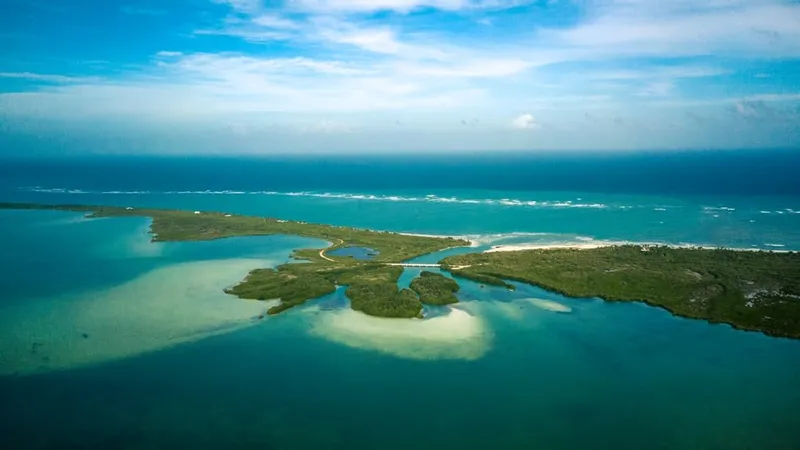
Wedged between the Caribbean Sea and the Sian Ka’an Biosphere Reserve (UNESCO), Boca Paila offers a camping experience framed by white sand and some of Mexico’s richest wildlife. It’s just south of Tulum but feels like a different world.
What to do: Sport fishing (bonefish, tarpon, permit), snorkeling the reef, kayaking through mangroves, birdwatching
Practical info:
- Fisher camps along the road offer basic services and camping spots — $5-15 USD (100-300 MXN)
- Bring your own food and water; limited shops
- Best season: November–April (less rain, calmer seas)
- Sian Ka’an entry fee: $5 USD (~100 MXN)
12. Erendira Beach, Baja California
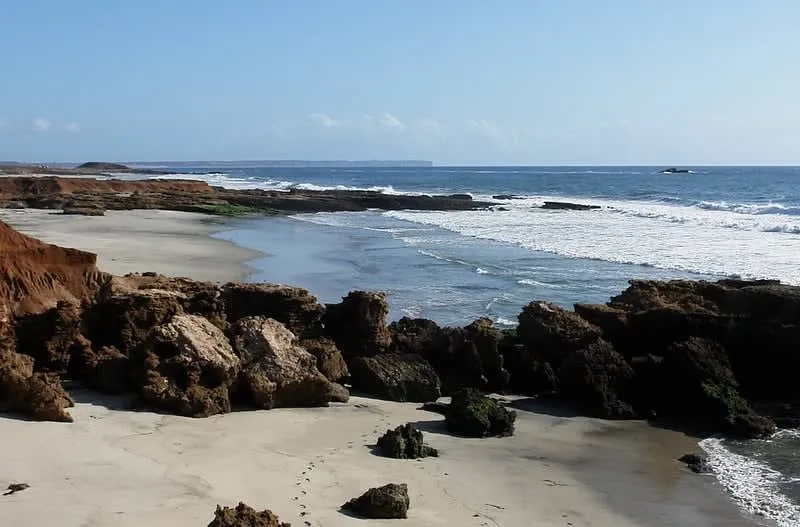
Only 85 km from Ensenada but feeling like the edge of the world, Playa Erendira is Pacific coast camping at its most raw. No services, no cell signal, no other tourists (most days). Just sea cliffs, tide pools, and some of the most star-filled skies in western Mexico.
What to do: Whale watching (November–April), birdwatching, sea lion observation, tide pool exploration, stargazing
Practical info:
- Free camping on the beach and bluffs
- Bring everything: water, food, firewood, trash bags
- Best season: November–March for whales; year-round for solitude
- Road is unpaved for the last stretch — any vehicle can make it slowly
13. Maruata Beach, Michoacán
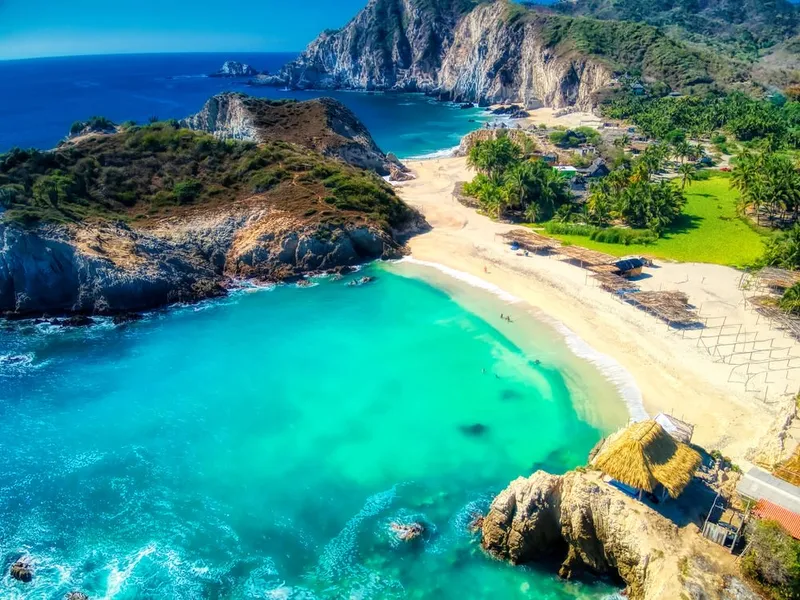
Maruata is a Nahua indigenous community on Michoacán’s wild Pacific coast, famous for sea turtle nesting (olive ridley turtles come ashore here from July to December). You camp under palapas or directly on the sand, and locals sell fresh seafood and basics.
What to do: Sea turtle watching, surfing, swimming, exploring tide pools, eating fresh fish with the community
Practical info:
- $3-5 USD (50-100 MXN) per night for beach camping
- Locals provide food and basic services
- Limited phone signal
- Best season: October–December (turtle hatching + dry weather)
- The Nahua community manages tourism — respect their rules and spaces
14. Yelapa, Jalisco
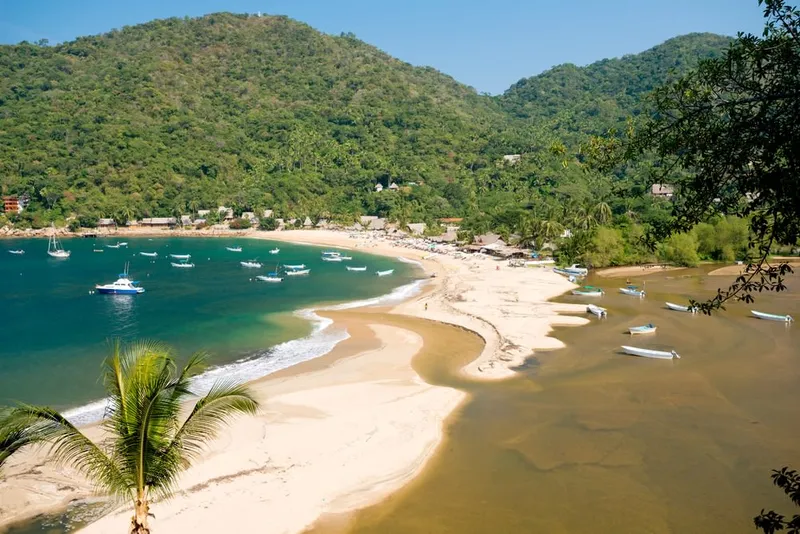
Yelapa is accessible only by boat from Puerto Vallarta, which keeps it wonderfully uncommercialized. A 15-minute walk from the beach leads to a 30-meter waterfall, and from November to April, humpback whales breach and sing in the bay — from your campsite.
What to do: Waterfall hikes, whale watching, jungle trekking, snorkeling, eating pie at Yelapa’s famous pie ladies
Practical info:
- Water taxi from Puerto Vallarta: $10-15 USD (200-300 MXN) round trip
- Camping on the beach: $3-8 USD (50-150 MXN)
- Basic restaurants and shops in town
- Best season: November–April (whale season + dry weather)
- Last water taxi back to PV leaves around 5pm — or camp overnight
15. Puerto Morelos, Quintana Roo
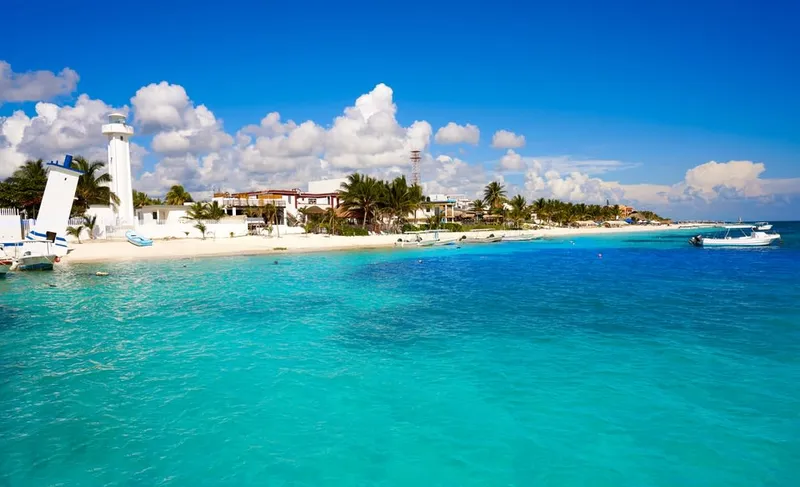
Puerto Morelos combines beach, jungle, cenotes, mangroves, and the world’s second-largest barrier reef in one area. The town has evolved from a fishing village into an artists’ and writers’ haven while keeping a laid-back pace.
What to do: Reef snorkeling and diving, cenote swimming, mangrove kayaking, exploring Puerto Morelos town market
Practical info:
- Beachfront camping available at several spots south of town
- The town has full services: restaurants, ATMs, dive shops, groceries
- Best season: November–April (dry, less humid)
- Cost: $5-10 USD (100-200 MXN) at basic campsites
Desert, Jungle, and Unique Camping
Some of Mexico’s most memorable camping happens in landscapes that don’t fit neatly into “mountain” or “beach” — desert oases, jungle waterfalls, volcanic valleys, and butterfly sanctuaries.
16. Cuatro Ciénegas, Coahuila
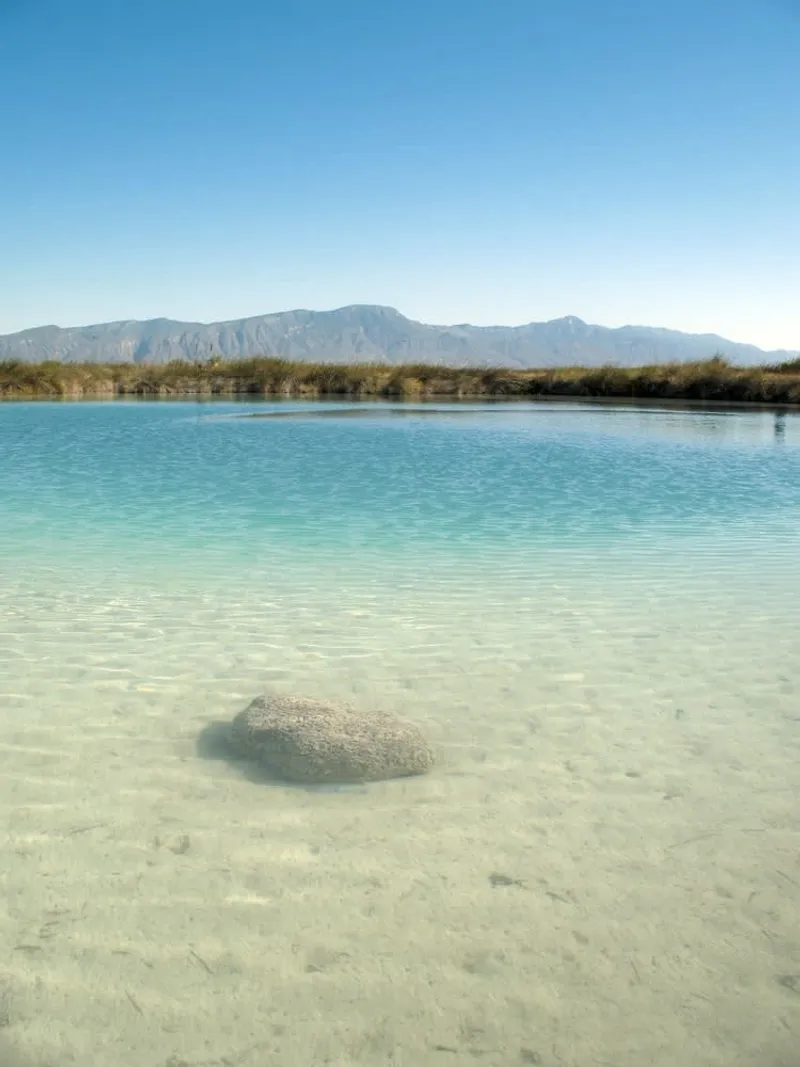
Cuatro Ciénegas is surreal. In the middle of the Coahuila desert, a valley of over 200 spring-fed pools creates an oasis with more endemic species per square kilometer than almost anywhere on Earth. The stromatolite reefs here are living fossils — among the oldest life forms on the planet.
Camp at the Mesquite River Resort or designated areas, and at night, the stars reflected in the desert pools create an unforgettable spectacle.
What to do: Swimming in turquoise pozas (pools), hiking the white gypsum dunes, stargazing, visiting the marble quarry, photographing the contrast of desert and water
Practical info:
- Mesquite River Resort: $10-15 USD (200-300 MXN) with basic facilities
- Swimming allowed only in designated pools (fragile ecosystem — respect the rules)
- Nearest city: Monclova, about 80 km
- Best season: October–April (summer temperatures exceed 40°C / 104°F)
- Bring reef-safe sunscreen — the pools’ ecosystem is incredibly fragile
17. Cascada de Agua Azul, Chiapas
Deep in the Chiapas jungle, Agua Azul is a series of cascading waterfalls that turn an almost impossible shade of electric blue during the dry season. You can camp near the falls and swim in natural pools surrounded by tropical forest.
What to do: Swimming in the cascades, hiking jungle trails, visiting nearby Chiapas waterfalls, day trip to Palenque ruins
Practical info:
- Campgrounds at the entrance with basic facilities — $5-8 USD (100-150 MXN)
- The water is bluest from February to May (dry season)
- Avoid during rainy season (June–October) — currents become dangerous and water turns brown
- Entry fee: ~$2 USD (30 MXN)
- About 4 hours from San Cristóbal de las Casas via the Chiapas travel circuit
18. Monarch Butterfly Biosphere Reserve, Michoacán
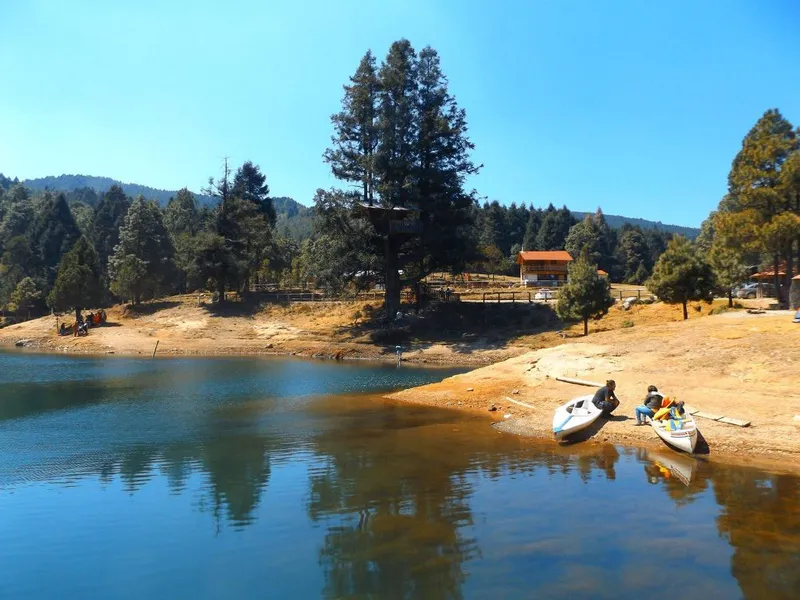
Every winter, hundreds of millions of monarch butterflies migrate from Canada and the US to a handful of mountaintop oyamel fir forests in Michoacán and the State of Mexico. Camping near these sanctuaries lets you arrive at the forest before dawn, when the butterflies start to stir as the sun warms their wings — a sight that will stay with you forever.
What to do: Visit El Rosario or Sierra Chincua sanctuaries, guided forest walks, photography, horse rides to the butterfly colonies
Practical info:
- Camping available near Angangueo and Ocampo — basic campgrounds and cabins: $5-10 USD (100-200 MXN)
- Butterfly season: November–March (peak: late January–February)
- Go on a weekday and arrive early to avoid crowds
- Altitude is 3,000+ meters — bring warm layers and expect thin air
- Sanctuary entrance: $5 USD (~100 MXN) plus local guide fee
19. Peña de Lobos Natural Reserve, State of Mexico
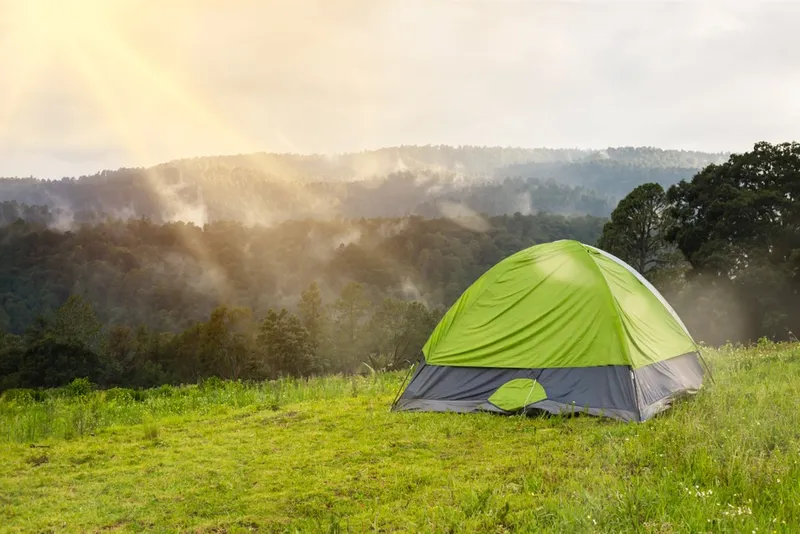
Peña de Lobos offers varied camping zones with waterfalls, caves, and a rock formation called the Devil’s Backbone (Espinazo del Diablo). It’s popular with Mexico City day-trippers, but camping overnight reveals its true character: night campfires, waterfall sounds, and cool mountain air.
What to do: Hike to the Devil’s Backbone and five waterfalls, rappelling, mountain biking, night campfires, exploring a 150-meter-deep cave with subway river
Practical info:
- Multiple camping zones with fire pits and basic restrooms
- About 2 hours from Mexico City
- Best season: October–April
- Cost: $5-8 USD (100-150 MXN)
20. Granada Waterfalls, Guerrero
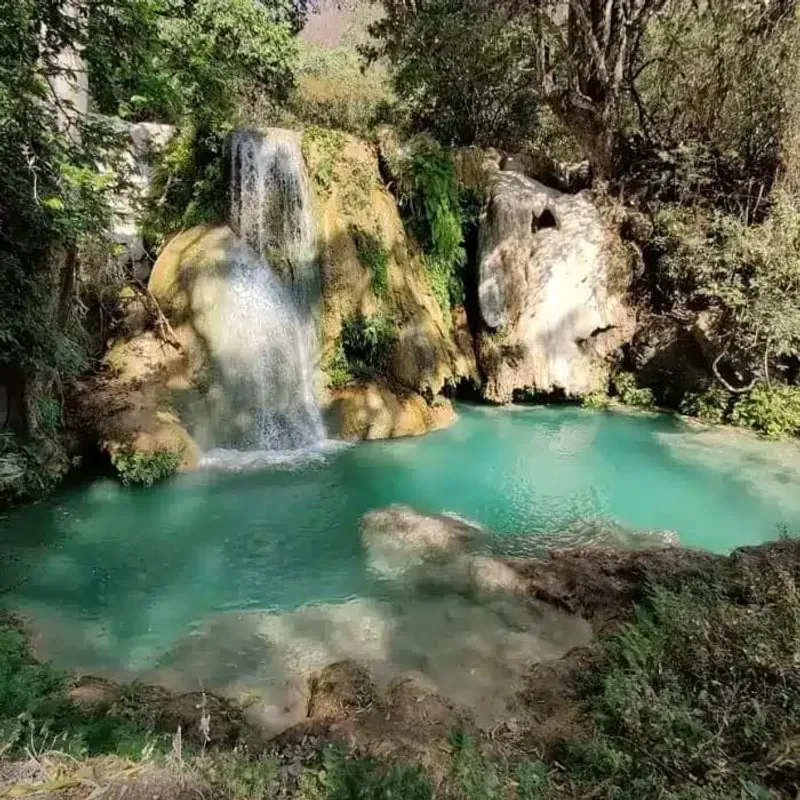
This eco-tourism park in Guerrero lets you camp anywhere within its grounds: beside waterfalls, near swimming pools of intense blue-green, or deep in the forest. Five waterfalls connected by mountain bike trails and rappelling routes make it one of the most active camping destinations in Mexico.
What to do: Waterfall rappelling, mountain biking between the five cascades, swimming in mineral pools, exploring a 150-meter cave, night camping with forest sounds
Practical info:
- Camp anywhere in the park: $5-10 USD (100-200 MXN)
- Activities like rappelling are extra: $10-20 USD (200-400 MXN)
- Best season: October–April (dry, safe water levels)
- About 3 hours from Mexico City or Taxco
Essential Gear for Camping in Mexico
Whether you’re boondocking on a Baja beach or hiking into the Copper Canyon, this gear list covers Mexico-specific needs:
The Basics
- Tent with quality rain fly — even in the dry season, coastal dew and mountain mist are real
- Sleeping bag rated for cold — desert and mountain nights drop 15-20°C (27-36°F) from daytime temperatures
- Sleeping pad — insulation from ground cold and scorpion protection
- Headlamp + extra batteries — most campsites have zero lighting
- Portable water filter or purified water — Mexican tap water isn’t safe to drink. In towns, buy from water stores (purificadoras) at ~1 peso per liter ($0.05 USD)
Mexico-Specific Essentials
- Insect repellent with DEET — mosquitoes in jungle and coastal areas are aggressive
- UV flashlight (blacklight) — scorpions glow fluorescent under UV. Sweep your tent, sleeping area, and shoes every night. Non-negotiable in desert and tropical areas
- Mineral-based sunscreen — many natural areas, cenotes, and reserves require biodegradable/reef-safe products. Chemical sunscreens may be confiscated at entry
- Cash in Mexican pesos — almost no campgrounds accept cards. Carry $200-500 MXN ($10-25 USD) in small bills for camping, firewood, and food
- Layers for temperature swings — mornings are cold, afternoons are hot, evenings drop again. A merino base layer and lightweight puffy jacket cover most scenarios
- Offline maps — download Google Maps or Maps.me offline before heading to remote areas. Cell coverage is patchy outside cities
For Van/RV Camping
- Air compressor and tire gauge — essential for airing down on sandy beach approaches and re-inflating for pavement
- iOverlander app — the go-to app for finding campsites, water sources, dump stations, and fuel across Mexico. Download it before your trip
- Extra fuel and water capacity — gas stations can be 100+ km apart in Baja and northern Mexico
- Basic Spanish phrases — campground operators, gas attendants, and local guides rarely speak English outside tourist zones
Safety Tips for Camping in Mexico
Mexico gets a reputation that often doesn’t match reality for campers. The key is choosing the right areas and using common sense.
Choosing Your Campsite
- Stick to established areas. National parks, organized campgrounds, known boondocking spots (check iOverlander reviews), and biosphere reserves are all well-traveled and safe
- Camp where others camp. There’s safety in numbers, and the camping community in Mexico (especially Baja) is incredibly social and supportive
- Avoid isolated roadside camping. Don’t just pull over on a random highway and pitch a tent. Find a designated area or a spot with other campers
- Ask locals. In small towns, ask about safe camping areas. Most communities are welcoming and will direct you to good spots — some will even invite you to camp on their property
At the Campsite
- Arrive before dark. Most camping areas have no lighting, and setting up in the dark on unfamiliar terrain is asking for trouble
- Lock valuables in your vehicle. Keep electronics, passports, and cash in your car, not your tent
- Check for scorpions. Shake out shoes, check sleeping bags, and sweep your tent area with a UV flashlight before bed. Scorpion stings in Mexico are rarely dangerous for healthy adults but are very painful
- Be careful with campfires. Only build fires in designated areas. Mexico’s dry season creates extreme fire risk. Always fully extinguish before sleeping
- Watch water currents. Rivers and waterfalls can flash-flood during rainy season (June–October) — even if skies are clear where you are, rain upstream creates deadly surges
On the Road
- Don’t drive at night. Livestock on roads, unmarked speed bumps (topes), and poor road lighting make nighttime driving risky, especially in rural areas. Plan to arrive at campsites by late afternoon
- Keep your gas tank half full. Stations can be sparse in Baja and northern Mexico
- Download offline maps. Cell service disappears in many camping areas. Have backup navigation ready
- Use toll roads (cuotas) when available. They’re safer, faster, and better maintained than free highways (libres)
Wildlife Awareness
- Scorpions glow under UV light — carry a blacklight and check nightly
- Snakes are present in desert, jungle, and forest environments — never reach into rock crevices, and watch where you step
- Jellyfish and stingrays on Pacific and Caribbean beaches — shuffle your feet entering water
- Mosquitoes carry dengue in tropical lowlands — use repellent at dawn and dusk
How to Find Campsites in Mexico
iOverlander
The most popular app among Mexico campers, van-lifers, and overlanders. Community-reviewed campsite listings with GPS coordinates, photos, price info, and access notes. Essential for Baja and mainland routes. Available for iPhone and Android.
Google Maps (Offline)
Download the offline map of your destination region before heading out. Searching “camping” or “campamento” in Google Maps shows some organized campgrounds, especially near popular tourist areas.
Local Knowledge
Once you’re in a region, ask at small-town stores (tiendas), gas stations, or tourism offices. Locals know camping spots that don’t show up on any app. In many cases, families near popular natural areas will invite you to camp on their property for a small fee ($2-5 USD).
Facebook Groups
Search for “camping en México” or “overlanding Mexico” groups — Mexican campers share current conditions, new spots, and safety updates in real time.
Best Time to Camp in Mexico
| Season | Best Regions | What to Expect |
|---|---|---|
| Oct–Dec | Everywhere | Start of dry season, comfortable temperatures, butterfly and turtle seasons |
| Jan–Mar | Baja California, Pacific coast, central mountains | Whale season, clear skies, peak snowbird camping, coolest mountain temperatures |
| Apr–May | Northern deserts, high mountains, Caribbean coast | Warmest dry season weather, least crowded, spring break is over |
| Jun–Sep | Baja (stays dry), high deserts | Rainy season in most of Mexico — avoid jungle and river camping. Baja is the exception |
The golden rule: October through April covers 80% of Mexico’s best camping conditions. Baja California is the year-round exception — it barely rains.
Camping Costs in Mexico: What to Budget
| Camping Type | Cost per Night (MXN) | Cost per Night (USD) |
|---|---|---|
| Free beach boondocking | $0 | $0 |
| Basic established campground | $50-300 | $3-15 |
| Campground with facilities | $100-400 | $5-20 |
| Full-service RV park | $250-800 | $12-40 |
| Glamping / eco-lodge | $1,000-4,000 | $50-200 |
| National park entry | $20-100 | $1-5 |
Daily budget estimate for tent camping including food and transport: $15-30 USD (300-600 MXN). That makes camping the cheapest way to travel Mexico — by far.
Responsible Camping: Leave No Trace in Mexico
Mexico’s protected natural areas are treasures. Many camping destinations are biosphere reserves, wildlife sanctuaries, and national parks with fragile ecosystems. Follow these principles:
- Pack out ALL trash. Many campsites have no bins. Bring garbage bags and carry everything out
- Use biodegradable products. Reef-safe sunscreen, biodegradable soap, natural insect repellent
- Camp in designated areas. Don’t create new tent sites in sensitive environments
- Don’t cut plants or collect wood from living trees. Buy firewood locally or bring your own
- Respect wildlife. Observe from a distance — especially nesting turtles, butterflies, and whales
- Fire safety. Build fires only where permitted, keep them small, and fully extinguish before leaving
- Support local communities. Buy food locally, hire local guides, and pay camping fees — this money directly supports conservation
Camping in Mexico isn’t just an adventure — it’s a way to experience the country at its most raw and beautiful. From Baja’s endless coastline to Chiapas’s jungle waterfalls to the Sierra’s starlit forests, there’s a campsite waiting for every kind of traveler. Travel insurance matters even more when you are camping off-grid, so make sure your policy includes emergency medical care and evacuation before you go. Grab your tent, pack your sense of adventure, and go find yours.