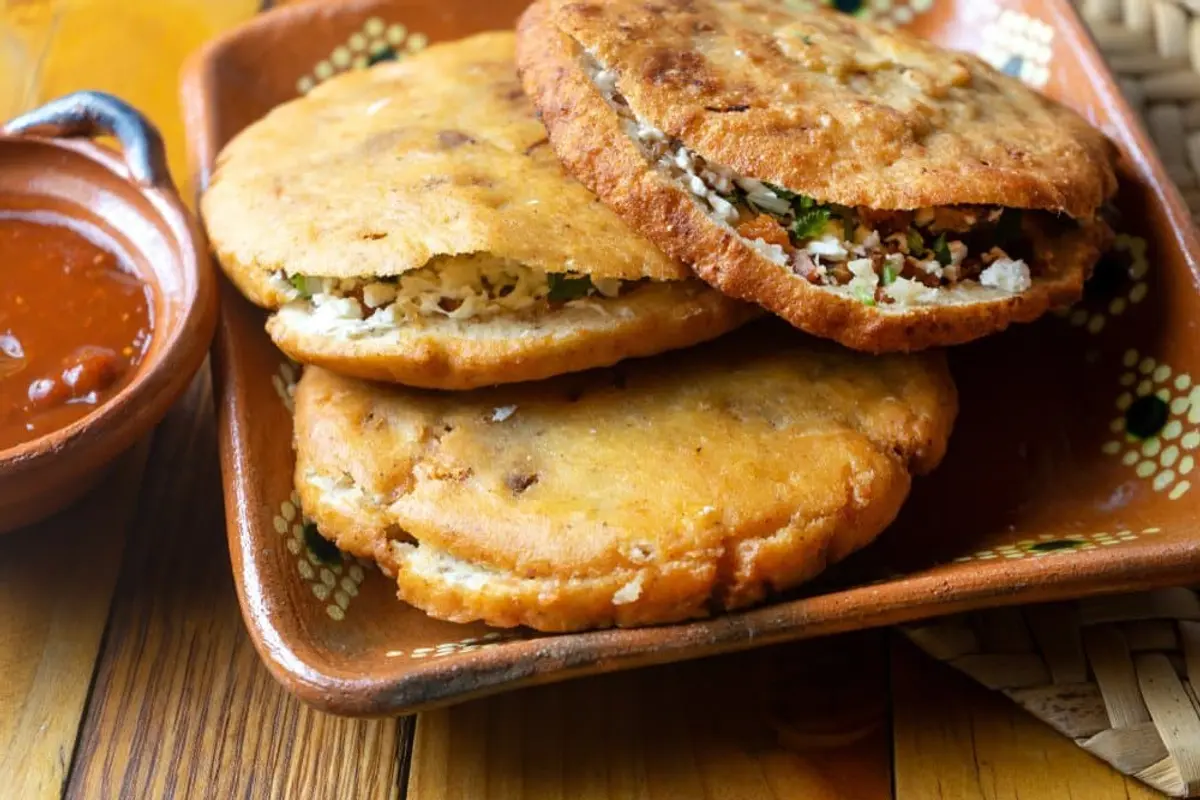
What Is a Bocol? Huasteca Corn Cake Explained
A bocol is a thick Huasteca corn cake made from nixtamalized masa, lard, and salt, then cooked on a comal and split open for fillings like beans, cheese, pork, or egg. Bocoles differ from gorditas and sopes in their dough, shape, and regional roots; this guide explains those differences and where to try them in Mexico.
If you are wondering whether bocoles are basically gorditas, not quite. They are thicker, richer, more regional, and more tied to Huasteca breakfast culture and festival cooking.
María Asunción Medina has been making bocoles for 22 years in her family’s lonchería in El Aguacate, a town in the municipality of Aquismón, San Luis Potosí. She learned from her mother. Her mother learned from her grandmother. The family has been cooking bocoles for over 100 years.
“Cooking bocoles has its degree of complexity,” she says. “It is also necessary to have a good hand and say a prayer before starting to knead the ground corn.”
The bocol sits at the intersection of the practical and the ceremonial, made every morning for breakfast and also prepared for Xantolo, the Huasteca’s most important festival. It is one of the clearest foods to try if you want to understand the region beyond waterfalls and road-trip stops.
Bocoles Quick Answer
| Question | Quick answer |
|---|---|
| What are bocoles? | Thick round corn cakes from the Huasteca, cooked on a comal and usually split open for fillings. |
| Where are they from? | Mainly San Luis Potosí, plus parts of Veracruz, Hidalgo, and Tamaulipas. |
| What do they taste like? | Richer and denser than a tortilla, with a toasty corn flavor and soft interior from the lard in the masa. |
| What goes inside? | Beans, fresh cheese, pork, chorizo, egg, or chile-seasoned variations. |
| When should you eat them? | Breakfast or early lunch. The best stalls often sell out before noon. |
If you are building a Huasteca trip, bocoles are worth seeking out in Aquismón, Ciudad Valles, and Tamazunchale, especially before a day exploring Huasteca Potosina or heading onward to Xilitla.
What Are Bocoles?
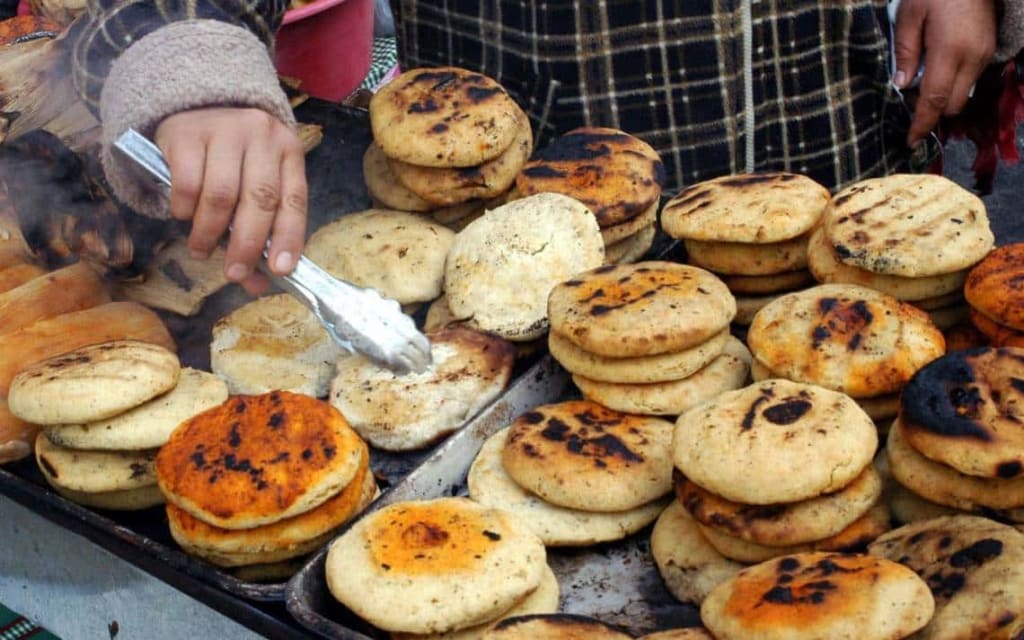
A bocol is a thick, round corn masa cake from the Huasteca region — the cultural zone spanning San Luis Potosí, Tamaulipas, Veracruz, Hidalgo, and parts of Querétaro and Puebla.
The word bocol comes from the Tének language (Teenek or Huastec), one of the oldest Mayan languages still spoken in northeastern Mexico. In Tének, the word refers to “a round corn food” — a description that has barely needed updating in several centuries.
Bocoles are made from masa de nixtamal (corn dough from traditionally nixtamalized corn, not commercial corn flour), mixed with lard and salt, then shaped into thick discs approximately 8–10 cm in diameter and 1 cm thick. They are cooked on a comal over medium-low heat, turned until cooked through, then split open and filled.
The lard in the dough is not optional — it creates the bocol’s characteristic richness and slightly crumbly interior. A bocol made without lard is technically something else.
Bocoles vs Gorditas vs Sopes: The Comparison
These three corn masa foods confuse visitors and even some Mexicans from outside the Huasteca. Here is the distinction:
| Bocol | Gordita | Sope | |
|---|---|---|---|
| Shape | Round, thick disc | Flatter, pocket-like | Smaller, bowl-edged disc |
| Thickness | ~1 cm | ~0.8 cm | ~0.6 cm |
| Lard in dough | ✅ Always | Sometimes | Sometimes |
| Filling method | Split open after cooking | Slit on side after cooking | Toppings on surface |
| Typical fillings | Beans, cheese, pork | Regional variety | Beans, meat, cream, salsa |
| Origin region | Huasteca | National | Central Mexico |
| Cooking method | Comal (sometimes fried) | Comal, then fry | Comal, then fry edges |
The key practical difference: a bocol is filled inside, like a stuffed sandwich. A sope is topped on the surface, like an open-faced corn tostada with raised edges. A gordita is somewhere between — a slit pocket rather than a fully split disc.
For travelers, that distinction matters because the best bocoles usually come from small breakfast counters in the Huasteca rather than from generic antojito stalls elsewhere in Mexico. If a menu in Mexico City or Cancún says “bocoles,” it is already unusual enough to be worth a closer look.
The Fillings: What Goes Inside a Bocol
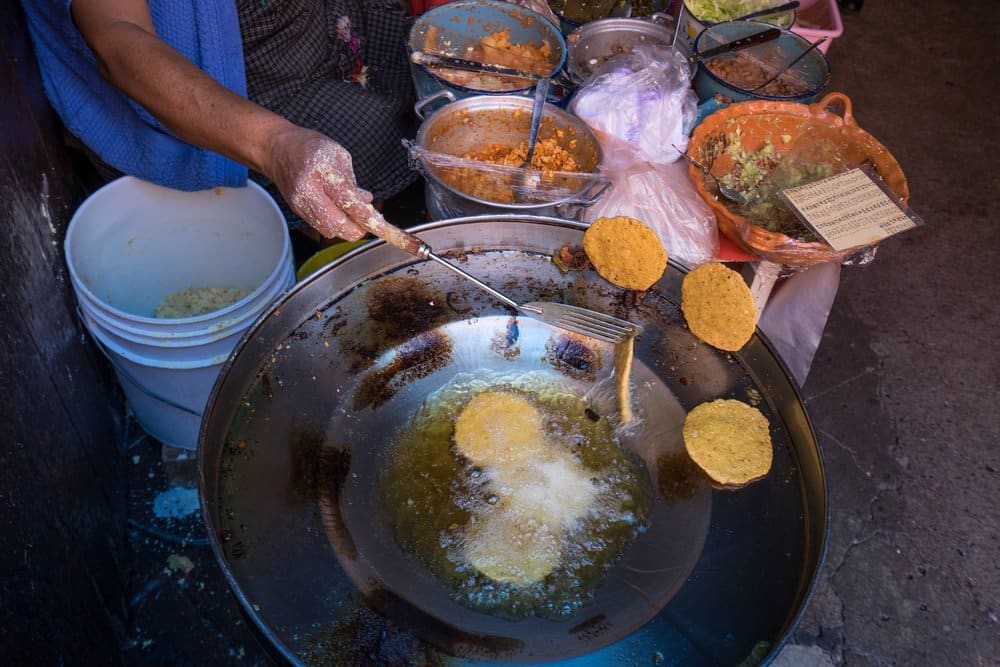
The filling determines the bocol’s personality. If you only try one version, start with beans and fresh cheese or pork in red chile, because those are the combinations most likely to tell you whether a stall is taking the dish seriously. According to María Asunción Medina, the most popular fillings in the Huasteca Potosina are:
Cheese (queso): Fresh white cheese, crumbled or in pieces. The simplest and most common filling — the melted cheese against the rich masa is a complete flavor. In Aquismón, this is the best-seller.
Pork (puerco): Shredded pork, either plain or in a red chile sauce. The savory meat filling is the most filling option and the one most associated with festival bocoles.
Beans (frijoles): Mashed black beans cooked with epazote — a filling that predates the Spanish introduction of livestock to the Huasteca. Bean bocoles are the most deeply pre-Columbian form.
Chorizo: Mexican-style fresh chorizo, crumbled and cooked — richer and more spiced than the cheese or bean versions. Often combined with scrambled egg.
Scrambled eggs (huevos revueltos): The breakfast bocol par excellence — scrambled egg with onion and tomato, sometimes with green chile.
Cecina (dried beef): Bocoles served alongside or stuffed with cecina appear in the northern Huasteca, connecting two dried-meat traditions.
Bocol Variations by Dough
Bocoles pintos: Green or red chile is worked into the masa before forming — the dough itself carries the heat and color. The filling becomes secondary because the bocol has its own character.
Bocoles verdes: Epazote (Mexican herb) and green chile ground into the masa. A bright, aromatic dough that works particularly well with white cheese filling.
Bocoles azules: Made with blue corn masa instead of white or yellow. Nuttier flavor, slightly denser texture. Most common in festival preparations.
Bocoles and Xantolo: The Ceremonial Connection
The Xantolo festival — the Huasteca’s extended Day of the Dead, celebrated over 4 days in late October and early November — is the single occasion when bocol production reaches its peak. The Tének, Nahua, and Tepehua communities of the Huasteca prepare bocoles as part of the offerings on home altars (ofrendas) and as food for the communal celebrations that accompany the days of the dead.
María Asunción Medina notes: “The occasions in which bocoles are most consumed in all its wide presentations are in the ceremonies, rituals, and festivities of the Huasteca.”
During Xantolo, bocoles appear alongside zacahuil (the enormous communal tamale that can feed an entire village — sometimes 3 meters long), mixiotes (maguey leaf-wrapped meat), and tlapepecholes (another Huasteca masa preparation). These are not separate traditions — they are one coherent food culture that has been maintained continuously for centuries.
The huapango music plays through the nights of Xantolo, and the food tables at every house include bocoles. Visiting the Huasteca during Xantolo and eating bocoles at a family gathering is one of the most authentic cultural experiences in Mexico — and almost completely unknown to international tourists.
Regional Variations Across the Huasteca
The bocol adapts to wherever it travels:
San Luis Potosí (Aquismón, Ciudad Valles, Tamazunchale): The classic form — corn masa with lard, cooked on a comal. The San Luis version is considered the most traditional by consensus.
Tamaulipas: Similar to SLP but with more variation in filling combinations and sometimes a slightly thinner disc.
Veracruz (Tantoyuca — “Bocol apanao”): The wheat flour version of Tamiahua, Veracruz makes a bocol with harina de trigo (wheat flour) instead of corn masa. The result is softer, slightly bread-like, and completely different in character — evidence of colonial-era adaptation.
Hidalgo (Huejutla de Reyes — “Bocol de Huejutla”): Made with whole beans mixed directly into the masa dough, not used as a separate filling. The bean-masa combination creates a denser, more intensely flavored disc. This variation is sometimes called bocol negro for the color the black beans give the dough.
The Traditional Bocol Recipe
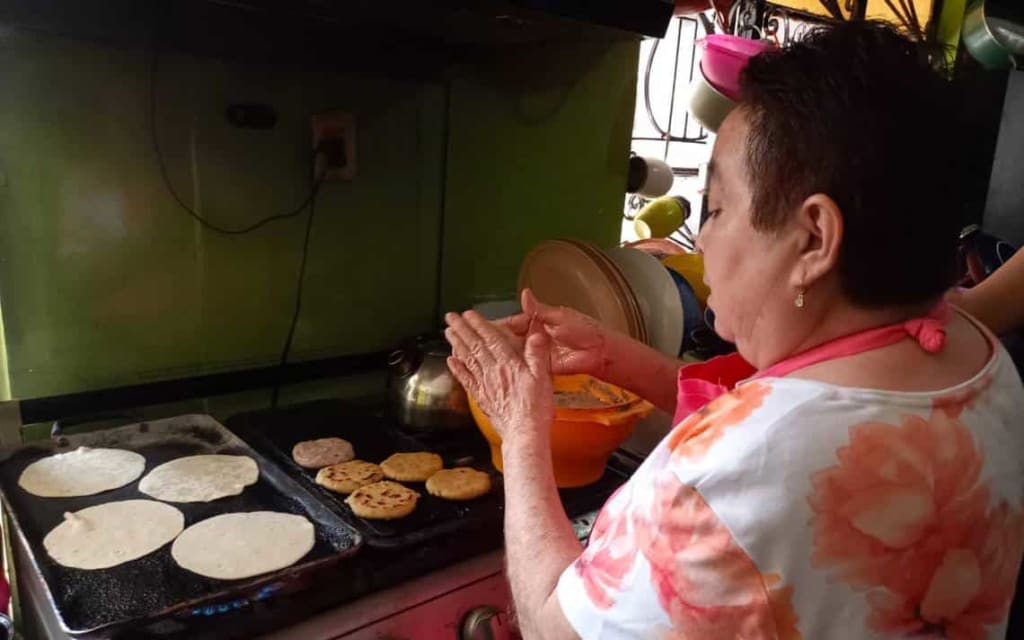
This is the Aquismón-style bocol — the most traditional form, following María Asunción Medina’s method.
Ingredients (makes approximately 12 bocoles):
- 1 kg fresh corn masa (masa de nixtamal, not instant corn flour)
- 250g lard (manteca de cerdo)
- Salt to taste
- Optional additions: chopped green chile, fresh epazote leaves, ancho chile rehydrated and pureed
For the basic cheese filling:
- 1 round dry queso de aro (or queso fresco), crumbled
- 4 ancho chiles, deveined and seeded, rehydrated in hot water
- 1 tablespoon vegetable oil
Process:
-
Beat the lard: In a large bowl, beat the lard with salt at high speed until it turns white, creamy, and fluffy — approximately 5 minutes. This step aerates the lard and is essential for the final texture.
-
Incorporate the masa: Add the corn dough to the beaten lard. If using additions (green chile, epazote), add them now. Knead until you have a homogeneous texture that does not stick to your hands. Test by taking a small piece and rolling it into a ball — it should hold its shape without cracking.
-
Shape: Form small balls (approximately 60–70g each) and flatten into discs about 8–10 cm diameter and 1 cm thick — thicker than a gordita, rounder than a sope.
-
Cook on comal: Heat a comal over medium-low heat (no oil). Place the bocoles on the comal and cook for approximately 4–5 minutes per side, turning twice. The bocol should inflate slightly and develop light brown patches on the exterior. The interior should be cooked through but still moist.
-
Fill: Split the bocol in half while hot. Fill with cheese (dressed with the chile sauce), beans, pork, or your filling of choice.
For the chile-cheese filling: Blend the rehydrated ancho chiles with oil. Mix the chile sauce into the crumbled cheese until the cheese is evenly coated. Season with salt.
Note from María: “The dough must be mixed with lard and beef; some people can even use ground chili or another type of corn — I use yellow corn, but there are other people who use blue or purple corn.”
Where to Eat Bocoles in the Huasteca
Bocoles are a morning food, and that timing is part of the experience. Street vendors and market stalls typically sell them from 7:00 AM until noon, when the best batches are often gone. If you show up at 1:00 PM expecting a full menu, you will probably miss them.
| Location | What to Look For | Notes |
|---|---|---|
| Aquismón, SLP | Family loncherías near town center | Most traditional; María Asunción-style |
| Ciudad Valles, SLP | Morning markets and roadside stalls | Hub of Huasteca food scene |
| Tamazunchale, SLP | Main road stalls, mercado | Arrive before 9 AM |
| Tantoyuca, Veracruz | Any breakfast stall | Wheat flour “apanao” version here |
| Huejutla de Reyes, Hidalgo | Market hall | Bean-masa “Bocol de Huejutla” |
In Ciudad Valles, bocoles appear alongside the full Huasteca breakfast spectrum: zacahuil tamales, enchiladas huastecas, pames (corn cakes from the Pame indigenous community), and fresh fruit with chile piquín. City Valles is the best single stop for a Huasteca food tour on Viator.
For planning a full trip to the region — which includes the spectacular waterfalls of Huasteca Potosina and the Las Pozas surrealist garden in Xilitla — our complete Huasteca Potosina travel guide covers logistics and suggested itineraries.
Bocoles and the Broader Huasteca Food Tradition
Bocoles do not exist in isolation — they are part of a food culture that produced several of Mexico’s most interesting and under-known dishes:
- Zacahuil — the enormous communal tamale, sometimes 3 meters long, wrapped in banana leaves and cooked in a pit. A single zacahuil can feed 50–80 people.
- Enchiladas huastecas — smaller, stuffed, sauce-drenched corn tortillas in a chile-tomato sauce
- Ximbo — fish wrapped in maguey leaves and cooked over coals
- Tlapepecholes — another masa preparation specific to festival cooking
The connection between bocoles and the huapango music tradition is worth noting: both are pre-Columbian Tének cultural practices that survived the Conquest and persist in the same geographic zone. When you eat bocoles in Aquismón and hear huapango at a village festival, you are in direct contact with a continuous tradition.
The San Luis Potosí travel guide covers the full state, of which the Huasteca is the most gastronomically distinctive zone.
Why Bocoles Are Worth Seeking Out
Bocoles are one of Mexico’s least-exported foods — you will not find them in Mexican restaurants in the US or Europe, and they barely appear on menus in Mexico City. Their range is genuinely limited to the Huasteca, which is itself a region that most international travelers skip.
That makes them something rare in contemporary travel: a genuinely local food that requires actually going somewhere to taste. The effort is proportional to the reward — a bocol fresh off María Asunción Medina’s comal in Aquismón, split open and filled with chile-dressed cheese, eaten standing at a wooden counter at 8:00 in the morning, is one of the most satisfying breakfasts in Mexico.
Plan the Huasteca trip around the waterfalls, stay for the bocoles, and if you time it right, experience both during Xantolo when the entire region celebrates the dead with food, dance, and music that has been continuous for centuries.