Cuetzalan, Puebla: Complete Travel Guide to the Pueblo Mágico (2026)
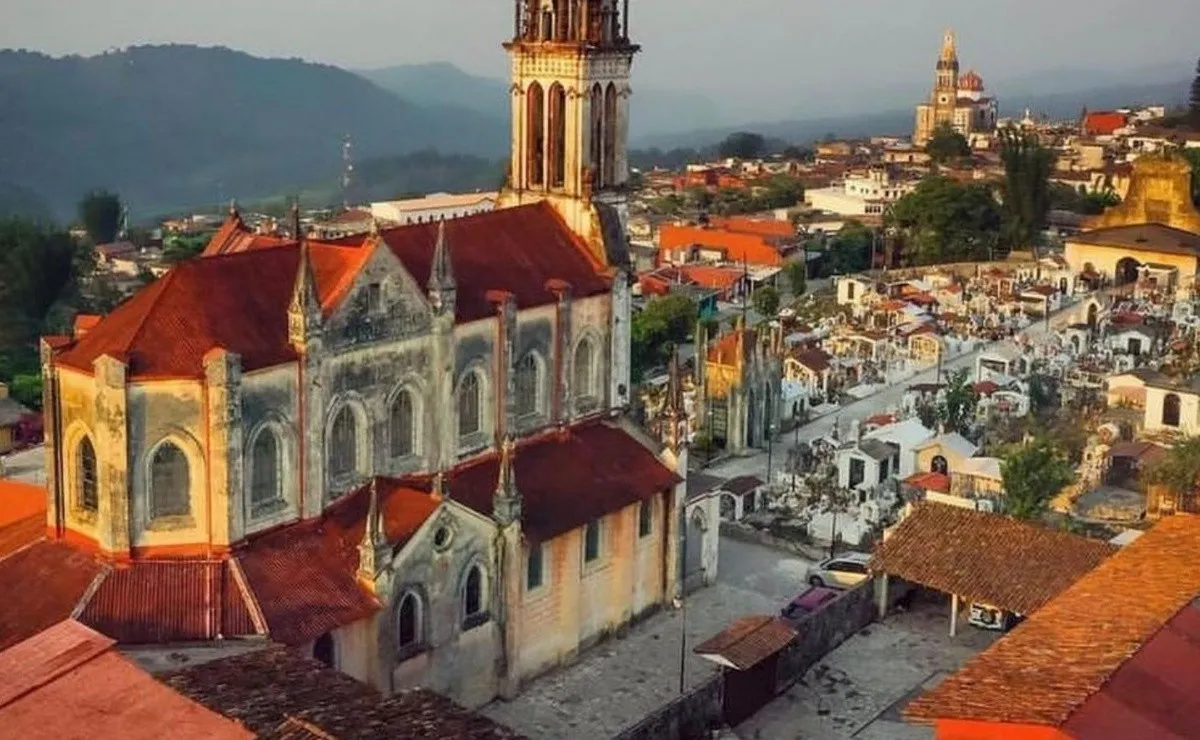
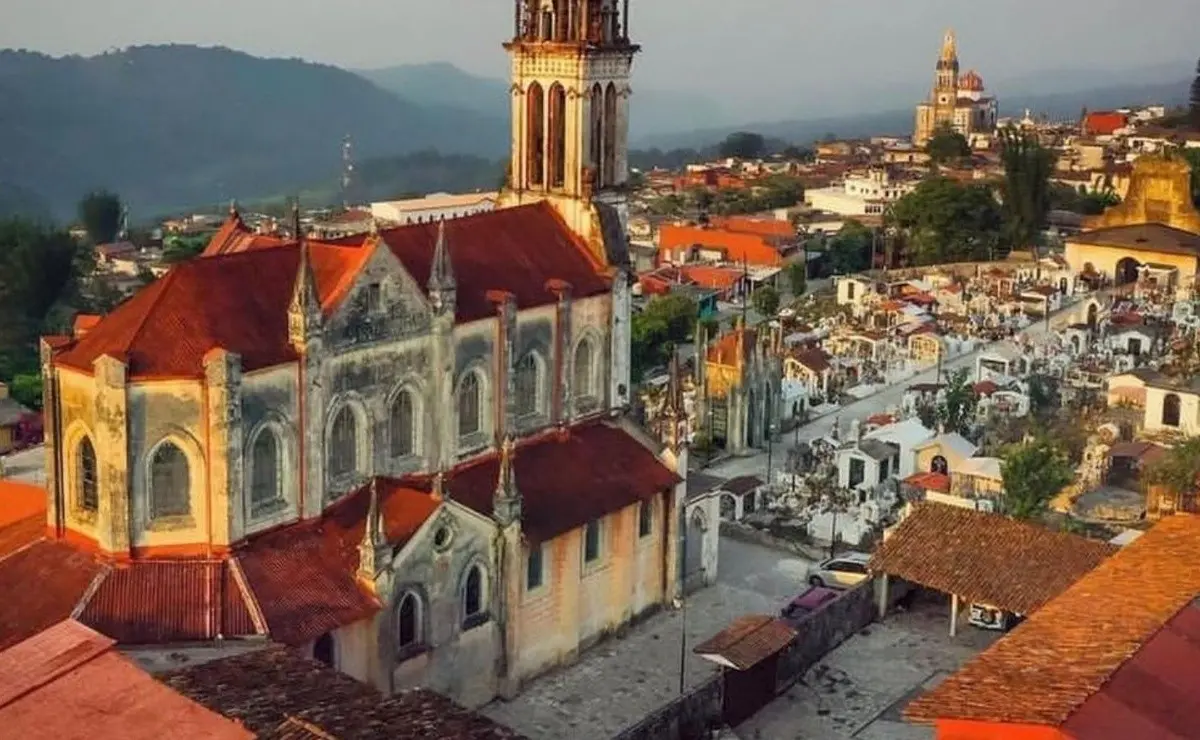
Cuetzalan del Progreso sits in the Sierra Norte mountains of Puebla at 1,100 meters, where coffee grows between ancient Totonac ruins and waterfalls that drop off limestone cliffs into the cloud forest below. It’s the most difficult Pueblo Mágico in Puebla to reach. It’s also the most rewarding.
The name derives from the Nahuatl word for quetzal bird — this was once the territory of the sacred bird. Today the same mountain cloud forest sustains coffee, vanilla, and an indigenous culture that hasn’t been commercialized out of existence. The Sunday market is the clearest example: Nahua and Totonac traders come from surrounding communities in traditional dress to sell handwoven textiles and medicinal herbs to each other, not to tourists.
This guide covers everything you need to plan a visit: how to get there, what to do (waterfalls, ruins, caves, market, Voladores), where to eat, where to stay, and when to go.
Where Is Cuetzalan?
Cuetzalan del Progreso is in the Sierra Norte de Puebla, about 300 km northeast of Mexico City and 180 km northeast of Puebla City. The town sits at 1,100 meters in a fog-draped highland coffee-growing zone bordering the tropical foothills that lead down to Veracruz.
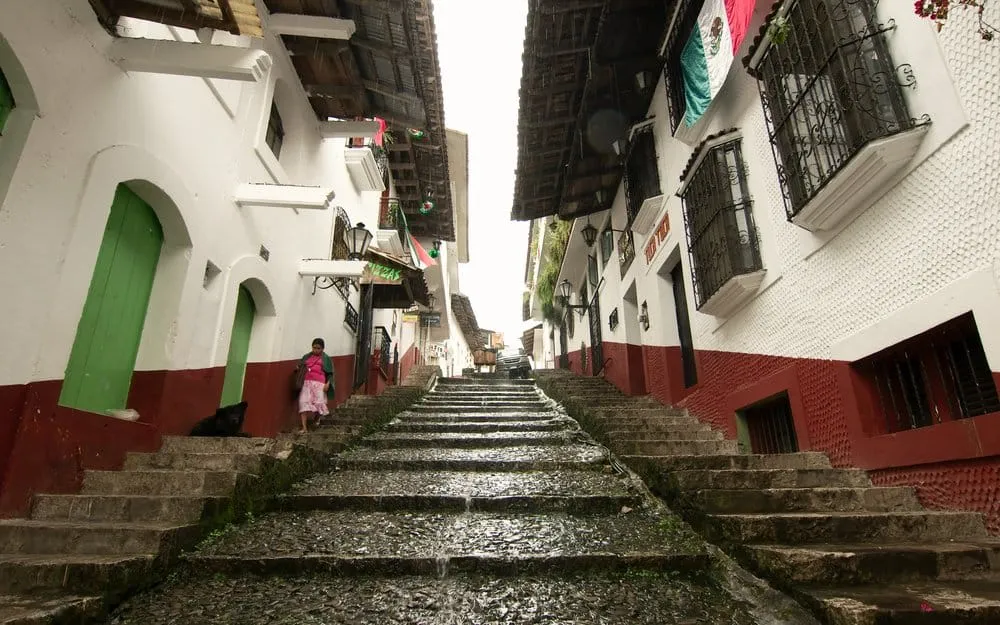
The elevation and terrain create Cuetzalan’s defining characteristic: it’s almost always partly cloudy, often foggy, and regularly wet. The mist rolls through the cobblestone streets in the mornings and evenings. Stone buildings are draped with moss. Ferns grow from church walls.
How to Get to Cuetzalan
From Mexico City (most common for international travelers):
Take an ADO or AU bus from TAPO (Terminal de Autobuses de Pasajeros de Oriente — Mexico City’s eastern bus terminal) to Zacapoaxtla — about 3 hours, 200–250 MXN. From Zacapoaxtla’s market square, take a shared taxi or colectivo van to Cuetzalan — 45 minutes, 50–70 MXN.
Total: 4–5 hours, around 300 MXN from TAPO.
Some direct buses from TAPO to Cuetzalan run on weekends (AU brand, ask at TAPO about current schedule). The route exists but service is limited.
Driving from Mexico City: Take the Puebla autopista east, then Highway 129 northeast through Zacatlán and Zacapoaxtla. The final 30 km from Zacapoaxtla to Cuetzalan is a mountain road — winding, beautiful, and manageable in a regular car when dry. In heavy rain (June–September), the road requires more caution.
From Puebla City (CAPU terminal): Buses run to Cuetzalan directly or via Zacapoaxtla. Journey time: approximately 3 hours. Check the CAPU terminal schedule or take a taxi to the Estrella Roja terminal for mountain region routes.
Practical note: Cuetzalan has no train service, no airport, and Uber doesn’t operate there. Public transport and car rental are your options. Car rental from Puebla City gives the most flexibility for visiting waterfall trails and Yohualichan on your own schedule.
The Sunday Tianguis (Market)
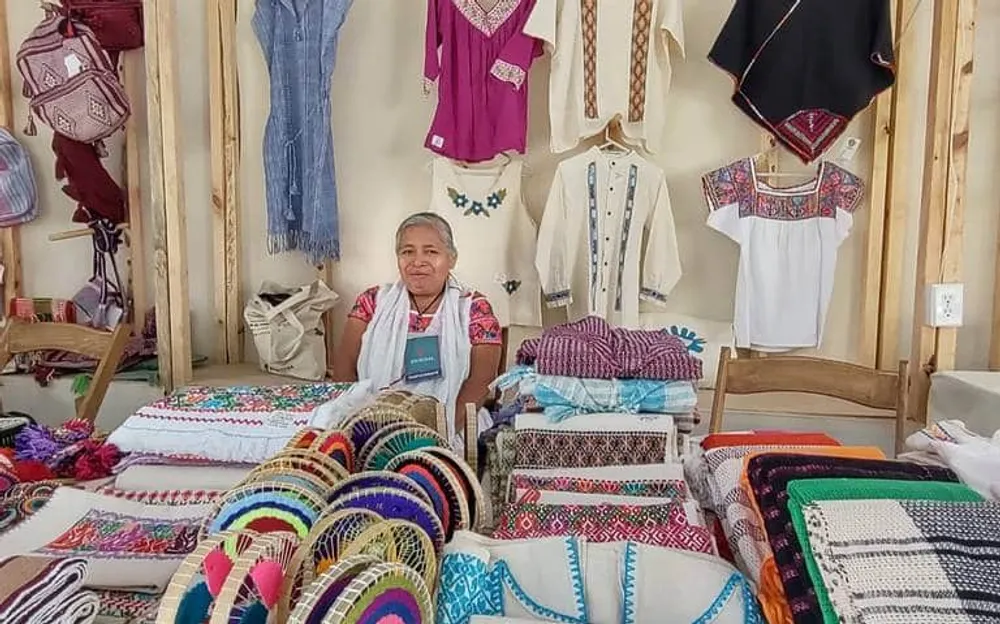
Every Sunday, Nahua and Totonac traders come down from surrounding mountain communities to Cuetzalan’s main plaza and the streets spreading from it. This is the event that defines the town — and what separates Cuetzalan from most other Pueblos Mágicos.
What makes it different: The traders are not selling to tourists. They’re selling to each other and to local residents, as they’ve done for centuries. You’ll see transactions conducted in Nahuatl. Women dress in traditional quechquémitl (a triangular shoulder garment) with elaborate hand-embroidered floral patterns specific to their home community — you can identify where each trader is from by their needlework.
What to buy:
- Handwoven textiles — quechquémitl, table runners, embroidered blouses. The embroidery is labor-intensive; a well-made piece represents days of work
- Coffee — Sierra Norte arabica, often sold by the cooperative (Tosepan Titataniske, the indigenous cooperative that has farmed this region for decades), whole bean or ground
- Vanilla — the Sierra Norte has wild vanilla orchids; pure vanilla extract and vanilla pods are sold at market prices far below what you’d pay elsewhere
- Yolixpa — the local herbal liqueur in small bottles
- Medicinal herbs — highland healers sell dried herbs, tinctures, and remedies
- Mushrooms — the cloud forest produces exceptional fungi; dried mushrooms are sold in bulk
- Tlayoyos — masa oval patties stuffed with beans and fresh cheese, cooked on a griddle. The best ones are at the market
Arrive before 9 AM. By 10 AM, some traders have already sold out of their best pieces and the food stalls are crowded. By noon, the market begins to wind down.
Waterfalls Around Cuetzalan
The Sierra Norte’s limestone geology and heavy rainfall create dozens of waterfalls within a short hike of the town center. Three are accessible without a guide; more require local knowledge.
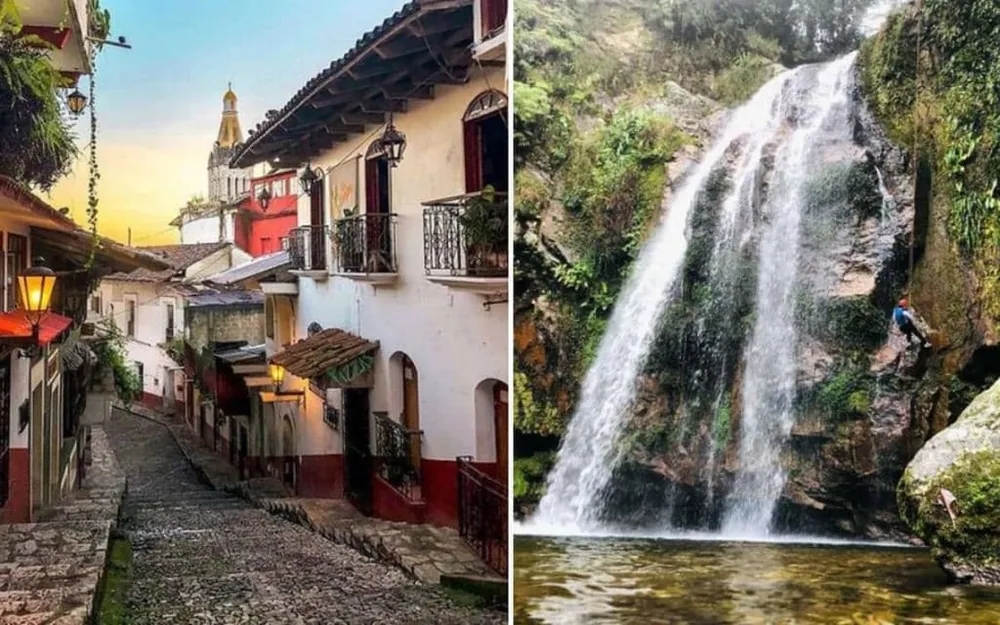
Las Brisas (Cascada de la Olla): The most-visited waterfall near Cuetzalan. About 3 km from the town center (40-minute walk or 10-minute taxi), it drops approximately 30 meters into a pool surrounded by cloud forest vegetation. Entrance fee approximately 30–50 MXN. Rope systems allow you to descend close to the base. Can get crowded on Sunday afternoons; visit Saturday or Monday morning for a quieter experience.
Cascada La Gloria: Slightly further from town (5–6 km), accessible by trail through coffee plantation land. Less visited than Las Brisas, higher drop, more dramatic. Ask at your hotel for the current trail access — some sections cross private farmland and local guides prefer visitors use the established paths.
Atepolihui (El Salto): Part of the same cave and water system as the Atepolihui caverns (see below). The waterfall emerges from a cave opening and drops into a pool — you can swim in the pool at the base. It requires navigating through part of the cave complex to reach from the interior, or hiking around from above. A local guide is recommended.
Waterfall season: Waterfalls are full year-round in the Sierra Norte — this is one of the wettest regions in Mexico. Paradoxically, they’re most dramatic in the rainy season (June–September) but hiking to them in the rain requires rubber boots and trail confidence. November–February offers accessible trails with full waterfalls and clear views.
Caves: The Atepolihui Cavern Complex
Below the surface of the Sierra Norte lies an extensive cave system carved by underground rivers. The most accessible from Cuetzalan is the Atepolihui complex.
The caves combine several features: stalactites and stalagmites in the upper sections, underground river passages (you can wade), and connections to the waterfall system at the exit. Tours run approximately 2 hours and include sections where you’re knee-deep in cold underground river water — waterproof boots and a headlamp are essential.
Cueva del Diablo: A shorter cave system east of town, more accessible without specialized gear. Less dramatic than Atepolihui but viable for visitors who don’t want a full spelunking experience.
Local guides organize cave tours from Cuetzalan’s main plaza for approximately 150–300 MXN per person. Don’t attempt Atepolihui without a guide — the passages are not marked and flooding is possible in the rainy season.
Yohualichan Archaeological Zone
About 8 km from Cuetzalan on the road toward Zacapoaxtla, Yohualichan is an archaeological site of the Totonac culture — the same civilization that built El Tajín near Papantla in Veracruz. The architectural style is nearly identical: the buildings feature the nichos (decorative niches) covering the pyramid facades that characterize the Totonac tradition. You can book Mexico tours on Viator.
Why it matters: Yohualichan predates most of the El Tajín complex and may have been a satellite capital. The site includes a ball court, several pyramid platforms, and residential areas. Because it’s less famous and harder to reach than El Tajín, Yohualichan receives far fewer visitors — you may have the site to yourself on weekdays.
What to see: The main complex has three pyramid structures in the Tajín style (niched facades) and a well-preserved ball court. The site museum (small, on the premises) has ceramics and artifact finds from the excavation. The cloud forest setting — ferns growing between stones, mist in the trees — makes photography excellent.
Practical info:
- Distance: 8 km from Cuetzalan center (taxi ~80 MXN, rental car 15 minutes)
- Entry: ~50 MXN
- Hours: Daily 9 AM – 5 PM
- Allow: 1.5–2 hours
- Best combined with: Coffee cooperative visit on the same road
Voladores de Papantla
In the atrium of the Church of San Francisco de Asís, you’ll find a tall mast for the Voladores de Papantla — the flying men ceremony. Four men climb a 30-meter mast, tie ropes to their ankles, and spiral down as the mast rotates, unwinding 13 times each while one man stands at the top playing a flute and drum.
The ceremony originated with the Totonac people of Veracruz and the Sierra Norte. UNESCO declared it an Intangible Cultural Heritage of Humanity in 2009. Unlike the commercial Voladores performances in tourist zones of the Riviera Maya or Mexico City’s Parque Hundido, the Cuetzalan Voladores are performed within their original cultural context by community members from the surrounding villages.
When it happens: Reliably on Sunday mornings when the tianguis is active — typically between 10 AM and noon. Also during major festivals (see below). The ceremony is not ticketed; a voluntary donation of 20–50 MXN per viewer is customary.
Cuetzalan’s Coffee Heritage
The Sierra Norte de Puebla is one of Mexico’s premier coffee-growing regions — high altitude arabica with the shade and moisture of a cloud forest. Cuetzalan has been a coffee trading hub since the 19th century. The Casa de la Gran Máquina (now the Casa de Cultura) was built in the late 1800s specifically as the region’s main coffee processing and export house. Its Gothic windows and Victorian-era machinery rooms are a direct architectural record of Cuetzalan’s importance in the global coffee trade.
Today, coffee is grown predominantly by indigenous cooperatives, most notably Tosepan Titataniske (Totonac for “let’s all work together together”). Founded in 1977, the cooperative has over 34,000 member families and produces certified organic arabica sold internationally. Coffee tours of cooperative farms are available through local guides — you can see the full process from cherry to cup, and buy directly at cooperative prices.
What to buy: Look for shade-grown, organic arabica from Tosepan or smaller cooperatives at the Sunday market. Prices are significantly lower than the same coffee sold in Mexico City specialty cafés.
Yolixpa: The Local Herbal Drink

Yolixpa is Cuetzalan’s most distinctive food product — an herbal liqueur made by steeping between 23 and 30 Sierra Norte highland herbs in aguardiente (cane spirit). Originally a medicinal preparation by Nahua healers, it evolved into a social drink over centuries.
The herbs: Sage, mint, basil, oregano, and thyme are the most commonly cited, but each producer guards their complete formula. The herbs must be from the highland Sierra Norte — altitude and soil change the chemical composition of the plants.
Varieties:
- Natural: Bitter, intensely green, closest to the original medicinal formula
- Sweetened: Honey or piloncillo added to balance the bitterness
- Flavored: Passion fruit, orange, coconut, coffee yolixpa — more accessible for first-timers
Every bar and restaurant in Cuetzalan serves it. You can also buy labeled bottles at the Sunday market for about 80–150 MXN to take home. It keeps well — the alcohol preserves the herbs.
What to Eat in Cuetzalan
Cuetzalan’s food sits at the intersection of Nahuat highland cooking and the tropical ingredients of the Sierra Norte foothills.
Tlayoyos: Cuetzalan’s signature street food — oval patties of masa stuffed with black beans and fresh cheese (requesón), cooked on a dry griddle. Served with salsa and sometimes topped with meat. Found at the Sunday market and daily at market stalls.
Xochitamales: The Sierra Norte tamale — masa filled with chicken or pork in mole sauce, wrapped in a banana or hoja santa leaf rather than corn husk, steamed. Larger and richer than the Oaxacan tamale.
Mole de caderas: A seasonal goat mole made with the hip and leg cuts, cooked with dried chiles and herbs. Associated with the October goat harvest season.
Tlacoyos with mushroom: Cloud forest mushrooms — particularly hongos de temporada (seasonal mushrooms including shiitake-like varieties that grow wild) — stuffed into thick oval masa cakes. Available at the market in season.
Café de olla: Coffee brewed in a clay pot with cinnamon and piloncillo. In Cuetzalan, made with locally grown beans — a different product from the generic café de olla served elsewhere.
Where to eat: The restaurants around the main plaza are reliable. For the most authentic food, eat at the Sunday market stalls run by community vendors, not the sit-down restaurants.
Colonial Architecture
Cuetzalan’s town center is a compact colonial ensemble on steep terrain — most streets require walking up or down, not across. The buildings follow a specific local aesthetic: whitewashed walls with red brick trim, deep-set windows, wide-eaved rooflines.
Church of San Francisco de Asís: The dominant structure on the main plaza. Its 68-meter clock tower is the tallest church tower in Puebla state — visible from the valley below for miles. The original 17th-century structure was expanded several times; the bell tower’s Renaissance and Romantic hybrid style dates to the early 19th century.
Chapel of the Immaculate Conception (La Conchita): Built 1913, oriented north-south rather than the canonical west-facing direction for Catholic churches — the local builders followed topography over doctrine. Interior mural by local painter Joaquín Galicia Castro.
Municipal Palace: 1941, neoclassical with rustic detailing, replica of the Roman Basilica of San Juan de Letran. A Cuauhtémoc sculpture by local artist Isauro Bazán crowns the facade.
Casa de la Gran Máquina (Casa de Cultura): The 19th-century coffee export house with Gothic windows, now housing the Calmahuistic Ethnographic Museum. The museum has archaeological pieces from Yohualichan, traditional costumes, looms, instruments, and Totonac artifacts.
Best Time to Visit Cuetzalan
| Month | Weather | Events | Notes |
|---|---|---|---|
| January–February | Cool, some fog, limited rain | — | Best trail conditions; waterfall access easier |
| March–April | Warming, some rain starting | Semana Santa (if applicable) | Good conditions; Semana Santa brings crowds |
| May | Increasing rain | — | Trails muddier, waterfalls building |
| June–September | Heavy rain daily | — | Most beautiful (lush green) but roads can be difficult; rubber boots essential |
| October | Rain easing | Festival del Café (coffee harvest) | Best month overall: transitional weather, coffee festival |
| November | Dry season starting | Día de Muertos | Cuetzalan’s Day of the Dead combines Nahua and Catholic traditions |
| December | Dry, cool | Christmas posadas | Pleasant conditions; lower tourist traffic |
The Sunday rule: If you’re going to Cuetzalan, plan to be there on a Sunday for the tianguis. Arrive Saturday to settle in; leave Monday. Three days is ideal for the market, waterfalls, and Yohualichan.
Where to Stay

What to expect: Most accommodation is in 2–4 story colonial buildings without elevators. Rooms vary from simple posada rooms (basic bed, shared bathroom, 300–500 MXN) to boutique hotels with mountain views and local crafts (800–1,500 MXN). Book ahead for weekends — especially Sunday market weekends in October and November.
Tip: Ask for rooms on the upper floors for mountain and plaza views above the fog line. Ground floor rooms can feel damp in rainy season.
Practical Tips
Rubber boots: If you’re visiting waterfalls or caves, rubber boots (botas de hule) are more practical than hiking shoes — the trails are muddy year-round. Several shops in Cuetzalan rent them for 50–80 MXN/day.
Cash only: Most market stalls, small restaurants, and posadas are cash only. There is a Banamex ATM on the main plaza. It’s the only ATM in town — bring backup cash from Puebla or Mexico City.
Mobile signal: Telcel has the best coverage in the Sierra Norte. OXXO/AT&T coverage is unreliable. Download offline maps before leaving the highway.
Fog and rain: Pack a waterproof jacket regardless of season. The cloud forest creates micro-climate rain even on “clear” days. Mornings are often socked in; midday frequently clears; afternoon rain is common June–October.
Altitude awareness: At 1,100 meters, Cuetzalan is comfortable — no altitude sickness issues. But the temperature drops at night; bring layers even in summer.
For the broader Puebla regional context, Cuetzalan pairs well with Atlixco Puebla and the colonial city of Puebla itself. For Mexico travel planning, see our best time to visit Mexico guide and Mexico itinerary guides.