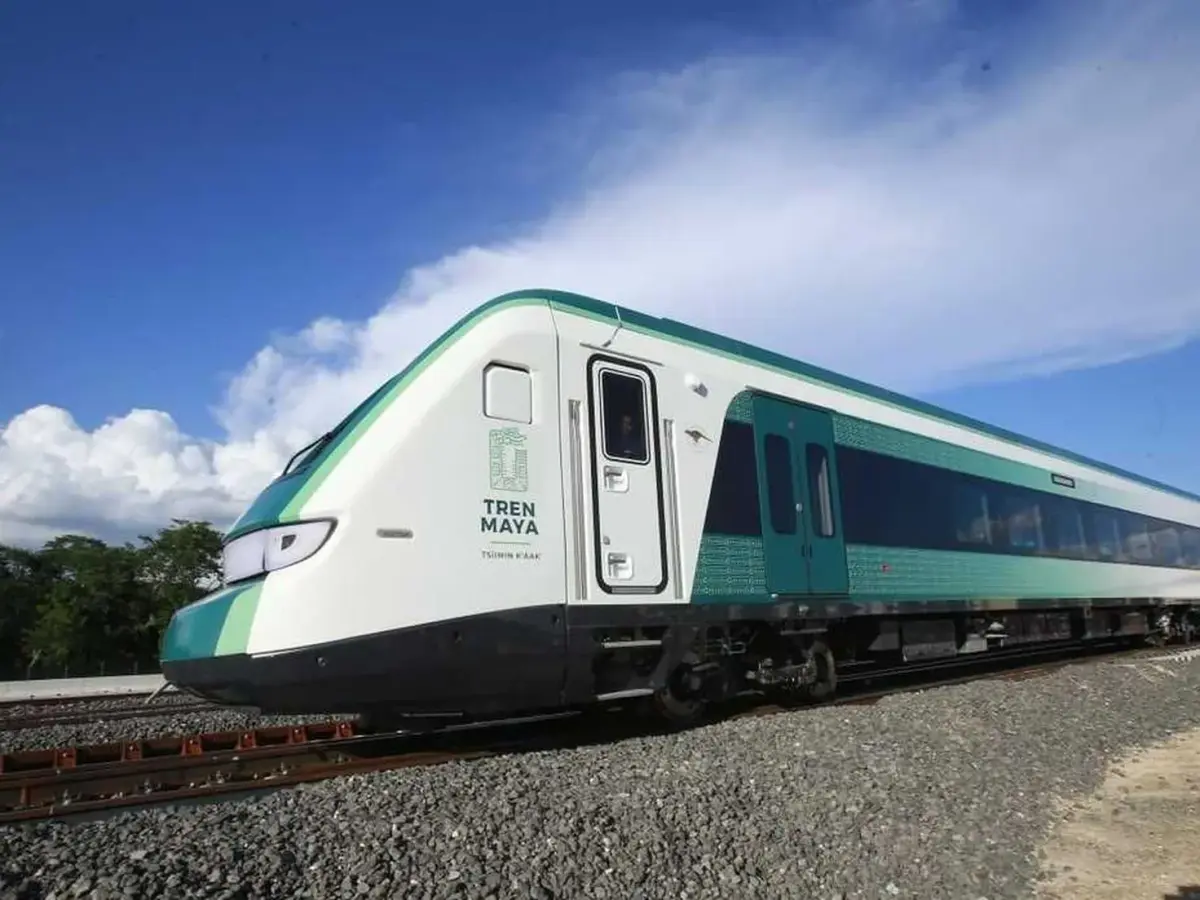
Tren Maya Guide 2026: Route, Stations & Tickets
Tren Maya guide for 2026: the route, stations, ticket basics, best stops, and connections travelers need to plan the journey.
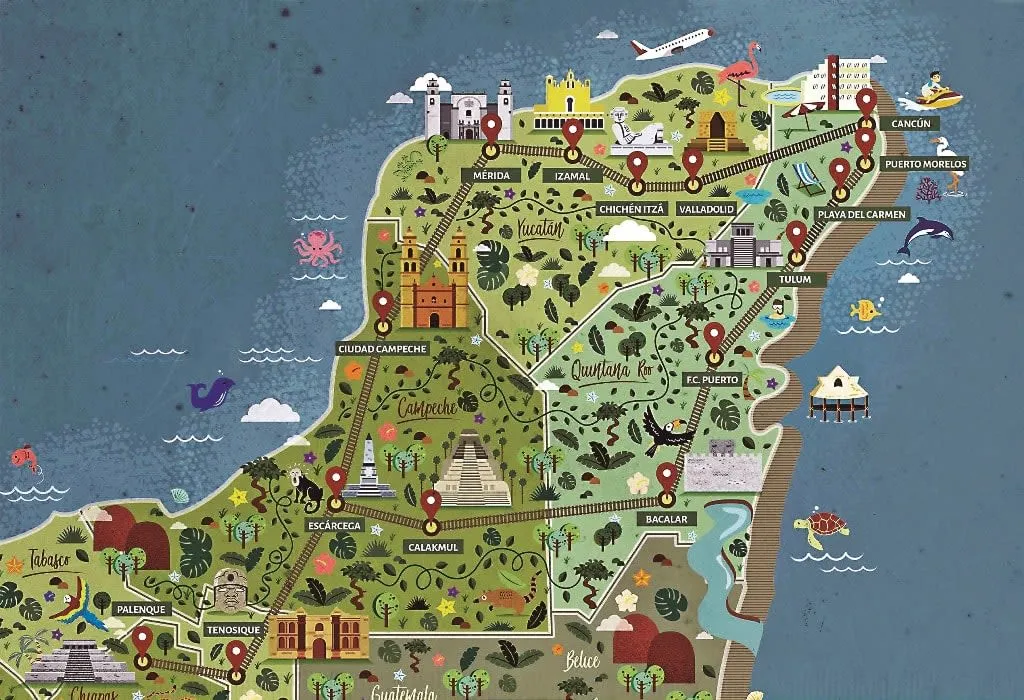
The short answer: the Tren Maya (Maya Train) is a 1,500-kilometer rail loop through Chiapas, Tabasco, Campeche, Yucatán, and Quintana Roo. Its most useful tourist stops include Cancún, Valladolid, Chichén Itzá, Mérida, Campeche, Tulum, Bacalar, and Palenque. Check the official site for live fares and departures, then plan the station transfer at each stop.
This is not the best choice for every route in Mexico, but it is one of the easiest ways to move around the southeast if your trip is focused on the Yucatán Peninsula and nearby Maya-region destinations.
If you only need one takeaway, it is this: use the Maya Train for multi-stop southeast itineraries, not for every single airport transfer or last-mile trip.
Maya Train Route in 30 Seconds
- Coverage: more than 1,500 kilometers across five states in southeastern Mexico
- Main traveler-friendly stops: Cancún, Puerto Morelos, Playa del Carmen, Tulum, Bacalar, Valladolid, Chichén Itzá, Mérida, Campeche, and Palenque
- Best for: travelers building a Yucatán Peninsula circuit with archaeology, colonial cities, and beach time
- Not best for: door-to-door convenience, tiny detours, or places where you still need a taxi, colectivo, or rental car after arrival
- Tickets: check the official Tren Maya website for current schedules, fares, and booking changes
Is the Maya Train Complete?
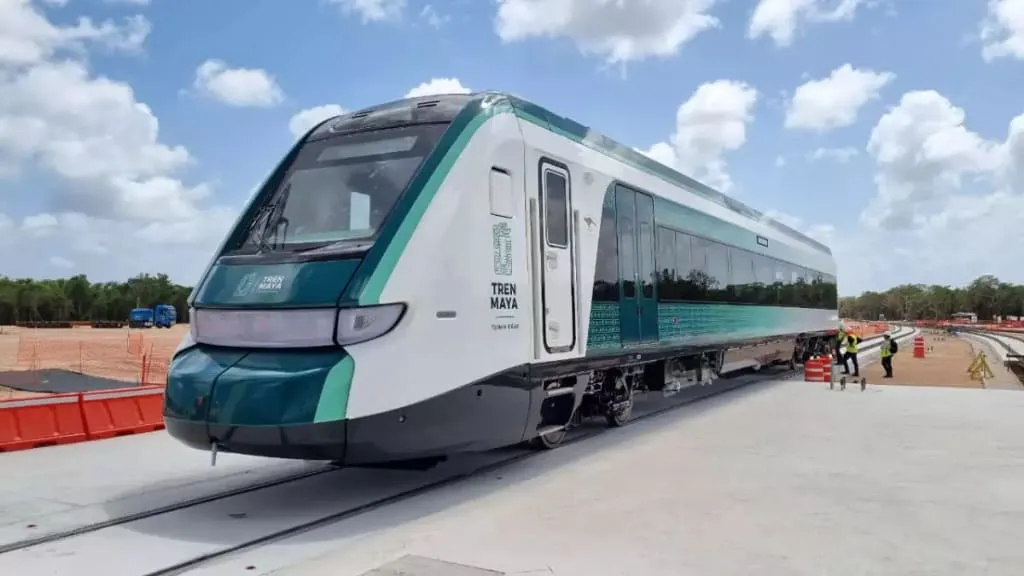
Yes, the Maya Train is now operating as a real travel option, but travelers should still expect some station-to-destination logistics after arrival.
The network covers more than 1,500 kilometers and connects the core Maya-region states of Chiapas, Tabasco, Campeche, Yucatán, and Quintana Roo. In practical terms, that means you can now use it to connect many of the southeast’s biggest tourism hubs instead of treating it as a future-only project.
The main planning mistake is assuming the train solves the entire journey. It solves the long-distance rail segment, but you may still need a taxi, transfer, colectivo, or rental car to reach ruins, beaches, or downtown hotel zones from some stations.
How much do Maya Train tickets cost?
Ticket prices vary by route, distance, and service category, so the smart move is to check the official Tren Maya website right before booking instead of relying on old blog posts.
That matters because schedules, fare classes, and booking flow can change faster than evergreen travel content gets updated. You may also see different practical costs once you add station transfers, taxis, or luggage-heavy connections.
For the latest fares, departures, and booking instructions, use the official Tren Maya site first, then build the rest of your trip around station-to-hotel logistics.
If you are comparing options, look at total trip cost, not just the train fare. On some routes the train is the most interesting experience, while on others a direct bus or flight may still be faster or simpler.
Maya Train Features

The Tren Maya will have 42 X’trapolis trains, electric trains that will feature a distinctive design for Mexico, with a capacity for 300 passengers per car.
It will be able to transport 10,000 passengers per day and aims to attract three million tourists per year.
The Maya Train will offer three categories: Xiinbal (regular), Janal (long distance), and P’atal (restaurant).
The large windows offer passengers a breathtaking view of the scenery along the way.
The seats are spacious, ergonomic, and reclining, with power outlets and storage space for suitcases and bags. There is also an area for bicycles.
P’atal, the service for long trips
Passengers traveling long distances can access comfortable cabins with bunk beds, private bathrooms, and showers.
Janal, the restaurant service
The train’s menu will feature more than 30 dishes for breakfast, lunch, and dinner, showcasing regional Mayan cuisine such as chipilin tamales, huevos motuleños, panuchos, cochinita pibil, tzic de venado, sopa de lima, papadzules, among others.
The train’s dessert menu will offer traditional marquesitas, handmade chocolates, cocada, and dulce de nance.
Regional beverages such as coffee, pozol, chaya water and tea, pitahaya and lime agua fresca, xtabentún, tequila, mezcal, wine, pulque, and Mexican craft beers will also be available.
Maya Train Map Route
Best route by trip style
- First-time Yucatán trip: Cancún → Valladolid/Chichén Itzá → Mérida
- Beach plus ruins: Cancún or Playa del Carmen → Tulum → Bacalar
- Colonial cities plus archaeology: Mérida → Campeche → Palenque
- Deep southeast loop: Cancún → Mérida → Campeche → Palenque → Bacalar → Tulum
If your goal is a smooth first trip, prioritize the stations that connect to places with strong hotel inventory and clear onward transport, especially Cancún, Valladolid, Mérida, Campeche, Tulum, and Bacalar.
Maya Train Stations in Campeche
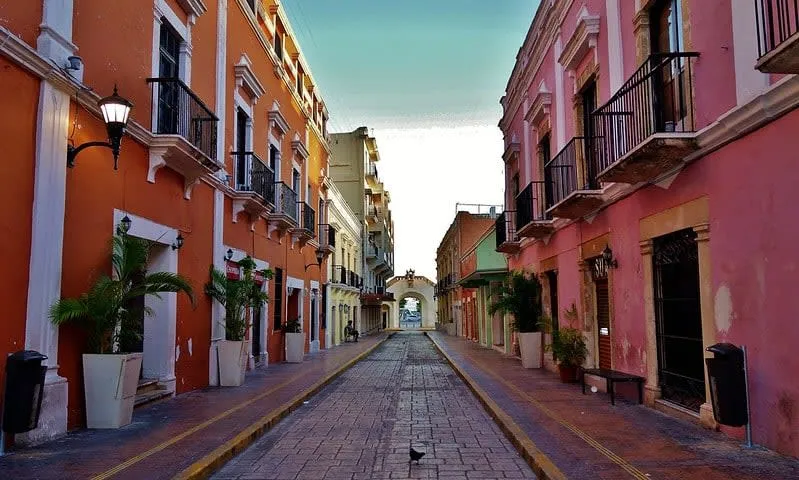
Campeche City
The San Francisco de Campeche station connects with the Campeche Cathedral, the Plaza de la Constitución, and the San Román Church.
It also allows you to visit colonial buildings of baroque style, the historic walled district, and the Archaeological Museum of Campeche, where you can find Mayan artifacts from areas such as Edzná and Calakmul.
Xpujil
This station is located near the archaeological zone of Xpujil, perhaps one of the least explored by tourists in Campeche.
The station allows an easy connection with Guatemala and Belize, as well as sites with a wide range of tourist attractions.
You may want to read: Explore The Isthmus of Tehuantepec on Mexico’s New Rail Line
The town of Xpujil is the head of the municipality of Calakmul and is home to about 3,000 inhabitants.
Tenabo
Tenabo station belongs to section 2 of the Tren Maya and connects with different points of interest, such as the ex-hacienda San Antonio Hom, an early 20th-century stone, wood, and metal building.
In addition, in the town of Kaki are located the archaeological zones of La Xoch and Chun Cedro, dating from 600 BC to 980 AD.
Calakmul
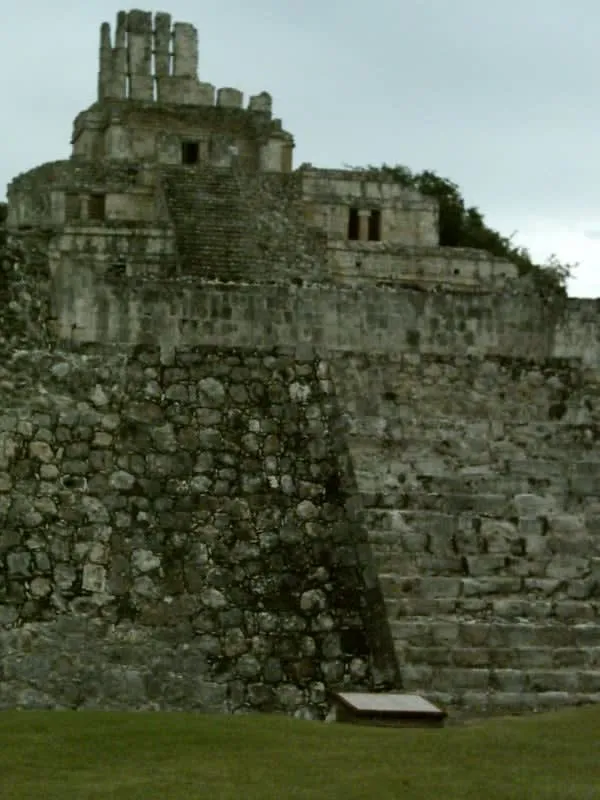
The archaeological zone of Calakmul was declared a UNESCO World Heritage Site.
Along with Tikal and Palenque, it was one of the Mayan forces that dominated the classic period.
Over 5,000 historical structures have been found on the site, among which the Great Acropolis and the Central Plaza, made up of impressive pyramids and structures built to worship the sun, stand out.
Hecelchakán
Some of the main attractions in the municipality of Hecelchakán include the sale of handicrafts made in small family workshops in the region, such as regional dresses, huipiles, hammocks, and leather huaraches.
Centenario
The Centenario station is next to the Noh or Silvituc Lagoon, so it has several options for tourists such as hotels, restaurants, hiking, and cayuco rides, a traditional boat used as an alternative to motorboats to protect the fauna that inhabits the place.
Calkiní
The Calkiní station is located in the municipality of the same name. The place stands out for selling handicrafts, hat making, and the weaving of petates (artisanal rugs).
In this station, it is possible to visit the tourist corridor of Dzitbalché – Nunkiní – Isla Arena and the route Bécal – Nunkiní – Isla Arena.
Maya Train Stations in Yucatan
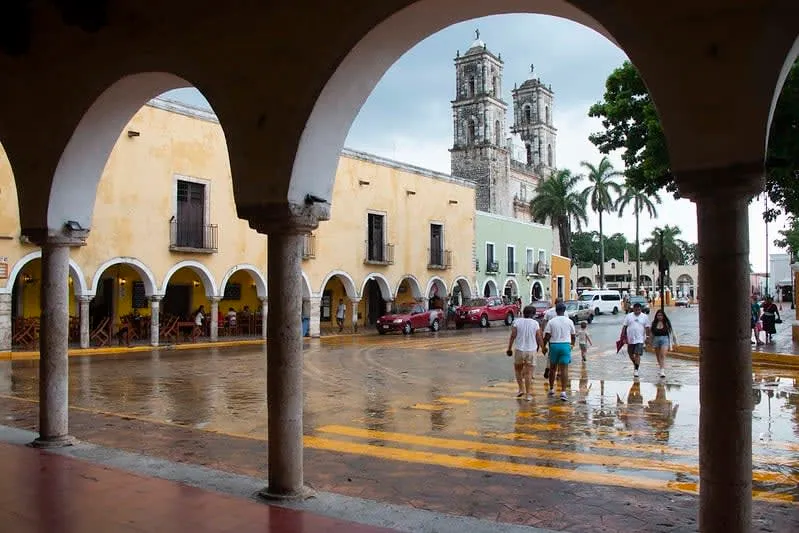
Maxcanú
The Maya Train route stops at Maxcanú, an agricultural town of 12,000 inhabitants from which you can plan trips to the Puuc route, the group of archaeological sites located in southern Yucatán that share a symmetrical construction style, with buildings longer than tall and decorated façades.
The most representative city of the style, Uxmal, is less than 50 kilometers from Maxcanú.
Umán
Although Uman is part of the metropolitan area of Mérida, it combines old haciendas with open cenotes perfect for scuba diving.
Its location also makes it an ideal starting point to visit Celestún and its estuary, considered a biosphere reserve for its rich plant and animal life.
Teya, Merida
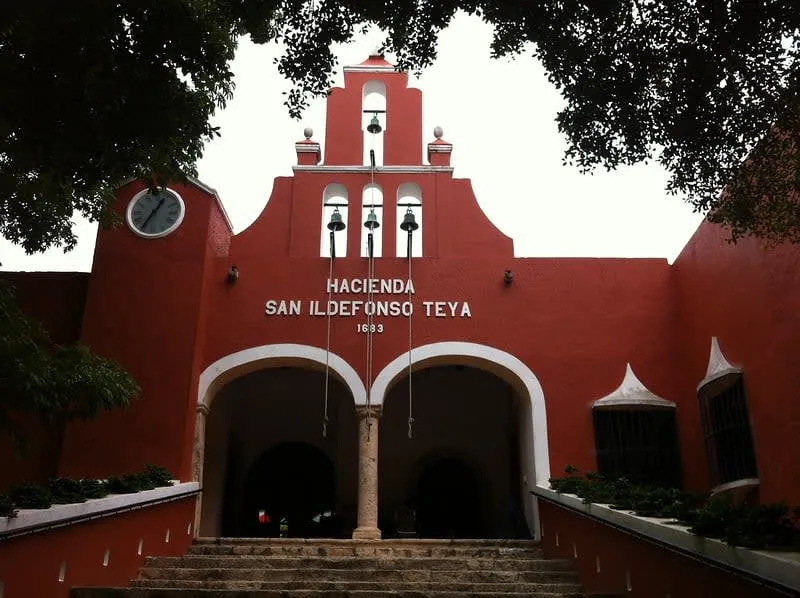
With more than 920,000 inhabitants, Mérida is the most populated city on the peninsula and the largest on the Tren Maya route.
The station that connects the capital of Yucatan with the rest of section 3 is located ten kilometers east of the city and, according to previous estimates, will be one of the busiest of the entire complex.
It combines the best of Yucatecan gastronomy and architecture with routes of interest in all directions:
- Henequén haciendas that tell the story of inequality
- Cenotes, a network of subway rivers
- And the archaeological zones of the Puuc region
Tixkokob
20 kilometers from the capital of Yucatan, Tixkokob is a growing tourist destination in the heart of the henequen zone of the state.
Henequen is an important leaf fiber and has been used since pre-Columbian times to make ropes, nets (for fishing, hunting, carrying, and tying), hanging baskets, hammocks, bags, and small clothes.
Surrounded by haciendas that offer lodging and guided tours on Viator to learn about the production process of the fibers obtained from the agave and delineate its history, this is a town famous for the textiles and hammocks produced.
Izamal
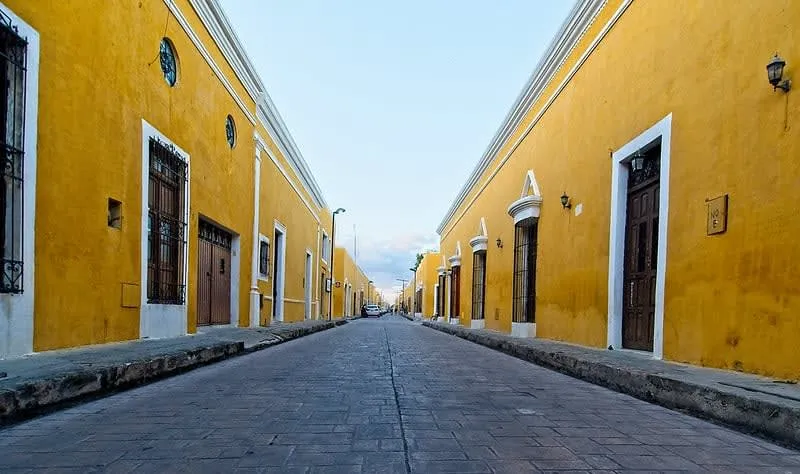
The magical town of Izamal, famous for its yellow walls and arches, was a central religious center for the ancient Maya of the northern peninsula.
The Kinich Kakmó pyramid, a building more than 34 meters tall, is the third largest in Mexico and shows the importance of the ancient city, whose vestiges extend around the current urban layout.
Chichen Itza
With 2.6 million visitors a year, Chichen Itza is the most visited archaeological site, and the pyramid of Kukulcan, a flagship of Mexico in the world.
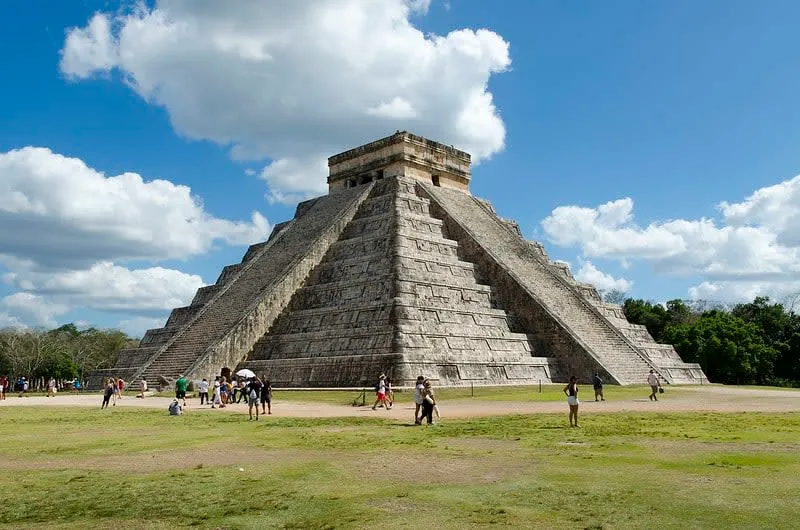
In addition to the arrival of the Maya Train, the archaeological complex of the ancient city and the site museum will also be joined by Chichén Viejo, a section opened to the public for the first time in early October 2023 after three decades of research.
Valladolid
Another important stop of the Maya Train is in Valladolid, the second largest city in Yucatán, which serves as a midway point between Mérida and Cancún.
Named a magical town in 2012, Valladolid converges Franciscan convents with crystalline cenotes.
The station is located on the side of Federal Highway 180D, about 10 kilometers from downtown.
Maya Train Stations in Quintana Roo
Nuevo Xcan
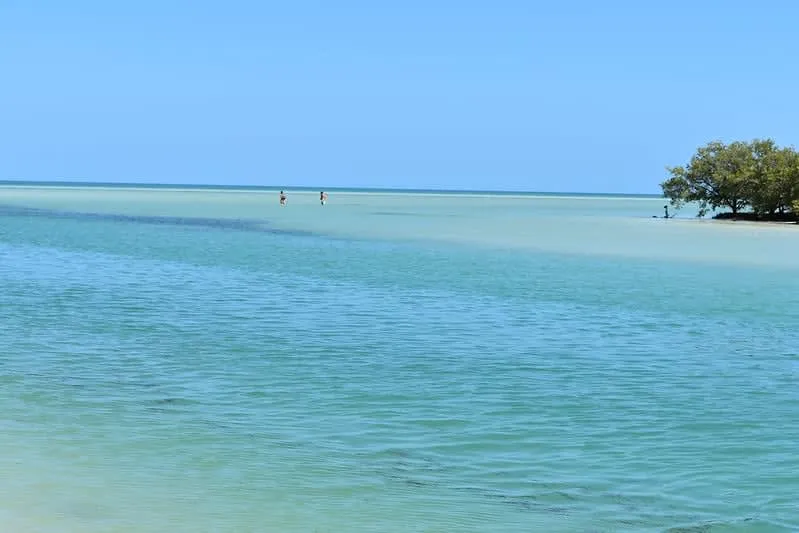
In the municipality of Lázaro Cárdenas, on the border between Quintana Roo and Yucatán, is Nuevo Xcán, the train station that connects to the island of Holbox.
Nuevo Xcán is famous for its cenotes such as La gota de agua, ideal for camping and hiking.
On the way to Holbox, tourists can visit Kantunilkín, a village of Mayan families whose local markets are a reference to the daily life of the site.
Leona Vicario
The Leona Vicario station is located in the municipality of Puerto Morelos and from here it is also possible to reach the island of Holbox.
Its Tuukul Taam museum, open every day, is famous for its botanical garden and because you can learn about the Mayan culture with the vestiges exhibited there.
Woodcraft workshops are one of its main tourist attractions.
Cancun Airport
The second busiest airport in Mexico has the largest train station on the entire route.
It is expected that the connection of travelers is efficient and fast thanks to its location. There are restaurants, handicraft stores, and concierge services for tourists.
The Cancun Airport station is the administrative headquarters of the Maya Train project.
Puerto Morelos
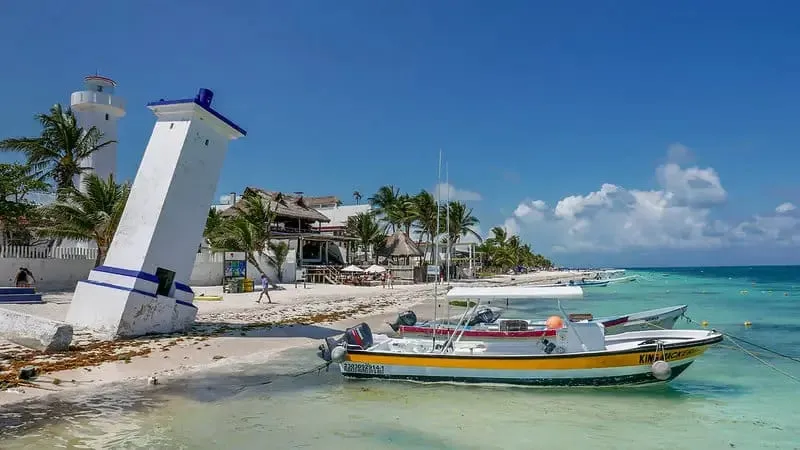
Puerto Morelos is a fishing village with small hotels, a leaning lighthouse, and a reef that bears the same name.
This reef is part of the Mesoamerican Reef, one of the largest in the world, full of marine fauna visible by snorkeling or diving.
In Puerto Morelos there is a route of the cenotes that connects 19 of them, among the most famous is the Boca del Puma cenote.
Playa del Carmen
Of course, this is one of the most important tourist sites in Quintana Roo, known for its party atmosphere and coral reefs, just two stations away from Cancun airport.
In Playa del Carmen, Quinta Avenida, a street famous for its luxury stores, nightclubs, and hotels that allow tourists to stay very close to the coast, stands out.
This is the ideal place to go to Cancun’s main attractions such as Xel-Ha, Xplor, and Xcaret.
Near downtown, a 20-minute drive away, is the secret river, and a 10-minute walk from the main beach, tourists can see the archaeological site of Xaman-Ha, also known as the archaeological site of Playacar.
Mayan Riviera Stations
Tulum
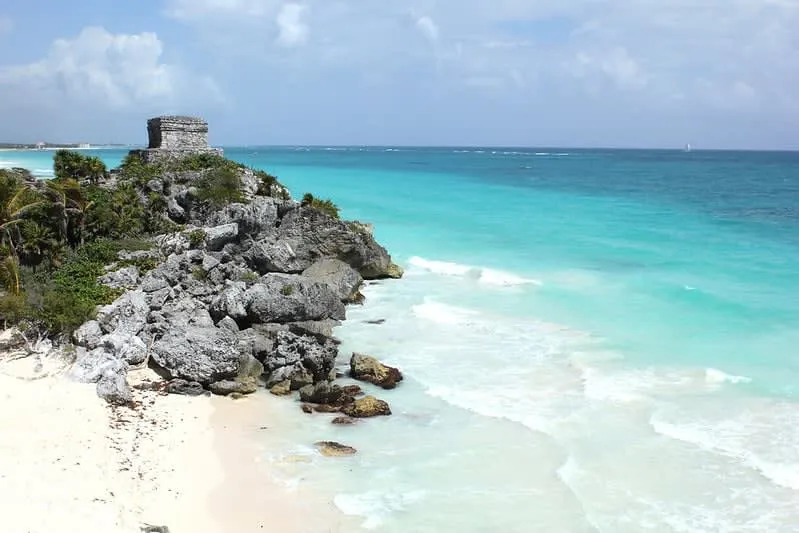
The beach and archaeological zone of Tulum are must-see sites in the Riviera Maya.
The archaeological zone has a direct connection to the Mexican Caribbean and is a 10-minute drive from the main town. You can compare car rental prices on RentCars for the best deals.
In the same area are Coba and Akumal. Coba has a 24-meter pyramid that was a Mayan temple.
Tourists can climb it and the building functions as a lookout that allows you to see the jungle from the heights.
Akumal, on the other hand, is known for the sightings of turtles with which you can swim with the appropriate protocols.
The freshwater cenotes are also acclaimed by visitors, some of the main ones being Nicte-Ha, Calavera, Gran Cenote, and Cenote Dos Ojos.
Among the most popular beaches are Playa Paraiso, Las Palmas, Xcacel, and Playa Pescadores.
Tulum Airport
The Tulum airport, inaugurated on December 1, 2023, will soon be accompanied by the Mayan Train to connect tourists with the most emblematic sites of the peninsula.
It is estimated to have 33,000 operations to transport 5.6 million passengers.
The airport is located 20 kilometers southwest of downtown Tulum, in the municipality of Carrillo Puerto.
Felipe Carrillo Puerto
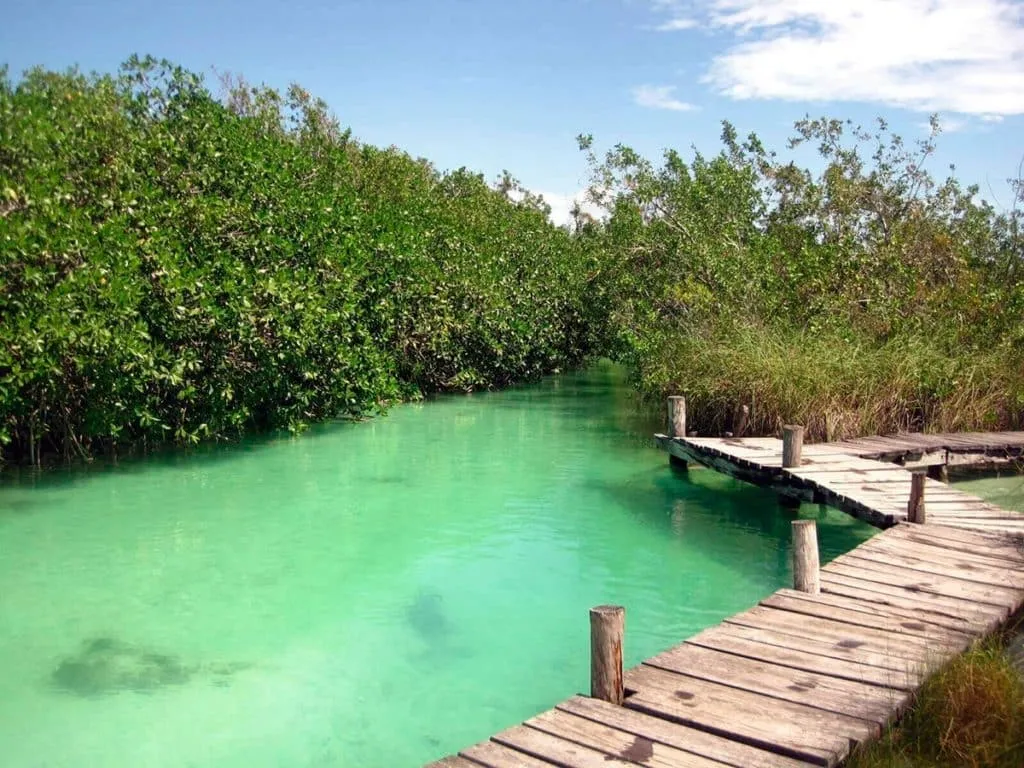
Unlike most resorts, Felipe Carrillo Puerto stands out for being a little tourist place, in the center of the State of Quintana Roo, in the Mayan zone.
This coastal town is home to Ascension Bay and Espiritu Santo Bay.
It also has the Sian Ka’an Biosphere Reserve which has been declared a World Heritage Site by UNESCO and the ecotourism center Síijil Noh Há.
Chacchoben-Limones
Although Limones, a town of 2,700 inhabitants, does not appear in travel guides for the Mexican southeast, it is a key point that connects Bacalar and Mahahual, two emerging destinations in the south of Quintana Roo, with the rest of the Riviera Maya.
Twenty kilometers from Limones stands Chacchoben, an ancient Mayan city in the middle of the jungle and far from the tumult of the most popular archeological sites in the region.
Bacalar

This magical town in Quintana Roo, famous for its “lagoon of seven shades of blue,” boasts several tourist sites such as Fort San Felipe, the Museum of Piracy, and its main square with a typical kiosk.
In Bacalar, you can also find underwater caverns that connect with the Cenote Azul, the Isla de los Pájaros, and some archaeological sites such as Chacchoben.
Chetumal Airport
The Chetumal airport is the last station of section 6 of the Tren Maya.
It will have a workshop, a garage, and a multimodal terminal to boost cargo transportation.
Nicolás Bravo – Kohunlich
Kohunlich stands out for its archaeological zone and the construction of the Wellness Market, which is located on the Los Manguitos property, at the main access to the Mayan Train.
The pre-Hispanic vestiges found in this place are characterized by their ceremonial and residential character. Its main buildings are the Temple of the Masks and the 27 Steps.
Maya Train Stations in Tabasco
El Triunfo
El Triunfo Station is located in Balancán, Tabasco. One of the most important tourist attractions in the area is the church of Señor de Tila, 13 kilometers from the station.
Furthermore, it provides access to the Moral Reforma archeological zone, 53 kilometers away.
Visitors can tour the structures dating back to 300 B.C. Moral Reforma was a commercial connection to Petén through the San Pedro River.
Tenosique
Settled on the edge of the Usumacinta River, this town stands out for being surrounded by Mexico’s southern jungle, which offers an array of exploration activities. You can explore Merida tours on Viator.
In Tenosique, visitors can take a boat ride on the Usumacinta and dive into the crystal clear waters of the Santa Margarita spring.
In addition, there are cultural activities such as a visit to the parish of Cristo Crucificado and, in January, the Danza del Pocho, considered cultural patrimony of the State and whose origin dates back to pre-Hispanic times.
Tenosique is located 46 kilometers from the archaeological zone of Pomoná, where structures and pieces of the Mayan classic are found.
Boca del Cerro
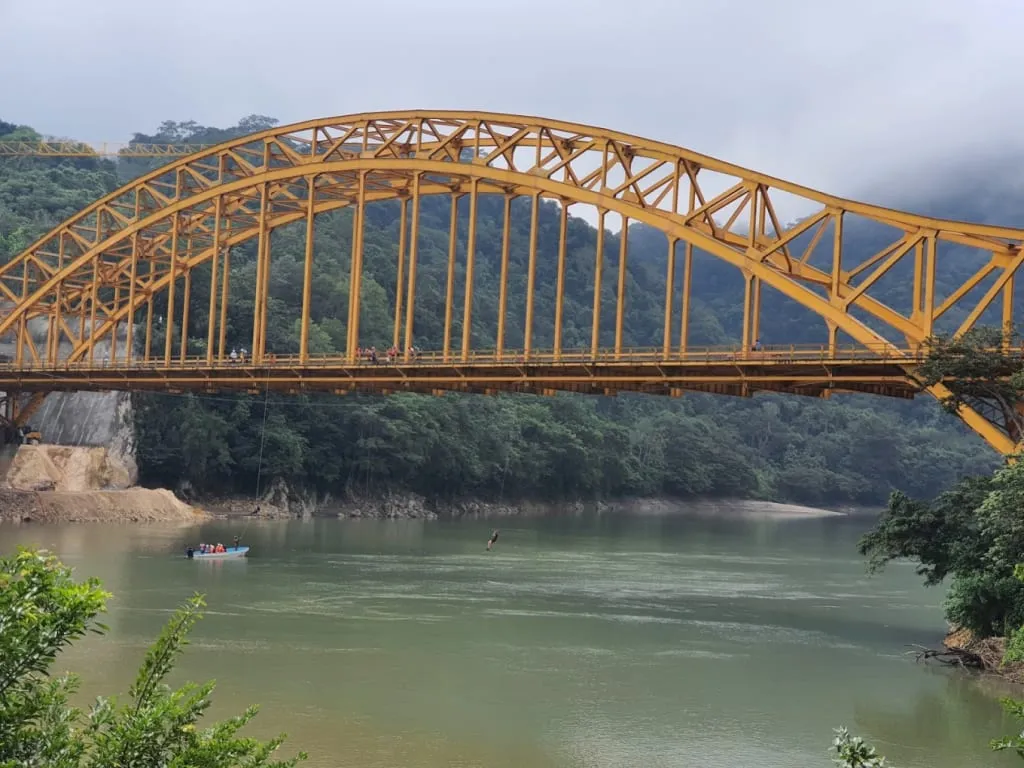
For the construction of the Boca del Cerro station, in the State of Tabasco, a bridge was built across the Usumacinta River, which flows from the border with Guatemala.
According to Mota-Engil Latin America, the company in charge of the project, the bridge at Boca del Cerro station is “the most important work” of Section 1, as its construction required the installation of 21 segments.
Mayan Train Station in Chiapas
Palenque
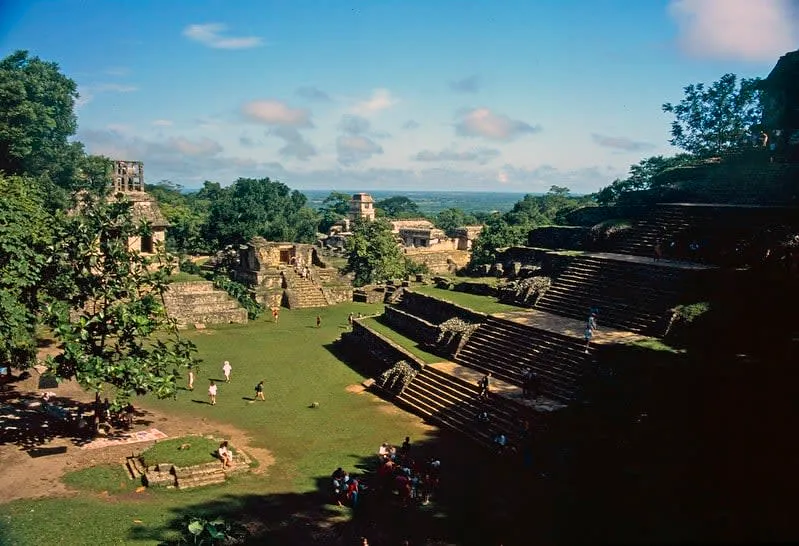
This station, in the State of Chiapas, allows tourists to visit one of the most important tourist sites in southern Mexico: the archaeological zone of Palenque, where the temples of the Sun, the Cross, the Inscriptions, and the Palace are located.
The pre-Hispanic city, together with Tikal and Calakmul, was one of the most important of the classic Mayan era.
The Maya Train station is being built on the former airport grounds, near the towns of Palenque and Pakal Ná.
Maya Train: Conclusion
In conclusion, the Maya Train stands as a testament to Mexico’s commitment to sustainable tourism, cultural preservation, and economic development in the region.
As travelers embark on this captivating journey, they will not only witness the breathtaking landscapes and archaeological wonders but also contribute to the well-being of local communities along the route.
The Maya Train opens up a new adventure, inviting explorers to delve into the heart of Mexico’s rich history and diverse ecosystems.
From the lush jungles of Chiapas to the pristine beaches of the Riviera Maya, every stop along the route offers a unique blend of ancient traditions and modern allure.
As this transformative project unfolds, I hope that the Maya Train will foster a deeper appreciation for Mexico’s cultural heritage, encourage responsible tourism practices, and create opportunities for sustainable growth in the surrounding areas.
This railway is more than just a mode of transportation; it is a bridge connecting the past with the future and linking travelers to the vibrant tapestry of Mexico’s landscapes and communities.
As the train’s wheels roll over the tracks, so too does the promise of a new era in travel—one that celebrates the beauty of diversity, fosters environmental stewardship, and leaves a positive impact on the communities it touches.