Chilmole vs Relleno Negro: What They Mean in Yucatán
Chilmole vs recado negro vs relleno negro in Yucatán, what changes and what stays the same?
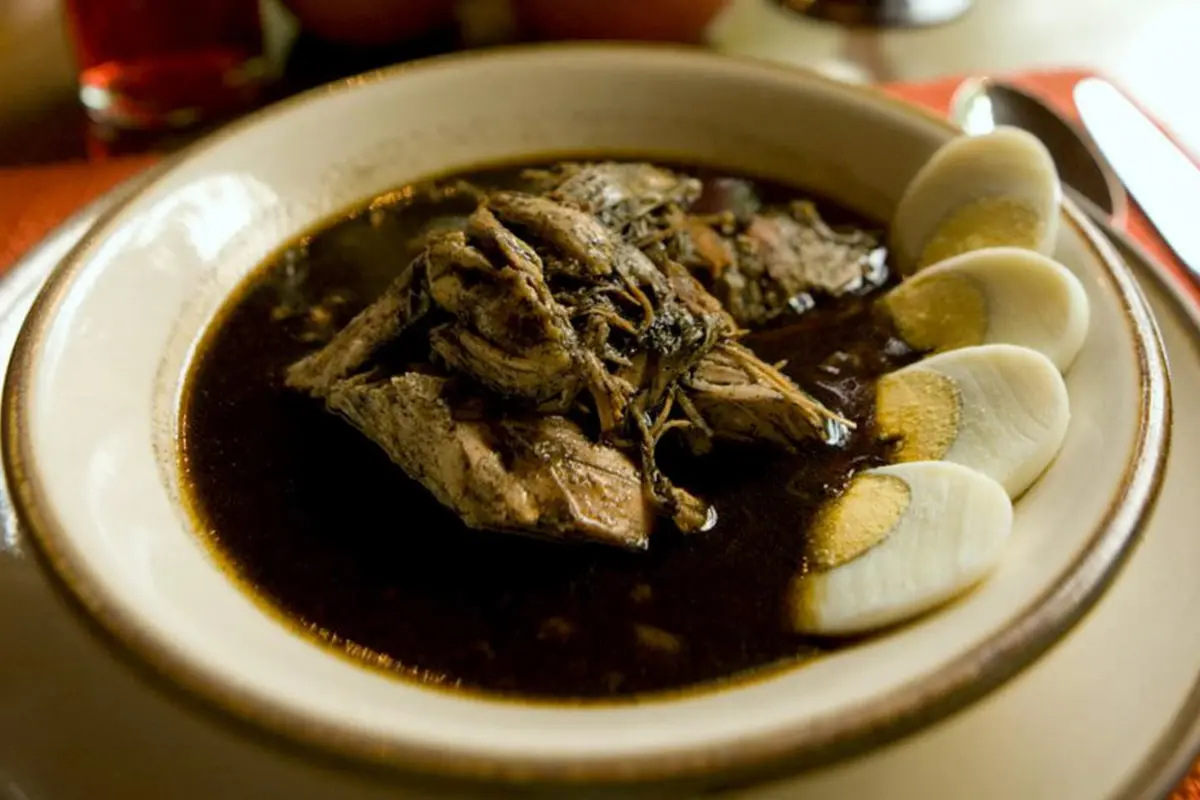
Quick answer: recado negro is the black spice paste, relleno negro is the finished turkey or chicken dish made with that paste, and chilmole is the name many people use for the same black, smoky stew family in Yucatán. If you want the full plated dish in a restaurant, ask for relleno negro. If you are shopping in a market, look for recado negro.
| Term | What it means | Best time to use the word |
|---|---|---|
| Chilmole | The dark Yucatecan stew or sauce family built around roasted chiles and spices | When asking about the dish in a broad, traditional-food sense |
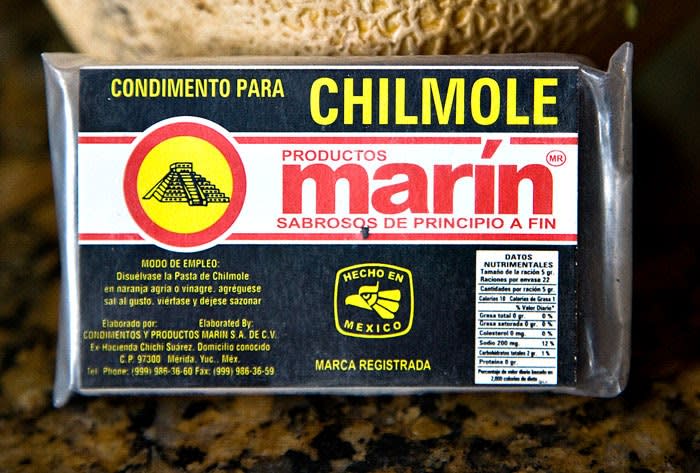
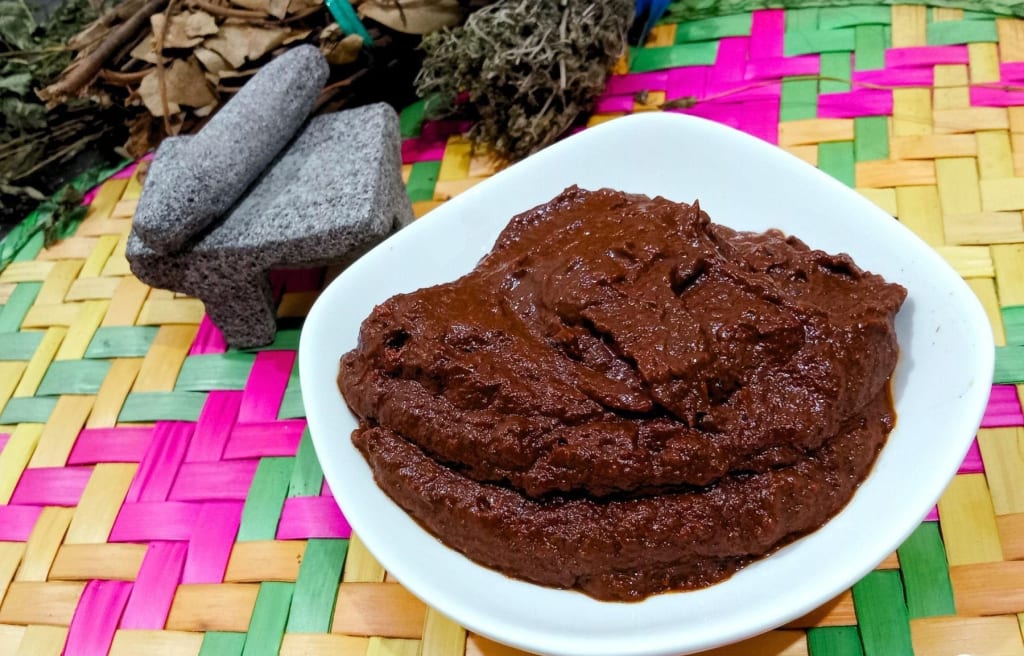
| Recado negro | The black seasoning paste made from charred chiles, spices, and aromatics | When buying the paste in a market or talking about the base ingredient |
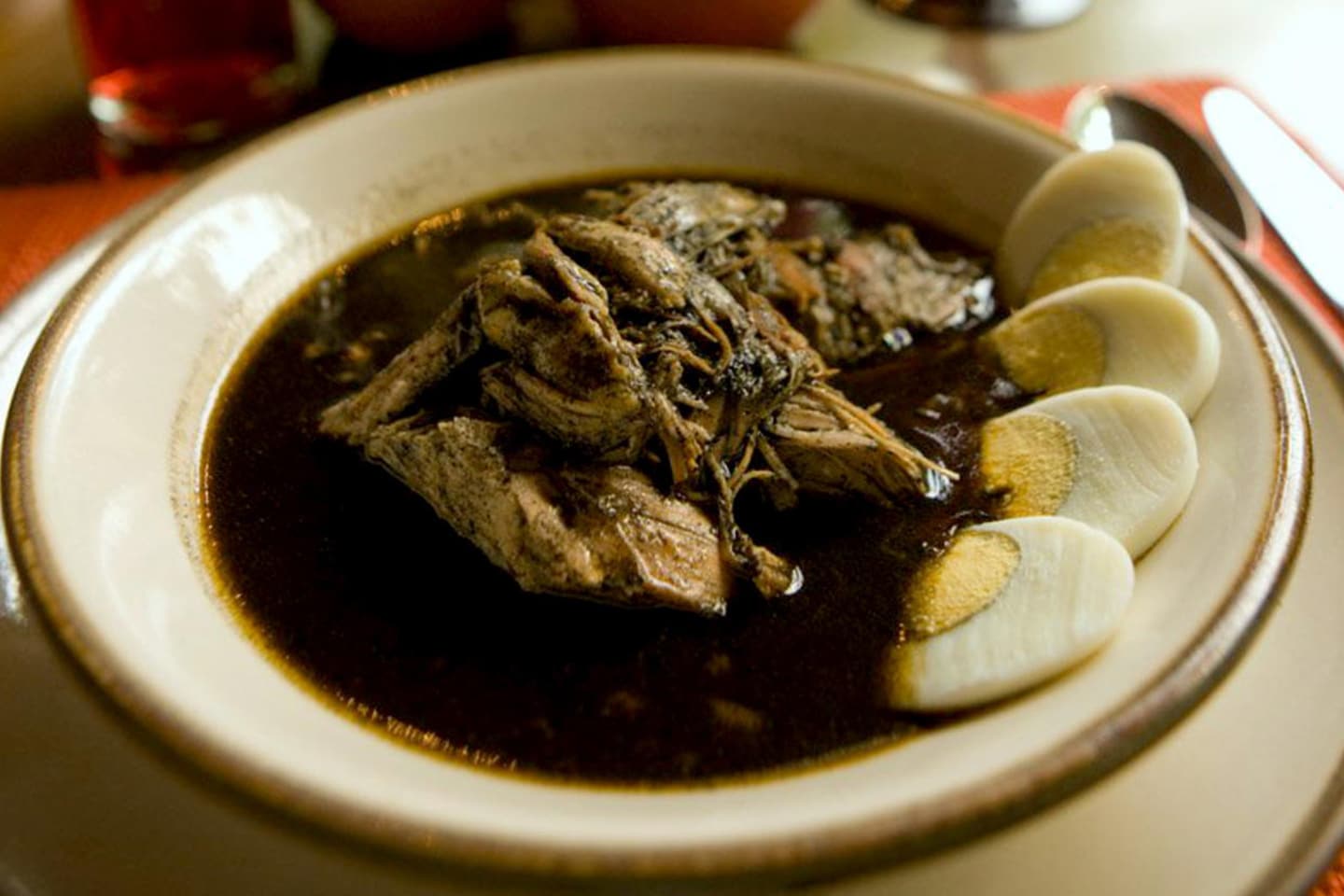
| Relleno negro | The finished dish, usually with turkey or chicken, stuffing, and often boiled egg | When ordering the plated meal in Yucatán |
Yucatecan cuisine is one of Mexico’s most distinctive regional food traditions, and these three terms confuse travelers because locals often use them interchangeably in casual conversation. The useful distinction is simple: recado negro is the paste, relleno negro is the dish, and chilmole is the broader name you will hear for the black stew itself.
If you are building out a Yucatán food list, this is one of the dishes worth learning before you arrive, along with other classic Mexican ingredients and dishes. It is one of the clearest examples of the smoky, deeply spiced profile that makes Yucatecan food different from central-Mexico moles.
Yucatecan Chilmole or Chimole
What is chilmole and how is it prepared? In practice, chilmole is the dark, smoky Yucatecan stew built from roasted chiles, spices, and broth. It is often made with chicken, turkey, or pork, and its flavor is earthier and more charred than the sweeter, thicker moles many travelers expect elsewhere in Mexico.
Chile ancho and mulato chile contribute a smoky and slightly spicy flavor, while achiote and spices provide a palette of aromas.
Adding meat, typically chicken or pork (or both), enhances the dish.
Ingredients of the chilmole paste include:
- 3 ancho chiles
- 3 mulato chiles
- 1 teaspoon of white pepper powder
- 3 pimientas gordas (allspice)
- 2 cloves
- 1 teaspoon oregano powder
- 1 teaspoon cumin
- 3 cloves garlic
- 1 tablespoon of dried peppermint leaves
- 1 achiote cube
- ½ piece white onion
- 1 tablespoon of sea salt
- 2 tablespoons of lard
How to make Chilmole
Making chilmole is a culinary ritual that has been passed down from generations.
The process begins with cleaning and deveining the chiles, followed by roasting to bring out their flavors.
Afterward, they are mixed with spices, garlic, and the rest of the ingredients that will form the base of the mole.
On the other hand, the meat of your choice is slowly cooked thoroughly in this mixture, allowing the flavors to integrate.
Keep in mind that you may find slightly different versions of chilmole than the original recipe, which makes this dish a reflection of the country’s vast geography and biodiversity.
You may want to read: Beyond Tacos: 11 Mexican Spices That Will Transform All Your Meals
It also plays an important role in gatherings and rituals, from family celebrations to community events, symbolizing the connection between history, tradition, and communion.
What is Recado and Relleno Negro?
First of all, the term “recado” in Yucatán refers to a seasoning paste made by grinding spices, chiles, and aromatics together.
So recado negro is the black seasoning paste, while relleno negro is the finished dish built from that paste. That is the distinction most travelers actually need.
Recado negro gets its intense black color from heavily roasted or nearly charred chiles, burnt tortillas, and spices. You can buy it in Yucatán markets as a prepared paste, which is why travelers often see the ingredient name before they ever see the full dish on a menu.
Making Relleno Negro
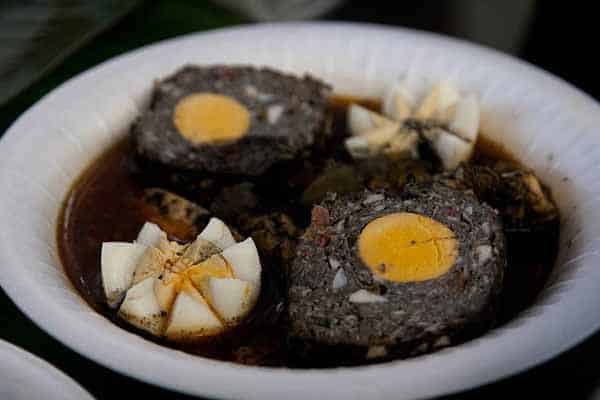
The original recipe is made with turkey, recado negro, and ground pork (for the stuffing).
In Yucatán, it is especially tied to Hanal Pixán, the Maya Day of the Dead tradition, though you can also find it beyond that season in restaurants focused on regional cuisine.
For this recipe, you will also need tomato, achiote, black pepper, cloves, cumin, oregano, epazote, garlic, and boiled eggs.
As mentioned earlier, the black color comes from the deeply roasted chiles and seasonings in the recado negro, typically including ancho chile, local dried chiles, cumin, achiote, burnt tortilla, cloves, sour orange juice, garlic, oregano, and salt.
What should you order first in Yucatán?
If you only have one shot at trying this family of dishes, order relleno negro in a traditional Yucatecan restaurant. You will get the full experience, the broth, the meat, the stuffing, and the egg, instead of only seeing the seasoning paste on a shelf.
- Order relleno negro if you want the complete dish.
- Buy recado negro if you want to cook it at home or bring back the base paste.
- Expect chilmole to be used as the broad dish name in articles, recipes, and local conversation.
This is one of the oldest and most recognizable dishes in Yucatecan gastronomy, and it is worth trying on any food-focused trip through Mérida, Valladolid, or the wider peninsula.
Next read: What to Eat in Mérida, Mexico and Yucatán Food Guide