18 Best Things to Do in Ciudad Obregón (2026)
If you’re looking for the best things to do in Ciudad Obregón, Sonora, start with Náinari Lagoon for an easy first afternoon, Cócorit and the Yaqui Museum for living Yaqui culture, and a Yaquis de Obregón baseball game or a proper Sonoran carne asada for the version of the city locals actually love.
Yes, Ciudad Obregón is worth visiting if you want a more grounded, local side of Sonora. It is better for food, baseball, Yaqui culture, and practical northern-Mexico road-trip stops than for beaches or luxury hotels. Most travelers only need 2 to 3 days to cover the highlights, eat well, and add a day trip like Álamos or Guaymas and San Carlos.
Ciudad Obregón works best when you treat it as the most useful inland base in southern Sonora, not as a resort detour. This is where you come for Yaqui heritage, serious beef, winter baseball, and easy access to the Yaqui Valley rather than colonial façades or beach clubs. If you’re mapping a broader Sonora trip or comparing inland cities with bigger state hubs like Hermosillo, Obregón gives you a more local, food-first, culture-first side of the state.
Ciudad Obregón (population 450,000) is the agricultural capital of Sonora in the fertile Yaqui Valley, around 550 km south of the US border on Highway 15. Named after President Álvaro Obregón, the city is best known for Yaqui culture, mesquite-grilled carne asada, and the Pacific League baseball team that dominates local conversation every winter.
Quick answer: what is Ciudad Obregón best for?
- Best for: Yaqui culture, Sonoran food, baseball, bass fishing, and practical northern-Mexico road trips
- Not best for: beaches, colonial architecture, or mild summer weather
- Ideal trip length: 2 to 3 days
- Best first stops: Náinari Lagoon, Cócorit, Yaqui Museum, and a carne asada dinner
- Best add-on: Álamos if you want a colonial contrast, or Copper Canyon if you’re building a bigger northwestern Mexico itinerary
Best Ciudad Obregón stop by trip style
| If you care most about… | Start here | Why it fits |
|---|---|---|
| A first quick look at the city | Náinari Lagoon | Easiest first stop, central, and a good feel for local life |
| Yaqui culture | Cócorit + Yaqui Museum | The clearest cultural reason to stop in Ciudad Obregón |
| Food | A carne asada dinner + wakabaki | The city makes the most sense once you eat like Sonora does |
| Sports atmosphere | Yaquis de Obregón baseball | Best October to February, and the city’s strongest night-out experience |
| Outdoor add-on | Oviachic Dam | Best half-day escape for bass fishing and desert views |
| A colonial contrast | Álamos | Best day trip if Obregón is your Sonora base |
Ciudad Obregón at a Glance
- Best for: Yaqui culture, food, baseball, bass fishing, real-city Sonora
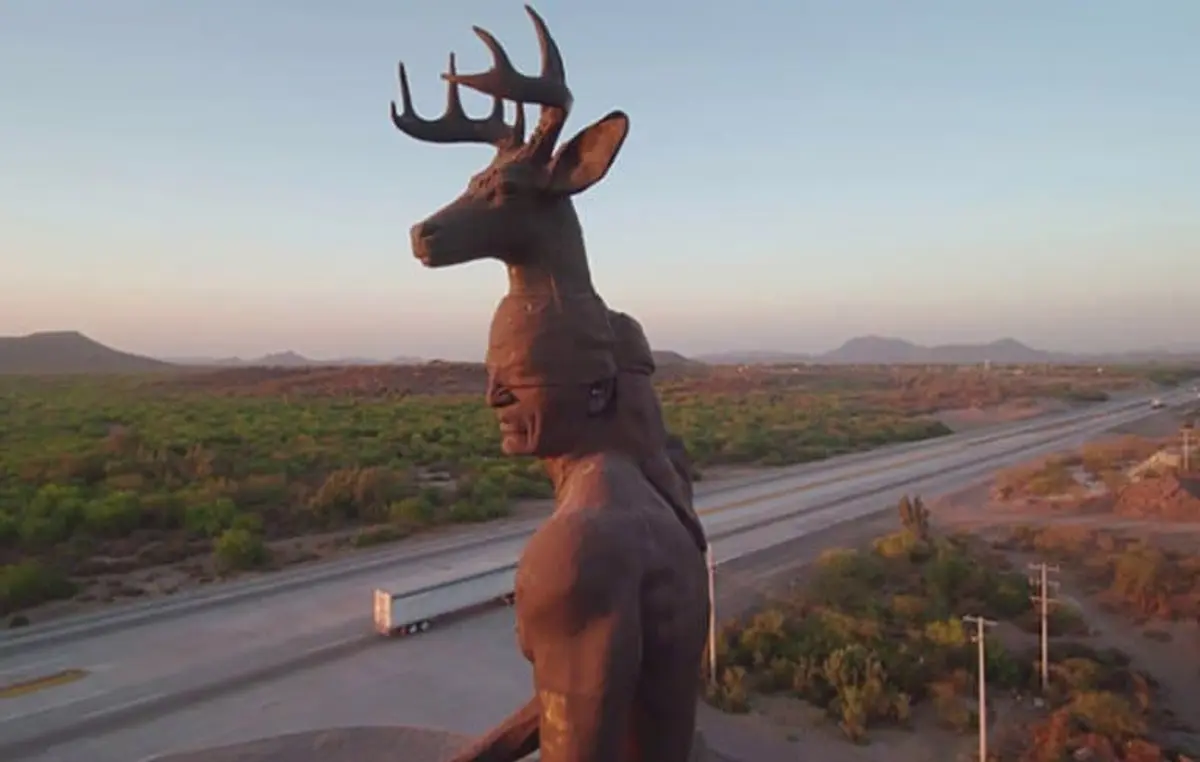
- Top sights: Náinari Lagoon, Yaqui Museum, Giant Deer Dance statue, Cócorit murals
- Best day trip: Álamos
- Airport: Ciudad Obregón International Airport (CEN)
- Ideal stay: 2 to 3 days
- Best season: October through April
- Skip if: You want beaches or cool summer weather
Getting to Ciudad Obregón
By air: CEN airport has direct flights from Mexico City (1.5 hrs, from 1,400 MXN), Guadalajara, Tijuana, and Tucson. Aeromexico Connect operates multiple daily CDMX flights.
By car on Highway 15 (toll road): Phoenix 9 hrs | Hermosillo 4 hrs | Los Mochis 3 hrs | Mazatlán 8 hrs. Toll costs from Hermosillo: ~270-360 MXN. Bring Mexican auto insurance — US policies don’t cover you here. Compare car rental prices on RentCars.
By bus: TAP, TUFESA, and Elite lines serve: Hermosillo (4 hrs, 360-450 MXN), Los Mochis (3 hrs, 320-400 MXN), Guadalajara (16 hrs, 1,260-1,440 MXN). Air-conditioned coaches with reclining seats.
Getting Around
Downtown and Náinari Lagoon are walkable. Beyond that:
- Uber works freely in Ciudad Obregón (unlike Cancún/Oaxaca). Most rides: 35-90 MXN.
- SUBA buses: ~15 MXN per ride, modern and air-conditioned
- Car rental: Hertz operates locally. ~630-900 MXN/day — useful for Oviachic Dam and day trips
Brief History: Cajeme and Obregón
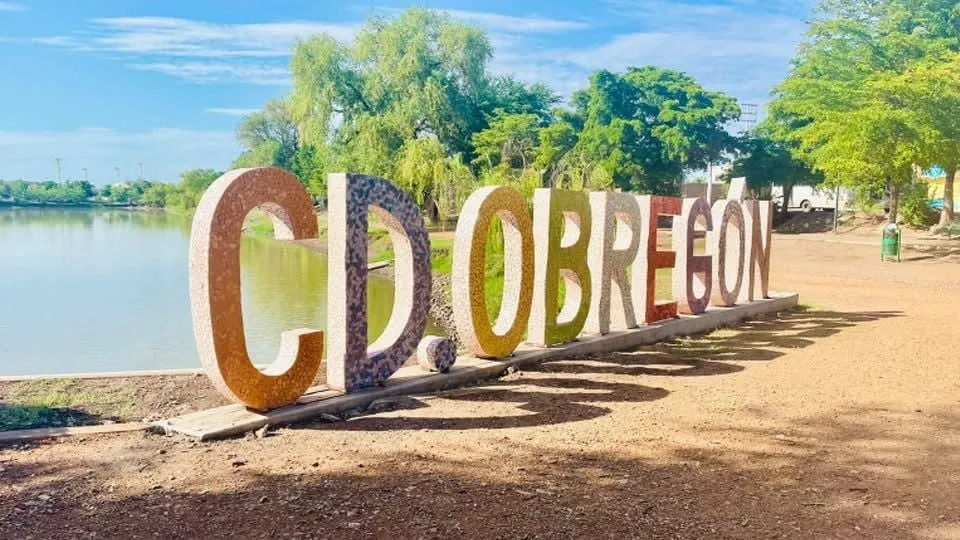
Cajeme — the Yaqui leader who gave his name to the municipality
The municipality is officially named Cajeme after José María Leyva — a Yaqui leader who fought in the Porfirian army before leading the Yaqui rebellion against Porfirio Díaz himself. The city was founded in 1906 as a railroad water station, then transformed by Álvaro Obregón after his presidential term. In 1928 it was renamed Ciudad Obregón.
Today it’s Sonora’s economic engine — wheat, corn, safflower, and chickpeas from the Yaqui Valley feed the country.
18 Best Things to Do in Ciudad Obregón
1. Álvaro Obregón Main Square (Plaza)
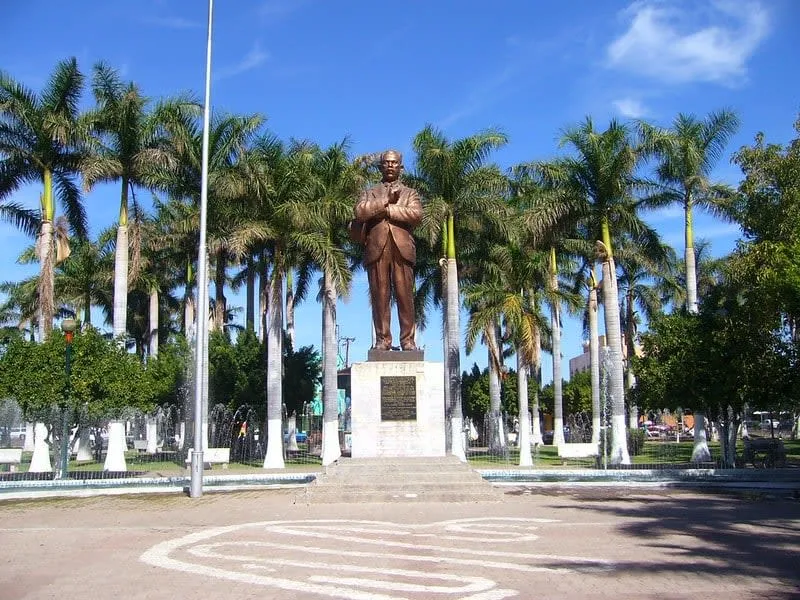
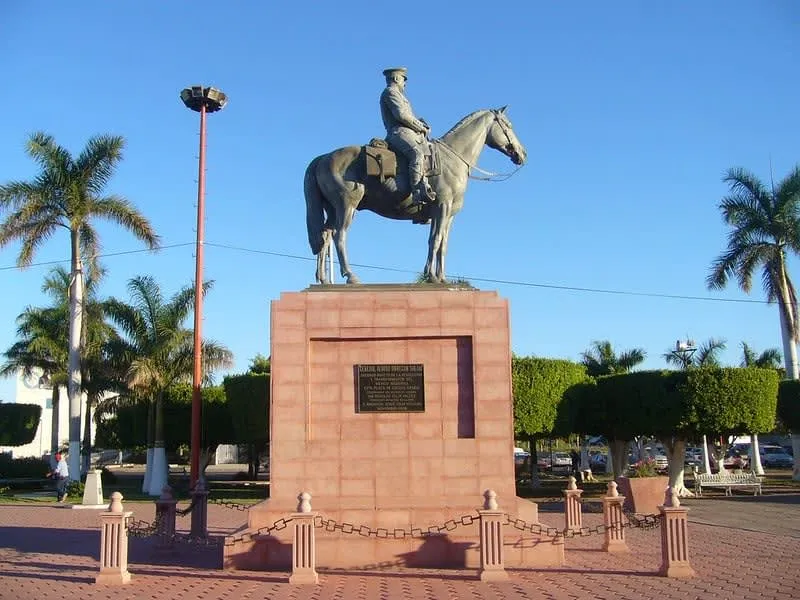
The central plaza anchors downtown life. A monument to Obregón on horseback stands before the Palacio Municipal, flanked by the standout Monumental Clock — a 8-10 meter tower that’s become the city’s symbol. The 2011 renovation added a sound and light show. Come evenings when families gather, vendors sell ice cream and Yaqui crafts, and the desert heat finally breaks.
Cost: Free | Time: 30-60 min
2. Náinari Lagoon
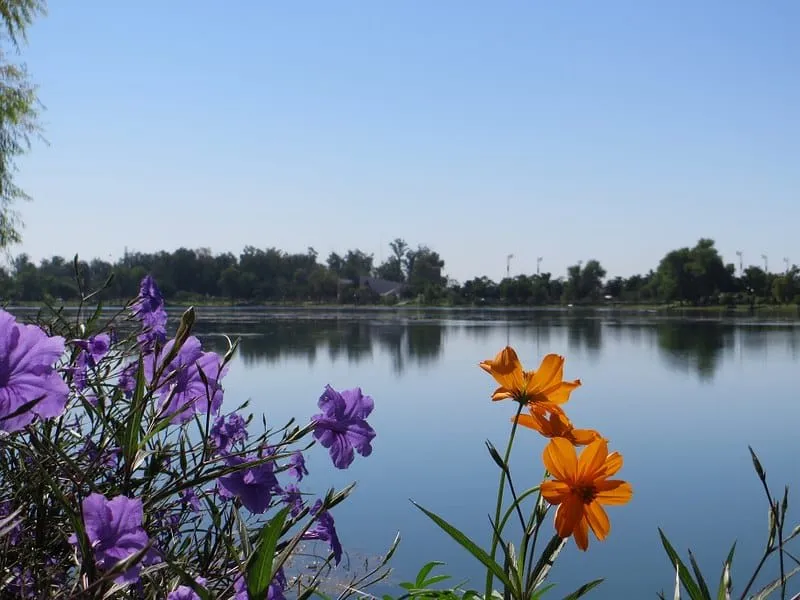
The “Novia de Cd. Obregón” — built in 1956, nearly 2 km diameter
The city’s main recreation hub and arguably northern Mexico’s most pleasant urban park. Families picnic on the shores, kids feed turtles, joggers circle the perimeter. Pedal boats, zip line, and a floating dock for sport fishing during the day. At night: dancing fountains, a giant water screen, and illuminated geysers with food vendors around the perimeter.
Cost: Free entry | Pedal boats ~55-90 MXN | Zip line ~90 MXN | Time: 1-2 hrs
3. Museum Sonora in the Revolution (MUSOR)
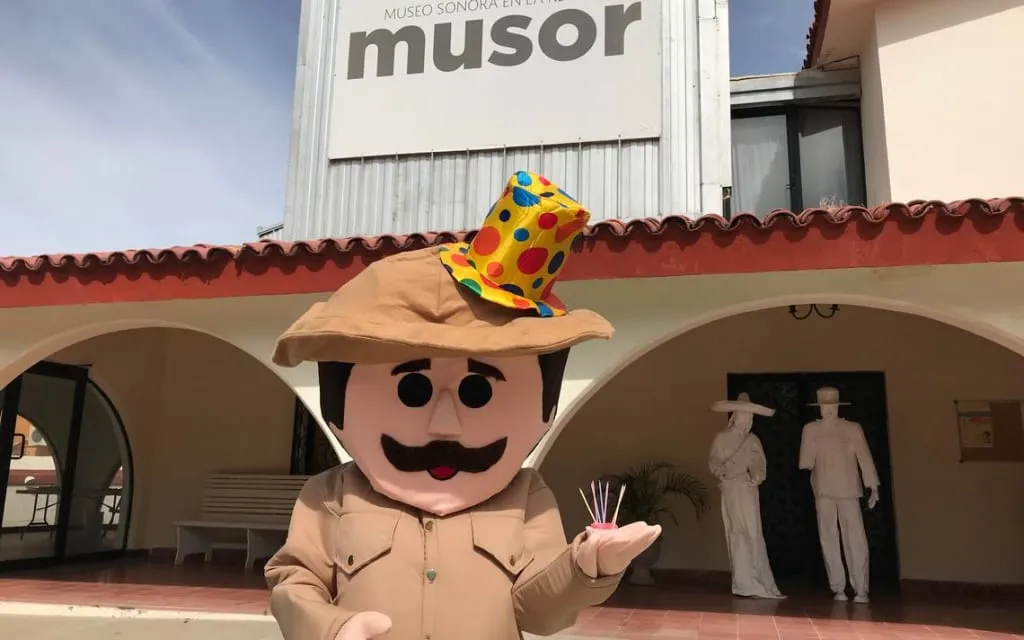
Sonora produced more revolutionary leaders than any other state, and this museum tells that story well. Three scenarios cover Yaqui Valley origins, the Revolution itself, and Sonorans who shaped modern Mexico. Artifacts from Obregón’s life, weapons, photographs, temporary exhibition halls, and a crafts shop.
Cost: ~35-55 MXN | Time: 1-1.5 hrs
4. Museum of Yaqui Culture (Cócorit)
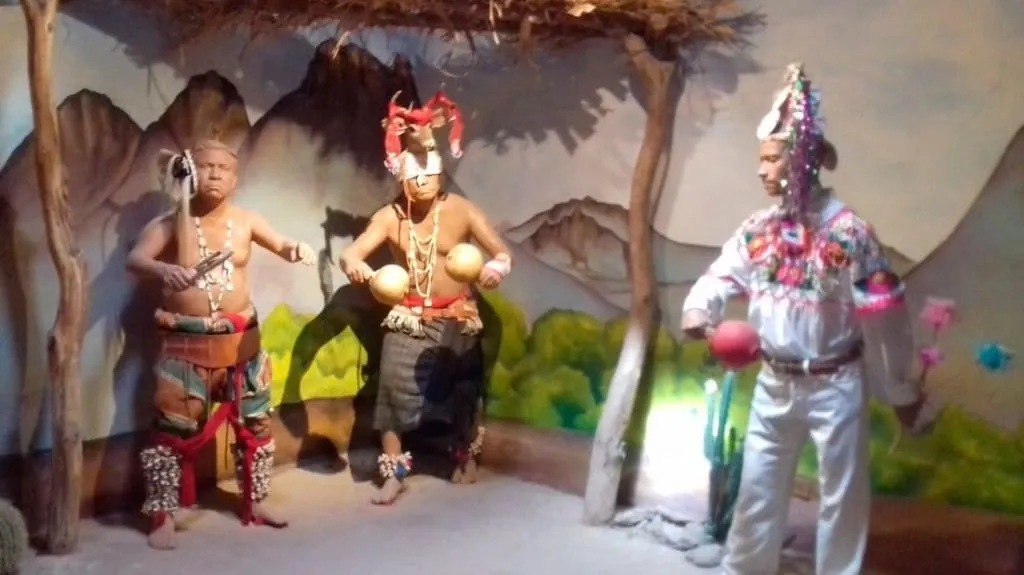
Located 10 minutes from downtown in Cócorit (one of the eight Yaqui Nation towns), this is one of the most important ethnographic museums in northern Mexico. 11 thematic halls cover Yaqui cosmovision, territory, festivals, music, dance, governance, and the stories of chiefs like Tetabiate and Cajeme. Free parking, cafeteria, cultural workshops. For broader context on Mexico’s indigenous groups, see our Indigenous Groups in Mexico guide.
Cost: ~10-15 MXN adults, 5-10 MXN children | Hours: Daily 9am-6pm | Time: 1-2 hrs
5. Cathedral of the Sacred Heart of Jesus
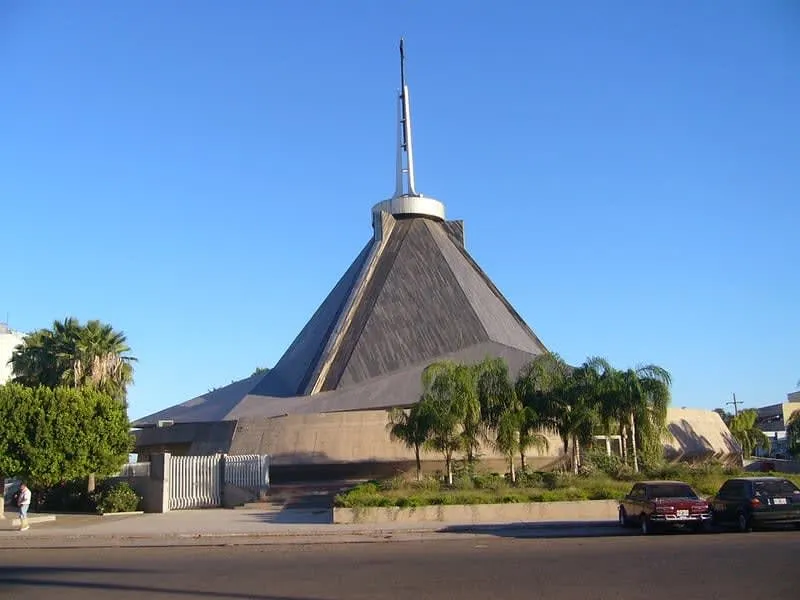
Built 1977 — not a colonial cathedral but a bold modernist statement. Prism-shaped roof, dramatic cross, bronze and marble interior. The standout: the original bell tower from the earlier temple preserved intact alongside the new structure. Worth a quick stop for the architecture alone.
Cost: Free | Time: 20-30 min
6. The Giant Deer Dance Statue
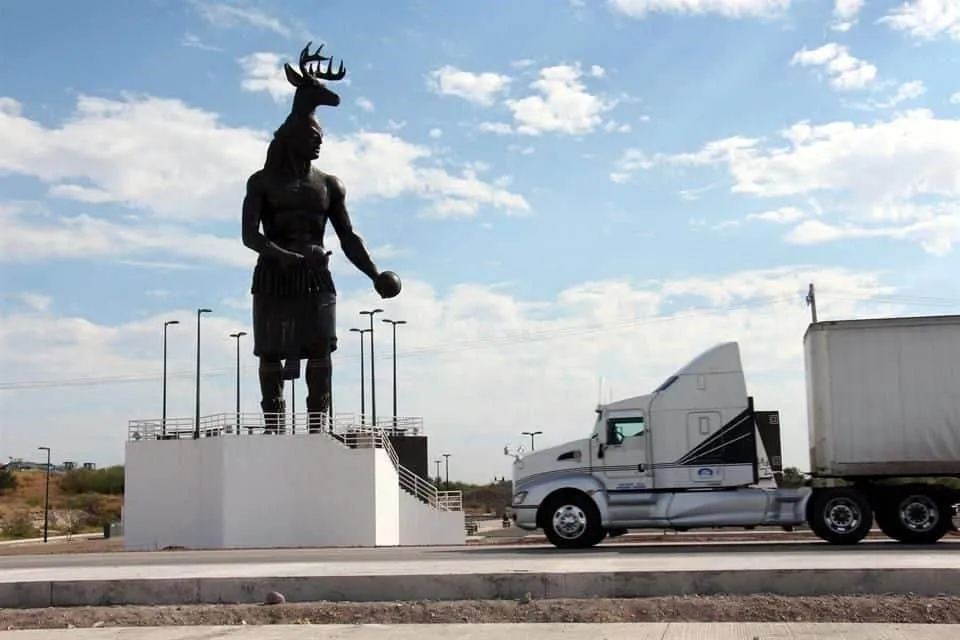
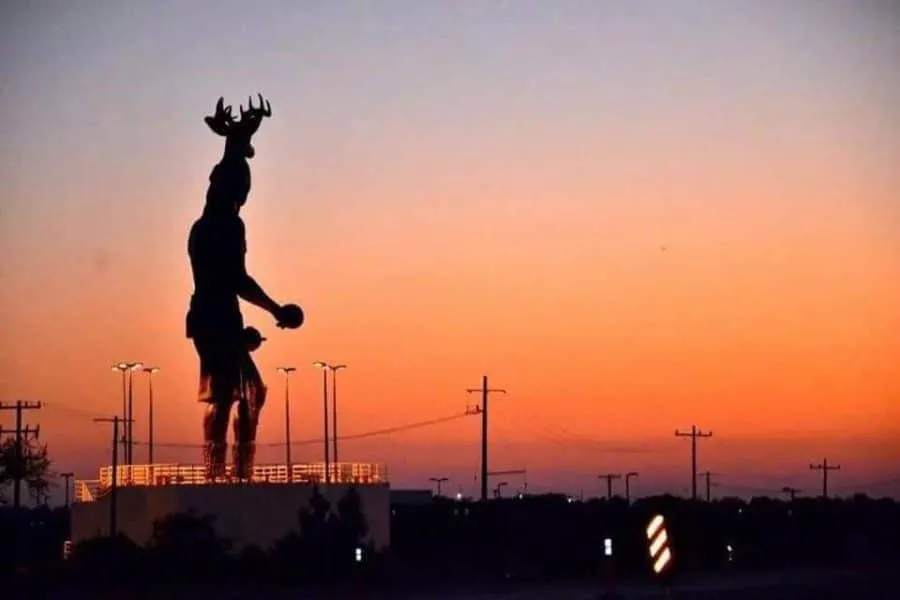
The tallest sculpture in Latin America at 30+ meters. Sculptor Marlon Balderrama worked with Yaqui elders for four years — they specifically requested the dancer’s eyes be covered, as in actual ceremonies. On Highway 15 near Loma de Guamúchil with a plaza, fountain, and ceremonial area. An unmissable landmark if driving through.
Cost: Free | Time: 15-20 min (roadside stop)
7. Ostimuri Children’s Park and Zoo
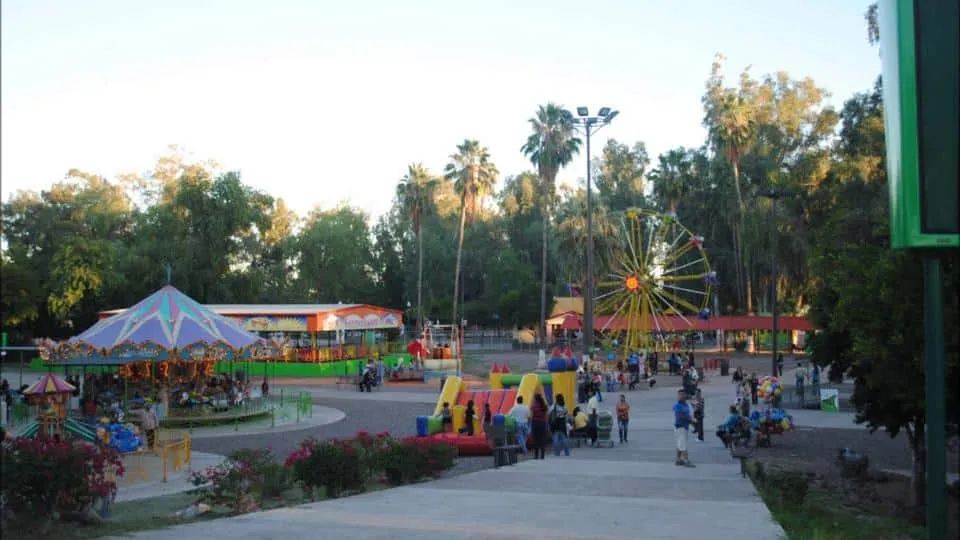
Inaugurated 1970. Combines amusement rides, zoo, and 1,300+ trees. Families love the metallic slider, little train, and aquatic activities. Also houses the planetarium (below) — combine both into a half-day.
Cost: ~35-55 MXN | Hours: Wed-Sun 8am-8pm | Time: 2-3 hrs with kids
8. Antonio Sánchez Ibarra Planetarium
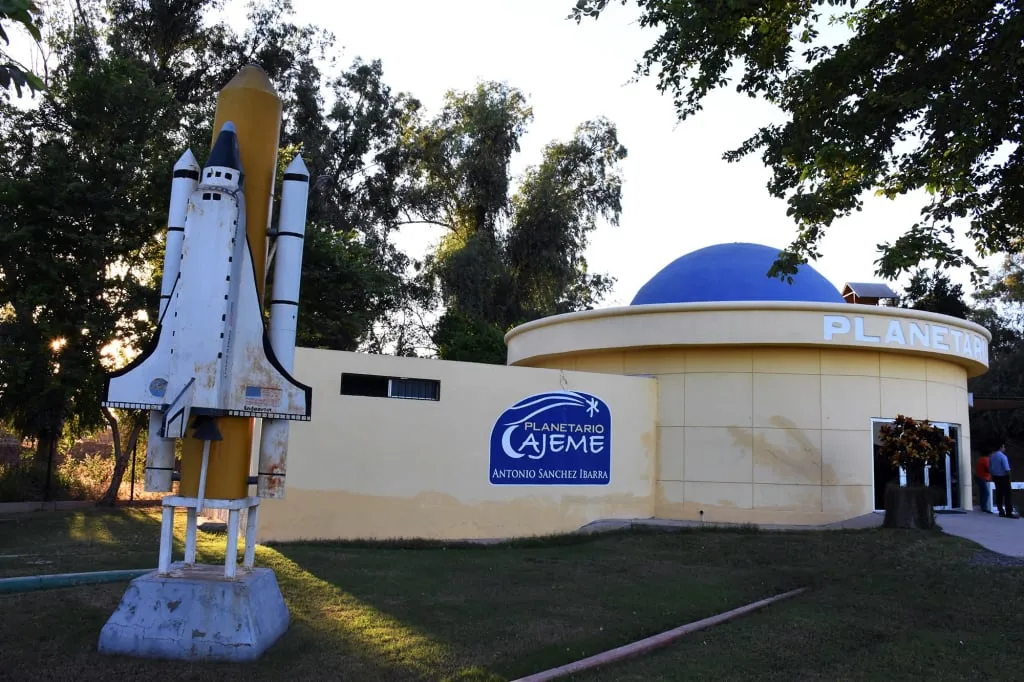
Inside Ostimuri Park. Uses locally developed Sonoran projection technology to show the night sky over Ciudad Obregón across seasons. Covers constellations, solar storms, planetary details, and deep-space imagery. Small but well done — the local tech angle is genuinely impressive.
Cost: ~35-55 MXN | Time: 45-60 min
9. Yaquis de Obregón Baseball
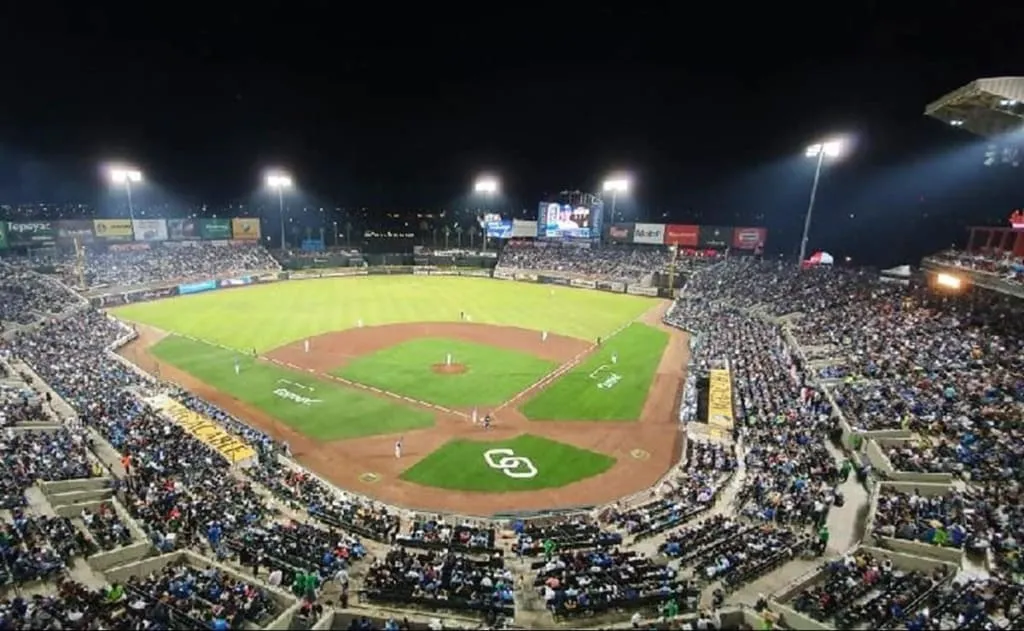
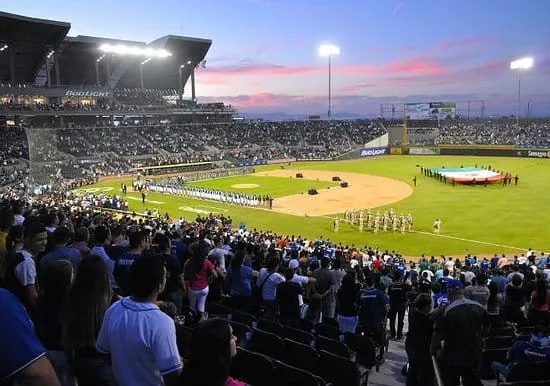
If you visit October through February, a Yaquis game is non-negotiable. The Yaquis play in the Liga Mexicana del Pacífico — one of the top professional leagues outside the US. The 12,000-seat stadium (inaugurated 2016) meets international standards, but it’s the atmosphere that makes it: Obregón lives and breathes baseball. The crowd is passionate, and carne asada tacos are sold in the stands.
Cost: ~90-270 MXN | Season: October-February
10. Visit Cócorit — The Town of Birds
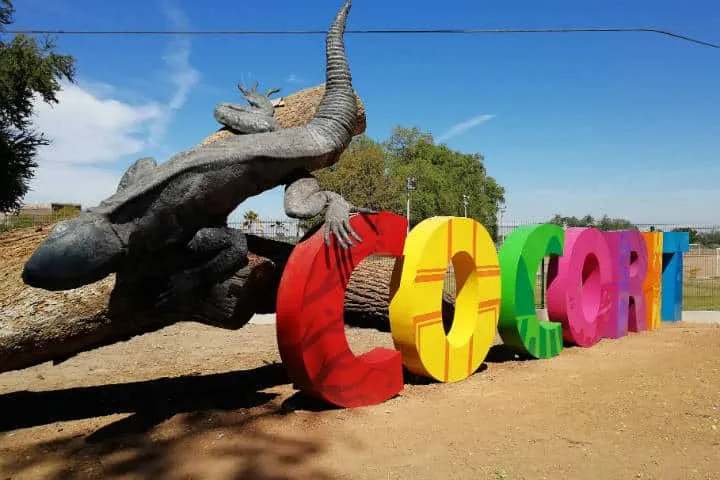
One of the eight traditional Yaqui Nation towns, 10 minutes from downtown. The “Alas en mi pueblo” (Wings in my town) movement transformed its walls into vivid bird murals — one of the most photogenic towns in Sonora. Also visit the Parish of Our Lady of Guadalupe, Plaza de Armas, and the Yaqui Museum (above). Small cafes offer more intimate dining than the city.
Cost: Free | Time: 1-2 hrs
11. Oviachic Dam (Presa Álvaro Obregón)
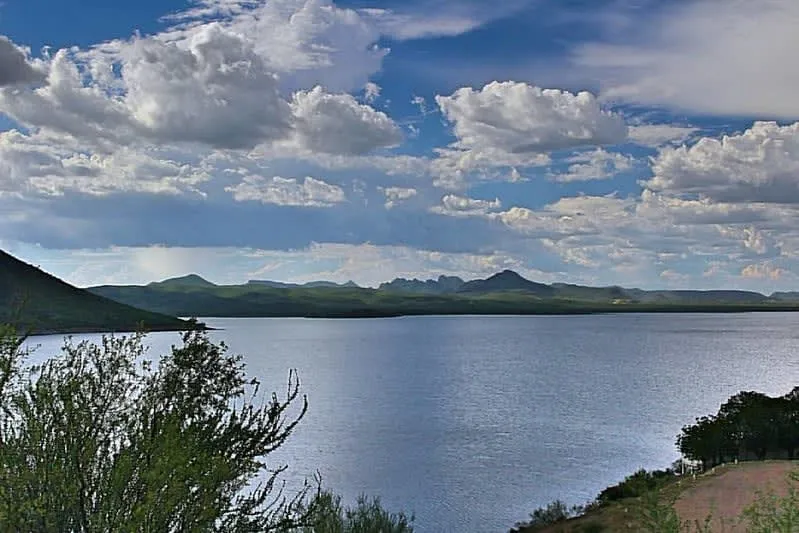
36 km north of the city, this dam on the Yaqui River is internationally famous for largemouth bass tournaments. Anglers fly in from Europe, Australia, and across the Americas to chase fish that regularly hit 5–7 kg, with tournament-winning catches pushing well past that.
Bass fishing details: Peak season runs November through May when water temperature drops and bass are most active. Most visiting anglers book through guides who speak English — ask your hotel or contact the state tourism office (SECTUR Sonora) for current guide contacts. Bring medium-heavy spinning or baitcasting tackle; crank baits, plastic worms, and swimbaits all produce. A typical guided day (4–6 hours, boat and equipment included) runs 1,800–3,600 MXN per person — far cheaper than comparable lakes in the US.
Also: catfish, tilapia, kayaking, canoeing, sailing. Panoramic desert-meets-water views. Designated camping spots and family recreation areas along the road.
Getting there: Highway 15 north 10 km → right at “Carretera a Rosario-Esperanza” (15 km) → right at “Carretera a Hornos-Buenavista” (11 km)
Cost: Fishing permits vary | Guided fishing day ~1,800–3,600 MXN/person | Boat rental ~360-720 MXN/day | Time: Half-day to full day
12. Centro de Culturas Populares
Free cultural center on Blvd Rodolfo Elías Calles focused on Mayo, Yaqui, and other southern Sonoran ethnic groups. Rotating exhibitions of art, photography, traditional crafts. Quiet and thoughtful — good context for the indigenous heritage throughout your visit.
Cost: Free | Hours: Mon-Fri 8am-7pm | Time: 30-45 min
13. Casa Rosalva Art Gallery
Permanent forum for contemporary art — national and international works in graphical and sculptural forms. Small, well-curated, free. Worth a stop walking between the plaza and other downtown attractions.
Cost: Free | Time: 20-30 min
14. Callejón del Arte Bunka
Pedestrian alley transformed into an open-air gallery with murals, sculptures, and rotating cultural installations. Represents the city’s growing arts scene.
Cost: Free | Time: 15-20 min
15. Golf at Club de Golf
18-hole, 72-par course 5 minutes from the north entrance off Highway 15. Hosts international competitions. Arrange guest access through your hotel.
Cost: ~720-1,080 MXN for guests | Time: Half day
16. Hunting in the Cajeme Region
Thousands of acres surrounding the city for white-wing dove, duck, deer, and game bird hunting. Best dove season: September-November. Duck season: November-February. To find outfitters: search TripAdvisor for “hunting Cajeme Sonora”, ask at the Hermosillo SECTUR office, or contact the state hunting federation (Federación Sonorense de Caza). Reputable outfitters handle federal hunting permits (SEMARNAT), equipment, guides, and transport from the city. Confirm licenses are included — US hunters will also need a temporary firearm import permit from Mexican customs.
Cost: Guided packages from ~3,600-7,200 MXN/day all-inclusive
17. Yo’o Juara Butterfly Sanctuary
Outside the city. Focuses on the Cuatro Espejos butterfly combined with Yaqui cultural education. The name means “butterfly” in Yaqui. Peaceful, off-the-radar, won’t appear on tourist lists.
Cost: Small donation | Time: 1-1.5 hrs
18. Dr. Oscar Russo Vogel Theater (ITSON)
The city’s main performing arts venue at the Sonora Institute of Technology. Theatrical productions, concerts, regional dance. Check local listings — typically something worth attending from classical music to folklórico.
Cost: ~90-270 MXN by event
What to Eat: Ciudad Obregón’s Food Guide
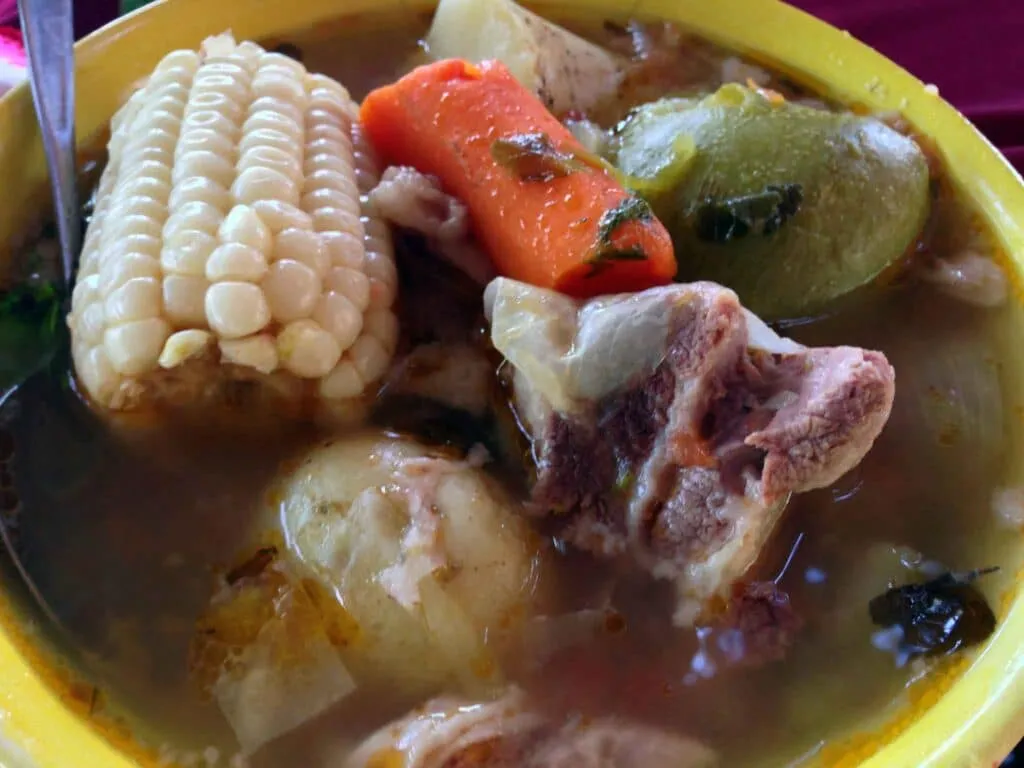
Wakabaki — the Yaqui ceremonial soup you have to order
Sonora is cattle country. The state produces some of Mexico’s finest beef, and you taste the difference in every bite.
Carne Asada
The defining food of Sonora — and Obregón does it as well as anywhere. Thick mesquite-grilled beef, flour tortillas, guacamole, grilled onions, fresh salsa. Not just a dish — a weekend ritual. Every street smells like mesquite smoke on Sunday afternoons.
Where: El Bronco, Mr. Steak, Las Parrillas, Santo Filete | Cost: 145-360 MXN/person
Wakabaki (wah-kah-BAH-kee)
A Yaqui ceremonial soup: beef ribs, chickpeas, pumpkin, potato, cabbage, carrots, green beans in rich broth. Hearty, deeply flavored, communal. Tells you everything about Yaqui cuisine.
Cahuamanta
Originally made with sea turtle (now illegal), evolved into manta ray and shrimp in chipotle-tomato broth or as tacos. The broth version is outstanding on a cool desert morning. For cahuamanta, El Rey Seafood (Ave. Allende) does it best — order the broth version as a morning meal.
Machaca
Shredded dried beef rehydrated with eggs, onions, chiles, tomatoes — served in massive Sonoran flour tortilla burritos. Cowboy food born from desert necessity, now a Sonoran icon. Every morning in Obregón starts with machaca for someone.
Dogos (Sonoran Hot Dogs)
Sonora invented the bacon-wrapped hot dog — yes, the ones that conquered the American Southwest originated here. In Obregón: beans, grilled onions, tomato, mustard, mayo, jalapeño salsa. Street carts sell them for 18-36 MXN.
Coyotas
Traditional Sonoran cookies: wheat flour filled with piloncillo, cajeta, or guava. Simple, satisfying, perfect with café de olla.
Bacanora
Sonora’s answer to tequila — mezcal made 100% from roasted local maguey, protected by denomination of origin. Smoky, complex, uniquely Sonoran. Sip it straight.
Restaurant Overview
| Restaurant | Specialty | Price |
|---|---|---|
| Mochomos | Mexican/regional, groups | $$ |
| El Bronco | Sonoran steaks | $$ |
| Mr. Steak | Premium cuts, Rib Eye añejo | $$$ |
| El Rey Seafood | Cahuamanta, seafood | $$ |
| Sofía’s Casa Brunch | Brunch, fusion | $$ |
| Mesón la Viña | Food & wine | $$$ |
| Antojitos Las Delicias | Regional cooking | $ |
| Santo Filete | Steakhouse | $$$ |
| Taco Taco | Street-style tacos | $ |
Street food: 55-145 MXN | Mid-range: 215-450 MXN/person | Steakhouse: 450-810 MXN/person
Yaqui Semana Santa Ceremonies
The Yaqui Easter ceremonies are one of the most profound cultural experiences in all of Mexico — and almost no international tourists know they exist.
During Holy Week (March or April), the eight traditional Yaqui towns — including Pótam, Vícam, and Tórim — hold days-long ceremonies blending Catholic ritual with pre-Hispanic Yaqui spirituality. The Fariseo (Pharisee) dancers wear elaborate masked costumes and perform an ancient battle between good and evil that culminates on Holy Saturday when the Fariseos symbolically burn their masks in a collective catharsis. The Pascola dancers, accompanied by flute and drum, perform through the night.
Visitors are generally welcome to attend — the Yaqui communities are not closed to outsiders for these events. That said, they are sacred religious ceremonies, not performances:
- Do not photograph without explicit permission from community leaders
- Dress modestly — covered shoulders and knees
- Stay quiet and respectful during ceremony moments; conversation happens in designated areas
- Ask a local contact or your hotel to introduce you properly if possible
The ceremonies run across multiple days; the most significant moment is the Saturday night burning. Arriving a day early and staying through Sunday gives you the full experience. No entrance fee — a donation to the community is appropriate.
Day Trips from Ciudad Obregón
| Destination | Distance | Drive | Highlight |
|---|---|---|---|
| Álamos | 150 km SE | 2.5 hrs | Colonial Pueblo Mágico, María Félix Museum |
| Bahía de Kino | 250 km NW | 3.5 hrs | Sea of Cortez beaches, Isla Tiburón (Seri people) |
| Guaymas & San Carlos | 130 km N | 2 hrs | Desert-meets-ocean diving, snorkeling |
| Magdalena de Kino | 290 km N | 4 hrs | Pueblo Mágico, October San Francisco festival |
Álamos is the top pick — one of Mexico’s best-preserved colonial towns with 17th-century architecture, cobblestone streets, and the Basilica of the Immaculate Conception’s 32-meter tower.
Best Time to Visit
| Season | Months | Temp | Notes |
|---|---|---|---|
| Best | Oct-Apr | 15-30°C | Baseball season, Yaqui ceremonies |
| Hot | May-Jun | 30-42°C | Very hot, fewer crowds |
| Avoid | Jul-Sep | 35-45°C+ | Dangerously hot, occasional monsoon |
March-April Semana Santa brings the Yaqui Easter ceremonies — a living tradition blending Catholic and indigenous rituals unlike anything else in Mexico. If you can time your visit for this, do it.
Safety
Sonora has a reputation but Ciudad Obregón tourist areas are consistently safe:
- Uber works freely (unlike Cancún, Tulum, or Oaxaca where it’s restricted or banned)
- Use Uber or sitio taxis called by your hotel — don’t hail street cabs
- Stick to well-lit, populated areas at night
- Use toll roads at night — better lighting, Green Angels roadside assistance
Budget Guide
| Item | USD | MXN |
|---|---|---|
| Budget hotel/night | $25-40 | 450-720 |
| Mid-range hotel/night | $50-80 | 900-1,440 |
| Street food meal | $3-5 | 55-90 |
| Restaurant meal | $12-25 | 215-450 |
| Uber across city | $2-5 | 35-90 |
| Baseball game ticket | $5-15 | 90-270 |
| Museum entry | $1-3 | 10-55 |
| Car rental/day | $35-50 | 630-900 |
Daily budget: 720-1,080 MXN (budget) | 1,440-2,160 MXN (mid-range)
Where to Stay
Hotels cluster along Boulevard Rodolfo Elías Calles, around Náinari Lagoon, and near the main plaza. If this is your first Sonora stop, stay close to the lagoon or main commercial corridors so you can move easily between restaurants, downtown, and Highway 15. If you have an early flight or a road-trip departure, prioritize a hotel with secure parking over the absolute cheapest rate. If you’re still deciding whether inland Sonora fits your route, compare this base with Hermosillo for a bigger-city stay or Guaymas and San Carlos for a coast-first trip.
Best area by trip type:
- First-time visit: near Náinari Lagoon for food, green space, and easy city access
- Road-trip overnight: near Boulevard Rodolfo Elías Calles / Highway 15 access for easier in-and-out driving
- Walkable central feel: near the main plaza / downtown if you want the cathedral, plaza, and local restaurants close by
Key options:
- Best Western Hotel San Jorge (~800–1,100 MXN/night) — reliable mid-range, central location, good parking
- Hotel Valle Grande (~650–900 MXN/night) — popular with business travelers, near the main commercial district
- City Express by Marriott (~1,000–1,400 MXN/night) — modern business hotel, clean, predictable quality
The area near Náinari Lagoon is a pleasant base if you want a walkable neighborhood feel. Avoid the budget strip near the old bus terminal.
⚠️ Book ahead for baseball season (Oct–Feb) and Semana Santa — the city fills with fans and visitors and rates spike. Normal shoulder months (May, June, September) have no availability issues.
Planning a Sonora trip? See our Northern Mexico Travel Guide for the full picture, or explore Hermosillo, Álamos, Guaymas & San Carlos, and the Copper Canyon. For Mexico’s indigenous cultures: Indigenous Groups in Mexico.