
Best Day Trips from Guanajuato City: 10 Easy Excursions for 2026
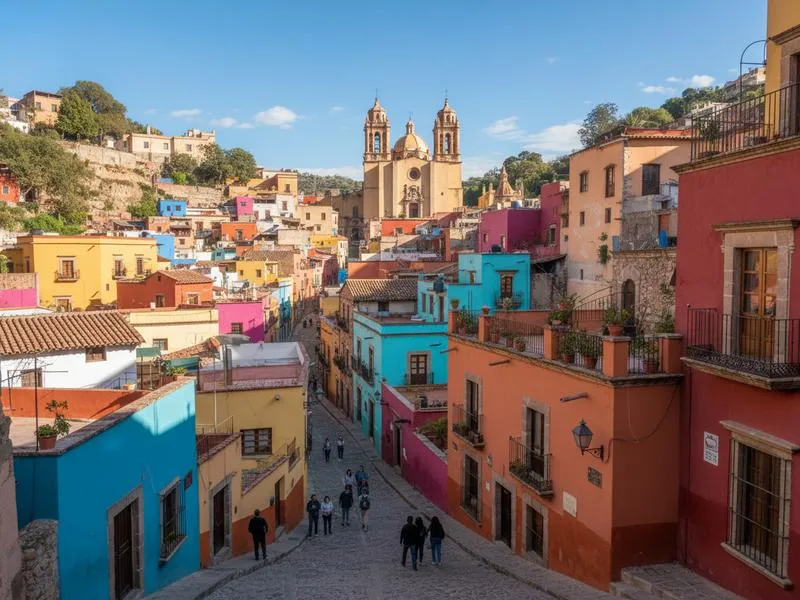
The best day trips from Guanajuato City are Dolores Hidalgo for history and food, San Miguel de Allende for a beautiful colonial day, León for shopping, and Mineral de Pozos if you want something more unusual. If you do not have a car, Dolores Hidalgo, León, and San Miguel are the easiest picks.
Guanajuato City sits at the center of one of Mexico’s richest colonial regions, and within two hours in any direction you’ll find more UNESCO heritage sites, Revolutionary history, leather markets, ghost towns, and flamingo lagoons than most travelers realize. The problem is not finding places to go. It is choosing trips that actually feel worth the time once you leave the city.
This guide covers the 10 best day trips from Guanajuato, ranked by the balance of distance, effort, and what you actually get when you arrive. There is an option for every type of traveler, including several that do not require a rental car.
30-Second Answer
| If you want… | Best day trip from Guanajuato | Why it wins |
|---|---|---|
| The easiest trip without a car | Dolores Hidalgo | Short bus ride, compact center, big payoff in history and food |
| The prettiest colonial town | San Miguel de Allende | Best architecture, rooftop views, easy bus connection |
| Shopping and a practical city day | León | Fast ride, leather markets, strong museum option |
| Something unusual | Mineral de Pozos | Mining ruins, mezcal, artist workshops, very different feel |
| A full-day culture-heavy outing | Querétaro | Historic center, aqueduct, and serious city depth |
The biggest ranking-page gap on this topic is that most results either push bookable tours or list places without helping you choose. If you are visiting Guanajuato for the first time, start with Dolores Hidalgo, San Miguel de Allende, or León because they give the best return for the least planning.
Quick Reference: Day Trips from Guanajuato at a Glance
| Destination | Distance | Drive | Best Transport | Entry Cost | Best For |
|---|---|---|---|---|---|
| Cerro del Cubilete | 20 km | 20 min | Car / tour | Free | Christ statue, panoramic valley views |
| Dolores Hidalgo | 50 km | 50 min | Bus / car | 80 MXN museum | Mexican Independence, wild ice cream |
| León | 60 km | 45 min | Bus / car | Free | Leather shopping, modern architecture |
| Yuriria | 80 km | 1 hr | Car | Free | 16th-century convent, flamingo lagoon |
| San Miguel de Allende | 90 km | 1.5 hr | Bus / car | Free | Colonial architecture, hot springs |
| Atotonilco Sanctuary | 95 km | 1.5 hr | Car (via SMA) | Free | UNESCO Baroque frescoes, pilgrimage |
| Mineral de Pozos | 100 km | 1.5 hr | Car / tour | Free | Mining ghost town, artisan workshops |
| Querétaro | 130 km | 1.5 hr | Bus / car | Free (historic center) | UNESCO city, aqueduct, wine region |
| Lagos de Moreno | 120 km | 2 hr | Bus / car | Free | Colonial Jalisco, Tequila region link |
| San Juan del Río | 180 km | 2.5 hr | Car / bus | Free | Opals, wine, wicker crafts |
Getting Around: Transport from Guanajuato
| Option | Best For | Approximate Cost | Notes |
|---|---|---|---|
| Rental car | Any trip, maximum flexibility | $35–55 USD/day | Pick up at Del Bajío Airport (BJX) in León — 20-30% cheaper than city pick-up. Highway 45D and 57D are well-maintained. |
| Bus (Primera Plus / ETN) | Dolores Hidalgo, León, San Miguel, Querétaro | 60–250 MXN | Depart from Guanajuato Central Bus Terminal. Comfortable reclining seats on major routes. |
| Organized tour | Mineral de Pozos, Cerro del Cubilete | 400–800 MXN | Local operators on Jardín de la Unión; often include guide and transport. |
| Taxi | Short trips up to León or Dolores Hidalgo | 400–700 MXN one-way | Negotiate before departure. Better value for groups. |
| Uber | Within Guanajuato metro area | 80–200 MXN | Unreliable in Guanajuato City’s tunnel system; better once you’re on the highway toward León or Silao. |
1. Dolores Hidalgo — 50 km | 50 Min
”The Cradle of National Independence”
On September 16, 1810, Father Miguel Hidalgo stood at the church in Dolores and rang the bell that launched Mexico’s War of Independence. The Grito de Independencia still reenacted in Mexico City’s Zócalo every September 15 traces directly to this town. For Mexican history, no day trip from Guanajuato matters more.

What to do:
- Museo Casa Hidalgo — the actual house where Father Hidalgo lived, now a museum with original furnishings and documents. Entry 80 MXN.
- Parroquia de Nuestra Señora de los Dolores — the church where the Grito happened. The bell tower is the most photographed in the Bajío region.
- Talavera tile workshops — Dolores Hidalgo produces a significant share of Mexico’s hand-painted Talavera ceramics. The factories lining the highway let you watch artisans at work and buy directly at production prices (30–50% cheaper than Puebla boutiques).
- The ice cream stands — this is a genuine cultural institution, not a tourist gimmick. Vendors on the main plaza sell nieves (water-based sherbets) in flavors that include mole negro, tequila, beer, shrimp, avocado, and chipotle. They’ve been here for decades. Try the mole.
Practical info: Buses run every 20–30 minutes from Guanajuato bus terminal, 60–80 MXN, 50-minute journey. The main plaza, museum, and Talavera district are all within walking distance of the bus station.
Best combo: Pair Dolores Hidalgo with the Sanctuary of Atotonilco (15 km further south, en route to San Miguel) for a full-day Ruta de la Independencia loop.
2. León — 60 km | 45 Min
Mexico’s Leather Capital
León produces more leather goods than any other city in Mexico — roughly a third of the country’s total footwear output originates here. For visitors, that means a city-sized open market of leather bags, belts, shoes, boots, and wallets at prices that make the same goods in Mexico City or tourist shops look absurd.

What to do:
- Zona Piel — the wholesale leather district covers several city blocks. Over 300 shops sell directly to the public. A quality leather bag runs 500–1,200 MXN ($25–60 USD); comparable products in tourist areas cost three times more.
- Mercado de Artesanías — handcrafted goods beyond leather: textiles, ceramics, carved wood.
- Poliforum León — a striking modernist civic center with murals by Jorge de la Peña. Free to enter the main hall.
- Cathedral Basílica — the city’s 17th-century cathedral facing the main plaza. Notable for its unusual twin facade combining Baroque and Neoclassical elements.
- Museo de Arte e Historia de Guanajuato (MAHG) — permanent collection covering Pre-Columbian to contemporary; one of the best regional history museums in central Mexico. Entry 60 MXN.
Practical info: Buses from Guanajuato to León run frequently throughout the day; 45 minutes, around 80 MXN. From León you can also connect directly to Del Bajío Airport (BJX) if you’re flying in or out.
3. Yuriria — 80 km | 1 Hour
Flamingos, Lagoon & a 16th-Century Convent
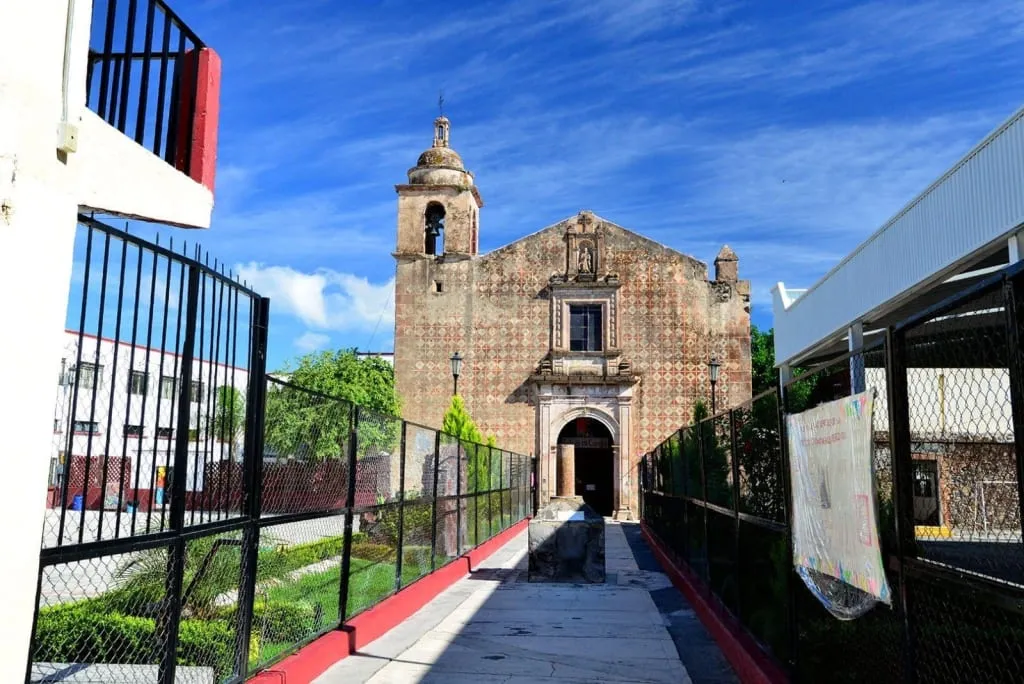
Yuriria is the least-famous destination on this list and the most underrated. It has two things that together make for an exceptional day: a massive 16th-century Augustinian convent that’s among the finest examples of early colonial religious architecture in Mexico, and a lagoon that hosts a resident flock of flamingos — not migratory flamingos, but birds that live there year-round.
What to do:
- Ex-Convento de San Nicolás de Tolentino — built between 1550 and 1577, this Augustinian convent is a national monument. The facade is Plateresque (intricate carved stonework resembling silverwork), and the interior cloister is largely intact. Free entry; small donation appreciated.
- Laguna de Yuriria — one of Mexico’s oldest artificial lakes, dug by the Augustinian friars in the 16th century to supply water to the convent and town. Today it supports a permanent colony of flamingos along with herons, egrets, and roseate spoonbills. Boat tours available at the dock (150–200 MXN/person).
- Centro histórico — small colonial plaza with good local seafood restaurants; try mojarra (tilapia) fresh from the lagoon.
Practical info: Yuriria is best reached by car (80 km south on highway toward Morelia). Some rural buses connect via Uriangato, but the schedule is infrequent. Not ideal without your own transport.
4. San Miguel de Allende — 90 km | 1.5 Hours
The Most Beautiful Colonial Town in Mexico
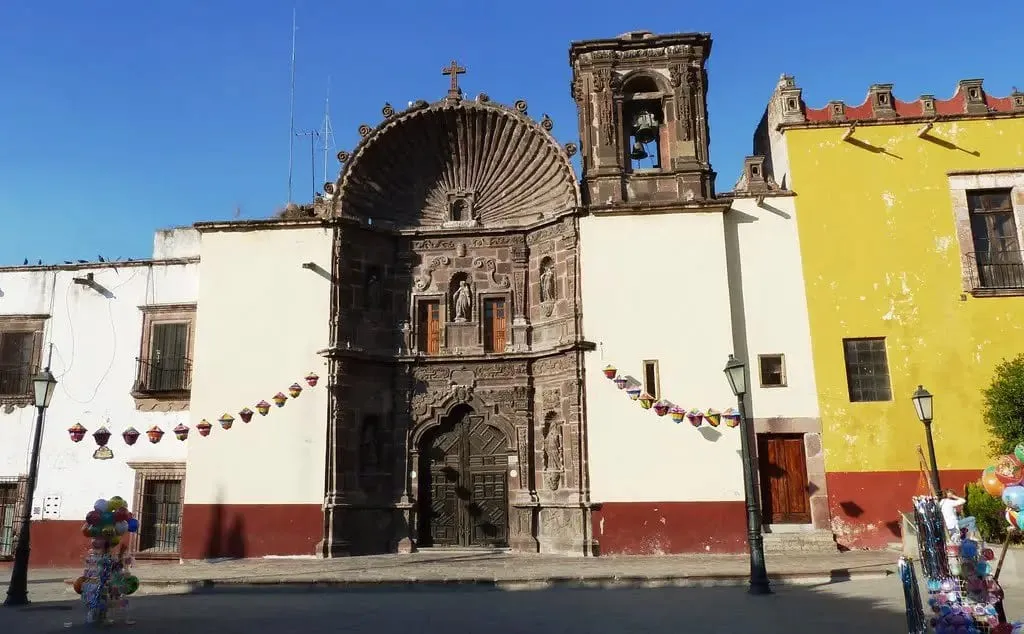
San Miguel de Allende is the poster child for Mexican colonial architecture — UNESCO World Heritage Site since 2008, home to 30,000 expats, and consistently ranked among the world’s top travel destinations. The attention is deserved. The rosy-pink neo-Gothic spires of La Parroquia rising above the Jardín Principal remain genuinely stunning even at peak tourist hours.
What to do:
- Jardín Principal — the main plaza is the heart of the city. La Parroquia, the city’s defining church, was designed in 1880 by self-taught stonemason Zeferino Gutiérrez, who reportedly sketched the design from European postcards. Arrive early; the facade changes color in morning light.
- Mercado de Artesanías — the best place in town to buy handmade tin ornaments, leather, embroidered textiles, and traditional crafts at reasonable prices (unlike the boutiques on Canal Street).
- Instituto Allende — a prestigious arts school since 1951. The campus is open to visitors; the gardens and gallery are free. Neal Cassady (of On the Road fame) spent his last years in San Miguel.
- Hot springs — three options within 10 km of town: La Gruta (cave pool, 170 MXN, least crowded midweek), Escondido Place (infinity pools, 350 MXN), and Taboada (family-oriented, 200 MXN). Book La Gruta weekends well in advance.
- El Charco del Ingenio — a botanical garden with Mexico’s largest collection of cacti (2,500+ species) and 150 bird species. Entry 80 MXN. Best in the morning when birds are active.
- Chiles en nogada — San Miguel restaurants may serve this Puebla dish from late July through September, with August and early September the safest window. Exact dates vary, so confirm the menu before planning the day trip around it and check the current season guide.
Practical info: Primera Plus and ETN buses run from Guanajuato multiple times daily; 1.5 hours, 150–200 MXN. Return buses run until late evening. If driving, combine with Atotonilco Sanctuary (15 km north of San Miguel on the way back toward Guanajuato).
5. Sanctuary of Atotonilco — 95 km | 1.5 Hours
Mexico’s Sistine Chapel (UNESCO, Free Entry)
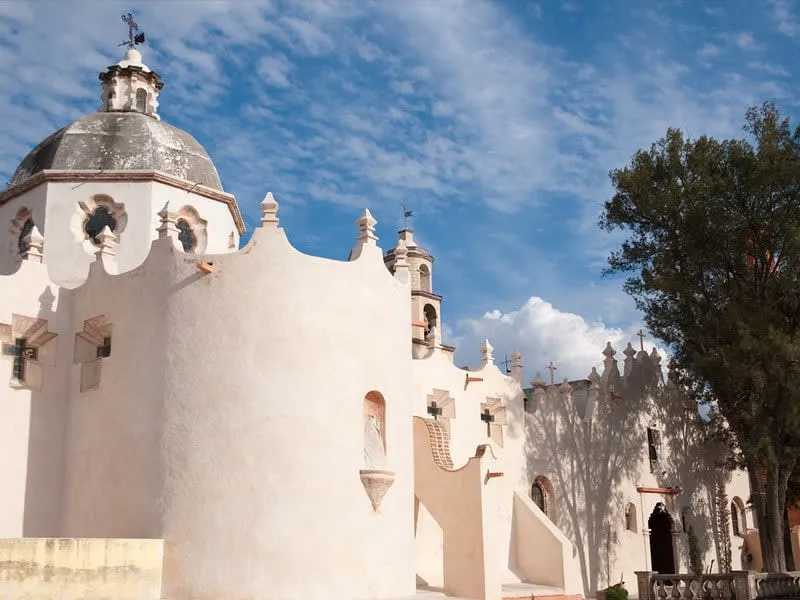
Fifteen kilometers north of San Miguel de Allende, down a dusty road through agave fields, sits one of the most remarkable buildings in Mexico — and one of the least-visited despite being a UNESCO World Heritage Site since 2008 (jointly listed with San Miguel de Allende as a single designation).
The Sanctuary of Jesús Nazareno de Atotonilco is a Jesuit pilgrimage shrine built between 1748 and 1776. Every interior surface — walls, arches, ceilings — is covered in elaborate Baroque frescoes and paintings by local artist Miguel Antonio Martínez de Pocasangre. The sanctuary has seven chapels, each with its own complete decorative program. Walking through it feels genuinely overwhelming.
It’s also a living pilgrimage site. Father Hidalgo stopped here before beginning the Independence march to Dolores in 1810, taking the image of the Virgin of Guadalupe as a banner. Pilgrims still come on their knees from across the Bajío. The atmosphere is unlike any tourist site in Mexico.
Entry: Free. Open daily 8 AM–8 PM. Dress modestly (shoulders and knees covered). Photography is permitted.
Getting there: No direct public transport. From Guanajuato: drive to San Miguel, then continue 15 km north on the Guanajuato highway. Or take a taxi from San Miguel’s bus station (80–120 MXN round-trip).
Best combo: Atotonilco + San Miguel de Allende in one day. Leave Guanajuato early, drive to Atotonilco first (1 hour, minimal crowds before 10 AM), then continue to San Miguel for the afternoon and evening.
6. Mineral de Pozos — 100 km | 1.5 Hours
The Most Atmospheric Ghost Town in Mexico
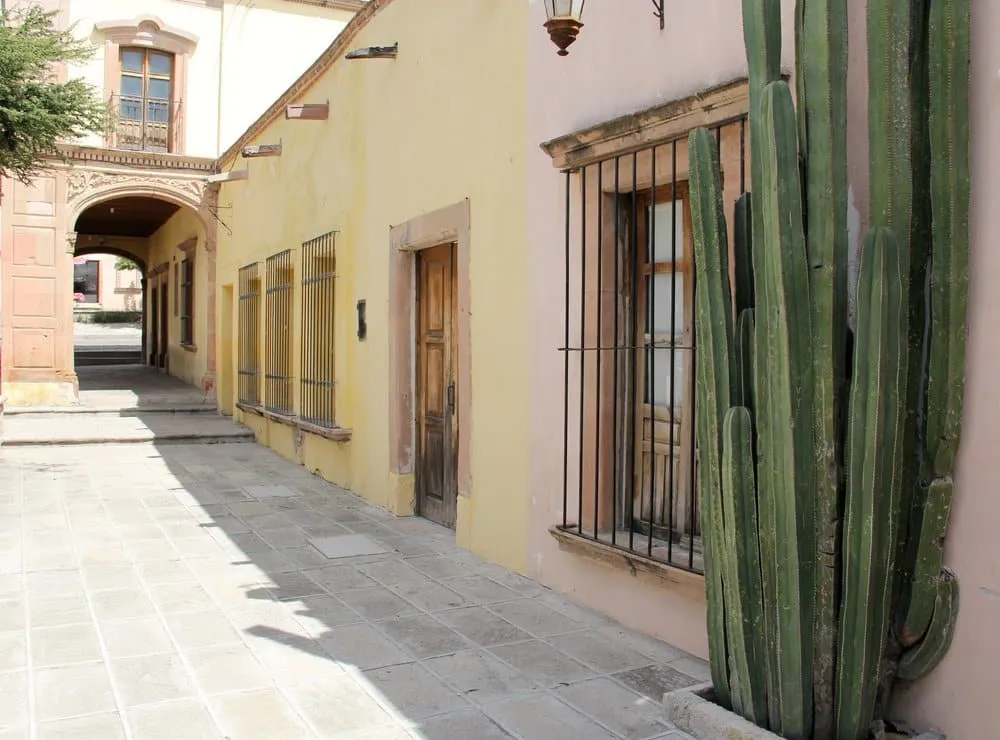
At its 18th-century peak, Mineral de Pozos (formally: Mineral de Pozos, Municipio de San Luis de la Paz) had more than 70,000 residents and was one of the most productive silver and copper mining centers in New Spain. The mines collapsed economically at the end of the 19th century, the population dispersed, and the haciendas were left to crumble in the high desert.
Today fewer than 5,000 people live among the ruins, and the town has become an unlikely center for arts, craft mezcal, and pre-Hispanic instrument-making. The combination of dramatic industrial ruins and active creative community makes it unlike any other destination in central Mexico.
What to do:
- Mine ruins — the remains of Hacienda de la Cinco Señores, Hacienda de la Purísima, and other mining complexes are open to explore at no charge. The scale is staggering — walls that once housed hundreds of workers stretch across the hillside.
- Pre-Hispanic instrument workshops — several artisans in town make and sell clay flutes, drums, and wind instruments based on Mesoamerican designs. These aren’t tchotchkes; they’re functional instruments used in ceremonies. Watching them being made and hearing them played is one of the more unusual experiences in Guanajuato state.
- Mezcal producers — small artisan mezcaleros have set up in the old industrial buildings. Most offer tastings; prices are significantly lower than mezcal bars in Guanajuato City or San Miguel.
- Art galleries — a loose cluster of galleries and studios has established itself in the ruins. Worth a walk-through.
Practical info: Best reached by car (100 km from Guanajuato City, about 1.5 hours via San Luis de la Paz). Some tour operators in Guanajuato offer Mineral de Pozos day trips (400–700 MXN including transport and guide).
7. Cerro del Cubilete — 20 km | 20 Minutes
The Geographic Center of Mexico (Free)
Cerro del Cubilete is the closest day trip on this list and among the most panoramic. A 2,750-meter hill (higher than many European peaks) just outside Silao, it’s crowned by an enormous 20-meter bronze statue of Cristo Rey (Christ the King), built in 1944 after the government finally permitted its reconstruction following the Cristero War.
What to make of it: This is Mexico’s equivalent of Christ the Redeemer in Rio — a massive hilltop religious monument with sweeping views over the Bajío plains. The views extend 80+ kilometers on clear days. The site is sacred to Mexican Catholics, and on the third Sunday of January it draws hundreds of thousands of pilgrims.
Entry: Free. The road to the summit is paved and driveable year-round. There’s a small chapel inside the base of the statue; pilgrims often crawl on their knees up the final approach.
Practical info: 20 km southwest of Guanajuato City, near Silao. Drive time 20–25 minutes. Best combined with a León trip (Silao is on the Guanajuato–León highway).
8. Querétaro — 130 km | 1.5 Hours
UNESCO City, Ancient Aqueduct & Mexico’s Wine Country
Querétaro is the longest drive on this list that still qualifies as a comfortable day trip — 130 km, about 1.5 hours by car on Highway 45D. The city’s UNESCO-designated historic center is one of the most intact Spanish colonial urban cores in the Americas, and its 74-arch aqueduct (built 1726–1738, still standing in perfect condition) is visible from the approach road.
What to do:
- Historic center — the UNESCO zone covers roughly 200 hectares of colonial plazas, convents, and mansion facades. The Jardín Zenea, Plaza de Armas, and the surrounding callejones (alleys) are compact enough to walk in a half day.
- Acueducto de Querétaro — the 1.28-km aqueduct carried water into the city from the Río Blanco, using 74 arches up to 23 meters high. It took 12 years to build and remains one of the engineering marvels of colonial Mexico. Best seen at dusk when it’s illuminated.
- Cerro de las Campanas — the hill where Emperor Maximilian of the Second Mexican Empire was executed by firing squad in 1867. A small chapel marks the spot. Free entry.
- Wine country — the Sierra Gorda foothills near Bernal (east of Querétaro city) support Mexico’s growing fine wine industry. Several bodegas offer tastings and tours: Freixenet México, La Redonda, and Puerta del Lobo are the most accessible.
- Bernal — 60 km east of Querétaro city, Bernal is a Pueblo Mágico dominated by La Peña de Bernal, the world’s third-largest monolith after Gibraltar and Sugarloaf Mountain. The town itself is tiny but has good restaurants and craft shops.
- San Juan del Río — 50 km south of Querétaro city, known for opal mining (Mexico produces ~90% of the world’s fire opals), wicker furniture manufacturing, and the first-ever manufactured wine in Mexico (Cava de los Frutos from the 1960s). Good opal shops along the main highway.
Practical info: Primera Plus buses run Guanajuato–Querétaro directly; about 2 hours, 200–250 MXN. By car, Highway 45D is fast and toll-paying ($4–6 USD). Querétaro city is very walkable; you don’t need a car once you’re in the historic center.
Full guide: 25 Things to Do in Querétaro City →
9. Lagos de Moreno — 120 km | 2 Hours
Colonial Jalisco’s Hidden UNESCO Candidate
Lagos de Moreno sits in Jalisco but is closer to Guanajuato City than to Guadalajara. Often overlooked in favor of San Miguel or Querétaro, it’s a genuine colonial city with an exceptional historic center that’s been nominated multiple times for UNESCO status. The Templo de Nuestra Señora de los Lagos, the neoclassical Teatro Rosas Moreno, and the 16th-century bridge over the Río Lagos give the city an architectural quality that punches well above its fame.
What to do:
- Historic center — baroque and neoclassical buildings clustered around a series of interconnected plazas. Far fewer tourists than Guanajuato or San Miguel; often you’ll be the only foreign visitor.
- Templo de Nuestra Señora de los Lagos — a Baroque church that took 150 years to complete, starting in 1752. The stone carving on the facade rivals anything in San Miguel.
- Birria Lagos — Lagos de Moreno is credited (by Jalisco standards) as one of the origin points of birria, the slow-braised goat or beef stew that’s now internationally famous. Local versions use goat (chivo) rather than beef; the flavor is deeper and more complex.
- Tequila connection — Lagos de Moreno sits on the northeastern edge of the designated Tequila Denomination of Origin zone. Some of the smaller highland agave producers here are accessible for visits if you contact them directly.
Practical info: Bus from Guanajuato to Lagos de Moreno, around 2 hours with a connection through León. Better by car (Highway 80). Not as commonly visited as the other destinations on this list, but worth it if you want to experience a genuine colonial city without tour groups.
10. San Juan del Río — 180 km | 2.5 Hours
Opal Capital of the World
At 180 km, San Juan del Río pushes the limit of a comfortable day trip — it’s really a stop en route to Querétaro, and best treated that way. But if opals are on your shopping list, this is where 90% of Mexico’s fire opals are mined, cut, and sold, at prices a fraction of what jewelers charge internationally.
What to do:
- Opal shops — shops along the main highway (Libramiento) sell rough stones, cut gems, and finished jewelry. Quality varies enormously; buy from shops with certificates, and understand that Mexican fire opals range from orange to red to green. A high-quality stone in a simple gold setting runs 500–3,000 MXN ($25–150 USD).
- Wicker market — San Juan del Río produces some of Mexico’s best wicker and rattan furniture. Roadside workshops sell directly; pieces are large but can be shipped.
- Wine — Cava de los Frutos, one of Mexico’s pioneering wineries, is outside San Juan del Río. Tours and tastings available on weekends (book ahead).
Practical info: San Juan del Río is most logical as a detour on a Querétaro day trip — visit Querétaro first, then stop in San Juan del Río on the return drive. By bus it’s an easy stop on the Guanajuato–Querétaro route.
Best Day Trip from Guanajuato by Traveler Type
| Traveler type | Best pick | Why |
|---|---|---|
| First-time visitor | Dolores Hidalgo | Fast, easy, strongly tied to Mexican history, and genuinely fun |
| Couple | San Miguel de Allende | Most romantic streets, rooftop bars, hot springs nearby |
| Shopper | León | Best-value leather shopping in central Mexico |
| History nerd | Dolores Hidalgo + Atotonilco | Independence history plus one of Mexico’s great church interiors |
| Photographer | Mineral de Pozos | Ruins, desert light, and dramatic textures |
| Family | Cerro del Cubilete or León | Shorter travel times and easier logistics |
| Traveler without a car | Dolores Hidalgo or San Miguel de Allende | Best bus access with walkable centers |
Best Combination Routes
The Independence Trail (1 day, best with car)
Guanajuato City → Dolores Hidalgo (50 km) → Atotonilco Sanctuary (95 km) → San Miguel de Allende (90 km) → back to Guanajuato
The classic Ruta de la Independencia. Start early in Dolores Hidalgo (Museo Casa Hidalgo opens 9 AM), stop at the plaza for ice cream, then drive to Atotonilco before the tour groups arrive. Spend the afternoon in San Miguel and catch a rooftop sunset before the 1.5-hour return drive. Distance: about 220 km total. Requires a car.
Shopping & Cities Loop (1 day, bus-friendly)
Guanajuato → León (leather market) → back
Take the morning bus to León, spend 4–5 hours in Zona Piel and the historic center, take the afternoon bus back. The most efficient single-city day trip. Good for focused shopping.
Ghost Town & Ghost Mines (1 day, car needed)
Guanajuato → Mineral de Pozos → Dolores Hidalgo → back
Head northeast to Mineral de Pozos in the morning (least crowded before noon), explore the ruins and workshops for 2–3 hours, then loop back through Dolores Hidalgo for lunch and the ice cream experience. Returns to Guanajuato by early evening.
Wine & History (overnight better, manageable as day trip)
Guanajuato → Querétaro → Bernal → San Juan del Río → back
A long day (5+ hours of driving total) but covers three distinct experiences: Querétaro’s UNESCO center, La Peña de Bernal monolith, and San Juan del Río’s opal market. Start at 7 AM, back by 9 PM. Not relaxed — better as an overnight.
Common First-Timer Mistakes
- Trying to do too much in one day. San Miguel, Dolores Hidalgo, Querétaro, and Mineral de Pozos all deserve more time than travelers expect. Pick one main stop unless you have a car and an early start.
- Assuming every trip is bus-friendly. León, Dolores Hidalgo, and San Miguel are easy without a car. Yuriria, Mineral de Pozos, and Atotonilco are much better with your own wheels.
- Forgetting Guanajuato’s bus terminal is outside the center. You need extra time and taxi money just to reach the terminal.
- Underestimating weekend crowds in San Miguel. If you want a calmer visit, go midweek or arrive early.
- Choosing Querétaro for a lazy day. It is worth it, but it is a bigger city day with more transit time than León or Dolores Hidalgo.
Practical Tips
Car rental: Pick up at Del Bajío Airport (BJX) in León rather than Guanajuato city — 20–30% cheaper and avoids navigating the tunnel system with an unfamiliar vehicle. Renting a car in Mexico is straightforward on the Bajío highways.
Bus terminal: Guanajuato’s Central Bus Terminal (Central de Autobuses) is 5 km southwest of the city center — take a taxi (50–80 MXN) or local bus downtown. All intercity buses depart from here. Primera Plus and ETN operate comfortable routes. Arriving from Mexico City? Buses come from Terminal Norte (not TAPO) — see the full Mexico City to Guanajuato guide for options, prices, and the Querétaro stopover route.
Getting around Guanajuato city itself: The tunnel system confuses rental car drivers unfamiliar with the layout. Use it for entering and exiting the city, but plan your route before you drive — there are few U-turn opportunities underground.
Safety: The historic centers of all cities mentioned here are safe for tourists. Guanajuato state carries a US Level 3 advisory, but this reflects cartel activity in industrial zones (Celaya, Salamanca), not the tourist circuit. See our Mexico travel advisory guide for state-by-state detail.
Best season: October and November are peak travel months for the Bajío — mild temperatures, the Cervantino Festival in Guanajuato (October), and the Day of the Dead celebrations in San Miguel (late October–early November). March through May are also excellent. June–September brings afternoon rains but fewer crowds.
Related Reading
- Guanajuato City Travel Guide 2026 — underground tunnels, Mummy Museum, callejoneadas
- Things to Do in Guanajuato City — 25 activities ranked
- Things to Do in San Miguel de Allende — hot springs, markets, festivals
- Best Time to Visit Guanajuato — when festivals, weather, and prices line up best
- Yuriria Guanajuato: Convent & Flamingo Lagoon Guide — 16th-century convent, flamingos, lagoon tours
- Mineral de Pozos Guanajuato — ghost town, mining ruins, pre-Hispanic instruments
- Cancun to Guanajuato 2026 — direct flights, BJX airport guide, Semana Santa tips
- Colonial Mexico Travel Guide — full route through the Bajío and Silver Route
- Safest Cities in Mexico for Tourists — city-by-city safety context
- How Much Does Mexico Cost? — daily budgets for Central Mexico travel
- Driving in Mexico and Road Trips — what first-time drivers should know before renting a car in the Bajío