25 Things to Do in Querétaro City: 2-Day Guide
Querétaro City is one of the best easy city breaks in central Mexico: 25 strong things to do, a UNESCO historic center, the aqueduct, enchiladas queretanas, safe walkable streets, and quick day trips to Bernal or wine country. If you have 2 days, spend day one in the center and day two choosing between Peña de Bernal, Tequisquiapan, or the local wineries.
Querétaro City in 30 Seconds
| If you’re wondering… | Short answer |
|---|---|
| Is Querétaro worth visiting? | Yes, especially for a long weekend, a Mexico City side trip, or a colonial-cities route with Guanajuato and San Miguel. |
| How many days do you need? | 2 days covers the city well, 3 days lets you add a day trip. |
| What should you do first? | Walk the UNESCO center, see Los Arcos, visit Cerro de las Campanas, then plan meals around Querétaro’s local dishes. |
| Is it safe? | Yes, Querétaro is one of the safer large cities in Mexico, especially in the historic center. |
| Best day trips? | Bernal, San Juan del Río, Jalpan de Serra, and local wine-country stops. |
| Best base? | Stay in or just beside the historic center so you can walk most of the main sights. See the best hotels in Querétaro. |
| Quick Facts | Details |
|---|---|
| Location | Querétaro state, 215 km northeast of Mexico City |
| Altitude | 1,820 m (5,970 ft) |
| UNESCO | Historic Monuments Zone inscribed 1996 |
| Best Time | October–April (dry season, mild temperatures) |
| Safety | Level 2, historic center is very safe for most travelers |
| Getting There | QRO airport or Mexico City to Querétaro by bus, car, or private transfer |
| Day Budget | 400–700 MXN (budget) / 800–1,800 MXN (mid-range) |
Best fit: first-time Mexico visitors who want a calmer colonial city, food-focused travelers, and anyone building a central Mexico route.
Worst fit: travelers who want beaches, nightlife-first energy, or a city packed with major bucket-list attractions every waking hour.
25 Best Things to Do in Querétaro City
| # | Activity | Category | Cost | Time Needed |
|---|---|---|---|---|
| 1 | Walk the UNESCO Historic Center | Historic Sites | Free | 2–3 hrs |
| 2 | Los Arcos Aqueduct at sunset | Historic Sites | Free | 1 hr |
| 3 | Cerro de las Campanas (Maximilian site) | Historic Sites | Free | 1–1.5 hrs |
| 4 | Templo de Santa Rosa de Viterbo | Historic Sites | Free | 45 min |
| 5 | Convento de la Santa Cruz | Historic Sites | 30–50 MXN | 1 hr |
| 6 | Jardín Zenea + La Corregidera | Neighborhoods | Free | 1–2 hrs |
| 7 | Museo Regional de Querétaro | Museums | 90 MXN | 2–3 hrs |
| 8 | Museo de Arte de Querétaro | Museums | 90 MXN | 1.5–2 hrs |
| 9 | Palacio de Gobierno | Historic Sites | Free | 30 min |
| 10 | Enchiladas queretanas food experience | Food | 80–150 MXN | 1 hr |
| 11 | Barbacoa de borrego (Sunday tradition) | Food | 80–150 MXN | 1 hr |
| 12 | Nopal, cheese & gorditas street circuit | Food | 50–100 MXN | 1 hr |
| 13 | Querétaro wine tasting | Food & Drink | 200–500 MXN | 2–3 hrs |
| 14 | Hot air balloon over Querétaro | Adventure | 1,600–2,800 MXN | 3–4 hrs (morning) |
| 15 | Cooking class: enchiladas queretanas | Activity | 800–1,500 MXN | 3 hrs |
| 16 | Night tour of the Historic Center | Culture | Free / 200–400 MXN guided | 2 hrs |
| 17 | Peña de Bernal day trip (43 km) | Day Trip | Free–50 MXN entry | Full day |
| 18 | Tequisquiapan wine & cheese day trip | Day Trip | 200–600 MXN | Full day |
| 19 | San Juan del Río opals & agates | Day Trip | Free–shopping | Half day |
| 20 | Sierra Gorda Missions UNESCO | Day Trip | 75–100 MXN | Full day |
| 21 | San Miguel de Allende (1 hr) | Day Trip | Free + activities | Full day |
| 22 | Amealco Otomí dolls market | Day Trip | Free + shopping | Half day |
| 23 | El Pueblito pyramid (15 km) | Day Trip | 75 MXN | Half day |
| 24 | Jalpan de Serra missions road trip | Day Trip | 75 MXN/mission | Full day or overnight |
| 25 | Querétaro wine route (Cuna de Tierra) | Day Trip / Activity | 350–800 MXN tasting | Half–full day |
Historic Sites
1. Walk the UNESCO Historic Center
Querétaro’s Historic Monuments Zone was inscribed as UNESCO World Heritage in 1996 — the designation covered not just monuments but the entire urban fabric of the colonial center. It earned the honor partly because the city was built after the Spanish conquest and designed from scratch, giving it an unusually coherent colonial grid unlike older cities built over pre-Hispanic foundations.
The center is compact and walkable. Start at Jardín Zenea (the main plaza), work outward to Plaza de Armas and the Palacio de Gobierno, then follow the pedestrian street La Corregidera south toward the aqueduct. The entire circuit can be walked in 2–3 hours, though the churches alone will slow you down. Most street signs are in Spanish only; navigation is intuitive — the center is 12 blocks by 12 blocks.
Practical: No ticket, no hours — the streets are public. Best experienced in the morning (fewer crowds, soft light) or late afternoon. Wear comfortable shoes; the streets are original colonial stone and uneven.
2. Los Arcos — The 74-Arch Aqueduct
Built between 1726 and 1738 to supply water to the growing colonial city, the Los Arcos Aqueduct stretches 1,280 meters with 74 semicircular arches reaching up to 23 meters tall. It carried water until the early 20th century when modern infrastructure replaced it.
Today the aqueduct runs along a tree-lined boulevard. The best approach is to walk the full length from the old city end toward the neighborhoods to the east — about 20 minutes at a relaxed pace. The hour before sunset (4–6 PM depending on season) turns the pinkish-gold quarry stone amber and is the best photography window. Late evening, the aqueduct is lit and locals walk it as an evening ritual.
What most visitors miss: the aqueduct’s water source was a spring at the foot of Cerro del Cimatario, several kilometers away. The engineering required to maintain pressure across that distance, in the 18th century, is what made it remarkable. Look for the variation in arch height as the terrain slopes — the engineers adjusted continuously.
Practical: Free, always accessible. The eastern end connects to quieter residential neighborhoods; the western end connects to the city center. A mirador (viewpoint) on the hillside to the north gives the classic full-length perspective — ask locals for “el mirador de los arcos.”
3. Cerro de las Campanas — Where an Empire Ended
On June 19, 1867, Archduke Maximilian of Austria — imposed as Emperor of Mexico by Napoleon III’s France — was executed by firing squad on this hill alongside two Mexican generals. The event ended the Second Mexican Empire and the French Intervention. French painter Édouard Manet made the scene famous in four versions of his painting “The Execution of Maximilian,” now in museums from London to Mannheim.
The Cerro de las Campanas (Hill of the Bells) today has a small chapel built by the Austrian government at the spot of the execution, a large statue of Benito Juárez (the president who ordered it), and views over the entire city. The walk from the base takes 15–20 minutes. Entry is free.
Most visitors spend 45 minutes here — the historical weight is real, and the panoramic view of Querétaro’s colonial skyline with the aqueduct running through it is the best in the city.
Practical: Free. Open daily. The walk from the city center takes 25 minutes on foot or 10 minutes by Uber (40–60 MXN). Bring water — there are no vendors at the top. The best city views are from the Juárez statue platform.
4. Templo de Santa Rosa de Viterbo
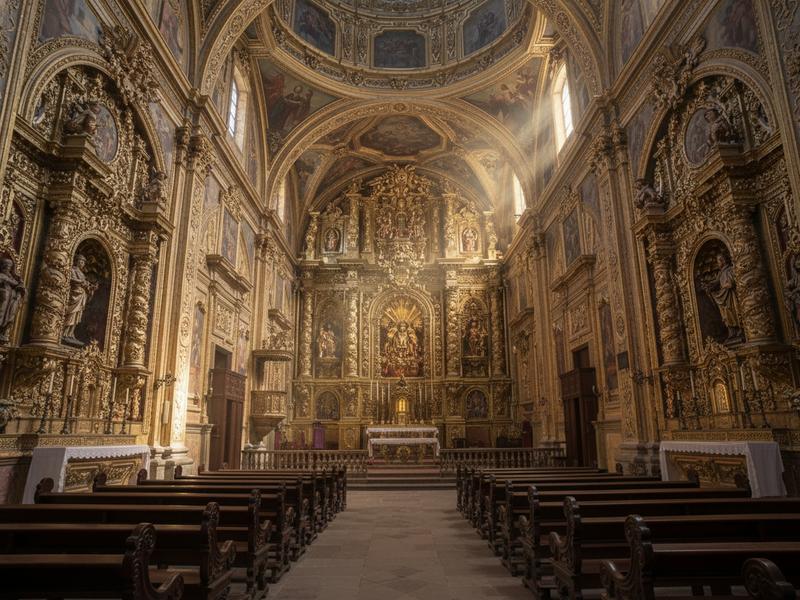
Built in the 17th and 18th centuries, Santa Rosa de Viterbo is considered one of the most elaborate Baroque churches in all of Mexico — which is saying something in a country full of elaborate Baroque churches. The facade features a density of carved stone ornament that has been described as “architecture in ecstasy.”
What sets it apart architecturally:
- Flying buttresses with decorative corbels — unusual in Mexican colonial churches, borrowed from European Gothic but executed in full Baroque
- The bell tower clock — has four faces and an inverted clock mechanism; some claim it’s the oldest working clock in Latin America, though this is disputed
- The interior — gilded altarpieces with Churrigueresque elaboration, a cedar choir loft, and a sacristy with unique tiling
The church is active — masses are held on Sunday mornings. The building is best photographed in the morning when the carved facade catches direct light.
Practical: Free entry during visiting hours (generally 9 AM–5 PM). Photography allowed. Located on Plaza Mariano de las Casas, two blocks from Jardín Zenea.
5. Convento de la Santa Cruz — The Cross-Shaped Cactus
The Franciscan Convent of the Holy Cross was founded in 1683 and served as Maximilian’s headquarters before his capture. It’s also the site of a biological oddity that has become Querétaro’s best-known legend: a cactus variety that grows thorns in the shape of small crosses.
The botanical explanation is mundane — the cactus (Opuntia species) was propagated from plants grafted with cruciform-shaped cuts by early missionaries, selecting for the trait over generations. The religious legend, that the cross-shaped thorns grew from a cross left by the Apostle Santiago himself, is more compelling than the science. Locals maintain the mystery.
The convent also has a colonial garden, original missionary cells, and exhibits on Querétaro’s founding. The guided tour (30–45 minutes) is conducted by the resident Franciscan brothers. It’s genuine — not a tourist performance — and they’re knowledgeable about the history.
Practical: Entry 30–50 MXN. Tours in Spanish; some brothers speak basic English. Hours typically 9 AM–2 PM and 4–6 PM; closed Sunday mornings. The cactus is in the main courtyard.
Museums
6. Museo Regional de Querétaro
Housed in the former Convento de San Francisco — the oldest standing building in Querétaro, built in 1540 — the Museo Regional covers the region’s pre-Hispanic cultures, the colonial period, and the Reform Wars/Second Empire. The colonial-period rooms are the strongest: maps, documents, and artifacts from when Querétaro was a prosperous center of the Camino Real trade route to Santa Fe.
The room most visitors seek: the chamber where the Treaty of Guadalupe Hidalgo was discussed during the aftermath of the Mexican-American War (1848). Mexico ceded half its territory in this treaty. The room is kept largely as it was.
Practical: 90 MXN. Open Tuesday–Sunday 9 AM–6 PM. Photography allowed without flash. Allow 2–3 hours.
7. Museo de Arte de Querétaro
Installed in the former Augustinian convent, the Museo de Arte has a permanent collection of colonial-era religious painting — Baroque oils, gilded retablos, and Spanish-school works from the 16th to 19th centuries — alongside rotating contemporary exhibitions. The building’s cloister, with its double-arcaded galleries and carved stone columns, is itself the reason to visit.
Practical: 90 MXN. Open Tuesday–Sunday 10 AM–6 PM. The convent church attached to the museum is often open without charge.
Neighborhoods & Food
8. Jardín Zenea + La Corregidera
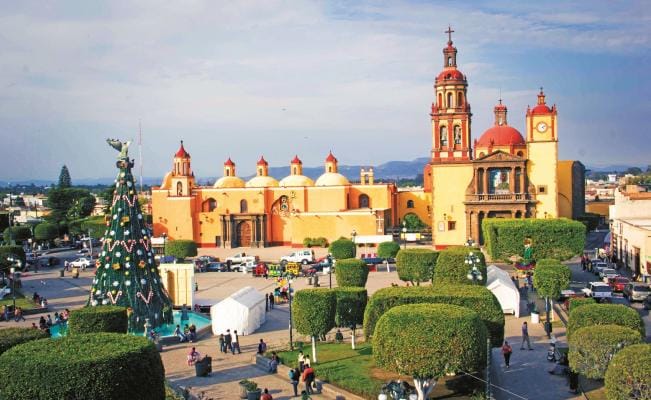
The Jardín Zenea is the city’s main public square — a kiosk-centered garden where shoeshine men work, families walk on Sunday evenings, and a brass band performs regularly. It’s functional rather than grand, which is the point: Querétaro hasn’t turned its center into a museum for tourists. Locals actually use it.
La Corregidera is the pedestrian street that runs from Jardín Zenea south toward the aqueduct. It’s named for Josefa Ortiz de Domínguez, “La Corregidora” — the colonial official’s wife who, while under house arrest in the Palacio de Gobierno in September 1810, managed to get a message to Independence conspirators warning them that their plot had been discovered. She allegedly had a sympathetic jailor ring the church bell as her signal. The Independence movement launched days earlier than planned as a result.
The Palacio de Gobierno at the corner of Plaza de Armas still has the door through which her message passed. A bronze plaque marks it.
Practical: The pedestrian zone is busiest 6–9 PM daily. The Plaza de Armas fountain dates to 1842 and depicts mythological figures. Jardín Zenea is the best place to find shoe shines (40–60 MXN), street food (elotes, churros), and locals willing to give walking directions.
9. Enchiladas Queretanas — The City’s Signature Dish
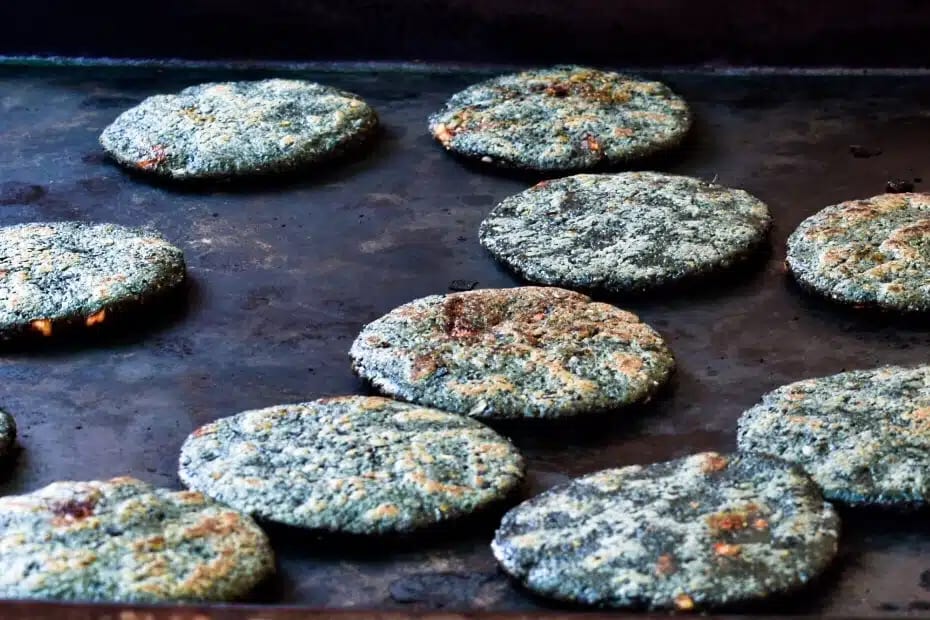
Querétaro’s enchiladas are distinct from every other state’s version. Where most Mexican enchiladas are rolled corn tortillas in chile sauce, enchiladas queretanas are:
- Corn tortillas, lightly fried
- Filled with fresh white cheese (queso fresco)
- Topped with a mild red tomato-herb sauce
- Garnished with sliced carrots, cooked potatoes, and fried chorizo
- Often served with a side of nopal (cactus)
The dish is rich, substantial, and not particularly spicy — closer to European-Mexican fusion than the chile-forward dishes of Oaxaca or Veracruz. The best versions are made from scratch; ask locals for their neighborhood recommendation rather than eating at tourist-facing restaurants.
Where to eat: Local fondas (small family restaurants) around Mercado de la Cruz serve enchiladas queretanas at lunch (1–3 PM) for 80–120 MXN. The tourist-zone restaurants near Jardín Zenea charge 150–250 MXN for the same dish.
10. Barbacoa de Borrego (Sunday Tradition)
On Sunday mornings, neighborhoods across Querétaro set up barbacoa operations — lamb or mutton slow-cooked overnight wrapped in agave (maguey) leaves in an underground pit. Families arrive early (7–10 AM); the meat runs out by noon. The ritual is communal: several generations around a shared table, consomé broth in clay cups, stacks of handmade tortillas, and salsa verde that gets passed without asking.
This is not restaurant food. Ask your hotel or guesthouse which neighborhood market has the best barbacoa that week — locals know. Budget 80–150 MXN per person for a full portion with consomé and tortillas.
11. Querétaro Wine Route
Before you lock in your plan, make one decision early: keep your sightseeing in the center on one day and your out-of-town activities on another. Querétaro is compact, but the best day trips, wineries, and balloon rides all work better when you are not trying to squeeze them around museum hours in the old town.
Common Mistakes First-Time Visitors Make
- Staying too far from the historic center. You’ll waste time in Ubers instead of walking between the best sights.
- Trying to do Bernal, wine country, and the city in one day. Pick one out-of-town focus.
- Skipping food planning. Querétaro is better when you treat enchiladas queretanas, barbacoa, and market snacks as part of the itinerary, not an afterthought.
- Using San Miguel de Allende as your only colonial-city stop. Querétaro is a stronger base if you want easier logistics and lower hotel prices.
- Underestimating sun and altitude. Midday walking feels hotter and drier than many visitors expect.
11. Querétaro Wine Route
The state of Querétaro is Mexico’s fastest-growing wine region — higher altitude than traditional Mexican wine regions, significant temperature variation between day and night (ideal for grape growing), and serious investment from both domestic and international producers.
Key wineries near the city (most require advance reservation):
- Cuna de Tierra (50 km, San Miguel de Allende direction): award-winning reds, elegant tasting room, panoramic views
- Freixenet México (40 km): The Spanish sparkling wine giant Freixenet established Mexico’s most significant methode champenoise winery here; tours of the cave cellars and production line, tastings of Sala Vivé sparkling wines
- La Redonda (70 km, near Tequisquiapan): organic viticulture, restaurant on-site, cheese pairing
- Hacienda Los Rosales (45 km): boutique winery, overnight stays possible
Most full-day wine tours from Querétaro City include 2–3 wineries and run 700–1,200 MXN/person. Uber or rental car required for self-guided visits.
Adventure & Activities
12. Hot Air Ballooning Over Querétaro
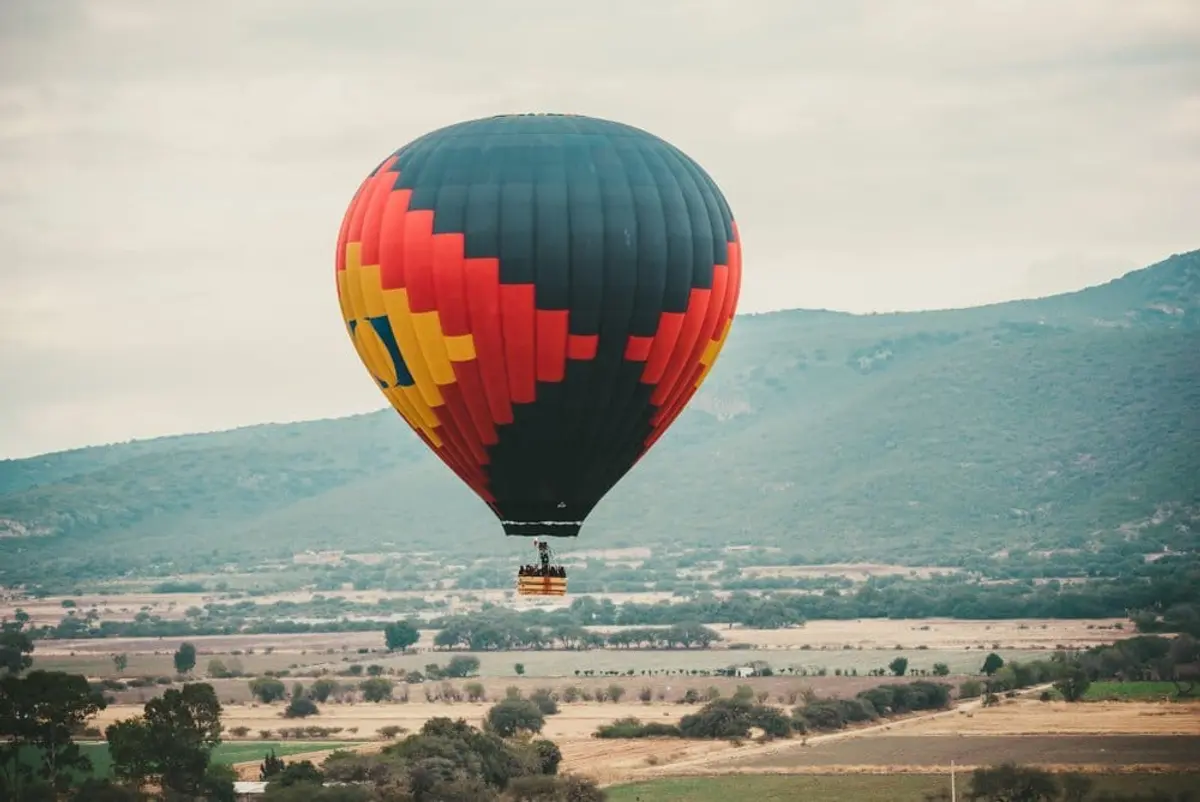
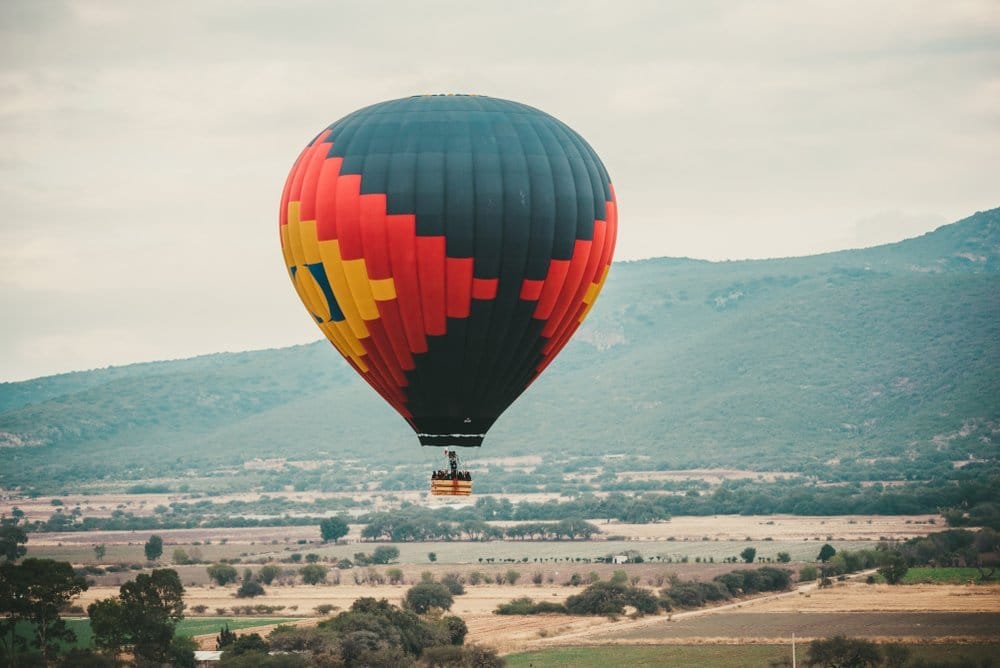
Querétaro has a small but established hot air balloon industry that’s significantly more affordable than the Teotihuacan flights near Mexico City. Flights depart at dawn (typically 5–6 AM), drift over the city’s colonial center and surrounding agricultural valleys, and last 45–60 minutes in the air.
Cost: 1,600–2,800 MXN per person (vs. 3,500–5,500 MXN at Teotihuacan). The lower price reflects both lower marketing overhead and less tourist saturation — the flights here are smaller operations with more personal service.
Operators: Several Querétaro-based companies offer flights; book directly rather than through hotel concierge to avoid commission markups. Cierros de León and Globos Querétaro are established names. Book 2–3 days in advance on weekends.
Practical: Dress warmly (it’s cold at 5 AM at altitude). Flights are weather-dependent and occasionally rescheduled. You’ll typically be collected from your hotel at 5 AM, transported to the launch site, fly 45–60 min, and return by 9 AM — leaving the rest of the morning free.
13. Cooking Class: Enchiladas Queretanas
Several culinary schools and local home cooks in Querétaro’s historic center offer cooking classes focused on regional cuisine. A good class covers:
- Enchiladas queretanas (the city’s signature)
- Nopal preparation (cactus cleaning and cooking)
- Gorditas de maíz
- Basic chile sauces distinct from Oaxacan or Veracruz styles
Cost: 800–1,500 MXN per person (3–4 hours, includes ingredients and lunch). Look for classes at Casa de la Marquesa cooking school or through smaller operators listed on Airbnb Experiences.
Day Trips from Querétaro City
14. Peña de Bernal (43 km — 45 min)
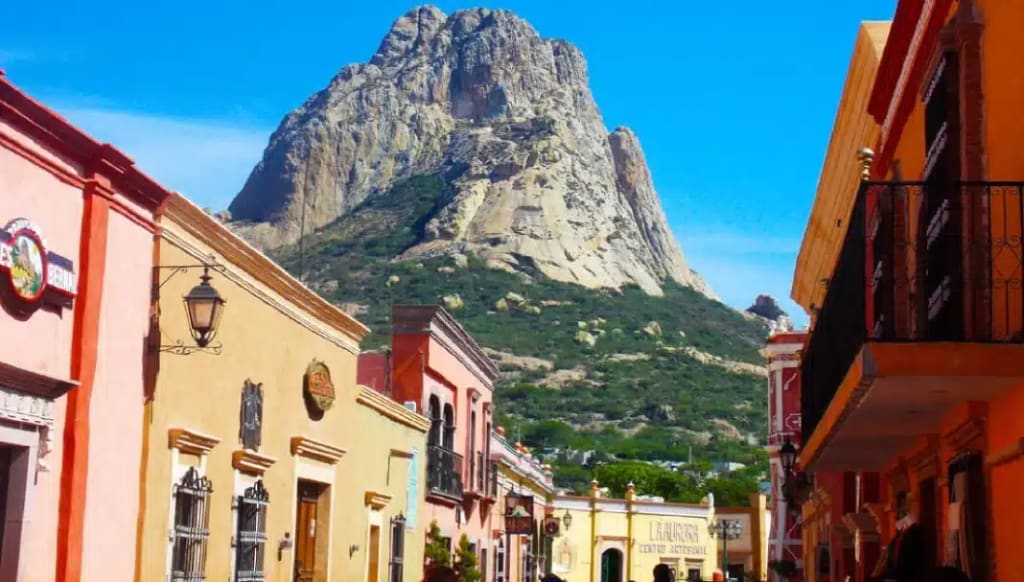
The Peña de Bernal is a 350-meter-tall volcanic monolith — the third largest in the world after Gibraltar and Sugarloaf Mountain in Rio de Janeiro. It rises from the valley floor in a single dramatic mass above the Pueblo Mágico town of Bernal, population 4,000.
The hike to the base takes 30 minutes; the full climb to the highest accessible point (not the summit, which requires technical climbing) takes another 30–45 minutes on a maintained trail with chains for steep sections. The view from the top takes in the Querétaro Valley, the surrounding wine country, and on clear days the volcanic peaks of the Sierra Gorda.
The town below has:
- Gorditas de maíz (Bernal’s are famous throughout the state — try them with cheese and picadillo)
- Cheese shops (regional fresh and aged cheeses)
- Artisan craft shops (opals, leather goods, regional textiles)
- Wine shops from nearby producers
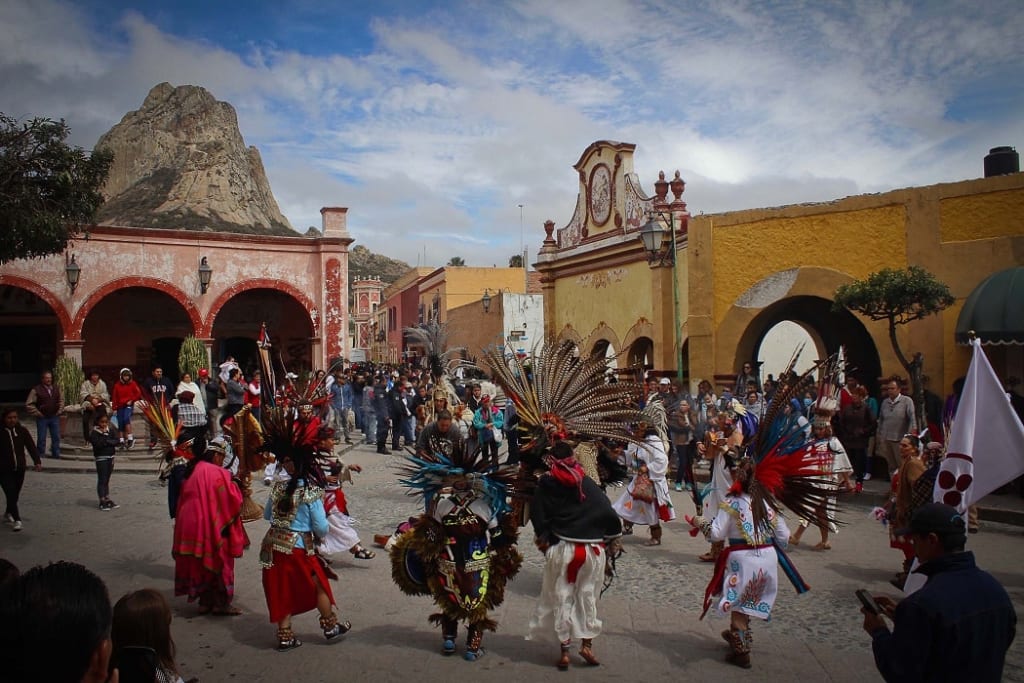
Practical: 43 km from Querétaro City; 45 minutes by car. Buses run from Querétaro’s central bus terminal roughly every 2 hours (80–100 MXN one way). Trail entry: free. Bernal is most crowded on weekends and during the Equinox Festival (spring equinox, when the rock casts a shadow on the town — thousands attend).
15. Tequisquiapan (70 km — 1 hr)
Tequisquiapan is Querétaro’s wine and cheese town — a Pueblo Mágico with a central plaza of bougainvillea-covered portales, natural hot springs on the edge of town, and a Sunday market known for artisan crafts, regional cheese, and the Querétaro wine that gets less attention than Baja California’s.
The cheese circuit: Tequisquiapan and the surrounding region produce significant volumes of Mexican manchego, Oaxacan-style string cheese, and fresh goat cheeses. Several shops on the main plaza sell directly from producers; prices are lower than Mexico City specialty shops.
Practical: 70 km from Querétaro City; 1 hour by car. Buses run from Querétaro’s terminal (90–120 MXN). Combination day: Tequisquiapan in the morning, Bernal in the afternoon (they’re 40 km apart).
16. San Juan del Río (50 km — 45 min)
San Juan del Río is Mexico’s opal and agate capital — the gemstone market in the city center sells fire opals, agates, amethysts, and mineral specimens at wholesale prices compared to Mexico City or Taxco. The best shopping is in the covered market near the main plaza; bargaining is expected and prices are negotiable.
Beyond the gem market: the historic center has a colonial bridge over the Río San Juan, several 18th-century churches, and a local market food scene (nopal tacos, carnitas). It’s a working city rather than a tourist destination — that’s the appeal.
Practical: 50 km, 45 minutes by car or direct bus (70–90 MXN). The gem market is open daily but busiest Tuesday–Sunday morning.
17. Sierra Gorda Missions UNESCO (150 km — 2.5–3 hrs)
Five Franciscan missionary churches in the Sierra Gorda mountains carry their own UNESCO World Heritage designation (inscribed 2003), separate from Querétaro City’s designation. Built in the 18th century by Fray Junípero Serra (who later founded the California missions), they feature an extraordinary fusion style: Gothic structure, Spanish Baroque ornament, and Indigenous Chichimec iconography worked into the facades by local craftsmen.
The result is architecture found nowhere else — European church forms decorated with pre-Hispanic gods, corn cobs, and regional animals mixed seamlessly with Christian imagery. The facades of Jalpan de Serra and Landa de Matamoros are the most elaborate.
Explore Jalpan de Serra and the Sierra Gorda →
Practical: The 5 missions are spread over a 150–200 km mountain circuit. Day trip from Querétaro is possible but long — overnight in Jalpan de Serra (basic hotels, 600–1,200 MXN/night) is recommended to visit multiple missions without rushing. Rental car strongly recommended; public transport is available but slow. Car rental for Sierra Gorda →
18. San Miguel de Allende (90 km — 1 hr)
San Miguel de Allende needs no introduction — it’s one of Mexico’s most visited colonial cities, with a massive expat community and a reputation for good restaurants, galleries, and the pink neo-Gothic Parroquia. It’s one hour from Querétaro, which makes the two cities a natural 2-day circuit on the Colonial Route.
What few guides note: Querétaro is the better base for this pairing. San Miguel accommodation costs 30–60% more than equivalent Querétaro options. Stay in Querétaro, day-trip to San Miguel, and pocket the difference.
Things to do in San Miguel de Allende → | Day trips from San Miguel →
Budget Guide
| Travel Style | Daily Budget | What’s Included |
|---|---|---|
| Budget | 400–700 MXN ($20–35 USD) | Hostel dorm or guesthouse, market meals, walking + public transport |
| Mid-range | 800–1,800 MXN ($40–90 USD) | Colonial hotel, restaurant meals, Uber, one paid attraction |
| Comfortable | 1,800–3,500 MXN ($90–175 USD) | Boutique hotel, good restaurants, hot air balloon, wine tasting |
Cost reference:
- Hostel dorm: 200–350 MXN/night
- Budget colonial guesthouse: 600–900 MXN/night
- Mid-range hotel with patio: 1,200–2,200 MXN/night
- Market lunch (3 courses): 80–150 MXN
- Restaurant dinner: 200–500 MXN
- Uber within the city: 40–100 MXN
- Bus to Bernal: 80–100 MXN each way
- Museum entry: 90 MXN per museum
Best Time to Visit Querétaro City
| Month | Weather | Crowds | Notes |
|---|---|---|---|
| Jan–Feb | 12–22°C, dry | Low | Best hotel rates; cool evenings require a jacket |
| Mar–Apr | 15–27°C, dry | Medium (Spring Break/Semana Santa) | Semana Santa fills hotels — book 4–6 weeks ahead |
| May–Jun | 18–30°C, becoming humid | Low | Hot afternoons; early rains begin June |
| Jul–Aug | 16–26°C, rainy afternoons | Low | Afternoon showers (2–5 PM), mornings clear and cool |
| Sep–Oct | 15–25°C, end of rains | Medium | Rains taper off; Independence Day (Sep 15–16) in Querétaro is significant — the Independence movement launched here |
| Nov–Dec | 11–22°C, dry | Medium–High (Dec) | Posadas and Christmas decorations transform the Historic Center; December is popular and expensive |
Best months: October–November and February–March balance pleasant weather, manageable crowds, and reasonable hotel prices.
Independence Day context: Querétaro was the center of the 1810 Independence conspiracy; September 15–16 celebrations here have particular historical resonance and draw visitors from Mexico City who want a more authentic commemoration than the capital’s spectacle.
Getting to Querétaro
| Option | Time | Cost | Notes |
|---|---|---|---|
| Bus from CDMX Terminal Norte | 2.5–3 hrs | 200–350 MXN | ETN, Primera Plus, Omnibus; every 30–60 min |
| Car from Mexico City | 2–2.5 hrs | Tolls ~200–250 MXN | Mexico 57 toll highway; leave before 7 AM |
| Domestic flight (QRO airport) | 1–2 hrs flight | 800–3,000 MXN | Connections from Monterrey, Guadalajara, Tijuana, Cancún |
| Uber from QRO airport | 15–20 min | 120–180 MXN | Straightforward ride to Historic Center |
Getting around Querétaro City: The Historic Center is fully walkable. Uber is reliable and cheap (40–100 MXN for most trips). City buses exist but routes are complex for visitors. Taxis from official stands are safe; negotiate the fare before getting in.
What to Pack
Querétaro sits at 1,820 meters — higher than you might expect. Temperatures can drop to 8–12°C on winter nights even when daytime highs reach 22°C. Pack:
- A light jacket or fleece for evenings and early morning balloon flights
- Comfortable walking shoes (colonial stone streets are uneven)
- Sunscreen (altitude means stronger UV radiation)
- A small daypack for day trips
Complete Mexico packing list →
Safety in Querétaro
Querétaro City is one of Mexico’s safest major cities for tourists. The Historic Center is well-patrolled, well-lit, and genuinely busy with locals into the late evening — the kind of pedestrian activity that naturally discourages petty crime.
Standard precautions:
- Use Uber rather than street taxis after dark
- Don’t leave valuables in parked cars (especially on day trips)
- The Cerro de las Campanas area is safe in daylight but less visited at night — go during the day
For current US State Department travel advisories: Mexico Travel Advisory 2026 →
Plan Your Querétaro Trip
Querétaro makes an excellent standalone 2–3 day visit or the first stop on a Colonial Route circuit: Querétaro → San Miguel de Allende → Guanajuato → back to Mexico City via León. The three colonial cities are 1–1.5 hours apart; the circuit covers some of Mexico’s most historically significant and architecturally impressive territory without crossing a single major highway.
Querétaro Travel Guide → | Day trips from Querétaro → | Colonial Mexico travel guide → | Things to do in Guanajuato → | Day trips from Guanajuato → | Day trips from San Miguel de Allende →