Day Trips from Querétaro 2026: 10 Best Excursions Ranked
Querétaro is one of Mexico’s most underrated day-trip bases. Within 90 minutes of the colonial city center, you have the world’s third-largest monolith, Mexico’s top wine route, five UNESCO-listed Baroque missions hidden in a cloud forest biosphere reserve, and one of the country’s most beautiful colonial cities in San Miguel de Allende.
This guide covers 10 day trips from Querétaro, ranked by distance and the combination of effort versus payoff. A rental car unlocks the best options; several are manageable by bus or Uber for those traveling without wheels.
Quick Reference: Day Trips from Querétaro
| Destination | Distance | Drive | Best Transport | Entry Cost | Best For |
|---|---|---|---|---|---|
| San Juan del Río | 50 km | 45 min | Bus / car | Free | Colonial town, opals |
| Tequisquiapan | 65 km | 1 hr | Bus / car | Free | Wine, cheese, thermal spas |
| Bernal monolith | 65 km | 55 min | Bus + local / car | Free | Monolith, colonial village |
| Wineries (Ruta del Vino) | 60–75 km | 1 hr | Car | Tour: 200–400 MXN | Wine tasting |
| Pinal de Amoles | 130 km | 2 hr | Car | Free | Sierra Gorda cloud forest |
| Sierra Gorda missions | 150–200 km | 2.5–3.5 hr | Car | Free | UNESCO Baroque churches |
| San Miguel de Allende | 90 km | 1.5 hr | Bus / car | Free | UNESCO colonial city |
| Guanajuato City | 180 km | 2.5 hr | Bus / car | 40 MXN tunnels | UNESCO mummy museum, tunnels |
| Atotonilco Sanctuary | 105 km | 1.5 hr | Car / tour | 30 MXN | UNESCO chapel, “Mexico’s Sistine Chapel” |
| Mineral de Pozos | 140 km | 2 hr | Car | Free | Ghost mining town |
Getting Around: Transport Options
| Option | Cost | Best For | Notes |
|---|---|---|---|
| Rental car | From 450 MXN/day | Sierra Gorda, wineries, multiple stops | Essential for remote missions |
| Uber | 150–300 MXN | Bernal, Tequisquiapan, San Juan | Reliable within 70 km |
| Public bus | 50–150 MXN | San Miguel, Guanajuato, Tequisquiapan | From Central de Autobuses |
| Organized tour | 600–1,000 MXN/person | Sierra Gorda missions (if no car) | Limited departures |
The Central de Autobuses Querétaro (on the northern edge of the city) has Primera Plus, ETN, and Ómnibus buses to San Miguel de Allende (1.5 hours, 180–250 MXN), Guanajuato (2.5 hours, 200–300 MXN), San Juan del Río (45 min, 70–90 MXN), and Mexico City (2.5–3 hours, 200–350 MXN). Uber from the Historic Center to the bus terminal costs 50–80 MXN.
1. Peña de Bernal — 65 km
Distance: 65 km northeast | Drive: 55 min | Entry: Free (base area)
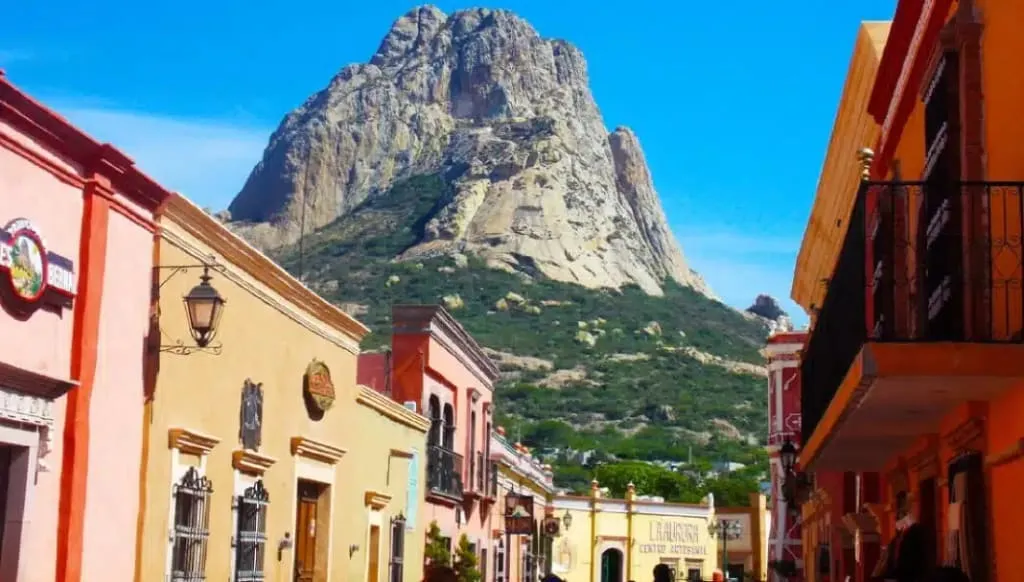
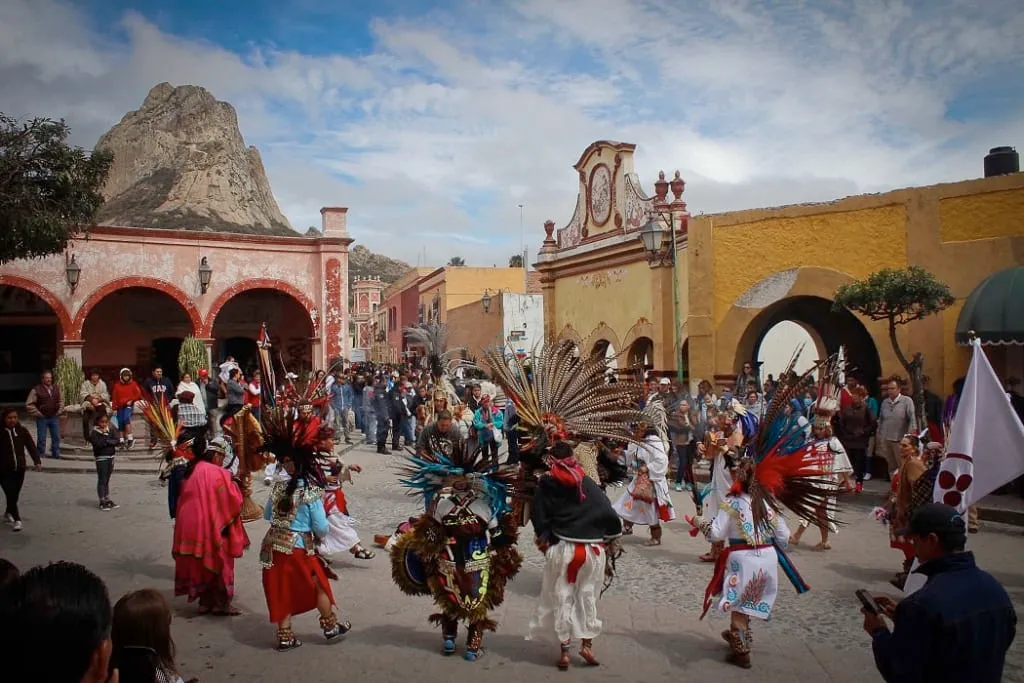
Peña de Bernal is a 433-meter rock formation towering above the colonial village of Bernal — the third-largest freestanding monolith in the world (after Uluru in Australia and the Rock of Gibraltar). The surrounding town of Bernal has 5,000 residents, a perfectly preserved stone main street, and one of the best street food traditions in Querétaro state.
The monolith: The Peña is climbable via a marked trail to approximately two-thirds height (around 2 hours round trip). The full summit requires technical gear and a guide — most visitors hike to the natural terraces for panoramic views over the valley. The rock is considered sacred by the Otomí people and has been a pilgrimage site for centuries.
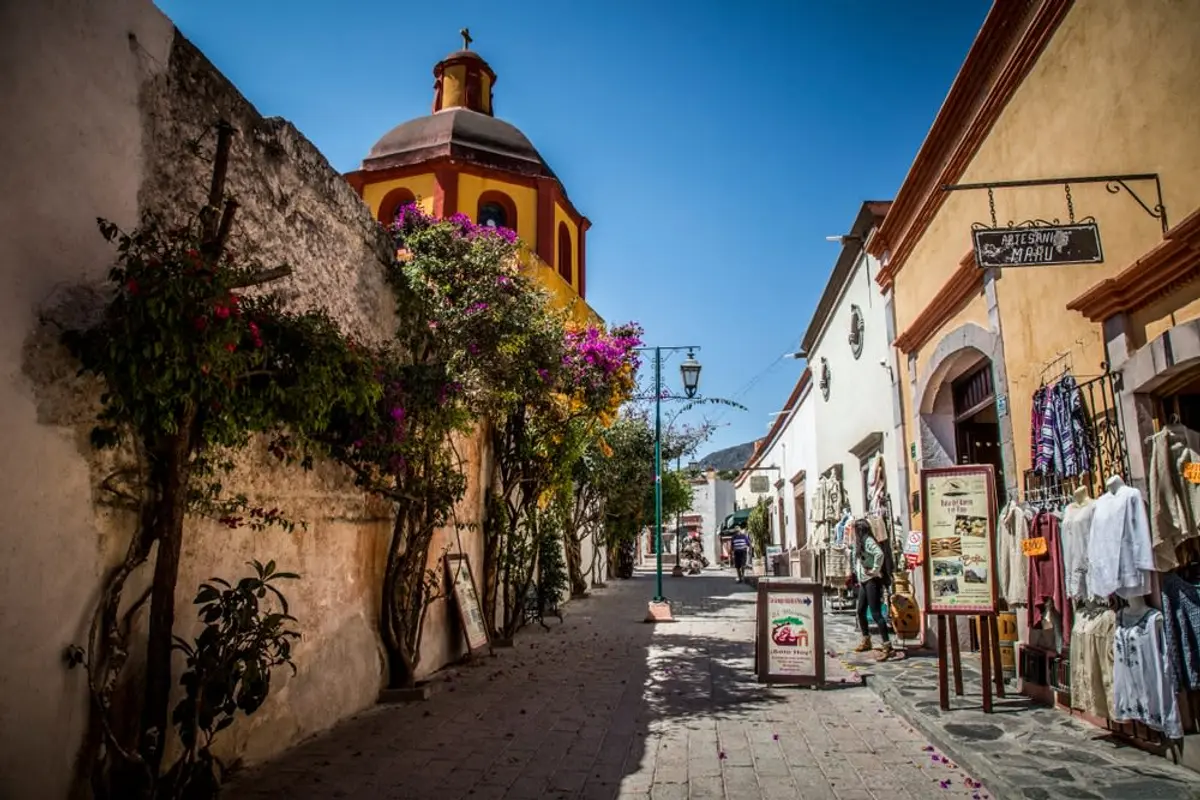
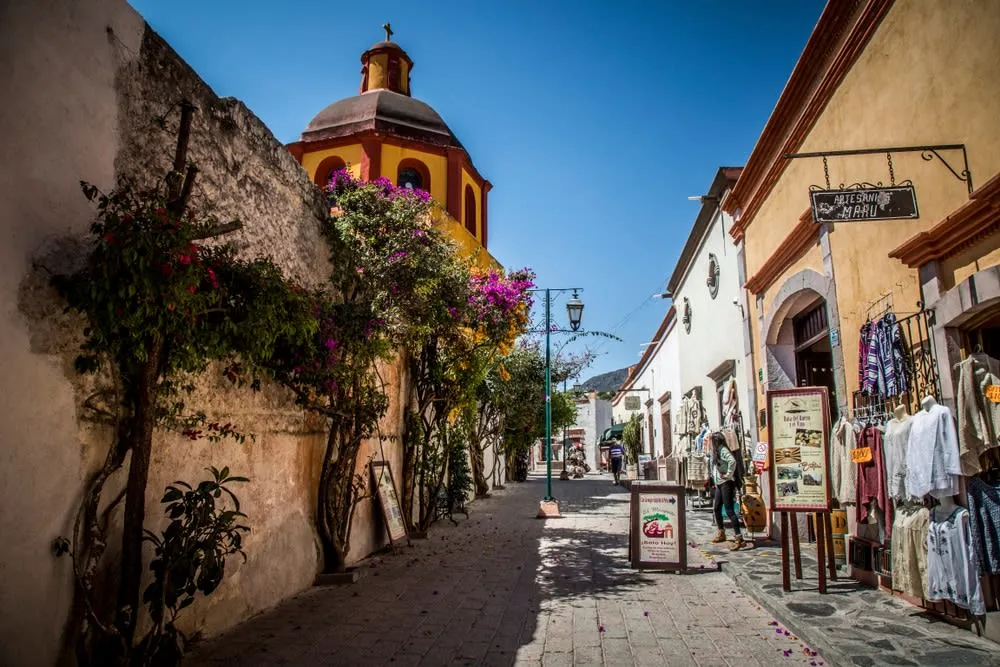
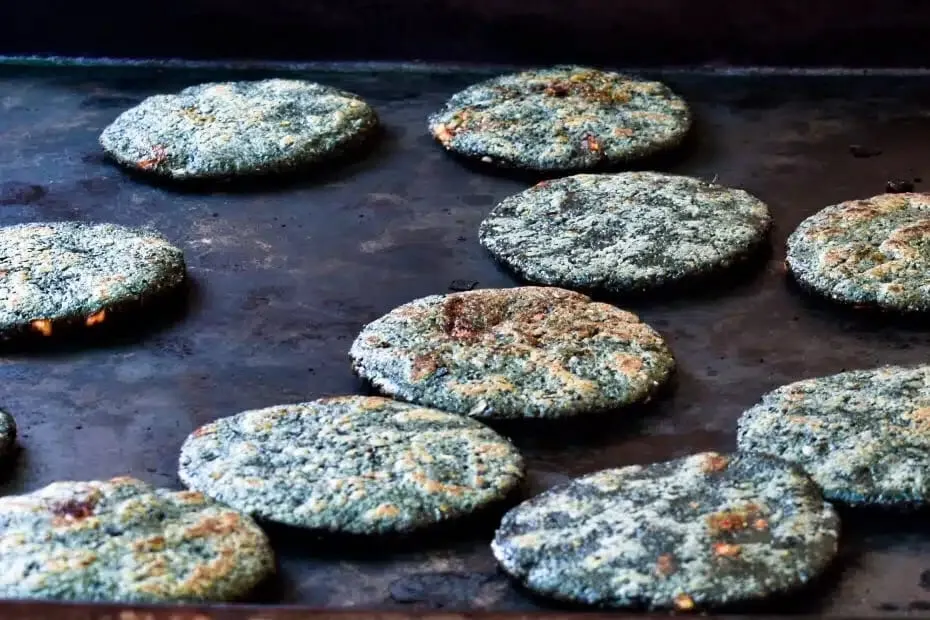
The village: Bernal’s main pedestrian street, Calle Independencia, is lined with artisan shops selling rebozo shawls (a Querétaro specialty), handmade leather goods, and opals (the surrounding region is Mexico’s opal mining heartland). Restaurant after restaurant serves gorditas — Bernal is considered the gordita capital of Mexico, with dozens of filling options including beans, chicken tinga, requesón, chicharrón, and picadillo.
Cheese and wine: The Tequisquiapan-Ezequiel Montes wine corridor passes through this area — several vineyards within 20 minutes of Bernal offer drop-in tastings. The mountain cheeses (queso serrano, requesón) available from roadside vendors are worth buying for the return journey.
Getting there: Bus from Querétaro → San Juan del Río (45 min) → Bernal (30 min local bus). Total 1.5 hours, 120–130 MXN. Uber from Querétaro city center costs 200–300 MXN (55 min). Most drivers will not do a return pickup — arrange in advance or find a local taxi in Bernal for the return.
2. Tequisquiapan Wine & Cheese Route — 65 km
Distance: 65 km east | Drive: 1 hr | Entry: Free (town); winery tours 200–400 MXN
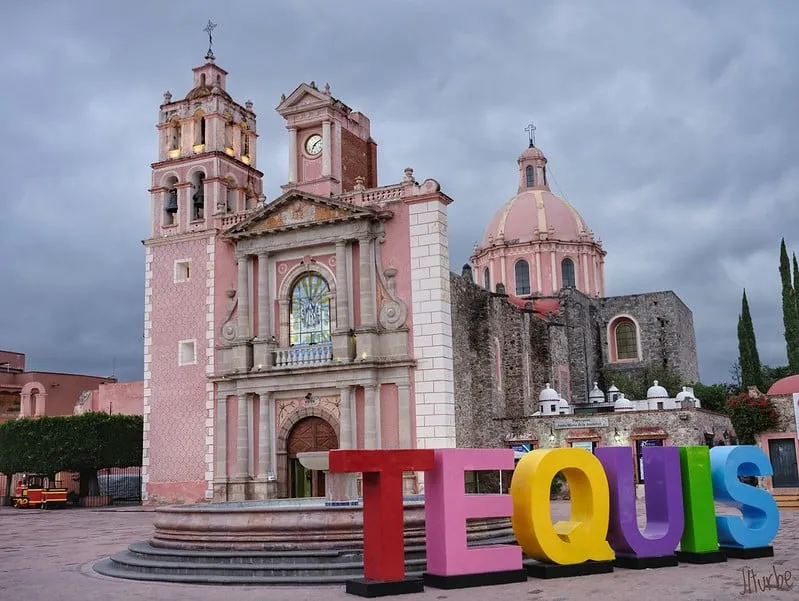
Tequisquiapan is Querétaro’s weekend escape — a thermal spa town with a shaded colonial plaza, an outstanding regional market, and direct access to Mexico’s most productive wine route. The town itself is entirely walkable and traffic-free in the center.
What to do:
- Mercado de Artesanías — regional crafts including opals, wicker furniture, and handwoven textiles
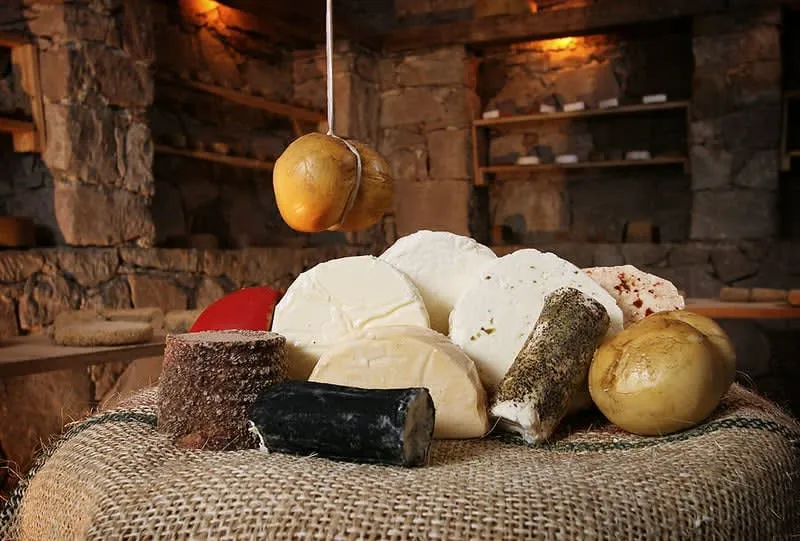
- Queso y vino market — the Friday–Sunday market near the main plaza specializes in artisan cheese (queso serrano, manchego queretano, requesón) and locally produced wines
- Temazcal — traditional steam ceremony offered by several spas in town (300–600 MXN)
- Thermal pools — several hotels open their mineral pools to day visitors (150–250 MXN)
Ruta del Vino Queretano: The wine route between Tequisquiapan and Ezequiel Montes covers around 20 wineries. The most visitor-friendly include La Redonda (tours daily, 200–350 MXN), Freixenet México (sparkling wine, tours weekends), and Viñedos San Marcos (smaller, more intimate). Advance booking recommended for weekend visits.
Getting there: Buses from Querétaro bus terminal to Tequisquiapan run regularly (1 hour, 80–100 MXN). Uber from Querétaro city costs 180–250 MXN (1 hour). Car rental lets you stop at wineries between Querétaro and Tequis.
3. San Juan del Río — 50 km
Distance: 50 km southeast | Drive: 45 min | Entry: Free
San Juan del Río is Querétaro’s closest day trip and the most overlooked — a legitimate colonial city of 280,000 people with an intact 16th-century historic center and a worldwide reputation for two things: opals and wicker.
Opals: The mountains around San Juan del Río produce fire opals and crystal opals sold in tianguis (open-air markets) and jewelry workshops throughout the city. Prices are significantly lower than Querétaro city or Mexico City — genuine loose opals start at 50–500 MXN depending on quality. Be aware that synthetic opals are sold alongside genuine stones; buy from established shops or ask for certificates.
Wicker: San Juan is the wicker capital of central Mexico — furniture workshops and market stalls overflow with handmade baskets, chairs, shelves, and decorative pieces at factory prices. Challenging to take home but spectacular if you’re driving.
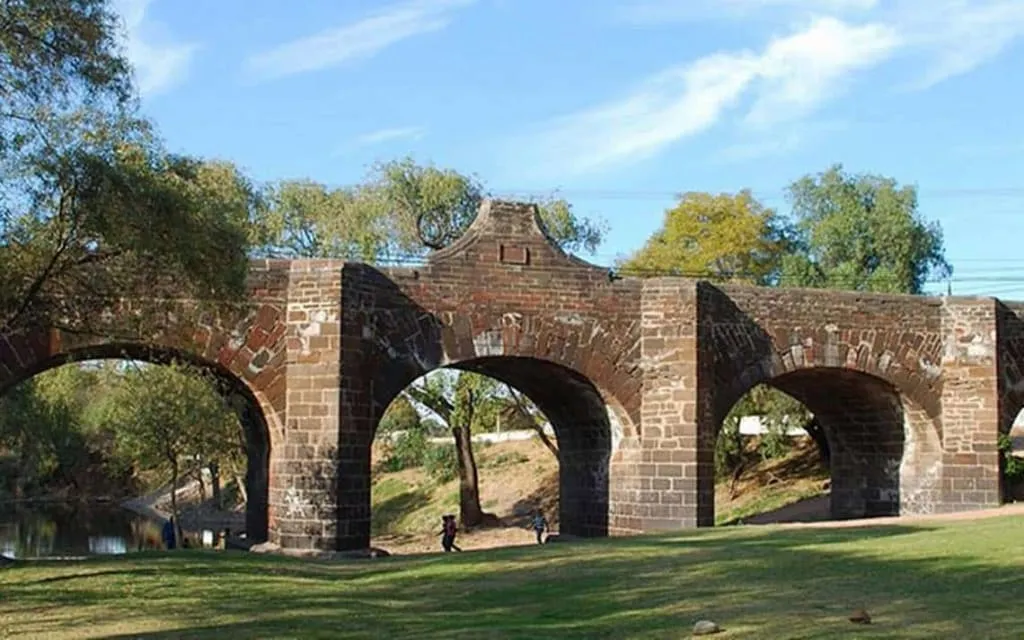
Historic center: The Templo de San Juan Bautista (16th century), the Ex-Convento de Santa Clara, and the main Plaza Independencia are all worth a walk. The aqueduct along the eastern edge of the historic center is a smaller version of Querétaro’s famous 74-arch structure.
Getting there: Buses from Querétaro bus terminal every 15–20 minutes (45 min, 70–90 MXN round trip). Uber costs 150–200 MXN each way.
4. San Miguel de Allende — 90 km
Distance: 90 km northwest | Drive: 1–1.5 hr | Entry: Free
San Miguel de Allende is the most spectacular destination reachable as a day trip from Querétaro — and also the one most worth staying overnight if you have the option.
Why it’s exceptional: The 1938 neo-Gothic Parroquia de San Miguel Arcángel (designed from a postcard by a self-taught architect who had never seen Gothic cathedrals in person) dominates a skyline of domed churches and pastel facades. The historic center has been a UNESCO World Heritage Site since 2008. About 30,000 expats live here, which gives the city an international food and arts scene unusually developed for a city of 170,000.
As a day trip: Arrive by 9 AM to beat tour buses at the Jardín Principal (main plaza). Walk up to the Mirador on Cuesta de San José for the panoramic city view. The Instituto Allende (attended by Neal Cassady and immortalized in Kerouac’s On the Road) is free to enter. The Santuario de Atotonilco (14 km outside town, “Mexico’s Sistine Chapel” — 18th-century murals covering every surface) is the most commonly skipped major attraction for day-trippers.
Getting there: Primera Plus and ETN buses from Querétaro bus terminal to San Miguel (1.5 hours, 180–250 MXN). Departs every 1–2 hours. Uber from Querétaro city costs 350–500 MXN each way. Car rental is best if combining with Guanajuato.
5. Atotonilco Sanctuary — 105 km
Distance: 105 km northwest | Drive: 1.5 hr | Entry: 30 MXN
The Santuario de Atotonilco (officially San Juan de Dios de Atotonilco) is one of Mexico’s most extraordinary religious buildings and a UNESCO World Heritage Site — yet it’s 14 km outside San Miguel and most visitors skip it entirely.
What makes it remarkable: Every interior surface — walls, arches, domed ceilings — is covered with 18th-century murals painted by Miguel Antonio Martínez de Pocasangre over 30 years (1740–1780). The pigments were made from natural minerals and the technique is primitive by European standards, which makes the total effect completely unlike anything else in Mexico. The church was built as a place of penance and pilgrimage; groups of penitents still walk to Atotonilco from San Miguel on foot during Holy Week, covering the 14 km on their knees for part of the route.
Logistics: Combine with San Miguel de Allende for a full day trip. Taxis from San Miguel to Atotonilco cost 150–200 MXN return. The church is open during daylight hours; the most atmospheric time to visit is early morning before tour groups arrive.
6. Sierra Gorda UNESCO Missions — 150–200 km
Distance: 150–200 km northeast | Drive: 2.5–3.5 hr | Entry: Free
The Sierra Gorda Biosphere Reserve contains five UNESCO-listed Franciscan missions built between 1751 and 1768 by Junípero Serra (the same friar who later founded the California mission chain). Each mission sits in a separate mountain valley with its own indigenous community, creating a circuit through three distinct ecosystems: oak-pine forest, cloud forest, and semi-tropical lowland.
The five missions:
- Jalpan de Serra (150 km) — the principal mission and regional capital; the most accessible
- Concá (175 km) — smallest mission; set in tropical lowlands with a river nearby
- Landa de Matamoros (185 km) — cloud forest setting; the most photogenic drive to get there
- Tilaco (195 km) — most remote; narrow mountain road; genuinely off-grid
- Tancoyol (200 km) — highest elevation; panoramic valley views; least visited
As a day trip: Jalpan alone is manageable as a day trip (3-hour drive from Querétaro, several hours to explore, 3-hour return). The full five-mission circuit requires an overnight in Jalpan — most travelers book 2 days.
The drive: The road from Querétaro to Jalpan crosses the Sierra Gorda through spectacular mountain scenery — cloud forest, canyon overlooks, and occasional hawk sightings. A rental car with GPS is essential; the roads are paved but mountain-narrow with few services.
7. Guanajuato City — 180 km
Distance: 180 km northwest | Drive: 2.5 hr | Entry: 40 MXN tunnels
Guanajuato is technically a day trip from Querétaro but so rich it rewards staying at least one night. The UNESCO colonial city of underground tunnels (originally built as flood channels, converted to roads), callejones (alleyways) connecting plazas, and the world-famous Mummy Museum contains enough to fill a full day easily.
Key Guanajuato highlights:
- Callejón del Beso (Alley of the Kiss) — two balconies so close that lovers can kiss across the gap
- Alhóndiga de Granaditas — the granary where Father Hidalgo’s army broke the first Spanish resistance in 1810; severed heads of independence leaders displayed on the corners for 10 years
- Mummy Museum (Museo de las Momias) — 111 naturally mummified bodies from the 19th-century cemetery; the oldest mummy in the Americas is here
- Valenciana mine and church — 18th-century silver mine that funded 30% of the world’s silver supply; the adjoining Churrigueresque church took 20 years to carve
- Callejoneada — student minstrel parades that depart from Teatro Juárez evenings
Getting there: Primera Plus buses from Querétaro bus terminal (2.5 hours, 250–350 MXN). Car via highway takes around 2 hours. Most visitors combine Guanajuato with San Miguel de Allende on a two-day colonial circuit.
8. Mineral de Pozos — 140 km
Distance: 140 km northwest | Drive: 2 hr | Entry: Free
Mineral de Pozos is a partially abandoned 19th-century silver mining town in the high desert of Guanajuato state — 3,000 residents rattling around in stone ruins that once housed 70,000 miners. The combination of crumbling haciendas, cacti-filled plazas, and a growing artist community has made Pozos one of Mexico’s most atmospheric “ghost towns.”
What you’ll find: Pre-Hispanic music workshops (traditional instruments made from clay and bone), artisan studios, mine shaft trails, and the ruined church of San Pedro with its collapsed roof open to the sky. The town has a small but excellent selection of restaurants and mezcal bars. The Mercado de Artesanías runs on weekends.
Who it’s for: Travelers interested in history, photography, and getting genuinely off the beaten path. Not for first-timers wanting highlights — Pozos rewards curious, unhurried visitors.
Getting there: Rental car essential (no reliable bus service). Via San Luis de la Paz (30 km away). Combined well with Dolores Hidalgo or San Miguel de Allende on a longer loop.
9. Pinal de Amoles — 130 km
Distance: 130 km northeast | Drive: 2 hr | Entry: Free
Pinal de Amoles sits at 2,650 meters in the Sierra Gorda — the gateway to the biosphere’s high-altitude zone and a dramatic change from Querétaro’s high desert. The town itself is small (6,000 residents), but the surrounding cloud forest has hiking trails, waterfalls, and eagle-owl nesting sites.
Why visit: The drive up is as good as the destination — the road climbs through five distinct plant zones from scrubland to cloud forest. The Peñamiller canyon overlook 30 km before the town is one of the most spectacular viewpoints in central Mexico. The town has a good weekly market (Sundays) and basic accommodation if you want to stay.
Best combined with: The Sierra Gorda mission circuit — Pinal de Amoles is on the road toward Landa de Matamoros.
10. Dolores Hidalgo — 135 km
Distance: 135 km northwest | Drive: 1.5–2 hr | Entry: Free
Dolores Hidalgo is the birthplace of Mexican independence — Father Miguel Hidalgo’s famous “Grito de Independencia” speech on September 16, 1810, was delivered from the church steps on the main plaza. Every September 16, the town fills with pilgrims and patriotic celebrations.
What to see:
- Parish of Our Lady of Sorrows — the church from which the Grito was delivered; well-preserved 18th-century facade
- Casa Museo Miguel Hidalgo — the independence leader’s house, now a national museum (20 MXN)
- Ice cream — Dolores Hidalgo is famous for outrageous ice cream flavors: mole, shrimp, beer, tequila, and cactus. Try at least three on the main plaza.
- Talavera workshops — the town produces distinctive regional ceramics different from Puebla-style Talavera; workshops sell direct
Getting there: Bus from Querétaro via San Miguel de Allende (1.5–2 hours total, change in San Miguel). Car via Highway 111 (1.5 hours direct). Most travelers combine Dolores Hidalgo with San Miguel de Allende on the same day.
Best Combination Routes
| Route | Time | Stops | Best Transport |
|---|---|---|---|
| Wine & Cheese Loop | Full day | Tequisquiapan → winery → Bernal for lunch | Car rental |
| Colonial Circuit | Full day | San Miguel de Allende → Atotonilco | Bus or car |
| Ghost Town Swing | Full day | Mineral de Pozos → Dolores Hidalgo | Car rental |
| Sierra Gorda Intro | Full day | Jalpan mission → Pinal de Amoles overlook | Car rental |
| UNESCO Day | Full day | Bernal + Tequisquiapan + winery | Car rental |
Seasonal Calendar
| Season | Best Trips | Notes |
|---|---|---|
| Mar–May | All destinations | Dry, pleasant temperatures (22–28°C) |
| Jun–Aug | Sierra Gorda, Pinal de Amoles | Cloud forest green; mountain roads wet — 4WD advised for remote missions |
| Sep | Dolores Hidalgo | Independence Day (Sep 16) celebrations; book ahead |
| Oct–Nov | Wine route, Tequisquiapan | Harvest season; wine festivals |
| Dec–Feb | Bernal, San Miguel | Cool and clear; Cervantino festival (Oct, Guanajuato) in shoulder season |
Budget Guide
| Budget Level | Daily Cost | What You Get |
|---|---|---|
| Budget | 150–300 MXN | Bus transport, free entry sites, street food |
| Mid-range | 500–900 MXN | Uber or rental share, winery tour, restaurant lunch |
| Comfortable | 1,000–1,800 MXN | Rental car, multiple sites, tasting menus, spa |
Useful Links
- Querétaro City Travel Guide — base for all day trips
- Things to Do in Querétaro — city activities first
- Bernal Querétaro — full Bernal guide
- Tequisquiapan Querétaro — full Tequisquiapan guide
- San Juan del Río Querétaro — opal and wicker town
- Things to Do in San Miguel de Allende — SMA activities guide
- Day Trips from San Miguel de Allende — SMA excursions
- Day Trips from Guanajuato — continue the colonial circuit
- Colonial Mexico Travel Guide — full central Mexico context
- Mexico Packing List — what to bring for mountain day trips