Things to Do in Guanajuato City 2026: 25 Best Activities, Culture & Day Trips
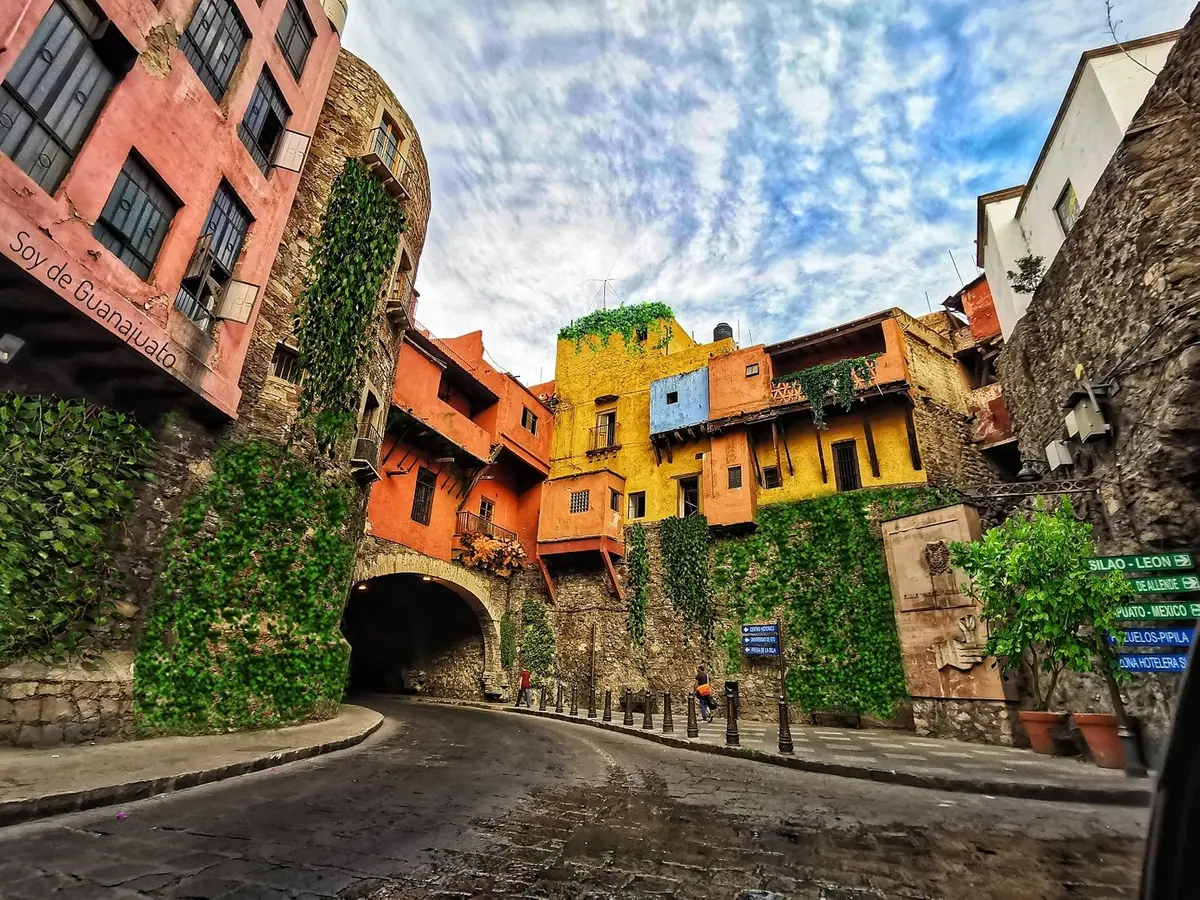
Guanajuato City is a UNESCO World Heritage Site wedged into a narrow ravine in central Mexico — a city of 200,000 people, 14 callejones (alleys), a road system built inside former flood tunnels, and more history per square kilometer than almost anywhere in the country. It produced roughly 30% of the world’s silver supply at its 18th-century peak, and that wealth went into churches, mansions, and cultural institutions that still stand intact today.
This is Mexico travel at its most rewarding: entirely walkable, architecturally stunning, with authentic student culture from one of the country’s oldest universities. Here are the 25 best things to do.
Quick Overview
| Activity | Category | Cost | Best Time |
|---|---|---|---|
| Underground Tunnels | Unique experience | Free (walk) | Any time |
| Mummy Museum | Museum | 110 MXN / ~$6 | Morning (less crowded) |
| Callejoneada | Street parade | Free | 8 PM nightly |
| Alley of the Kiss | Landmark | Free | Sunset |
| Pípila Monument | Views | Free (walk) or 40 MXN funicular | Sunset |
| Juárez Theater | Architecture/shows | Free exterior, 40 MXN tours | Mornings |
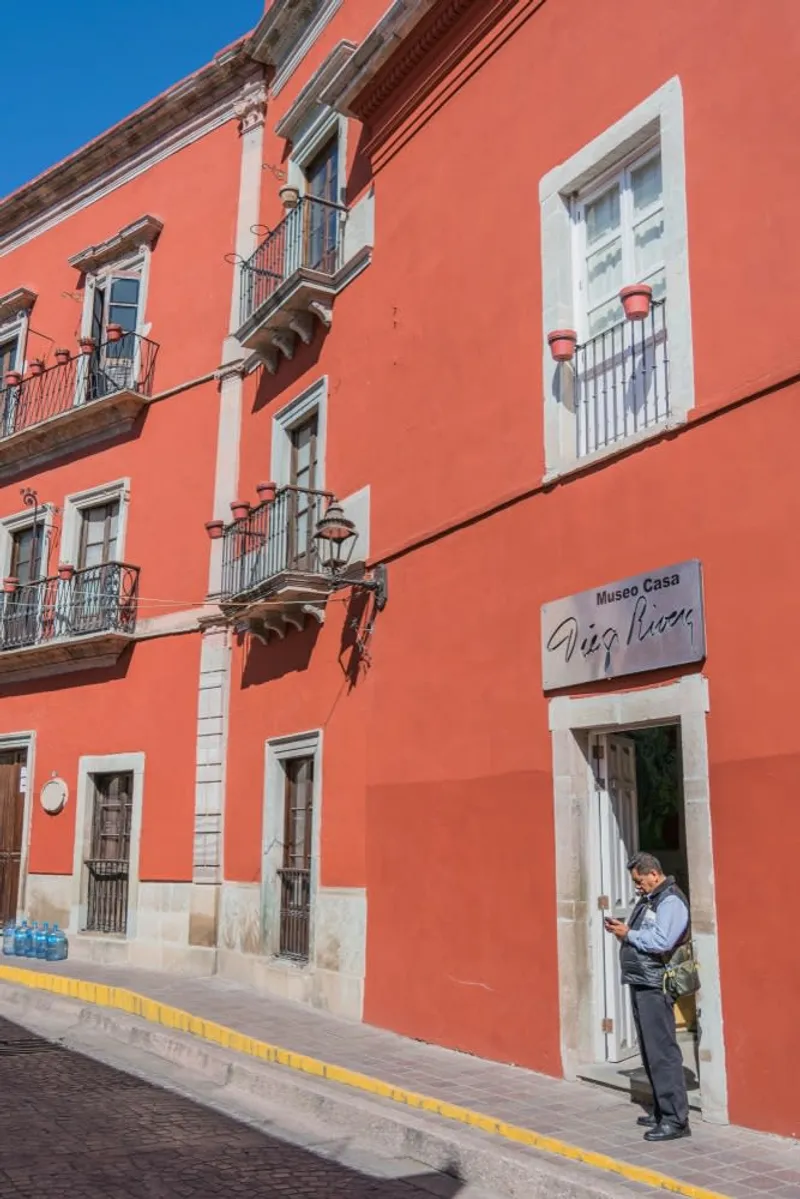
| Diego Rivera Museum | Art museum | 50 MXN | Mornings |
| Alhóndiga de Granaditas | History museum | 75 MXN | Any time |
| Valenciana Mine & Church | History/architecture | 50 MXN mine tour | Morning |
| Cervantino Festival | Festival | Free–$$$$ | October only |
| Day of Flowers | Festival | Free | Lent (March–April) |
| Mercado Hidalgo | Market/food | Free entry | Breakfast 8–11 AM |
| Calzada de Guadalupe | Walk | Free | Morning |
| Jardín de la Unión | Gathering | Free | Evening |
| León leather market | Shopping | Free | Thursday/Sunday |
Historic Center & Landmarks
1. Walk the Underground Tunnels
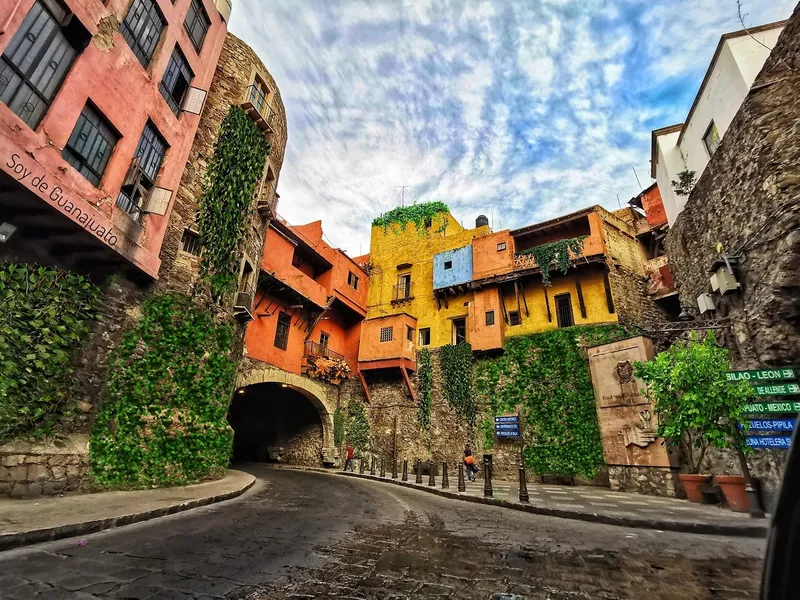
Guanajuato’s most unique feature isn’t above ground — it’s below. In the 1960s, engineers diverted the flood-prone Guanajuato River underground and turned the riverbed into a road network that now runs beneath the entire city. What you’re driving through is a literal tunnel carved through mountains, lit by orange sodium lamps, smelling of exhaust and history.
Most visitors see the tunnels from buses and taxis. Do it on foot: enter from Subterráneo Miguel Hidalgo near Jardín de la Unión and walk east toward the Alhóndiga. The pedestrian walkways run alongside traffic. About 1 km total. Free, safe, and genuinely unlike anything else in Mexico.
Tip: The tunnels connect most major landmarks — locals use them as shortcuts. Once you understand the network, navigation gets much easier.
2. Find the Alley of the Kiss (Callejón del Beso)
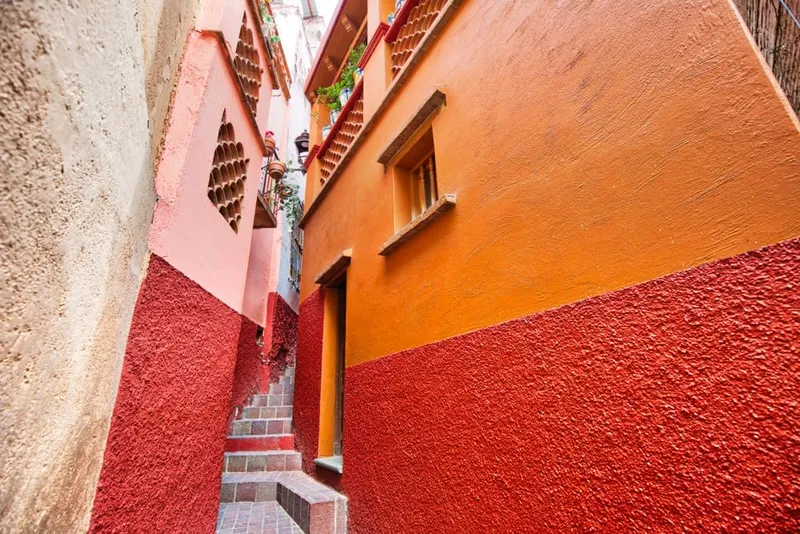
Two opposing houses built so close together that their second-floor balconies are only 68 centimeters apart. According to legend, a wealthy father forbade his daughter from seeing her lover — so they kissed each night across the gap until he discovered them and pushed her off the balcony. The lover caught her, but too late.
The tradition: kiss your partner on the third step leading up to the alley for 7 years of good luck. (Miss the kiss and it’s 7 years of bad luck.)
Where: Behind Jardín de la Unión, uphill on Calle Cantarranas. Look for the crowd. When: Go at golden hour for photos without the midday tour-group crush.
3. Climb to the Pípila Monument
The monument honors Juan José de los Reyes Martínez Amaro — known as “El Pípila” — a miner who strapped a stone slab to his back as a shield and set fire to the Alhóndiga de Granaditas gates during the 1810 independence uprising, turning the tide of the first major battle of Mexico’s War of Independence.
The statue is enormous and the panoramic view over the city is the best in Guanajuato — especially at sunset when the colored houses glow.
Getting there:
- Funicular: 40 MXN round trip, departs from Callejón del Calvario near Jardín de la Unión. 2 minutes each way.
- On foot: 20-minute uphill walk through winding alleys. Harder but you see the city differently.
4. Tour the Juárez Theater
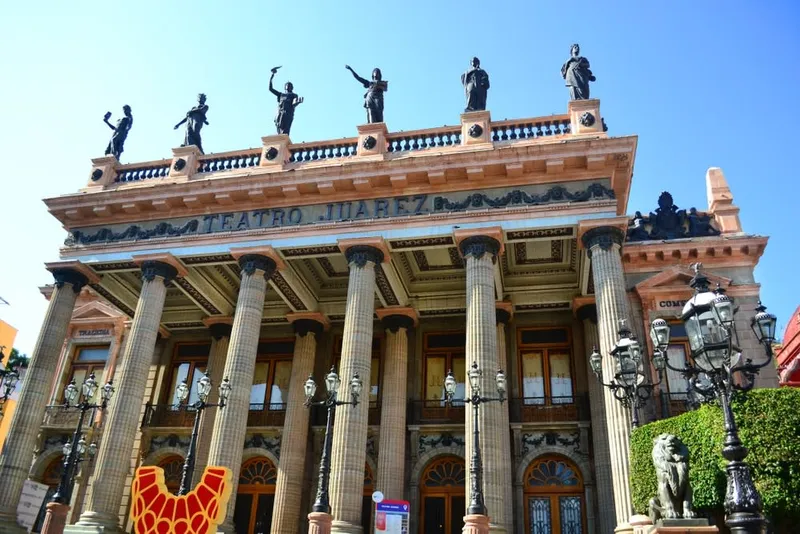
Built over 33 years and inaugurated on October 27, 1903 with President Porfirio Díaz in attendance. The opening performance was Aida by Verdi, performed by an Italian opera company. The facade combines Greek columns with Moorish interior details — an architectural contradiction that somehow works completely.
Eight bronze muse statues line the roofline. Inside, every surface is gilded or draped. The main theater hall seats 900 and still hosts performances year-round.
Entry: Guided tours run Tuesday–Sunday, 9 AM–1:45 PM, 45 MXN. Shows run most evenings — check the calendar at teatrojuarez.com for current programming.
5. Visit the Alhóndiga de Granaditas
Originally built as a grain warehouse in the early 1800s. In September 1810, royalist forces barricaded themselves inside as Hidalgo’s independence army laid siege — until El Pípila torched the doors. The massacre inside ended Spanish control of the city.
After the independence war turned, the insurgent leaders (Hidalgo, Allende, Aldama, Jiménez) were executed and their decapitated heads were hung from the four corners of this same building for 10 years as a warning.
Today it’s the state history museum, with permanent exhibits covering pre-Hispanic Guanajuato, the independence war, and Mexico’s political history. The hooks where the heads hung are still visible on the exterior walls.
Entry: Tuesday–Sunday, 10 AM–6 PM. 75 MXN (~$4 USD).
6. Stroll the Jardín de la Unión
The living room of Guanajuato. Triangular plaza surrounded by laurel trees, the Juárez Theater on one side, the San Diego Temple on another. Most evenings: a band plays traditional music, students gather on the benches, vendors sell corn and sweets, couples watch the callejoneada depart.
Free, central, always animated. All major landmarks are within 5 minutes’ walk from here.
Best time: 6–9 PM on weekends when the plaza fills with people.
Museums
7. Mummy Museum (Museo de las Momias)
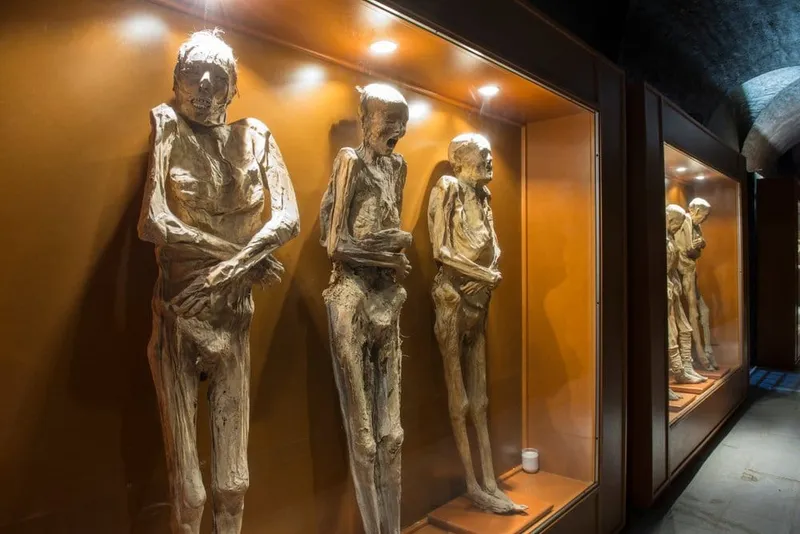
Guanajuato’s most famous and most polarizing attraction. Between 1865 and 1958, the city exhumed bodies from the municipal cemetery when families couldn’t pay burial fees — and found that the local soil (rich in nitrates and alum) had naturally mummified many of them.
The museum displays 111 mummies in glass cases: men, women, infants, even a woman who was buried alive (her position in the coffin tells the story). The oldest mummy dates to 1833. The smallest is a fetus.
It’s genuinely eerie. It’s also genuinely fascinating. The mummies are actual people, not wax figures or theatrical props. That distinction lands differently for different visitors.
Entry: 110 MXN (~$6 USD). Open daily 9 AM–6 PM (until 8 PM on weekends). Tip: Go on a weekday morning. Weekend afternoons bring school groups. Getting there: Take a “Momias” bus from Jardín de la Unión (7 MXN) or walk 20 minutes uphill.
8. Diego Rivera House Museum (Casa Diego Rivera)
Diego Rivera — the muralist who painted Palacio Nacional in Mexico City, who was married to Frida Kahlo — was born in this house in 1886. The museum occupies his birth home on Calle Pocitos.
The collection covers his development from childhood sketches to works completed a year before his death in 1957. Includes early cubist experiments rarely shown elsewhere, plus pieces from the private collection of politician Marte Gómez.
Entry: Tuesday–Saturday 10 AM–6:45 PM, Sunday 10 AM–2:45 PM. 50 MXN.
9. Museo Iconográfico del Quijote
An entire museum dedicated to Don Quixote. Guanajuato has a deep connection with Cervantes — the Cervantino Festival is named for him — and this museum houses 600+ representations of Quixote in every medium: painting, sculpture, stained glass, tapestry, ceramics. Works by Dalí, Picasso, and Daumier are in the collection.
Entry: Tuesday–Saturday 10 AM–6:30 PM, Sunday 10 AM–2:30 PM. 50 MXN.
Culture & Nightlife
10. Join a Callejoneada
The defining Guanajuato experience. Estudiantinas — student groups in medieval Spanish costume (black capes, hose, doublets) — lead nighttime walking parades through the city’s narrow alleys, playing guitars and mandolins and singing serenades and dirty limericks about local history.
Participants follow along carrying wine bottles (buy from vendors at the start), stopping at famous locations while the guide narrates the legends. The Alley of the Kiss is always on the route.
Departure: Jardín de la Unión and Plaza San Roque, 8 PM most evenings (more frequent on weekends). Cost: Free to join. Wine ~80 MXN from street vendors on the route. Duration: 1–1.5 hours. Tip: Show up by 7:45 PM — groups depart on time.
11. See a Performance at Juárez Theater
The Juárez Theater programs concerts, opera, ballet folklórico, and theater performances year-round. Prices are reasonable by any standard — Mexican symphony orchestra tickets cost 150–400 MXN. Check teatrojuarez.com for the current season.
During the Cervantino Festival (October), the theater hosts the headline international productions. These sell out months in advance.
12. Calzada de Guadalupe Walk
A long uphill street lined with trees and colonial buildings, connecting the historic center to the Basílica and Presa de la Olla reservoir. The walk takes about 30 minutes at a leisure pace, passing neighborhood markets and street food stands that tourists rarely reach.
Best on Sunday mornings when the Presa holds a small outdoor market.
Architecture & Churches
13. Basílica of Our Lady of Guanajuato
The yellow facade dominates Plaza de la Paz (the city’s original main square, pre-Jardín de la Unión). Inside is one of the most venerated Marian images in Mexico: a cedar-wood sculpture of the Virgin that legend says was hidden by Spanish Catholics from Moorish rulers for seven centuries before being sent to the New World.
The Virgin is dressed in gold and jewels donated by the city’s silver mine owners. The story of Guanajuato’s wealth is visible in every detail of this church.
Free entry. Open daily 9 AM–7 PM.
14. Valenciana Mine and Church
The Valenciana silver mine was the most productive mine in New Spain at its 18th-century peak, at some points accounting for 2% of the entire world’s silver output. The mine is still partially active — tours go 50 meters underground and explain the colonial-era extraction methods. Entry: 50 MXN.
Immediately adjacent is the Temple of San Cayetano — the mine owner’s private church, built to outshine every other church in Mexico. The facade is Churrigueresque (the most extravagant form of Spanish Baroque), and according to local accounts took 20 years to carve. The golden retablo inside was funded by silver profits that would be unimaginable today.
Getting there: 3 km north of the historic center. Taxi 50 MXN or “Valenciana” bus 10 MXN from Jardín de la Unión.
15. Cerro del Cubilete (Cristo Rey)
A hill 15 km outside the city center, often cited as the geographic center of Mexico, crowned by a bronze statue of Christ the King (Cristo Rey) — 16 meters tall, visible for miles. The statue is a pilgrimage site for Mexican Catholics.
The views from the hill extend across the bajío flatlands in all directions on a clear day.
Getting there: Taxi from city center 150–200 MXN round trip (negotiate return pickup). No regular bus service.
Festivals
16. International Cervantino Festival (October)
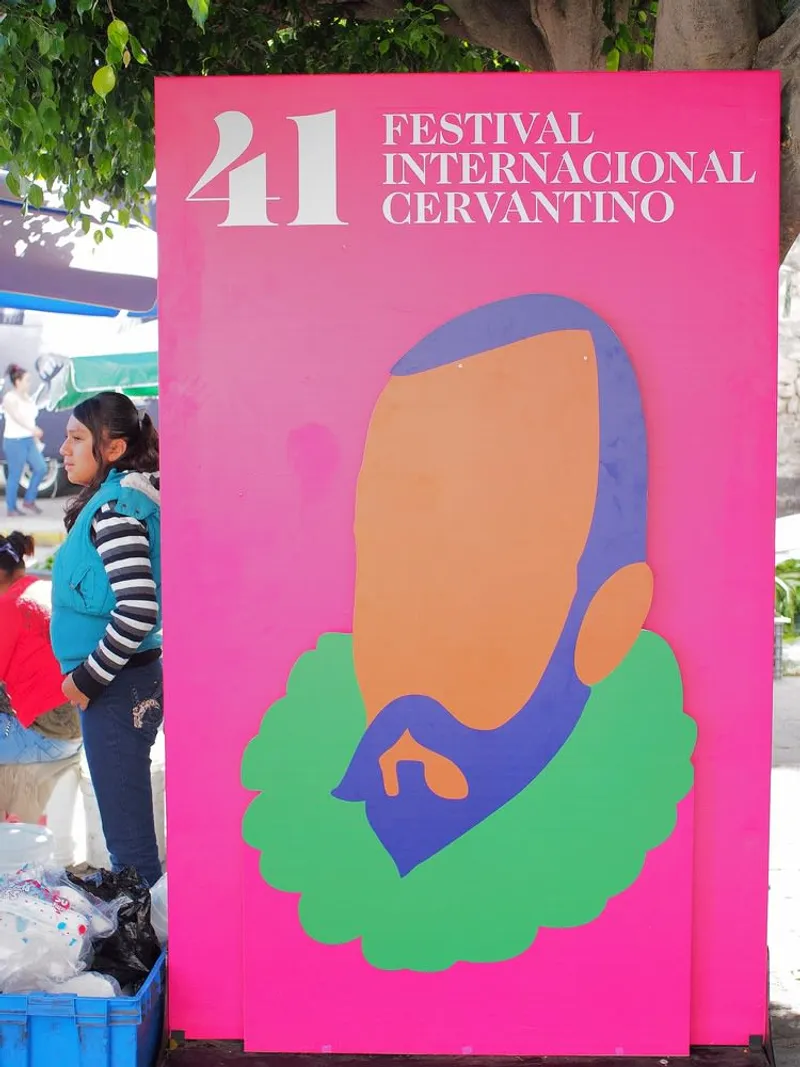
One of the most important performing arts festivals in Latin America. Three weeks in October, usually the second through fourth weeks. Artists from 30+ countries perform theater, dance, circus, opera, and classical music across the city’s plazas, theaters, and unconventional venues.
The festival began in the 1950s as an amateur interpretation of Cervantes’ interlude plays performed by students on the city’s plazas. It grew into a major international event with ticketed headline shows and dozens of free outdoor performances throughout the city.
Tickets: festivalcervantino.gob.mx — buy 3–4 months ahead for headline shows. Free outdoor events run continuously throughout. Accommodation: Book 6+ months in advance. Hotels sell out completely. Prices triple.
17. Day of the Flowers (Viernes de Dolores)
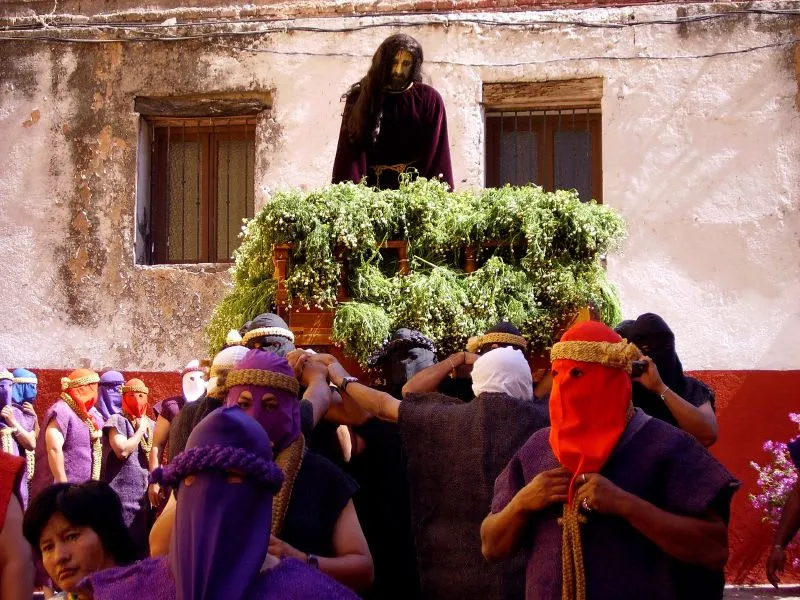
The Friday before Palm Sunday (March or April), the Jardín de la Unión is covered with hundreds of thousands of flowers in every color. It commemorates the “Friday of Sorrows” of the Virgin Mary.
The night before (Thursday), parties run across the city. On Friday, a more traditional ceremony involves residents walking through the garden in the old tradition of courtship: young men would offer flowers to the women they were interested in. Some young traditionalists still observe this.
When: Varies by year (tied to Easter). 2026: April 3.
18. Medieval Festival
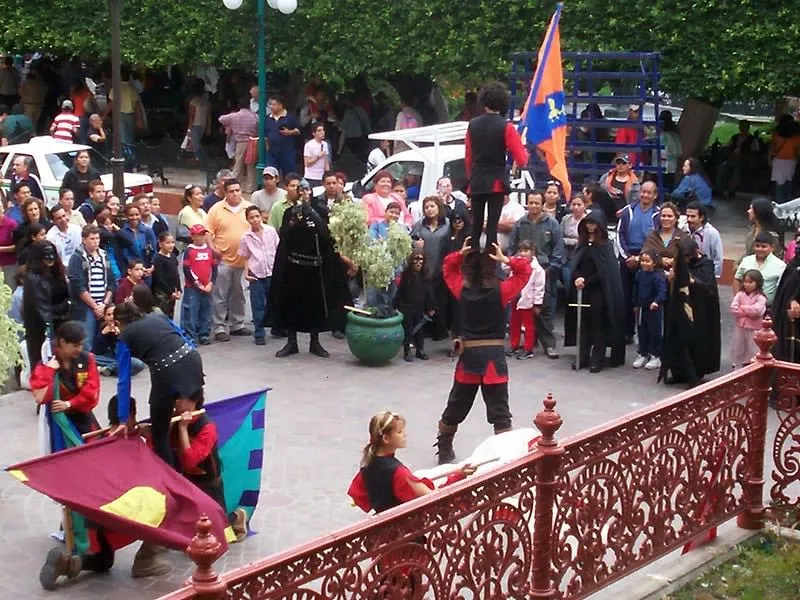
Three days in late March to early April. Guanajuato goes medieval: jousting, archery, sword fights, juggling, acrobatics, and a craft market in Plaza de la Paz, Plaza San Roque, and the Alhóndiga esplanade. Participants arrive in period costume from across Mexico.
The logic of a medieval festival in a silver-mining colonial city makes more sense than it sounds — Guanajuato has always had a theatrical, performative culture, and the medieval imagery connects to the Spanish heritage more directly here than in most Mexican cities.
When: Usually the last weekend of March or first weekend of April.
19. Day of the Cave (July 31)
Every July 31 (feast of San Ignacio de Loyola), residents hike up to the Cueva Nueva cave at dawn for an outdoor mass. Fireworks, singing of Las Mañanitas, and the peculiar tradition of asking the cave for rain — which, according to locals, reliably arrives by afternoon.
Food & Markets
20. Breakfast at Mercado Hidalgo
The city’s main market occupies a cast-iron structure built in 1910, originally designed as a train station. The ground floor has a produce section; the upper balcony runs stalls selling guajolota (torta de tamales), enchiladas mineras, gorditas, and pozole.
The specialty: Enchiladas mineras — the Guanajuato version of enchiladas, topped with potatoes, carrots, lettuce, queso fresco, and chiles. Not like any other enchilada in Mexico. Named for the mine workers who ate them. See the full Guanajuato food guide for 15 essential dishes including guacamayas, gorditas de harina, and cajeta.
Hours: 7 AM–8 PM daily. Best time: 8–11 AM for breakfast.
21. Eat at Jardín de la Unión Restaurants
The restaurants lining the triangular plaza are more expensive than the market but offer the experience of eating outdoors while watching the city’s social life unfold. La Carreta, El Retiro, and Café Tal are the most established.
Realistic cost: 150–250 MXN per person for a full meal, including a beer.
Day Trips
| Destination | Distance | Time | Highlight | How |
|---|---|---|---|---|
| Dolores Hidalgo | 55 km | 1.5 hrs | Grito de Independencia birthplace, ice cream with bizarre flavors (beer, shrimp, tequila, avocado) | Bus from Terminal Central, 80 MXN |
| San Miguel de Allende | 95 km | 2 hrs | UNESCO colonial city, La Parroquia pink church, international art scene | ETN or Primera Plus bus, 150 MXN |
| León | 65 km | 1.5 hrs | Leather capital of Mexico — shoes, bags, belts at factory prices | Bus from Terminal Central, 60 MXN |
| Mineral de Pozos | 80 km | 2 hrs | Ghost town with abandoned silver mine architecture, Pueblo Mágico | Car or tour (no direct bus) |
| Yuriria | 90 km | 2 hrs | 16th-century convent, flamingo lagoon (spring) | Bus via Salamanca, 100–130 MXN |
Practical Information
Getting Around
Guanajuato’s historic center is entirely walkable — most attractions are within 15 minutes of Jardín de la Unión on foot. The underground tunnels connect the center to outlying neighborhoods and the bus terminal.
City buses: 7–10 MXN. The “Momias” route goes to the Mummy Museum; “Valenciana” goes to the mine. Taxis: Metered. Center to Valenciana mine: 50 MXN. Center to bus terminal: 40 MXN. Uber: Available and works reliably. Usually cheaper than taxis for longer distances.
Where to Eat
| Place | Specialty | Price |
|---|---|---|
| Mercado Hidalgo (upper floor) | Enchiladas mineras, gorditas, pozole | 60–120 MXN |
| La Carreta (Jardín de la Unión) | Mexican classics, terrace seating | 150–250 MXN |
| El Truco 7 | Seafood, mezcal selection | 180–280 MXN |
| Mestizo | Modern Mexican, upscale | 250–400 MXN |
| Biznaga Café | Breakfast, coffee, café setting | 80–150 MXN |
Local specialty to try: Biznaga — candied cactus (prickly pear genus), sold at markets and street stalls. See the full Guanajuato food guide for all 15 dishes including enchiladas mineras, guacamayas, gorditas de harina, and cajeta from Celaya.
Free Activities
| Activity | Notes |
|---|---|
| Underground tunnels walk | Free pedestrian access |
| Alley of the Kiss | Free, always open |
| Callejoneada | Free to join (buy your own wine) |
| Jardín de la Unión | Always free |
| Basílica of Our Lady | Free entry |
| Calzada de Guadalupe walk | Free |
| Mercado Hidalgo exterior + ground floor | Free to walk through |
| Pípila Monument base | Free (funicular costs 40 MXN) |
Budget Guide
| Budget Level | Daily Spend | What You Get |
|---|---|---|
| Budget | $30–50 USD / 500–850 MXN | Hostel (180–300 MXN), market meals (60–120 MXN/meal), free activities |
| Mid-range | $70–110 USD / 1,200–1,900 MXN | Guesthouse or small hotel (600–1,000 MXN), restaurants (150–250 MXN/meal), 2–3 paid attractions |
| Comfortable | $130–200 USD / 2,200–3,400 MXN | Boutique hotel (1,200–2,000 MXN), full-service restaurants, shows, day trips |
Hotel prices in October (Cervantino) increase 200–300%.
Safety in 2026
The historic tourist center of Guanajuato is safe. The US Level 3 advisory for Guanajuato state applies to industrial corridors (Celaya, Irapuato, Salamanca) that have experienced cartel violence — not the colonial city. The university population, high foot traffic, and international tourism create a secure environment in the areas visitors use.
Standard precautions: keep valuables in hotel safes, use ATMs inside banks, don’t flash expensive cameras or jewelry in isolated alleyways at night. See our Mexico travel advisory guide for full state-by-state context.
Getting to Guanajuato
From Mexico City: ETN or Primera Plus bus from Terminal Norte (Metro Line 5 — note: not TAPO) — 4.5–5 hours, 350–700 MXN depending on class. Full breakdown of every option: Mexico City to Guanajuato 2026.
By air: Del Bajío Airport (BJX) near Silao/León serves Houston, Dallas, Los Angeles, and multiple domestic routes. Taxi or shuttle from BJX to Guanajuato: 350–500 MXN, 30–40 minutes.
By car: MEX-57D to Querétaro, then MEX-45D via Silao — 4–4.5 hours. Renting a car in Mexico makes day trips to Dolores Hidalgo, Mineral de Pozos, and Yuriria much more flexible. Budget 350–480 MXN in tolls each way.
Plan Your Trip
For a complete guide to the city — hotels, best time to visit, and the full neighborhood breakdown — read our Guanajuato City Travel Guide.
For month-by-month timing, Cervantino booking strategy, and the Día de la Cueva (July 31) local festival, see our Best Time to Visit Guanajuato guide.
The Mummy Museum has its own dedicated guide if you want the full story behind the natural mummification process.
For the best day trips from Guanajuato — Dolores Hidalgo’s independence history and wild ice cream, León leather market, San Miguel de Allende, ghost town Mineral de Pozos, and Querétaro’s aqueduct — see our Day Trips from Guanajuato guide. Guanajuato fits naturally into a colonial Mexico circuit with San Miguel de Allende (2 hrs), Dolores Hidalgo (1.5 hrs), and Morelia (2.5 hrs). See our 10-day Mexico itinerary and 2-week Mexico itinerary for routing options.
For practical trip planning, see the Mexico entry requirements guide and Mexico packing list.
Book Guanajuato tours on Viator — callejoneada tours, silver mine visits, day trips to Dolores Hidalgo, and more.