Morelia Mexico Travel Guide 2026: Colonial Grandeur, Butterflies & Day of the Dead
Morelia, Michoacán is a UNESCO World Heritage colonial city built almost entirely from pink quarry stone — a look unlike any other city in Mexico. It’s the capital of Michoacán state, 305 km west of Mexico City, and the gateway to the Monarch Butterfly Biosphere Reserve, one of nature’s greatest spectacles.
Most travelers know Cancún or Mexico City. Morelia is what they discover on their second trip — and it’s usually the one they remember longer.
| Quick Facts | Details |
|---|---|
| Location | Michoacán state, central Mexico |
| Altitude | 1,910 meters (6,270 ft) above sea level |
| Population | ~900,000 (metro) |
| UNESCO | Historic center listed 1991 |
| Distance from CDMX | 305 km (~3-4 hours by bus/car) |
| Distance from Guadalajara | 289 km (~3-4 hours) |
| Best Time to Visit | October–March (monarch butterflies + Day of the Dead) |
| Safety Level | Level 2 (Exercise Increased Caution — Michoacán state) |
| Language | Spanish; English limited outside tourist areas |
| Currency | Mexican Peso (MXN); ATMs widely available |
Why Morelia Deserves Your Attention
Most colonial Mexican cities follow the same playbook: main square, cathedral, government palace. Morelia breaks the template.
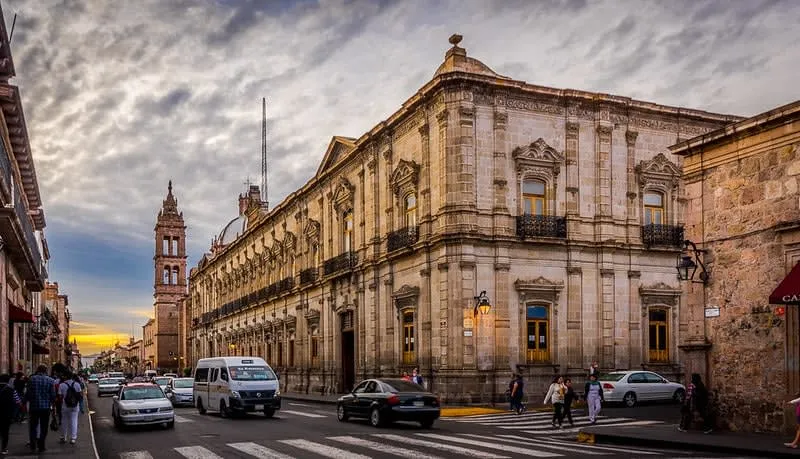
There is no main plaza. The historic center was designed in pure 16th-century Spanish grid style, but without a central zócalo — unique among all Mexican colonial cities. What you get instead is a continuous streetscape of rose-pink quarry stone buildings, over 200 of them, that glow amber at dusk.
The city is also named after a person — a rarity in Mexico. José María Morelos y Pavón, born here in 1765, became one of the key military leaders of Mexico’s War of Independence. The city was renamed from Valladolid to Morelia in 1828 to honor him.
Then there’s the monarch butterfly connection. From November to March, an estimated 200 million monarchs migrate from Canada and the US to the forests of Michoacán — a two-hour drive from Morelia. It’s one of the most astonishing wildlife events on earth.
The Historic Center
The 2 km² UNESCO Historic Center packs over 200 buildings that have been continuously inhabited since the 16th century. The pink quarry stone (cantera rosa) comes from local mines — every building must use it under preservation law.
The Cathedral
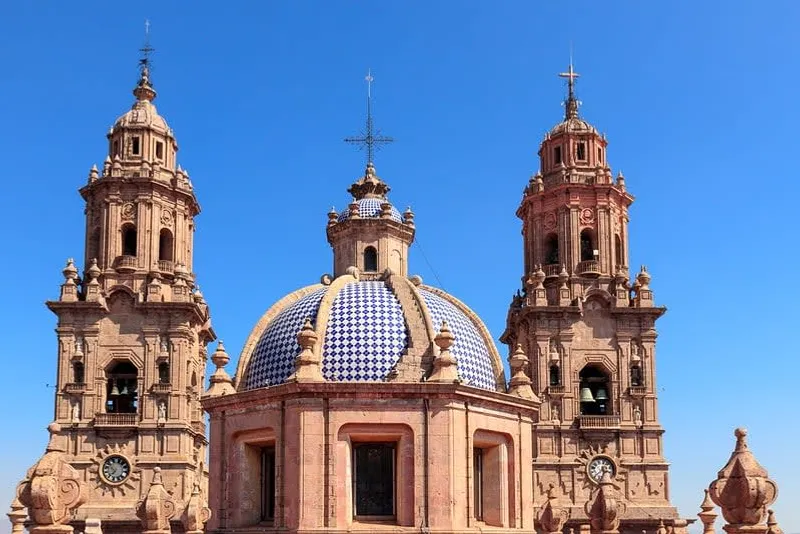
Morelia’s cathedral is a masterpiece of Mexican Baroque. Construction started in 1660 and finished in 1744, and the result is a perfectly proportioned facade flanked by two towers reaching 68 meters — visible from almost anywhere in the city.
Don’t miss:
- The organ with 4,500 pipes — the largest in Mexico and one of the largest in Latin America. Organ concerts happen year-round; check the Conservatorio de las Rosas schedule.
- The silver baptismal font, dating from the 17th century.
- Saturday evening light show (espectáculo de luz y sonido): the cathedral facade is illuminated with projections, fireworks, and sound. Free and spectacular.
Entry is free. Saturday evenings fill up — arrive 30 minutes early for a good spot on Avenida Madero.
The Aqueduct
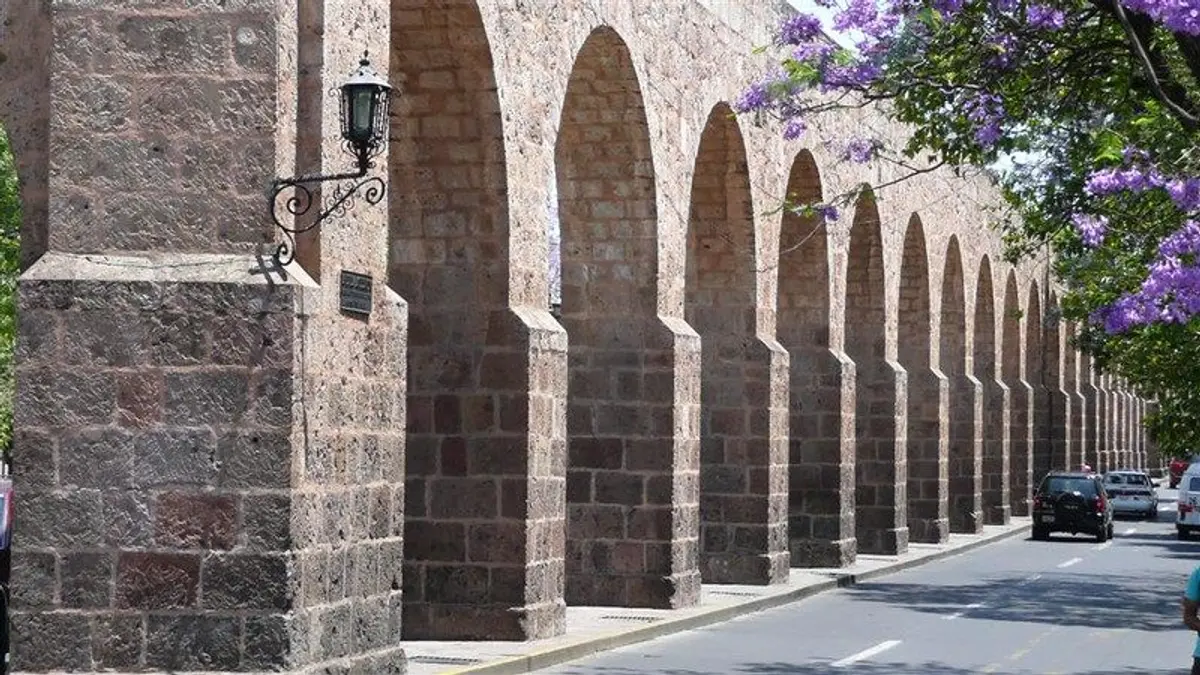
One of the most photogenic colonial aqueducts in Mexico. Built in 1785 to bring water to the growing city, it stretches 1,700 meters with 253 semicircular arches, each almost 10 meters tall. It operated until 1910 when the city’s water system modernized.
Today it’s a pedestrian promenade at the end of Avenida Acueducto. The late-afternoon light on the arches is a photographer’s dream. Walk the full length (about 20 minutes) toward the Bosque Cuauhtémoc park.
Conservatorio de las Rosas
Founded in 1743, this is the oldest music school in the Americas. It’s still an active conservatory — you can often hear students practicing baroque and classical pieces as you walk through the courtyards. Occasional free concerts in the chapel on weekends.
The building itself, a former convent, is a gem of Mexican Baroque architecture. Entry to the courtyards is generally open during school hours.
Museums
Morelia punches above its weight on museums:
| Museum | What’s Inside | Entry Fee | Hours |
|---|---|---|---|
| Museo Nacional del Virreinato Regional Michoacano | Pre-Hispanic artifacts, colonial art, independence-era relics | 90 MXN (~$4.50) | Tue–Sun 9AM–6PM |
| Museo Casa de Morelos | Birth house of José María Morelos, independence documents | 90 MXN | Tue–Sun 9AM–6PM |
| Museo del Estado | Michoacán history from pre-Hispanic to modern | Free | Mon–Fri 9AM–8PM |
| Museo de Arte Contemporáneo Alfredo Zalce | 20th–21st century Mexican art | 30 MXN | Tue–Sun 10AM–6PM |
| Planetario de Morelia | Astronomy shows, especially good for kids | 80 MXN | Wed–Sun |
Budget 3–4 hours for the Regional museum if you’re serious about Mexican colonial and pre-Hispanic history. It’s one of the best in central Mexico.
Morelia International Film Festival
The Morelia International Film Festival is the city’s biggest annual arts event and a compelling reason to visit in October. The 2026 edition runs October 16–25, bringing Mexican premieres, international guests, and screenings to venues around the historic center. Central hotels become more competitive during the festival, so book a refundable room early and review the program when it is released.
Our Morelia Film Festival 2026 guide covers ticket timing, venues, hotel areas, and how to build the festival into a Morelia trip.
Day of the Dead in Morelia and Michoacán
Michoacán is ground zero for Mexico’s most authentic Day of the Dead traditions. While the holiday is celebrated nationwide November 1–2, the celebrations here predate the Spanish conquest — the Purépecha people have been honoring their dead on these dates for over 2,000 years.
In Morelia, the city’s cemeteries and parks fill with marigold (cempasúchil) altars, candles, and families gathered overnight with their deceased relatives. The main cemetery near the historic center is open to respectful visitors — it’s a genuinely moving experience, not a tourist performance.
In Pátzcuaro (60 km away, see Day Trips below), the celebrations on Lake Pátzcuaro’s Janitzio Island are particularly famous: candlelit processions by canoe across the lake at midnight on November 1.
In Tzintzuntzan (75 km away), the Purépecha ceremonies are among the most traditional in Mexico, conducted in the original Purépecha language with rituals unchanged for centuries.
If you’re visiting Mexico in late October or early November, routing through Morelia and Pátzcuaro is a non-negotiable.
Monarch Butterfly Biosphere Reserve
Every year from November to March, approximately 200 million monarch butterflies migrate from Canada and the US to overwinter in the fir forests of the Transvolcanic Mountain Range — just a two-hour drive from Morelia.
The UNESCO-listed Biosphere Reserve straddles Michoacán and the State of Mexico. The main visitor centers are:
| Site | Distance from Morelia | What to Expect | Entry |
|---|---|---|---|
| El Rosario (Michoacán) | ~125 km (2.5 hrs) | Largest colony, most visitors, full infrastructure | 100 MXN + horse rental available |
| Sierra Chincua (Michoacán) | ~130 km (2.5 hrs) | Less crowded, longer hike, more intimate | 70 MXN |
| Cerro Pelón (Estado de México) | ~150 km (3 hrs) | Fewest tourists, steeper hike | 70 MXN |
Best months: Mid-December through February, when the butterflies are most concentrated. February is peak — the trees turn orange with tens of millions of resting monarchs, and warm afternoons bring clouds of them into flight around you.
Practical: Go on a weekday. Arrive before 11 AM before the afternoon mist arrives. Wear layers — the altitude (3,000+ m) makes it cold even in February. The hike from the parking area takes 30–60 minutes each way depending on the site.
You can book a day tour from Morelia or drive yourself. Organized day tours from Morelia handle transport and guides, which helps at El Rosario where the trails can be congested.
Michoacán Food Guide
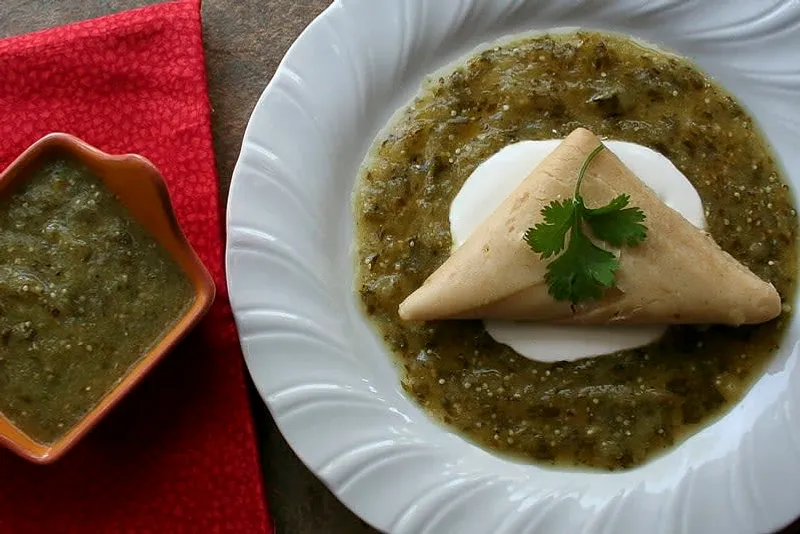
Michoacán has one of the most distinct food cultures in Mexico. The state’s cuisine is UNESCO-listed as Intangible Cultural Heritage. Don’t leave without eating:
| Dish | What It Is | Where to Find It |
|---|---|---|
| Carnitas | Slow-cooked pork — Michoacán invented it, and it’s still the best in Mexico | Mercado de Dolores Hidalgo, Uruapan market, any local carnitas shop |
| Corundas | Triangular tamales wrapped in corn leaf (not banana leaf), often served with salsa and cream | Markets and traditional restaurants |
| Uchepos | Fresh corn tamales, slightly sweet, smoother than regular tamales | Markets and traditional restaurants |
| Churipo | Beef and chili stew — deep red, slightly spicy, eaten for breakfast or lunch | Traditional fondas in the market |
| Atapakua | Pre-Hispanic green pumpkin seed sauce | Restaurants specializing in Purépecha cuisine |
| Dulces de Morelia | Crystallized fruits, ates (fruit pastes), jamoncillo (sweet bean/nut candy) | Dedicated sweet shops on Calle Valentín Gómez Farías |
Carnitas note: Michoacán carnitas are different from everywhere else in Mexico. The pork is cooked in large copper cauldrons (cazos de cobre) in its own lard, producing a crispy exterior and tender interior. Uruapan (90 km south) is the carnitas capital — but Mercado de Dolores Hidalgo in Morelia does it well too.
Dulces de Morelia: The street of candy shops near the Mercado de Dulces sells crystallized fruits, fruit pastes (ates), and jamoncillo — a sweet made from goat’s milk and pine nuts. These make excellent gifts and are unique to Michoacán.
Where to Eat
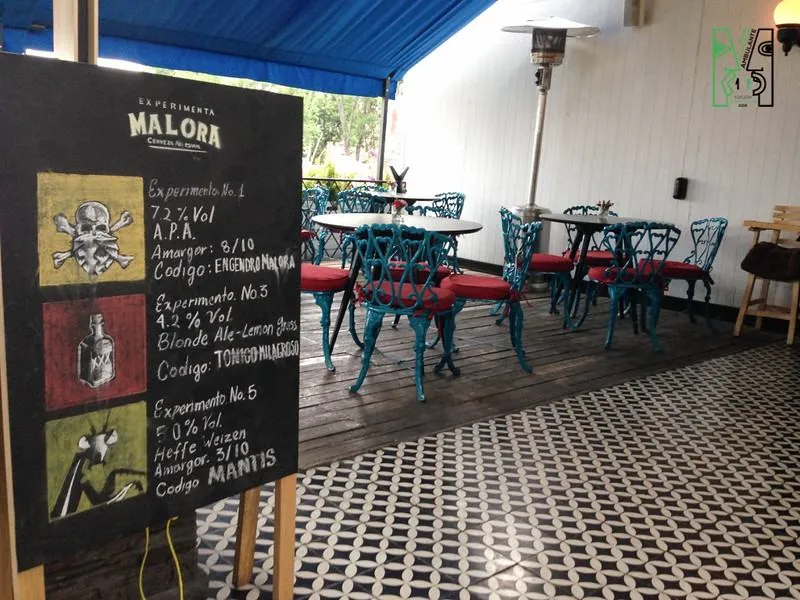
| Restaurant | Type | Price Range | Location | Standout |
|---|---|---|---|---|
| Los Mirasoles | Fine Michoacán cuisine | $$$ | Morelos Norte | Regional ingredients, cathedral views from terrace |
| La Azotea | Michoacán cuisine, rooftop | $$–$$$ | Historic center | Best rooftop view of the city |
| Emiliano’s | Carnitas specialist | $$ | Morelos Norte | The city’s most reliable carnitas |
| Taquería El Gordo | Street tacos | $ | Near Mercado | Carnitas tacos for 20–30 MXN each |
| Mercado de Dulces | Food stalls | $ | Centro | Corundas, uchepos, churipo at fondas |
| Las Trojes | Traditional Mexican | $$ | Av. Camelinas | Hacienda setting, generous portions |
| Lu Cocina Michoacana | Modern Michoacán | $$$ | Galeana | Michelin-recognized, tasting menu available |
Budget eaters: The city’s markets have food stalls (fondas) serving full comidas corridas (set lunch: soup + main + drink) for 80–120 MXN ($4–6). These are the best value for traditional food.
Day Trips from Morelia
Morelia’s location puts several remarkable places within easy reach:
| Destination | Distance | Drive Time | Highlight |
|---|---|---|---|
| Pátzcuaro | 60 km | 1 hour | Lake Pátzcuaro, Janitzio Island, Purépecha crafts, Day of the Dead |
| Tzintzuntzan | 70 km | 1.25 hrs | Purépecha ruins (Yácatas), Day of the Dead ceremonies |
| Cuitzeo | 30 km | 40 min | Largest natural saline lake in Mexico, 16th-century convent |
| Monarch Butterfly Reserve | 120–130 km | 2–2.5 hrs | El Rosario or Sierra Chincua (Nov–Mar only) |
| Uruapan | 120 km | 1.5 hrs | Paricutín volcano (day hike), Barranca del Cupatitzio waterfall, carnitas capital |
| Pátzcuaro crafts villages | 60–80 km | 1–1.5 hrs | Santa Clara del Cobre (copper), Tzintzuntzan (ceramics), Paracho (guitars) |
Pátzcuaro is essential. The city is one of Mexico’s best-preserved colonial towns, with a main plaza lined with portales (arcades) and a distinctly Purépecha atmosphere. The boat ride to Janitzio Island (30 min, 90 MXN round trip) gives views of the lake and the giant statue of Morelos that dominates the island. On weekends and holidays the island gets crowded — go on a weekday morning.
Uruapan is worth it for the Paricutín volcano — a cinder cone volcano that erupted in 1943 and literally buried the village of San Juan Parangaricutiro. The church steeple still protrudes from the lava field. You can ride horses to the edge of the crater or hike it. Most day tours depart Uruapan at 8 AM.
Getting to Morelia
| From | Method | Duration | Cost | Notes |
|---|---|---|---|---|
| Mexico City (Terminal Poniente) | ETN/Autovías bus | 3.5–4 hrs | 220–480 MXN | Near Metro Observatorio; frequent departures |
| Mexico City | Drive via Hwy 15D | 3.5–4 hrs | Toll ~200 MXN | Via Toluca/Maravatío |
| Guadalajara | ETN/Primera Plus bus | 3.5–4 hrs | 350–550 MXN | Via Zamora |
| Guadalajara | Drive | 3 hrs | — | Hwy 15 or 35 |
| Flight | Aeropuerto Internacional Michoacán (MLM) | Varies | $80–200 USD | Flights from CDMX, Monterrey, Tijuana |
From Mexico City bus: Morelia buses depart from Terminal Poniente (Metro Observatorio, Line 1) — not TAPO and not Terminal Norte. ETN and Autovías La Línea are the main carriers. See the full Mexico City to Morelia transport guide for routes and prices. Heading back? See Morelia to Mexico City for the return journey. Book at the terminal or via etn.com.mx for ETN seats.
Driving: The autopista (toll highway) is the best option. A rental car makes Pátzcuaro, the butterfly reserve, and Uruapan much easier to manage on your own schedule.
Getting Around Morelia
The historic center is walkable — all the major sites are within 2 km. For day trips, options are:
- Taxis: Plentiful and cheap for city trips. Negotiate or ask for the meter.
- Uber: Available and reliable in Morelia — usually cheaper than taxis.
- Buses (combis): Cover city neighborhoods and connect to bus station.
- Car rental: Recommended for the butterfly reserve and multi-stop day trips.
Where to Stay
| Hotel | Zone | Style | Price/Night | Notes |
|---|---|---|---|---|
| Hotel de la Soledad | Historic center | Colonial boutique | $80–130 USD | 17th-century building, courtyard, walking distance to everything |
| Hotel Cantera Diez | Historic center | Colonial boutique | $70–110 USD | Pink quarry stone building, excellent breakfast |
| Hotel Los Juaninos | Cathedral-facing | Rooftop bar | $90–150 USD | Best location — right on the cathedral square |
| Hotel Virrey de Mendoza | Historic center | Historical grande dame | $120–180 USD | 1565-era building, grandest colonial hotel in the city |
| Casa Grande Morelia | Historic center | Boutique | $60–90 USD | Comfortable, quieter street, good value |
| Holiday Inn Express | Av. Camelinas | Modern chain | $50–80 USD | Outside historic center, near shopping |
Recommendation: Stay in the historic center. A 15-minute walk gets you to everything. The boutique colonial hotels in Morelia are significantly cheaper than equivalent hotels in San Miguel de Allende or Oaxaca for the same experience.
Best Time to Visit
| Month | Weather | Crowds | Events |
|---|---|---|---|
| Jan–Feb | Cool and dry, 15–22°C | Low–Medium | Peak monarch butterfly season |
| Mar–Apr | Warm, 20–28°C, dry | Low | Good all-round |
| May–Jun | Hot before rains, 22–30°C | Low | Quiet season |
| Jul–Sep | Rainy season, 18–25°C | Low | Green hills, fewer tourists |
| Oct | Dry, 18–25°C | Medium | Pre-Day of Dead build-up |
| Nov 1–2 | 18–24°C | High | Day of the Dead — best in Mexico |
| Nov–Dec | Cool, dry, 14–22°C | Medium | Monarchs arriving |
Best overall: October–February. The Day of the Dead (November 1–2) and monarch butterfly season (November–February) overlap to create one of Mexico’s most rewarding travel windows.
Weather note: At 1,910 m altitude, Morelia is noticeably cooler than Guadalajara or Mexico City in winter. Bring layers for November–February evenings.
Budget Guide
| Budget Level | Daily Cost | What You Get |
|---|---|---|
| Budget | $30–50 USD | Hostel or guesthouse, market meals, public transport, free museums |
| Mid-range | $60–100 USD | Boutique colonial hotel, restaurant meals, Viator day trips |
| Comfort | $100–160 USD | 4-star hotel, fine Michoacán cuisine, private day trips to butterfly reserve |
Morelia is excellent value compared to Mexico City, San Miguel de Allende, or Oaxaca. Colonial boutique hotels run $70–130/night vs $150–250+ in San Miguel. Restaurant meals at good mid-range places average 200–400 MXN ($10–20).
Safety in Morelia
Michoacán state carries a US Level 2 advisory (Exercise Increased Caution) due to cartel activity in some rural areas. Morelia city and the main tourist routes are safe — the historic center, Pátzcuaro, and the butterfly reserve are well-traveled and have no significant tourist-safety issues.
Standard precautions: don’t flash expensive items, use Uber over street taxis at night, and avoid driving rural roads after dark. travel insurance covers medical and emergency situations — recommended for Michoacán given the advisory.
Frequently Asked Questions
How many days do I need in Morelia? Two full days covers the historic center well — cathedral, aqueduct, conservatory, and the main museums. Add a third day for a Pátzcuaro day trip or, November–February, the butterfly reserve. Four to five days lets you explore Uruapan and the Purépecha crafts villages.
Is Morelia safe for tourists? The historic center and main tourist areas are safe. Michoacán state has a Level 2 US advisory, which applies to rural areas and is the same level as large parts of Europe. The tourist circuit (Morelia, Pátzcuaro, butterfly reserve) is well-traveled with no specific tourist-safety issues reported. Standard precautions apply.
Is Morelia UNESCO World Heritage? Yes — Morelia’s Historic Monuments Zone was inscribed on the UNESCO World Heritage List in 1991. Over 200 buildings from the 16th–18th centuries constitute one of Latin America’s best-preserved colonial urban centers.
When do the monarch butterflies arrive in Michoacán? The first monarchs arrive in mid-November; colonies peak in January–February when 200+ million butterflies concentrate in a few fir forest groves. The best viewing window is December–February. By late March, they begin the return migration north.
How do I get to the monarch butterfly reserve from Morelia? By car: 2–2.5 hours to El Rosario or Sierra Chincua (follow signs to Angangueo or Ocampo). By organized tour: multiple operators in Morelia run full-day trips including transport and a bilingual guide — the most convenient option. By bus: take a bus from Morelia’s Central Camionera to Zitácuaro, then a local micro to El Rosario (5 total hours each way — more effort than it’s worth).
Morelia vs. Other Colonial Cities
| Morelia | San Miguel de Allende | Guanajuato | Oaxaca | |
|---|---|---|---|---|
| Tourists | Medium | Very High | High | Very High |
| Hotel Prices | $$ | $$$$ | $$$ | $$$ |
| Unique Factor | Butterflies + Day of Dead | Expat scene, art | Tunnels, mummies | Mezcal, crafts |
| UNESCO | ✅ | ✅ | ✅ | ✅ |
| Best For | Culture, nature, authenticity | Romance, food scene | Quirky architecture | Indigenous culture |
| English Level | Low–Medium | High | Medium | Medium |
Morelia is the least touristy of Mexico’s main colonial cities, which is both its challenge and its appeal. You get a genuinely Mexican city that functions as a real place, not a museum piece for foreigners.
Plan Your Trip
- Explore Morelia day tours and butterfly excursions on Viator — day trips to the butterfly reserve, Pátzcuaro, and Uruapan with guides.
- Compare car rental deals for Michoacán on RentCars — a car opens up Pátzcuaro, the butterfly reserve, Uruapan, and the crafts villages on your own schedule.
- travel insurance — recommended for Mexico travel, especially in states with Level 2 advisories.
More Morelia guides: Day Trips from Morelia → | Things to Do in Morelia → | Guanajuato City → | Things to Do in San Miguel de Allende → | Pátzcuaro & Lake Michoacán → | Monarch Butterfly Reserve → | Colonial Mexico Travel Guide → | Mexico Travel Advisory 2026 → | How Much Does Mexico Cost? → | Best Time to Visit Mexico →