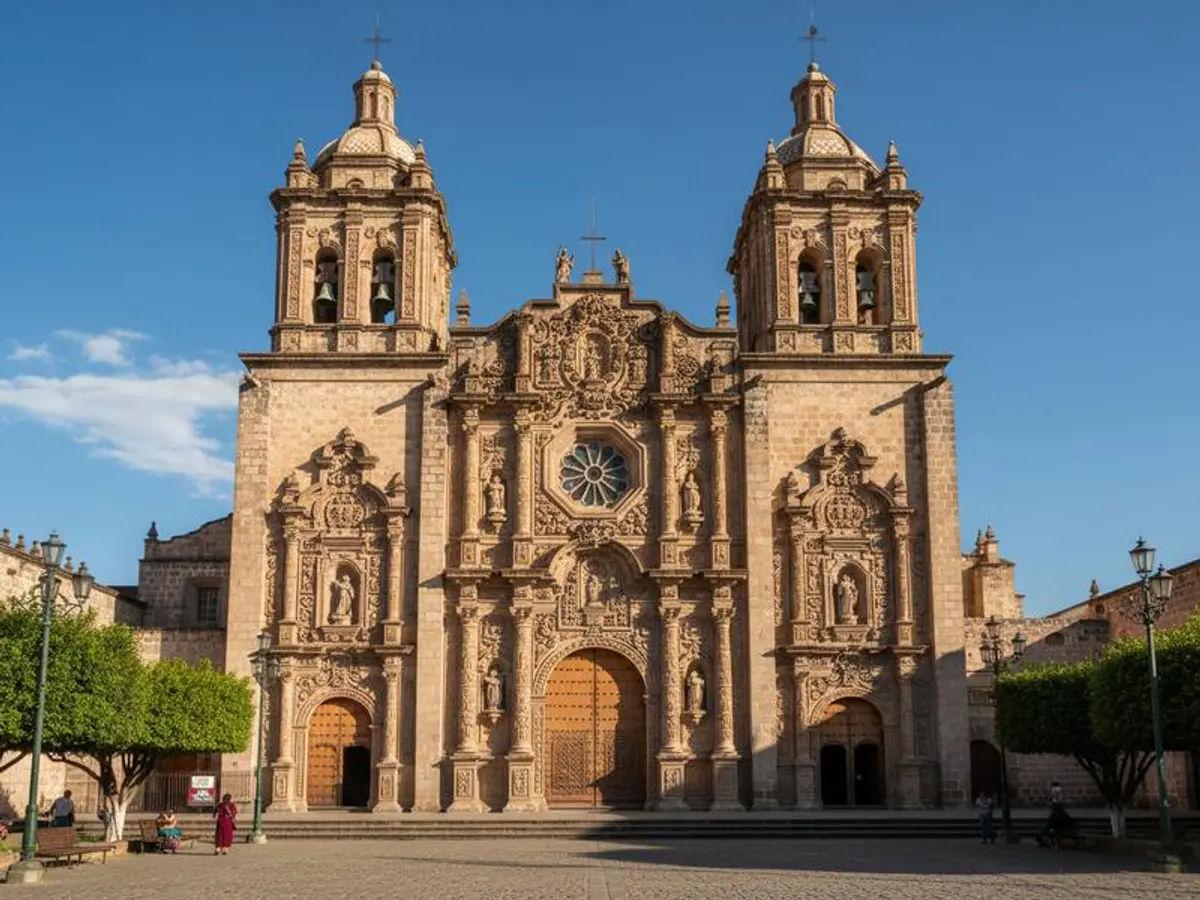
Guanajuato City Travel Guide 2026: Best Things to Do, Where to Stay, and Tips
Guanajuato City is one of the best colonial cities in Mexico for first-time visitors who want history, atmosphere, walkable streets, and nightlife in one place. If you only have one long weekend, give Guanajuato 2 to 3 days, stay in or near the historic center, and plan your evenings around a callejoneada or rooftop drinks, not just museums.
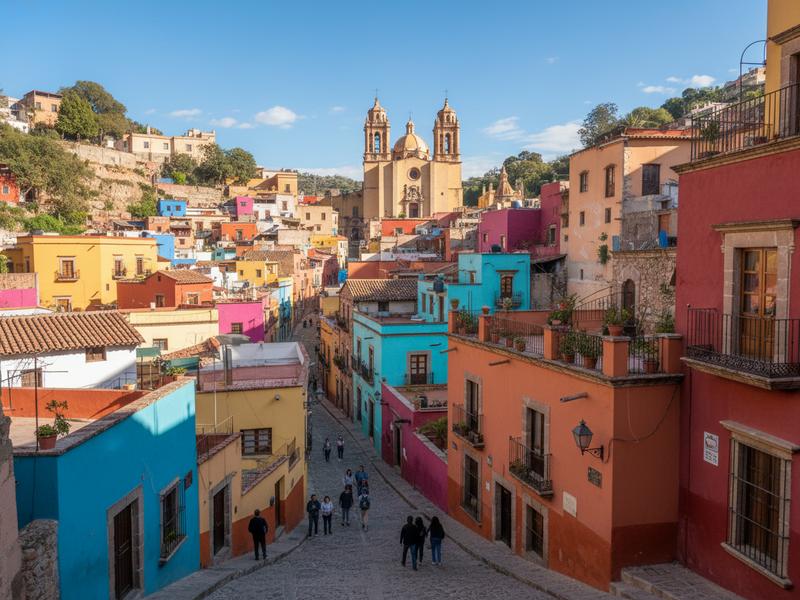
What makes Guanajuato different is that it feels theatrical without feeling fake. The tunnels, steep alleys, silver-mining history, student energy, and Cervantino culture all pile into a compact center that is easy to explore on foot once you understand the layout.
30-Second Answer
| Question | Short Answer |
|---|---|
| Is Guanajuato City worth visiting? | Yes, especially if you like colonial cities, live music, food, and walkable historic centers. |
| How many days do you need? | 2 days minimum, 3 days ideal. |
| Best area to stay? | Historic center if you want to walk everywhere, or just uphill from center for quieter nights and better views. |
| Best time to go? | October for Cervantino, or November to April for dry weather and easier sightseeing. |
| Biggest first-timer mistake? | Booking a car-centered trip. Guanajuato works best when you stay central and walk. |
Quick Facts
| State | Guanajuato |
| Altitude | 2,000 m / 6,600 ft |
| Population | ~200,000 (city) |
| UNESCO status | Historic Monuments Zone, 1988 |
| Airport | Del Bajío (BJX), 45 min drive |
| Currency | Mexican Peso (MXN) |
| Best time | Oct (Cervantino) or Nov–Apr (dry season) |
| Language | Spanish |
| Time zone | UTC-6 (UTC-5 in summer) |
| Safety | Guanajuato state: US Level 3 — tourist center is safe |
Why Guanajuato Stands Apart
Most Mexican colonial cities have one or two signature landmarks. Guanajuato has twenty, jammed into a walkable ravine you can cross in 15 minutes. The streets twist and climb so sharply that the concept of a grid never arrived — every walk becomes a surprise.
The city built its wealth on silver. At its 18th-century peak, Guanajuato’s mines produced roughly 30% of the world’s silver supply. That money went straight into churches, mansions, theaters, and the Juárez Theater — which was inaugurated in 1903 as one of the grandest venues in the Americas. When the mines eventually declined, the city was left with an extraordinarily well-preserved colonial core and very little industrial development to ruin it.
Today, the city is also home to the Universidad de Guanajuato, a 400-year-old institution that keeps roughly 40,000 students in the city. This university culture is what drives the callejoneadas, the festival calendar, and the general energy of the place — Guanajuato has a youthful buzz that most colonial cities lack.
Book tours in Guanajuato on Viator for skip-the-line access to key sites and guided walks through the old center.
The Underground Tunnels
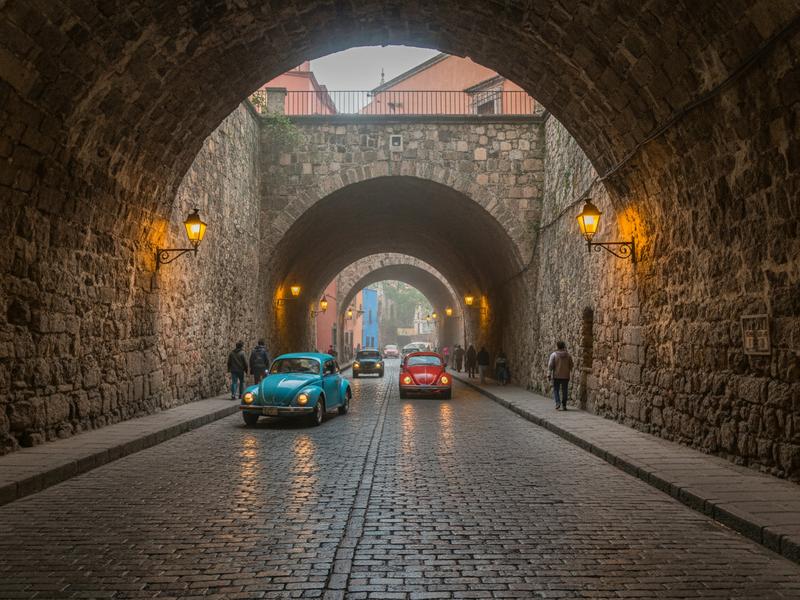
Guanajuato’s most immediately disorienting feature is that much of its vehicular traffic runs underground. The tunnel network — roughly 10 km of subterranean roads — was originally built between 1960 and 1968 to redirect the Guanajuato River, which had flooded the city repeatedly since the colonial era.
When the river was diverted to a new channel outside the city, the old riverbed tunnels were paved and opened to traffic. Over the decades, the network was expanded with new purpose-built tunnels.
What this means for visitors:
- Taxis and buses dive into tunnels constantly — it’s completely normal
- Walking in the tunnels as a pedestrian is not recommended (no sidewalks in older sections)
- The tunnels create surprising pop-up exits in the middle of plazas and hillsides
- Tunnel entrances are marked with “Subterráneo” signs
The tunnel system is genuinely one of the world’s stranger urban phenomena — a city that solved its flood problem and its traffic problem simultaneously by turning a river into a road.
The Historic Center and UNESCO Plazas
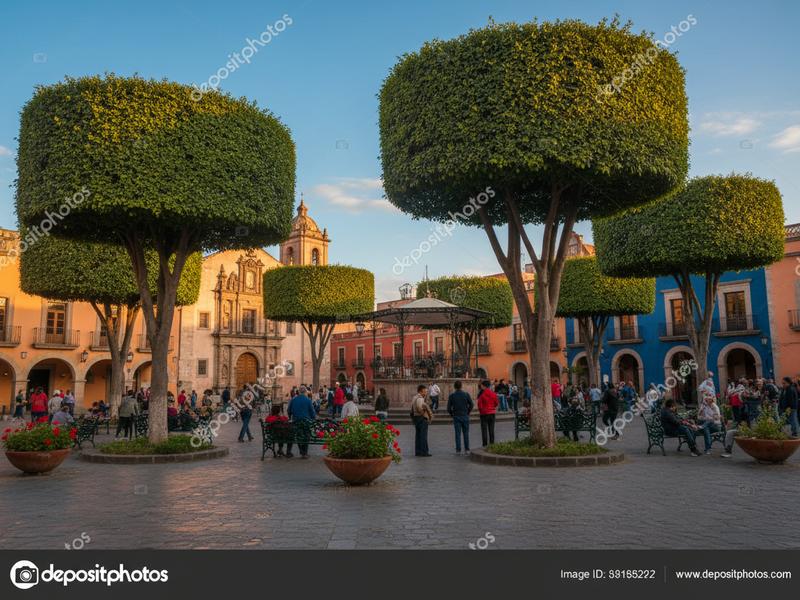
The heart of Guanajuato is the Jardín de la Unión, a triangular plaza shaded by Indian laurel trees, surrounded by restaurant terraces, and backed by the Juárez Theater. On most evenings, a town band sets up and plays — this is where callejoneadas depart, where students congregate, and where visitors discover they’ve lost track of time.
Key plazas and streets to walk:
Plaza de la Paz: A quieter square adjacent to the Basílica de Nuestra Señora de Guanajuato, which houses a cedar-carved Virgin given to the city by King Philip II of Spain in 1557. The church’s yellow baroque facade is Guanajuato’s most-photographed exterior.
Callejón del Beso (Alley of the Kiss): The narrowest alley in the city — so narrow that balconies on opposite sides are barely 68 centimeters apart. Legend says that Romeo and Juliet–style lovers could reach across to kiss without leaving their respective buildings. Today, there’s a formal legend that kissing on step three guarantees seven years of good luck. It’s a tourist ritual, but an enjoyable one.
Jardín Reforma and Plaza San Roque: Both quieter than the main plaza — more local, better for watching daily city life.
Calle Positos and Calle Alonso: The main commercial arteries of the old center, both pedestrianized, lined with shops, cafes, and university buildings.
For context on how Guanajuato fits into a larger colonial road trip, see our Central Mexico Colonial Travel Guide.
The Juárez Theater
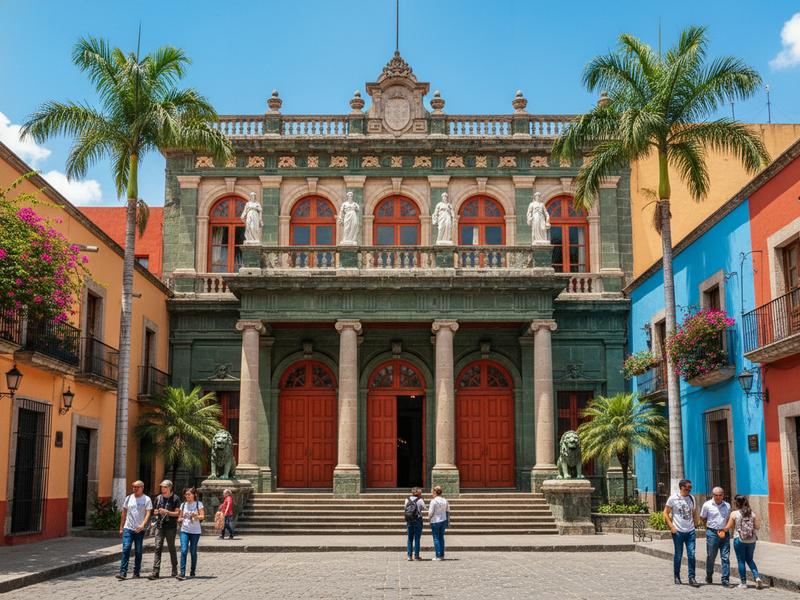
The Teatro Juárez was built between 1873 and 1903 — a 30-year construction that outlasted three governors and one president who started it. The inauguration on October 27, 1903 was attended by President Porfirio Díaz; the opening opera was Verdi’s Aida performed by an Italian company.
The facade is neoclassical with Doric columns, topped by eight bronze muses (seven arts, one science) imported from Europe. The interior is Moorish — deep reds, ornate gilded boxes, a painted ceiling, and gas-lamp-era intimacy that modern theaters rarely achieve.
Visiting the theater:
- Guided tours: Available daily, usually 9 AM–2 PM; entrance is about 30 MXN
- Performances: Check the official theater program — opera, classical music, and dance year-round
- Cervantino: The Juárez Theater is one of the primary Cervantino venues; tickets sell out months in advance
The Callejoneada
The callejoneada is Guanajuato’s most unique social ritual and one of Mexico’s best nighttime experiences.
An estudiantina — a group of students dressed in Renaissance Spanish costume (capes, tights, doublets, plumed hats) playing guitars, mandolins, lutes, and singing Spanish ballads — leads a parade through the city’s narrow alleys. Participants follow along carrying small bottles of wine and dulces típicos (traditional candies sold at the parade’s start point).
How to join:
- Most estudiantinas depart from Plazuela San Roque or the Jardín de la Unión between 8 PM and 9 PM
- Shows typically last 1–1.5 hours, winding through 4-6 historic alleys including the Callejón del Beso
- Cost: 100–200 MXN per person, includes a small bottle of wine or mezcal in some versions
- Organized callejoneadas run every night; some student groups operate independently and are free to follow
The experience is intimate and genuinely fun — not the manufactured “cultural show” that happens at resort destinations. The estudiantina tradition dates to medieval Spain and was transplanted to Guanajuato through the university.
The Mummy Museum
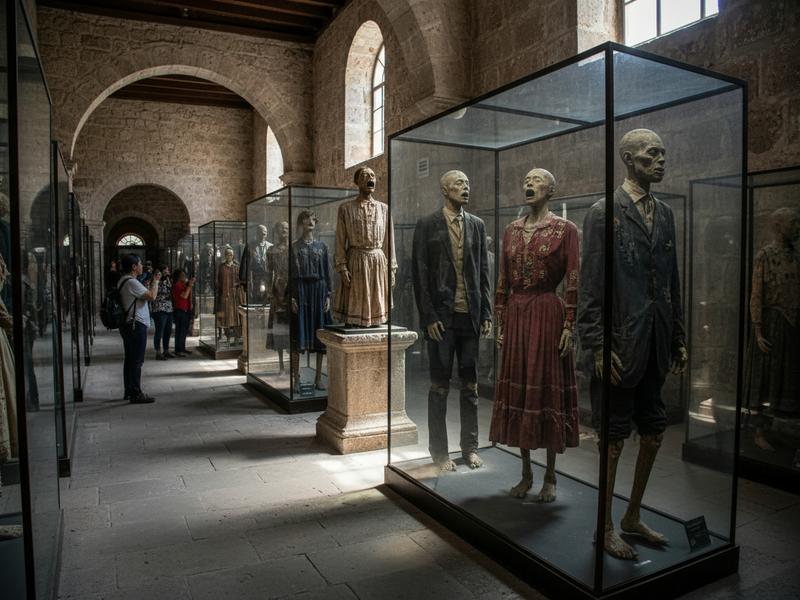
The Museo de las Momias de Guanajuato is one of Mexico’s most visited museums and also its most macabre. Between 1865 and the 1950s, the city’s municipal cemetery exhumed bodies from family plots when perpetual grave fees went unpaid. What workers found was remarkable: Guanajuato’s soil chemistry and altitude had naturally mummified many of the bodies.
By the 1870s, citizens were paying to view the mummified remains. By the 1900s, a permanent museum had formed. Today, the museum displays 111 mummies — some with hair, clothing, and facial expressions intact, including the world’s smallest mummified fetus.
Practical info:
- Hours: 9 AM–6 PM daily
- Entrance: ~100 MXN
- Photography: Allowed without flash
- Location: Adjacent to the Panteón Municipal, a 10-minute taxi ride from the city center
The museum is genuinely affecting — not horror-show entertainment, but a strange window into how 19th-century Guanajuatans lived, dressed, and died. Book a guided Mummy Museum tour on Viator to get historical context beyond what the exhibit plaques explain.
See also our dedicated Mummies of Guanajuato guide for the full story.
The Pípila Monument
The Monumento al Pípila stands on the highest visible hill above the city center, visible from almost anywhere in Guanajuato. It depicts Juan José de los Reyes Martínez — nicknamed El Pípila — a miner who strapped a flat stone to his back as a shield and crawled to the doors of the Alhóndiga de Granaditas (the Spanish royalist stronghold) to set them on fire with a torch during the 1810 Battle of Guanajuato, the opening military engagement of Mexico’s War of Independence.
Getting there:
- Funicular: From behind the Alhóndiga, takes 3 minutes, costs about 35 MXN each way — operates until ~8 PM
- Walking: 20-minute uphill walk through Callejón del Cuarto
- Best time: Sunset, when the whole city turns golden below you
The view from Pípila is the best in the city — better than any rooftop bar, because you see the full ravine topography that makes Guanajuato’s layout so unusual.
Valenciana Mine and Church
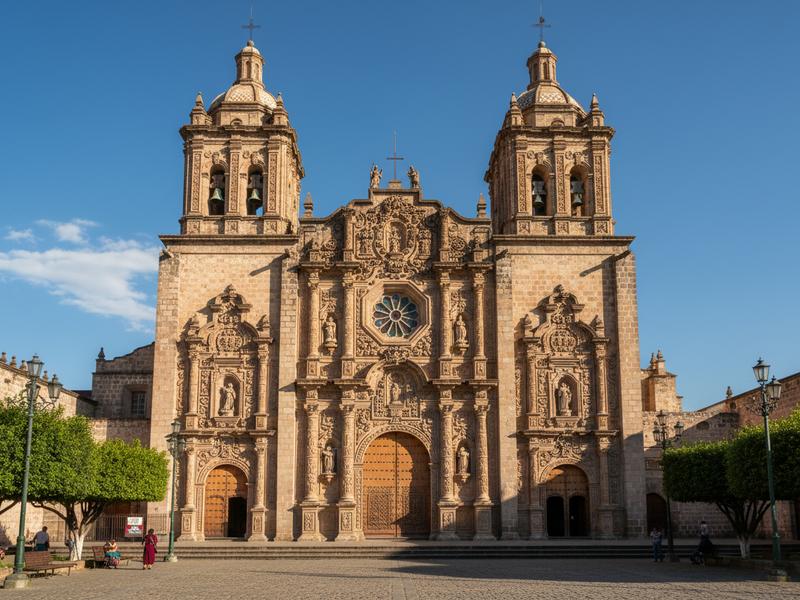
Six kilometers north of the city center, the Valenciana Mine was the world’s most productive silver mine throughout the 18th century. At its peak in the 1780s, it supplied 20% of the world’s silver output and made its owner, the Count of Valenciana, the richest man in New Spain.
The mine is still accessible to visitors — you can descend into the first levels with a guide and see the working conditions that sustained colonial Spain’s treasury for two centuries.
Adjacent to the mine is the Templo de San Cayetano de Valenciana (also called La Valenciana Church), built 1765-1788 by the Count of Valenciana as a thank-you for his mining wealth. It’s considered the finest example of Mexican Churrigueresque (ultra-baroque) architecture anywhere — the facade is an explosion of carved stone ornament that took over 20 years to complete. The contrast between the mine workers’ brutal conditions and this palace-like church built with their labor is not lost on anyone.
Getting there: Taxis from center cost about 80-120 MXN each way; round-trip Uber is usually 150-200 MXN. Organized day tours from Guanajuato typically include Valenciana + the mummy museum in a single circuit.
The Festival Internacional Cervantino
The Festival Internacional Cervantino (FIC) is Guanajuato’s biggest annual event and one of the most important performing arts festivals in the Americas. It runs for three weeks each October, typically the second through fourth weeks.
The festival began in 1953 as a small series of dramatic “entremeses” (short plays) by Cervantes performed outdoors by university students. By the 1970s it had expanded into an international festival; today it draws 90,000-120,000 visitors annually and hosts companies from 30+ countries.
What happens:
- Venue: 12+ official venues including the Juárez Theater, Cervantes Theater, Alhóndiga de Granaditas, and outdoor plazas
- Performances: Theater, opera, classical music, dance, circus, street performance
- Price range: 80 MXN for outdoor events to 2,000+ MXN for premium theater seats
- Free events: About 40% of programming is free or low-cost, concentrated in the Jardín de la Unión and Plaza San Francisco
Booking strategy:
- Tickets go on sale approximately 6 weeks before the festival opens
- The Juárez Theater and Alhóndiga sell out within days
- Book accommodation 3-4 months in advance — the city doubles in population during peak festival weekends
- Website: festivalcervantino.gob.mx
If you can only visit Guanajuato once, October during Cervantino is the time to do it.
Silver Mining History
Guanajuato’s identity is inseparable from silver. The mining era began in 1548, just 27 years after the Spanish conquest of Mexico, when silver deposits were discovered in the hills above the current city center.
By the 17th century, Guanajuato was producing more silver than Peru’s famous Potosí mine — a fact that funded Spain’s wars, the construction of Seville Cathedral, and the colonial infrastructure of New Spain. The city’s baroque architecture — the exuberant, ornate style that covers churches and mansions — was directly paid for with silver.
The Alhóndiga de Granaditas (now a museum in the city center) was originally built as a grain storage warehouse but became the site of the 1810 battle that opened Mexico’s War of Independence. Today it’s a museum covering Guanajuato’s history from pre-Hispanic times through the Revolution — an excellent 2-hour visit.
The silver boom ended with independence — the British mining companies that took over in the 1820s were less efficient, and the mines began a slow decline that lasted through the 19th century. A few still operate today as tourist attractions and small-scale commercial operations.
Day Trip to León
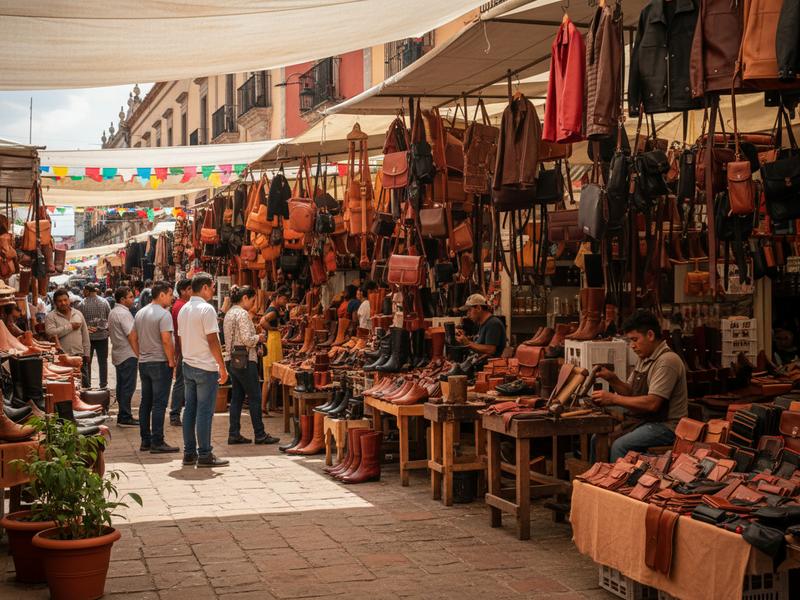
León, 50 km northwest of Guanajuato City, is Mexico’s leather goods capital and one of the few day trips that makes commercial sense from a travel perspective. The city produces roughly 60% of Mexico’s footwear and has an entire district — the Zona de Piel (Leather Zone) — dedicated to leather factories and retail shops.
What to buy in León:
- Boots: Cowboy-style and dress boots, 800-4,000 MXN; custom orders in 24-48 hours at many shops
- Bags and belts: Factory prices, 30-60% below Mexico City retail
- Jackets: Full leather jackets, 1,500-4,500 MXN
- Wallets and small goods: 150-500 MXN
Getting there from Guanajuato City: Frequent buses from the Central de Autobuses (45 min, 50-70 MXN) or taxi/Uber (~350 MXN each way). See our León Guanajuato guide for the full shopping district breakdown.
Getting to Guanajuato City
By Air: The closest airport is Del Bajío International Airport (BJX) near the city of Silao, about 45 km from Guanajuato center. Taxis to the city run 350-500 MXN; shuttle services run 200-350 MXN. Most major Mexican cities have direct flights to BJX; from the US, American and United fly directly from several hubs. Compare car rental prices at BJX airport on RentCars.
By Bus from Mexico City: ETN and Primera Plus depart from Terminal Norte (Metro Line 5 — not TAPO) in Mexico City — 4.5–5 hours, 350–700 MXN depending on class. Flecha Amarilla is a budget option. From Guadalajara: 3.5 hrs, 300–450 MXN. From San Miguel de Allende: 1.5 hrs, 120–160 MXN. From Querétaro: 2.5 hrs, 180–250 MXN. The Central de Autobuses is 5 km southwest of the city center (50–80 MXN taxi). Full transport guides: Mexico City to Guanajuato 2026 | Guadalajara to Guanajuato 2026 | Cancun to Guanajuato 2026 | Guanajuato to Mexico City 2026 | Guanajuato to Guadalajara 2026.
By Car from Mexico City: 4–4.5 hours via MEX-57D (toward Querétaro) then MEX-45D via Silao. Tolls approximately 350–480 MXN total. Parking in Guanajuato’s historic center is nearly impossible due to the canyon geography — use the Estacionamiento Alhóndiga near the center (~150 MXN/day) and walk or taxi everywhere.
From San Miguel de Allende: 90 minutes by bus or car — an excellent pairing. See our San Miguel de Allende guide for that half of a colonial weekend.
Best Time to Visit
For a full month-by-month breakdown — including the Día de la Cueva (July 31), Cervantino booking strategy, and why August is the one month to reconsider — see our Best Time to Visit Guanajuato guide.
October (Cervantino): The obvious peak. Performances, international visitors, full energy — and advance booking required for everything. Weather is post-rainy-season: clear, 15-22°C during the day.
November–February: Dry season, moderate crowds, temperatures cool (10-20°C, chilly at night). The quietest period — you get the city without the student crush. Christmas and Día de Reyes (January 6) bring local Mexican visitors.
March–May: Pre-rainy-season. Warm days, little rain, flowering trees. Good for hiking up to Pípila or the surrounding hills. Semana Santa brings Mexican families and fills hotels.
June–September: Rainy season. Afternoon showers, lush green hills, the lowest hotel rates of the year. Streets can flood in heavy rain. University is in session — city is at its most local.
Where to Stay
Best area by trip style
| Trip Style | Best Area | Why |
|---|---|---|
| First time in Guanajuato | Historic center | You can walk to Jardín de la Unión, Teatro Juárez, callejoneadas, restaurants, and most museums. |
| Quiet nights + good views | Hills above center | Better rooftop views and less nightlife noise, but expect stairs and taxi rides back. |
| Budget stay | Mercado Hidalgo / bus station side | Cheaper rooms and hostels, but less charming at night than the core center. |
| Driving trip | Edge of centro or near parking garages | Easier parking and less tunnel stress than staying deep inside the old center. |
Historic Center (recommended): Walking distance to everything. Expect narrow streets, no parking, and colonial-era charm. Boutique hotels in renovated colonial mansions work best around Jardín de la Unión, Plaza de la Paz, Positos, and the lanes below the university steps.
Budget: Hostels cluster near the Mercado Hidalgo and the bus station. Expect 300-600 MXN per bed in dorms, 700-1,100 MXN for private rooms.
Mid-range (1,500-3,000 MXN/night): Boutique hotels in the center with rooftop terraces or courtyards.
Splurge: Several 5-star properties have opened in renovated colonial mansions on the city’s hills. Expect 4,000-8,000 MXN/night with panoramic city views.
Budget Table
| Expense | Budget | Mid | Comfort |
|---|---|---|---|
| Hostel/Hotel (per night) | 400-700 MXN | 1,500-2,500 MXN | 3,500+ MXN |
| Meals (per day) | 200-350 MXN | 400-700 MXN | 800+ MXN |
| Local transport | 30-80 MXN/day | 80-150 MXN/day | 200+ MXN/day |
| Entry fees (daily average) | 50-100 MXN | 100-200 MXN | 300+ MXN |
| Daily total | ~700-1,200 MXN | ~2,000-3,500 MXN | 5,000+ MXN |
Approximate figures as of Feb 2026; USD rate ~17-18 MXN
What to Eat in Guanajuato
Guanajuato has a serious food identity rooted in its silver-mining history. See the full Guanajuato food guide for all 15 essential dishes, market recommendations, and budget breakdown.
Enchiladas mineras: Guanajuato’s signature dish — tortillas in guajillo sauce filled with queso fresco, topped with diced potato, carrot, pickled jalapeño, and shredded chicken. The potato-and-carrot topping is unique to this region.
Guacamayas: The essential street snack — chicharrón in a toasted bolillo with cucumber, lime, and Valentina hot sauce. Vendors set up near the Jardín Unión from 10 AM (35-50 MXN).
Mercado Hidalgo: The main covered market, housed in an early 20th-century iron building. Ground floor: food stalls with full meals for 60-120 MXN. Best for enchiladas mineras at market prices.
Cajeta from Celaya: Guanajuato state is the spiritual home of cajeta (goat-milk caramel). Buy artisanal versions at Mercado Hidalgo — far superior to the commercial product.
Street food: Look for gorditas de harina (wheat flour, not corn — a colonial Spanish distinction), carnitas on Sunday mornings, and elotes — all concentrated around Mercado Hidalgo and near the Central de Autobuses.
Nearby Day Trips
Dolores Hidalgo: 50 km northeast — the town where Father Hidalgo rang his church bell on September 16, 1810, launching the Mexican War of Independence. Known today for unusual ice cream flavors (shrimp, beer, tequila). See our Dolores Hidalgo guide.
Mineral de Pozos: A near-ghost town of abandoned silver mines and colonial ruins, 75 km northeast — gaining a reputation as an artists’ colony. See Mineral de Pozos guide.
San Miguel de Allende: 90 km east — arguably Mexico’s most polished colonial city, with a large expat community, international restaurants, and the Parroquia de San Miguel in its main plaza. See San Miguel de Allende travel guide.
Querétaro: 2.5 hours east — another UNESCO colonial city with excellent food and a less-touristed feel. See Bernal, Querétaro guide for nearby highlights.
For safety context on traveling through Guanajuato state, see our Mexico Travel Advisory 2026 guide.
Practical Tips
- Cash is king in Guanajuato’s markets and smaller restaurants. ATMs are widely available in the center but run low on weekends.
- Altitude: At 2,000 m, some visitors feel mild altitude effects on the first day. Drink water, avoid heavy exercise initially, and limit alcohol on day one.
- Walking shoes: The streets are cobblestone throughout. Comfortable, closed-toe shoes are strongly recommended.
- Funicular hours: The Pípila funicular closes by 8-9 PM, so do not leave sunset until the last possible minute.
- Language: English is less common here than in Cancún or Los Cabos. Basic Spanish goes a long way.
- Altitude clothing: Evenings drop to 10-14°C even in summer. Always carry a layer.
Common First-Timer Mistakes
- Staying too far from centro to save a little money, then spending the difference on taxis and uphill walks.
- Renting a car for city sightseeing. Guanajuato is a walking city once you arrive, and parking in the core is annoying.
- Trying to do it as a rushed day trip from Mexico City or Guadalajara. Guanajuato gets much better after dark.
- Skipping evenings entirely. The city changes at night, especially around Jardín de la Unión, the estudiantinas, and rooftop bars.
- Packing like a warm-weather beach trip. Evenings are cooler than people expect year-round.
For day trips from Guanajuato — Dolores Hidalgo, San Miguel de Allende, Mineral de Pozos, León, and Querétaro — see our Day Trips from Guanajuato guide. Deciding between the two cities? See our Guanajuato vs San Miguel de Allende comparison for an honest breakdown. Visiting from San Miguel de Allende? See Day Trips from San Miguel de Allende — Guanajuato City is the top recommended full-day excursion. For a full road trip connecting Guanajuato, San Miguel, and Querétaro, see our Colonial Mexico Travel Guide. For a longer loop through colonial Mexico, add Morelia — 2.5 hours south — a UNESCO city of pink quarry stone, monarch butterflies, and Mexico’s best Day of the Dead. See the Morelia Travel Guide.
Final Thoughts
Guanajuato City rewards visitors who slow down. The callejoneadas make no sense unless you’re following along at 8 PM. The tunnels only become comprehensible once you’ve been driven through them a few times. The Valenciana church only lands when you’ve already seen the mine it financed.
It’s not a city you can efficiently “do” in a day. Give it three, ideally in October when the entire colonial core becomes an outdoor performing arts venue, and you’ll understand why so many travelers list it as the best place they visited in Mexico.
For a full list of activities with opening hours, prices, and practical tips, see our dedicated Things to Do in Guanajuato City 2026 guide.
Book Guanajuato tours and activities on Viator — city walking tours, callejoneada packages, and day trips to Valenciana and Dolores Hidalgo all available.