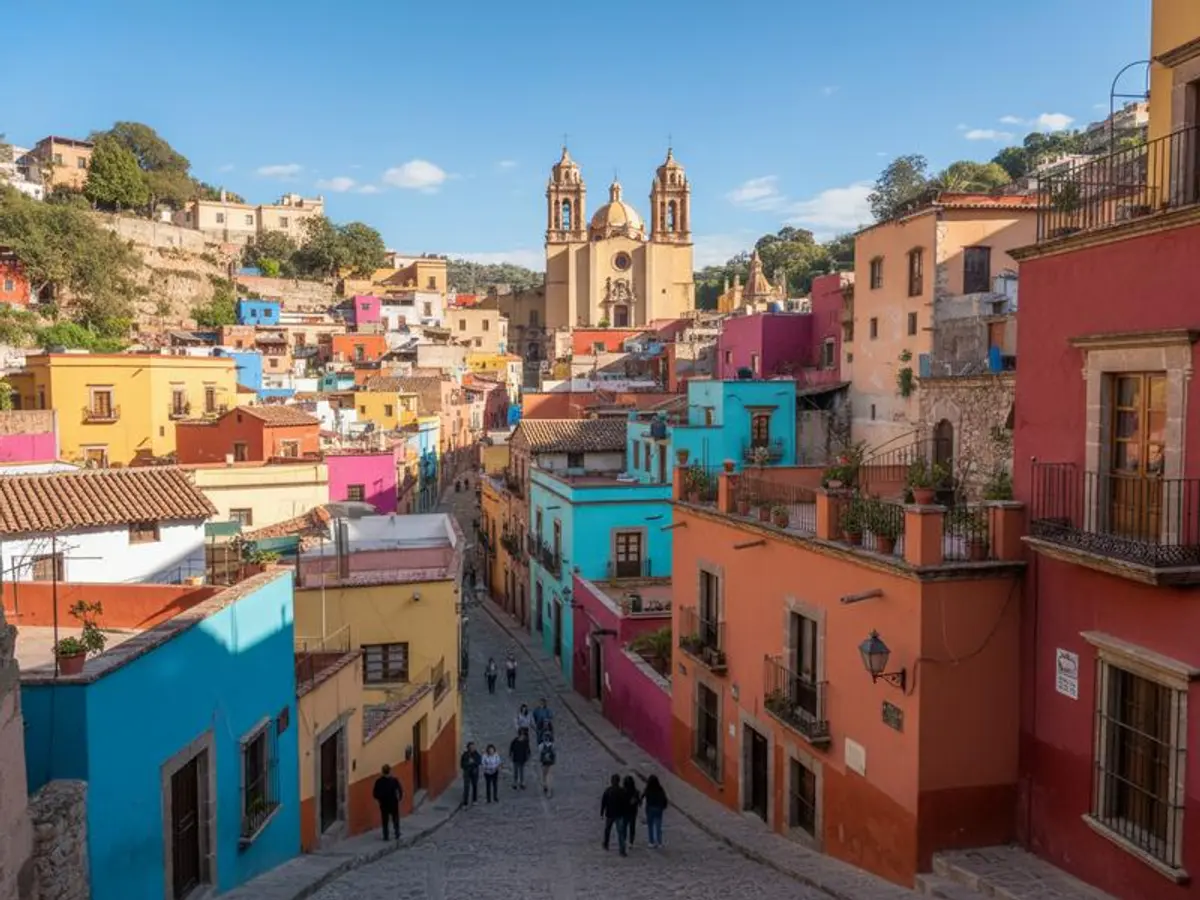
Guanajuato vs San Miguel de Allende 2026: Which Colonial City Is Right for You?
Guanajuato and San Miguel de Allende are the two most-visited colonial cities in central Mexico — and the most common travel planning dilemma in the region. They’re 90km apart, both UNESCO World Heritage Sites, and seemingly similar on paper. In practice, they feel completely different.
Guanajuato is wilder: a canyon city built on silver-mining wealth, riddled with underground tunnels, alive with student energy, and 30–40% cheaper. San Miguel de Allende is more refined: smaller, immediately walkable, photogenic to the point of feeling curated, and home to a large English-speaking expat community that has shaped both the prices and the infrastructure.
You can visit both in one trip. But if you only have time for one, here’s how to choose.
At a Glance: Guanajuato vs San Miguel de Allende
| Guanajuato | San Miguel de Allende | |
|---|---|---|
| State | Guanajuato (city = state capital) | Guanajuato (state) |
| Population | 200,000 | 170,000 (30,000 expats) |
| UNESCO status | ✅ Historic city + mines (1988) | ✅ Historic town + Atotonilco (2008) |
| Elevation | 2,050m | 1,870m |
| Geography | Narrow canyon, steeply terraced | Valley, compact and flat-ish |
| Budget (mid-range/day) | $50–80 USD | $80–140 USD |
| Hostel from | 250–350 MXN | 400–600 MXN |
| English spoken | Less common (university town) | Very common (large expat community) |
| Best known for | Cervantino Festival, callejoneadas, Mummy Museum | La Parroquia church, Semana Santa, artisan shopping |
| Top festival | Cervantino (October, 3 weeks) | Semana Santa (March/April) |
| Nightlife | Active (student population) | Quieter but good restaurant scene |
| Day trips | León, Dolores Hidalgo, Querétaro | Atotonilco, Dolores Hidalgo, hot springs |
| Getting there | Bus from Terminal Norte CDMX (4.5 hrs) | Bus from Terminal Norte CDMX (3.5–4 hrs) |
| Uber | ✅ Works | ✅ Works |
The Cities: What Makes Each Unique
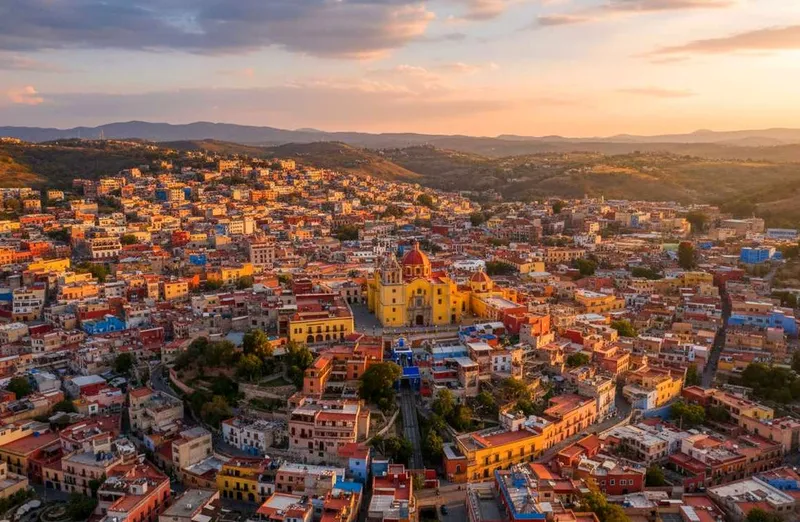
Guanajuato: Mexico’s Most Dramatic Canyon City
Guanajuato doesn’t make geographic sense. A city of 200,000 built into a deep ravine, where streets are too narrow for cars in the historic center, where 17th-century silver barons built mansions on near-vertical slopes, and where a network of underground tunnels — originally built to divert a flooding river — now serves as the city’s main road system.
This geography is what makes Guanajuato unforgettable. Looking out from the Pípila monument at sunset, the city below is a cascade of terracotta, yellow, pink, and blue — built up, not out, because there was nowhere else to go.
The city is home to the Universidad de Guanajuato, one of Mexico’s oldest universities (founded 1732). That student population gives the city a permanent energy that San Miguel doesn’t have — callejoneadas (wandering student musicians with jugs of wine), cheap lonchería lunches, and bars that stay open late.
Guanajuato’s standout experiences:
- Callejoneadas — student estudiantinas in traditional costumes lead singing processions through the narrow alleys (callejones), stopping at the famous Callejón del Beso (Alley of the Kiss). Depart from Jardín Unión evenings.
- Underground tunnels — the city’s road system runs through converted flood-control tunnels. Disorienting and memorable.
- Mummy Museum (Museo de las Momias) — 111 naturally mummified bodies, grim and fascinating. One of Mexico’s most visited museums.
- Valenciana Mine — worked continuously from 1558 to 2011. The Baroque Templo de San Cayetano next to it has a 20-year-carved facade and is among the most beautiful churches in Mexico.
- Festival Cervantino (October, 3 weeks) — 30+ countries, 200,000 visitors, 100+ events. The most important international arts festival in Latin America.
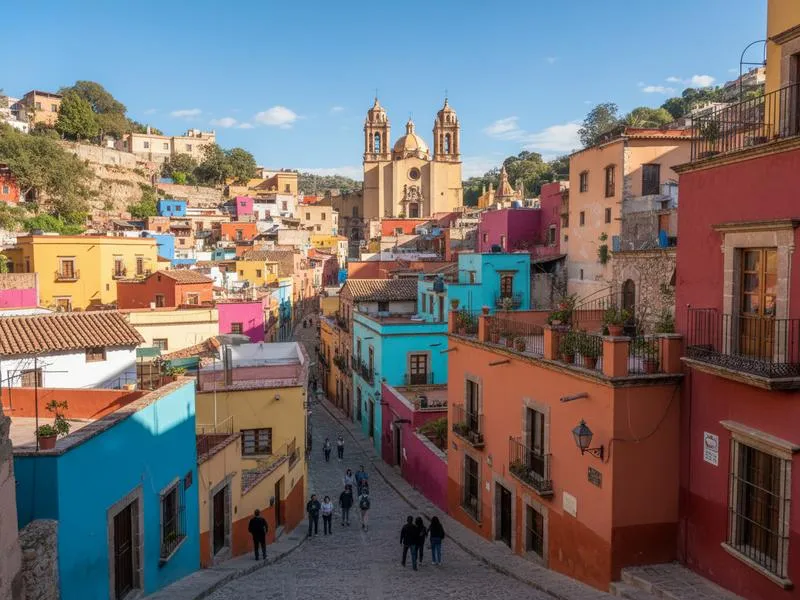
San Miguel de Allende: The Polished Colonial Showpiece
San Miguel de Allende is smaller, flatter, and immediately more navigable than Guanajuato. The historic center is compact enough to walk everywhere. The signature view — La Parroquia’s neo-Gothic pink stone spires rising above the main plaza — is one of the most photographed in Mexico.
The city has been home to a substantial foreign community since the 1930s and 1940s, when American and Canadian artists discovered it after World War II. That history shaped everything: restaurant quality is consistently high, English is widely spoken, and the infrastructure caters to an international standard. The flip side is that prices reflect this — San Miguel is noticeably more expensive than Guanajuato.
San Miguel de Allende’s standout experiences:
- La Parroquia de San Miguel Arcángel — the pink neo-Gothic church on the main plaza. Free to enter. The local legend: it was designed in the 1880s by a self-taught indigenous stonemason named Zeferino Gutiérrez, who copied the design from postcards of European cathedrals. Controversial among art historians; beloved by everyone else.
- Santuario de Jesús Nazareno de Atotonilco (UNESCO) — 10km outside the city. Called “Mexico’s Sistine Chapel” for its floor-to-ceiling murals. Entry 30 MXN. Often included as a day trip with hot springs.
- El Charco del Ingenio — botanical garden with 1,000+ cactus and succulent species, the largest collection in Mexico. Free on Sundays.
- Hot springs — three options within 30 minutes: La Gruta (pools, cave pool, crowded), Escondido Place (quieter), Taboada (most authentic). All around 200–300 MXN entry.
- Semana Santa (March/April) — the most visually spectacular Holy Week celebration in central Mexico, famous for the Procession of the Silence (Good Friday, silent candlelit procession) and the Quema de Judas (Holy Saturday fireworks).
The Honest Budget Comparison
This is the most practical difference between the two cities.
| Expense | Guanajuato | San Miguel de Allende |
|---|---|---|
| Hostel dorm | 250–350 MXN | 400–600 MXN |
| Budget hotel (private) | 600–900 MXN | 1,000–1,500 MXN |
| Mid-range hotel | 1,200–1,800 MXN | 1,800–3,000 MXN |
| Boutique hotel | 1,800–3,000 MXN | 3,000–6,000+ MXN |
| Comida corrida (set lunch) | 60–90 MXN | 80–130 MXN |
| Restaurant dinner (mid) | 180–320 MXN | 300–550 MXN |
| Fine dining | 450–800 MXN | 700–1,400 MXN |
| Beer (bar) | 35–55 MXN | 55–90 MXN |
| Museum entry | 30–150 MXN | Free–200 MXN |
| Taxi within city | 40–80 MXN | 60–100 MXN |
| Daily total (budget) | $35–55 USD | $55–85 USD |
| Daily total (mid-range) | $70–110 USD | $100–160 USD |
Bottom line: Guanajuato is roughly 30–40% cheaper across the board. If budget is a constraint, this is decisive.
Food & Restaurants: Who Wins?
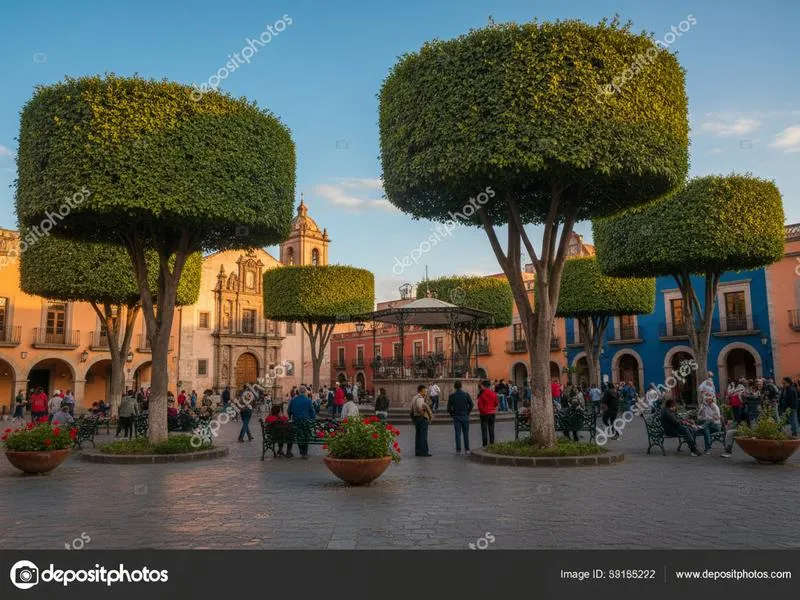
Guanajuato’s Food Scene
Guanajuato’s signature dishes reflect its mining history and central Mexico location:
- Enchiladas mineras (miners’ enchiladas) — the city’s iconic dish. Corn tortillas stuffed with cheese, topped with red guajillo chili sauce and garnished with potato, carrot, and sausage. Not what you’d expect from the name.
- Guacamayas — street food sandwich of chicharrón (fried pork skin) in a bolillo roll with salsa verde and lime. 25–40 MXN. Quintessential Guanajuato street food.
- Chiles en nogada — usually available from late July through September, with August and early September the safest window. This Puebla dish is a poblano chile stuffed with picadillo (ground meat and fruit), covered in white walnut cream sauce and pomegranate seeds; Guanajuato restaurants may offer seasonal versions, but confirm the menu before planning around it. Check the current chiles en nogada season guide for timing.
- Cabrito (roast goat) — a northern Mexico tradition that appears in Guanajuato’s mining-era restaurants.
The food scene in Guanajuato is honest and inexpensive, concentrated around the Jardín Unión plaza and the university area. Fine dining exists but is limited. See the full Guanajuato food guide for 15 essential dishes including cajeta (the regional goat-milk caramel made in nearby Celaya), gorditas de harina, and Bajío wine from wineries like Cuna de Tierra.
San Miguel’s Food Scene
San Miguel has the strongest restaurant scene of any city its size in Mexico, driven by the expat population’s demand for quality. The city attracts serious chefs and produces genuinely world-class meals.
- Niue and El Pegaso — examples of restaurants that would be notable in Mexico City
- Tianguis (Sunday organic market) — artisan products, local chiles, organic vegetables, prepared foods from vendors; held at Parque Juárez on Sundays
- Dolores Hidalgo ice cream (day trip, 45 min) — bizarre flavors: mole, shrimp, beer, avocado, corn. Not actually good ice cream, but a rite of passage.
For quality of dining experience, San Miguel wins. For value, Guanajuato wins.
Architecture & Visual Appeal
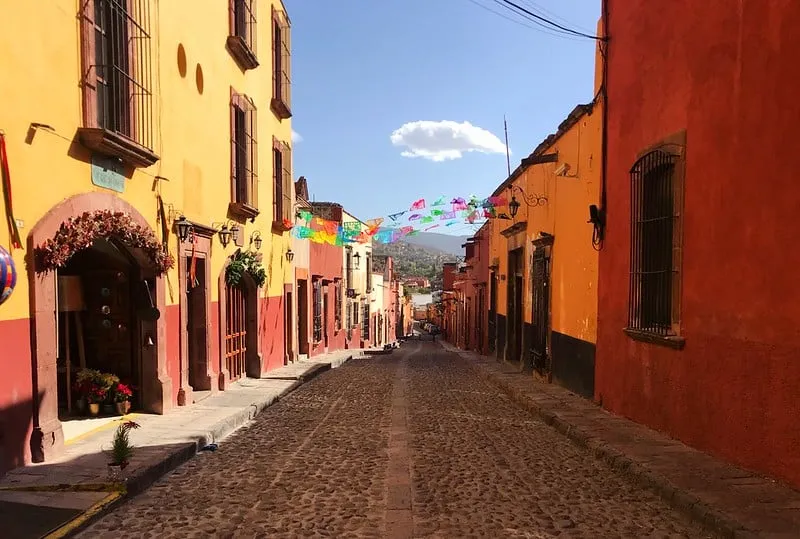
Both cities are stunning, but differently.
Guanajuato is dramatic because of geography — the canyon forces buildings to stack vertically, producing a visual density that’s overwhelming in the best way. The colors (terracotta, yellow, pink, powder blue) were chosen by 18th-century silver barons competing for status. The view from Pípila at sunset is one of the great urban vistas in Mexico.
The underground architecture is unique — no other city in Mexico has a main road system that runs through flood-control tunnels. Walking into a callejón at midnight and emerging into a different plaza feels genuinely surreal.
San Miguel de Allende is immediately “perfect” — every street looks like a postcard. The pink stone of La Parroquia against the blue sky is almost impossibly photogenic. The historic center is smaller and more uniform than Guanajuato, which makes it easier to navigate and more consistent visually, but also more manicured.
For dramatic visual impact: Guanajuato. For consistent Instagram-ready aesthetics: San Miguel.
Festivals: The Definitive Calendar
| Festival | City | When | Scale |
|---|---|---|---|
| Festival Cervantino | Guanajuato | 3 weeks in October | International, 200,000+ visitors |
| Semana Santa | San Miguel | Late March/April (2026: Mar 29–Apr 5) | National, most spectacular in region |
| Día de Muertos | Both | Oct 31–Nov 2 | San Miguel more photogenic; Guanajuato has Cervantino overlap |
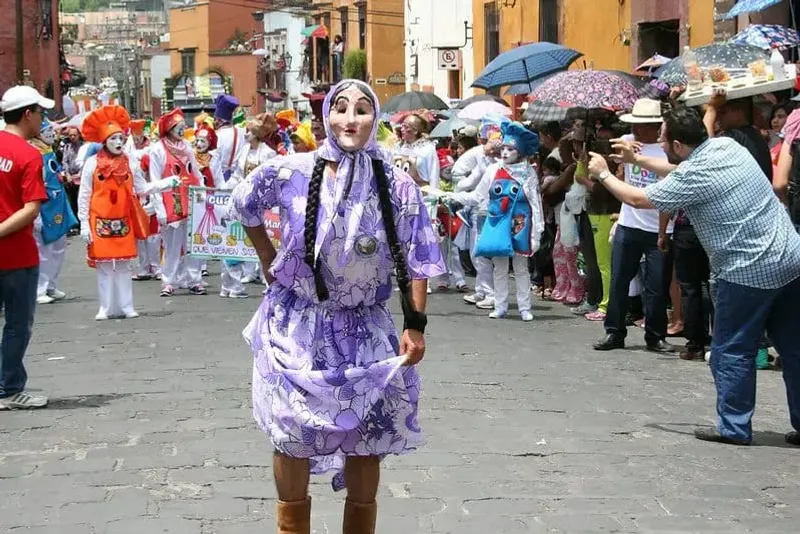
| Fiestas de San Miguel Arcángel | San Miguel | Sep 29 (patron saint) | Local, callejoneadas, mojigangas |
| Festival de Luz y Vida (Christmas) | San Miguel | Dec 16–24 | Posadas, exceptional atmosphere |
| Día de la Cueva | Guanajuato | July 31 | Purely local — community picnic on Cerro de la Bufa |
For Cervantino (October): Book 3–4 months ahead. Hotel prices double. If you’re going, go specifically for the festival — the city is transformed.
For Semana Santa: San Miguel is worth the planning. The Procession of the Silence (Good Friday evening, candlelit, completely silent) is one of the most affecting public rituals in Mexico. No Ley Seca in Guanajuato state.
Who Should Choose Each City
Choose Guanajuato if you:
- Are on a tighter budget and want the most dramatic setting
- Want authentic Mexican university-town energy (students everywhere, cheap tacos, late-night callejoneadas)
- Are visiting in October for Festival Cervantino
- Love dramatic geography and unusual architecture (tunnels, canyon views)
- Want to visit the Mummy Museum (genuinely one of a kind)
- Prefer a city where tourism hasn’t sanitized everything
- Are day-tripping to León (leather shopping, 1 hr away) or the Bajío silver cities circuit
Choose San Miguel de Allende if you:
- Want a fully walkable, immediately comprehensible small colonial city
- Prefer excellent restaurants and a refined food scene
- Are visiting during Semana Santa (best Semana Santa in central Mexico)
- Want strong English-speaking infrastructure (expat community)
- Are interested in art galleries, studio visits, and artisan shopping
- Plan to do hot springs day trips (best selection near SMA)
- Are a first-time visitor to colonial Mexico and want a gentle introduction
Choose both if you:
- Have 5+ days in the region
- Are based in Mexico City (2 hours to SMA, 4.5 hours to Guanajuato)
- Are road-tripping the Colonial Circuit (Querétaro–Guanajuato–SMA–Dolores)
- Want to compare them directly (many travelers strongly prefer one over the other once they’ve been to both)
Getting Between the Two Cities
The most common trip: Guanajuato and San Miguel together in one go.
By bus: There is no direct bus between them. Route: Guanajuato → Querétaro (ETN/Primera Plus, 1.5–2 hrs, 180–300 MXN) → San Miguel de Allende (1.5 hrs, 150–250 MXN). Total: 3–4 hours, 330–550 MXN.
By car: 90km via MEX-45D and MEX-51D — about 1.5 hours. Recommended: This is one of the best driving routes in central Mexico. The highway runs through Bajío farmland, and Dolores Hidalgo (45 min) is a logical midpoint. Rent a car in Guanajuato (BJX airport, 27km away — not “near” the city as many guides claim) or arrange a private transfer.
Private transfer: 1,200–1,800 MXN for a 1–4 passenger vehicle. Worth it if you’re traveling with luggage.
Dolores Hidalgo as a midpoint: Halfway between the two cities. Historic significance (the 1810 Grito de Independencia happened here at 5 AM), elaborate Talavera ceramics, and the famous ice cream with bizarre flavors. Makes the journey more interesting than the bus connection.
Compare car rentals for the BJX airport →
The “Do Both” Itinerary (5 Days)
Day 1 (Guanajuato): Arrive, check in, walk Jardín Unión. Callejoneada in the evening.
Day 2 (Guanajuato): Pípila viewpoint at sunrise. Alhóndiga de Granaditas (independence history). Mummy Museum. Valenciana mine and church. Sunset from the cemetery above the Templo de los Pobres.
Day 3 (Drive to SMA via Dolores): Morning at the Guanajuato Saturday market. Drive to Dolores Hidalgo — see the church where Hidalgo rang the bell, try the ice cream. Arrive San Miguel by early afternoon.
Day 4 (San Miguel): La Parroquia at dawn. El Charco del Ingenio botanical garden. Thursday gallery walk evening. Dinner at a serious restaurant.
Day 5 (Day trip from SMA): Hot springs at La Gruta or Escondido. Sanctuary of Atotonilco on the way back (30 MXN entry, completely worth it).
Getting There from Mexico City
Both cities are accessible from CDMX’s Terminal Norte (NOT TAPO). This is the single most common mistake in guides to both cities — numerous English-language resources incorrectly say TAPO.
To Guanajuato: ETN or Primera Plus from Terminal Norte, 4–4.5 hours, 380–600 MXN. Note: Guanajuato’s BJX airport is in Silao, 27km away — not walking distance to the city.
To San Miguel de Allende: ETN or Primera Plus from Terminal Norte, 3.5–4 hours, 320–650 MXN. Uber works in SMA (unlike Tulum or San Cristóbal). Parking in the historic center is extremely limited.
For full transport guides: Mexico City to Guanajuato | Mexico City to San Miguel de Allende
The Final Answer
Guanajuato is better for: drama, budget, student energy, the most unique urban geography in Mexico, and October.
San Miguel is better for: polish, walkability, restaurant quality, English-language infrastructure, and Semana Santa.
They’re not competitors — they’re complements. Mexico’s Colonial Circuit (Querétaro–Guanajuato–SMA–Dolores–Morelia) is one of the best road trips in the country. The cities look different, feel different, and attract slightly different travelers. Spending 2–3 days in each is better than choosing.
If you’re forced to choose one: budget travelers and those who want the most visually intense experience → Guanajuato. First-time visitors and those who want easy luxury → San Miguel.
Plan your visit: Guanajuato tours on Viator | San Miguel de Allende tours on Viator
Travel insurance: travel insurance
Continue exploring:
- Guanajuato City Travel Guide
- Things to Do in Guanajuato
- Best Time to Visit Guanajuato
- Day Trips from San Miguel de Allende
- Best Time to Visit San Miguel de Allende
- Colonial Mexico Travel Guide