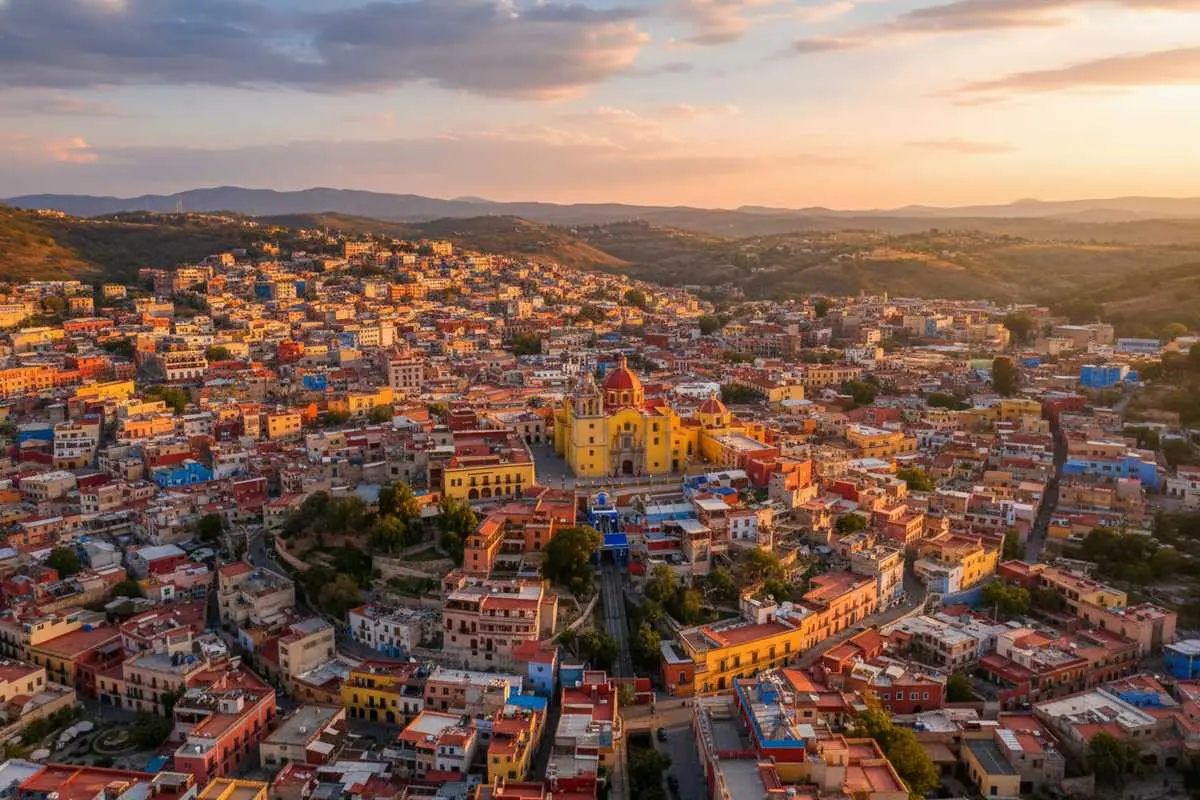
Best Time to Visit Guanajuato City, Mexico in 2026
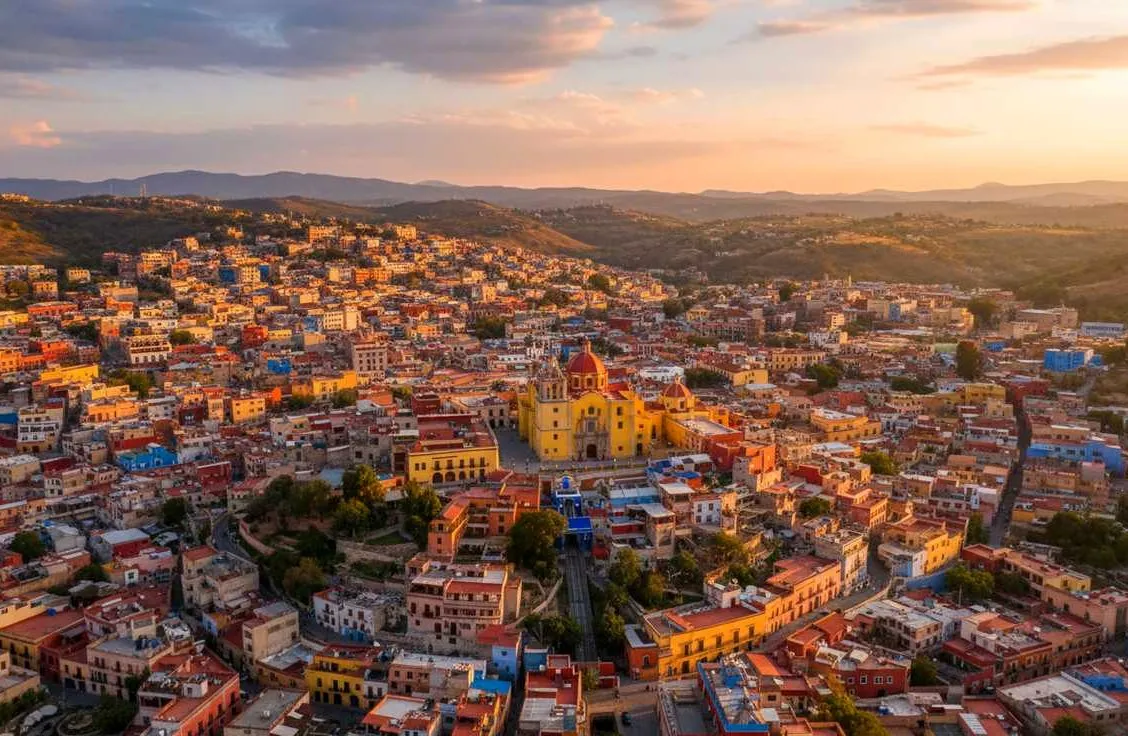
The best time to visit Guanajuato City is October and November if you want the best weather, the strongest cultural calendar, and the city’s prettiest post-rain light. February and March are the best value months, with dry days, cool nights, and lower hotel rates. August is the riskiest month because heavy rain can disrupt the city’s underground tunnel network.
Guanajuato City is a UNESCO World Heritage colonial city in the state of Guanajuato, in central Mexico’s Bajío highlands. It sits at roughly 2,000 meters inside a narrow silver-mining canyon, which gives it mild temperatures most of the year but also makes rainy-season downpours more disruptive here than in flatter colonial cities.
Quick answer by trip goal:
- Best overall: October and November
- Best value: February, March, and much of July
- Best for festivals: October for Cervantino, July 31 for Día de la Cueva
- Best for fewer crowds: January, February, and June
- Worst month for weather risk: August
Best and Worst Months at a Glance
| Month | Weather | Rain | Key Events | Crowds | Prices | Rating |
|---|---|---|---|---|---|---|
| Jan | ⭐⭐⭐⭐ Mild 23°C | None | Quiet, few tourists | Very Low | Low ✅ | ⭐⭐⭐⭐ |
| Feb | ⭐⭐⭐⭐⭐ Mild 25°C | None | Low season | Very Low | Low ✅ | ⭐⭐⭐⭐⭐ |
| Mar | ⭐⭐⭐⭐⭐ Warm 27°C | None | Semana Santa (Mar 29) | Building | High | ⭐⭐⭐⭐ |
| Apr | ⭐⭐⭐⭐⭐ Warm 28°C | None | Easter, Día de las Flores | Peak 🔴 | Peak 🔴 | ⭐⭐⭐⭐ |
| May | ⭐⭐⭐ Hot 30°C | Starting | Quiet | Moderate | Moderate | ⭐⭐⭐ |
| Jun | ⭐⭐⭐ Warm 27°C | Afternoon | University break | Moderate | Low ✅ | ⭐⭐⭐ |
| Jul | ⭐⭐⭐ Warm 26°C | Daily PM | Día de la Cueva (Jul 31) | Moderate | Low ✅ | ⭐⭐⭐⭐ |
| Aug | ⭐⭐ Warm 26°C | Daily PM | Rainy peak — tunnel risk | Low | Low ✅ | ⭐⭐ |
| Sep | ⭐⭐⭐ Warm 25°C | Ending | Fiestas Patrias (Sep 16) | Low | Low ✅ | ⭐⭐⭐ |
| Oct | ⭐⭐⭐⭐⭐ Perfect 24°C | Rare | Festival Cervantino 🎭 | Peak 🔴 | Peak 🔴 | ⭐⭐⭐⭐⭐ |
| Nov | ⭐⭐⭐⭐⭐ Ideal 23°C | None | Day of the Dead | Moderate | Moderate | ⭐⭐⭐⭐⭐ |
| Dec | ⭐⭐⭐⭐ Cool 22°C | None | Posadas, NYE | High | High | ⭐⭐⭐⭐ |
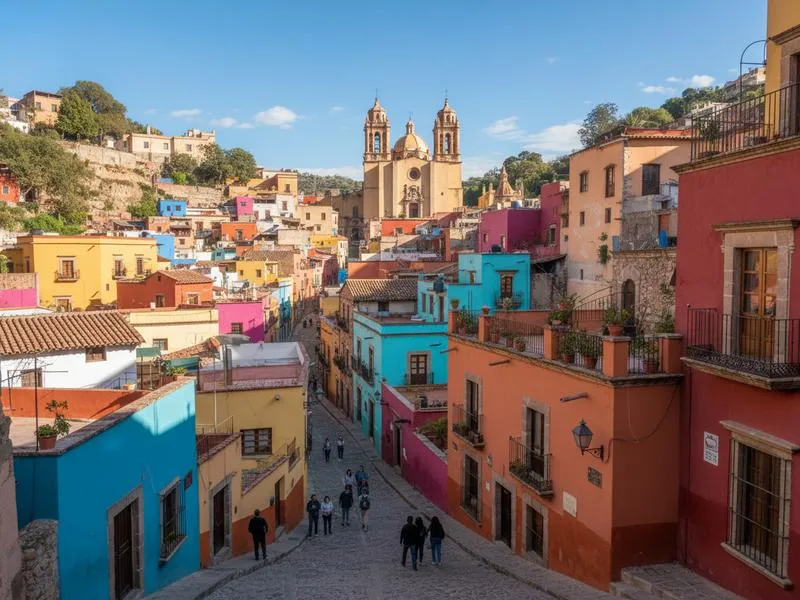
Best Time to Visit Guanajuato: October for Cervantino, November for Pure Quality
October is unambiguously Guanajuato’s peak and, for most visitors, its best month. The Festival Internacional Cervantino transforms the city for three weeks: Teatro Juárez fills with sold-out opera and theater, the Jardín de la Unión hosts free outdoor concerts, and Entremes performers in Don Quijote costumes appear on every callejón (alley). The population of 200,000 swells with 400,000+ visitors during festival weeks — the atmosphere is electric but logistics require planning. Hotels book out 2–4 months ahead and prices double. If you’re coming for Cervantino, October 8–25 (approximate 2026 dates) is the window.
November is the overlooked gem. Cervantino is over, prices drop 30–40% from October highs, the weather is identical (23–24°C dry days, cool evenings), and the city is genuinely lush from four months of rain. Day of the Dead (November 1–2) brings marigold-filled altars to the Jardín de la Unión and a candlelit procession through the Pantéon municipal cemetery. It’s a more intimate celebration than Oaxaca’s — better for those who want to feel part of it rather than observe it.
February–March is the best value window in the dry season. The university is in full session, callejoneadas usually run every evening, the weather is clear and cool (25–27°C), and room rates are at their annual low. If you want dry weather without paying Cervantino or Easter prices, this is the sweet spot.
If you’re deciding fast, use this rule: choose October if you want energy, November if you want the best overall balance, and February or March if price matters most. Hot air balloon flights over the city usually run October through April, so this period also suits visitors who want clear-sky mornings.
The Canyon Problem: Why Rainy Season Is Different Here
Guanajuato’s defining physical feature — a silver-mining canyon — creates a weather dynamic unlike any other Mexican city. Understanding this is essential for timing your visit.
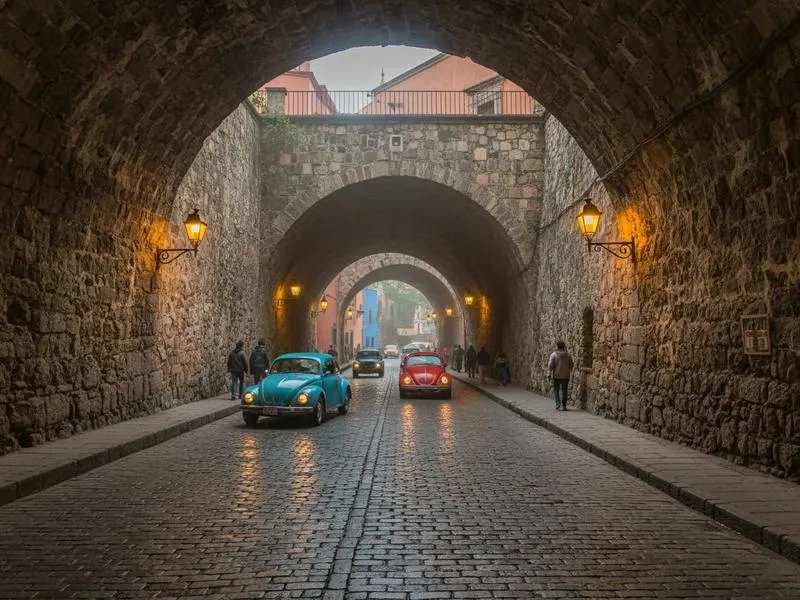
The city was built in a narrow canyon and expanded upward onto hillsides. Its famous underground tunnel network (8km of tunnels originally dug to control flooding from the Río Guanajuato) now serves as the city’s main road system. But the canyon shape means:
During heavy August–September rains:
- Water runoff concentrates rapidly in the canyon floor
- The tunnel system can partially flood after exceptional storms
- Streets in the lower city (near Hidalgo Market, Alhóndiga) can see surface water
- Tunnel closures have occurred after extreme events in 2016, 2019, and 2022
This doesn’t happen every year — perhaps 2–3 severe tunnel flooding events per decade. But it’s a real risk specific to Guanajuato that doesn’t exist in cities like San Miguel de Allende or Oaxaca. The standard afternoon rain pattern (3–5 PM thunderstorms that clear by evening) is fine for tourism. The risk is consecutive days of heavy rain, which is most likely in August.
Practical advice: If you must visit during rainy season, July is lower risk than August–September. Keep an eye on Guanajuato weather forecasts and have a Plan B day if tunnels are running rough.
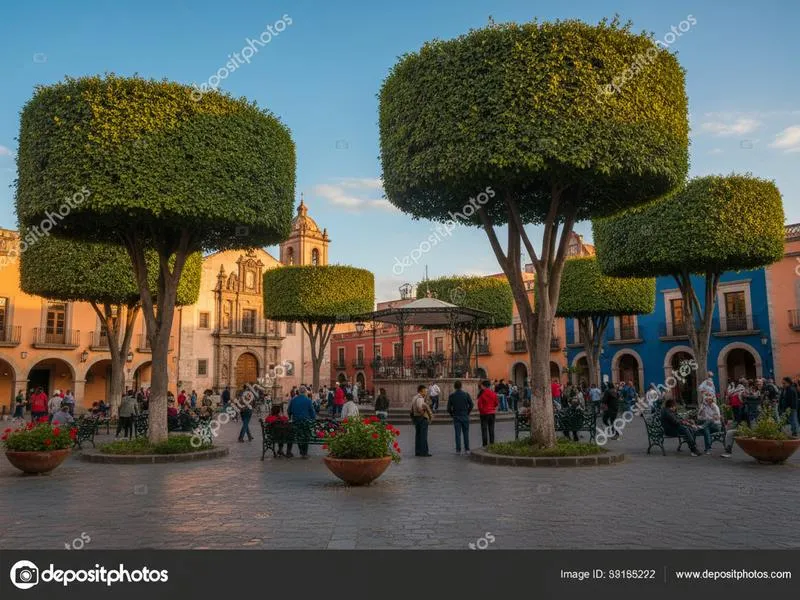
Festival Cervantino (October): The World Comes to Guanajuato
The Festival Internacional Cervantino is one of the world’s five most important performing arts festivals — comparable to Edinburgh or Avignon. It was founded in 1972 as a celebration of Cervantes, whose Entremeses (short comedic plays) have been performed in Guanajuato’s alleyways since the 1950s.
What to expect:
- Scale: 30+ countries, 200+ performances, 450,000+ total attendees over 3 weeks
- Venues: Teatro Juárez (1903 Porfirian opera house), Teatro Principal, Plazuela del Baratillo, Plaza de la Paz — the entire historic center becomes a stage
- Free events: Dozens of outdoor performances daily in plazas and callejones — no tickets needed
- Paid events: Major headliners (symphony orchestras, national theater companies, international dance troupes) at Teatro Juárez run 200–1,500 MXN per show
- Entremeses Cervantinos: The original street theater in Don Quijote and Sancho Panza costumes — free performances starting at Plaza San Roque at dusk
2026 approximate dates: October 8–25. Official program releases in August at festivalcervantino.gob.mx.
Booking for Cervantino:
- Hotel rooms: book 2–4 months ahead — October inventory sells out entirely
- Tickets: buy online as soon as the program releases (usually late August)
- Flights into BJX or León: buy 3+ months ahead for October travel
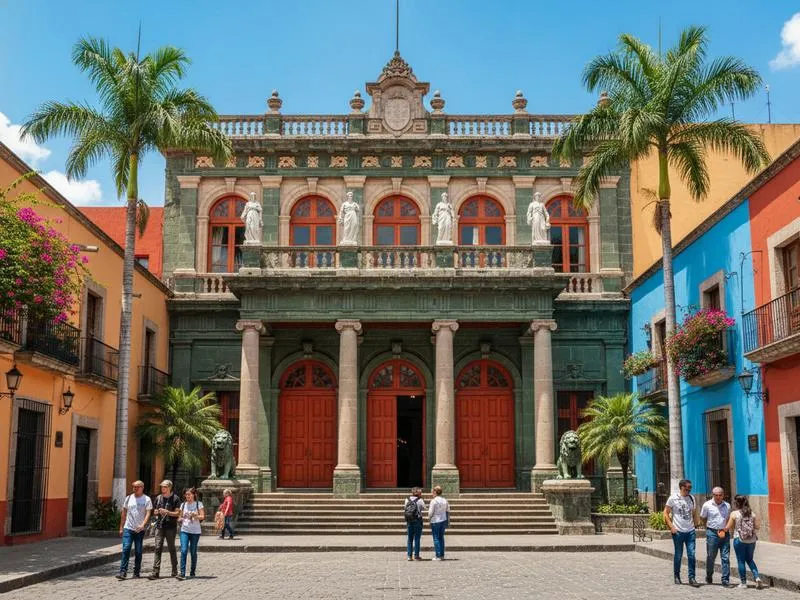
July 31: El Día de la Cueva — Guanajuato’s Secret Festival
Most Mexico travel guides don’t mention this — it’s not in the international tourism brochures. But locals will tell you: July 31 is one of the best days to be in Guanajuato.
El Día de la Cueva (Day of the Cave) is a centuries-old community tradition. Every year on July 31, thousands of Guanajuatenses hike up to the Cueva del Estudiante — a cave on the slopes of Cerro de la Bufa above the city — for an all-day hillside celebration. Families bring food and drink. Musicians play. Students sing. The whole city seems to move uphill.
How to join:
- Start from the Callejón del Calvario or take a taxi up toward La Bufa
- The hike takes 30–45 minutes and is steep but manageable
- Bring a blanket, snacks, and water — it’s a genuine picnic festival
- The views over the canyon city are spectacular
- There are no entry fees, no tour groups, no organized tourism — just the city celebrating itself
If you’re in central Mexico in late July and can route through Guanajuato on July 31, do it.
Semana Santa (March 29–April 5, 2026)
Guanajuato’s Holy Week is less famous than San Miguel de Allende’s but still significant — and considerably less crowded. The city’s canyon acoustics make the cathedral bells during Good Friday processions particularly resonant.
Key Semana Santa events:
- Viacrucis (Good Friday, April 3): Solemn procession through the historic center
- Quema de Judas (Holy Saturday, April 4): Giant papier-mâché Judas effigies exploded with fireworks — smaller scale than SMA but more accessible
- Día de las Flores (April 8–9): The week after Easter, Guanajuato celebrates its Student Holiday (Día del Estudiante) with flower-throwing from balconies in the historic center — a uniquely local tradition
Hotels fill and prices double during Semana Santa, but if you book 4–8 weeks ahead, you can still find rooms (much easier than SMA). For the full Holy Week spectacle with fewer crowds, Guanajuato is the better choice over San Miguel.
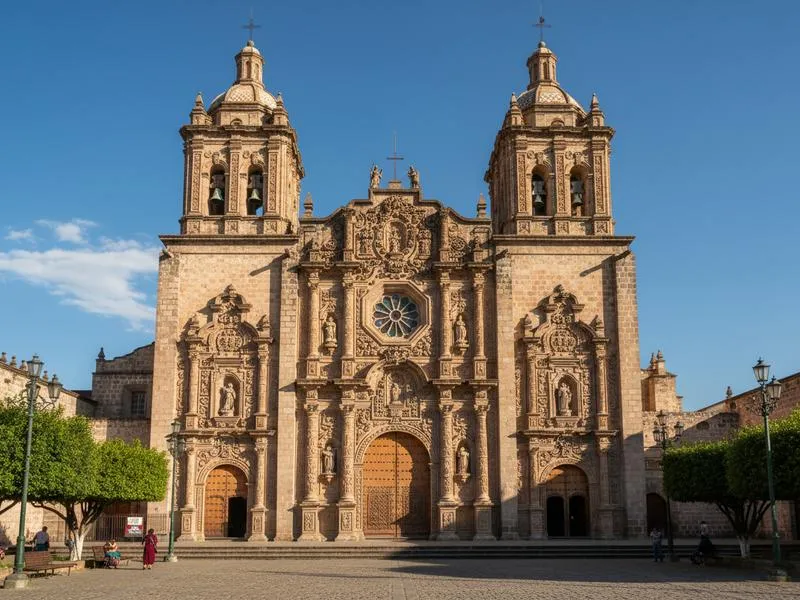
Dry Season (November–May): The Natural Window
The dry season in Guanajuato is defined by clear skies, cool nights, and the full energy of a university city in session. The Universidad de Guanajuato (founded 1732) fills the alleyways with students year-round, but the callejoneadas — the famous evening alley parades led by estudiantina minstrel groups in medieval costumes — run most frequently from October through June when classes are in full session.
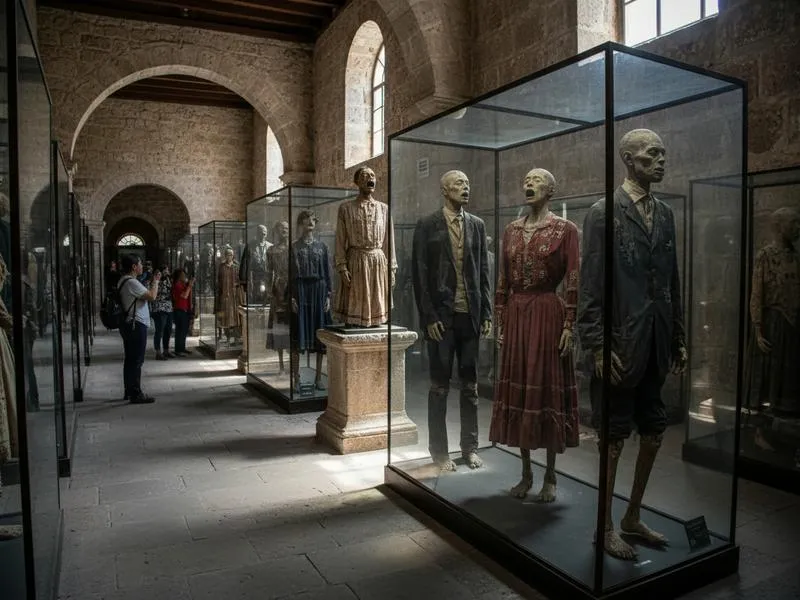
November–January: The coldest dry-season months. Daytime highs of 22–24°C with clear skies and nights dropping to 8–10°C. Bring a jacket for evenings — rooftop bars and Jardín de la Unión cafés get cold after sunset. Prices are at their lowest of the year in January. The Mummy Museum (111 naturally mummified bodies from the 19th century) is year-round and best visited when crowds are light.
February–March: The sweet spot before Semana Santa prices kick in. Dry, mild, sunny days (25–27°C), cold evenings, and the callejoneadas running nightly around 8 PM from the Jardín de la Unión or Plaza San Roque. Pre-Semana Santa March has excellent hotel rates. Budget 3–4 days minimum for the historic center alone.
April–May: Post-Easter prices normalize quickly. May’s heat (28–32°C) and pre-rainy-season dust make it the least photogenic month. University end-of-semester exams in late May thin out callejoneadas activity.
Rainy Season (June–September): Affordable, But Know the Risks
Guanajuato’s rainy season follows the typical central Mexico pattern: mornings are clear and warm, afternoon thunderstorms arrive around 3–5 PM, evenings clear and cooler. The difference from other cities is the canyon amplification effect described above.
June: University break begins, callejoneadas thin out. First rains arrive. Prices are very low. Tourism drops sharply — you can walk the Callejón del Beso (Alley of the Kiss) without the usual crowd.
July: Rain intensifies but afternoons are still often clear until 4–5 PM. El Día de la Cueva (July 31) is worth timing for. Prices remain low. Morning light over the canyon city is spectacular.
August: The highest flood risk month. If you visit, choose accommodations above the canyon floor (hillside hotels have zero flood risk). Morning visits to Valenciana mine and church (4km outside the city at higher elevation) are good use of time when afternoons are uncertain.
September: Rains begin tapering after mid-month. Fiestas Patrias (September 16 Independence Day) brings a good celebration to the Jardín de la Unión with mariachis and fireworks — authentic rather than touristy.
Prices by Season
| Period | Budget Hotel | Mid-Range Hotel | Notes |
|---|---|---|---|
| Jan–Feb | $35–70 USD/night | $70–130 USD/night | Best value dry season |
| Mar (pre-Easter) | $40–80 USD/night | $80–150 USD/night | Good value |
| Semana Santa (Mar 29–Apr 5) | $80–150 USD/night | $150–300+ USD/night | Book 4–8 weeks ahead |
| May–Jun | $30–60 USD/night | $60–120 USD/night | Low season value |
| Jul–Sep | $25–55 USD/night | $55–110 USD/night | Lowest prices of year |
| Oct (Cervantino) | $80–160 USD/night | $160–350+ USD/night | Book 2–4 months ahead |
| Nov–Dec 19 | $40–80 USD/night | $80–150 USD/night | Good value shoulder |
| Dec 20–Jan 6 | $70–130 USD/night | $130–250+ USD/night | Christmas/NYE peak |
Guanajuato is 30–50% cheaper than San Miguel de Allende year-round. Hostels run $12–20 USD/night, making it excellent for budget travelers.
Weather by Month
| Month | Avg High | Avg Low | Rain Days | Notes |
|---|---|---|---|---|
| January | 23°C (73°F) | 8°C (46°F) | 1 | Cold nights 🧥 |
| February | 25°C (77°F) | 9°C (48°F) | 1 | Best value |
| March | 27°C (81°F) | 11°C (52°F) | 2 | Warm, clear |
| April | 28°C (82°F) | 12°C (54°F) | 4 | Hot peak |
| May | 30°C (86°F) | 14°C (57°F) | 6 | Hottest, dusty |
| June | 27°C (81°F) | 14°C (57°F) | 12 | Rains begin |
| July | 26°C (79°F) | 13°C (55°F) | 18 | Día de la Cueva Jul 31 |
| August | 26°C (79°F) | 13°C (55°F) | 19 | Flood risk peak |
| September | 25°C (77°F) | 13°C (55°F) | 14 | Rains tapering |
| October | 24°C (75°F) | 11°C (52°F) | 5 | Cervantino, perfect |
| November | 23°C (73°F) | 9°C (48°F) | 2 | Ideal |
| December | 22°C (72°F) | 8°C (46°F) | 1 | Cold nights 🧥 |
Best Time by Travel Style
| You Want | Best Month(s) |
|---|---|
| Best overall | October (Cervantino), November |
| Best value | January, February, July–September |
| Festival experience | October (Cervantino), July 31 (Día de la Cueva) |
| Holy Week | March 29–April 5 (less crowded than SMA) |
| Day of the Dead | November 1–2 |
| Callejoneadas nightly | October–June (university in session) |
| Mummy Museum (no crowds) | January–February, June–September |
| Hot air balloons | October–April (book 3–5 days ahead) |
| Photography | October–November (lush, perfect light), February–March (clear dry season) |
| Budget travel | January–February, July–September |
| Avoid crowds | January–February, June–September (except Cervantino Oct) |
What to Skip (and When)
| Period | Problem |
|---|---|
| August | Highest flood risk for tunnels — not impossible, just the worst month |
| Late May | End-of-semester exams — fewer callejoneadas, dusty weather |
| Cervantino (if you don’t have hotel booked) | Fully booked — don’t arrive without reservations |
| November–December university exam session (Nov 20–Dec 8) | Callejoneadas less frequent |
Guanajuato vs. San Miguel de Allende: Which and When?
These neighboring UNESCO colonial cities are 90 minutes apart and often compared. They suit different travelers.
| Factor | Guanajuato | San Miguel de Allende |
|---|---|---|
| Best month | October (Cervantino) | October–November |
| University energy | ✅ Constant (major campus) | ❌ Small college town feel |
| Festival variety | October-heavy | Year-round festival calendar |
| Flooding risk | ⚠️ Canyon (low but real) | Low risk |
| Prices | 30–50% cheaper | Higher (expat premium) |
| Nightlife | ⭐⭐⭐⭐⭐ Bar-filled alleyways | ⭐⭐⭐ More subdued |
| Day trip distance | 90 min from each other | 90 min from each other |
| Target visitor | Younger, budget-flexible, culture-focused | Older, romantic getaway, expat-adjacent |
Best strategy: Base yourself in Guanajuato and day-trip to San Miguel de Allende. You’ll pay Guanajuato prices while having easy access to SMA’s boutique galleries and Jardín Allende atmosphere.
Getting There
By air: Del Bajío International Airport (BJX), between León and Silao — 45km from Guanajuato City, 30–40 minutes. Direct flights from Houston, Dallas, Los Angeles, Chicago, and multiple Mexican cities. Taxi from BJX: 450–600 MXN ($23–30 USD). The closest international option for non-Mexico connections.
By bus from Mexico City: ETN, Primera Plus, and Omnibus de México from Terminal Norte — 4.5–5 hours, 350–500 MXN. Frequent departures. The standard arrival route for independent travelers.
By bus from San Miguel de Allende: 90 minutes, ADO/Primera Plus, 60–100 MXN. Easy day trip in either direction.
Essential Planning Links
- Guanajuato City Travel Guide — underground tunnels, the Mummy Museum, Cervantino, and Valenciana mine
- Things to Do in Guanajuato — the best museums, miradores, callejoneadas, and day plans
- What to Eat in Guanajuato — enchiladas mineras, guacamayas, cajeta, and other local specialties
- Day Trips from Guanajuato — Dolores Hidalgo, León, San Miguel de Allende, and Querétaro
- Best Time to Visit San Miguel de Allende — compare timing if you’re pairing both colonial cities
- Best Time to Visit Mexico — national weather and seasonality overview
If you’re building a bigger Bajío trip, pair this guide with the Guanajuato City travel guide and things to do in Guanajuato so readers can move straight from season planning into route building.