10 Morelia Day Trips: Scenic Drives & Weekend Ideas
The best day trips from Morelia double as some of Michoacán’s easiest scenic drives: Pátzcuaro and Janitzio for most first-time visitors, Cuitzeo for a short lake road trip, the Monarch butterfly reserves from November to March, and Santa Clara del Cobre or Lake Zirahuen for a calmer weekend escape. If you do not have a car, Pátzcuaro and Tzintzuntzan are the simplest choices. If you want the most dramatic experience, save a full day for Paricutín.
Morelia sits at the heart of Michoacán, which means you can reach lakeside colonial towns, Purépecha ruins, copper workshops, butterfly sanctuaries, and volcanic landscapes without changing hotels. What matters is choosing the right trip for your time, transport, and season.
This guide ranks the 10 best Morelia day trips by scenic payoff, drive time, no-car logistics, and how realistic they are for actual travelers, not just for tour brochures. The strongest options are the ones that are easy to combine, easy to reach, and still feel distinct from Morelia itself.
Quick answer: choose Pátzcuaro for the easiest first trip, Cuitzeo for the fastest short road trip, Santa Clara del Cobre if crafts matter most, and the Monarch reserves if you are visiting in winter.
30-Second Answer
- Best overall day trip from Morelia: Pátzcuaro and Janitzio
- Best day trip without a car: Pátzcuaro, then Tzintzuntzan
- Best seasonal trip: Monarch butterfly reserves, November through March
- Best nature trip: Paricutín if you want drama, Lake Zirahuen if you want easy scenery
- Best craft town: Santa Clara del Cobre
- Best short half-day escape: Cuitzeo Lake
At a Glance: 10 Day Trips from Morelia
| Destination | Distance | Drive Time | Entry | Best For |
|---|---|---|---|---|
| Cuitzeo Lake | 35 km | 35 min | Free | Quick escape, causeway, flamingos |
| Pátzcuaro | 60 km | 1 hr | Free (boat extra) | Colonial town, Janitzio, Day of Dead |
| Tzintzuntzan | 70 km | 1 hr | Free | Purépecha ruins, olive groves |
| Santa Clara del Cobre | 72 km | 1 hr | Free | Copper workshops, Pueblo Mágico |
| Lake Zirahuen | 70 km | 1 hr | Free | Pristine mountain lake, kayaking |
| Paracho | 90 km | 1.5 hr | Free | Guitar capital, luthier workshops |
| Angangueo / Monarchs | 115 km | 2 hr | 80–100 MXN | Monarch butterfly reserves |
| Uruapan | 115 km | 1.5 hr | 120 MXN (park) | Waterfall park, avocados, gateway to Paricutín |
| Paricutín Volcano | 160 km | 2.5–3 hr | 300–500 MXN (horse) | World’s youngest volcano, lava-buried church |
| Lago de Camécuaro | 150 km | 2 hr | 30 MXN | Crystal-clear spring lake, ahuehuete trees |
1. Pátzcuaro and Janitzio Island — 60 km, 1 hour
Pátzcuaro is the anchor day trip from Morelia and deserves most of your time. The town itself — Plaza Vasco de Quiroga flanked by arcaded restaurants, the Casa de los Once Patios craft market, and the 16th-century Basilica de Nuestra Señora de la Salud — takes 2–3 hours to explore properly.
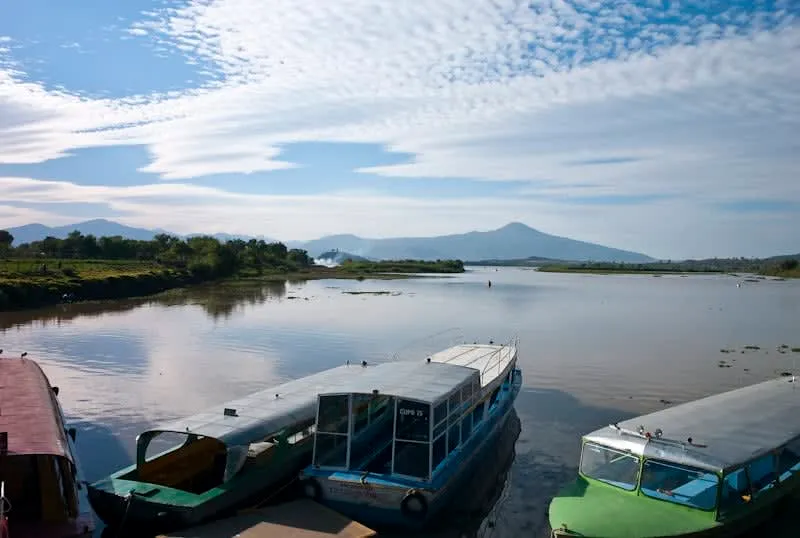
The main event is the boat trip to Janitzio Island (20 minutes, 55–70 MXN round-trip), a Purépecha fishing village famous for the giant statue of José María Morelos that you can climb for panoramic views across Lake Pátzcuaro. The island is also the epicenter of Mexico’s most atmospheric Day of the Dead celebration — thousands of candles on the lake at midnight on November 1st. Boats and accommodation fill up 2–3 months in advance for Día de Muertos.
For food: the market stalls near the boat docks serve the best carnitas in Michoacán. The proper Pátzcuaro version comes with corundas (triangular tamales) and uchepos (sweet corn tamales) — a different product from the Michoacán food you’ll find in tourist restaurants.
Pátzcuaro + Tzintzuntzan combo: Add 15 minutes of driving to include Tzintzuntzan (the ancient Purépecha capital, described below) on the return to Morelia. The two sites sit on the same lake and complement each other naturally.
Transport: Buses from Morelia’s Central Camionera every 15–20 minutes, 60–80 MXN, 1 hour. Car: take Highway 15 south, highway toll around 70 MXN.
Full activities guide: See Things to Do in Pátzcuaro for the complete 25-activity breakdown including Semana Santa schedule, Día de Muertos logistics, and best restaurants.
2. Tzintzuntzan — 70 km, 1 hour
Before Morelia was founded in 1541, Tzintzuntzan was the capital of the Purépecha Empire — the only pre-Hispanic civilization that successfully resisted Aztec expansion. The name means “place of the hummingbirds” in Purépecha.
The Yácatas (pyramid platforms) are five stepped platforms overlooking Lake Pátzcuaro, dating to around 1400 AD. Entry is 90 MXN. Unlike most Mexican ruins, Tzintzuntzan’s Yácatas are combined pyramid-altar structures unique to Purépecha architecture — you won’t find this form anywhere else.
The adjacent Ex-Convento Franciscano de Santa Ana (1526) contains some of Mexico’s oldest olive trees — brought from Spain in the 1500s, they’re among the first olive trees planted in the Americas, with massive gnarled trunks 500 years thick. Access is free during daylight hours.
The town’s craft market sells excellent black lacquerware (traditionally decorated with floral motifs) and straw figures — buy here at source prices rather than in Morelia or Pátzcuaro shops.
Transport: Same bus route as Pátzcuaro — tell the driver “Tzintzuntzan” and they’ll drop you at the highway entrance. 30-minute walk to ruins or 40 MXN taxi.
3. Santa Clara del Cobre — 72 km, 1 hour
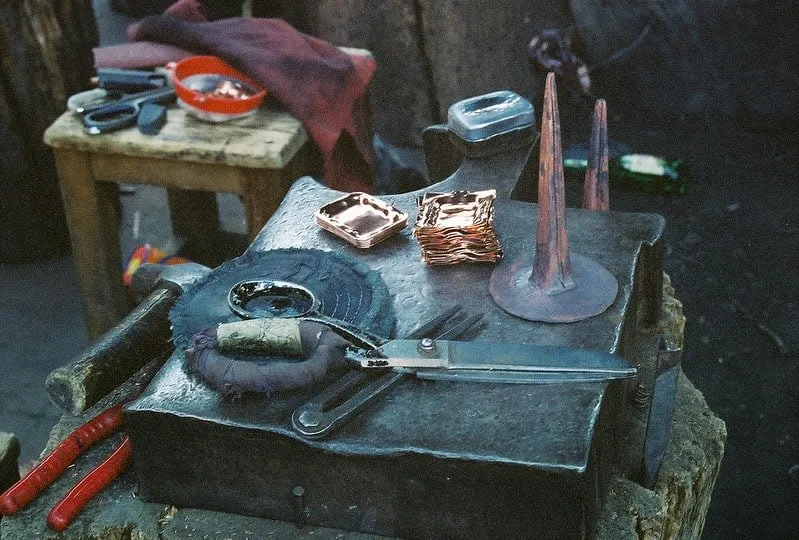
Santa Clara del Cobre is the copper craft capital of Mexico and one of the most satisfying craft towns in the country. Over 200 family workshops line the streets, and most welcome visitors to watch the process: raw copper sheets beaten cold over rounded stones into bowls, sinks, sculptures, and decorative panels. No molds. No machines. The technique is pre-Columbian Purépecha craft that survived the Spanish conquest intact.
Entry to any workshop is free. Most workshops have a small showroom attached. Prices for a handmade copper bowl start at 150 MXN for small pieces; large decorative panels run 1,500–8,000 MXN. Prices are 30–40% lower than you’ll pay in Mexico City’s craft markets or Oaxacan artisan shops for comparable work.
The Museo del Cobre (30 MXN entry) shows the full history from Purépecha metallurgy through the colonial era, with prize pieces from the annual Feria Nacional del Cobre (held in August). The fair is worth planning a trip around if copper craft interests you seriously.
Santa Clara + Lake Zirahuen combo: These two are 20 km apart. Combine in one day — copper shopping in the morning, lake lunch and kayaking in the afternoon.
Transport: No direct buses from Morelia. Take a bus to Pátzcuaro (1 hr, 60–80 MXN), then a local bus or taxi to Santa Clara (30 min, 40–60 MXN). Car is significantly easier.
4. Lake Zirahuen — 70 km, 1 hour
Lake Zirahuen is everything Lake Pátzcuaro is not: no souvenir stalls, no boat hawkers, no cruise traffic. The lake is small (5 km × 2 km), surrounded by pine-oak forest at 2,100 m altitude, and so clear you can see the bottom at 12 meters depth. Motorized boats are prohibited — the surface is glassy quiet.
A few families rent out kayaks and rowboats at the main dock (80–150 MXN/hour). The forest trails above the lake take 1–2 hours and offer views across the valley. The single row of lakeside restaurants serves fresh trout caught the same morning — a whole trout with tortillas and salsa runs 80–120 MXN.
Zirahuen sees very little foreign tourism despite being technically on the tourist route from Morelia to Pátzcuaro. It rewards off-the-beaten-track travelers disproportionately.
Transport: No direct buses from Morelia. Car is the practical option (take Morelia–Uruapan highway, exit at Pátzcuaro, then follow signs for Zirahuen). Alternatively, arrange a private driver through your Morelia hotel for the Pátzcuaro + Zirahuen + Santa Clara circuit (~800–1,200 MXN for the full day).
5. Paracho — 90 km, 1.5 hours
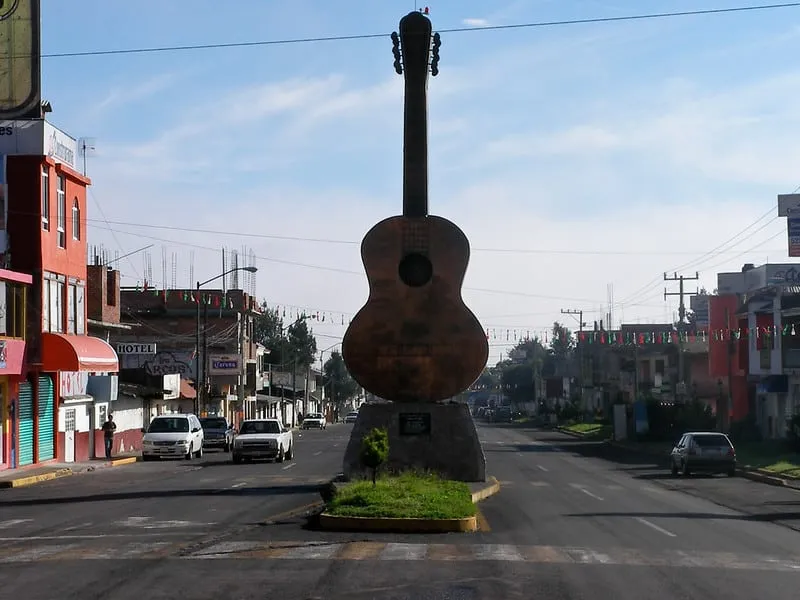
Paracho is a town of 30,000 people in the Purépecha highlands that builds over 80% of Mexico’s classical and folk guitars. The instrument is not indigenous — guitars arrived with Spanish missionaries in the 16th century — but the Purépecha adopted the craft so completely that Paracho is now considered the guitar capital of the Americas, with over 800 registered luthiers (guitar makers) in and around town.
Workshops are open to visitors and the demonstrations are genuinely interesting: you watch craftsmen tap-testing spruce tops for resonance, carving neck joints by hand, and applying traditional lacquer finishes. Prices for a functional student guitar start at 600 MXN; professional instruments run 3,000–15,000 MXN.
The Museo del Guitarrero (free entry, irregular hours) traces the Paracho guitar tradition from the 1500s to present. The Festival Internacional de la Guitarra in August draws performers and luthiers from across Latin America.
Paracho’s food market is also worth stopping for: corundas (triangular tamales unique to Michoacán), atole de grano (corn gruel with piloncillo), and grilled meats prepared in the Purépecha highland tradition.
Transport: Buses depart from Morelia’s Central Camionera to Uruapan (every 20–30 min, 90–120 MXN, 1.5 hrs). Change in Uruapan for Paracho (40 min, 35–50 MXN). Car: Highway 15 Morelia–Uruapan, then Highway 37 north to Paracho.
6. Monarch Butterfly Reserves — 115 km, 2 hours
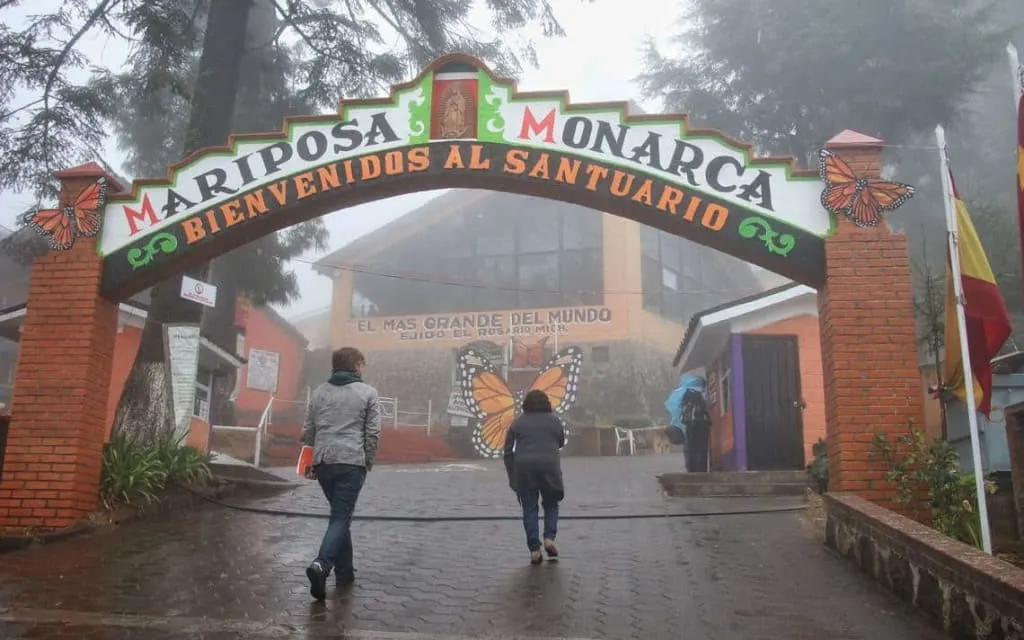
The Monarch butterfly overwintering sites in Michoacán are a legitimate natural wonder. Every November, 50–250 million Monarch butterflies from Canada and the northeastern United States arrive in the Transverse Neovolcanic Belt, coating oyamel fir trees so densely that branches bend under the weight. The air literally rustles with wing sounds.
The three most accessible reserves from Morelia are:
| Reserve | Distance from Morelia | Entry | Notes |
|---|---|---|---|
| El Rosario (Angangueo) | 115 km, 2 hr | 80 MXN | Most popular, best infrastructure, busiest on weekends |
| Sierra Chincua (Angangueo) | 120 km, 2 hr | 80 MXN | Fewer crowds, longer hike (2–3 hrs), often denser butterfly colonies |
| Cerro Pelón (Zitácuaro area) | 130 km, 2.5 hr | 100 MXN | Least visited, requires horse (300–400 MXN extra) or longer hike |
Critical timing: Arrive at El Rosario before 11 AM. Butterflies are clustered in cold morning temperatures; by midday they warm up, open wings, and disperse into the canopy making them harder to see. The hike from the parking area takes 45–60 minutes at 3,000 m altitude — go slowly if you’re not acclimatized.
Season: November through March. Peak: January–February.
Organized tours from Morelia: Multiple operators run daily tours during season for 400–700 MXN per person including transport and guide. Ask at your hotel or the Morelia tourism office on the main plaza.
7. Uruapan — 115 km, 1.5 hours
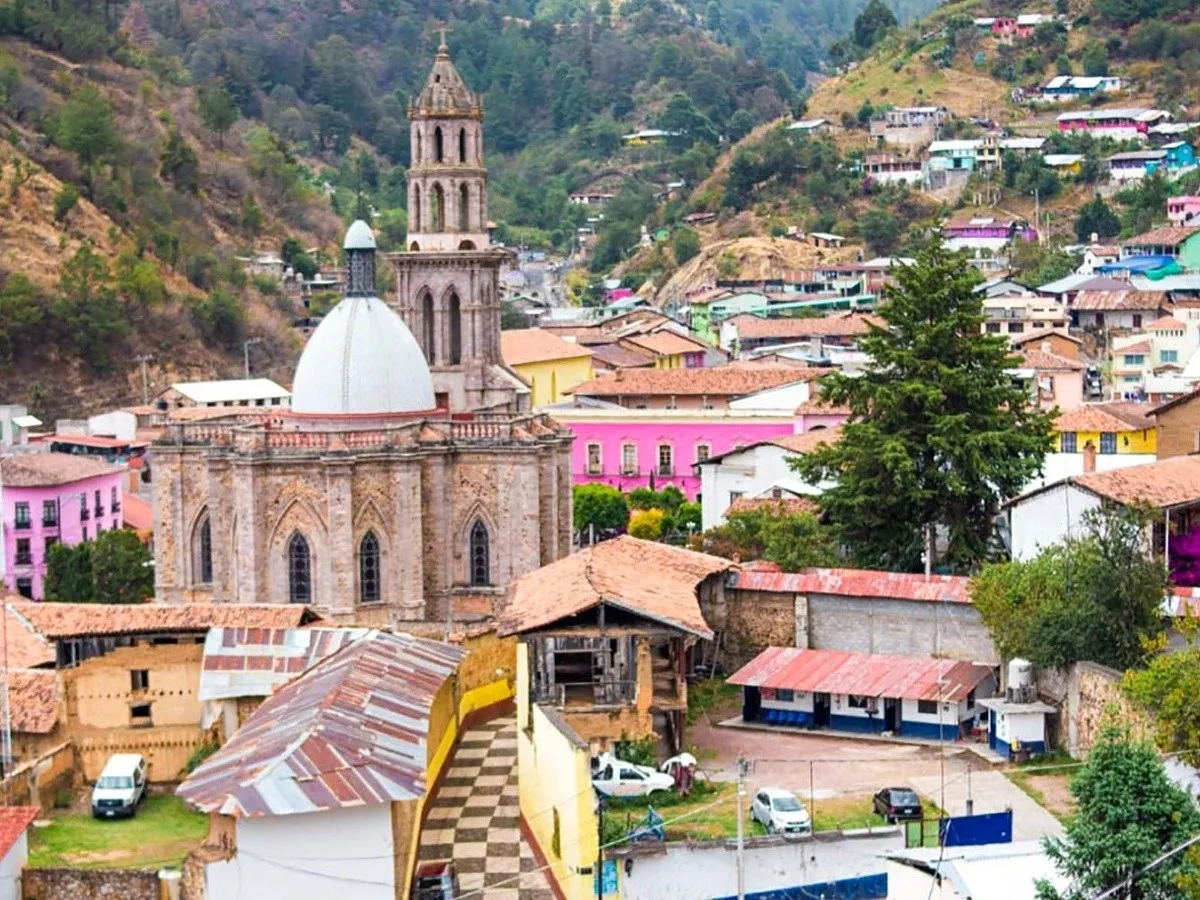
Uruapan calls itself the “avocado capital of the world” — the Michoacán region surrounding it produces 80% of Mexico’s avocados and roughly 40% of global supply. The town itself is less polished than Morelia or Pátzcuaro, but it earns a day trip for two specific reasons.
Parque Nacional Barranca del Cupatitzio — Mexico’s oldest national park (1938) — sits at the edge of town. The Cupatitzio River emerges from underground springs here and cascades through a heavily forested canyon. The main attraction is La Tzaráracua waterfall (5 km south of the park entrance, 120 MXN entry), a 25-meter cascade in jungle setting accessible via a 40-minute forest walk. The park itself (separate entrance, 40 MXN) has springs, smaller waterfalls, and excellent birdwatching.
Uruapan is also the practical base for visiting Paricutín volcano (40 km further, described below). If you’re doing both, stay overnight in Uruapan rather than attempting the full circuit from Morelia in one day.
Transport: Buses from Morelia every 20–30 minutes, 90–120 MXN, 1.5 hours.
8. Paricutín Volcano — 160 km, 2.5–3 hours
Paricutín is the world’s youngest volcano and one of the strangest landscapes on earth. The cone erupted from a cornfield in February 1943 — a farmer named Dionisio Pulido watched it begin — and over 9 years of continuous eruption buried two entire villages under lava. The cone stopped growing in 1952 and has been dormant since.
What you see today: a 400-meter-tall cinder cone rising from a hardened lava field, with the stone tower of the Templo de San Juan Parangaricutiro sticking out of the lava at a slight tilt, the buried church interior still largely intact. The lava surface is eerie, pocked, and completely unlike anything else in Mexico.
Getting there: Drive to the village of Angahuan (near Uruapan). From there, hire a horse in the village center directly — do not use tour company intermediaries who add 50–80% markup. The going rate is 300–500 MXN for a horse and guide to the buried church and back (3–4 hours round trip). The walk on foot takes 2 hours each way across difficult lava terrain.
Honest logistics note: Paricutín as a pure day trip from Morelia (160 km away) is feasible but tiring. Leave Morelia by 7 AM, arrive Angahuan by 10 AM, begin horse ride, return by 3 PM, back in Morelia by 7 PM. The better plan is combining it with an overnight in Uruapan — do Tzaráracua waterfall on day 1, Paricutín on day 2.
9. Cuitzeo Lake — 35 km, 35 minutes
Lake Cuitzeo is the closest day trip from Morelia and one of the most overlooked. It’s Mexico’s second-largest lake (after Chapala) and sits just off the highway north of the city. The 16th-century aqueduct and causeway that crosses the lake — originally built by Spanish missionaries — is 6 km long and still the main road across.
The town of Cuitzeo on the lake’s north shore centers on the restored Ex-Convento Agustino de Santa María Magdalena (1550), one of the best-preserved 16th-century monasteries in Mexico with an unusual open chapel and excellent wall paintings. Entry is 80 MXN.
The lake attracts significant birdlife year-round — flamingos, great egrets, white pelicans, and wading shorebirds concentrate on the shallow margins. The peak bird season is November–March when northern migrants arrive.
Transport: Buses from Morelia’s Central Camionera to Cuitzeo town, 40–50 MXN, 40 minutes. The closest major lake excursion by public transport.
10. Lago de Camécuaro — 150 km, 2 hours
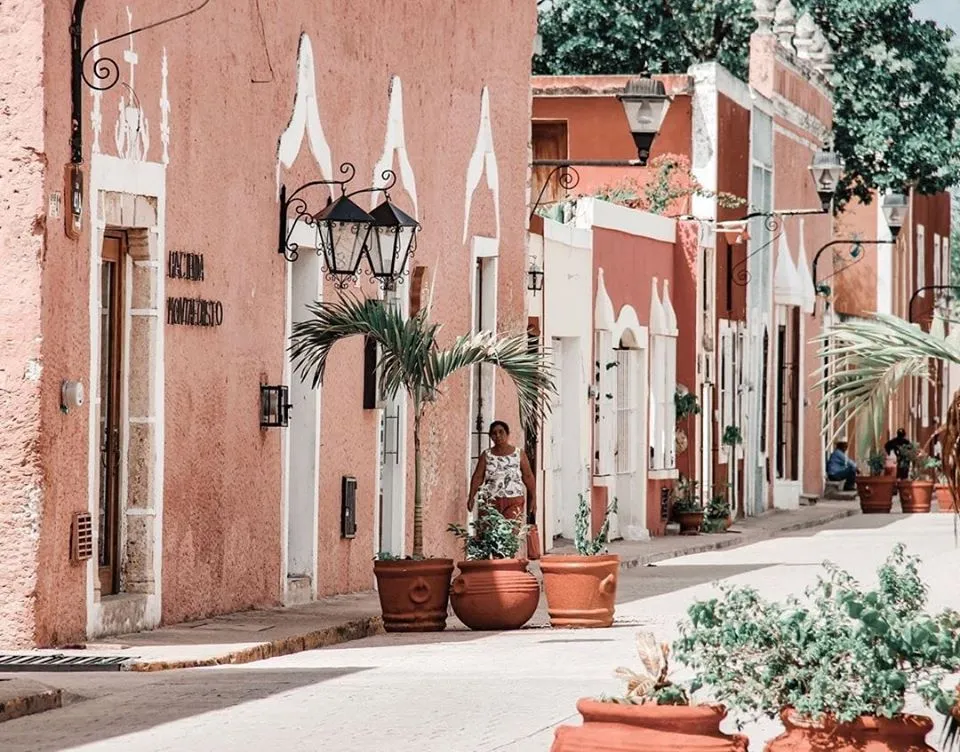
Lake Camécuaro (officially Parque Nacional Lago de Camécuaro, near Tangancícuaro) is one of Mexico’s genuinely little-known gems — a small spring-fed lake with extraordinary water clarity, ringed by enormous ahuehuete trees (Montezuma cypress) with root systems in the water and canopies 25 meters high. The water temperature stays at a constant 24°C year-round, fed by underground springs.
The park (30 MXN entry) has a swimming area in the lake itself, kayak rentals (80 MXN/hour), and hiking paths under the massive tree canopy. On weekdays it’s almost empty. On weekends, Mexican families from Zamora and Morelia come for the day. It’s the kind of place travelers from outside Mexico almost never know about.
Transport: Car only (Highway 15 toward Zamora). The drive takes 2 hours including the toll road. No practical public bus connection exists.
Best Road Trips From Morelia by Drive Time
If you searched for road trip ideas near Morelia, these are the clearest picks by how much driving you actually want to do.
| If you only want to drive… | Best pick | Why it works |
|---|---|---|
| 35 to 45 minutes | Cuitzeo Lake | Fastest half-day escape with a monastery, causeway, and birdlife |
| 1 hour | Pátzcuaro | Best all-around first trip with easy food, lake, and colonial payoff |
| 1 hour | Santa Clara del Cobre or Lake Zirahuen | Better for craft shopping or a calm lake lunch if you have a car |
| 1.5 hours | Paracho or Uruapan | Better for guitars, waterfalls, or a bigger full-day outing |
| 2 hours | Monarch reserves | Best winter-only day trip with the highest seasonal wow factor |
| 2.5 to 3 hours | Paricutín | Best long road trip if you want the most dramatic landscape |
The main mistake is choosing Paricutín or Lago de Camécuaro when you only have half a day. If your trip is short, stay with Cuitzeo, Pátzcuaro, Santa Clara del Cobre, or Tzintzuntzan.
Which Day Trip Fits Your Travel Style?
| If you want… | Best pick | Why it works |
|---|---|---|
| The easiest first trip | Pátzcuaro | Fast bus ride, strong food and culture payoff, easy to combine with Janitzio |
| A good trip without a car | Pátzcuaro or Tzintzuntzan | Frequent buses and simple logistics from Morelia |
| Something genuinely unique | Paricutín | Nowhere else in Mexico feels like the lava field and buried church |
| The best winter-only experience | El Rosario or Sierra Chincua | Peak Monarch season creates a real once-in-a-lifetime day |
| A calm scenic day | Lake Zirahuen | Quiet lake, forest setting, easy lunch-and-kayak day |
| Shopping for crafts | Santa Clara del Cobre or Paracho | Best copper and guitar workshops close to Morelia |
Getting Around: Transport Comparison
| Method | Best For | Cost | Notes |
|---|---|---|---|
| Rental car | 4+ destinations, Paricutín, Zirahuen | 600–1,000 MXN/day | Most flexible, required for some routes |
| Bus from Central Camionera | Pátzcuaro, Uruapan, Paracho | 60–120 MXN each way | Frequent service, reliable |
| Organized tour (butterflies) | El Rosario/Sierra Chincua (Nov–Mar) | 400–700 MXN/person | Best value for monarch season |
| Private driver / taxi | Full-day circuits | 1,200–2,000 MXN/day | Hotel front desks can arrange |
| Colectivo | Tzintzuntzan, Santa Clara | 30–50 MXN each | Change in Pátzcuaro |
Best Day Trips from Morelia Without a Car
If you are staying in Morelia without a rental car, do not try to force every option on this list. The most realistic public-transport day trips are:
- Pátzcuaro for the easiest bus connection and best all-around payoff
- Tzintzuntzan if you want archaeology and can handle one simple taxi connection
- Cuitzeo for a fast half-day outing
- Uruapan if you want a larger city day with park time
The trips that work much better with a car or private driver are Lake Zirahuen, Santa Clara del Cobre, Paracho, Lago de Camécuaro, and Paricutín. The butterfly reserves are the exception, because a seasonal organized tour is often easier than self-driving.
Combination Routes
Michoacán Craft Circuit (1 day, car): Pátzcuaro (3 hrs) → Tzintzuntzan (1 hr) → Santa Clara del Cobre (2 hrs) → Morelia. About 180 km total, all manageable before dark.
Lakes & Ruins Circuit (1 day, car): Cuitzeo monastery (1.5 hrs) → return to Morelia for lunch → Zirahuen lake (2.5 hrs, swimming + kayak) → back via Santa Clara. ~150 km.
Butterfly + Colonial (2 days, Nov–Mar): Day 1 Pátzcuaro + Tzintzuntzan. Day 2 El Rosario or Sierra Chincua (early AM) + Angangueo town visit.
Volcano Circuit (2 days): Day 1 Uruapan + Tzaráracua waterfall (stay overnight in Uruapan). Day 2 Paricutín horse ride + Angahuan. Drive back to Morelia in the afternoon.
Seasonal Calendar
| Month | Best Options | Notes |
|---|---|---|
| Nov–Feb | Monarch butterflies ⭐ Pátzcuaro, Tzintzuntzan | Peak butterfly season. Day of Dead Nov 1–2 in Pátzcuaro (book far ahead) |
| Mar–May | Lake Zirahuen, Santa Clara, Paracho | Spring weather, less competition for hotels |
| Jun–Sep | Uruapan waterfalls (higher flow), Cuitzeo flamingos | Rainy season makes forest lush; some mountain roads slippery |
| Oct | Morelia Film Festival, Pátzcuaro Day of Dead prep | The festival runs October 16–25, 2026; Pátzcuaro prices rise before Día de Muertos |
Budget Guide
| Travel Style | Day Trip Budget (Morelia base) | Includes |
|---|---|---|
| Budget | 200–400 MXN/day | Bus transport, free sites (Cuitzeo, Santa Clara workshops), market meals |
| Mid-range | 500–900 MXN/day | Bus + colectivo, ruin entry fees, sit-down restaurant lunch |
| Comfortable | 1,200–2,000 MXN/day | Car rental or private driver, boat to Janitzio, carnitas lunch, copper purchases |
Common Mistakes to Avoid
- Trying to do Paricutín as a casual late-start day trip. Leave early or make it an overnight via Uruapan.
- Showing up late to the Monarch reserves. You want cold morning conditions, not a midday arrival.
- Assuming every trip is easy by bus. Several are much better with a car, even if technically possible by public transport.
- Underestimating Janitzio timing. Boats are quick, but dock transfers and island walking add time.
- Planning Día de Muertos in Pátzcuaro at the last minute. Rooms and boats get booked out fast.
Where to Stay in Morelia
The Morelia travel guide covers accommodation in full. For day trips, staying in central Morelia (near the Cathedral or aqueduct) keeps all bus departures within reach. For the butterfly reserves specifically, Angangueo has several small guesthouses that let you arrive before the morning tours from Morelia — a significant advantage.
See also: Things to Do in Morelia for the city itself. Getting to Morelia from CDMX: Mexico City to Morelia transport guide (Terminal Poniente, not TAPO).