25 Best Things to Do in Pátzcuaro, Michoacán: Janitzio, Food & Day Trips
Pátzcuaro is a Purépecha colonial town on the shore of Lake Pátzcuaro, 60 km southwest of Morelia in Michoacán, Mexico. At 2,175 meters elevation, it sits cooler than most of Mexico, with cobblestone streets, one of Mexico’s most beautiful plazas, and the most atmospheric Día de Muertos celebration in the country. Population: 90,000. UNESCO Intangible Cultural Heritage ties through Purépecha traditions.
If you’ve heard one thing about Pátzcuaro, it’s probably the November candles. But this town earns a trip in any month. The lake is genuine, the food is excellent, the silver-and-lacquerware craft tradition runs deep, and the Semana Santa lake procession is unlike anything else in Mexico.
I’ve been to Pátzcuaro three times. It’s one of the few places in Mexico where the tourist experience and the real community life overlap almost completely, the Janitzio families actually go to the cemetery on November 1, not for you, but for their ancestors.
If this is your first trip, start with Janitzio Island, Plaza Vasco de Quiroga, the Basilica, Casa de los Once Patios, and a white-fish lunch. If you have a second day, add Tzintzuntzan, Ihuatzio, and Santa Clara del Cobre. For deeper background before you go, read our Pátzcuaro, Michoacán guide and Mexico City to Pátzcuaro transport guide.
Is Pátzcuaro Worth Visiting?
Yes, especially if you want a Mexico trip with more culture than checklist tourism. Pátzcuaro is worth visiting for its Purépecha identity, lake scenery, strong food traditions, artisan workshops, and easy day trips to Janitzio, Tzintzuntzan, and Santa Clara del Cobre. If you only have one day, focus on the historic center plus Janitzio. If you have two or three days, Pátzcuaro becomes one of the best bases in Michoacán.
25 Things to Do in Pátzcuaro at a Glance
| Activity | Type | Time Needed | Cost |
|---|---|---|---|
| Janitzio Island | Nature/Culture | Half day | 60–80 MXN boat |
| Plaza Vasco de Quiroga | Culture | 1–2 hrs | Free |
| Basilica of Our Lady of Health | Culture | 30–45 min | Free |
| Día de Muertos cemetery vigil | Festival | All night Nov 1–2 | Free |
| Good Friday lake procession | Festival | Evening Apr 3 | Free |
| Tzintzuntzan Yácatas ruins | Archaeology | 2–3 hrs | 65 MXN |
| Santa Clara del Cobre copper workshop | Craft | Half day | Free–moderate |
| Museo de Artes Populares | Museum | 1–2 hrs | 30 MXN |
| Gertrudis Bocanegra Library mural | Culture | 30 min | Free |
| Lake boat tour (not Janitzio) | Nature | 1–2 hrs | 200–400 MXN |
| White fish lunch on the plaza | Food | 1–1.5 hrs | 100–250 MXN |
| Nieve de pasta tasting | Food | 20 min | 20–40 MXN |
| Tzintzuntzan olive trees | Nature | 1 hr | Free |
| Yunuen Island (quieter than Janitzio) | Nature | 3–4 hrs | 60–80 MXN |
| Purépecha handicraft market | Shopping | 1–2 hrs | Free |
| Pátzcuaro artisan street (Calle Portugal) | Shopping | 1–2 hrs | Free |
| Lake Zirahuen (day trip) | Nature | Half day | Free–transport |
| Paracho guitars (day trip) | Craft | Full day | Free–purchase |
| Uricho viewpoint | Nature | 1 hr | Free |
| Casa de los Once Patios | Culture | 1 hr | Free |
| Temple of San Francisco | Culture | 30 min | Free |
| Morelia (day trip) | City | Full day | Bus 55–80 MXN |
| Pázcuaro cooking class | Food | 3–4 hrs | 500–1,000 MXN |
| Monarch butterfly viewing (seasonal) | Nature | Full day | 100 MXN entry |
| Ihuatzio ruins | Archaeology | 2 hrs | 65 MXN |
Best first-timer shortlist: 1) Janitzio, 2) Plaza Vasco de Quiroga, 3) Basilica of Our Lady of Health, 4) Casa de los Once Patios, 5) white fish lunch, 6) Tzintzuntzan if you have a second day.
1. Janitzio Island — The Heart of It All
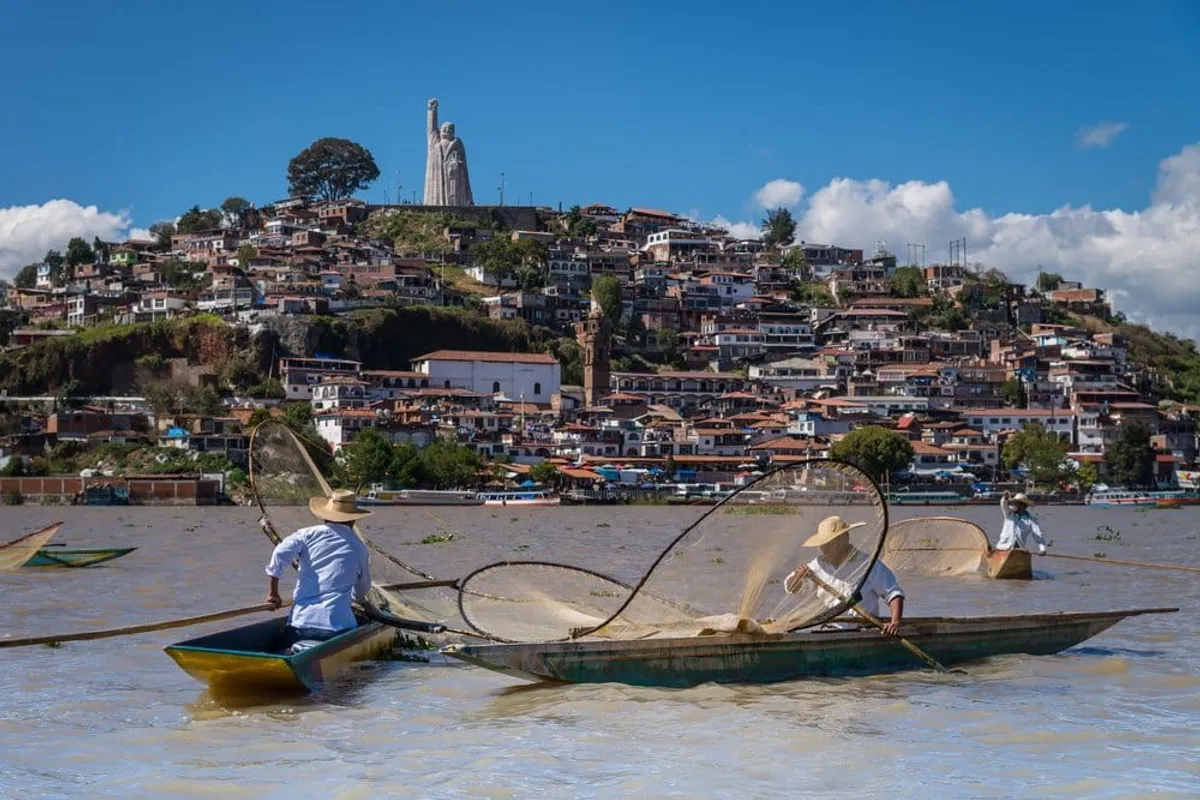
Janitzio is the most iconic island in Lake Pátzcuaro — the one with the giant statue of José María Morelos (the independence hero born in Michoacán) extending his fist skyward from the summit. You can climb inside the hollow statue for panoramic views of the entire lake.
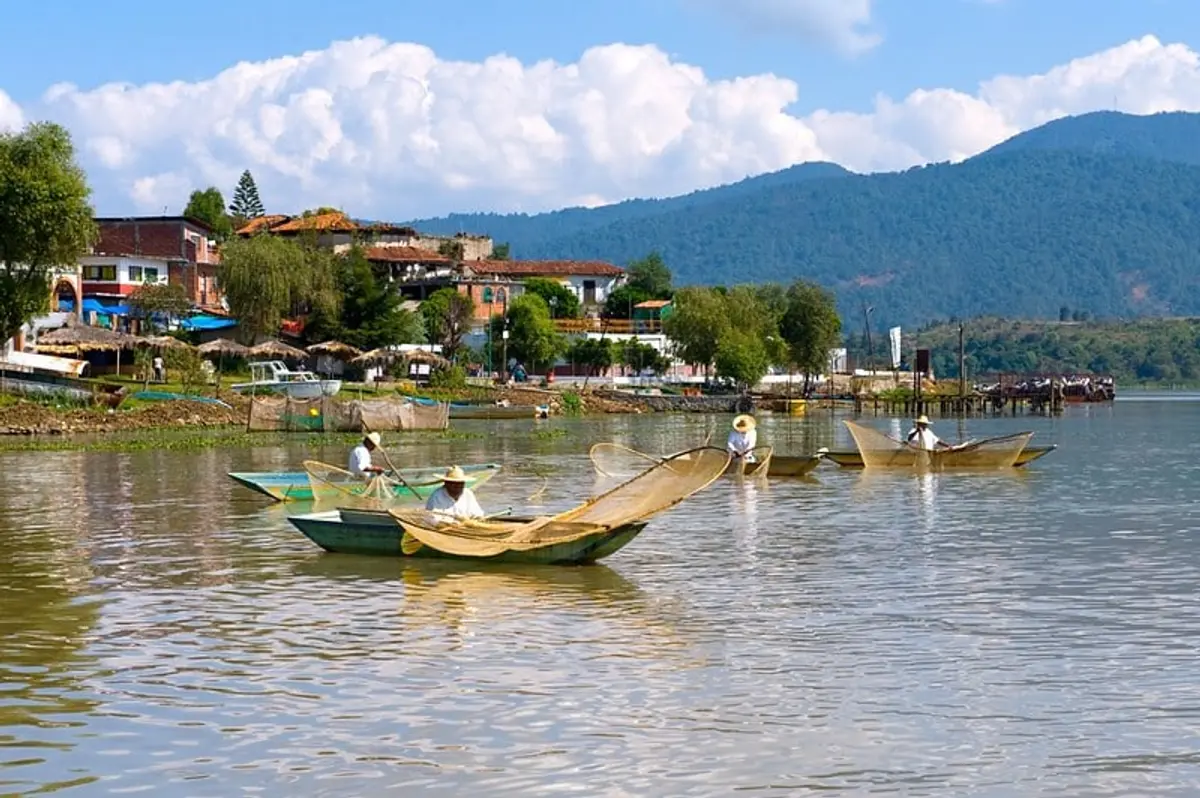
The island itself is a vertical village of about 2,000 people who make their living from fishing (the iconic mariposa butterfly nets you see in photos), making crafts, and running restaurants. The main street up to the monument is lined with stalls selling white fish, fish tacos, and local sweets.
Practical info:
- Boats from Muelle General (main pier, 4 km from plaza): 60–80 MXN round trip
- Boats from Muelle San Pedrito: slightly cheaper
- Runs 8 AM–6 PM continuously (no fixed schedule, boats go when full)
- Morelos monument interior: 20 MXN to climb (worth it for views)
- Allow 2–3 hours total
Día de Muertos (Nov 1–2): The night vigil on Janitzio is what most visitors have seen in photographs. Purépecha families row to the island cemetery after dark with flowers, candles, and ofrendas for their ancestors. The hillside cemetery fills with candlelight visible from the mainland. This is a real family ceremony — not a performance. Be respectful, keep noise minimal, don’t shine bright lights at the graves. Get there before 9 PM to find good viewing spots along the cemetery walls.
2. Plaza Vasco de Quiroga — Mexico’s Most Beautiful Small-City Plaza
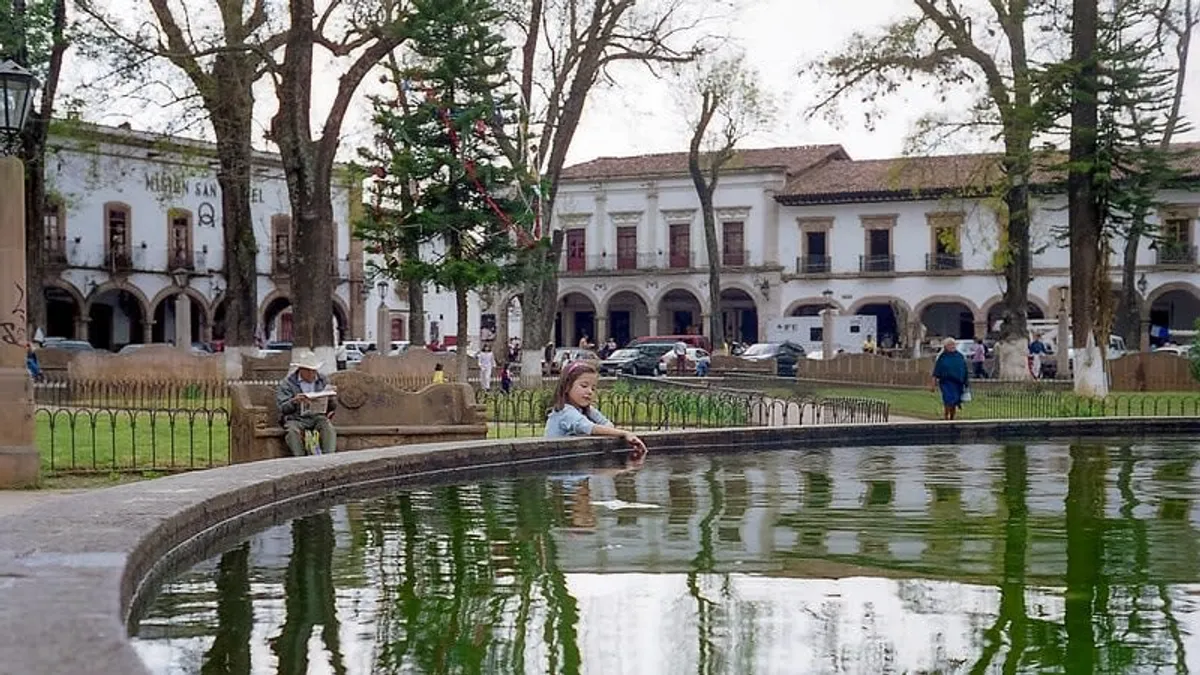
Named after Vasco de Quiroga — the 16th-century bishop who organized the Purépecha towns into single-craft workshops (one village makes copper, one makes lacquerware, one makes guitars) — the main square is one of the largest and most beautiful in Mexico. Unlike most Mexican plazas, it has no church on it, which gives it an open, gallery-like feel.
The square is lined with colonial arcades housing restaurants, hotels, and handicraft shops. On Sunday mornings, regional painters exhibit work in the open air. At any hour, it’s full of life without feeling touristy or manufactured.
What to do:
- Walk the perimeter and look at the facades (many are 16th–17th century)
- Sit at one of the restaurant terraces for white fish lunch
- Browse the handicraft shops under the portales (look for lacquerware boxes, copper plates, and rebozos)
- Find the Fuente de los Pescadores fountain in the center — the copper fish are cast by artisans from Santa Clara del Cobre
Sunday: Open-air painting exhibition from 10 AM–2 PM. Free, excellent quality.
3. Basilica of Our Lady of Health
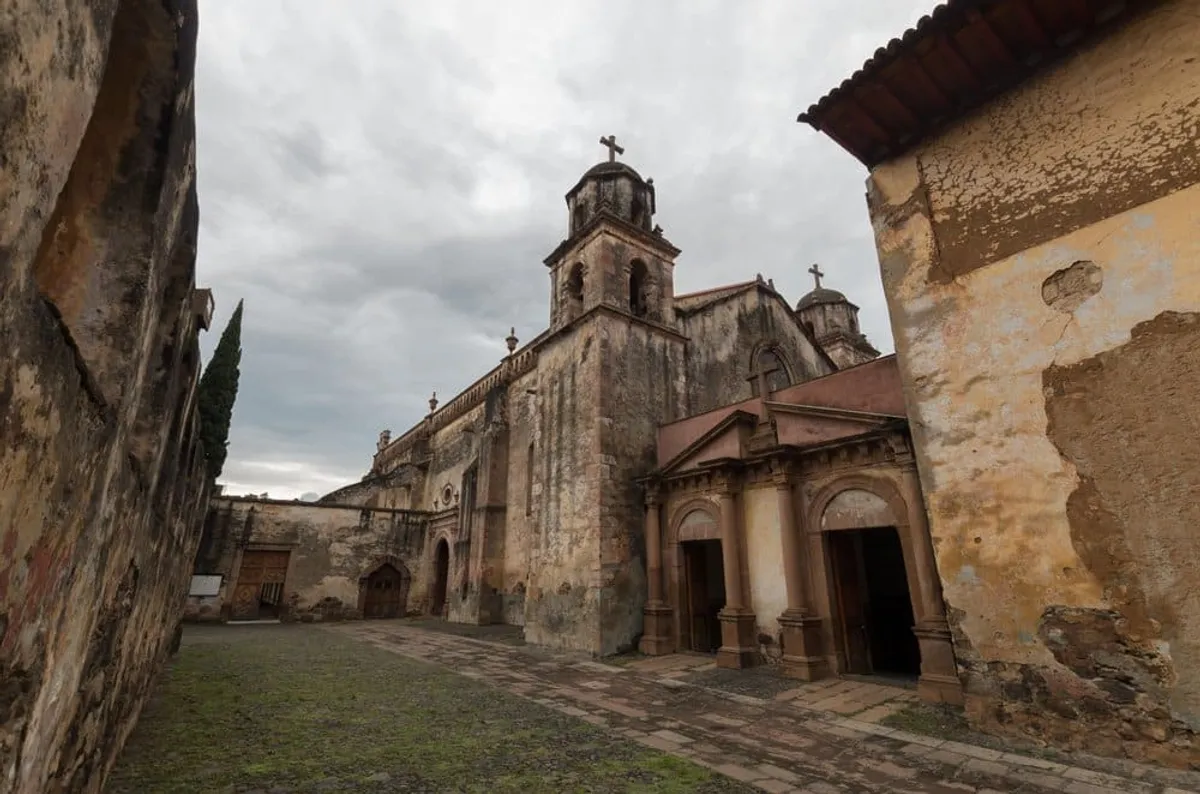
Built by Vasco de Quiroga in 1540, the Basilica de Nuestra Señora de la Salud is the most important religious site in Pátzcuaro and one of the most revered Marian shrines in western Mexico. The Virgin of Health (La Virgen de la Salud) inside is made of corn-cane paste — the same material used for many pre-Hispanic figures. It’s a remarkable blend of indigenous craft and Spanish Catholic iconography.
Key details:
- Open daily 7 AM–9 PM (services at 8 AM, 12 PM, 7 PM)
- The Virgin statue is on the main altar — made of corn-cane mixed with orchid honey. Extremely fragile, extremely old.
- The feast day (December 8) draws pilgrims from across Michoacán
- The atrium is where outdoor religious processions begin during Holy Week and Día de Muertos
Holy Week: The Basilica is the starting and ending point for the Good Friday lake boat procession. If you’re in Pátzcuaro for Semana Santa, attend the 7 PM service on Maundy Thursday — the church is at maximum atmospheric intensity.
4. Semana Santa — The Good Friday Lake Procession
Pátzcuaro’s Semana Santa is unlike any other in Mexico. The signature event: on Good Friday evening (April 3, 2026), a figure of the Dead Christ is placed in a wooden boat and rowed across Lake Pátzcuaro between churches, with hundreds of candle-lit trajineras following behind. The procession moves in near-silence across the dark lake.
This doesn’t happen anywhere else in Mexico. It’s a Purépecha tradition that predates the colonial Catholic church calendar — the lake itself is sacred in Purépecha cosmology.
2026 Holy Week schedule:
- Palm Sunday March 22: Blessing of palms, procession from Basilica
- Holy Monday–Wednesday: Via Crucis stations in the historic center
- Holy Thursday April 2: Last Supper ceremony, Washing of Feet at the Basilica
- Good Friday April 3: Procession of the Dead Christ (lake boat procession, evening ~8 PM)
- Holy Saturday April 4: Burning of Judas effigies in the market area
- Easter Sunday April 5: Resurrection Mass, music, flower carpets
No Ley Seca in Michoacán — restaurants and bars open throughout Holy Week.
See our complete Semana Santa in Pátzcuaro guide for the full schedule, logistics, and where to watch the lake procession.
5. Tzintzuntzan Yácatas Ruins
Tzintzuntzan (“Place of the Hummingbirds”) was the capital of the Purépecha Empire before Spanish contact — the only major pre-Hispanic civilization never conquered by the Aztecs. The ruins sit 15 km north of Pátzcuaro on the lakeshores.
The Yácatas are a unique architectural form: five stepped platform structures built in a T-shape, unlike any Maya or Aztec building. They face the lake and the setting sun. The site is compact but genuinely evocative — far fewer visitors than Teotihuacan or Monte Albán, and you can explore freely.
Practical info:
- Entry: 65 MXN (INAH)
- Open 9 AM–5 PM
- Allow 1.5–2 hours
- Combined ticket with Ihuatzio ruins (20 km north): ask at the entrance
- Colectivo from Pátzcuaro center to Tzintzuntzan: 18–25 MXN (15 min)
Olive tree walk: The Ex-Convent of San Francisco in Tzintzuntzan has the oldest olive trees in the Americas, planted by Vasco de Quiroga in the 1530s. Walk through them on the way back to the bus stop. During Palm Sunday, families cut branches from these 500-year-old trees.
6. Santa Clara del Cobre — Copper Workshop Town
Santa Clara del Cobre (official name: Villa Escalante) is 17 km south of Pátzcuaro — a 20-minute drive or 30-minute bus. The entire town is organized around copper. Every family makes copper objects using techniques unchanged since the Purépecha empire. The main plaza has a copper fountain. Every storefront sells copper pots, plates, bowls, and sculptures.
This is the living version of Vasco de Quiroga’s 16th-century plan: each town specializes in one craft so they don’t compete, and each has expertise unmatched elsewhere.
What to buy:
- Copper vases and bowls: 100–800 MXN depending on size
- Copper platters: 200–600 MXN
- Copper sculpture: 400–2,000+ MXN for large pieces
- Copper earrings/jewelry: 80–300 MXN
Don’t miss: Watch the artisans work. Coppersmithing here is done cold — the hammering and forming happens without heating the metal (unlike most metalwork traditions). Ask if you can watch; most workshops welcome observers.
7. Museo de Artes Populares
Housed in the 16th-century Colegio de San Nicolás (founded by Vasco de Quiroga, one of the oldest schools in the Americas), this museum has the best collection of Michoacán and Purépecha popular art anywhere. Lacquerware boxes, feather mosaics, ceremonial objects, traditional clothing, and copper work — all displayed with real historical context.
Entry: 30 MXN Hours: Tuesday–Sunday 10 AM–6 PM Time needed: 1.5–2 hours
8. Gertrudis Bocanegra Library Mural
Inside the former Augustinian Temple of San Agustín (now the Gertrudis Bocanegra Municipal Library), Juan O’Gorman painted a massive mural in 1942 depicting the history of Michoacán from pre-Hispanic Purépecha culture through the Mexican Revolution. It’s one of the great murals of the Mexican muralist movement, far less visited than Rivera’s works in Mexico City.
Entry: Free Hours: Monday–Saturday 9 AM–7 PM Time needed: 30 minutes
Gertrudis Bocanegra herself was a Pátzcuaro woman executed in 1817 for her role in the independence movement — she was shot in this plaza. The library is named in her honor.
9. Día de Muertos Cemetery Vigil — The World’s Most Photographed Night
On the night of November 1 into November 2, Pátzcuaro’s cemeteries fill with candlelight. This is the real Día de Muertos — not a parade, not a tourist event. Purépecha families decorate the graves of their relatives with marigolds (cempasúchil), copal incense, photos, food offerings, and hundreds of candles. They sit all night. They eat together. Sometimes they play music.
The Janitzio island cemetery is the most famous and photographed — arrive by 8 PM to get a spot along the walls. The mainland cemeteries (Tzintzuntzan and Erongarícuaro) are less crowded and equally moving.
Logistics:
- Book accommodation 3+ months ahead (all hotels sell out)
- November 1 is the children’s day (Día de los Muertos Chiquitos) — Nov 2 is adults
- The island boat service runs all night Nov 1–2 (special extended hours)
- Respectful dress, no bright flashes, keep quiet near family gatherings
- Budget hotels: 1,500–3,000 MXN/night. Mid-range: 3,000–6,000 MXN. Book months ahead.
10. Lake Pátzcuaro Boat Tour
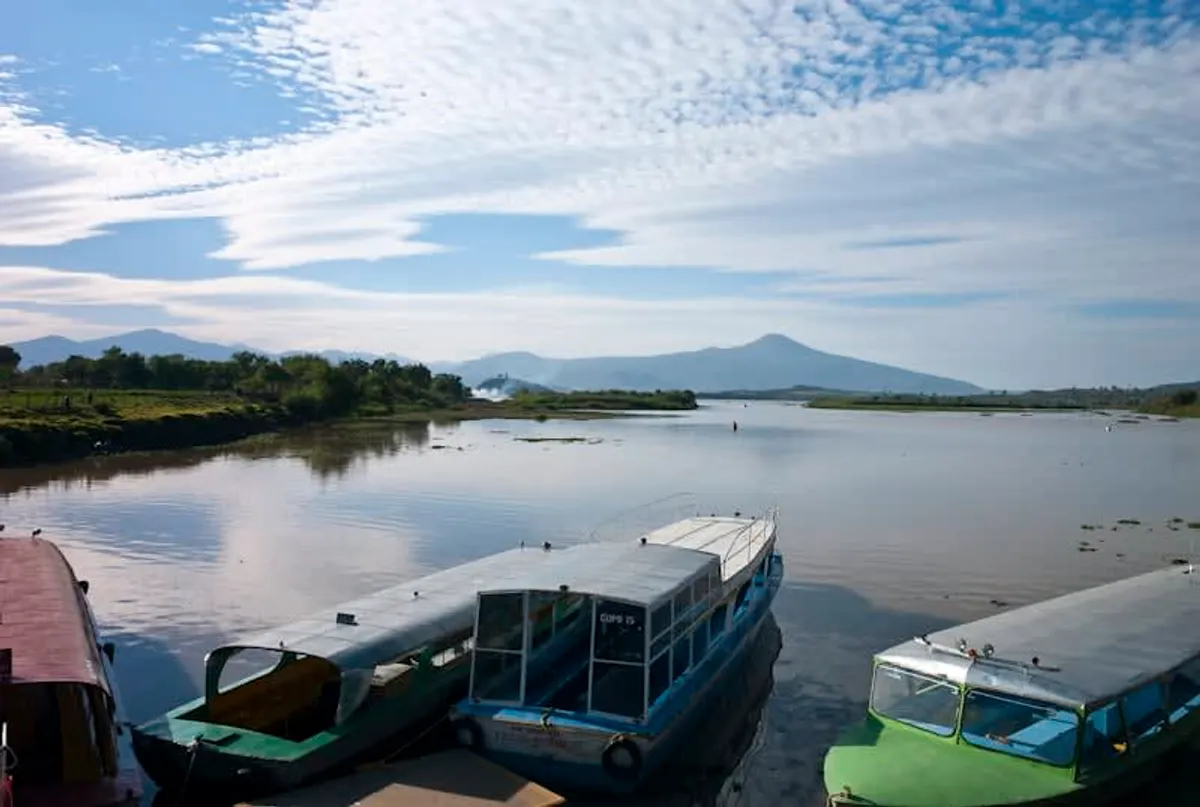
Beyond Janitzio, the lake has six other islands and a 54 km shoreline. Take an unstructured boat tour from the main pier to explore the quieter parts: egret rookeries on the smaller islets, Purépecha fishing communities with dugout canoes, and the distant mountains of Michoacán.
Options:
- Group tour boat (shared, to Janitzio only): 60–80 MXN
- Private boat charter (1–6 people): 200–500 MXN/hour depending on boat size
- Yunuen Island eco-lodge: boat + cabin packages from 800 MXN/night (advance booking required)
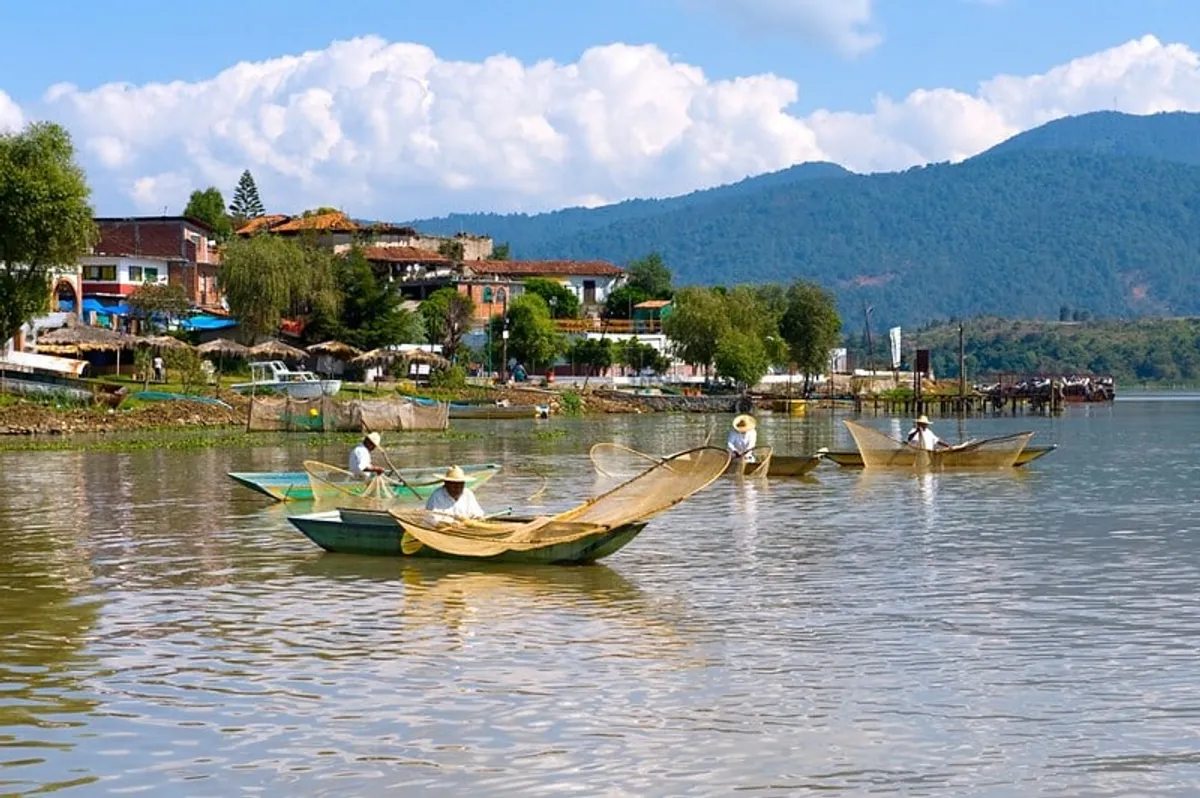
The butterfly nets: The classic Pátzcuaro image — fishermen standing in canoes with large triangular nets — is real but less common than in the 20th century. You’ll still see it at dawn around Janitzio and Yunuen. The nets catch a local fish (charales and white fish) and are also used symbolically in the Día de Muertos flotilla.
11. White Fish Lunch — Pátzcuaro’s Signature Dish
Pescado blanco (white fish) from Lake Pátzcuaro is one of Mexico’s most prized regional ingredients — light, delicate, mildly sweet. The species (Chirostoma estor) lives only in this lake. Traditional preparation: lightly battered in egg white, fried in oil, served whole with lime and salsa.
Where to eat:
- El Patio (Plaza Vasco de Quiroga): white fish, churipo stew, uchepos — mid-range, 150–250 MXN/plate
- La Surtidora (Portal Regules): reliable Michoacán classics, family atmosphere, 100–180 MXN
- Restaurante Don Primo (near the pier): fresher fish (you’re near the water), 120–200 MXN
- Pier-side stalls: fish tacos 25–40 MXN each, excellent quality
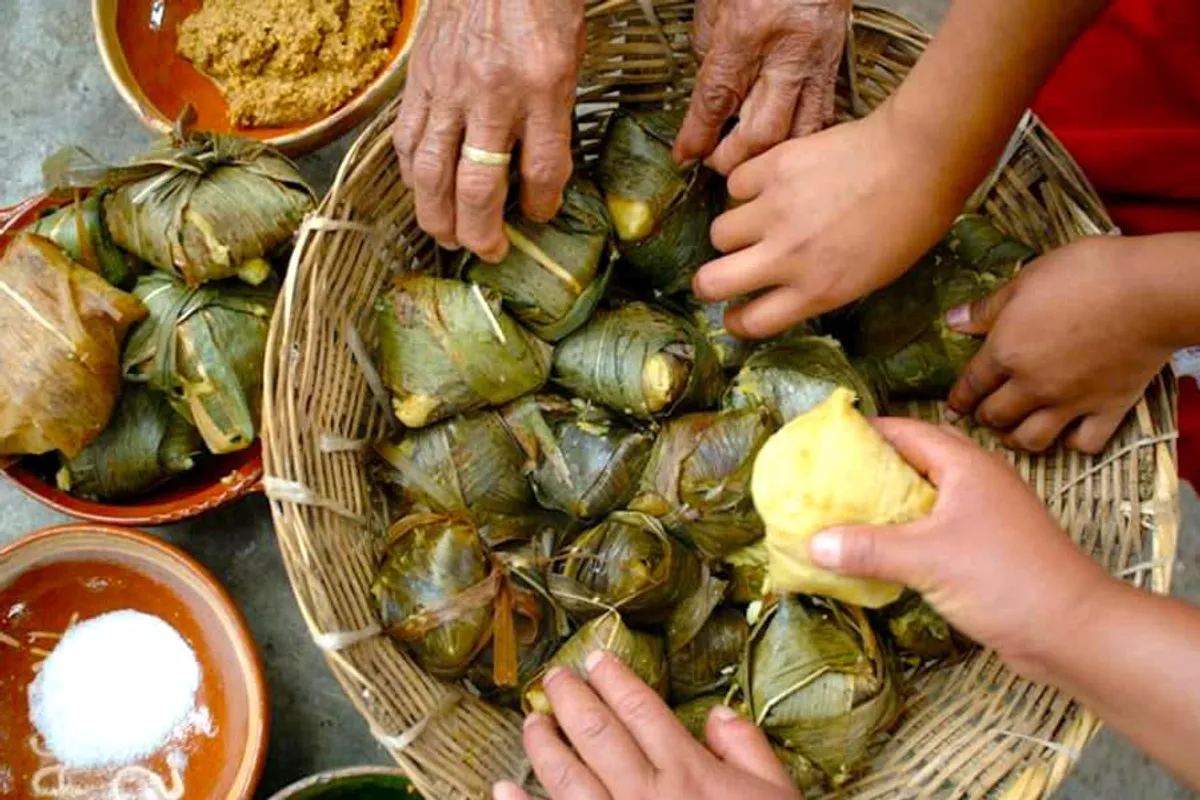
Order: Pescado blanco entero (whole), churipo (red broth beef stew) as a starter, corundas on the side, nieve de pasta for dessert.
12. Nieve de Pasta — Only in Pátzcuaro
Nieve de pasta is a milk-based ice cream found only in Pátzcuaro and parts of Michoacán — denser than regular helado, less sweet, with flavors including canela (cinnamon), guayaba, tamarind, and chocolate. The name comes from pasta (referring to the thick, paste-like texture).
Get it in small cups (20–25 MXN) from the vendors on the main plaza. The stall to the right of the Basilica atrium has been there for decades.
13. Ihuatzio Ruins
Less visited than Tzintzuntzan but equally interesting, Ihuatzio is another Purépecha ceremonial center on the lakeshore 20 km north of Pátzcuaro. Two large pyramid platforms overlook the lake. The site has excellent views and almost no crowds.
Entry: 65 MXN Best combined with: Tzintzuntzan in a single day (only 10 km apart) Transport: Colectivo from Pátzcuaro terminal or rent a car
14. Casa de los Once Patios
A 16th-century Dominican convent converted into an artisan showcase — eleven interconnected courtyards (hence the name) housing workshops where Michoacán craftspeople work on lacquerware, textiles, copper, and painting. You can watch artisans at work and buy directly.
Entry: Free Hours: Daily 10 AM–7 PM Where: Calle Madrigal de las Altas Torres, 3 blocks from the main plaza
15. Purépecha Crafts Market
The handicraft market beside the Basilica is one of the best in central Mexico. Michoacán is famous for its craft diversity — each town produces something different, and Pátzcuaro concentrates it all.
What to look for:
- Lacquerware (from Uruapan and Pátzcuaro): painted wooden boxes and trays, 150–800 MXN
- Copper objects (from Santa Clara del Cobre): 100–600 MXN
- Guitars and stringed instruments (from Paracho): 500–3,000 MXN
- Rebozos (Purépecha woven shawls): 200–800 MXN
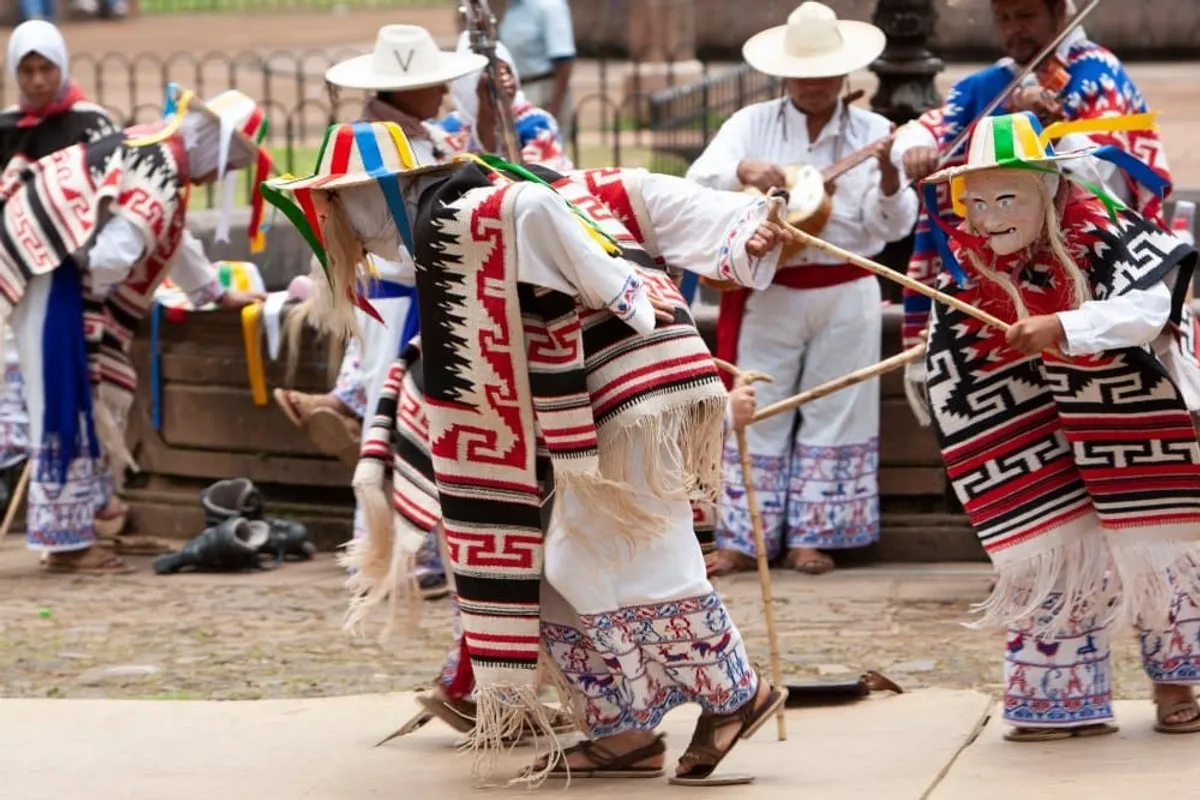
- Painted wooden masks (used in Purépecha dances): 150–600 MXN
- Feather mosaics (arte plumario): rare, expensive, extraordinary — 1,000–5,000 MXN
Bargaining: Polite negotiation is acceptable on most items except food. Don’t offer less than 70% of the initial price.
Day Trips from Pátzcuaro
| Destination | Distance | Time | Why Go |
|---|---|---|---|
| Morelia (capital) | 60 km | 1 hr | Cathedral, aqueduct, candy street, city life |
| Tzintzuntzan | 15 km | 20 min | Purépecha ruins, oldest olive trees in Americas |
| Santa Clara del Cobre | 17 km | 20 min | Copper workshop town |
| Ihuatzio ruins | 20 km | 25 min | Purépecha pyramids, lake views |
| Lake Zirahuen | 20 km | 30 min | Turquoise lake, pine forest, swimming |
| Paracho | 80 km | 1.5 hr | Guitar capital of Mexico |
| Monarch butterflies (El Rosario) | 115 km | 1.5 hr | Seasonal Oct–Mar |
| Uruapan + Tzaraacua waterfall | 60 km | 1 hr | Avocado capital, jungle waterfall |
| Paricutín volcano | 100 km | 2 hrs | Walk to 1943 eruption lava field |
See our Day Trips from Morelia guide for detailed logistics on all Michoacán destinations.
1, 2, and 3 Day Pátzcuaro Itineraries
If you have 1 day
- Morning: Plaza Vasco de Quiroga, Basilica, and Casa de los Once Patios
- Lunch: white fish or corundas on the plaza
- Afternoon: boat to Janitzio
- Evening: nieve de pasta and a walk through the lit-up historic center
If you have 2 days
- Day 1: Historic center + Janitzio
- Day 2: Tzintzuntzan + Ihuatzio, then finish in Santa Clara del Cobre for copper workshops
If you have 3 days
- Day 1: Historic center + Janitzio
- Day 2: Tzintzuntzan + Ihuatzio + lake viewpoints
- Day 3: Santa Clara del Cobre or Zirahuén, with time for shopping and a slower food-focused afternoon in town
For a wider colonial-cities route, pair Pátzcuaro with Morelia, things to do in Morelia, and our broader Colonial Mexico travel guide.
Seasonal Calendar
| Month | What’s Happening | Crowd Level | Notes |
|---|---|---|---|
| January | Día de Reyes (Jan 6), quiet | Low | Best prices |
| February | Carnival (small but charming) | Low–Medium | Good weather |
| March | Semana Santa begins (Mar 22) | Medium–High | Palm Sunday March 22 |
| April | Holy Week, Good Friday lake procession | High | Book 2–3 weeks ahead |
| May–September | Rainy season | Low | Afternoon showers, lush green |
| October | Harvest season, Cervantino nearby | Medium | Best underrated month |
| November 1–2 | Día de Muertos | VERY HIGH | Book 3+ months ahead |
| December | Christmas posadas, Dec 8 pilgrimage | Medium | Atmospheric cold evenings |
Free Activities
| Activity | Time |
|---|---|
| Walk Plaza Vasco de Quiroga | 1–2 hrs |
| Gertrudis Bocanegra Library mural | 30 min |
| Basilica of Our Lady of Health | 30 min |
| Tzintzuntzan olive tree walk (grounds) | 45 min |
| Casa de los Once Patios | 1 hr |
| Purépecha handicraft market browsing | 1 hr |
| Semana Santa processions | All day |
| Día de Muertos cemetery vigil | All night |
| Lake viewpoints (lakefront road) | Variable |
Budget Guide (Per Person Per Day)
| Budget Level | Daily Cost | Accommodation | Food | Transport |
|---|---|---|---|---|
| Budget | 400–600 MXN / $22–33 USD | Hostel or guesthouse 200–350 MXN | Market food, fish tacos 80–150 MXN | Colectivos 15–30 MXN |
| Mid-range | 700–1,200 MXN / $38–65 USD | Colonial hotel 400–700 MXN | Plaza restaurant + one white fish lunch 200–350 MXN | Combo colectivo + one boat 150–200 MXN |
| Comfortable | 1,500–3,000 MXN / $80–160 USD | Boutique colonial hotel 900–2,000 MXN | Sit-down restaurants, cooking class 500–800 MXN | Taxis + day trip transport 400–600 MXN |
Note: Prices double-to-triple during Día de Muertos (Nov 1–2) and Semana Santa.
Getting to Pátzcuaro
From Morelia: Puruarán bus from Central de Autobuses de Morelia — every 30 min, 45 min journey, 60–80 MXN. Or rent a car (MEX-14 highway, 1 hour, easy drive).
From Mexico City: Bus to Morelia from Terminal Poniente (ETN/Primera Plus, 4 hours, 300–500 MXN), then connect to Pátzcuaro. Or fly to Morelia airport (GEN), then bus/taxi.
From Guadalajara: Bus via Zamora or direct — 3–4 hours, 250–450 MXN.
No Uber in Pátzcuaro. Use mototaxis (25–40 MXN for short trips) or regular taxis from the central stands.
Where to Stay in Pátzcuaro
| Hotel | Style | Price/Night | Location |
|---|---|---|---|
| Hotel Casa Encantada | Colonial boutique | 1,200–2,200 MXN | Historic center |
| Mesón de San Antonio | Historic inn | 800–1,500 MXN | Plaza area |
| Hotel Mandala | Mid-range | 600–1,000 MXN | Walking distance to plaza |
| Rancho El Calvario | Rural retreat | 1,500–2,800 MXN | Lakeside, 3 km from center |
| Yunuen Island eco-cabin | Island experience | 900–1,600 MXN | On the lake |
Booking: During Día de Muertos and Semana Santa, every hotel in town fills. Book 3+ months ahead for November; 3–4 weeks ahead for April Holy Week.
Practical Tips
- Cash only: Most restaurants and market stalls in Pátzcuaro do not accept cards. Bring enough cash — ATMs exist on the main plaza but run out during festivals.
- Mototaxis: The primary local transport within town — a 3-wheel motorcycle taxi. Standard fare 25–40 MXN for most trips.
- Cold evenings: At 2,175 meters, Pátzcuaro gets genuinely cold after dark (Oct–Feb nights drop to 5–8°C). Bring layers.
- No Uber/DiDi: Does not operate here. Regular taxis from the taxi stands near the main market.
- Boat scams: Only use boats from the official pier (Muelle General or Muelle San Pedrito). Unofficial operators sometimes approach tourists on side streets — avoid.
More Pátzcuaro Guides
- Mexico City to Pátzcuaro — all 4 transport options, Terminal Poniente guide, Semana Santa booking tips
- Semana Santa in Pátzcuaro 2026 — Good Friday lake procession, full Holy Week schedule, no Ley Seca
- Things to Do in Morelia — day trips from the Michoacán capital
- Day Trips from Morelia — Pátzcuaro, monarchs, Paricutín, and 8 more
- Mexico in November — Día de Muertos, monarchs, perfect weather
- Mexico in October — early Día de Muertos prep, Cervantino
- Best Time to Visit Mexico — how Pátzcuaro fits by season
- Safest Cities in Mexico — where Michoacán tourist towns fit in the safety picture