Oaxaca Pyramids 2026: Can You Climb? Monte Albán + 11 Sites Ranked
Oaxaca is the most archaeologically rich state in Mexico. While Monte Albán draws the headlines—and deserves them—the state has twelve significant archaeological zones spread across the Valley of Oaxaca, the Mixteca Alta, and the southern isthmus. Most visitors see Monte Albán and call it done. That’s like going to Rome and only visiting the Colosseum.
This guide covers all twelve sites: what they actually are, how much they cost, how long they take, and which ones you can combine in a single day trip from Oaxaca City. You can book Oaxaca tours on Viator.
Can You Climb the Pyramids in Oaxaca?
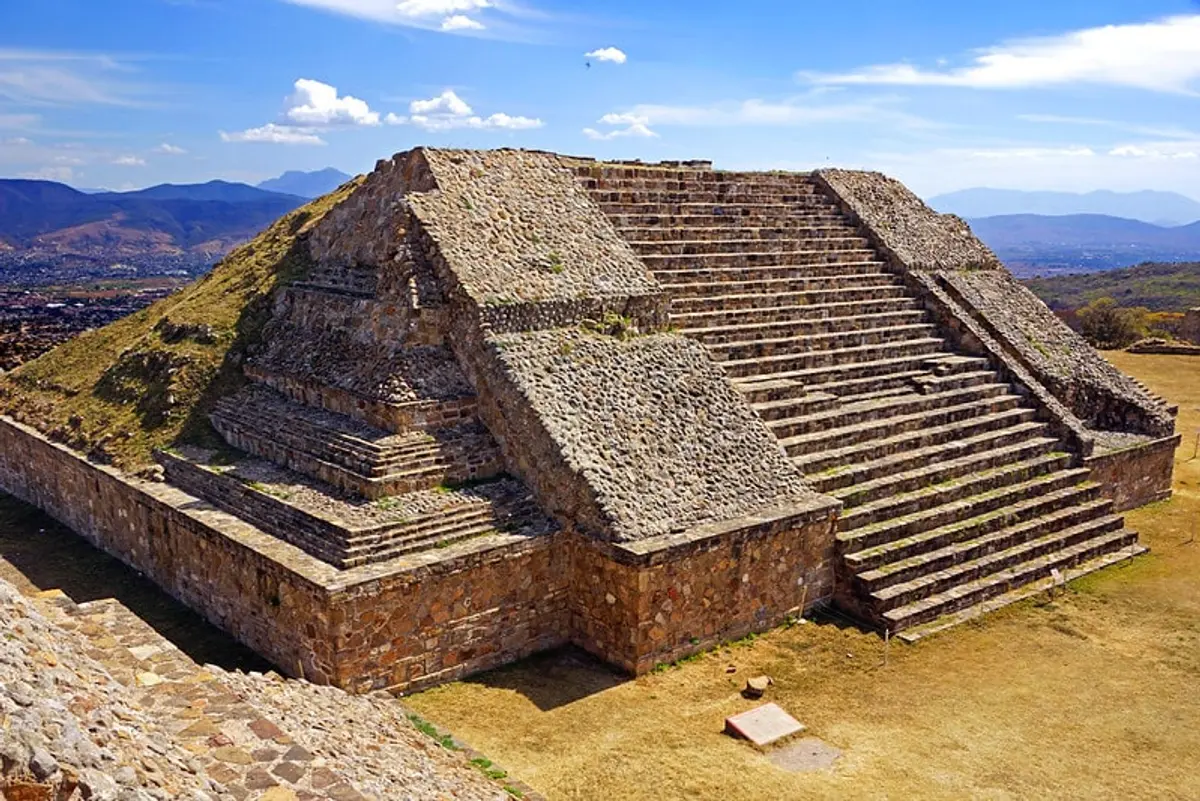
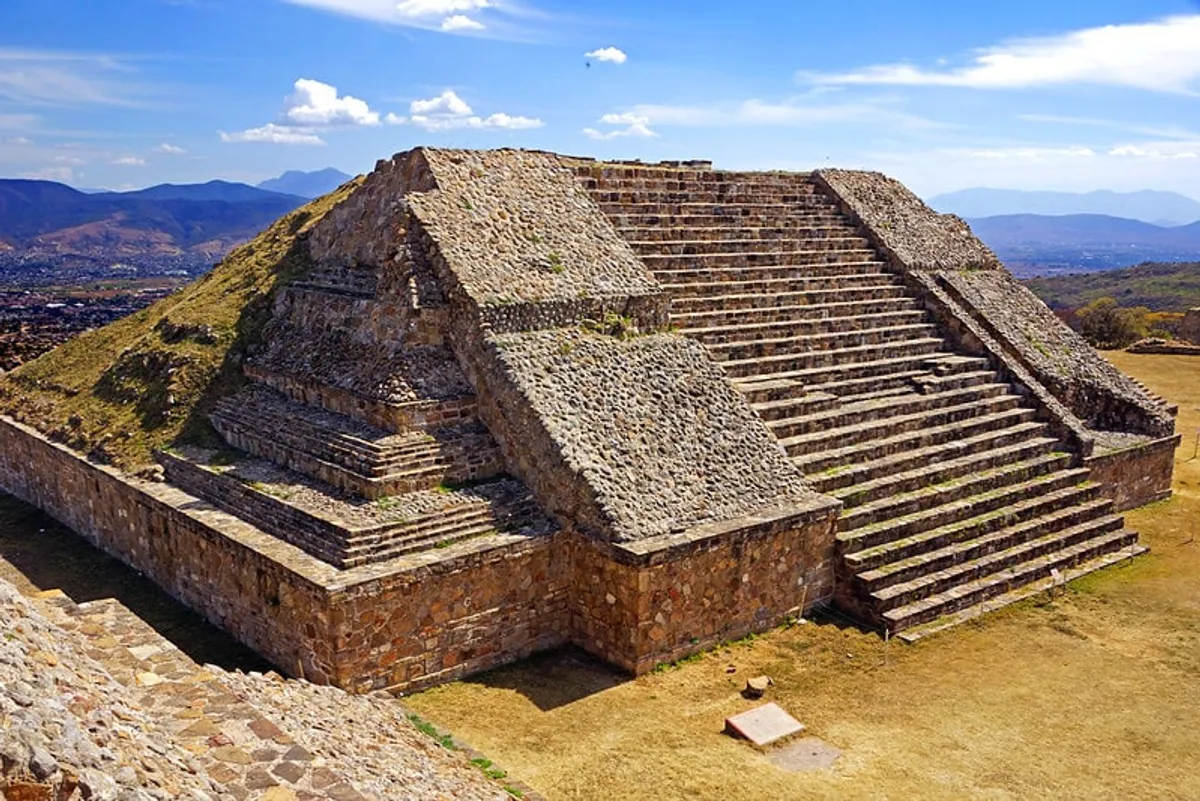
Yes — Monte Albán’s pyramids are fully climbable in 2026. All major platforms and structures are open to visitors. This is a major difference from the more famous sites:
| Ruins | Can You Climb? | Status |
|---|---|---|
| Monte Albán (Oaxaca) | ✅ Yes | All main pyramids open |
| Mitla (Oaxaca) | ✅ Partial | Columns Group accessible |
| Yagul (Oaxaca) | ✅ Yes | Fortress + ball court open |
| Chichen Itza | ❌ No | Banned since 2008 |
| Tulum Ruins | ❌ No | Viewing only |
| Teotihuacan — Sun Pyramid | ❌ No | Closed |
| Teotihuacan — Moon Pyramid | ⚠️ Limited | Reopened May 2025, restricted route |
| Cobá | ✅ Yes | 45 km from Tulum, rope-assisted |
| Ek Balam | ✅ Yes | Best climbable pyramid in Yucatán |
Monte Albán’s platforms give views over the entire Valley of Oaxaca — three valleys converging below you. The Main Platform at the south end climbs 40+ steps with panoramic views that no other Oaxacan site can match.
Wear shoes with grip. Steps are steep and can be slippery. Arrive before 10 AM to beat tour groups and the midday heat. Bring 2 liters of water minimum — almost no shade on the main plaza.
Overview: All 12 Sites at a Glance
| Site | Distance | Entry | Climb? | Visit Time | Crowd Level |
|---|---|---|---|---|---|
| Monte Albán | 10 km west | 210 MXN | ✅ Yes | 2–3 hrs | High |
| Mitla | 45 km east | 70 MXN | ✅ Partial | 1.5–2 hrs | Medium |
| Yagul | 36 km east | 65 MXN | ✅ Yes | 1–1.5 hrs | Low |
| Lambityeco | 25 km east | 55 MXN | Ground only | 45 min | Very Low |
| Dainzú | 22 km east | 50 MXN | Ground only | 45 min | Very Low |
| Atzompa | 8 km west | 65 MXN | ✅ Yes | 1 hr | Very Low |
| Zaachila | 18 km south | 55 MXN | Ground only | 1 hr | Low |
| San José El Mogote | 17 km north | Free | Ground only | 30–45 min | Minimal |
| Guiengola | 220 km SE | Free | ✅ Hike | 2–3 hrs | Minimal |
| Yucuita | 180 km north | Free | Ground | 1 hr | Minimal |
| La Casa de la Cacica | 195 km north | Free | Ground | 45 min | Minimal |
| Huamelulpan | 185 km north | Free | Ground | 1 hr | Minimal |
Day-Trip Route Guide
Route A — The Valley Circuit (full day, recommended): Oaxaca City → Dainzú (22 km) → Lambityeco (25 km) → Yagul (36 km) → Mitla (45 km). Drive east on Highway 190. All four sites are on the same road. Tlacolula market (Sundays) adds a fifth stop. Combine Mitla with the alebrijes market at Arrazola on the return. You can compare car rental prices on RentCars for the best deals.
Route B — Monte Albán + Atzompa (half day): Monte Albán opens at 8 AM. Spend 2 hours there. Drive 3 km further west to Atzompa. Both sites on the same mountain road. Back in Oaxaca by noon.
Route C — Western Valley (half day): Cuilapan de Guerrero (Dominican monastery ruins, 13 km south) → Zaachila (18 km south). Both in the same direction, 2–3 hours total.
Route D — Mixteca Alta (full day or overnight): For Yucuita, Casa de la Cacica, and Huamelulpan — these are 180–200 km north in Mixtec territory. Too far for a day trip from Oaxaca City unless you have a car and start early. Worth building a separate overnight around Tlaxiaco or Huajuapan de León. You can explore Oaxaca tours on Viator.
1. Monte Albán — The Anchor Site
Monte Albán was the capital of the Zapotec civilization for over 1,000 years — founded around 500 BCE, abandoned around 700 CE. At its peak, the city had a population of 25,000 and dominated the three valleys of Oaxaca from its hilltop position 400 meters above the city.
The Main Plaza: The civic-ceremonial heart of Monte Albán is a leveled plateau roughly 300 by 200 meters — an extraordinary feat of engineering given they moved entire mountaintops to create it. The plaza is bordered by platforms, pyramids, and palace complexes on all four sides. Walking it feels like traversing a drowned city.
Los Danzantes (The Dancers): The carved stone slabs on Building L are among the most discussed in Mesoamerican archaeology. The figures appear to be contorted, dancing — but closer analysis suggests they depict sacrificed captives, prisoners of war, or medical figures showing physical deformities. They predate Monte Albán’s classic period and represent some of the oldest monumental sculpture in Oaxaca (500–200 BCE).
Building J (The Observatory): The arrow-shaped building pointing southwest of the main axis. Its unusual orientation was not a mistake — it aligns with stellar events, and its internal passages may have been used to observe specific star risings. Unlike the simple hole-in-the-wall design at other Mesoamerican observatories, Building J has an elaborate staircase system pointing into the sky.
Tomb 104: Located near Building S at the northern platform. Although the jade mask of the Bat God (Cociyo) found here is now in the Regional Museum of Oaxaca, the tomb chamber itself is still visible. Its painted murals of Zapotec gods remain partially intact.
Practical info:
- Hours: Daily 8 AM – 5 PM
- Entry: 210 MXN (~$10-11 USD) as of January 2026, includes museum
- Best time: 8–10 AM (before tour groups from Oaxaca arrive at 10–11 AM)
- Allow: 2–3 hours
- Getting there: Shuttle from Hotel Rivera del Ángel (65 MXN one-way), taxi (120–180 MXN one-way), car rental recommended if combining with Atzompa. See our full Monte Albán transport guide for all options.
- Tip: Bring water — there is very little shade on the main plaza
2. Mitla — The Geometric Masterpiece
Mitla means “place of the dead” in Nahuatl (mictlan), and the Zapotec called it Lyobaa — “place of rest.” It functioned as Oaxaca’s primary religious center after Monte Albán’s decline, inhabited continuously until the Spanish conquest.
What makes Mitla unique in all of Mesoamerica: The Columns Group palaces are covered in geometric mosaic panels — interlocking greca (stepped fret/key) patterns formed from thousands of small pieces of cut stone, fitted together without mortar. Each panel is unique. Researchers have identified 18 distinct patterns. No other pre-Columbian site in the Americas used this technique at this scale.
The Church of San Pablo: The Spanish built a church directly on top of the main Zapotec temple platform in 1590. The colonial church walls incorporate original Zapotec stones, and you can walk under the church to see the pre-Columbian columns still supporting the structure. It is one of the most explicit examples of colonial religious superimposition in Mexico.
The Hall of the Columns: Six enormous monolithic columns — each carved from a single stone — support the roof of the main hall. The tallest columns are 4.5 meters. They have withstood earthquakes for 600+ years because they’re not fixed at the base.
Practical info:
- Distance: 45 km east of Oaxaca on Highway 190 (45–55 min)
- Entry: 70 MXN (~$3.50 USD)
- Hours: Daily 8 AM – 5 PM
- Allow: 1.5–2 hours
- Best combined with: Yagul + Lambityeco (Route A)
- Nearby: Tlacolula Sunday market (12 km back toward Oaxaca) — one of the best weekly markets in the state
3. Yagul — Fortress Views with Few Crowds
Yagul (“old tree” in Zapotec) was a refuge city built after Monte Albán’s fall, around 800 CE. Its position on a steep rocky outcrop above the valley gave it natural defensive advantage — and gives modern visitors one of the best views in the Valley of Oaxaca.
UNESCO recognition (2010): Yagul and Mitla were jointly declared a World Heritage Site for preserving both pre-Columbian archaeological structures and traditional Zapotec agricultural practices (milpa farming, agave cultivation) that have continued unchanged for 2,000 years.
Ball Court: One of the largest and best-preserved in Oaxaca. Unlike Monte Albán’s smaller court, Yagul’s is long enough to understand how the Mesoamerican ball game actually functioned — a 60-meter stretch of flanking walls with angled scoring rings.
The Patio of the Triple Tomb: Three burial chambers with carved stone reliefs, accessible below the main palace complex. The paintings on the tomb walls are faded but still visible.
Cave paintings: Above the fortress section, cave openings contain some of the oldest paintings in Oaxaca — thought to predate the Zapotec occupation of the site by thousands of years.
Practical info:
- Distance: 36 km east (35–45 min)
- Entry: 65 MXN
- Hours: Daily 8 AM – 5 PM
- Allow: 1–1.5 hours
- Crowd level: Very low — you may have the site largely to yourself
4. Lambityeco — Salt and Stucco Faces
Lambityeco was a compact Zapotec town that thrived between 600–750 CE, specializing in salt production from the saline soils of the valley floor. Unlike its neighbors, it was never a capital or religious center — it was an industrial and administrative town.
The Pitao Cocijo heads: The best-preserved stucco deity faces at any Oaxacan site. Two enormous heads of Pitao Cocijo (the Zapotec rain/lightning god) project from the facade of the Palace of the Priests (Structure M-190). The detail — headdress, earrings, facial scarification — is extraordinary for exposed outdoor sculpture that has survived 1,400 years.
Palace of the Caciques: Adjacent structure with a tomb beneath it containing portraits of an elite couple — stucco portraits of actual named individuals, not mythological figures.
Practical info:
- Distance: 25 km east (25 min)
- Entry: 55 MXN
- Hours: Daily 8 AM – 5 PM
- Allow: 45 minutes
- Note: Compact site — easy to combine with Dainzú and Yagul
5. Dainzú — The Ballplayer Reliefs
Dainzú predates Monte Albán. Founded around 750 BCE in the Tlacolula sub-valley, it was one of the earliest urban settlements in Oaxaca. Its most remarkable feature is a gallery of stone reliefs depicting ballplayers wearing helmets with jaguar features — one of the clearest visual records of the Mesoamerican ball game in any Oaxacan site.
The Ballplayer Gallery: A sloped wall on the lower temple bears approximately 40 relief carvings of figures in ballgame poses. The jaguar helmet iconography links Dainzú to Gulf Coast Olmec traditions — suggesting long-distance cultural exchange in 700 BCE.
The Tomb: A corbeled-arch tomb chamber beneath the main pyramid is accessible and shows carved lintels with Zapotec glyphs.
Practical info:
- Distance: 22 km east (20–25 min)
- Entry: 50 MXN
- Hours: Daily 8 AM – 5 PM
- Allow: 45 minutes
6. Atzompa — Monte Albán’s Forgotten Neighbor
Atzompa (“at the top of the water” in Nahuatl) was one of the three major residential satellites of Monte Albán during its peak period. It sits on the same mountain ridge as Monte Albán, 3 km further northwest. While Monte Albán was the civic-ceremonial core, Atzompa housed a significant portion of the elite population.
The three ball courts: Atzompa contains three ball courts, including one measuring 45 meters — longer than Monte Albán’s primary ball court. The fact that a satellite city had three courts suggests ball game ritual was distributed beyond the capital.
Green-glazed ceramics: Atzompa is the origin of the distinctive green pottery still sold throughout Oaxaca today. Workshops in nearby Santa María Atzompa village continue the tradition with the same clay and firing techniques.
Practical info:
- Distance: 8 km west (same road as Monte Albán, 3 km past the main site)
- Entry: 65 MXN
- Hours: Daily 8 AM – 5 PM
- Allow: 1 hour
- Note: Much smaller visitor infrastructure than Monte Albán — fewer services, no shuttle
7. Zaachila — The Last Zapotec Capital
Zaachila (“first daughter of the earth” in Zapotec) was continuously occupied from pre-Columbian times to the present. As Monte Albán declined, Zaachila became the Zapotec political capital, and it remained so until the Spanish conquest — meaning it was a living city, not an abandoned ruin, when Hernán Cortés arrived.
The Tombs: Two subterranean tombs beneath the central platform contain intact stucco figures depicting Zapotec death deities and the underworld. Tomb 1 has an owl figure with a human face (representing the Zapotec lord of the underworld) and a turtle figure. Tomb 2 has more elaborate wall paintings. Both are accessible to visitors.
The Market: Zaachila’s Thursday market is one of the best in the Oaxaca valley — live animals, local vegetables, and prepared food at prices aimed at locals rather than tourists.
Practical info:
- Distance: 18 km south (30–40 min)
- Entry: 55 MXN
- Hours: Daily 9 AM – 4 PM
- Allow: 1 hour
- Best combined with: Cuilapan de Guerrero (Dominican monastery ruins, 5 km north on the return)
8. San José El Mogote — Where Oaxacan Civilization Began
San José El Mogote is the least-visited significant archaeological site in the Valley of Oaxaca — and the most historically important site most visitors skip. Occupied from approximately 1500 BCE, it was the largest settlement in the region for 2,000 years before Monte Albán emerged.
Early writing in the Americas: Monument 3 at San José El Mogote bears a carved figure with what are believed to be early Zapotec glyphs — potentially among the oldest examples of writing in the Western Hemisphere, predating Monte Albán by several centuries.
Astronomical orientation: Like Monte Albán’s Building J, the main structures at San José El Mogote show astronomical alignments — evidence of complex calendrical knowledge at Oaxaca’s earliest urban site.
The small museum at the adjacent community center displays ceramics, figurines, and skeletal remains from the site’s long occupation. Free entry; the custodian doubles as the guide.
Practical info:
- Distance: 17 km north of Oaxaca near Etla (20–25 min)
- Entry: Free
- Hours: Daylight hours (check with custodian)
- Allow: 30–45 minutes + small museum
- Best combined with: Etla Wednesday market (artisan goods, local food)
9. Guiengola — The Zapotec Fortress
Guiengola is not in the Valley of Oaxaca — it’s in the Isthmus of Tehuantepec, 220 km southeast of Oaxaca City near the city of Tehuantepec. It was a Zapotec military fortress built specifically to resist Aztec expansion in the late 15th century. The Aztecs never took it.
The site requires a 1.5–2 km hike from the road. The panoramic views of the Isthmus are exceptional — on a clear day you can see both the Pacific Ocean and the Gulf of Tehuantepec.
Practical info:
- Only worthwhile if you’re traveling the Isthmus route (Oaxaca → Chiapas by road)
- Entry: Free
- Allow: 2–3 hours (hike + site)
10–12. The Mixteca Alta Sites
Yucuita, La Casa de la Cacica, and Huamelulpan are all in the Mixteca Alta — the mountainous region of northwestern Oaxaca, a different cultural and geographical world from the Valley of Oaxaca.
Yucuita (Mixtec: “hill of flowers”) was a major Mixtec trading center specializing in obsidian. Its pottery traditions are among the most distinctive in pre-Columbian Oaxaca.
La Casa de la Cacica in Teposcolula is a 16th-century colonial-indigenous hybrid structure — a palace fusing Mixtec architectural techniques with Spanish forms, built for the local ruling family shortly after the conquest.
Huamelulpan was one of the largest Mixtec cities at its peak (400 BCE–600 CE). Its platform systems incorporated drainage infrastructure that still functions. The small community museum has an excellent collection of locally excavated ceramics.
Monte Albán Visit Logistics (2026)
| Detail | Info |
|---|---|
| Hours | Daily 8 AM – 5 PM (museum closes 4:30 PM) |
| Entry Fee | 210 MXN (~$10–11 USD) |
| Shuttle from Oaxaca | 65 MXN one-way from Hotel Rivera del Ángel, Calle Mina 518 |
| Shuttle schedule | Departs every 30 min from 8:30 AM |
| Return shuttle | Every hour until 3:30 PM |
| Taxi from Oaxaca | 120–180 MXN one-way |
| Best arrival time | 8–9 AM (beat tour groups that arrive 10–11 AM) |
| Time needed | 2–3 hours (site + museum) |
| Shade | Almost none on main plaza — hat and 2L water essential |
| Shoes | Grip required — platforms are steep and uneven |
| Photography | Allowed everywhere, no tripod restrictions |
Where to Eat Near Monte Albán
Three realistic options:
-
On-site cafeteria (Monte Albán entrance) — tlayudas, empanadas, agua fresca at 60–120 MXN. Basic but convenient. Crowds thin by 2 PM.
-
Tlayudas Libres Doña Martha — On the access road down from the site (~5 min by car). Open-air tlayuda restaurant using a wood-burning comal. Oaxacan family operation; tlayudas 60–90 MXN. Open from 9 AM.
-
Mercado 20 de Noviembre, Oaxaca City — 10 minutes back toward the city center. The smoke corridor of chorizo and tasajo grills is the most famous food experience in Oaxaca. Budget 80–150 MXN per person for a full market lunch. Best for post-ruins reward.
Photography Tips for Monte Albán
The best light is at opening (8–8:30 AM), when the low sun rakes across the Main Plaza from the east, creating shadows that reveal the platform contours. The north platform looks directly toward the sunrise in March — if you’re visiting near the equinox (March 21), the alignment is especially dramatic.
The Los Danzantes reliefs (Building L, west side of plaza) photograph well in mid-morning light. The carved figures face south, so direct sun hits them from 9–11 AM.
The view from the South Platform — looking north across the full Main Plaza with the three valleys of Oaxaca extending behind — is the signature shot. Wide-angle lens recommended; the scale doesn’t compress well on telephoto.
Drone rules: Drones are prohibited at all INAH-managed sites in Mexico. This includes Monte Albán, Mitla, and all other Oaxacan ruins.
Oaxaca Ruins Practical Tips
Book accommodation in Oaxaca City first. All valley sites (Monte Albán, Mitla, Yagul, Lambityeco, Dainzú, Zaachila) can be visited as day trips from the city. For the Mixteca Alta, base in Tlaxiaco or Huajuapan.
Car rental is the key to combining multiple sites in a day. Day trips from Oaxaca City by organized tour cover Monte Albán and Mitla well, but you lose the flexibility to stop at Lambityeco, Dainzú, and Yagul at your own pace.
Monte Albán vs Chichen Itza: Monte Albán wins for visitors who want to actually climb. Chichen Itza banned climbing in 2008 — you can only view El Castillo from ground level. Monte Albán’s platforms are fully open. Monte Albán also costs less (210 MXN vs 646 MXN) and has minimal tour bus crush compared to Chichen Itza’s 8,000+ daily visitors. The downside: Monte Albán lacks Chichen Itza’s classic pyramid silhouette — it’s a more complex site that rewards slow exploration.
Best time to visit ruins in Oaxaca: October through March for comfortable temperatures. April and May can be hot but manageable compared to Yucatan. The key rule: visit any open-air site before 11 AM.
For context on Oaxacan culture and food: See our Oaxacan food guide and Oaxaca City travel guide before visiting the ruins — the archaeological context becomes much richer when you understand what the Zapotec and Mixtec peoples ate, traded, and celebrated.
Hierve el Agua: Not strictly “ruins,” but the petrified waterfall formation 70 km east of Oaxaca City is often combined with the Valley Circuit day trip. See it on the return from Mitla.
Visiting during Guelaguetza (late July): If your trip coincides with the Guelaguetza festival, Monte Albán hosts special sunrise events. See our Guelaguetza guide for festival timing.
Best time to visit Oaxaca overall: See our best time to visit Oaxaca guide — the archaeological sites are good year-round, but cultural timing (festivals, market days, agave harvest season) varies significantly.
Planning your Oaxaca trip? Start with our Oaxaca City guide and our 5 Days in Oaxaca itinerary, which integrates the Valley ruins circuit (Mitla, Yagul, Lambityeco) with Monte Albán and Hierve el Agua into a complete 5-day plan.