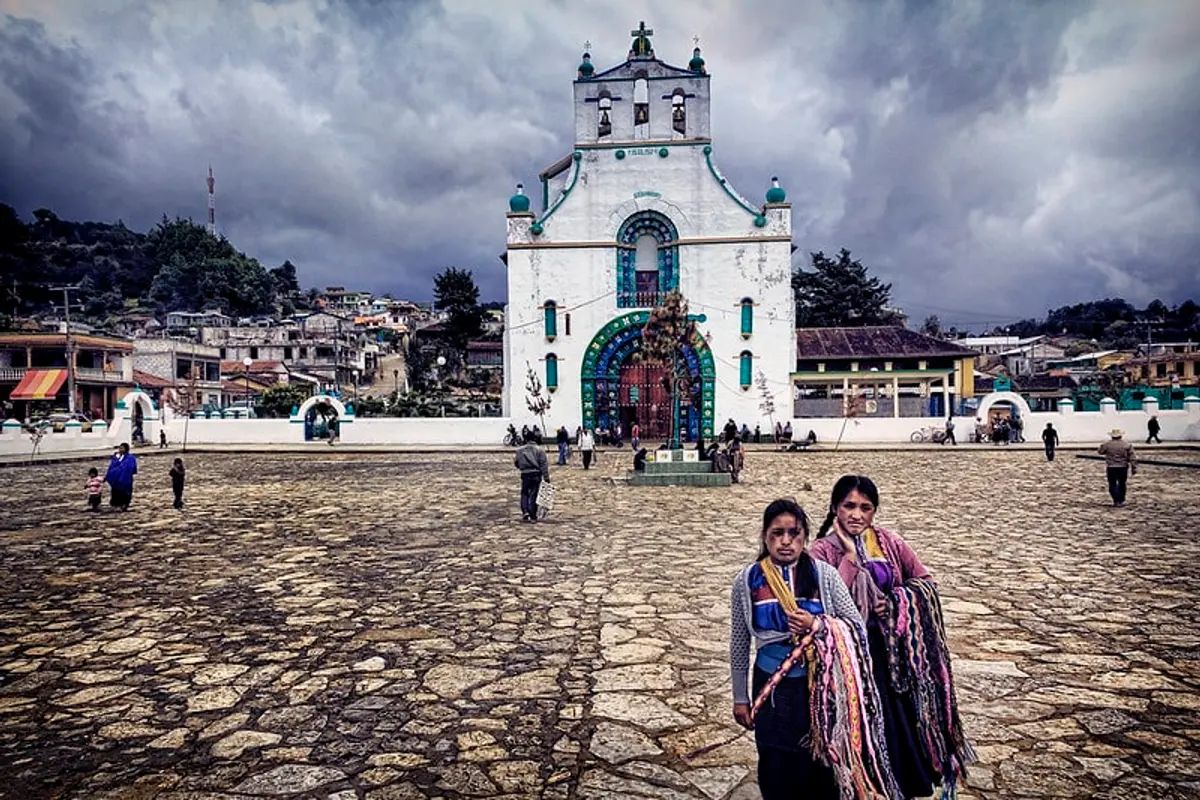
San Juan Chamula, Chiapas: Complete Guide to the Tzotzil Maya Village (2026)
San Juan Chamula is a Tzotzil Maya village 10km from San Cristóbal de las Casas in the Chiapas highlands. It’s worth the trip for one reason above all others: the San Juan Bautista church.
Inside: no pews. The floor is covered in pine needles. Thousands of candles burn continuously. Families kneel before rows of Catholic saints while curanderos (healers) perform rituals involving eggs, live chickens, copal incense, and Coca-Cola. Photography is forbidden. You will be asked to leave if you try.
It’s one of the most genuinely unusual places in Mexico.
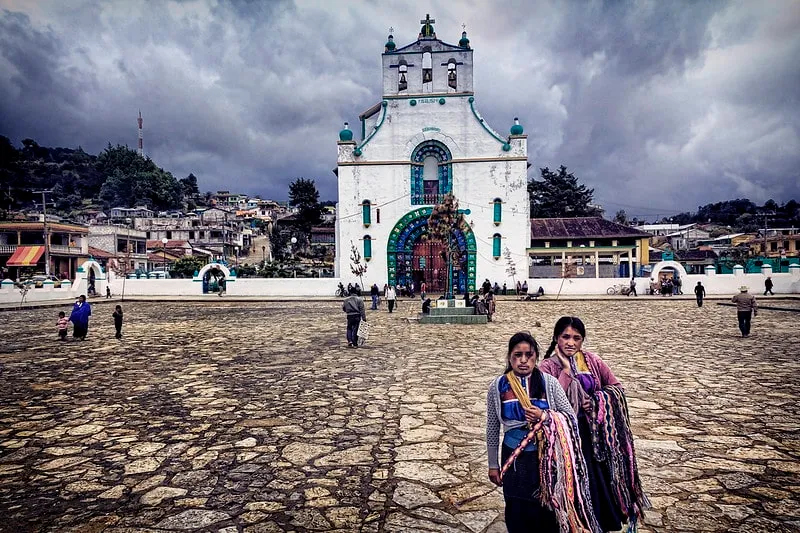
The Tzotzil Maya of San Juan Chamula
The Chamula are Tzotzil Maya people living in the highlands of Chiapas (Los Altos de Chiapas) at 2,260 meters elevation. The municipality has approximately 80,000 residents across the main town and surrounding hamlets.
The Chamula operate with significant autonomy from Mexican federal structures. They have their own police (mayoles), their own court system, their own elected governing structure based on the cargo system (a rotating hierarchy of civil and religious responsibilities), and their own laws. The Mexican government largely respects this autonomy.
The religion practiced here is syncretic — Catholicism layered over pre-Hispanic Maya belief, but neither of them fully. The saints in the church are addressed as Maya deities. Healing rituals that predate the Spanish conquest are performed inside a colonial church. It’s not contradictory to the Chamula — it’s their own system.
Clothing: Women wear thick black wool skirts (pochtal). Men wear the chuj — a wool tunic, white for community authorities (mayoles) and black or brown for others. These are handmade and have been the standard dress for centuries.
The San Juan Bautista Church
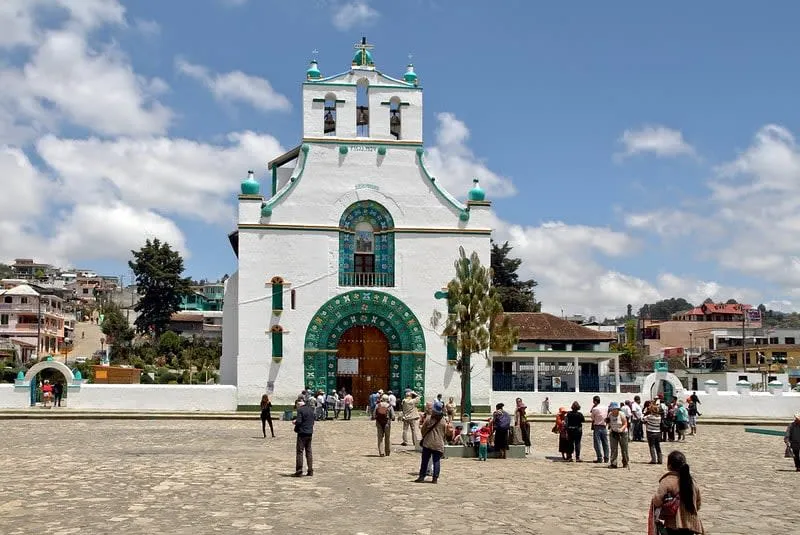
The church was built in the 16th century by Franciscan missionaries on the foundations of a Maya sacred site. The exterior is whitewashed with bright floral decorations. The interior is another world entirely.
What you’ll see inside:
- Floor covered in fresh pine needles (replaced regularly — the scent is strong)
- Thousands of candles in rows on the floor, lit by worshippers for different saints and intentions
- No pews — the congregation kneels directly on the pine needles
- Altarpieces and glass cases with Catholic saints dressed in fabric
- Active healing ceremonies (curanderismo): families with a healer, candles arranged in patterns, eggs being passed over the sick person, sometimes a live chicken
- Coca-Cola, Pepsi, and pox (fermented corn liquor) as offerings — the burping they produce is believed to expel bad spirits
The photography rule: This is non-negotiable. No photos inside, period. The mayoles (community police) stand watch. Getting caught means camera confiscation and possible detention. Leave your camera in your pocket and respect it — you’re watching private religious ceremonies, not a performance.
Entry: There’s an entrance fee, usually 25-35 MXN. Paid at a booth outside. The fee goes to the church and community.
Coca-Cola as a Ritual Offering
This is worth explaining because it’s frequently misunderstood.
The use of Coca-Cola in Chamula healing ceremonies started in the 1970s-80s, when traditional pox became taxed and harder to produce cheaply. Coca-Cola became a widely available, inexpensive alternative. It was adopted because burping — the gas release from carbonated drinks — is believed to expel negative energy and bad spirits from the body. The same principle applies to pox.
Today, Coca-Cola is fully integrated into the ritual calendar of Chamula. This is not a tourism gimmick or a symbol of globalization taking over indigenous culture — it’s an example of a living tradition absorbing external elements on its own terms.
The Cemetery and San Sebastián Ruins
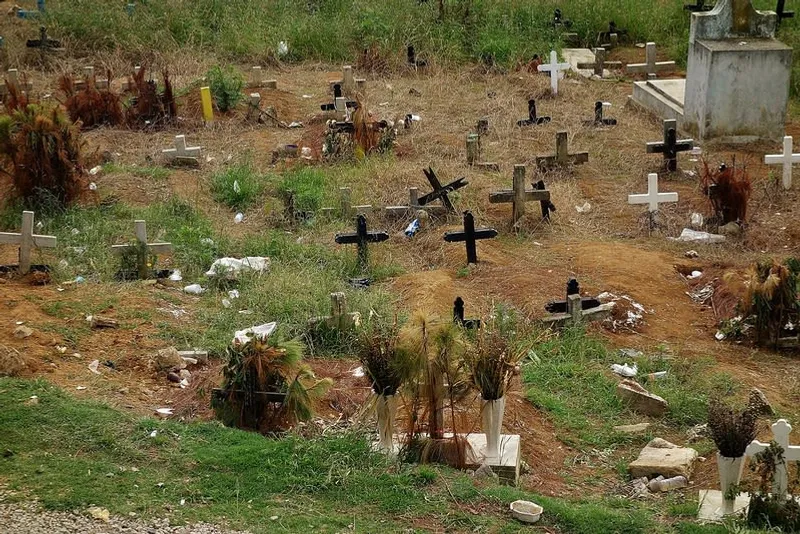
On a hill above town: the ruins of the old Temple of San Sebastián, surrounded by the cemetery. The ruins preserve only the walls — the church was abandoned after earthquakes, but the cemetery continues to function.
Crosses on the graves are wooden (simple families) or cement (wealthier families) — the material reflects economic status in a way that’s rarely so visible. Next to each cross: dry pine needles, which represent contact with the underworld.
Best time to visit the cemetery: Day of the Dead (November 1-2) brings extraordinary altars and ceremonies here. Worth planning a trip around if you’re in Chiapas in late October.
Photography is generally acceptable in the cemetery exterior — but read the situation and ask if you’re uncertain.
The Sunday Market
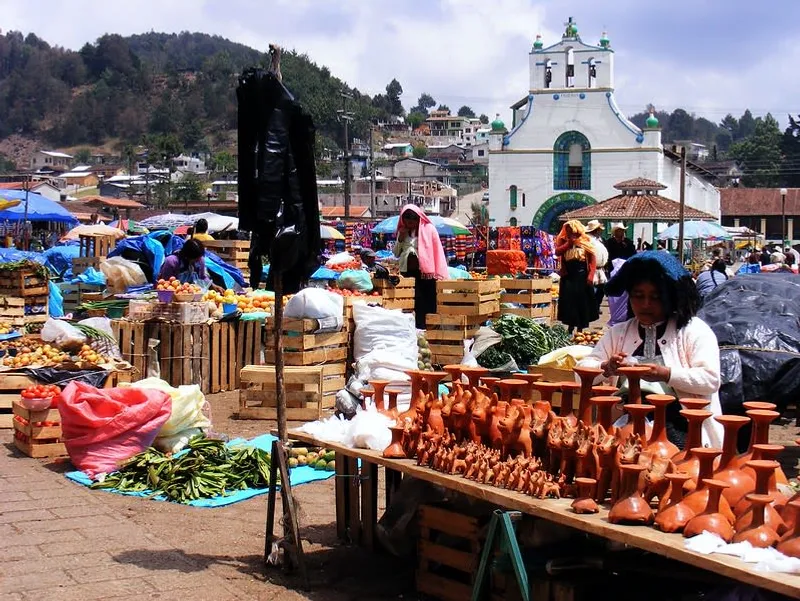
Every Sunday, the main plaza fills with Tzotzil vendors selling:
- Wool and cotton textiles — the thick black skirts women wear are sold here
- Handmade pochtal and chuj garments
- Palm leaf hats, leather goods, ceramics
- Ixtle (agave fiber) objects and musical instruments
- Local food: chicken broth, bean tamales, chilacayote (fig leaf squash) sweets
The Sunday market has more activity and more village life than weekday visits. If you’re combining Chamula with Zinacantán (as most organized tours do), you’ll typically hit the Sunday Zinacantán flower market the same morning.
The Chamula Carnival: K’in Tajimoltik
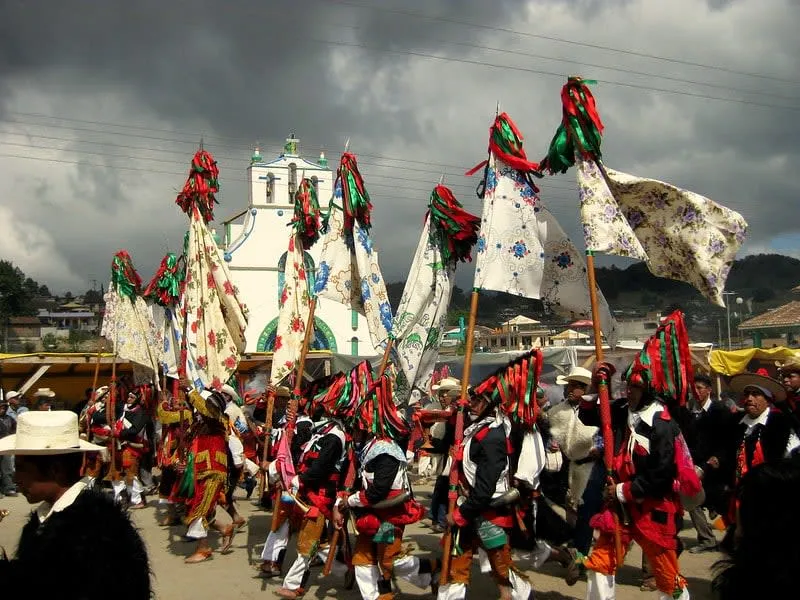
The Chamula Carnival — called K’in Tajimoltik (“New Fire” in Tzotzil) — is the most important celebration of the year. It’s held during the five days before Ash Wednesday and is directly tied to the Maya agricultural calendar, not just the Christian calendar.
What happens:
- Thirteen different costume groups participate, each with specific roles and elaborate traditional dress
- The max (monkey-men) wear wool jackets and conical caps of monkey fur — recalling the French military of the 19th century War of Intervention
- On the final Tuesday, 25 bulls are released through the neighborhoods and ridden by community members
- The Paxon coordinates the entire event — the highest responsibility in the carnival hierarchy
- Mayordomos are elected annually to care for specific saints and fund the celebrations from their own resources (a major honor and financial commitment)
When: 5 days before Ash Wednesday, typically late February or early March. Shrove Tuesday (Fat Tuesday) is the peak day.
Food and Drink in San Juan Chamula
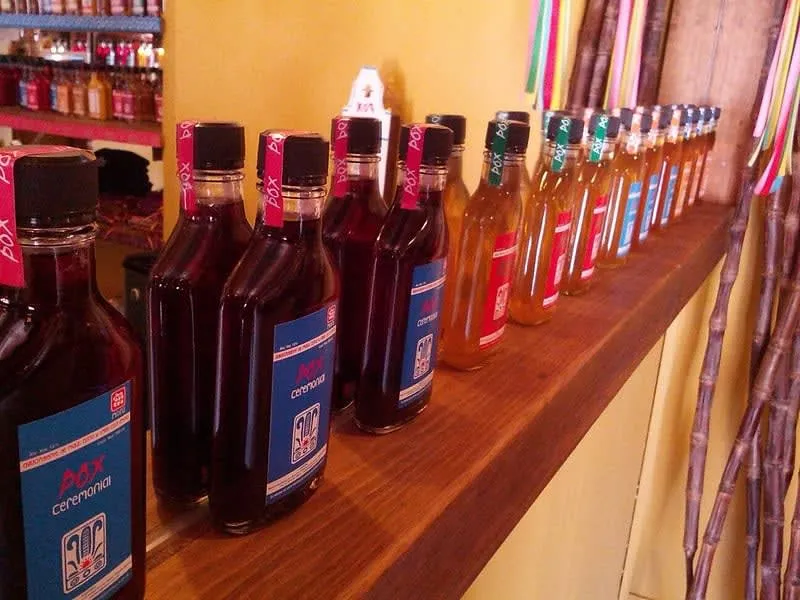
Pox (pronounced “Posh”)
The traditional ceremonial drink of the Chamula. A distillate made from fermented corn and sugar cane, typically 30-40% alcohol. Used in healing ceremonies, at festivals, and at celebrations. You can buy small bottles from vendors near the church — worth trying if you’re curious, but approach it as a cultural experience rather than a casual drink.
Other Local Foods
- Chicken broth with herbs — simple, good, sold at market stalls
- Mushrooms in various preparations — the highland forest produces good wild mushrooms
- Vok Ich — a salty corn dough drink cooked in a clay pot, served hot at celebrations, sometimes with dried chili. Not commonly available outside feast days.
- Pozol — fermented corn and cocoa drink kept in banana leaves, traditional throughout Chiapas
The market on Sundays is the best place to eat local food.
How to Get There
San Juan Chamula is 10km northwest of San Cristóbal de las Casas.
| Option | Cost | Time | Notes |
|---|---|---|---|
| Colectivo van | 15–20 MXN | 20–35 min | From Calle Honduras market in San Cristóbal. Departs when full. |
| Taxi | 120–150 MXN one-way | 15–20 min | Ask driver to wait (negotiate waiting fee) or arrange return time |
| Organized tour | 200–350 MXN/person | 4 hrs total | Usually includes Zinacantán; guides explain the rituals |
| Private car | — | 15 min | Easy road, signposted from San Cristóbal |
Recommended: Organized tour or taxi for a first visit. A guide who speaks Tzotzil can explain what’s happening inside the church — the ceremonies are much more meaningful with context.
Rules for Visiting Respectfully
- No photography inside the church — this is the main rule and strictly enforced
- No photographing authorities or active ceremonies without explicit permission
- Dress modestly — covered shoulders and knees. This is a working religious site.
- Do not interrupt ceremonies — walk around, observe quietly
- No flash anywhere near the candles — a fire risk and disruptive
- Don’t point at people — considered rude in Tzotzil culture
- Ask before photographing in the market — vendors may decline
San Juan Chamula is safe for visitors. The community depends on tourism and actively manages the experience. Follow the rules, be respectful, and you’ll have no problems.
Safety
The village is generally safe for tourists during daylight hours. The mayoles (community police) maintain order. The prohibition on photos is enforced, not threatened — violations result in confiscation and a fine, not violence.
Come during daylight. Don’t wander into residential areas away from the main plaza and church without a guide.
For complete trip planning in the region, see our guides to San Cristóbal de las Casas, day trips from San Cristóbal, and Sumidero Canyon. For deeper Chiapas context, see our Chiapas food guide.
travel insurance for your Mexico trip.