What to Eat in Chiapas: 10 Traditional Foods to Try First (2026)
If you are wondering what to eat in Chiapas first, start with tamal de bola, sopa de chipilín, cochito horneado, sopa de pan, pepita con tasajo, pox, pozol, and Chiapas coffee. If you only have one or two days, base yourself in San Cristóbal de las Casas, eat breakfast in Mercado José Castillo Tielemans, have sopa de pan or cochito for lunch, then finish with pox or highland coffee in the evening.
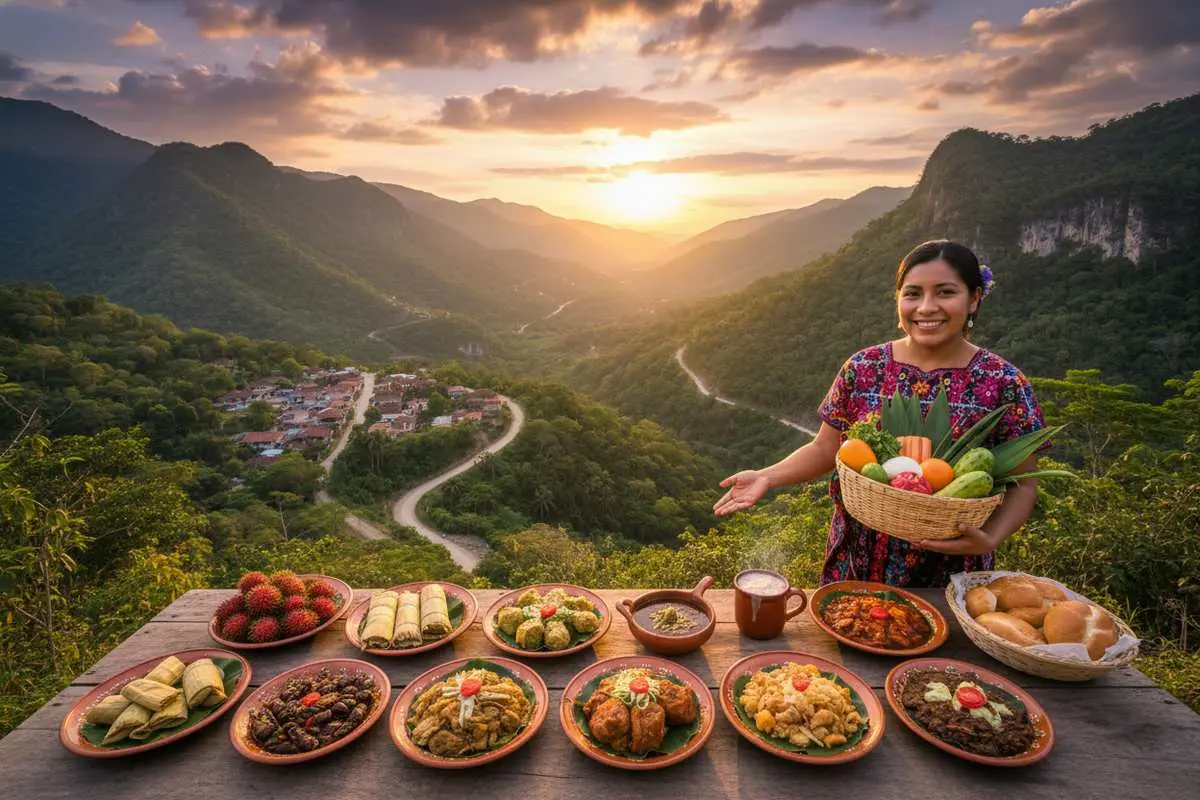
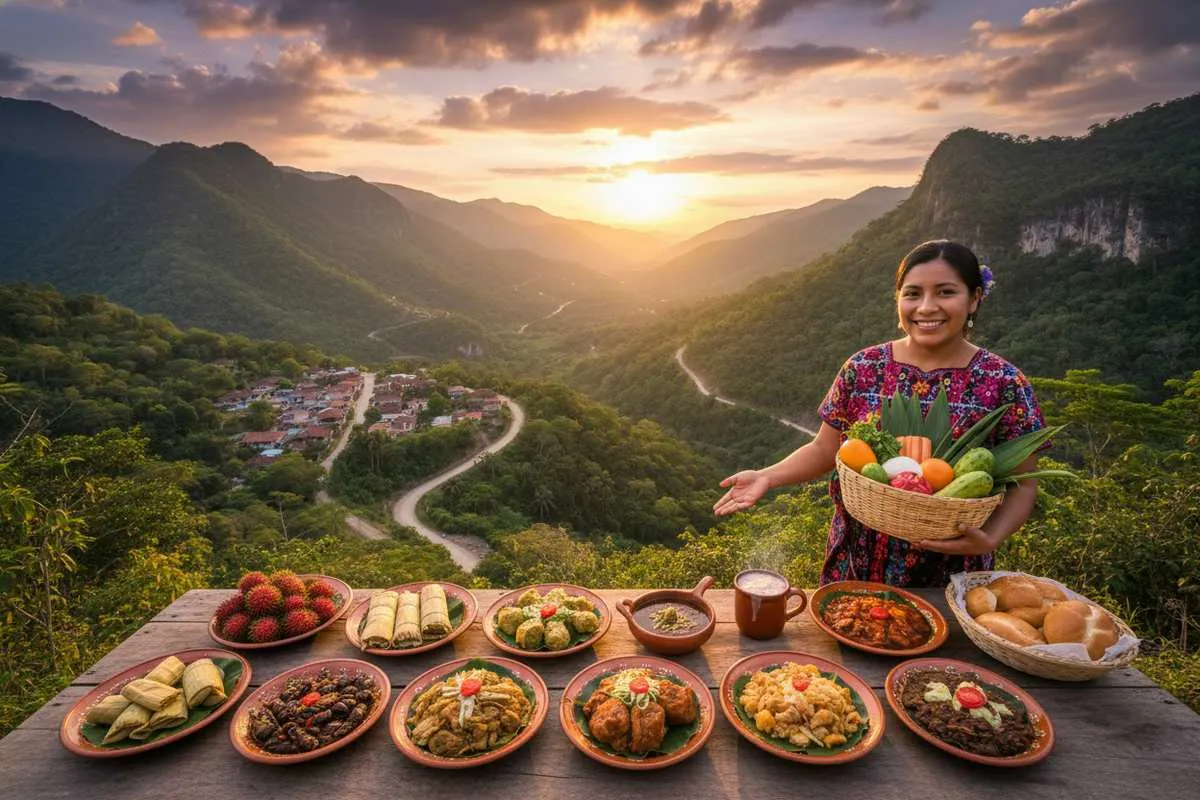
This page is the fast first-timer answer, not the giant statewide encyclopedia. It is built for travelers who want the clearest answer to what food Chiapas is known for, which dishes are most worth prioritizing, what each one tastes like, and where to try them without reading a 22-dish master list first. Chiapas cuisine feels distinct from the rest of Mexico because it blends Maya food traditions, highland ingredients, ceremonial drinks, local herbs like chipilín, and pork dishes you do not usually see grouped together elsewhere in the country. If you want the smartest first-order list instead of the longer statewide archive, start here.
What Food Is Chiapas Known For?
If you want the shortest answer, Chiapas is best known for tamal de bola, sopa de chipilín, cochito horneado, sopa de pan, pox, pozol, and Chiapas coffee. For most travelers, the smartest first meal is tamales or pozol for breakfast, sopa de pan or cochito for lunch, and either pox or specialty coffee in the evening. If you want the longer statewide list instead of the fast traveler shortlist, jump to Foods of Chiapas: 22 Traditional Dishes and Drinks.
Chiapas food at a glance:
- Most iconic dish: tamal de bola
- Best soup: sopa de chipilín
- Best pork dish: cochito horneado
- Must-try drink: pox if you want spirits, pozol if you want something traditional and non-alcoholic
- Best food city for travelers: San Cristóbal de las Casas
- Budget: about 200 to 400 MXN for a full day of eating very well
- Want the longer statewide dish list? See Foods of Chiapas: 22 Traditional Dishes and Drinks
- Want the fastest traveler answer? Use the table below before you order anything
For overall trip planning, see our complete Chiapas travel guide, San Cristóbal de las Casas guide, and best restaurants in San Cristóbal.
Chiapas Food in 30 Seconds
If you want the short version, these are the 10 traditional foods in Chiapas most worth ordering first:
- Tamal de bola for the most iconic Chiapas dish
- Sopa de chipilín for the clearest highland flavor
- Cochito horneado for a rich celebratory pork dish
- Sopa de pan for the strongest colonial-era comfort food
- Pepita con tasajo for one of the most overlooked savory plates
- Pox for a ceremonial local spirit
- Pozol or tascalate for traditional everyday drinks
- Chiapas coffee for one of Mexico’s best specialty products
| If you want… | Order this first | Best place to try it | Why it works |
|---|---|---|---|
| The one dish Chiapas is most known for | Tamal de bola | Mercado José Castillo Tielemans, San Cristóbal | It is the most iconic regional specialty and the clearest first answer for most travelers |
| The most distinctive local flavor | Sopa de chipilín | Traditional restaurants in San Cristóbal or Chiapa de Corzo | Chipilín is one of the ingredients that makes Chiapas food feel unlike the rest of Mexico |
| The best hearty lunch | Cochito horneado | Chiapa de Corzo or weekend fondas in San Cristóbal | Slow-roasted pork is rich, filling, and easy to find in traditional restaurants |
| The best market breakfast | Tamales + pozol | Morning market stalls in San Cristóbal | This is the fastest authentic breakfast combo in the highlands |
| The best drink souvenir | Chiapas coffee | Specialty cafés and cooperatives in San Cristóbal | It travels well and is one of the easiest local specialties to bring home |
| The best page if you want more than 10 dishes | Foods of Chiapas | Open the longer statewide guide | Use that page if you want the full 22-dish encyclopedia instead of the shortlist |
10 Traditional Chiapas Dishes to Try First
If you only want the fastest shortlist, start with these 10 dishes and drinks before branching out into the longer guide:
- Tamal de bola
- Sopa de chipilín
- Cochito horneado
- Sopa de pan
- Pepita con tasajo
- Garnachitas chiapanecas
- Queso de Ocosingo
- Pox
- Pozol
- Chiapas coffee
That list matches the dishes most travelers actually remember, and it lines up better with the 10 traditional foods in Chiapas, comida típica de Chiapas, and what food is Chiapas known for style queries already driving impressions to this page.
Where to Try the 10 Traditional Foods in Chiapas
If you want the fastest practical version, use this table before you start booking restaurants:
| Food or drink | Best first place to try it | Why there first |
|---|---|---|
| Tamal de bola | Mercado José Castillo Tielemans, San Cristóbal | Easy first-morning find, fresh turnover, and the clearest first-timer entry point |
| Sopa de chipilín | Traditional restaurants in San Cristóbal | The city is the easiest base for comparing home-style versions |
| Cochito horneado | Chiapa de Corzo | This is the dish’s strongest hometown context |
| Sopa de pan | El Caldero, San Cristóbal | One of the easiest dependable restaurant versions for travelers |
| Pepita con tasajo | Traditional restaurants in Tuxtla or San Cristóbal | Harder to find casually, easier in classic regional kitchens |
| Garnachitas chiapanecas | Evening street stalls in San Cristóbal | Best when hot and freshly fried |
| Queso de Ocosingo | Santo Domingo market area, San Cristóbal | Easy to taste or buy while staying in the highlands |
| Pox | Bars on Real de Guadalupe, San Cristóbal | Best for trying it straight and in cocktails the same night |
| Pozol | Chiapa de Corzo or market stalls in San Cristóbal | One of the classic everyday drinks of the region |
| Chiapas coffee | Cooperative cafés in San Cristóbal | Best city for tasting flights and buying beans to take home |
What Makes Chiapas Food Different From the Rest of Mexico
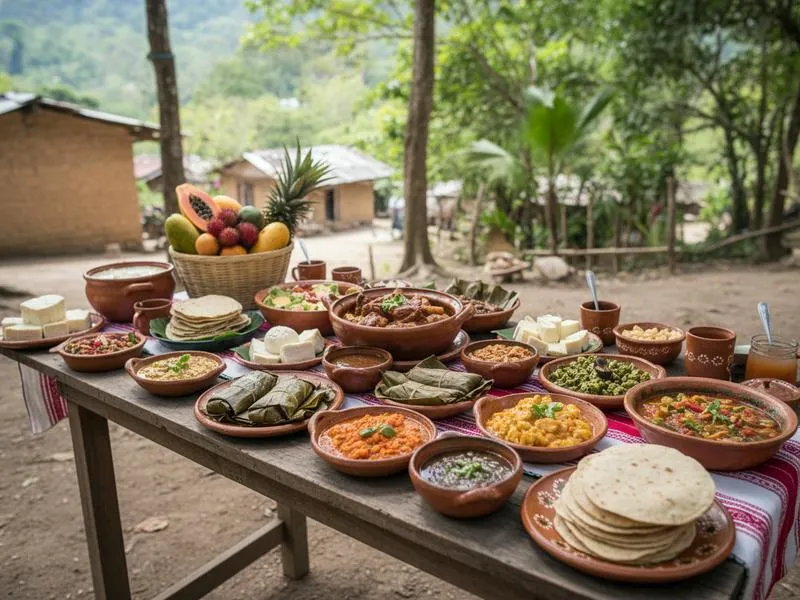
Chiapas food stands out because it keeps more indigenous ingredients and cooking habits in daily use than many better-known Mexican food regions. You will notice that quickly if you have already eaten your way through Oaxaca, Mexico City, or the Yucatán.
Here is what makes Chiapas cuisine feel different:
- Chipilín and hoja santa show up everywhere. Chipilín gives soups and tamales a green, earthy note that is hard to confuse with any other Mexican state. Hoja santa adds anise-like aroma to certain tamales and broths.
- The seasoning is often gentler and a little sweeter. Instead of leaning on aggressive chile heat, many Chiapas dishes use tomatoes, herbs, cinnamon, plantain, raisins, or mild dried chiles for rounder flavor.
- Corn and tamales are the backbone. If you only try one category of Chiapas food, make it tamales. The state has a remarkable variety, and dishes like tamal de bola and tamales de chipilín feel region-specific rather than generic.
- Black beans, fresh cheeses, and highland dairy matter. Queso de Ocosingo is one of the clearest examples of Chiapas having its own dairy identity.
- Traditional drinks are part of the food culture, not an afterthought. Pox, pozol, tascalate, and highland coffee are all part of understanding Chiapas cuisine.
If you want the most useful traveler shortcut, think of Chiapas food as a mix of Maya foodways, highland herbs, ceremonial drinks, pork dishes, market tamales, and excellent coffee. That framing will help you order well from day one.
Essential Chiapas Dishes You Can’t Miss
Tamales de Chiapas
Forget everything you know about Mexican tamales. In Chiapas, these cornmeal parcels take distinctive forms that differ markedly from those found in central or northern Mexico. The state boasts nearly 30 tamal varieties according to the Larousse Cocina food encyclopedia — more than almost any other region.
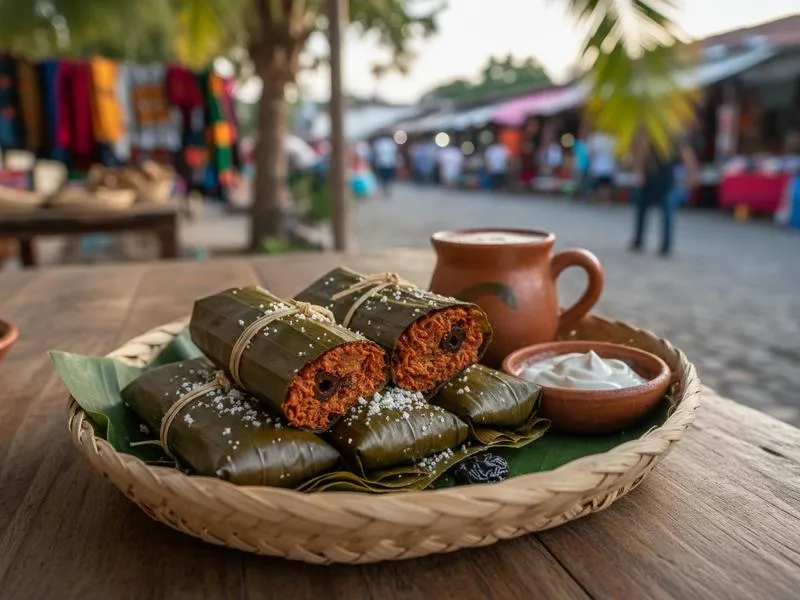
Tamales de Bola: The most iconic Chiapas tamal. Hand-kneaded into balls, filled with pork ribs stewed in tomato sauce with oregano, thyme, cumin, and ancho or guajillo chiles, wrapped in corn husks and steamed for an hour. The traditional version includes a fried simojovel chile — an intensely spicy variety grown almost exclusively in Simojovel de Allende. A single tamal de bola is a full meal. Cost: 25–45 MXN ($1.40–2.50) each.
Tamales de Chipilín: Filled with chipilín leaves (a local herb with subtle, earthy flavor) — Chiapas’s most beloved everyday variety. The bright green filling provides nutrition that sustained Maya communities for centuries.
Tamales de Mole: Featuring Chiapas’s distinctive moles — less complex than Oaxacan versions but with their own character derived from local chiles and regional spices.
Where to try: Municipal market vendors in the early morning. In San Cristóbal, the Mercado José Castillo Tielemans serves fresh tamales from 6 AM. Arrive before 9 AM for widest selection.
Sopa de Chipilín
One of Chiapas’s two signature dishes (alongside tamal de bola), sopa de chipilín is an aromatic soup built on chicken broth infused with the fragrant chipilín herb. What makes it special: small masa balls stuffed with fresh cheese, dropped into the simmering broth where they absorb herby, savory flavors while the cheese melts inside.
Thought to have originated in Chiapa de Corzo, this soup is now served across the state. The chipilín herb has a slightly nutty, green flavor that doesn’t compare to any common herb — you have to taste it.
Cost: 60–120 MXN ($3.30–6.70). Where to try: Traditional restaurants in San Cristóbal and Chiapa de Corzo.
Cochito Horneado
The signature pork dish of Chiapas. Cochito (meaning “little pig”) refers to suckling pig or pork shoulder marinated in a complex paste of achiote, guajillo and ancho chiles, thyme, green tomatoes, garlic, and vinegar, then slow-roasted until the meat falls apart. The result: deep, earthy flavors from the chile paste with the richness of slow-cooked pork.
Especially celebrated during the Fiesta Grande de Enero in Chiapa de Corzo each January. On regular days, found at weekend markets and traditional restaurants.
Cost: 120–200 MXN ($6.70–11) for a plate with sides. Where to try: In Chiapa de Corzo, restaurants around the main plaza serve it year-round. In San Cristóbal, ask about weekend cochito at family restaurants.
Sopa de Pan
This “bread soup” delivers remarkable depth. Hard-boiled eggs, plantains, raisins, and shredded chicken float in a rich broth flavored with local herbs and spices, topped with fresh bread that absorbs the flavors while maintaining texture. Originally a festival dish prepared for weddings and patron saint celebrations — a colonial-era fusion of Spanish and indigenous ingredients.
Cost: 80–140 MXN ($4.50–7.80). Where to try: El Caldero in San Cristóbal specializes in this dish.
Asado Chiapaneco
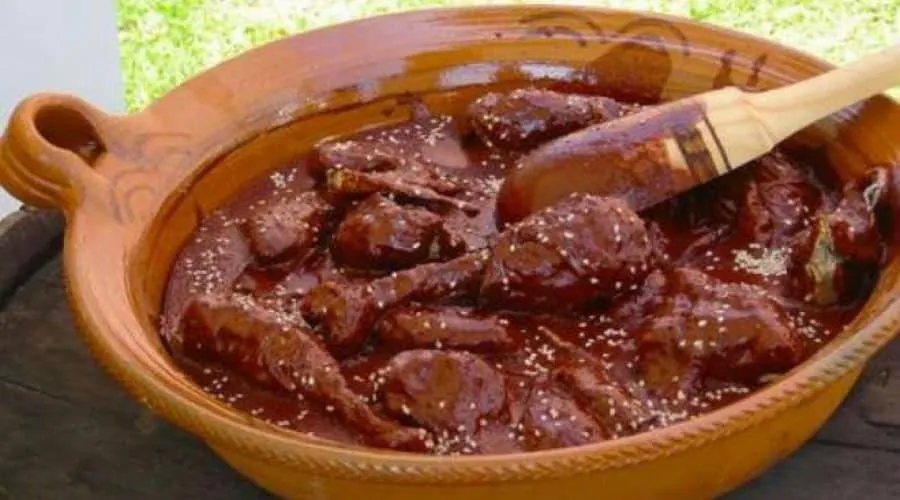
A deeply caramelized pork stew representing Chiapas home cooking at its finest. The pork simmers for hours in a sauce of dried chiles, toasted spices, and a touch of chocolate — similar to a mole but distinctly Chiapanecan. The slow caramelization creates layers of sweetness and heat. Found in family-run restaurants and home kitchens more often than tourist spots.
Cost: 90–160 MXN ($5–9). Where to try: Ask at family restaurants and market fondas in San Cristóbal — it’s a daily special, not always on menus.
Pepita con Tasajo
Thin-sliced dried beef (tasajo) served in a savory pumpkin seed sauce (pepita). The tasajo is salted, dried, then grilled until crispy at the edges while the pepita sauce provides a creamy, nutty counterpoint. One of Chiapas’s highest-rated savory dishes — and one visitors frequently overlook.
Cost: 80–150 MXN ($4.50–8.40). Where to try: Traditional restaurants in Tuxtla Gutiérrez and San Cristóbal.
Garnachitas Chiapanecas
Crispy fried corn discs topped with seasoned tomato sauce, finely chopped beef, onions, pickled cabbage, and crumbled fresh cheese. Chiapas’s answer to tostadas, but the extra-crispy base, slightly sweet tomato sauce, and tangy cabbage make them unmistakably local.
Cost: 15–30 MXN ($0.80–1.70) each. Where to try: Street vendors near markets and evening street food stalls in San Cristóbal.
Chalupas Coletas
Small, thick tortillas topped with shredded pork, salsa, and fresh cabbage. Named for the “coletos” (residents of San Cristóbal). The thicker base gives them satisfying chew, and toppings are uniquely Chiapanecan.
Cost: 20–35 MXN ($1.10–2) each.
Queso de Ocosingo
A distinctive double-cream cheese from the highland town of Ocosingo, between San Cristóbal and Palenque. The aging process creates a thin, Brie-like skin while the interior remains creamy and slightly tangy. Excellent with local honey and fresh fruit, or crumbled over beans and tortillas. If you’re driving the San Cristóbal–Palenque route, stop in Ocosingo to buy it from producers directly.
Cost: 60–120 MXN ($3.30–6.70) per ball. Where to find: Santo Domingo market area in San Cristóbal.
The Unique Chiles of Chiapas
What sets Chiapas food apart — even more than individual dishes — are the regional chiles found almost nowhere else. Understanding these peppers explains why Chiapas food tastes different from anything else in Mexico.
| Chile | Heat | Use |
|---|---|---|
| Chile Simojovel | Very high | Tamales de bola, salsas — grown almost exclusively in Simojovel municipality |
| Chile Tusta | Moderate | Highland tamales and moles — also found in neighboring Oaxaca |
| Chile Chimborote | Moderate | Shuti snail soups — found only in certain highland communities |
| Chile Amaxito | Mild–medium | Green sauces and salsas throughout the highlands |
Desserts and Sweets
Chiapas has a sweeter side that most food guides ignore.
Chimbos (Chimbolitos): The iconic regional dessert — sweet bread with anise flavor, crispy outside and soft and spongy inside. Made from flour, sugar, eggs, butter, and anise. Locals call the smaller versions “chimbolitos.” Found at every bakery in the highlands. Cost: 10–25 MXN each.
Nuégados: Fried dough balls drizzled with piloncillo (unrefined sugar) syrup, served during festivals and family gatherings.
Marquesote: A light, spongy cake traditional to Chiapa de Corzo, made with eggs, sugar, and corn starch. Texture somewhere between angel food cake and a soufflé.
Budget: A bag of mixed pan dulce at market bakeries costs 30–60 MXN ($1.70–3.30).
Traditional Drinks of Chiapas
Pox (Ceremonial Spirit)
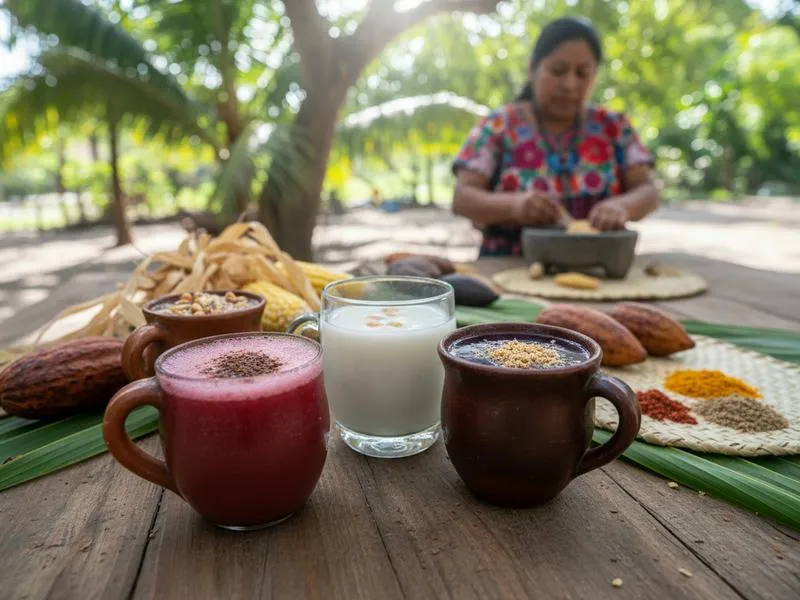
Pronounced “posh,” this corn-based spirit holds sacred status in highland Maya communities. For centuries, pox was produced only for healing ceremonies and religious rituals. Shamans still use it in the ceremonies of San Juan Chamula, where it accompanies prayers to facilitate communication with the spiritual world.
Today, commercial pox is widely available in San Cristóbal, often flavored with herbs (hierbabuena), fruits (tamarindo, maracuyá), or cacao. The unflavored version has a distinctive corn sweetness with subtle smokiness.
How to drink: Sip slowly at room temperature. Cost: 50–100 MXN per drink at bars; 150–400 MXN per bottle. Where to try: Bars along Real de Guadalupe in San Cristóbal — Los Amorosos specializes in artisanal pox varieties.
Pozol
This pre-Hispanic drink sustained Maya communities for millennia. Made from fermented corn dough (masa) mixed with water and often cacao, pozol provides nutrition and hydration in a single beverage. The fermentation gives it a slightly sour tang, while cacao adds subtle chocolate notes. Think of it as a pre-Hispanic protein shake.
Traditionally served cold from large clay pots. The thick, grainy texture takes getting used to, but it’s incredibly refreshing in Chiapas’s warm lowlands.
Cost: 15–30 MXN. Where to try: Market vendors throughout the highlands sell pozol in the morning — look for women with large clay pots.
Tascalate
A distinctive reddish-brown drink combining toasted corn, cacao, achiote (providing the color), cinnamon, and sometimes vanilla. The powder is mixed with water or milk to create a beverage somewhere between chocolate milk and horchata, with earthy undertones from the achiote.
Tascalate dates to pre-Hispanic times when cacao drinks were consumed throughout Mesoamerica. The combination of warm cinnamon, slightly bitter cacao, and achiote earthiness makes this uniquely Chiapanecan.
Cost: 20–40 MXN prepared; 50–100 MXN for powder to take home. Where to try: Cafés and markets in San Cristóbal; tascalate powder at the Santo Domingo market.
Chiapas Coffee
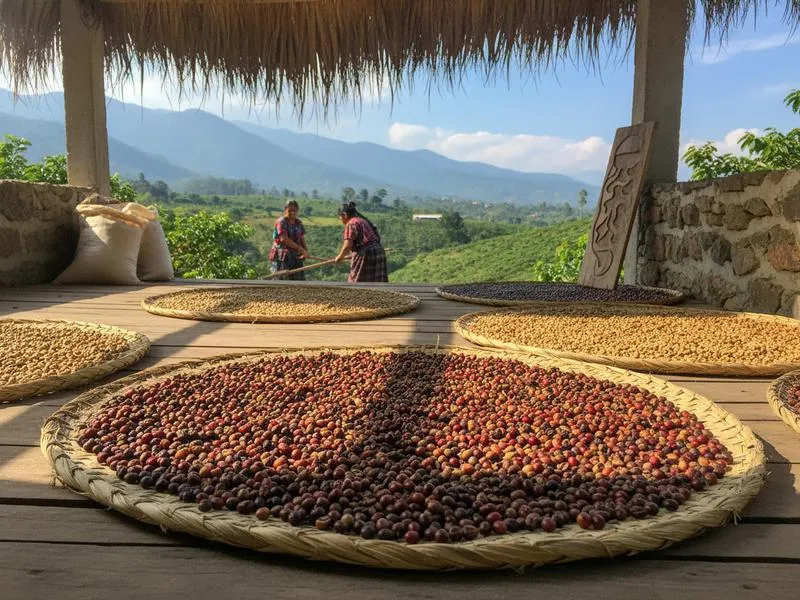
The highlands around San Cristóbal produce some of Mexico’s finest arabica coffee. Chiapas is Mexico’s largest coffee-producing state — approximately 40% of national production. The combination of altitude (1,200–1,800m), volcanic soil, and traditional shade-grown methods creates beans with bright acidity, medium body, and complex flavor notes.
Notable cafés in San Cristóbal:
- Carajillo Café: Single-origin beans, meticulous preparation — 40–70 MXN
- La Selva Café: Cooperative supporting organic farmers — great flat whites
- Frontera Artisan Coffee: Tastings explaining regional growing zones and altitude differences
- Café Museo: Combined coffee bar and cacao education center — try the coffee-cacao pairing
Take-home tip: A 250g bag of single-origin Chiapas beans costs 80–200 MXN ($4.50–11) — a fraction of what you’d pay for the same quality in the US or Europe. Buy at cooperatives or specialty shops, or at the Santo Domingo market.
Comiteco
A sugarcane-based spirit from the town of Comitán, with distinctive character from the local agave terroir. Less famous than pox but worth seeking out. Comiteco is one of Mexico’s lesser-known agave spirits and a point of pride for Chiapanecos. If you’re in Comitán, try it at source.
Cost: 40–80 MXN per drink; 200–500 MXN per bottle.
One-Day Chiapas Food Plan for Travelers
If you are in Chiapas for a short trip, this sequence works well:
- Breakfast: tamales, atole, or pozol at Mercado José Castillo Tielemans
- Late morning: specialty coffee at Carajillo Café, Frontera Artisan Coffee, or Café Museo
- Lunch: sopa de pan at El Caldero or a regional plate at La Cocina de Doña Betty
- Afternoon snack: garnachitas or queso de Ocosingo near Santo Domingo
- Dinner: a more refined regional meal at Tierra y Cielo or LUM
- Nightcap: a small pour of pox on or near Real de Guadalupe
This gives you a clean mix of market food, home-style cooking, upscale regional cuisine, and the drinks Chiapas is best known for.
Where to Eat in San Cristóbal de las Casas
Traditional and Regional
La Cocina de Doña Betty — Home-style Chiapas cooking at reasonable prices. Daily specials rotate based on market availability. Try the cochito when available, along with tamales and regional soups. Budget: 80–150 MXN ($4.50–8.40) per person.
El Caldero — Specializes in sopa de pan and other traditional Chiapas dishes. The sopa de pan here is considered one of the best in the city. Simple setting, authentic cooking. Budget: 70–130 MXN ($3.90–7.30) per person.
Restaurante Belil — Regional cuisine near the main plaza. Good introduction to Chiapas flavors. Budget: 100–180 MXN ($5.60–10) per person.
Contemporary and Elevated
LUM — The most ambitious restaurant in San Cristóbal. Tasting menus using indigenous ingredients: chicatana ants, regional chiles, wild herbs. Reservations essential for dinner. Budget: 400–800 MXN ($22–45) for tasting menu.
Tierra y Cielo — Regional cuisine elevated through careful sourcing, served in a beautiful colonial building. More accessible than LUM while still showcasing Chiapas flavors. Budget: 200–400 MXN ($11–22) per person.
Markets: Where Locals Eat
Mercado José Castillo Tielemans — The main municipal market. Authentic breakfast: fresh tamales, pozol, atole, sopa de chipilín, regional snacks. Arrive early morning — many vendors sell out by midday. This is the single best place to sample Chiapas food on a budget. Budget: 40–80 MXN for a full meal.
Santo Domingo Market Area — Food vendors alongside artisan stalls near Santo Domingo church. Good for quick snacks (garnachitas, tamales) while exploring. Best place to buy queso de Ocosingo, tascalate powder, and Chiapas coffee beans.
Eating in Tuxtla Gutiérrez, Palenque, and Beyond
Tuxtla Gutiérrez: The state capital has its own food identity. Las Pichanchas is the best-known restaurant for experiencing Chiapas gastronomy alongside regional folkloric dancing. Try the ningüijute (a seed-based pork mole associated with Tuxtla) and pepita con tasajo.
Palenque: Food in Palenque tends to mix regional Chiapas dishes with broader Mexican staples. Restaurant Maya and Restaurant Las Tinajas often appear on traveler shortlists, but quality can shift, so confirm current favorites locally.
Chiapa de Corzo: The Magical Town near Sumidero Canyon is one of the best places for cochito horneado and sopa de chipilín. If you are visiting in January during the Fiesta Grande, this is one of the strongest food stops in the state.
Comitán: The birthplace of tamal de bola and comiteco. It pairs naturally with a stop on a broader Comitán and Lagos de Montebello route if you want a more food-focused highlands road trip.
Food Experiences Worth Booking
Cooking classes: Several San Cristóbal operators teach traditional Chiapas dishes — guided market visit + hands-on tamal and salsa preparation. Half-day class: 800–1,500 MXN ($45–84) per person. Book through your hotel or tourism offices on the main square.
Food tours: Guided market tours and food walks provide context for what you’re eating, particularly valuable for navigating the municipal market’s options and understanding indigenous ingredients. 3–4 hour tour: 400–900 MXN ($22–50) per person.
Cacao experiences: Chiapas has strong cacao traditions predating Spanish contact. The ChocoMuseo and Café Museo both run chocolate tastings and workshops exploring Maya cacao culture. Most sessions: 200–500 MXN ($11–28), including tastings.
Chiapas Food Cost Guide
| Meal Type | Cost MXN | Cost USD |
|---|---|---|
| Market breakfast (tamales + coffee) | 30–60 | $1.70–3.30 |
| Street snacks (garnachitas, chalupas) each | 15–35 | $0.80–2 |
| Market fonda lunch (comida corrida) | 50–90 | $2.80–5 |
| Casual restaurant meal | 80–180 | $4.50–10 |
| Upscale restaurant dinner | 200–500 | $11–28 |
| LUM tasting menu | 600–900 | $33–50 |
| Specialty coffee | 35–70 | $2–3.90 |
| Pox drink at a bar | 50–100 | $2.80–5.60 |
| Full day eating well | 200–400 | $11–22 |
Practical Tips for Eating in Chiapas
- Embrace markets: The most authentic Chiapas flavors come from market stalls and traditional fondas, not tourist restaurants. Point at what looks good
- Go early: Market food is freshest in the morning; many vendors sell out by midday. Breakfast at the market is a Chiapas ritual
- Try everything: Pozol and tascalate take adjustment but reward open-minded tasting
- Bring cash: Markets and traditional eateries rarely accept cards. ATMs available in San Cristóbal and Tuxtla
- Watch for festivals: Chiapas food is best during celebrations — Fiesta Grande in Chiapa de Corzo (January), Semana Santa, and patron saint festivals all feature special dishes
- Buy to take home: Chiapas coffee beans, tascalate powder, queso de Ocosingo, and bottled pox all travel well and make excellent souvenirs
Chiapas Food vs. Foods of Chiapas: Which Page Should You Use?
Use this page if you want the fastest shortlist of what to eat first, where to try it, and how to build one good food day in San Cristóbal.
Use Foods of Chiapas if you want the broader statewide list with more dishes and drinks beyond the top 10.
That split matters because many travelers only need the best first 5 to 10 foods, while deeper planners want the longer encyclopedia version.
Related Guides
- Chiapas Travel Guide — planning your full trip
- San Cristóbal de las Casas Guide — the highland cultural capital
- What to Eat in San Cristóbal — 15 dishes, best markets, where locals eat
- Foods of Chiapas — the statewide dish list if you want more options beyond the top 10
- Oaxacan Food Guide — compare Chiapas and Oaxaca before a multi-state trip
- 7 Days in Chiapas Itinerary — where to spend your time
- Best Time to Visit Chiapas — highland vs jungle seasons
- Is Mexico Safe? — safety context for Chiapas travel
- Mexico Travel Cost — budgeting for a Chiapas trip