What to Eat in San Cristóbal de las Casas: 15 Dishes & Where to Find Them (2026)
San Cristóbal de las Casas sits at 2,200 meters in the Chiapas highlands, surrounded by 12 Tzotzil and Tzeltal Maya communities. The food here is not Mexican food with regional variations — it is a distinct indigenous culinary tradition that predates the Mexican nation by millennia. Chipilín grows only here and in Central America. Pozol is pre-Columbian. Pox is a Tzotzil sacred spirit. The tamales use banana leaves, not corn husks. You are eating something genuinely unlike the rest of the country.
This guide covers the 15 essential foods to eat in San Cristóbal, the best markets and restaurants, budget reality, and where locals actually go versus where tourists end up.
San Cristóbal Food at a Glance
| Dish | Type | Where to Find | Price (MXN) |
|---|---|---|---|
| Tamales de chipilín | Breakfast/lunch | Mercado Municipal, La Casa del Pan | 30-50 each |
| Cochito horneado | Weekend lunch | Mercado Municipal (weekends) | 80-150 |
| Pozol | Drink (any time) | Mercado Municipal, markets | 20-30 cup |
| Sopa de pan | Festive dish | El Fogón de Jovel, TierrAdentro | 90-140 |
| Pox spirit | Bar, evening | Pox bars on Real de Guadalupe | 60-120/shot |
| Queso de Ocosingo | Cheese/snack | Markets, cheese stalls | 80-200/piece |
| Tascalate | Drink | Traditional restaurants, markets | 20-40 |
| Chimbos | Dessert | Mercado de Dulces | 30-80 box |
| Pepita con tasajo | Lunch stew | Traditional restaurants | 130-180 |
| Mole negro chiapaneco | Dinner | El Fogón de Jovel, TierrAdentro | 150-250 |
| Chicharrón de Chiapas | Snack | Markets, butcher stalls | 30-60 |
| Hierba santa dishes | Any | Markets, traditional restaurants | 100-180 |
| Empanadas de chipilín | Snack/lunch | Street stalls | 20-35 each |
| Chilaquiles chiapanecos | Breakfast | Markets, fondas | 60-90 |
| Café de Chiapas | Coffee | Café Yik, Café San Cristóbal | 30-60 cup |
The 15 Essential Foods of San Cristóbal de las Casas
1. Tamales de Chipilín
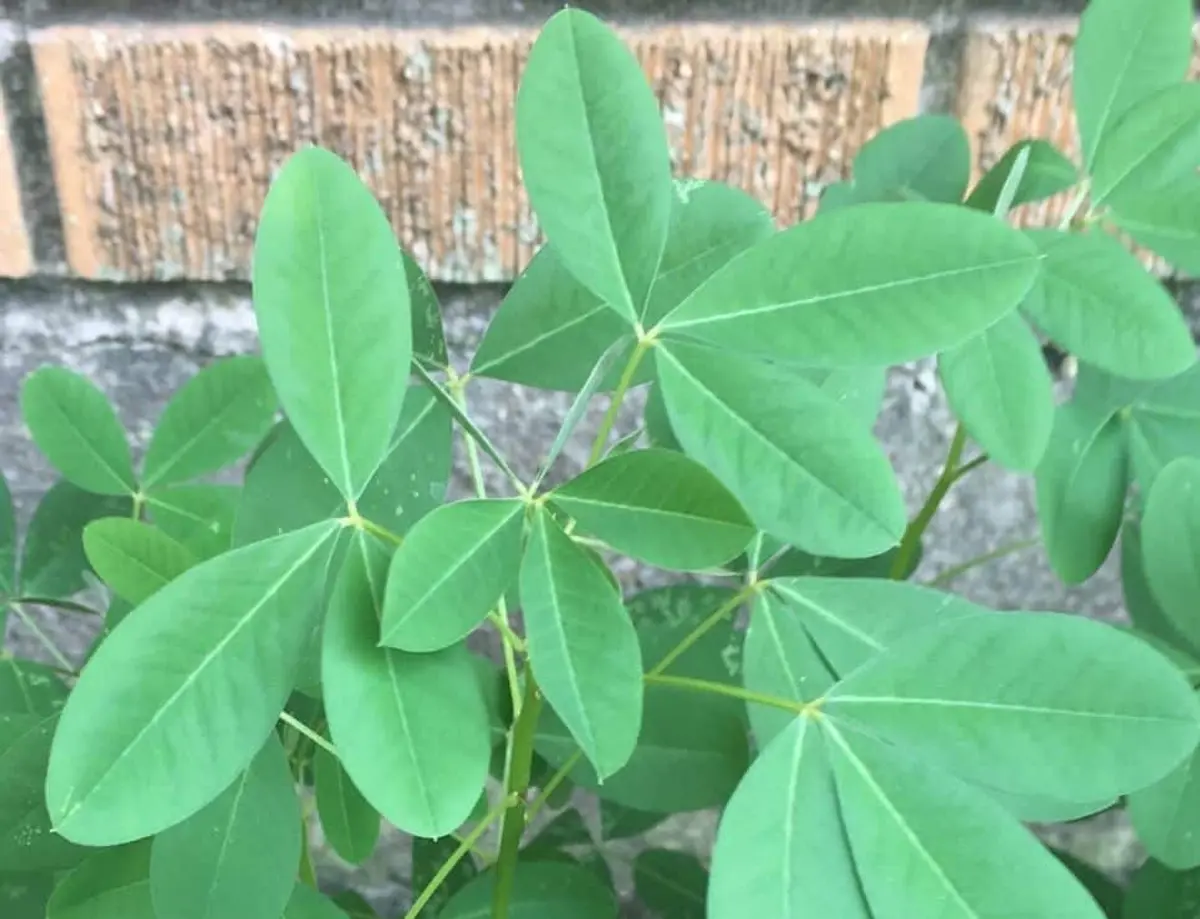
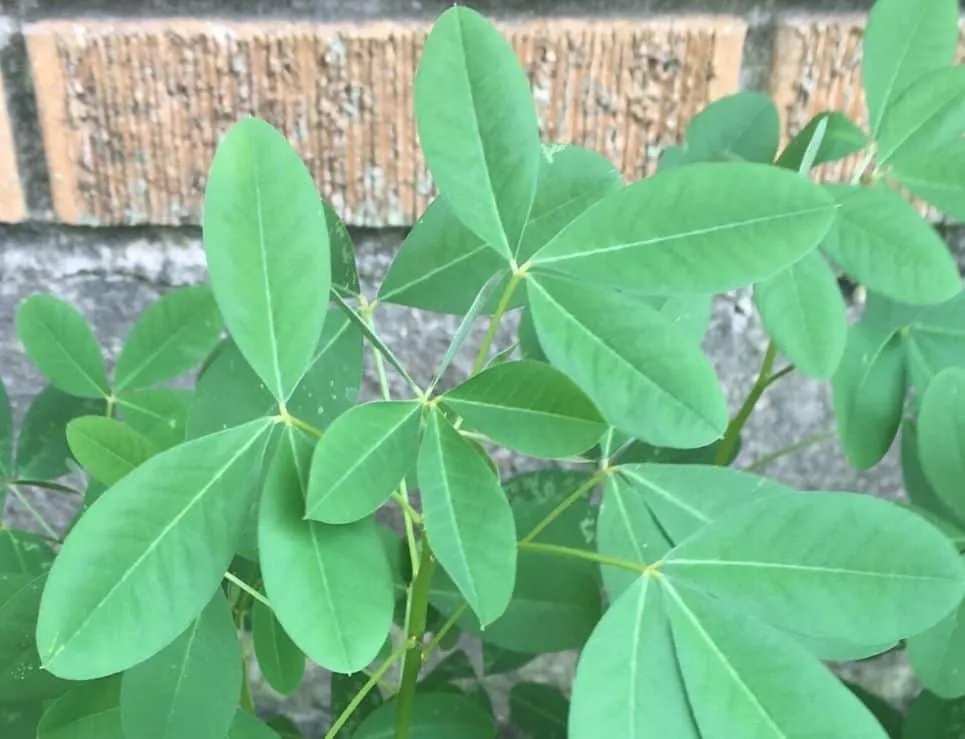
Chipilín (Crotalaria longirostrata) is a leafy legume that grows wild in Chiapas and Guatemala and exists nowhere else in Mexico. It has a grassy, slightly bitter flavor profile and a nutrient density — calcium, iron, protein — that made it a dietary staple for highland Maya communities for centuries. The tamale wraps chipilín into corn masa with black beans or crumbled Chiapas cheese, encases it in a banana leaf (not corn husks — that is the lowland tradition), and steams it until the leaf has transferred its flavor into the masa.
The result is a tamale that tastes nothing like the tamales of central Mexico: denser, earthier, more vegetal, with a subtle grassiness from the leaf. It is the correct breakfast in San Cristóbal. Eat two with a cup of pozol at the Mercado Municipal for 70-90 MXN total and you have the most authentic morning in the city.
Where to find: Mercado Municipal (women’s section, early morning until noon), La Casa del Pan Papalotl (comida corrida usually includes them), TierrAdentro, El Fogón de Jovel.
2. Cochito Horneado
The highlands’ Sunday dish. A whole suckling pig — or large pork portions — marinates overnight in achiote paste, dried Chiapas chiles, tomato, garlic, and herbs, then slow-roasts in a sealed clay cazuela for 3-5 hours. The fat renders completely, the skin crisps in its own drippings, and the meat shreds with no resistance.
Achiote (annatto seed paste) gives the pork its orange-red color and a faintly earthy, peppery sweetness that distinguishes Chiapas preparations from Yucatán’s cochinita pibil — a related technique but a different flavor profile. Cochito is served with rice cooked in the roasting juices, black beans, and fresh tortillas made to order.
At the Mercado Municipal on Saturday and Sunday mornings, vendors set up by 7 AM and sell out by noon. Do not arrive late.
Where to find: Mercado Municipal (weekends only, arrive before 10 AM), El Fogón de Jovel (daily), traditional fondas in the Barrio de Mexicanos.
3. Pozol
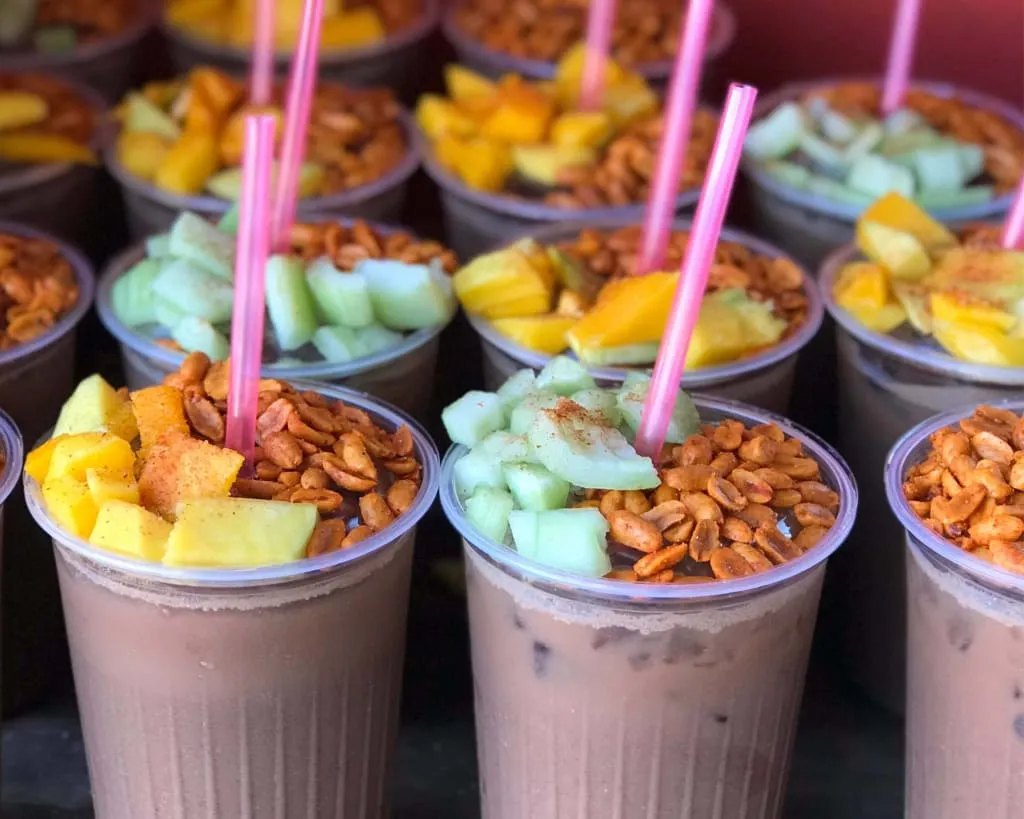
Pozol is one of the oldest continuously consumed beverages in the Americas. The Maya lowland traders carried it on routes through the Chiapas highlands — corn masa ground and fermented with cacao, carried in dried gourd containers, mixed with water on the trail. It provided calories, hydration, and caffeine in a form that kept for days without refrigeration.
The modern version is still essentially the same preparation: fermented corn masa and raw cacao dissolved in cold water, served in a clay cup with no sweetener or with a small amount of sugar or honey. The taste is an acquired flavor — earthy, faintly sour from fermentation, with a deep cacao note that is nothing like hot chocolate. It is a drink for the curious, not the cautious.
Order it at the Mercado Municipal from the women who have been making it since 5 AM. The 20-30 MXN cup is one of the most culturally significant food experiences in San Cristóbal.
Tascalate is the sweeter alternative: pine nuts, cacao, achiote, and corn flour dissolved in water or milk. Less fermented, more approachable. Also available at the markets.
4. Sopa de Pan (Bread Soup)
Sopa de pan is Chiapas’s answer to a festive main course — and one of the most historically interesting dishes in the region. Spanish missionaries introduced wheat bread to Chiapas in the 16th century, and the indigenous population developed a dish that used day-old bread as a vehicle for indigenous ingredients: dried fruits, plantain, tomato, raisins, almonds, capers, green olives, and the chicken or turkey broth holding it all together.
The result is a soup that shouldn’t work on paper — sweet, savory, briny, and earthy all at once — and does work in a bowl. It is a Christmas and festival dish in Chiapas, which means the best traditional restaurants serve it year-round as a marker of Chiapan identity.
Order it at El Fogón de Jovel or TierrAdentro. Expect 90-140 MXN.
5. Pox Spirit
Pox (pronounced posh, from the Tzotzil poxil meaning medicine or remedy) is the indigenous spirit of the Chiapas highlands, made from a combination of corn, wheat, and sugarcane distilled to 30-45% alcohol. It has been brewed in Maya communities for centuries and occupies a ceremonial role in Tzotzil culture — used in healing rituals, community decisions, and celebration.
The legal artisanal pox industry in San Cristóbal began formalizing around 2010, when producers began labeling and selling what had previously been community production only. Today there are several San Cristóbal pox producers selling at specialty bars and in markets.
The flavor profile is distinct from mezcal: earthier, with a sweetness from the sugarcane that rounds the corn and wheat character. Infused pox is common — herbs, fruits, honey — and accessible for first-timers.
Where to drink: La Viña de Bacco (Real de Guadalupe), Kakaw Bar (cacao-infused pox is the specialty), and dedicated craft pox shops near the zócalo.
6. Queso de Bola de Ocosingo
Ocosingo, a town 80 kilometers northeast of San Cristóbal, produces a cheese that appears nowhere else in Mexico: a ball-shaped fresh cheese (queso de bola) with a semi-firm exterior and a liquid-cream interior. The outer layer has a mild aged flavor; the inner core is essentially crema — runny, rich, slightly acidic.
To eat it properly, cut the top off the ball and eat the creamy interior with a spoon, then slice the firm exterior. It is served as an appetizer, accompaniment to meals, or standalone with tortillas.
Find it at the cheese stalls in the Mercado Municipal, at the Mercado de Artesanías, and at specialty food shops in the centro histórico. Prices range from 80-200 MXN depending on size.
7. Pepita con Tasajo (Pumpkin Seed Stew with Smoked Beef)
This is the dish that best illustrates the indigenous Mexican cooking method of using seeds as a sauce base — a technique that predates the New World by millennia. Pepita (pumpkin seed) is toasted, ground, and dissolved into a savory broth with tomato and Chiapas highland chiles. The result is a thick, green-gold sauce with an earthy, nutty depth. Tasajo — cured and smoked beef, cut thin — is cooked in the pepita broth or served alongside it.
The combination is rich and warming, specifically designed for the 15°C evenings that characterize San Cristóbal’s highland climate. This is not beach food. This is fire-and-altitude food.
Where to find: TierrAdentro, El Fogón de Jovel, and traditional fondas in the Barrio de la Merced.
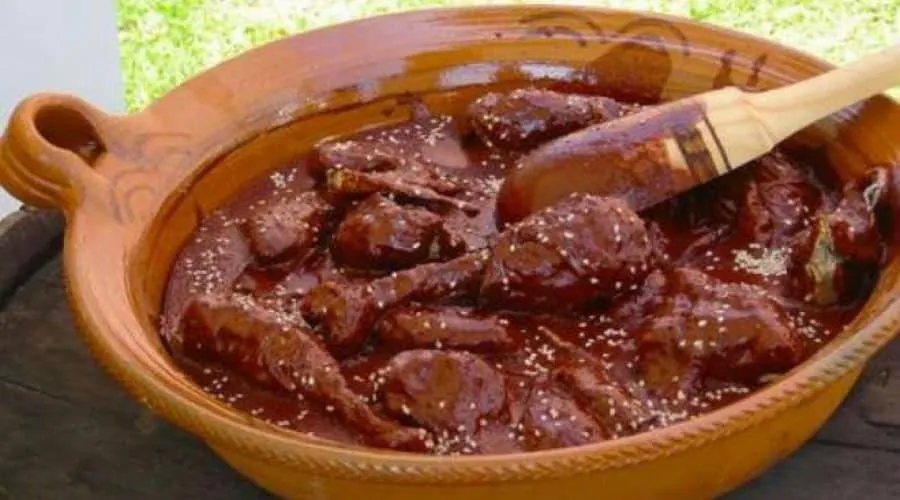
8. Mole Negro Chiapaneco
Chiapas mole negro differs from Oaxacan mole negro in the chile profile — Chiapas uses local highland chiles (mulato, pasilla chiapaneco, chile negro de Chiapas) rather than Oaxaca’s chilhuacle negro, and incorporates hierba santa (a large-leafed herb with an anise-root beer flavor that grows throughout Chiapas) in ways the Oaxacan version doesn’t.
The result is darker, more bitter, and more herbal than Oaxacan mole negro — less chocolate-forward, more smoky chile and fresh herb. It is served over turkey (the traditional vessel) or chicken, with rice and handmade tortillas.
This mole takes 2-3 days to make properly and appears on restaurant menus as a special or weekend preparation. Ask at El Fogón de Jovel or TierrAdentro what day their mole negro is available.
9. Chimbos (Chiapas Egg Dessert)
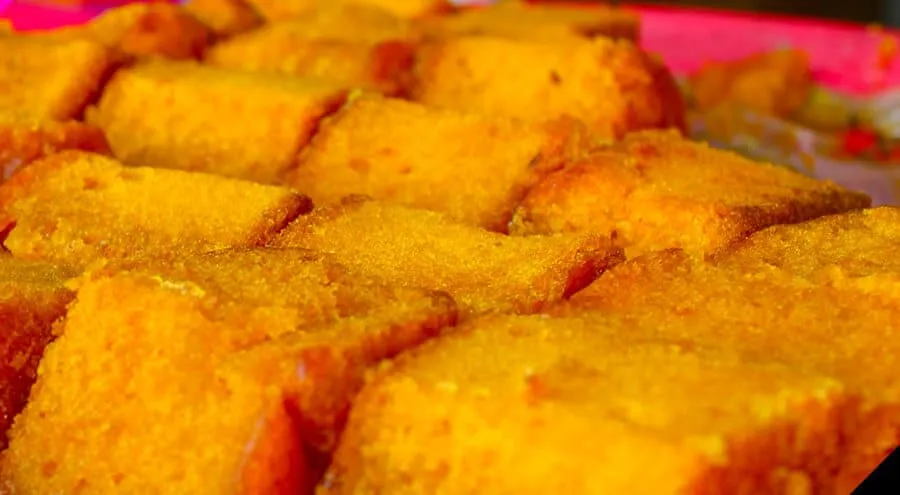
Chimbos are a colonial-era egg yolk dessert with a clear Spanish/convent-cooking lineage — egg yolks beaten with sugar and baked or simmered in syrup until they achieve a dense, fudgy texture. They taste like concentrated egg custard, sweet and rich, slightly grainy from the sugar concentration. They are specific to Chiapas and particularly associated with San Cristóbal.
Buy them at the Mercado de Dulces y Artesanías on Belisario Domínguez, where vendors sell chimbos by the piece or box alongside other Chiapas sweets: regional candies, crystallized fruits, dried chile candy, and peanut brittles.
A box of 6-8 chimbos makes an excellent gift and costs 60-120 MXN.
10. Hierba Santa Dishes
Hierba santa (Piper auritum) is a large-leafed herb native to Mesoamerica with a flavor profile that is impossible to compare — anise, root beer, tarragon, and something entirely its own. It grows abundantly in Chiapas and appears in the regional cuisine in ways that make the food immediately identifiable as coming from here:
- Tamales de hierba santa — masa wrapped in the large leaf itself, steamed, with the herb’s flavor infusing the masa completely
- Mole with hierba santa — added to Chiapas mole negro for the herbal note
- Wrapped meats — chicken or pork grilled inside a hierba santa leaf
- Soups — the leaf added at the end of cooking for fresh-herb brightness
If you encounter a dish described with “hierba santa” on the menu, order it. It is specific to this region and unavailable elsewhere.
11. Empanadas de Chipilín
The street version of the chipilín tamale. Corn masa stuffed with chipilín and cheese, folded into a half-moon shape, and cooked on a griddle (not deep-fried). They are sold at the entrance to the Mercado Municipal, from street carts on Avenida General Utrilla, and at market stalls around the zócalo.
One empanada costs 20-35 MXN and serves as the walking food of San Cristóbal. Two or three make a meal.
12. Chicharrón de Chiapas
Chiapas produces a specific style of chicharrón (fried pork rind) that differs from the puffy fried rinds of central Mexico — thicker, less puffed, with more meat still attached, and fried in lard until a deep mahogany. Sold by weight at butcher stalls in the Mercado Municipal, eaten with corn tortillas, salsa verde, and sliced radish.
It is the mid-afternoon snack of the market, bought standing at the stall, eaten immediately. Don’t look for table service; this is a standing-up food.
13. Chiapas Coffee
San Cristóbal sits in Mexico’s most important coffee-producing state. The highlands surrounding the city — Tapachula, Motozintla, the Soconusco region — grow the coffee. In San Cristóbal, the cooperative cafés serve it properly:
Café Yik (Real de Guadalupe) — run by the Majomut shade-grown coffee cooperative. The best cup in San Cristóbal, reliably. Espresso, pour-over, and cold brew all available.
Café San Cristóbal (Insurgentes) — the oldest café in the city, operating since the 1970s, grinding and roasting in-house.
La Selva Café — the largest Chiapas coffee brand with a San Cristóbal location. Good quality, reliable sourcing, and you can buy bags to take home.
Price: 30-60 MXN per cup, depending on preparation.
14. Chilaquiles Chiapanecos
The Chiapas version of chilaquiles uses local dried chiles (pasilla chiapaneco, mulato) and crema ácida (sour cream) instead of the crema dulce used in central Mexico. The tortilla chips are less soggy — a textural choice — and the chile sauce is smokier and less sweet than CDMX-style red chilaquiles.
Eaten at breakfast or brunch. Found at fondas (small local restaurants) near the Mercado Municipal and at the market itself. 60-90 MXN including beans and coffee.
15. Queso Crema de Chiapas and Quesillo
Chiapas produces two cheeses of note beyond the Ocosingo bola: queso crema de Chiapas (a soft, slightly salty spreadable cheese used across the state in cooking and as a table cheese) and quesillo — the Chiapan equivalent of Oaxacan string cheese. Both are sold fresh at market stalls and used in tamales, enchiladas, and stuffed peppers throughout the city.
Where to Eat in San Cristóbal de las Casas
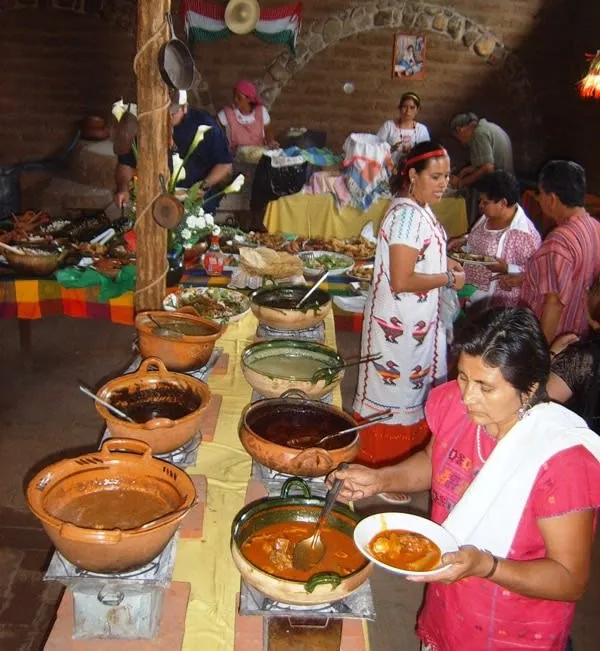
Mercado Municipal (Avenida General Utrilla)
The non-negotiable starting point. The covered market operates from 6 AM to 4 PM and has several food sections:
- Early morning: Tamales de chipilín, pozol, tascalate, cooked eggs, fresh tortillas — 30-80 MXN
- Late morning: Cochito horneado (weekends only), caldos, comida corrida — 60-120 MXN
- All day: Chicharrón by weight, cheese stalls, fresh chipilín, Chiapas coffee by the bag
Rule: eat at the stalls where the Tzotzil women are cooking, not the stalls with laminated menus in English.
La Casa del Pan Papalotl
The feminist collective bakery and restaurant on Real de Guadalupe is the best comida corrida value in San Cristóbal. For 80-110 MXN, you get a three-course set lunch rotating through traditional Chiapan preparations: sopa de pan or bean soup, a main course of tamales de chipilín or cochito or mole negro, and a drink (pozol, agua de frutas, or coffee).
The cooperative is run by women and operates as a social enterprise. The courtyard fills by noon with a mix of San Cristóbal residents and travelers who figured out it beats the tourist strip by every metric except location.
Hours: Lunch only, roughly noon-4 PM (sell out early on weekends)
Location: Real de Guadalupe 55, Centro Histórico
TierrAdentro — Tzotzil Maya Women’s Cooperative
TierrAdentro is the more formal indigenous cooperative restaurant — a cultural space as much as a restaurant. The kitchen is staffed by Tzotzil Maya women from surrounding communities and cooks the indigenous highland cuisine: pepita con tasajo, tamales wrapped in hierba santa, sopa de pan, pozol, tascalate. It is more expensive than La Casa del Pan (150-250 MXN per person) and more structured in service.
The space also hosts cultural events, craft sales, and indigenous language programs. Eating here funds community organizations in the surrounding municipalities.
Location: Real de Guadalupe (vary — check current signage), Centro Histórico
El Fogón de Jovel
The traditional Chiapan sit-down restaurant for visitors who want context and comfort together. “Jovel” is the Tzotzil name for San Cristóbal. The kitchen cooks in clay pots, serves the full canon of highland Chiapas cuisine (mole negro, sopa de pan, cochito, tamales, pepita con tasajo), and operates in a colonial courtyard setting.
Prices are mid-range by Mexican standards: 180-300 MXN per person. The service explains the dishes. It is the correct restaurant for the night you want to understand what you are eating.
Location: 16 de Septiembre 11, Centro Histórico
Pox Bars on Real de Guadalupe
The 10-block strip of Real de Guadalupe between the zócalo and the Dominican church has several dedicated pox bars. La Viña de Bacco is the most established. Kakaw Bar specializes in cacao-infused pox cocktails. Most bars offer pox flights (3-4 varieties, labeled by production method and aging) for 120-200 MXN.
Pox is best consumed sitting, with conversation, not rushed. The Tzotzil drinking culture around pox is ceremonial and unhurried. Tourist-facing pox bars have adapted this into a “craft spirits experience” that still communicates the original spirit of the thing.
Budget Eating Guide
| Budget tier | Daily food budget | Where to eat |
|---|---|---|
| Local budget | 150-250 MXN | Mercado Municipal + street stalls exclusively |
| Traveler mid-range | 300-500 MXN | 1 cooperative lunch + market breakfasts + 1 bar evening |
| Comfortable | 500-800 MXN | Mix of cooperatives, El Fogón de Jovel, pox bar evening |
| Splurge | 800-1,500 MXN | TierrAdentro, El Fogón de Jovel, full pox tasting flights |
San Cristóbal is one of Mexico’s cheapest cities for food. The tourist strip on Real de Guadalupe charges 200-400 MXN for meals that are 60-80% worse than the 90 MXN comida corrida at La Casa del Pan two blocks away.
Food By Neighborhood
| Neighborhood | Food identity | Best for |
|---|---|---|
| Centro Histórico | Traditional cooperatives, coffee | Tamales, pozol, comida corrida |
| Mercado Municipal | Indigenous market food | Everything local and authentic |
| Real de Guadalupe (tourist strip) | International + pox bars | Pox tasting, evening drinks |
| Barrio de Mexicanos | Working-class fondas | Cheapest Chiapan cooking in the city |
| Barrio de la Merced | Tlayudas, tacos | Oaxacan influence, late-night eats |
What to Drink in San Cristóbal
Pozol — the cultural anchor. Pre-Hispanic, fermented corn and cacao. Order it at the market before 10 AM.
Tascalate — sweeter, pine nut and cacao based. More approachable than pozol for first-timers.
Pox — the Tzotzil spirit. Drink it neat to understand it, then in a cocktail if you prefer.
Café de Chiapas — one of Mexico’s best coffees, served properly at Café Yik and cooperative cafés. Skip the international chains on Real de Guadalupe.
Atole agrio — sour fermented corn atole, a breakfast drink at the market. Deeply traditional, seldom seen outside highland Chiapas.
What to Bring Home from San Cristóbal
- Chimbos — the egg yolk dessert, sold in boxes at the Mercado de Dulces
- Queso de Ocosingo — ball cheese from Ocosingo, if you’re eating it soon
- Café de Chiapas — bags of shade-grown coffee from cooperatives (Café Yik, La Selva)
- Pox — bottled artisanal pox from craft producers (check liquid restrictions if flying)
- Chipilín dried — dried chipilín leaf for tea, sometimes available at the market
- Chocolate de Chiapas — bitter baking chocolate from highland cacao cooperatives
San Cristóbal Food Calendar
| Month | Food event | Notes |
|---|---|---|
| January | Día de los Reyes | Rosca de reyes across the city |
| February-March | Pre-Cuaresma (Lent prep) | Cochito demand peaks; fish dishes increase |
| April (Holy Week) | Semana Santa | Traditional Lenten foods; no Ley Seca in Chiapas |
| July | Guelaguetza markets | Artisan food markets across the city |
| October-November | Día de Muertos | Tamales and pozol offerings; market fairs |
| December | Posadas | Ponche, tamales, and navideño candy |
Ley Seca note: Chiapas does NOT have a Ley Seca (alcohol ban) during Semana Santa. Bars and pox shops remain open through Holy Week. This differs from Jalisco, Guerrero, and other states.
Practical Tips
- The Mercado Municipal is the best single hour you can spend eating in San Cristóbal. Arrive by 9 AM for the full selection.
- Pozol and tascalate are both sold by women with clay cups and large clay jars. They look the same from a distance — ask before ordering.
- Cooperative restaurants (La Casa del Pan, TierrAdentro) serve lunch only and sell out. Arrive by noon on weekdays, by 11:30 AM on weekends.
- Altitude (2,200m) affects digestion and alcohol tolerance. Pace yourself on both food richness and pox.
- Chipilín leaf causes mild drowsiness in some people — a property that made it useful in traditional medicine. Don’t drive immediately after a large chipilín meal.
- Most traditional restaurants accept card; market stalls are cash only.
Getting to San Cristóbal de las Casas
San Cristóbal has no airport. The closest is Tuxtla Gutiérrez Airport (TGZ), 80km away. Uber from TGZ runs 350-500 MXN and takes 80-120 minutes on mountain roads. ADO buses from Tuxtla run 60-90 MXN.
From Mexico City: overnight ADO bus 18-22 hours, or fly MEX→TGZ + transfer. From Cancún: fly CUN→TGZ direct on VivaAerobus or Volaris (~1hr).
See our full San Cristóbal de las Casas travel guide for logistics.
More Chiapas Food
Explore the wider Chiapas culinary tradition:
- Chiapas Food Guide: 18 Dishes — state-wide overview
- Best Restaurants in San Cristóbal — full restaurant guide with hours and addresses
- Things to Do in San Cristóbal — markets, Chamula, Sumidero, activities
- What to Eat in Oaxaca — the closest culinary counterpart
- What to Eat in Merida — Yucatecan comparison
- Day Trips from San Cristóbal — Palenque, Sumidero, Chamula
San Cristóbal’s food is the product of 2,200 meters, 15°C highland nights, and 3,000 years of Maya cooking tradition. Eat at the Mercado Municipal. Order the tamales. Drink the pozol. This is the real thing.