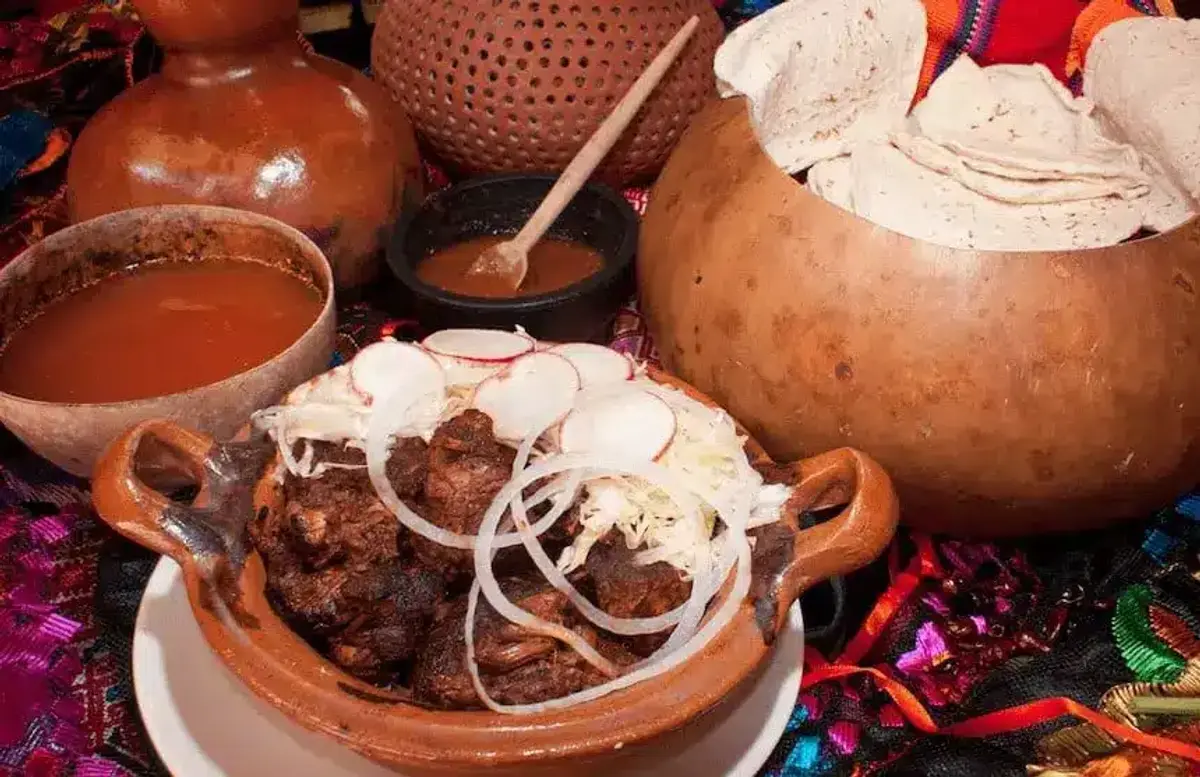
Foods of Chiapas: 22 Traditional Dishes and Drinks to Try First
If you are searching for the foods of Chiapas, start with cochito horneado, tamales de bola, sopa de pan, pepita con tasajo, pozol, tascalate, and Chiapas coffee. If you only have one or two days, start in San Cristóbal de las Casas for variety, go to Chiapa de Corzo for cochito and pozol, and add Comitán if tamales de bola are high on your list.
What makes Chiapas cuisine stand out is that it is aromatic rather than aggressively spicy, with stronger Maya continuity than most travelers expect. Ingredients like chipilín, hierba santa, pataxte cacao, chicatana ants, and shuti snails give it a flavor profile you will not get in Oaxaca, Yucatán, or central Mexico.
This page is the statewide dish guide for travelers who want the full answer to what food Chiapas is known for, not just the 10-dish shortlist. If you want the tighter shortlist, markets, restaurant picks, budgets, and practical food-planning advice, also read our Chiapas food guide and what to eat in San Cristóbal de las Casas.
This guide covers 22 traditional Chiapas dishes, where to eat them by city, how Chiapas compares with Oaxacan food, and which dishes are seasonal.
Chiapas Food in 30 Seconds
| If you want… | Order this | Best place to try it |
|---|---|---|
| The most iconic Chiapas dish | Cochito horneado | Chiapa de Corzo |
| The classic local breakfast | Tamales de bola | San Cristóbal de las Casas or Comitán |
| The drink everyone talks about | Pozol | Chiapa de Corzo |
| A sweeter colonial dish | Sopa de pan | San Cristóbal |
| A market-only seasonal specialty | Nucú (chicatana ants) | San Cristóbal, June to July |
| The best take-home food | Chiapas coffee | San Cristóbal cooperative cafés |
10 Traditional Chiapas Foods to Try First
If you want the fastest shortlist for searchers looking for the best Chiapas food first, start here:
- Cochito horneado
- Tamales de bola
- Sopa de pan
- Pepita con tasajo
- Sopa de chipilín
- Queso de bola de Ocosingo
- Pozol
- Tascalate
- Chiapas coffee
- Ninguijute
Best Chiapas Food by Trip Style
| If your trip is about… | Start with… | Best place to try it first |
|---|---|---|
| One iconic dish you cannot miss | Cochito horneado | Chiapa de Corzo |
| A classic breakfast in the highlands | Tamales de bola | San Cristóbal de las Casas or Comitán |
| A deeper market-food day | Pozol, sopa de chipilín, nucú | San Cristóbal markets |
| A drinks-first tasting | Tascalate, pox, Chiapas coffee | San Cristóbal cafés and bars |
| Trying the most traditional route-specific food | Cochito horneado plus pozol | Chiapa de Corzo |
Chiapas Food: Quick Reference
| Category | Must-Try |
|---|---|
| Signature dish | Cochito horneado (oven-roasted pork, Chiapa de Corzo) |
| Famous tamale | Tamales de bola (ball-shaped pork, Comitán / San Cristóbal) |
| Ancient drinks | Pozol (fermented corn+cacao), tascalate (cacao+achiote+chili) |
| Unique ingredients | Chipilín, hierba santa, chicatana ants (seasonal Jun–Jul) |
| Best city for food | San Cristóbal for variety, Chiapa de Corzo for the most traditional classics |
| Coffee | Soconusco and Los Altos highlands, Mexico’s strongest coffee region |
| Best companion guide | Chiapas food guide for markets, budgets, and where to eat |
| Dishes in this guide | 22 traditional dishes + drinks |
Chiapas vs Oaxaca: How the Cuisines Differ
Both states are known for indigenous food traditions but they’re not interchangeable. If you’re visiting both (common on the classic southern Mexico circuit), here’s what distinguishes them:
| Factor | Chiapas | Oaxaca |
|---|---|---|
| Dominant flavors | Aromatic, slightly sweet (plantain, raisins, cinnamon in savory) | Complex, fiery (chili heat, bitter chocolate) |
| Famous for | Tamales de bola, cochito, pozol, Chiapas coffee | Seven moles, tlayuda, mezcal, chapulines |
| Heat level | Mild — least chile-forward of southern Mexican cuisines | Moderate to high — mole negro and chapulines can be intense |
| Indigenous influence | Tzeltal, Tzotzil, Tojolabal Mayan traditions (very active) | Zapotec and Mixtec traditions (historically rich, more urbanized) |
| Unique ingredients | Chipilín, hierba santa, shuti snails, pataxte cacao, nucú ants | Chapulines, tasajo oaxaqueño, Oaxacan string cheese, tejate |
| Coffee | Mexico’s largest producer (40% national output) | Minor producer |
| Cheese tradition | Queso de bola de Ocosingo (stuffed ball cheese) | Quesillo (string/mozzarella-style) |
| Best city for food | Chiapa de Corzo (traditional), San Cristóbal (variety) | Oaxaca City (mole, markets, mezcal) |
| Price level | Very affordable — among Mexico’s cheapest states | Moderate — tourist infrastructure raises prices |
Bottom line: Oaxaca has more internationally recognized dishes. Chiapas has older, less-exported cuisine tied more directly to living indigenous food systems.
Chiapas is the southernmost state in Mexico, shares a border with Guatemala, and has the highest indigenous population percentage of any Mexican state — 28% of residents speak a Mayan language (predominantly Tzeltal and Tzotzil) as their first language. Those facts explain the food.
This is a cuisine built from highland and jungle ingredients that most visitors have never encountered: chipilín herb, hierba santa leaf, pataxte cacao, shuti freshwater snails, chicatana ants, and a regional tamale tradition that Larousse Cocina documents as producing nearly 30 distinct varieties. It is also, without much fanfare, the state that produces more coffee than any other in Mexico.
Chiapas cuisine does not rely heavily on chili heat — unlike Oaxaca’s famous moles or the Yucatán’s habanero culture. The flavor profile here is aromatic rather than fiery: indigenous herbs, fermented corn, smoked meats, and chocolate in forms that predate the Spanish Conquest.
What Makes Chiapas Cuisine Distinctive
The food of Chiapas reflects three overlapping worlds:
1. Highland Mayan tradition — The Tzeltal, Tzotzil, Tojolabal, and other Mayan groups of the Chiapas highlands maintained food systems centered on corn, beans, chayote, chipilín, and pataxte cacao. Many dishes eaten today in San Cristóbal and Comitán trace directly to pre-Columbian Mayan ceremonial and daily food.
2. Colonial mestizo cuisine — The Spanish introduced bread, olive oil, vinegar, raisins, and the recado sauce tradition (adobo-style preparations). Sopa de pan (bread soup) and cochito horneado both came from this colonial layering.
3. Jungle and lowland ingredients — The Lacandona rainforest and the Soconusco coastal plain produce ingredients rarely found elsewhere: exotic tropical fruits, pataxte (white cacao), exotic game (historically armadillo and squirrel appear in traditional recipes), and shuti snails from the large rivers.
The result is a cuisine that rewards curiosity. Most dishes have a story, and many are served nowhere else in Mexico.
The 22 Traditional Chiapas Dishes at a Glance
| Dish | Type | Where to Eat |
|---|---|---|
| Tamales de bola | Tamale (breakfast) | Comitán, San Cristóbal market |
| Cochito horneado | Slow-roasted pork | Chiapa de Corzo |
| Pepita con tasajo | Smoked beef + pumpkin seed stew | Chiapa de Corzo, Comitán |
| Sopa de pan | Colonial bread soup | San Cristóbal de las Casas |
| Queso de bola de Ocosingo | Artisan stuffed ball cheese | San Cristóbal restaurants |
| Chiapas-style mole | Sweeter mole with plantain | Tuxtla Gutiérrez, San Cristóbal |
| Sopa de chipilín | Corn + herb + cheese dumpling soup | Chiapa de Corzo, Tuxtla |
| Huevos a la Chiapaneca | Eggs with tortilla strips + beans | Any market fonda |
| Caldo de shuti | Freshwater snail broth | Chiapa de Corzo, river towns |
| Nucú ants | Toasted chicatana ants (June–July) | San Cristóbal market (seasonal) |
| Enchiladas palencanas | Tortillas in plantain-peanut sauce | Palenque restaurants |
| Estofado de pollo | Colonial chicken stew with chayote | Tuxtla Gutiérrez fondas |
| Chimbos | Fried buns with honey + cinnamon | Bakeries statewide |
| Puerco con hierba santa | Pork braised in anise-herb leaves | Traditional restaurants |
| Chanfaina | Offal stew (colonial recipe) | Festival food, Central Valley |
| Atole agrio | Fermented sour corn drink | Tzeltal/Tzotzil communities |
| Pozol | Ancient cacao + corn fermented drink | Chiapa de Corzo (best) |
| Tascalate | Sweet cacao + achiote + chili drink | San Cristóbal cafes |
| Ninguijute | Pork in pumpkin seed mole (Tuxtla specialty) | Tuxtla Gutiérrez markets |
| Chalupas coletas | Fried tortillas with pork + beets + carrot (San Cristóbal style) | San Cristóbal fondas |
| Chispola | Beef and vegetable stew (Tuxtla style) | Tuxtla Gutiérrez fondas |
| Pictes | Fresh sweet corn tamales (seasonal) | Markets, Jun–Sep |
The 22 Traditional Foods of Chiapas
1. Tamales de Bola
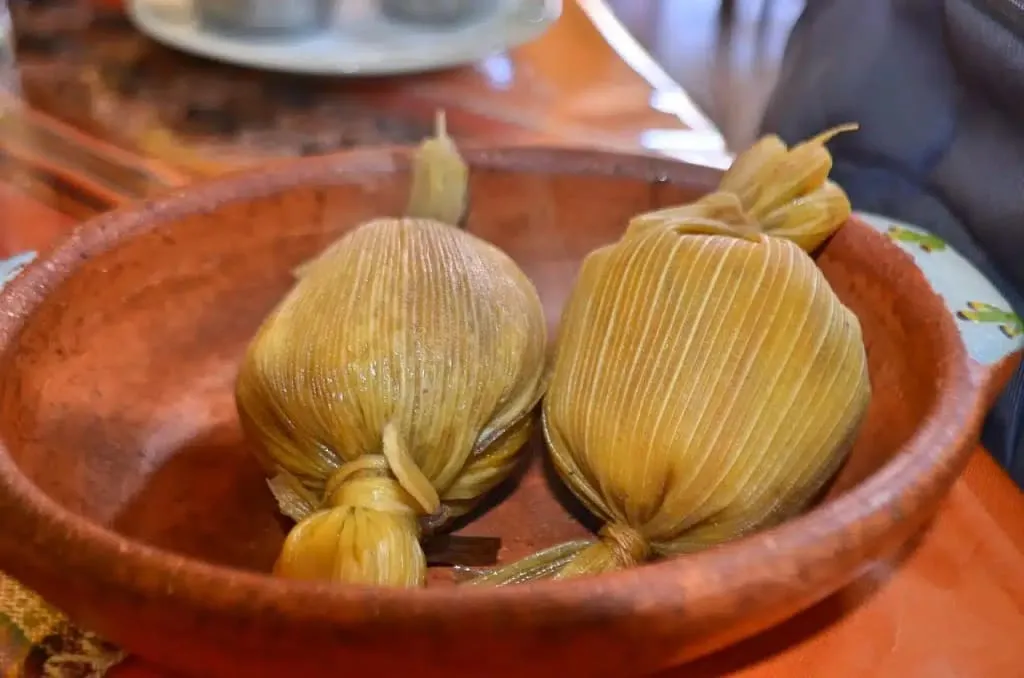
The signature tamale of Chiapas — and one of the oldest dishes in the state. The bola (ball) shape is created by forming the corn dough around a cavity of pork rib stew, a fried Simojovel chile, and optional chicharrón (pork rind), then tying the corn husk at both ends to create the rounded form.
The filling is cooked separately in a broth of tomato, oregano, thyme, cumin, and ancho or guajillo chile. The assembled tamale is steamed for approximately one hour. The result is denser than a standard tamale — the flavors more concentrated.
Origin: Tamales de bola appear in hieroglyphic records at Palenque — corn represented wealth in Mayan cosmology and tamales were ritual offerings to the gods.
Where to eat: Comitán de Domínguez (most traditional); San Cristóbal de las Casas market; street vendors near church plazas before 10 AM.
2. Cochito Horneado (Oven-Baked Pork)
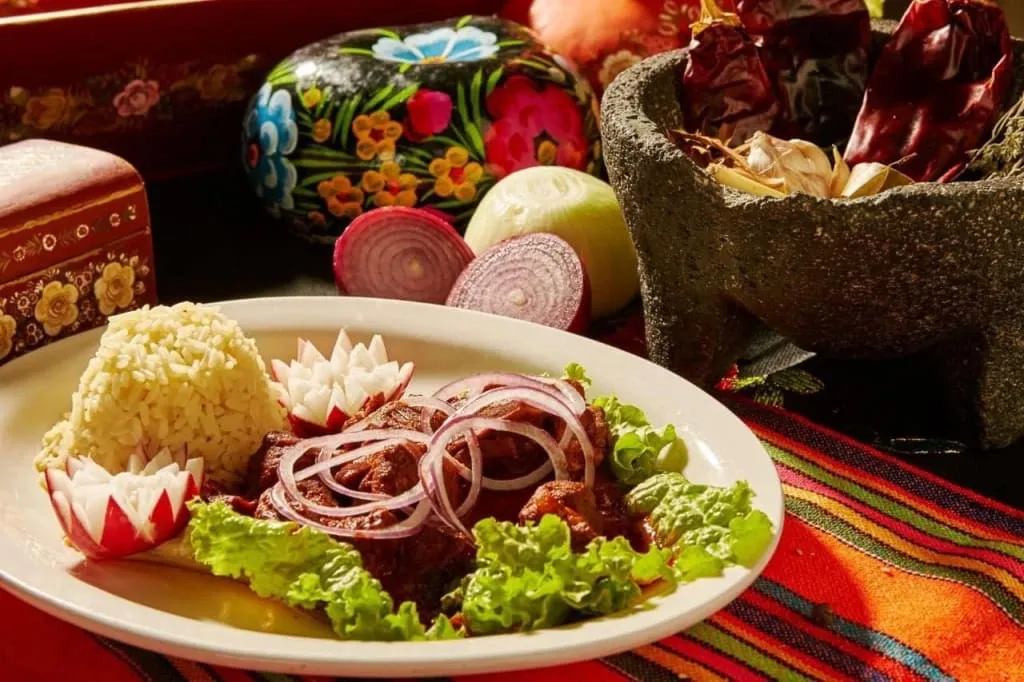
The most iconic meat dish in Chiapas. Young pork (cochito refers to a young pig) is marinated in recado — an ancho chile sauce with tomatoes, aromatic herbs native to Chiapas, and local spices — then slow-roasted in a clay pot or wood-fired oven until falling tender.
Served with the reduced recado as a sauce, plus fresh lettuce, radishes, and raw onion. The combination of deeply savory marinated pork and the fresh crunch of raw vegetables is fundamental to the dish — do not skip the vegetables.
Where to eat: Chiapa de Corzo is the undisputed home of cochito. The Fiesta Grande de Chiapa de Corzo (January 8–23) is when the city’s best cooks compete and cochito is served at every table. The Sumidero Canyon boat tours from Chiapa de Corzo make a perfect combination with cochito for lunch.
3. Pepita con Tasajo (Smoked Beef and Pumpkin Seed Stew)
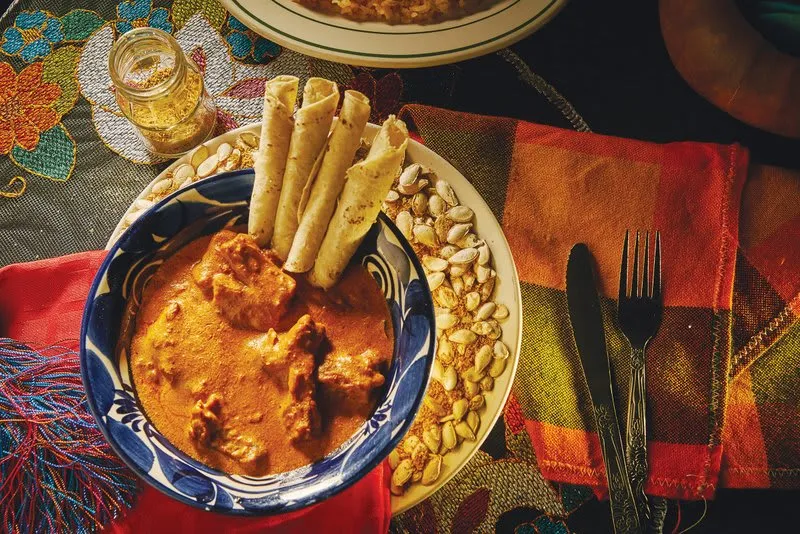
Tasajo is dried, smoked beef cut into thin strips — a preservation technique with deep pre-Hispanic roots across southern Mexico. In Chiapas, it is combined with ground pepita (toasted pumpkin seeds), achiote, tomatoes, onion, lard, and local spices to create a stew that is earthy, rich, and faintly smoky.
The pumpkin seed sauce acts as a thickener and adds a nutty quality that balances the intensity of the smoked meat. This is not an easy dish to find outside Chiapas — if you are in Chiapa de Corzo or Comitán, it is on the menu of most traditional restaurants.
4. Sopa de Pan (Bread Soup)
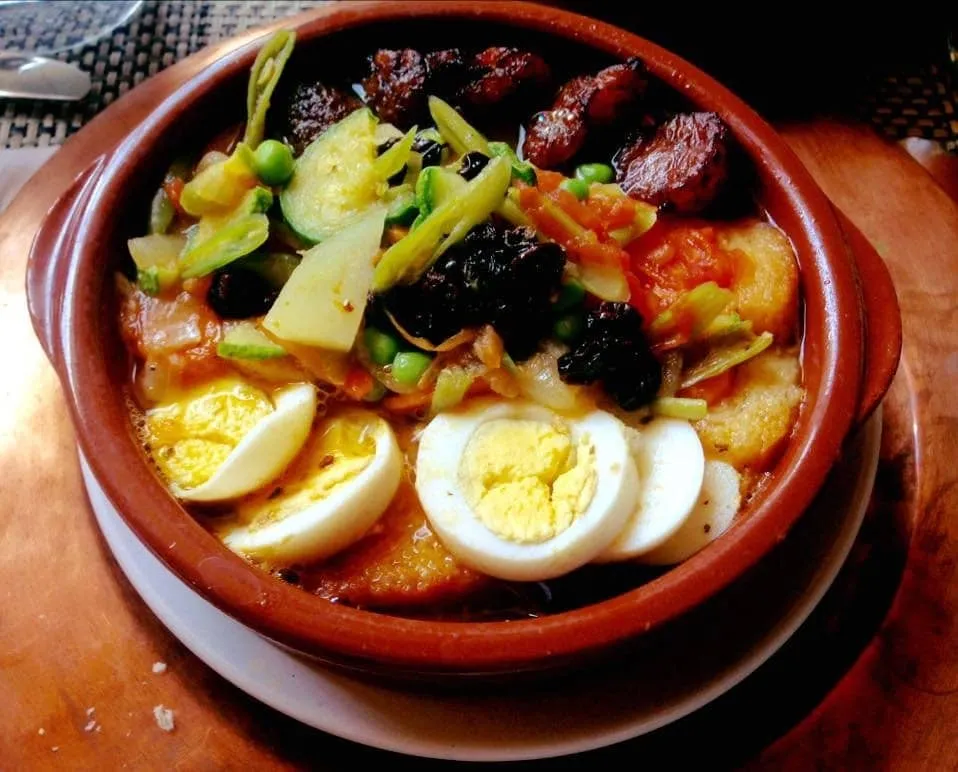
A uniquely Chiapas dish with direct colonial roots. Introduced during the colonial period for religious celebrations, it uses Pan de Coleto (a local bread typical of San Cristóbal), raisins, plantain, green beans, and hard-boiled egg slices in a tomato broth seasoned with dried chiles, saffron, oregano, and thyme. Served hot in a clay pot.
The combination of bread, dried fruit, and vegetable in a savory broth sounds improbable but works because the pan absorbs the broth and becomes a soft, deeply flavorful mass. This is arguably Chiapas’s most unique colonial-era dish.
Where to eat: San Cristóbal de las Casas — several traditional restaurants near the Zócalo. Most commonly seen at Sunday lunches and festivals.
5. Queso de Bola Relleno de Ocosingo (Stuffed Ball Cheese)
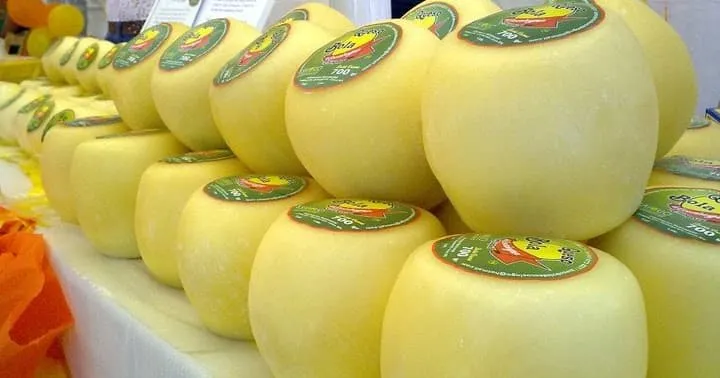
Queso de bola de Ocosingo is Chiapas’s most celebrated artisan cheese — produced in the town of Ocosingo (in the highlands near the Lacandona jungle) and recognized by gourmets across Mexico. The ball shape comes from hand-pressing the fresh curd into a round mold. The texture is semi-soft with a slightly crumbly interior.
The stuffed version (queso relleno) hollows out the cheese and fills it with a cooked ground pork stew of tomatoes, onion, olives, serrano peppers, almonds, and local spices, then bakes the filled cheese au gratin until the exterior browns and the filling melds with the cheese.
Where to eat: Any traditional restaurant in San Cristóbal serves the cheese both plain and stuffed. For the plain cheese, the Ocosingo market or specialty food shops in San Cristóbal carry fresh rounds.
6. Chiapas-Style Mole
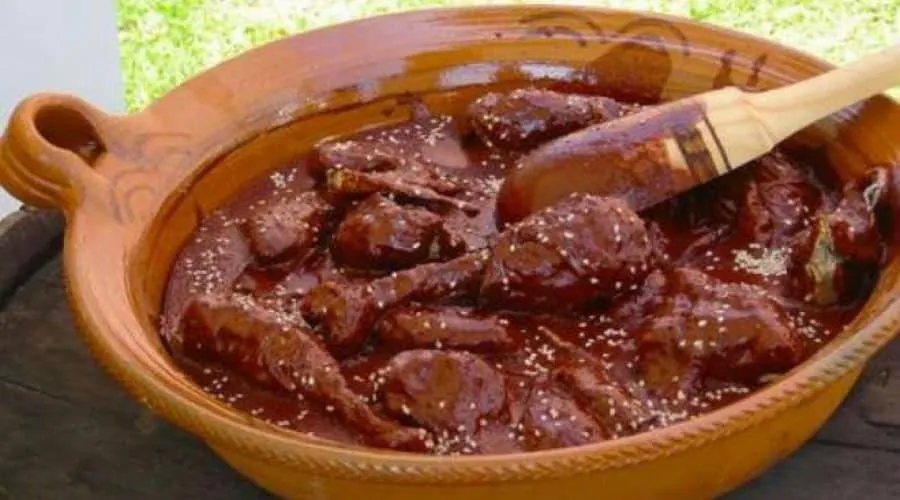
The Chiapas mole is distinct from Oaxaca’s seven moles — less complex, sweeter, and with fried plantain as a defining ingredient. The base includes ancho chile, peanuts, tomato, onion, thyme, prunes, chocolate, white bread crackers, and fried plantain, cooked with turkey or chicken.
The plantain gives the sauce a subtle sweetness that makes it more accessible than Oaxaca’s negro mole for first-time tasters. The chocolate base gives it depth without the bitter intensity of a mole negro.
7. Sopa de Chipilín (Chipilín Herb Soup)
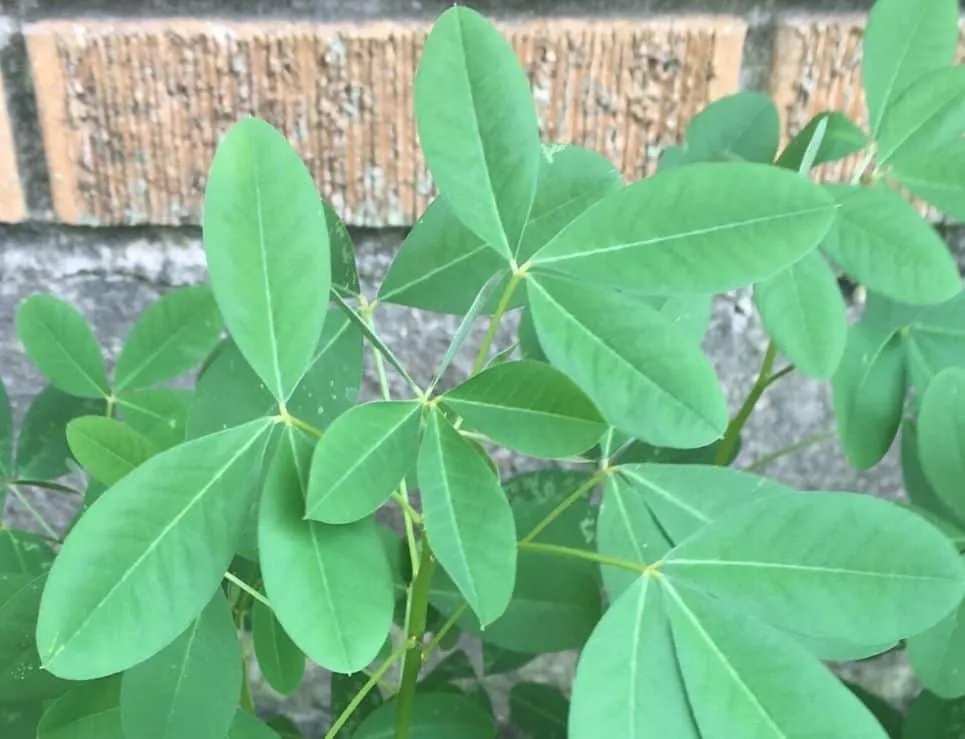
Chipilín (Crotalaria longirostrata) is a legume bush native to Chiapas and Central America whose leaves have a distinctive aromatic flavor — earthy, slightly bitter, and herbal in a way that has no direct equivalent in temperate cuisine. It is used throughout Chiapas as a flavoring herb the way Oaxaca uses epazote.
Sopa de chipilín is a corn kernel broth with chipilín leaves and round masa dumplings stuffed with cheese (bolitas de masa). The combination is simultaneously light and filling — the cheese dumplings absorb the herb-perfumed broth.
Origin: Said to have been created in Chiapa de Corzo. Now ubiquitous across Chiapas; particularly common in Tuxtla Gutiérrez restaurants.
8. Huevos a la Chiapaneca (Chiapas-Style Eggs)
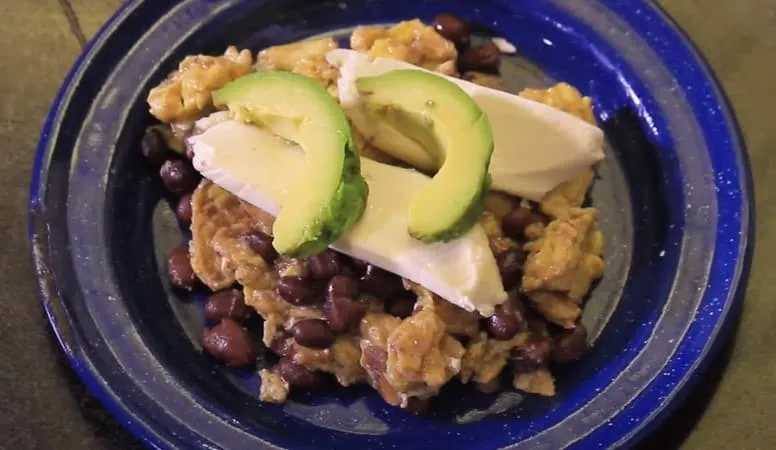
The standard breakfast in most of Chiapas: fried corn tortilla strips (totopos) cooked with eggs and pot beans, then topped with fresh cream, panela cheese, avocado slices, and chopped white onion. Simple, fast, and far more satisfying than the description suggests.
The key is the tortilla strips — they need to be fried until genuinely crispy, not just warmed. When done properly, the combination of crispy tortilla, soft egg, creamy beans, and tangy cheese is one of the best breakfasts in the country.
Where to eat: Everywhere — this is a daily household breakfast across Chiapas. Any market fonda (food stall) serves it for $50–80 MXN with coffee.
9. Caldo de Shuti (Freshwater Snail Broth)
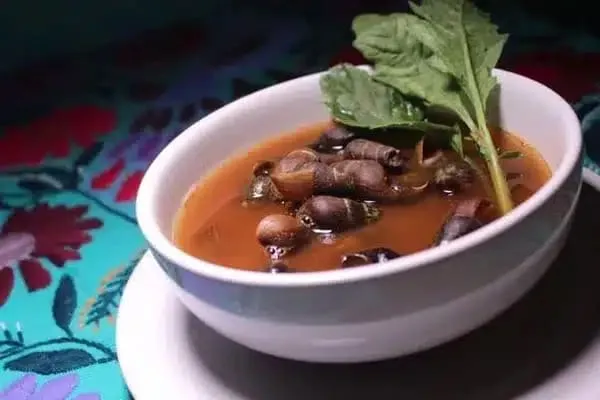
Shuti are small freshwater snails found in the large rivers of Chiapas — the Grijalva, Usumacinta, and their tributaries. They are simmered in a broth of tomato, onion, garlic, and aromatic herbs until tender, then served in the cooking liquid.
The texture is chewy-firm, somewhere between clam and small mussel. The flavor is mild and slightly riverine — the herb broth carries most of the taste. If you eat mussels or clams without hesitation, shuti is worth trying.
Where to eat: Traditional restaurants in Chiapa de Corzo and riverside towns along the Grijalva. Seasonal availability — most common during dry season when rivers are lower.
10. Nucú Ants (Chicatana Ants)
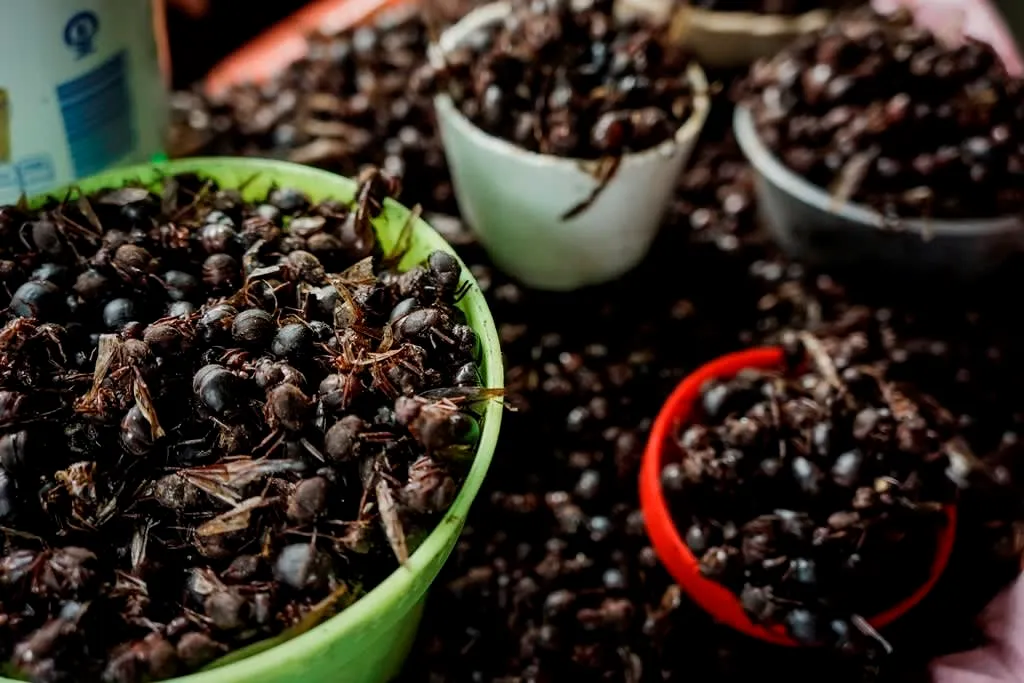
Called nucú in Chiapas and chicatana elsewhere in Mexico, these large winged ants (Atta mexicana) are a genuine delicacy — not an exotic dare. The flavor profile is nutty, chocolatey, and faintly savory, similar to toasted pumpkin seeds with a more complex earthiness.
They are harvested during their single annual flight season in June–July, when the queens and males emerge after the first rains. Nucú vendors appear in markets across Chiapas during these weeks, selling the ants toasted with salt, ground into paste for salsas, or cooked in tamales.
11. Enchiladas Palencanas
Named for the city of Palenque in the lowland jungle of Chiapas. The sauce is built from tomatoes, onion, garlic, dried chiles, plantain, pepita, sesame seeds, and peanuts — more complex than a standard red enchilada sauce and with the characteristic sweetness that the plantain and peanut add.
Fried tortillas are bathed in the sauce and served with Chiapanecan cream cheese and raw onion. The Palenque version is richer and more tropical-tasting than highland Chiapas enchiladas — the lowland climate and ingredients create a distinctly different character.
Where to eat: Palenque town, near the Palenque ruins — most restaurants serving comida típica in the area offer these.
12. Estofado de Pollo Chiapaneco (Chicken Stew)
Chiapas is one of Mexico’s major chicken and turkey producers. The estofado tradition (a stew with Spanish colonial roots — the word comes from Spanish estofar, to braise) appears here in a distinctly Chiapas version with potatoes, carrots, tomatoes, green beans, zucchini, plantains, and chayote, cooked with chicken and local seasoning blends.
The use of chayote and plantain alongside the standard vegetables gives the broth a slightly sweet, tropical depth that distinguishes it from central Mexican chicken stews.
Where to eat: Traditional fondas in Tuxtla Gutiérrez — the state capital’s market halls have some of the best examples.
13. Chimbos (Chiapas Dessert)
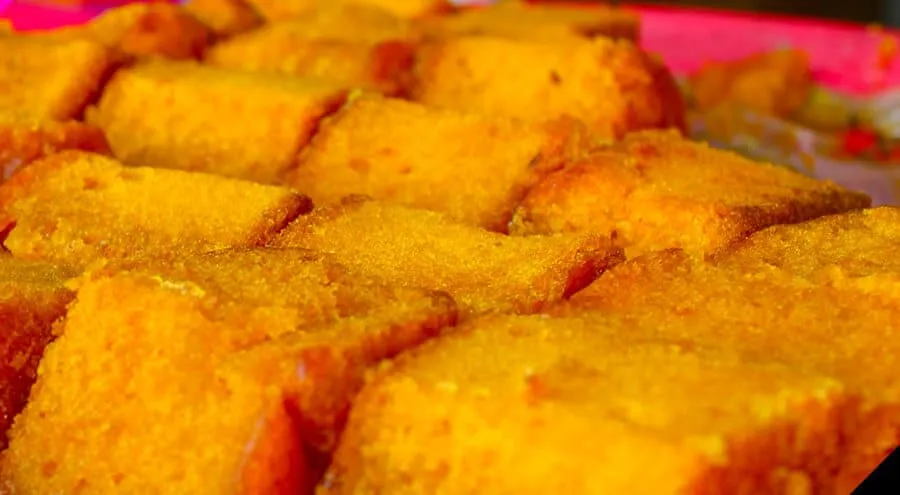
Small buns baked, soaked in beaten egg, fried golden, and drizzled with honey and cinnamon. The process produces a pastry that is simultaneously crispy on the outside, tender inside, and sweet throughout — similar in concept to a French pain perdu (French toast) but denser and more caramelized.
Chimbos are found in restaurants, market stalls, and bakeries throughout Chiapas. They are the most universally eaten sweet in the state — the dessert that appears at the end of a traditional comida lunch.
14. Puerco con Hierba Santa (Pork with Hierba Santa)
Hierba santa (Piper auritum) — holy herb — is a large-leafed plant with an extraordinary anise-like fragrance that appears throughout Oaxacan and Chiapan cooking. In Chiapas, pork braised with hierba santa leaves produces a dish that is both deeply savory and perfumed with the herb’s distinctive licorice note.
This is one of Chiapas’s less-exported dishes — it requires fresh hierba santa, which does not travel — making it among the most authentically local foods you can eat in the state.
15. Chanfaina (Offal Stew)
A traditional colonial-era preparation using pork offal (liver, kidney, lung) in a sauce of tomatoes, dried chiles, vinegar, and herbs. The vinegar-brightened sauce was the colonial solution for preservation before refrigeration. Chanfaina is still served at traditional festivals and Sunday lunches, particularly in the Chiapas Central Valley towns.
Not for the squeamish — but for those who eat tripe and offal elsewhere, chanfaina represents a direct taste of 18th-century Chiapas home cooking.
16. Atole Agrio (Sour Corn Atole)
A fermented corn drink unique to Chiapas — masa (corn dough) is allowed to ferment, then dissolved in water with local sweetener (or served unsweetened, in the most traditional form). The resulting drink is thick, sour, and deeply nourishing.
Atole agrio is the indigenous version of the broader Mexican atole tradition. Where regular atole is sweet and neutral, agrio is challenging — a strong sour-corn flavor that takes adjustment but becomes addictive. It is considered the traditional food of the Tzeltal and Tzotzil communities.
17. Pozol
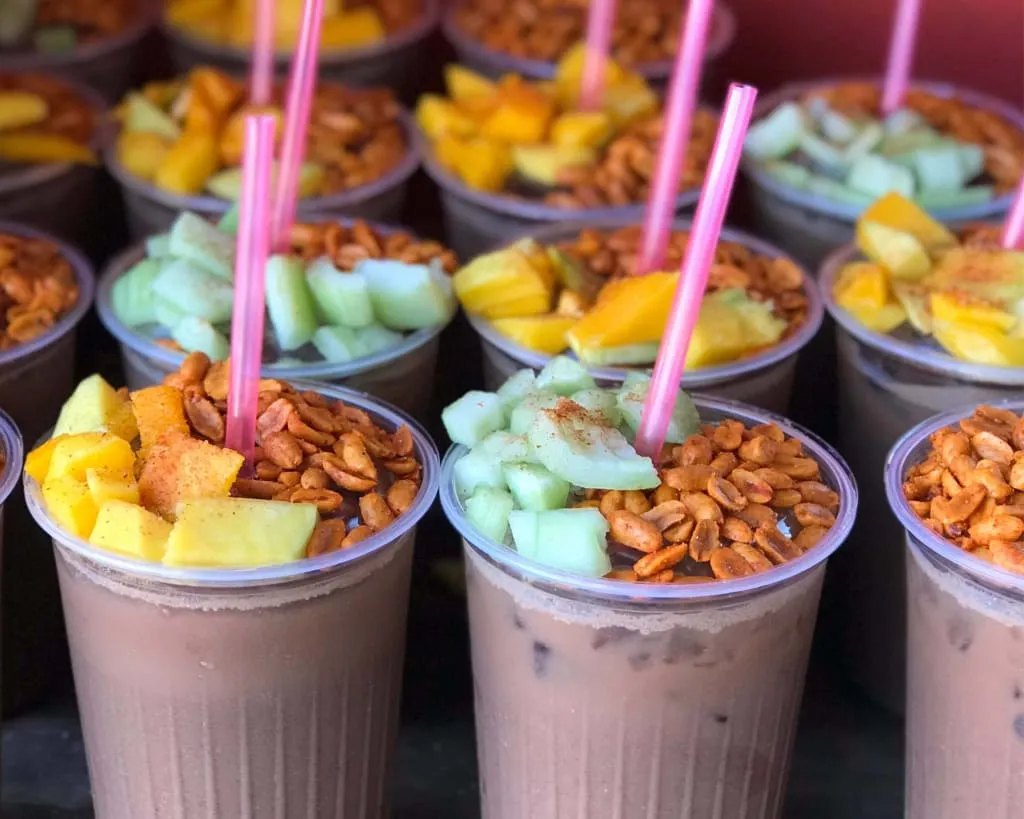
Mexico’s most ancient beverage — ground corn and cacao fermented together, mixed with water and served cold. The Mayan name was pochotl. In Chiapas, the classic pozol is unsweet and sour; the pozol arrecho version is served in a coconut bowl with cucumber, jicama, and seasonal fruit.
For the full story and how to make it, see our Pozol guide.
Best in: Chiapa de Corzo — the town is considered the home of the finest pozol in Chiapas.
18. Tascalate
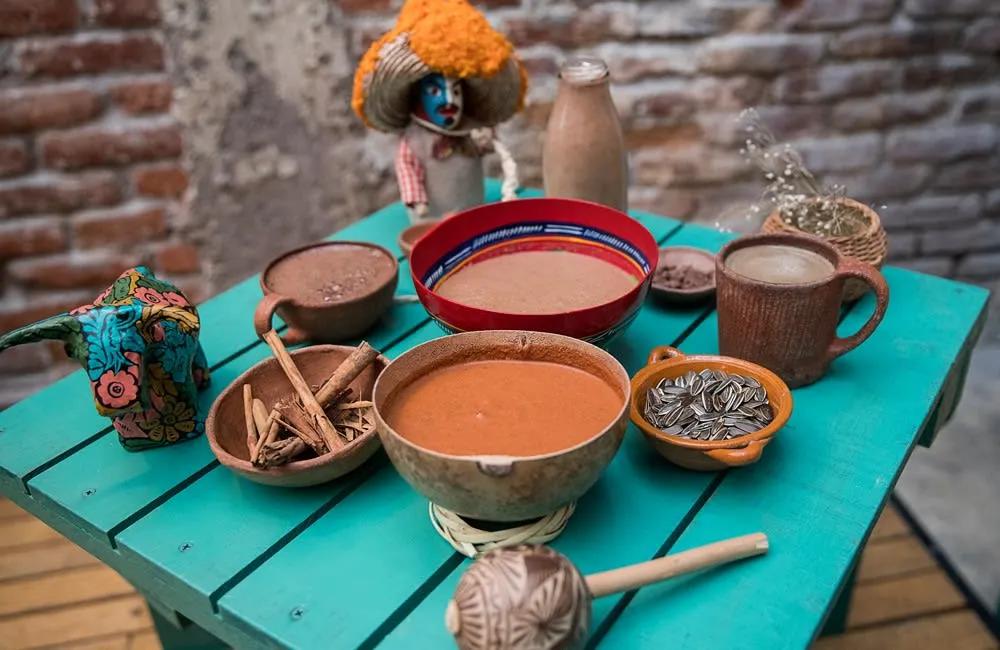
Unlike pozol (which is sour and earthy), tascalate is the sweeter, more approachable pre-Hispanic drink of Chiapas. Ground corn tortilla, cacao, achiote (annatto), and powdered chili are mixed with cold water and sugarcane. The achiote gives it a distinctive reddish color.
Considered sacred by the Tzeltal and served at weddings and religious ceremonies. Our Tascalate guide covers the full preparation method and history.
19. Ninguijute (Tuxtla’s Seed Mole)
Ninguijute is Tuxtla Gutiérrez’s signature dish — a pork mole made with ground pepita (toasted pumpkin seeds), dried chiles, tomatoes, and a complex blend of aromatic spices. Unlike Oaxacan moles which use chocolate and dozens of chile varieties, ninguijute is simpler but more direct in its pumpkin seed flavor.
The ground pepita creates a thick, ochre-colored sauce that coats slow-cooked pork ribs. The texture is denser than other Mexican moles — almost paste-like — with a nutty richness that builds over the meal.
Where to eat: Traditional market fondas in Tuxtla Gutiérrez — the Mercado Dieciséis de Septiembre and Mercado de los Antojitos are the best places. Available daily but most authentic during Tuxtla’s regional festivals in October.
20. Chalupas Coletas (San Cristóbal Style)
Coletas is the nickname for people from San Cristóbal de las Casas — and the chalupas they make are distinct from Puebla-style chalupas or generic tortilla-based snacks. San Cristóbal chalupas use fried corn tortillas spread with refried beans, topped with shredded cooked pork (seasoned with spices and herbs), and finished with grated beet and carrot shavings, crumbled aged Chiapas cheese, and fresh cream.
The combination of savory pork, earthy beans, sweet beet, and tangy cheese on a crispy tortilla is a genuinely distinctive flavor combination you won’t find outside the Chiapas highlands.
Where to eat: Food stalls and fondas in the Mercado Municipal de San Cristóbal, particularly around the covered market halls. A popular mid-morning snack (9 AM–1 PM is peak hours).
21. Chispola (Tuxtla’s Beef Stew)
Chispola is a beef and vegetable stew native to Tuxtla Gutiérrez and the Central Valley towns of Chiapas. Beef chunks are braised with potatoes, chayote, carrots, and a regional chile broth until everything falls tender. Simpler than the highland stews, it’s the everyday working-class lunch dish of the state capital.
The word chispola has no established Spanish etymology — linguists believe it may derive from a Zoque language term, the indigenous group who originally inhabited Tuxtla before Tzotzil migration reshaped the region.
Where to eat: Tuxtla Gutiérrez market fondas and small family restaurants. Almost invisible in San Cristóbal — this is a lowland-Chiapas dish.
22. Pictes (Sweet Corn Tamales)
Pictes are fresh sweet corn tamales — masa made from unripe corn (elote) rather than dried masa, combined with sugar, butter or lard, and sometimes cheese or raisins, then steamed in the fresh corn husk. The result is sweeter and moister than a standard tamale, with a texture closer to a steamed cornbread.
Pictes are strictly seasonal — they appear in markets and street stalls from approximately June through September when fresh corn is available. They are sold as a breakfast or snack food, not a main course.
Where to eat: Any Chiapas market during rainy season (June–September). In San Cristóbal, look for vendors near the church of San Francisco and at the Mercado José Castillo Tielemans.
Seasonal Chiapas Food Calendar
Some traditional Chiapas dishes are tied to seasons, agricultural cycles, or festivals. Plan accordingly:
| Month(s) | Seasonal Food | Why Seasonal |
|---|---|---|
| January | Cochito horneado at its best | Fiesta Grande de Chiapa de Corzo (Jan 8–23) — peak competition season |
| March–April | Sopa de pan (most common) | Holy Week tradition; sopa de pan appears at family Semana Santa meals |
| May–June | First fresh shuti | Dry season begins, rivers lower, snail harvesting peaks |
| June–July | Nucú/chicatana ants | Mating flight triggered by first rains — 1-2 week window only |
| June–Sep | Pictes (sweet corn tamales) | Requires fresh elote corn; unavailable rest of year |
| Sep–Oct | Chiles en nogada (Chiapas version) | Pomegranate season in highland Chiapas; Tuxtla restaurants feature them |
| Oct–Nov | Chiapas honey harvest | Tzeltal and Tzotzil beekeeping cooperatives sell fresh honey |
| Year-round | Cochito, tamales de bola, pozol, tascalate | Daily staples — available in every season |
Best Foods of Chiapas by City
If you are planning meals around your route, this is the fastest way to decide what to order first:
| City | Start with | Why it matters |
|---|---|---|
| San Cristóbal de las Casas | Tamales de bola, sopa de pan, coffee, chalupas coletas | Best all-around base for first-time visitors |
| Chiapa de Corzo | Cochito horneado, pepita con tasajo, pozol | The strongest place for classic traditional dishes |
| Comitán | Tamales de bola, estofado | Strong highland home-cooking tradition |
| Palenque | Enchiladas palencanas, tropical fruit drinks | Better for lowland flavors and ruins-day meals |
| Tuxtla Gutiérrez | Ninguijute, sopa de chipilín, chispola | Best for everyday capital-city cooking |
If your trip is based around the highlands, pair this guide with our day trips from San Cristóbal and Chiapas travel guide so the food stops line up with the rest of your itinerary.
Chiapas Coffee: Mexico’s Finest
The single most important food fact about Chiapas that most visitors don’t know: Chiapas produces more coffee than any other state in Mexico. The state accounts for roughly 40% of national coffee production, and the best lots from the highlands and Soconusco region consistently rank among Mexico’s finest.
The main coffee-growing zones:
| Region | Altitude | Flavor Profile |
|---|---|---|
| Soconusco (coastal) | 600–900m | Bright, floral, light body |
| Los Altos (San Cristóbal area) | 1,200–1,800m | Dark chocolate, dried fruit, medium-full body |
| Sierra Madre | 900–1,400m | Balanced, mild acidity, walnut notes |
In San Cristóbal de las Casas, the independent café scene rivals Mexico City in quality. Several cafes serve single-origin Chiapas beans with pour-over and espresso preparation at prices ($40–80 MXN per cup) far below comparable quality elsewhere.
What to buy: Single-origin washed arabica from Los Altos cooperatives. Look for bags from La Selva, Capeltic, or Mut Vitz cooperatives — all fair-trade, indigenous-owned operations. Avoid generic “Chiapas blend” supermarket packages — the quality difference is significant.
Where to Eat in Chiapas: City by City
| City | Best For | Don’t Miss |
|---|---|---|
| San Cristóbal de las Casas | Full range of Chiapas cuisine; best café scene | Tamales de bola (morning market), queso de bola, sopa de pan, coffee |
| Chiapa de Corzo | Traditional cochito and pozol | Cochito horneado, pepita con tasajo, pozol arrecho |
| Comitán de Domínguez | Tamales de bola (most traditional form) | Tamales de bola, estofado |
| Tuxtla Gutiérrez | Everyday Chiapas food; state capital | Sopa de chipilín, chicken stew, market fondas |
| Palenque | Lowland Chiapas cuisine | Enchiladas palencanas, cochito, fresh jungle fruits |
Best single market: The Mercado Municipal of San Cristóbal de las Casas, especially if you only have one food-focused morning in the state.
If You Only Have One Day to Try Chiapas Food
- Breakfast in San Cristóbal: tamales de bola and coffee.
- Lunch in Chiapa de Corzo: cochito horneado or pepita con tasajo after the canyon boat route.
- Afternoon drink: pozol if you want the most traditional option, tascalate if you prefer something sweeter.
- Dinner back in San Cristóbal or Tuxtla: sopa de pan, ninguijute, or sopa de chipilín.
For full travel planning in the state, our Chiapas travel guide covers logistics, accommodation, and sights. For the city-specific eating guide with restaurant names, market hours, and budget breakdown, start with What to Eat in San Cristóbal de las Casas, then pair it with day trips from San Cristóbal if you want to add Chiapa de Corzo or Palenque. If you want the broader traveler version with budgets and market strategy, read Chiapas food guide next.
What to Bring Home from Chiapas
Coffee — buy direct from cooperative shops in San Cristóbal; 250g bag runs $150–250 MXN
Queso de bola de Ocosingo — vacuum-sealed rounds travel well; buy at the cheese shop near San Cristóbal market
Chocolate from pataxte — the white cacao variety native to Chiapas; available at specialty food stores
Amber products — the Simojovel amber is sold as jewellery and in artisan shops, but amber-flavored regional products (honey, candy) make edible souvenirs
Chiapas honey — multifloral highland honey from Tzeltal communities; available at cooperative shops
Conclusion
Chiapas is not on the standard Mexican food tour on Viator circuit — most travelers think Oaxaca, Yucatán, or Mexico City when they think about regional Mexican cuisine. That gap is the opportunity.
The 22 traditional dishes here are older, less exported, and tied more directly to living indigenous food systems than most celebrated Mexican regional cuisines. Eating in Chiapa de Corzo or the San Cristóbal market puts you in direct contact with Mayan culinary traditions that have continued for over 2,000 years.
Cochito for lunch. Tamales de bola at dawn. Ninguijute for Sunday market meals. Pozol through the afternoon heat. Los Altos coffee at sunrise.
For the full trip — waterfalls, canyons, jungle ruins, and indigenous villages — the Chiapas travel guide and day trips from San Cristóbal cover everything beyond the plate.