Palenque Travel Guide 2026: Ruins, Waterfalls & How to Get There
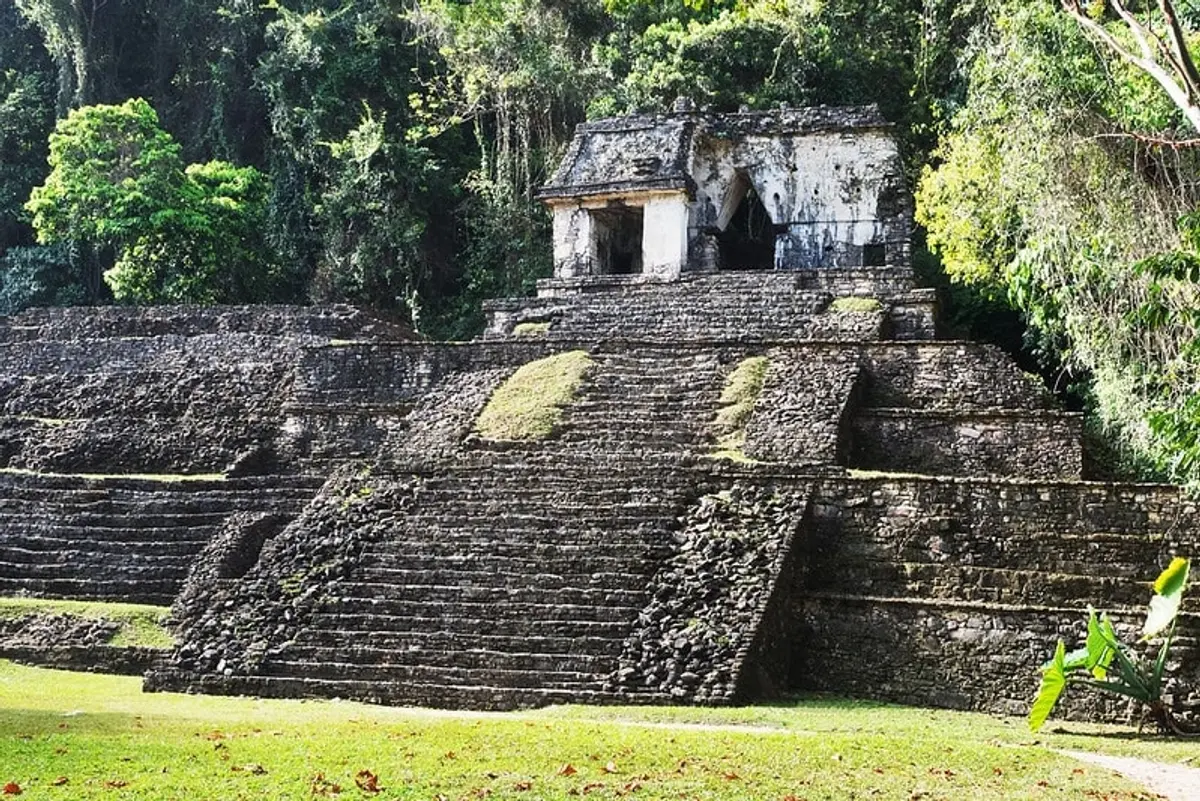
Palenque is a Maya archaeological site in northern Chiapas, Mexico — considered the finest example of Classic-period Maya architecture in the country. The ruins occupy a jungle hillside 150km south of Villahermosa, featuring the iconic Temple of the Inscriptions (site of Pakal the Great’s tomb), El Palacio with its astronomical tower, and the Cross Group temples. Unlike Chichen Itza’s open plazas, Palenque is intimate and jungle-framed, with howler monkeys audible from the ruins every morning.
The surrounding area adds Misol-Há (a 30m waterfall swimmable year-round) and Agua Azul (cascading turquoise pools, November-April best) within easy day-trip range.
| Quick Facts | Details |
|---|---|
| Location | Palenque municipality, Chiapas |
| Distance from San Cristóbal | 220km (4-5 hrs bus) |
| Distance from Villahermosa | 144km (2.5-3 hrs) |
| Entry fee (ruins) | |
| Opening hours | 8AM–5PM daily |
| Temperature | 27°C average year-round; hot & humid |
| Best months | November–April (dry, turquoise Agua Azul) |
| Safety | Chiapas Level 3 (exercise increased caution) — Palenque town itself is safe for tourists; the risk is not in this area |
Getting to Palenque
From San Cristóbal de las Casas (most common route)
This is the classic backpacker circuit: San Cristóbal → Palenque → Yucatán.
- OCC bus: Daily departures from San Cristóbal’s main bus station. Journey: 4-5 hours, 220-320 MXN. Comfortable first-class coaches with A/C. Book a morning departure to arrive early enough for the ruins.
- AEXA colectivo: Shared vans from San Cristóbal. Faster (3.5-4 hrs) but less comfortable. Depart when full, roughly 180-250 MXN.
- Organized tour: Many operators in San Cristóbal offer Palenque + waterfalls (Misol-Há + Agua Azul) combo tours for 600-900 MXN/person all-inclusive.
Bloqueo warning: The CNTE teachers’ union occasionally blockades Highway 199 between San Cristóbal and Palenque (near Ocosingo). Check local conditions before traveling independently. This rarely affects organized tours which have alternate routing knowledge.
From Villahermosa, Tabasco
Villahermosa is the nearest major city — good if you’re flying in.
- ADO bus: Multiple daily departures, 2.5-3 hours, 180-280 MXN
- Car: Highway 199 south, straightforward drive
From Mexico City
No direct option makes sense — it’s 900km+ away.
- Best: Fly to Palenque’s small airport (PQM, limited connections) or to Villahermosa (VSA), then bus
- ADO bus from CDMX: Exists (12-14 hrs, 750-1,200 MXN overnight) — only viable if you have time
From Cancun
Cancun is 850km from Palenque — a long haul. Two practical options:
- Fly CUN → Villahermosa (VSA): ~1 hour, 600–2,500 MXN. Then ADO bus VSA → Palenque: 2–2.5 hours, 200–280 MXN. Total: 5–6 hours door-to-door.
- Overnight ADO bus: 11–13 hours via Villahermosa, 550–900 MXN. Budget option but a long ride.
See our full Cancun to Palenque guide for flight prices, bus schedules, rental car route, and the Agua Azul timing truth.
From Campeche or Mérida
Traveling the “Maya Circuit” east-to-west:
- ADO from Campeche: ~5-6 hours, 350-500 MXN
- Car rental: Scenic route via Highway 186 and 199
Palenque Archaeological Zone
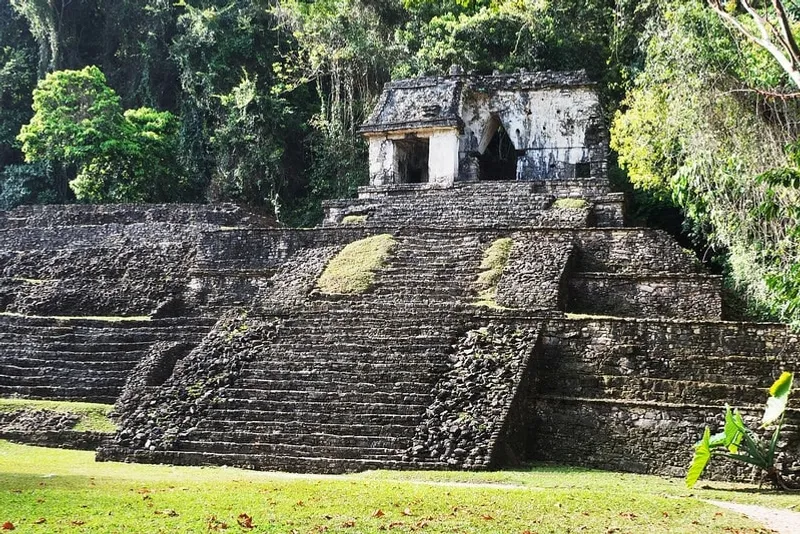
The archaeological zone opens at 8AM — arrive at opening to have the site nearly to yourself before tour groups from San Cristóbal arrive around 10AM. The ruins are fully exposed to the sun; bring a hat, water, and sunscreen. The jungle surrounding the site means humidity is constant.
Entry: ~100 MXN foreigners / free Sundays for Mexican nationals. Museum: ~50 MXN separate.
The Temple of the Inscriptions — Pakal’s Tomb
The centerpiece of Palenque. This 23-meter pyramid (8 levels + a temple) was built by Pakal the Great and finished by his son in the late 7th century. It’s named for three stone tablets containing 617 hieroglyphs — among the longest Maya inscriptions ever found.
In 1949, Mexican archaeologist Alberto Ruz Lhuillier discovered a hidden staircase inside the pyramid leading to Pakal’s tomb — a royal burial chamber 8 meters below ground level. Pakal had ruled Palenque for 68 years (615-683 AD), beginning his reign at age 12. His jade mosaic death mask is now in the National Museum of Anthropology in Mexico City.
Climbing: Prohibited since conservation efforts began. You view the exterior from below.
El Palacio — The Palace
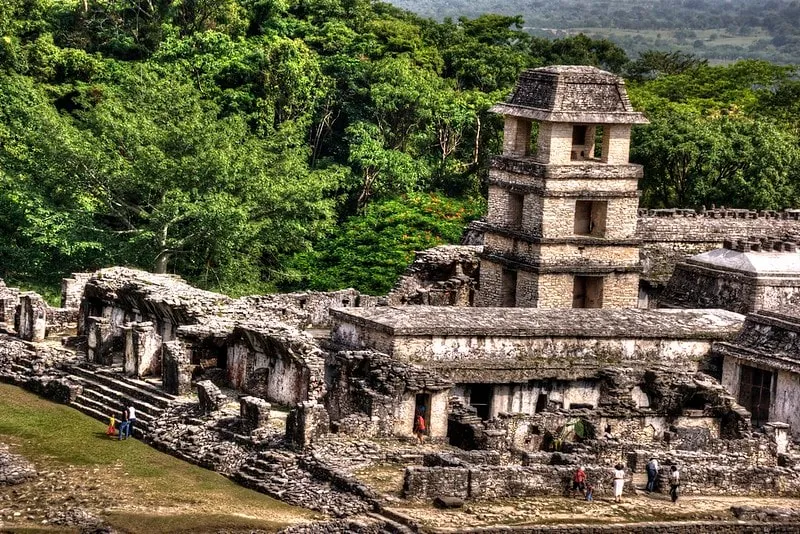
The Palace occupies half a hectare (86m × 59m) and was the administrative heart of Classic Palenque. Most striking is its four-story tower — unique in Maya architecture, likely used for astronomical observation or defensive surveillance.
The Palace spans multiple courtyards, galleries, and subterranean chambers. You can walk through much of it at ground level. Look for the T-shaped windows (the T symbol represents ik, wind/breath, and is uniquely Palenque) and the elaborate stucco reliefs on the pillars.
The Cross Group (Conjunto de las Cruces)
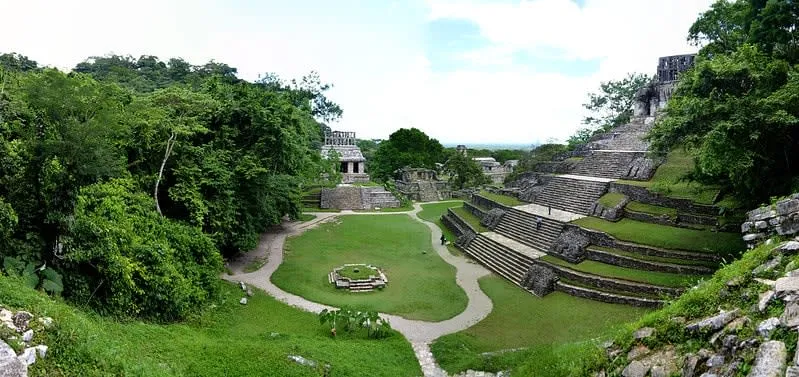
Three temples — the Temple of the Cross, Temple of the Foliated Cross, and Temple of the Sun — built by Chan Bahlum II after the death of his father Pakal. Despite the “Cross” name, the central tablet depicts the Maya World Tree (the tree of creation), not a Christian cross. The central panel from the Temple of the Cross was removed in the 19th century and is now in the National Museum of Anthropology.
The Aqueduct
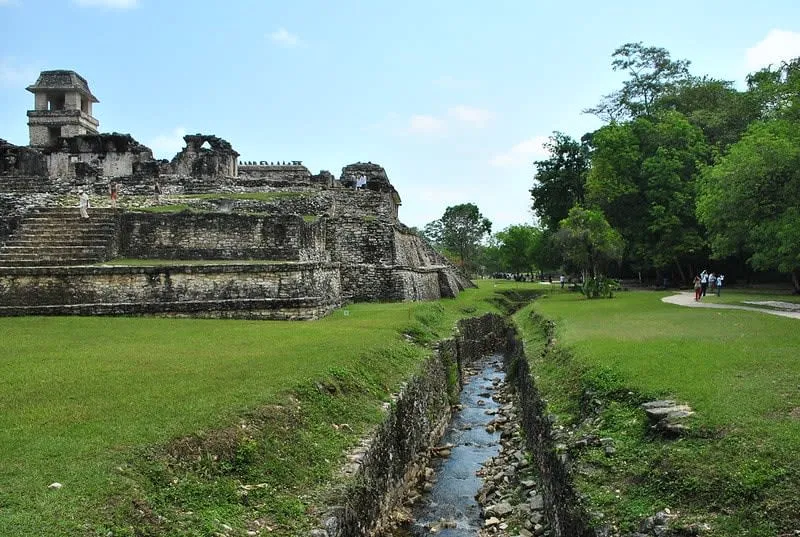
Palenque’s engineers channeled the Otulum River through a 3-meter-deep stone aqueduct beneath the main plaza. The hydraulic system also included a complex network under Pakal’s tomb — which researchers believe was intentional: a 2016 INAH study found the underground water connected to inscriptions on Pakal’s sarcophagus about entering the underworld through water.
Other Structures Worth Finding
- Temple of the Count — Named for French explorer Jean-Frédéric Waldeck, who called himself a Count and lived here in the 1820s. Steep access staircase.
- Temple of the Lion — Original relief (destroyed) depicted a king on a two-headed jaguar throne
- Ball Court — Smaller than other Maya sites, but still functional for understanding the game’s role
- Jungle trail temples — North Group and other outlying structures; bring mosquito repellent
Alberto Ruz Lhuillier Site Museum
Located at the entrance to the archaeological zone. Houses ceramics, funeral ornaments, sacrificial tablets, Pakal’s jade death mask replica (original in Mexico City), and the “Red Queen” mask (Ahpo-Hel, believed to be Pakal’s wife). Separate ticket (~50 MXN). Worth 45 minutes.
The Waterfalls Circuit (Day Trip from Palenque)
Misol-Há Waterfall (20km from Palenque)
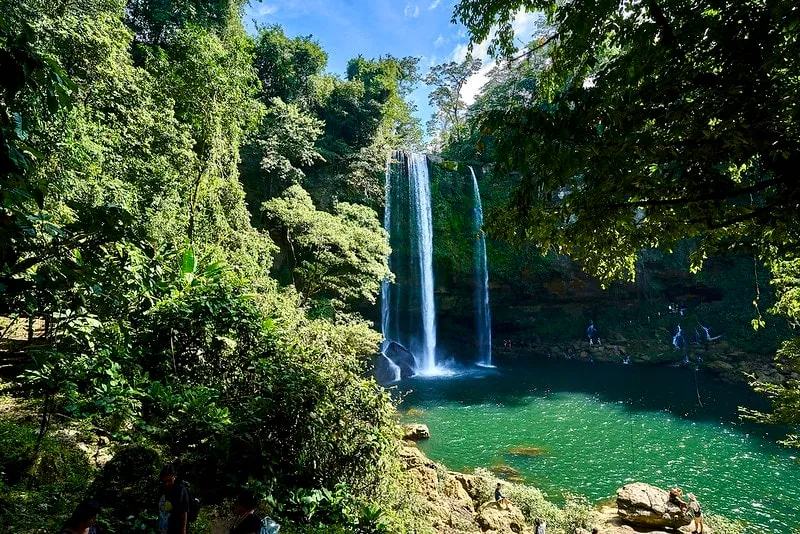
A 30-meter single-drop waterfall into a circular pool where swimming is allowed (with precautions for currents). The site is managed by a Chol indigenous community that also offers eco-lodging cabins — you can stay overnight for an atmospheric jungle experience.
Filming note: Misol-Há was one of the locations for Predator (1987, Arnold Schwarzenegger) and Apocalypto (2006, Mel Gibson). Both were filmed partially in Chiapas.
Entry: ~50 MXN. Open daily.
Agua Azul Waterfalls (63km from Palenque)
The cascading turquoise pools that dominate every Chiapas Instagram account. The color comes from calcium carbonate dissolved in the water — the same mineral chemistry as Bacalar and Hierve el Agua.
Critical seasonal note: The famous turquoise color only appears November through April during dry season. During the rainy season (June-October), the water carries suspended sediment and turns brown. Most guides skip this fact entirely.
Entry: ~80 MXN. Swimming allowed in designated zones (check for warnings — drownings have occurred in stronger current areas). The main waterfall area is managed by a community collective.
Combination route: Misol-Há (stop 1, 30 min) + Agua Azul (stop 2, 2-3 hrs) + Palenque ruins (stop 3) is a common organized tour sequence. Individual taxis from Palenque charge ~600-800 MXN round-trip for both. Colectivos from Palenque’s bus terminal run to Agua Azul (~50 MXN one-way).
Further Afield: Remote Maya Sites
Bonampak Archaeological Zone
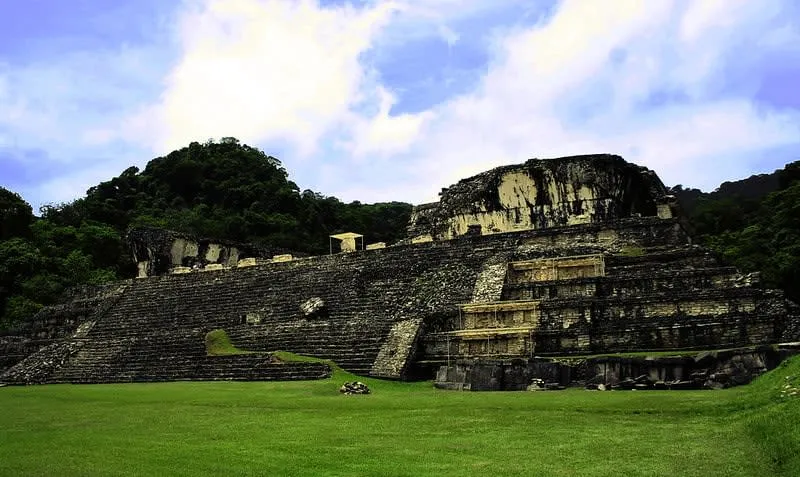
150km southeast of Palenque, in the Lacandon jungle near the Guatemala border. The site’s draw is unique in the Maya world: three rooms of floor-to-ceiling polychrome mural paintings from the 8th century, depicting battle scenes, musicians, dancers, and prisoner sacrifice in extraordinary detail. Most Maya painting has deteriorated — Bonampak’s murals survive because the rooms were filled with calcareous water that sealed and preserved them.
Logistics: Remote — requires a full day from Palenque (organized tour or rental car + hired guide). Access is via the Lacandon community of Lacanjá Chansayab. Entry: ~100 MXN.
Yaxchilán Archaeological Zone
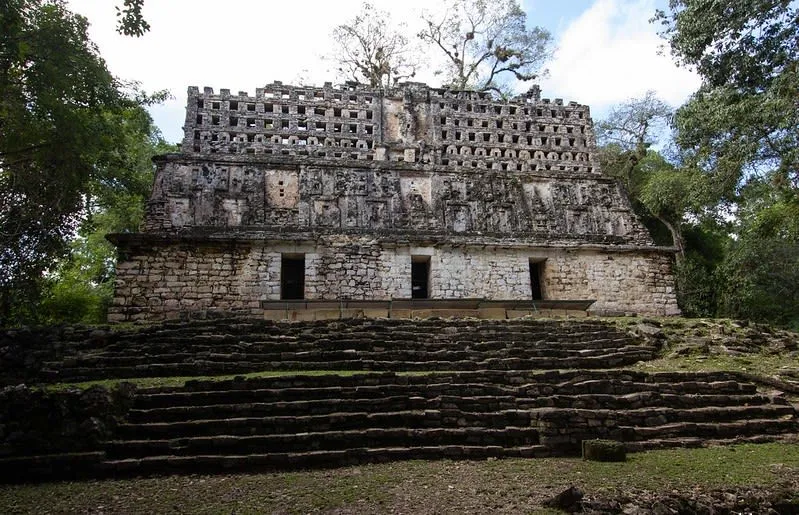
164km southeast, on the Guatemalan bank of the Usumacinta River. Access requires a boat crossing — organized tours typically combine Bonampak and Yaxchilán in a 2-day trip. The site is famous for its carved lintels above doorways, which provide detailed dynastic history for the ancient city. The surrounding jungle means spider monkeys, howler monkeys, and toucans are regular sightings.
Toniná Archaeological Zone (113km, near Ocosingo)
Toniná defeated and captured Palenque’s king Kan Xul II in 711 AD — making it Palenque’s historical nemesis. The site features a 70-meter artificial mountain across 7 platforms. Key structures: Palace of the Underworld (3rd platform), the Mural of the Four Suns (6th platform — allegory of four cosmic ages), and the Temple of the Smoking Mirror (the highest temple in Mesoamerica).
Less visited than Palenque, Toniná offers the rare combination of significant ruins without crowds. A reasonable day trip by car or colectivo from Palenque.
Food in Palenque
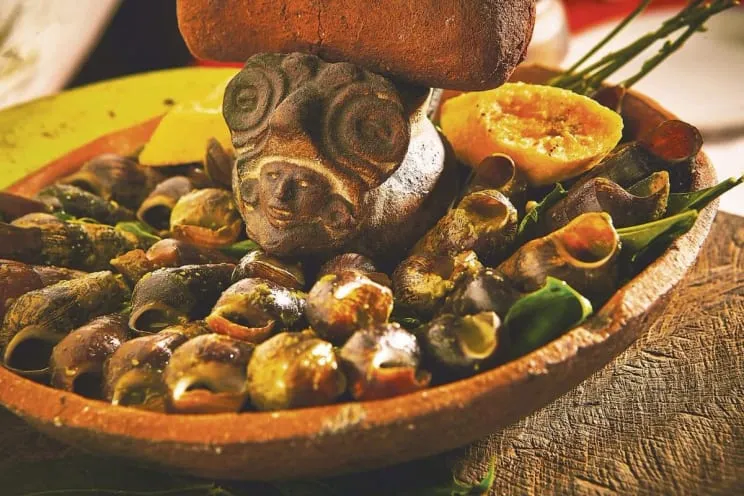
Palenque’s food reflects its Chol and Tzeltal indigenous heritage and its lowland jungle environment — distinct from the highland Chiapas cuisine of San Cristóbal.
| Dish | What It Is | Where to Find |
|---|---|---|
| Shote con momo | River snails with corn dough and hierba santa leaves | Bajlum Restaurant (best option) |
| Pato en chilmol | Duck in tomato-chile sauce (wild duck traditionally, now farm duck/chicken) | Bajlum Restaurant |
| Salpicón de venado | Shredded deer meat salad with citrus | Local restaurants near market |
| Pejelagarto | Prehistoric freshwater fish (alligator gar) — prized in Tabasco/Chiapas borderland | Market stalls |
| Chiapas tamales | Larger, banana-leaf-wrapped, with chile sauce | Market stalls, everyday |
| Tascalate | Ancient drink: chocolate, corn dough, achiote, pine nuts | Street vendors |
| Pozol | Fermented corn and cacao drink, served cold | Street vendors, markets |
Bajlum Restaurant is the landmark for pre-Hispanic cuisine in Palenque — exotic meats, deep cultural dishes, reservation required a few days in advance.
Budget options: The central market area has cheap comida corrida (set meals 60-100 MXN) with reliable traditional food.
Where to Stay in Palenque
| Budget | Options | Price Range |
|---|---|---|
| Budget | Hostel El Panchán (in the jungle near ruins), Hostel La Cañada | 200-400 MXN/person |
| Mid-range | Hotel Chablis Palenque, Hotel Maya Tulipanes, Maya Canada | 700-1,500 MXN/night |
| Upscale | Hotel Quinta Chanabnal (2km from ruins, jungle grounds with pools), Chan-Kah Resort Village | 1,500-3,000 MXN/night |
Zone tip: Staying near the ruins (El Panchán area) vs. Palenque town means a short walk or mototaxi to the site instead of 8km by taxi/bus. The ruins zone has jungle lodges with more character; Palenque town has more restaurant options.
Best Time to Visit Palenque
| Month | Ruins | Agua Azul | Crowds | Price |
|---|---|---|---|---|
| Nov–Feb | ✅ Excellent (cool-ish) | ✅ Turquoise | Low-Medium | Low |
| Mar–May | ✅ Good (getting hot) | ✅ Turquoise | Medium | Medium |
| Jun–Oct | 🌧️ Rainy (still open) | ❌ Brown water | Low | Lowest |
| Dec holiday | ✅ Excellent | ✅ Turquoise | High | High |
Bottom line: November to February is ideal — cooler temperatures (still 25-28°C), turquoise Agua Azul, and lower prices. March-May is still good for the waterfalls but increasingly hot. Rainy season ruins aren’t bad (it rains afternoons not mornings), but Agua Azul loses its defining feature.
Palenque Crafts & Souvenirs
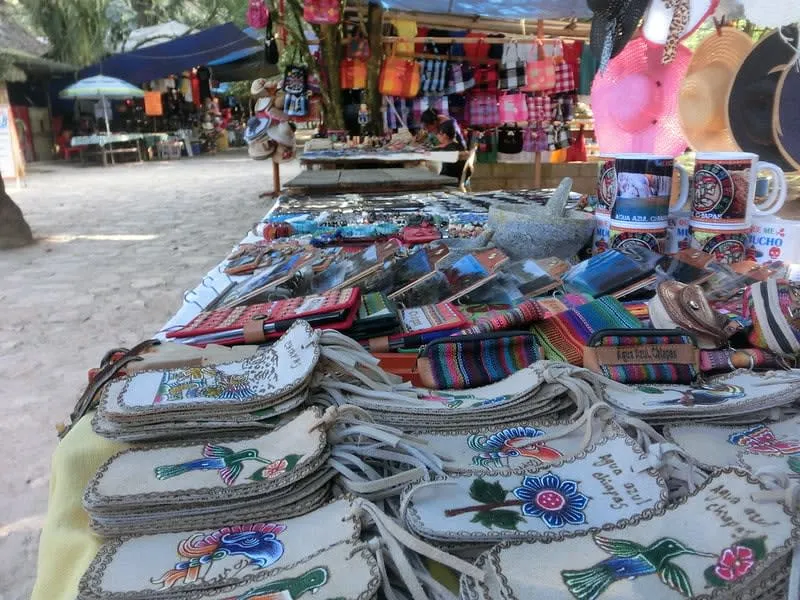
Palenque’s artisans — primarily Chol, Tzeltal, and Lacandon — produce:
- Amber — Chiapas amber (resin, not stone; can be thousands of years old) is sold throughout the market. Genuine amber feels warm, floats in salt water; plastic fakes feel cold and sink
- Dream catchers — Using local bird feathers (the traditional Lacandon version)
- Embroidered clothing — Regional costumes with jungle motifs
- Wood carvings — Often depicting Pakal’s sarcophagus lid and other Maya iconography
- Ceramics and pyrography on leather
The market near the central plaza has the best concentration of vendors. Prices are lower than in San Cristóbal for the same quality.
Palenque Budget Guide
| Style | Daily Cost | What You Get |
|---|---|---|
| Budget | $30-50 USD | Hostel, market meals, ruins + museum, colectivos |
| Mid-range | $60-100 USD | Mid hotel, restaurant meals, tour to waterfalls |
| Comfortable | $100-160 USD | Jungle lodge, guided ruins tour, Bonampak day trip |
Entrance fees summary:
- Ruins:
100 MXN ($5 USD) - Museum: ~50 MXN additional
- Misol-Há: ~50 MXN
- Agua Azul: ~80 MXN
- Total waterfalls circuit: ~350-400 MXN including transport colectivos
For travel insurance, Choose travel insurance with emergency medical and evacuation coverage for remote Chiapas travel.
Palenque Festivals
Santo Domingo de Guzmán fair (first 10 days of August) — Palenque’s patron saint festival, with traditional indigenous dances, marimba music (the double-keyboard modern marimba was invented in Chiapas in 1892 by Corazón de Jesús Borras Moreno), local food, and community celebrations.
Semana Santa (March/April) and Day of the Dead (November 1-2) are observed with local traditions, though smaller in scale than in highland Chiapas towns like Zinacantán or San Juan Chamula.
Palenque in the Chiapas Route
Most travelers combine Palenque with:
- San Cristóbal de las Casas (220km south) — Complete San Cristóbal guide
- Sumidero Canyon day trip from San Cristóbal — Day trips from San Cristóbal
- 7 Days in Chiapas — Full Chiapas itinerary guide
From Palenque, travelers typically continue east toward Campeche and the Yucatán (4-5 hrs by bus on Highway 186, passing the Calakmul Biosphere Reserve).
Getting there from San Cristóbal: See the Oaxaca to San Cristóbal route guide for the popular backpacker circuit connecting these Chiapas highlights. For tours departing San Cristóbal: Book Palenque day tours on Viator.
Palenque is part of our Chiapas travel guide and 7 Days in Chiapas itinerary. For the best Chiapas circuit, combine with San Cristóbal de las Casas, Cañón del Sumidero, and the Yucatán route east.
For a full breakdown of all activities — ruins, waterfalls, remote jungle sites, and where to eat — see our Things to Do in Palenque guide. For excursions beyond the ruins — Agua Azul (turquoise dry season only), Yaxchilán by river, Bonampak’s murals, and Toniná’s climbable pyramid — see our Day Trips from Palenque guide. Coming from San Cristóbal? See our San Cristóbal to Palenque transport guide for shuttle options, bloqueo warnings, and the waterfall stops. Heading to Mérida next? See our Palenque to Mérida guide for the overnight bus, the Campeche stopover option, and Semana Santa booking warnings.