20 Best Things to Do in Palenque + 2-Day Plan
The 20 best things to do in Palenque start with the Maya ruins at 8 AM, then stretch to jungle trails, Misol-Há, Agua Azul, Yaxchilán, Bonampak, and local Chiapas food. This guide ranks the essential stops, explains when Agua Azul is actually blue, and turns them into a practical 2-day itinerary—with a third-day option for the remote ruins.
Palenque in 30 Seconds
| Planning Question | Best Answer |
|---|---|
| Must-do activity | Palenque ruins at 8 AM |
| Best waterfall pairing | Misol-Há + Agua Azul in dry season |
| Best remote ruins | Yaxchilán if you want the river trip; Bonampak if murals matter more |
| Ideal trip length | 2 days for ruins + waterfalls; 3 days if adding Yaxchilán or Bonampak |
| Biggest mistake | Treating Agua Azul as equally blue year-round |
Activity Overview
| # | Activity | Distance | Time Needed | Best For |
|---|---|---|---|---|
| 1 | Palenque Archaeological Zone | In town | 3-5 hrs | Everyone |
| 2 | Temple of the Inscriptions | Inside ruins | 30 min | History |
| 3 | El Palacio (The Palace) | Inside ruins | 45 min | Architecture |
| 4 | Cross Group Temples | Inside ruins | 30 min | Photography |
| 5 | Maya Aqueduct | Inside ruins | 15 min | Unique structures |
| 6 | Site Museum (Alberto Ruz Lhuillier) | Inside ruins | 45 min | Culture |
| 7 | Jungle Trails (outlying groups) | Inside ruins | 1 hr | Adventure |
| 8 | Misol-Há Waterfall | 20km / 30 min | 1.5-2 hrs | Swimming |
| 9 | Agua Azul Waterfalls | 63km / 1 hr | 2-3 hrs | Scenery (Nov-Apr) |
| 10 | Roberto Barrios Waterfalls | 74km / 1.5 hrs | 2 hrs | Quiet waterfall |
| 11 | Yaxchilán Ruins | 145km / 3 hrs | Full day | Ruins & river |
| 12 | Bonampak Murals | 183km / 4 hrs | Full day | Art & history |
| 13 | Toniná Ruins (Ocosingo) | 113km / 2 hrs | Full day | Alternative ruins |
| 14 | Lacanjá Chansayab | 160km / 3 hrs | Full day | Lacandon Maya village |
| 15 | Palenque Town Artisan Market | In town | 1 hr | Shopping |
| 16 | Local Food: Shote con Momo | In town | 1 meal | Gastronomy |
| 17 | Pejelagarto (Alligator Gar fish) | In town | 1 meal | Gastronomy |
| 18 | Howler Monkey Spotting | Inside ruins | At 8 AM | Wildlife |
| 19 | Sunset at Palenque Ruins | Inside ruins | 1 hr | Photography |
| 20 | Archaeological Sunset & Night Sky | Outskirts | Evening | Stargazing |
Inside the Archaeological Zone
1. Palenque Ruins at 8 AM — The Non-Negotiable Timing Rule
The Palenque archaeological zone opens at 8:00 AM. This timing matters more here than at almost any other Mexico site.
By 10 AM, organized tour vans from San Cristóbal de las Casas (220km, 4-5 hours) start arriving. By 11 AM, Villahermosa day-trippers (144km, 2.5 hours) add to the flow. By noon it’s hot, humid, and crowded.
Arrive at 8 AM and you have:
- Morning light on the temples (dramatic side-lighting photographers pay for)
- Howler monkeys calling from the jungle canopy — genuinely startling and unforgettable
- The Temple of the Inscriptions to yourself for the first 45 minutes
- Temperatures still under 28°C instead of the 34°C+ midday heat
Entry: ~100 MXN INAH fee + ~50 MXN state fee = 150 MXN ($7-9 USD) combined. The site museum is included in the entry price (no separate ticket required — the old “separate ticket” info is outdated).
Tip: Hire one of the on-site licensed guides at the entrance (250-400 MXN/hour). The interpretive panels in English are sparse; a guide unlocks 10x the context.
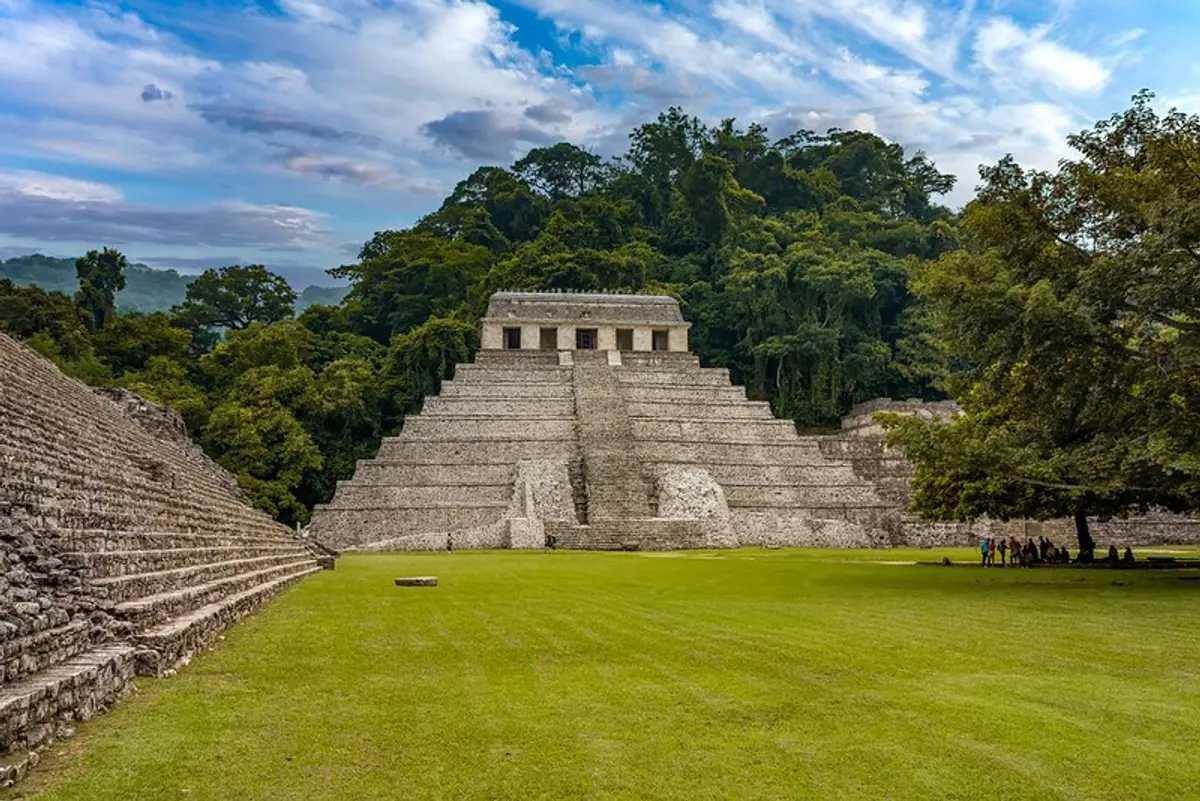
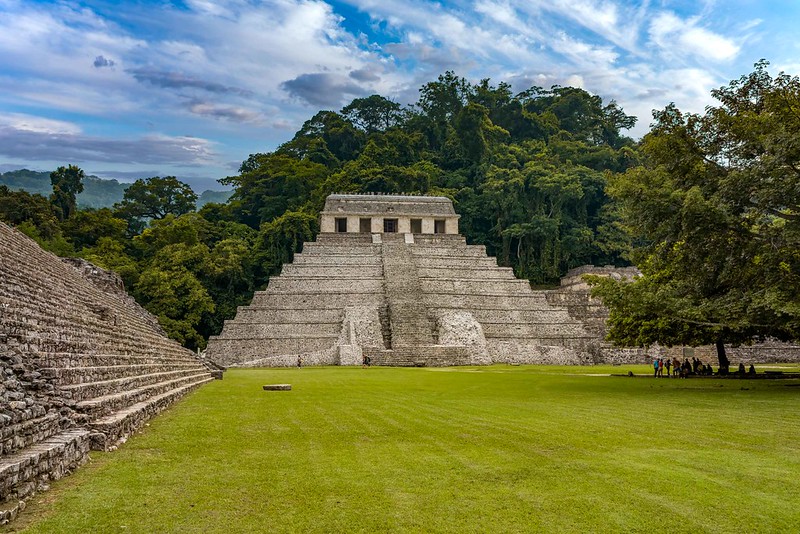
2. Temple of the Inscriptions — Pakal’s Tomb
Mexico’s most significant archaeological discovery sits at the foot of this nine-tiered pyramid. In 1952, archaeologist Alberto Ruz Lhuillier noticed a stone slab with small holes in the Temple’s floor. After four years of excavation, he found the sealed tomb of Pakal the Great — a Maya king who ruled Palenque from AD 615 to 683, living to approximately 80 years.
The tomb contained Pakal’s body covered in 1,000+ jade pieces, including a jade death mask considered one of the finest pre-Columbian works of art in existence. The sarcophagus lid — now famous worldwide — depicts Pakal at the moment of death descending into Xibalba (the Maya underworld).
What to see now: You cannot climb the pyramid or see the tomb (both closed since 2004 for preservation). The sarcophagus lid is in Mexico City’s National Anthropology Museum. However, the stucco reliefs on the Temple exterior, the Maya hieroglyphs on the three interior panels, and the scale of the pyramid itself remain powerful. The informational boards at the base have solid English translations.
3. El Palacio (The Palace)
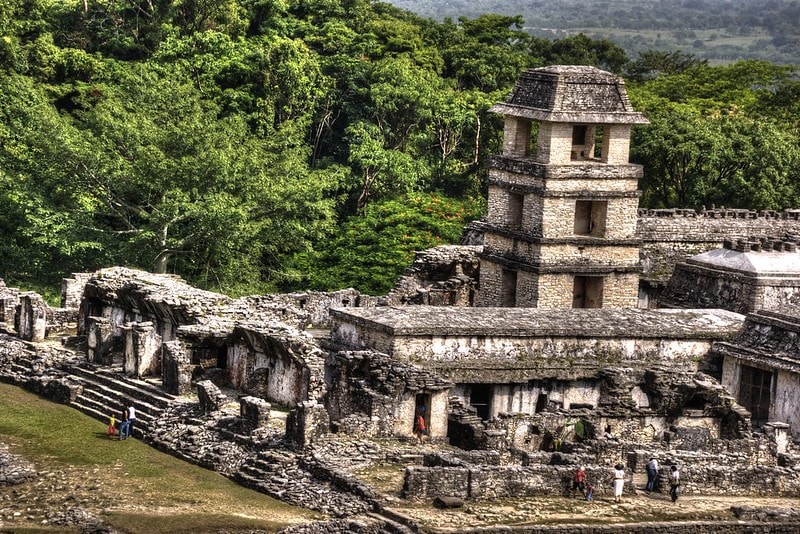
The most architecturally complex structure at Palenque. El Palacio was the administrative and residential center of Palenque’s royal court — not a pyramid, but an evolving platform complex built over approximately 400 years.
What makes it unique:
- The four-story square tower is the only structure of its kind in Classic Maya architecture. Archaeologists believe it functioned as an astronomical observatory for tracking Venus and solar events.
- The internal courtyards have relief sculptures depicting captives from defeated city-states — war trophies, essentially, carved in stone.
- Steam bath facilities (temazcal) are visible in the eastern courtyard — evidence of elaborate purification rituals.
- The stucco reliefs on the pier panels are the best-preserved at Palenque, showing rulers in ceremonial costume.
You can walk through El Palacio’s courtyards and climb partially into the tower area. Budget 45 minutes here.
4. Cross Group Temples (Grupo de las Cruces)
Three temples arranged around a plaza — Temple of the Cross, Temple of the Foliated Cross, and Temple of the Sun. All built by Kan Bahlam II (Pakal’s son) to legitimize his succession after 684 AD.
The “cross” in the name refers to a World Tree motif (the Wakah-Chan) at the center of each temple’s inner sanctuary — not a Christian cross (though Spanish priests later misinterpreted it). Each temple contains a stone tablet called a tabléro with hieroglyphic inscriptions describing Palenque’s creation mythology and the dynastic lineage.
The Cross Group temples are 500m from the main plaza via a jungle path. The walk itself is worth doing — thick trees, bird calls, occasional bromeliads hanging from branches.
5. The Maya Aqueduct
Palenque’s engineers diverted the Otulum River through the site using an enclosed stone channel — essentially a pressurized aqueduct designed to increase water velocity. Still partially functional during rainy season.
Located beneath El Palacio, the aqueduct runs for about 100 meters. It’s easy to miss (it’s below ground level) but one of Palenque’s most impressive engineering achievements. Look for it on the east side of the Palace complex.
6. Site Museum: Alberto Ruz Lhuillier
The museum at Palenque’s entrance houses artifacts excavated from the site, including:
- A replica of Pakal’s jade death mask (the original is in Mexico City)
- Original stucco reliefs removed from structures for preservation
- Ceramic funerary offerings from tombs throughout the site
- A scale model of the archaeological zone showing outlying groups not visible from the main plaza
Included in your ruins entry fee. The best time to visit is either before entering the ruins (air conditioning, good context before you see the structures) or after (more meaningful with the ruins fresh in mind). About 45 minutes is enough.
7. Jungle Trails to Outlying Groups
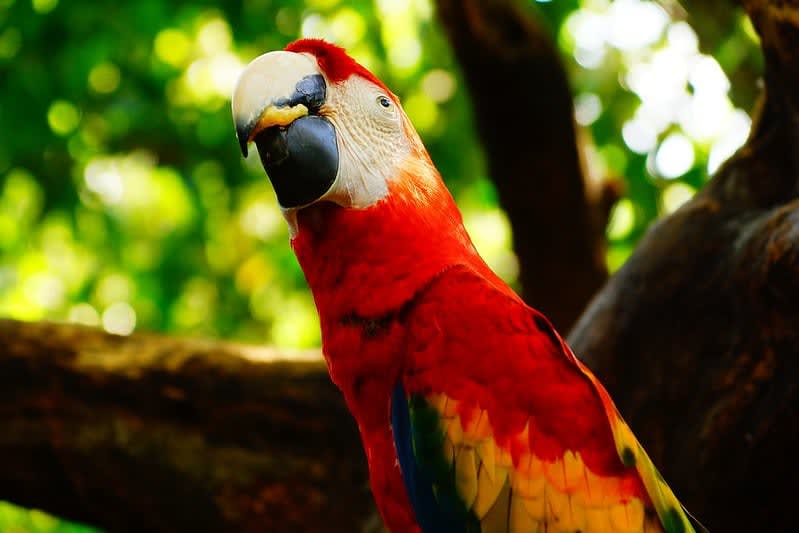
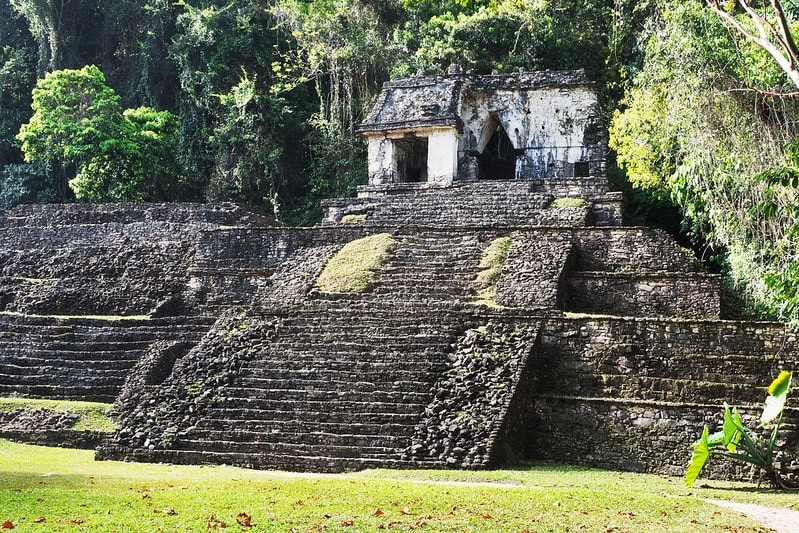
Beyond the main plaza, Palenque has outlying temple groups accessible via jungle trails: Grupo Norte (North Group), Grupo de los Murciélagos (Bat Group), and several unnamed mounds still under vegetation. These see a fraction of the main-plaza visitors.
Practical note: Trails can be slippery after rain — wear shoes with grip. The outlying groups are signposted but lighting is non-existent; go only during daylight. Bring insect repellent — the jungle underbrush houses aggressive mosquitoes even in dry season.
Howler monkey tip: The Grupo Norte path in early morning is one of the best spots to see spider and howler monkeys active in the canopy.
Waterfall Circuit (Day Trip from Palenque Town)
8. Misol-Há Waterfall — The Swimmable One
Distance: 20km from Palenque town | Time: 30 min by colectivo or car
A 35-meter waterfall that drops into a clear swimming pool with one remarkable feature: you can walk behind the water curtain through a natural cave. The mist keeps the cave entrance perpetually cool — a genuine relief from Palenque’s heat.
Practical:
- Entry: ~45-60 MXN
- Colectivo from Palenque market area: ~25-30 MXN, departs frequently
- Cabañas available if you want to stay overnight (basic but clean)
- Swimming is allowed and the pool is clean; bring a change of clothes
- The walk behind the curtain is free, accessible, and takes about 5 minutes
Misol-Há works year-round — the waterfall flows regardless of season and the swimming pool stays clear. It’s the reliable option when Agua Azul turns brown.
9. Agua Azul — Only Visit November Through April
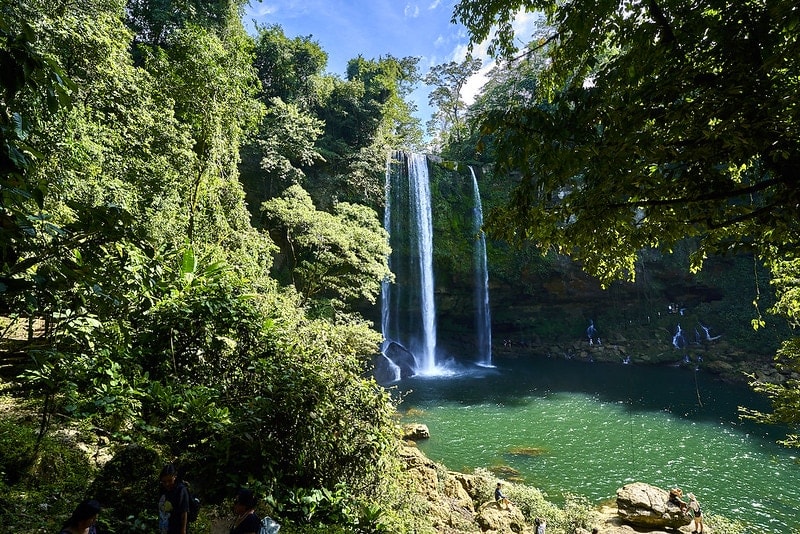
Distance: 63km from Palenque | Time: 1 hr by colectivo or car
CRITICAL: Only visit November–April
Agua Azul is a series of cascading waterfalls pooling at different heights — in dry season, the calcium carbonate-rich water creates brilliant turquoise colors. In rainy season (May-October), suspended sediment turns the water brown. Most photos online show dry-season color. Virtually every tour operator neglects to mention this.
If you’re visiting May-October: Skip Agua Azul or manage expectations explicitly. Misol-Há (above) is the better wet-season waterfall.
If you’re visiting November-April: Agua Azul is spectacular. Swimming is allowed in designated pools; vendors sell fresh fruit and snacks on the banks. Budget 2-3 hours.
Getting there:
- Colectivo from Palenque: ~40-60 MXN one way, departs from the bus station area
- Most Palenque tour operators run a “Waterfalls Circuit” combining Misol-Há + Agua Azul for 300-500 MXN per person
- Rental car: straightforward on Highway 199
10. Roberto Barrios Waterfalls — The Hidden One
Distance: 74km from Palenque | Time: 1.5 hours by car
Less visited than Agua Azul, Roberto Barrios is a series of cascades where the Chacamax River creates natural pools perfect for swimming — with cleaner water than Agua Azul even in rainy season (different drainage basin, less sediment). The turquoise color appears year-round here, not just dry season.
Most tour operators skip it; it requires a car or specific minibus route. Worth the extra distance if you have a vehicle.
Entry: ~30-50 MXN
Swimming: Yes, supervised areas
Best for: Those who want the Agua Azul experience without the crowds or seasonal limitations
Remote Sites (Full Day Each)
11. Yaxchilán Ruins — The River Frontier
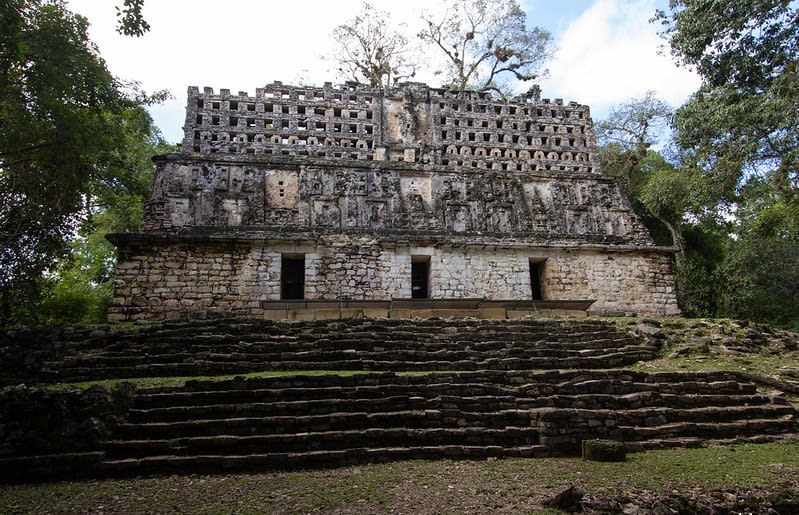
Distance: 145km from Palenque / ~3 hours
Access: Drive to Frontera Corozal → 25 min boat up Río Usumacinta
Yaxchilán occupies a dramatic position: the Río Usumacinta loops around the site on three sides, with Guatemala visible on the opposite bank. Access is only by boat — no road reaches the ruins.
Why it’s worth the logistics:
- The site is almost never crowded — the access barrier keeps mass tourism out
- Lintel carvings of Lady Xoc (depicting bloodletting rituals) are among the finest narrative Maya art extant
- Howler monkeys are essentially guaranteed here — the jungle is denser and less disturbed than Palenque
- The boat ride on the border river is itself an experience
Logistics from Palenque:
- Colectivo from Palenque to Frontera Corozal: ~60-80 MXN, 2-2.5 hours
- Lancha (motorized boat) at Frontera Corozal dock: ~350-500 MXN round trip per boat (up to 6-8 people, so negotiate as a group)
- Waiting time at ruins: 2-3 hours
- Return colectivo to Palenque: same route
Full day total: Budget 10-12 hours door-to-door. Many travelers overnight in Frontera Corozal or combine with Bonampak (180km beyond Frontera Corozal) as a 2-day loop.
12. Bonampak Murals — The Masterpiece
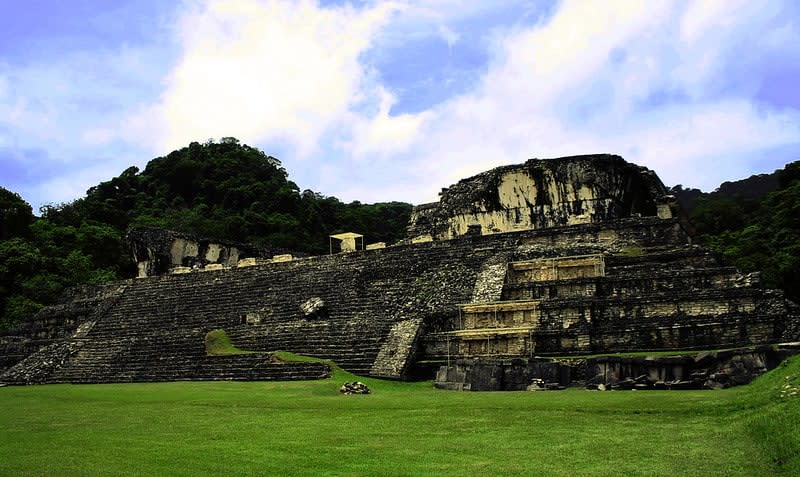
Distance: 183km from Palenque / ~4 hours
Bonampak houses the best-preserved Classic Maya murals in existence — three rooms painted floor-to-ceiling in vivid reds, blues, and blacks around 792 AD. The murals depict a sequence: the preparation for battle, the battle itself, and the aftermath including the torture and sacrifice of prisoners.
The paintings upended earlier assumptions that the Maya were a peaceful civilization. They show gore, hierarchy, and warfare in documentary detail. Palenque’s own murals were mostly destroyed by the jungle; Bonampak survived because the rooms filled with mineral deposits that preserved the pigments.
Access: Via Frontera Corozal (same road as Yaxchilán), then 30km further into the Lacandon jungle. Lacanjá Chansayab community (see #14) is the closest base. Best done as a 2-day trip combining Bonampak + Yaxchilán from Frontera Corozal.
Entry: ~100 MXN (INAH) + community fee (~50 MXN)
13. Toniná Ruins (Ocosingo)
Distance: 113km from Palenque / ~2 hours (different direction — toward San Cristóbal)
Toniná is the tallest Maya pyramid in Chiapas at 75 meters — actually taller than Chichen Itza’s El Castillo. It was a rival power to Palenque in the Classic period and actually captured and sacrificed Palenque’s king Kan Joy Chitam II around 711 AD.
Why visit:
- Significantly fewer tourists than Palenque — often under 50 people on a weekday
- The “Mural of the Four Eras” is one of the largest stucco murals in Mesoamerica (originally 3 meters high, 15 meters long)
- The site is still being excavated; active digs are visible
- The on-site museum is excellent
Note: Toniná is on the road toward San Cristóbal, not toward the waterfalls — plan it as a separate day or combine as a stop when arriving/departing from San Cristóbal.
In Palenque Town
14. Lacanjá Chansayab — Lacandon Maya Village
Distance: 160km / ~3 hours from Palenque
The Lacandon Maya are one of the few indigenous groups in Mexico who had minimal contact with Spanish colonizers — living deep in the Lacandón jungle near the Guatemala border. Lacanjá Chansayab is a community open to respectful tourism.
Activities available: guided jungle hikes, medicinal plant walks, handicraft sales (traditional textiles, wooden carvings, blowguns), and overnight stays in community guesthouses. The Lacandon language is different from other Maya variants — a living linguistic connection to Classic-period scribes.
How to visit: Most easily done as an organized day tour from Palenque (available from most agencies in town, 600-1,000 MXN per person including transport and guide). Respectful photography is generally fine if you ask first; children may not want to be photographed.
15. Palenque Town Artisan Market
The central market in Palenque town (Mercado Artesanal near the main park) sells Chiapas textiles, amber jewelry, carved jade replicas, and Lacandon Maya crafts — at prices significantly lower than San Cristóbal de las Casas.
What’s genuinely from the region:
- Amber from Simojovel (Chiapas produces some of the world’s finest amber, including specimens with insects)
- Handwoven textiles from Zinacantán and Chamula communities
- Carved wooden jaguar figures (Lacandón tradition)
Bargaining: Standard market practice — start at 60-70% of the asking price. Vendors are accustomed to negotiating.
16. Shote con Momo — Palenque’s Signature Dish

Shote are freshwater snails harvested from local rivers; momo is hierba santa (a broad-leafed aromatic herb with an anise-like flavor). Together they form a soup unique to northern Chiapas and the Tabasco lowlands — nowhere else in Mexico eats this.
The snails are chewy and subtly river-tasting; the momo broth is herbaceous and deeply aromatic. Order it with black beans and corn tortillas.
Where to eat it: Restaurants near the archaeological zone entrance on the road into the site. Typically 80-120 MXN per bowl. Ask explicitly for “shote con momo” — some places only put it on a specialty menu or serve it as a weekend dish.
17. Pejelagarto — The Prehistoric Fish
Pejelagarto is an alligator gar — a prehistoric-looking fish (unchanged for 100 million years) that lives in the rivers of Chiapas and Tabasco. It’s grilled whole and served with lime, onion, tomato, and chili.
Common in Villahermosa too, but available in Palenque’s restaurants near the main plaza. The flesh is mild white fish; the elaborate spiny exterior is the attraction. At 150-200 MXN per portion, it’s a mid-priced meal with the genuine local-specialty experience.
18. Howler Monkey Spotting (Free, at 8 AM)
The jungle surrounding Palenque’s ruins hosts spider monkeys and howler monkeys. Howlers produce a sound resembling a deep roaring wind — audible from 5km away — in early morning before the heat.
You don’t need to go far into the jungle. Standing at the main plaza at 8:00 AM, you’ll typically hear howlers within 20 minutes and often see them crossing the canopy above the outlying temple paths.
Best spots: The jungle trail from the Cross Group toward the Grupo Norte (north group). Spider monkeys are more visible here than near the main plaza.
Seasonal & Evening Activities
19. Full Moon Photography at the Ruins
Palenque closes at 5 PM, and the ruins cannot be accessed after hours. However, the hill above Palenque town (accessible by taxi, ~50 MXN from center) offers a distant view of the illuminated site on clear nights. During full moon, the Temple of the Inscriptions silhouette against the moonlit jungle is photographable from the road above.
20. La Cañada Hotel Restaurant Zone (Evening)
The collection of mid-range hotels along the road to the archaeological zone has a cluster of outdoor restaurants operating until 10-11 PM. Order horchata or pozol negro (a fermented cacao drink specific to Chiapas and Tabasco), eat grilled meats, and watch the fireflies begin once it’s dark.
It’s not a nightlife scene — Palenque is fundamentally a daytime destination — but the area is pleasant for an evening meal under ceiling fans with jungle sounds in the background.
Getting Around Palenque
| Option | Cost | Notes |
|---|---|---|
| Colectivo to ruins | 15-20 MXN | From Palenque center, frequent service |
| Taxi to ruins | 60-80 MXN | Faster, negotiable, useful with luggage |
| Mototaxi (town) | 20-30 MXN | For short town hops |
| Colectivo to Misol-Há | 25-30 MXN | From bus station area |
| Colectivo to Agua Azul | 40-60 MXN | From bus station area |
| Waterfall circuit combo tour | 300-500 MXN/person | Both waterfalls + transport |
| Rental car | $30-50 USD/day | Best for Yaxchilán + Bonampak route |
No Uber in Palenque. Taxis and colectivos only.
Free Activities in Palenque
| Activity | Cost | When |
|---|---|---|
| Howler monkey spotting | Free | 8 AM at ruins |
| Palenque town main square | Free | Any time |
| Walking behind Misol-Há cave | ~45 MXN (site entry) | Year-round |
| Fireflies near La Cañada | Free | After dark |
| Watching sunrise from ruins hill | Free (pre-entry) | 7-8 AM |
Seasonal Calendar
| Month | Agua Azul | Waterfalls | Ruins Heat | Wildlife |
|---|---|---|---|---|
| Nov–Feb | ✅ Turquoise | All flowing | 25-28°C ✅ | Good |
| Mar–Apr | ✅ Turquoise | Flowing well | 30-33°C | Excellent |
| May–Jun | ⚠️ Browning | Heavy flow | 34-36°C 🔴 | Dry |
| Jul–Sep | 🔴 Brown | Maximum flow | 34-36°C 🔴 | Good |
| Oct | ⚠️ Browning | Reducing | 30-33°C | Good |
Budget Guide (per person/day)
| Style | Daily Budget | What’s Included |
|---|---|---|
| Budget backpacker | $25–40 USD | Hostel dorm, colectivos, tacos, ruins only |
| Mid-range | $50–80 USD | Private room, taxis, 2 waterfalls, restaurant meals |
| Comfortable | $90–150 USD | Good hotel, rental car or full-day tours, ruins + Yaxchilán day |
Plan Your Palenque Visit
- Palenque Travel Guide — full logistics: transport from San Cristóbal, where to stay, best time, Semana Santa timing
- Palenque Ruins Guide — detailed site-by-site breakdown of the archaeological zone
- Day Trips from Palenque — Agua Azul (dry season only), Yaxchilán by boat, Bonampak murals, Toniná pyramid, Las Nubes
- 7 Days in Chiapas — full itinerary including Palenque + Agua Azul + Yaxchilán
- Oaxaca to San Cristóbal — route that connects to the Chiapas highlands before/after Palenque
- Day Trips from San Cristóbal — the opposite end of the Chiapas circuit
- Things to Do in San Cristóbal — 4-5 hours away by bus