What to Eat in Mérida: 18 Essential Dishes, Best Markets & Where Locals Eat (2026)
Mérida is Mexico’s most underrated food city. The Yucatan Peninsula spent 400 years relatively isolated — the Maya, the Spanish, Lebanese immigrants, and Caribbean trade all left their mark on a cuisine that looks nothing like what most people expect from Mexican food.
This is the real Mérida food guide: what to eat, what makes it different, where locals actually go, and why Sunday morning cochinita pibil is worth setting an alarm for.
The 18 Essential Dishes in Mérida
1. Cochinita Pibil — Mérida’s Soul Food
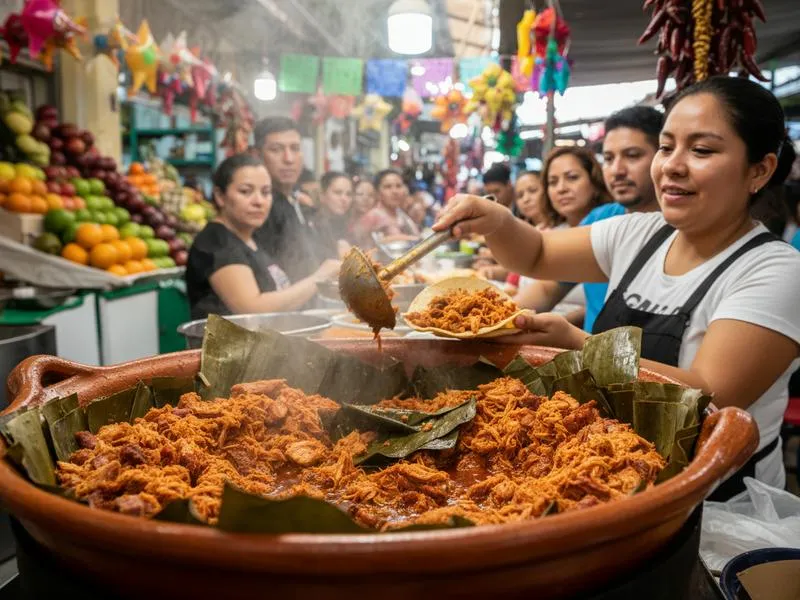
Slow-roasted pork marinated in achiote paste and naranja agria (sour orange), wrapped in banana leaves, cooked in a pib (underground pit oven) for hours until falling apart. The deep orange-red color comes from the achiote seeds — an ancient Maya spice with an earthy, slightly peppery flavor.
The Sunday rule: Cochinita pibil is traditionally a Sunday food. At Lucas de Gálvez market and Parque de Santa Lucía, vendors start at 7 AM and sell out by noon. Arrive by 9 AM for the best experience.
The pickled onion is non-negotiable: Cebollas curtidas (habanero-pickled red onions) cut through the richness of the pork. The habanero salsa on the side is for adjusting heat — start with a small amount.
Cost: 25-50 MXN per taco, 80-150 MXN for a plate at market stalls.
2. Panuchos — Stuffed Fried Tortillas
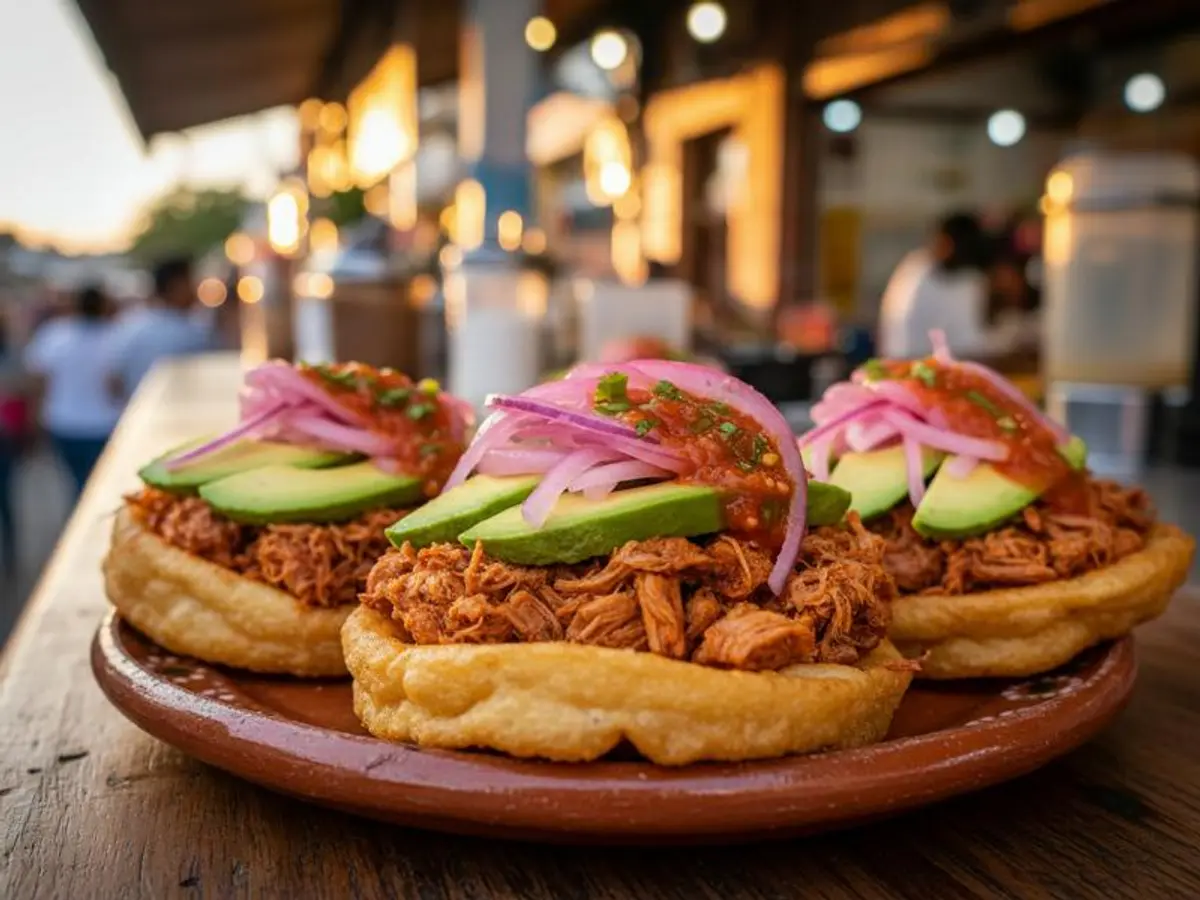
A corn tortilla stuffed with refried black beans inside the pocket, then fried until crispy and topped with cochinita pibil (or turkey, chicken, or cochinita de pavo), pickled red onion, tomato, and avocado.
What makes panuchos distinctive: the black bean filling is sealed inside the tortilla before frying, so every bite has the crunch of the fried shell, the creaminess of the beans, and the meat on top. A complete meal in one hand.
vs. Salbutes: Salbutes use fresh masa without the bean pocket — they puff up when fried, creating a lighter, airier base. Most Yucatecans have a strong opinion about which is better. Try both.
Cost: 15-35 MXN each. Sold everywhere from market stalls to dedicated panucherías.
3. Poc Chuc — Charcoal-Grilled Pork
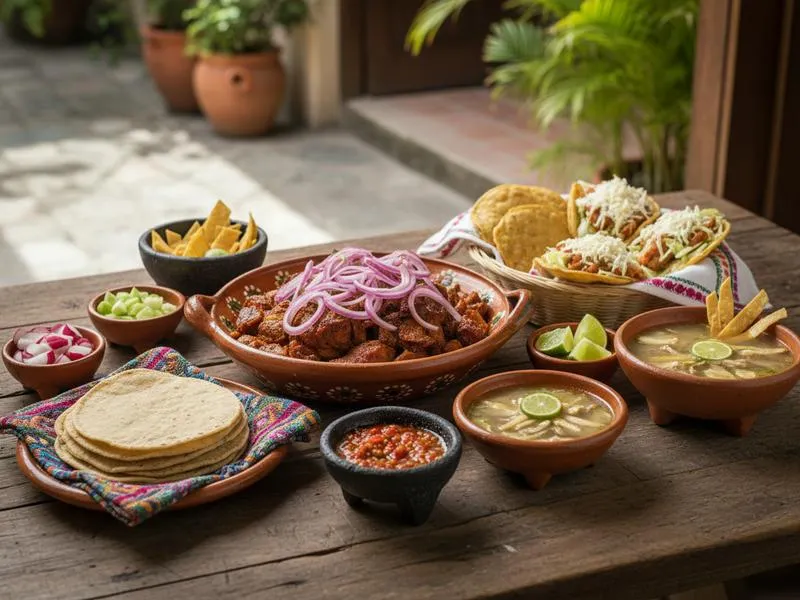
Thin pork slices marinated in naranja agria (sour orange juice), grilled over charcoal until the edges char. The sour orange marinade is a pure Maya ingredient — the same fruit used in cochinita pibil.
Served with xni-pec salsa (tomato, onion, habanero, sour orange juice — the name means “dog’s nose” in Maya, referring to how it makes your nose run), pickled red onion, refried black beans, and tortillas.
The charred edges are part of the dish. A properly made poc chuc has smoke, citrus, and char in every bite.
Where to eat it: La Chaya Maya (two locations, Calle 57 is the original), Los Almendros, any traditional Yucatecan restaurant.
Cost: 120-200 MXN at a sit-down restaurant.
4. Queso Relleno — The Dutch-Yucatan Fusion
A whole ball of Edam cheese (queso de bola) hollowed out, stuffed with pork picadillo (ground pork cooked with olives, capers, raisins, almonds, tomatoes, and spices), then steamed and served with two sauces: caldillo (a tomato-based broth poured over) and kol (a cornstarch-thickened white sauce).
The Dutch Edam arrived in Yucatán through Caribbean trade routes in the 1700s — Yucatán was a major henequen exporter, and ships trading with Europe brought Edam because the wax coating prevented spoilage. It became embedded in the cuisine and appears in multiple dishes.
Queso relleno is a Sunday and special occasion dish — look for it at restaurants like Manjar Blanco and at market fondas on weekend mornings.
Cost: 150-280 MXN per serving.
5. Sopa de Lima — The Mérida Bowl
A clear chicken broth with shredded chicken, crispy tortilla strips, and lima — a citrus fruit unique to Yucatán, slightly bitter and more floral than lime. The tortilla strips are added at the table, staying crispy in the broth long enough to eat.
Sopa de lima is the Mérida comfort food equivalent of chicken noodle soup. The lima’s distinctive flavor cannot be replicated with regular limes — if a restaurant outside Yucatán serves “sopa de lima,” they are approximating.
Where to eat it: Universally available at Yucatecan restaurants. La Chaya Maya, Hacienda Teya (25 min outside Mérida), any market fonda.
Cost: 60-100 MXN.
6. Papadzules — Ancient Maya Dish
One of the oldest dishes in Mayan cuisine: hard-boiled eggs wrapped in corn tortillas, covered in a pepita (pumpkin seed) sauce, and topped with a tomato-chile sauce.
The pepita sauce is bright green and nutty — made by grinding toasted pumpkin seeds with epazote (a pungent Mexican herb) and water. The combination with egg and tomato is surprisingly complex for such simple ingredients. Papadzules were likely made before Spanish colonization.
You will find papadzules primarily at traditional Yucatecan restaurants — less common at market stalls than panuchos and cochinita.
Cost: 80-140 MXN.
7. Kibis — The Lebanese Legacy
One of Mérida’s least-expected dishes: kibis (from kibbeh) are deep-fried bulgur wheat shells stuffed with ground beef, onion, and spices. They are sold from carts and at coctelerías alongside shrimp cocktails, tacos, and panuchos — completely normalized as Yucatecan street food.
Lebanese and Syrian immigrants arrived in Mérida in the 1890s-1920s, fleeing Ottoman conscription and later World War I instability. They integrated deeply into the local economy (many became wealthy in the henequen trade), and their food merged with Yucatecan cuisine. Shawarma is also common in Mérida — often served as tacos de canasta stuffed with seasoned lamb or beef.
Cost: 25-40 MXN per kibis at street carts.
8. Relleno Negro — Black Turkey Stew
A deep, almost black stew made with turkey (or chicken), a paste of charred chiles (chilhuacle negro) and spices, and a ball of raw ground pork called “masa” that thickens the sauce as it cooks. The charring of the chiles gives the dish its distinctive dark color and bitter-smoky depth.
Relleno negro is the most complex Yucatecan dish — home cooks spend hours making the chilmole (the spice paste). It is harder to find at market stalls and more common at traditional sit-down restaurants and Sunday family meals.
Where to eat it: Hacienda Xcanatún, La Chaya Maya, specialty Yucatecan restaurants.
Cost: 150-250 MXN.
9. Marquesitas — Mérida’s Night Food
A thin wafer batter cooked on a round iron plate, quickly rolled into a cone while hot, and filled with shredded Edam cheese and your choice of sweet fillings: Nutella, cajeta (goat caramel), strawberry jam, mango with chili, peanut butter, or condensed milk.
The combination of salty, firm Edam cheese inside a sweet filling is the defining Mérida dessert experience. The crunch of the wafer, the pull of the cheese, the sweetness of Nutella — it sounds strange until you eat one, and then you will have two.
Where: Parque de Santa Ana from 7 PM nightly (the most concentrated marquesita zone). Paseo de Montejo food stalls on evenings and weekends. Rolling carts throughout the Barrio de Santiago.
Cost: 30-60 MXN.
10. Brazo de Reina — Tamale Roll
A Yucatecan take on the tamale: a large flat sheet of masa spread with chaya (a local leafy green vegetable, nutritionally similar to spinach), pepita sauce, and hard-boiled egg, then rolled into a log and steamed in banana leaves. Sliced into rounds and served with tomato sauce.
Chaya is a Mayan superfood — higher in iron, calcium, and protein than most greens — eaten in Yucatán for thousands of years but almost unknown outside the peninsula. Brazo de reina is one of the best ways to taste it.
Cost: 60-100 MXN at market stalls.
11. Lomitos de Valladolid — Pork in Tomato Sauce
Chunks of slow-cooked pork simmered in a tomato, habanero, and cumin sauce, served with rice, black beans, and tortillas. This is Valladolid’s version of a pork guisado — simpler than cochinita pibil but deeply comforting.
Named after Valladolid (80km east of Mérida), lomitos are common at market fondas as a daily special. Less photographed than cochinita pibil, but a better picture of everyday Yucatecan home cooking.
Cost: 80-140 MXN at market stalls.
12. Cóctel de Camarón — Shrimp Cocktail (Yucatan Style)
Mérida is 35km from the Gulf Coast — the Gulf shrimp supply is direct and fresh. The Yucatecan cóctel de camarón is served cold in a large cup: shrimp in a tomato-lime sauce with cucumber, onion, cilantro, and avocado. Eaten with tostadas or saltine crackers.
Coctelerías — informal seafood spots often with plastic furniture and a TV showing soccer — are where locals eat seafood. They serve kibis alongside shrimp cocktails, reflecting the Lebanese fusion naturally. A good coctelería is more trustworthy than a polished tourist restaurant for fresh Gulf seafood.
Cost: 80-150 MXN.
13. Huevos Motuleños — Mérida Breakfast
The breakfast dish that put Mérida on the food map: fried eggs on a tostada with refried black beans, ham, frozen peas, and tomato sauce — then topped with fried plantain slices.
The combination sounds chaotic but the sweetness of the plantain against the savory egg, beans, and tomato sauce is exceptional. Named after the town of Motul (35km from Mérida), huevos motuleños are found at market stalls and breakfast restaurants from 7 AM.
Cost: 80-130 MXN.
14. Sikil-Pak — Mayan Pumpkin Dip
A pre-Hispanic dip made from ground toasted pumpkin seeds (pepitas), tomatoes, charred habanero, cilantro, and lime — a Yucatecan salsa rather than a side dish. Served with tostadas or as a sauce alongside fish or chicken.
Sikil-pak is evidence of how much pre-colonial Maya cuisine survives in Mérida. It shares ingredients with papadzules (pepita seeds are central to both) and uses no Spanish-introduced ingredients. Increasingly visible on upscale Mérida menus as chefs recover indigenous dishes.
Cost: Included as a table sauce at many restaurants.
15. Tikin Xic — Mayan Grilled Fish
A whole fish (usually snapper) marinated in achiote paste and sour orange juice, wrapped in banana leaves, and grilled. The same Mayan marinades from cochinita pibil applied to fish — the achiote turns the flesh orange-red, the banana leaf steams from inside while the outside chars.
Tikin xic is more common at coastal restaurants (Progreso, Dzilam) and at Mérida seafood spots with Gulf connections. The name is Maya — ‘tikin’ means dry, ‘xic’ means wing.
Cost: 150-280 MXN at seafood restaurants.
16. Dzotobichay — Stuffed Chaya Tamale
A Mérida market specialty that most visitors miss: a ball of masa stuffed with chaya, pepita sauce, and hard-boiled egg, wrapped in chaya leaves (not banana leaves), boiled, and served with tomato sauce.
Dzotobichay is similar to brazo de reina but in individual-portion form. It is a pure Mayan dish with no Spanish influence — corn, pumpkin seeds, and chaya are all pre-colonial ingredients.
Where to find it: Lucas de Gálvez market, specialty Yucatecan market stalls, Sunday markets.
Cost: 40-70 MXN.
17. Pan de Cazón — Layered Tortilla Casserole
A Campeche dish that has fully adopted Mérida: layers of corn tortillas, black beans, and shredded cazón (small shark or baby dogfish) in a tomato-habanero sauce, stacked like a lasagna and baked.
Cazón (dogfish) is a Gulf of Mexico staple that tastes like a mild, meaty fish — not what most people expect from shark. The combination with black beans and tomato sauce is savory and filling. Pan de cazón appears on Mérida menus as frequently as Campeche menus — the dish has crossed state lines.
Cost: 120-200 MXN.
18. Chocolomo — Beef Organ Stew
A traditional Mayan special-occasion dish: beef organs (liver, heart, kidney, lung), chopped and simmered in a dark broth with recado negro (charred chile paste), epazote, and sour orange. Served with tortillas.
Chocolomo is decreasing in frequency as younger generations shift preferences — finding it outside specialized traditional restaurants is becoming harder. If you see it on a menu, it is a signal of an authentic Yucatecan kitchen.
Cost: 150-250 MXN where available.
The Merida Food At-a-Glance Table
| Dish | Type | Price | Best Time | Where |
|---|---|---|---|---|
| Cochinita pibil | Pork taco | 25-50 MXN/taco | Sunday 7-11 AM | Market stalls |
| Panuchos | Fried tortilla | 15-35 MXN each | Any time | Everywhere |
| Salbutes | Fried tortilla | 15-30 MXN each | Any time | Everywhere |
| Poc chuc | Grilled pork | 120-200 MXN | Lunch | Restaurants |
| Queso relleno | Stuffed cheese | 150-280 MXN | Sunday/special | Traditional restaurants |
| Sopa de lima | Citrus broth | 60-100 MXN | Lunch/dinner | Restaurants |
| Papadzules | Egg tortillas | 80-140 MXN | Lunch | Traditional restaurants |
| Kibis | Lebanese-Maya | 25-40 MXN each | Any time | Street carts, coctelerías |
| Relleno negro | Turkey stew | 150-250 MXN | Lunch | Traditional restaurants |
| Marquesitas | Wafer dessert | 30-60 MXN | Evenings | Parque Santa Ana |
| Brazo de reina | Rolled tamale | 60-100 MXN | Breakfast/lunch | Market stalls |
| Huevos motuleños | Egg breakfast | 80-130 MXN | Breakfast | Markets, cafés |
| Cóctel de camarón | Shrimp cocktail | 80-150 MXN | Lunch | Coctelerías |
| Sikil-pak | Pumpkin dip | Table sauce | Any time | Restaurants |
| Tikin xic | Grilled fish | 150-280 MXN | Lunch | Seafood restaurants |
Where to Eat in Mérida: The Real Guide
Lucas de Gálvez Market (Calle 56 and Calle 67)
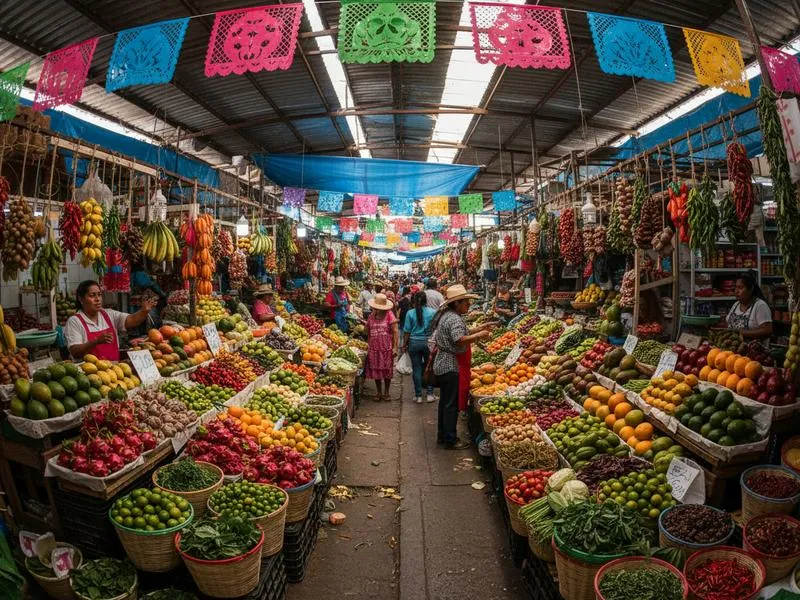
The main market. Chaotic, loud, real. Stall 26 is famous for cochinita pibil at breakfast, but multiple stalls serve excellent Yucatecan food throughout the morning. The meat section smells as you would expect. The prepared food section is in the back. Best between 7-11 AM for breakfast-style Yucatecan food.
Budget: 80-150 MXN for a full breakfast.
Parque de Santa Lucía (Sunday Mornings)
Every Sunday, vendors set up around this colonial park selling cochinita pibil from the traditional method — banana-leaf packets dug up from underground ovens. Arrive by 9 AM. This is the most photographed food scene in Mérida.
Budget: 30-80 MXN for several tacos.
La Chaya Maya (Calle 57 No. 488 — Original Location)
The most famous traditional Yucatecan restaurant in Mérida, operating for decades. Tourists find it, locals still eat there too. Serves all the classics: poc chuc, sopa de lima, panuchos, papadzules, queso relleno on good days. Portions are generous, prices are fair, air conditioning works.
Budget: 150-280 MXN per person.
Parque de Santa Ana (Evenings, from 7 PM)
The marquesitas zone. Multiple vendors with slightly different recipes compete for business — prices are similar, quality varies. Walk the full perimeter before committing. Also serves hot dogs, elotes, and other street food. This is where meriños (Mérida locals) go for the evening snack walk.
Budget: 30-60 MXN per marquesita.
Coctelerías (Scattered Through Barrios)
Look for plastic chairs, hand-painted seafood menus, and TVs showing Liga MX. These informal spots serve the best Gulf seafood in the city. Kibis appear on menus next to shrimp cocktails — order both. Locals eat here, not at the tourist-facing “seafood restaurants” near Plaza Grande.
Budget: 80-200 MXN.
Mercado de Santa Ana (Calle 47 and Calle 60)
A smaller market with fewer tourists than Lucas de Gálvez. Good for breakfast — huevos motuleños, tamales, cochinita pibil. Less chaotic than the main market.
The Lebanese-Yucatecan Fusion Explained
Between 1880 and 1920, roughly 30,000 Lebanese and Syrian immigrants arrived in Mexico — many settling in Yucatán because of the booming henequen economy. They integrated into local business and social life more thoroughly than in most Mexican cities.
The food legacy is visible everywhere:
| Lebanese Original | Mérida Version |
|---|---|
| Kibbeh | Kibis — deep-fried bulgur shells |
| Shawarma | Tacos árabes — Mérida-style spit meat |
| Tabbouleh | Adapted into local salads |
| Sfiha (meat flatbread) | Found at bakeries in Barrio de la Ermita |
| Al pastor | Originated from Lebanese shawarma in Puebla, spread nationwide |
The al pastor taco — Mexico’s most popular taco nationally — traces its origins to Lebanese immigrants in Puebla who taught Mexican butchers the vertical spit technique. Mérida’s kibis are the direct version without the Mexican adaptation.
Mérida vs Mexico City vs Oaxaca Food Comparison
| Category | Mérida | Mexico City | Oaxaca |
|---|---|---|---|
| Key proteins | Pork (cochinita), turkey, Gulf seafood | Beef (tacos al pastor), pork, chicken | Grasshoppers (chapulines), turkey (mole), black beans |
| Main spice | Achiote + sour orange + habanero | Chiles + cumin | 7 moles + Oaxacan herbs |
| Unique ingredient | Lima (citrus), epazote, chaya | Huitlacoche, epazote, herbs | Hierba santa, tasajo, memelas |
| Lebanese influence | Strong (kibis, tacos árabes) | Minor | None |
| Indigenous tradition | Heavy (75% Maya techniques) | Mixed | Very strong (Zapotec base) |
| Budget meal | 80-150 MXN | 80-200 MXN | 70-150 MXN |
| Spice level | Moderate (habanero on side) | Moderate | Moderate-high |
Mérida Food by Neighborhood
| Neighborhood | Food Focus | Best For |
|---|---|---|
| Centro Histórico | Everything — market stalls, restaurants, coctelerías | First-time visitors |
| Barrio de Santa Ana | Marquesitas, evening street food | Nighttime snacks |
| Barrio de Santiago | Traditional fondas, coctelerías | Budget Yucatecan |
| Paseo de Montejo | Upscale restaurants, modern Yucatecan | Special occasions |
| García Ginerés | Local neighborhood restaurants | Off-the-tourist-path |
| Cholul (outskirts) | Hacienda dining | Day trip dining |
What to Drink in Mérida
Horchata de almendra: Unlike the rice-based horchata of western Mexico, Mérida’s traditional horchata is made from ground almonds and sesame seeds. Served cold at market stalls — sweet, slightly nutty, perfect for heat.
Jamaica con Xtabentún: Hibiscus agua fresca (jamaica) mixed with Xtabentún — Mérida’s anise honey liqueur made from fermented honey and anise flowers, a Maya legacy product. Some restaurants serve it as a cocktail.
Xtabentún straight or mixed: A sweet, thick liqueur made from the xtabentún flower and fermented honey. Produced in Mérida and the Yucatán Peninsula only. Try it with ice or mixed with orange juice.
Mezcal isn’t from here: Mérida is tequila and beer country, not mezcal. The Maya had their own fermented drinks — balché (bark fermented with honey) — but mezcal is an Oaxacan and central Mexico product. Any bar in Mérida has it, but it is not local.
Agua de chaya: Fresh juice from chaya leaves, often mixed with pineapple, lemon, or cucumber. Served at health-oriented spots and juice bars — a way to taste the most Yucatecan ingredient in beverage form.
Mérida Food Budget Guide
| Budget Level | Daily Food Spend | What You Get |
|---|---|---|
| Budget traveler | 150-250 MXN/day | Market stalls, street food, marquesitas |
| Mid-range | 300-600 MXN/day | Mix of market + sit-down restaurants |
| Upscale | 700-1,500 MXN/day | Traditional hacienda dining, Paseo de Montejo restaurants |
The local eat secret: The comida corrida (set lunch menu) at fondas and small restaurants between 1-4 PM offers soup, main course, and a drink for 80-150 MXN. This is the best value meal in Mérida and how most locals eat their main meal of the day.
Where to Buy Mérida Food to Bring Home
- Xtabentún: Any liquor store or supermarket. Expect to pay 120-250 MXN for a quality bottle. Look for Licor de Xtabentún Wayan from local producers.
- Recado negro and rojo paste: Vacuum-packed spice pastes for making Yucatecan dishes at home. Available at Lucas de Gálvez and specialty food shops on Calle 62.
- Achiote: Solid orange paste blocks or powder. Look for La Anita brand.
- Queso de bola (Edam): Available at supermarkets. The large ball format is a Mérida souvenir if you are driving.
- Marquesita mix: The crispy wafer batter in powder form — some specialty food shops sell it.
Internal Links
- Mérida Travel Guide 2026 — complete city guide
- Things to Do in Mérida 2026 — 28 activities
- Day Trips from Mérida 2026 — 12 excursions
- Best Restaurants in Mérida — restaurant recommendations
- Best Time to Visit Mérida 2026 — when to go
- What to Eat in Yucatan — broader Yucatan food guide
- Valladolid Yucatán Travel Guide — 80km east, different food scene
- Cancún to Mérida 2026 — how to get here
- 7 Days in Yucatán Itinerary — week trip planning
- Mérida to Tulum 2026 — onward travel
- What to Eat in Cancún 2026 — Caribbean coast food guide