Best Time to Visit Mérida 2026: Best, Cheapest, and Worst Months
Mérida sits at just 9 meters above sea level on Mexico’s Yucatán Peninsula, giving it a hot semi-arid climate with a distinct dry season (November–April) and rainy season (May–October). Average daytime highs range from 28°C in January to 40°C in May — making heat, not rain or sargassum, the single biggest factor in planning your visit.
The standard answer — “November through April is the best time” — is broadly correct but leaves out the key nuance: late March and April can be brutally hot even in the “dry season.” The real sweet spot for Mérida is narrower than most guides admit: December (excluding Christmas week), January, and February.
Here’s what you actually need to know, month by month.
30-Second Answer
If you want the best overall weather in Mérida, go in January or February. If you want lower prices and do not mind short afternoon rain, go in June through August. If you hate extreme heat, avoid April and May, when Mérida can hit 38 to 40°C (100 to 104°F) and even major ruins like Uxmal and Chichén Itzá feel draining by late morning.
If you are choosing between weather, price, and day-trip comfort, the core tradeoff is simple: winter gives you the easiest city days, summer gives you the best hotel value, and late spring is the toughest season unless you are building your days around cenotes, museums, and air conditioning.
| If you want… | Best time to go | Why |
|---|---|---|
| Best overall trip | January-February | Lowest humidity, manageable heat, peak flamingo conditions |
| Lowest prices | June-September | Hotels drop sharply and crowds stay light |
| Cenotes + city break | November-February | Better walking weather in the city, cenotes still perfect |
| Flamingos at Celestún | November-April | Dry-season water levels concentrate the birds |
| Chichén Itzá or Uxmal day trips | November-February | Best chance of exploring ruins without punishing midday heat |
| Beach add-on at Progreso | June-September | Warm Gulf water and the beach actually makes sense as a heat escape |
At-a-Glance: Mérida Month by Month
| Month | Heat | Rain | Flamingos | Ruins Comfort | Prices | Rating |
|---|---|---|---|---|---|---|
| January | 🟢 Mild 28–32°C | ⬜ None | ⭐⭐⭐⭐⭐ Peak | ⭐⭐⭐⭐⭐ Ideal | Medium (drops Jan 6) | ⭐⭐⭐⭐⭐ |
| February | 🟢 Mild 29–33°C | ⬜ None | ⭐⭐⭐⭐⭐ Peak | ⭐⭐⭐⭐⭐ Ideal | Lower | ⭐⭐⭐⭐⭐ |
| March | 🟡 Warm 32–35°C | ⬜ Minimal | ⭐⭐⭐⭐ Excellent | ⭐⭐⭐⭐ Good | Higher | ⭐⭐⭐⭐ |
| April | 🔴 Hot 36–40°C | 🟡 Starting | ⭐⭐⭐ Good | ⭐⭐ Too hot | High (Semana Santa) | ⭐⭐ |
| May | 🔴 Hottest 37–41°C | 🟡 Building | ⭐⭐⭐ Moderate | ⭐ Very hot | Lower | ⭐⭐ |
| June | 🟡 Hot/wet 33–36°C | 🟠 Daily | ⭐⭐⭐ Moderate | ⭐⭐⭐ Early AM | Lowest | ⭐⭐⭐ |
| July | 🟡 Hot/wet 33–36°C | 🟠 Daily | ⭐⭐⭐ Good | ⭐⭐⭐ Early AM | Lowest | ⭐⭐⭐ |
| August | 🟡 Hot/wet 33–35°C | 🟠 Daily | ⭐⭐⭐ Good | ⭐⭐⭐ Early AM | Lowest | ⭐⭐⭐ |
| September | 🟡 Hot/wet 31–34°C | 🔴 Peak | ⭐⭐ Spread out | ⭐⭐ Avoid midday | Lowest | ⭐⭐ |
| October | 🟡 Warm/wet 30–33°C | 🟠 Easing | ⭐⭐⭐ Picking up | ⭐⭐⭐ Improving | Low | ⭐⭐⭐ |
| November | 🟢 Warm 28–32°C | 🟡 Minimal | ⭐⭐⭐⭐⭐ Excellent | ⭐⭐⭐⭐ Good | Medium | ⭐⭐⭐⭐ |
| December | 🟢 Mild 26–30°C | ⬜ None | ⭐⭐⭐⭐ Good | ⭐⭐⭐⭐ Good | High (late Dec) | ⭐⭐⭐⭐ (avoid Dec 23–Jan 1) |
Dry Season (November–April): When to Go and When to Be Careful
November–February: The Actual Sweet Spot
The best time to visit Mérida is the four-month window from mid-November through February — when the heat has subsided from summer peaks, the rains have stopped entirely, and the city is running at full cultural speed.
November sees temperatures drop into the 28–32°C range after the brutal summer. The Celestún flamingos concentrate as the estuary water level falls. Hanal Pixán (the Yucatán’s version of Day of the Dead, October 31–November 2) just ended, leaving the city in its post-festival calm. This is a genuinely underrated month to visit.
December (excluding Christmas week) offers Mérida’s coolest weather of the year — daytime highs around 26–30°C with cool evenings. The city decorates beautifully for Christmas. Avoid the last ten days of December through January 6: Christmas and New Year’s bring the highest prices and the largest domestic tourist crowds.
January (after January 6, Three Kings Day) is the single best month for most travelers. Hotel prices fall sharply after the holiday crowd clears. The FIME (Festival Internacional de la Mérida) runs in early January with free outdoor concerts and cultural events. Flamingos are at their peak concentration. Cenotes have perfect water temperatures. It’s the sweet spot of the sweet spot.
February matches January in nearly every way, with one bonus: Día de la Candelaria (February 2) and Carnival season (varies — check 2026 dates). Mérida’s Carnival is smaller than Mazatlán’s or Veracruz’s but lively, especially in the Centro Histórico.
March and April: Still “Dry Season” but Buyer Beware
March is a tricky month. Technically dry season, but average highs are already 32–35°C and climbing. The first two weeks are excellent — this is when the Chichén Itzá spring equinox draws visitors (March 21 = 50,000 people; go the week before or after for the same phenomenon with 1/10th the crowd). Spring break doesn’t hit Mérida directly the way it hits Cancún, but day-tripper traffic to Chichén Itzá surges significantly.
April is Mérida’s worst month for most travelers. Daytime temperatures routinely hit 38–40°C, with no rain to provide relief — the rains won’t start until May. Semana Santa (Holy Week) brings domestic tourist prices to their annual high. The combination of peak heat + peak prices + peak crowds is genuinely miserable unless you’re spending most of your time in air-conditioned restaurants, cenotes, or museums. Even the ruins become punishing.
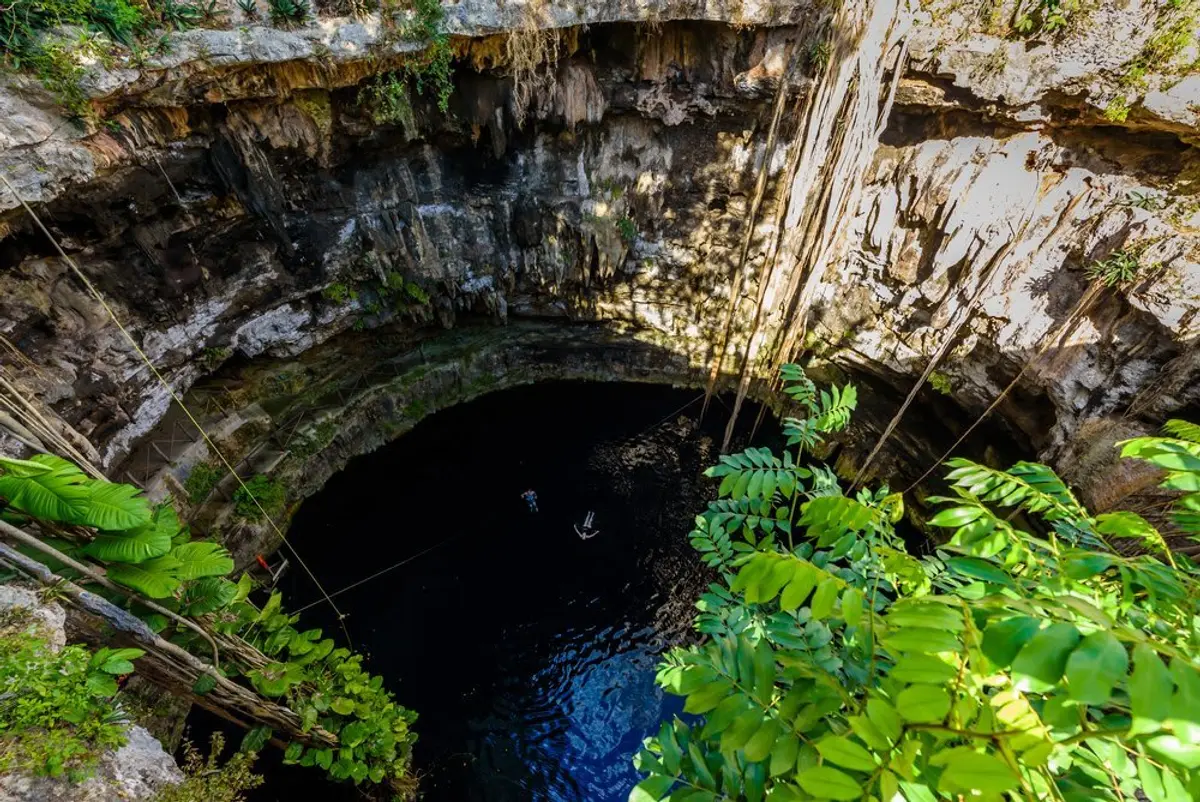
Practical rule for April: schedule anything outdoors before 9 AM or after 5 PM. The cenotes are your refuge — 24°C underground water, year-round.
Rainy Season (May–October): The Honest Case For Going
Most Mérida guides dismiss the rainy season entirely. That’s wrong for several reasons.
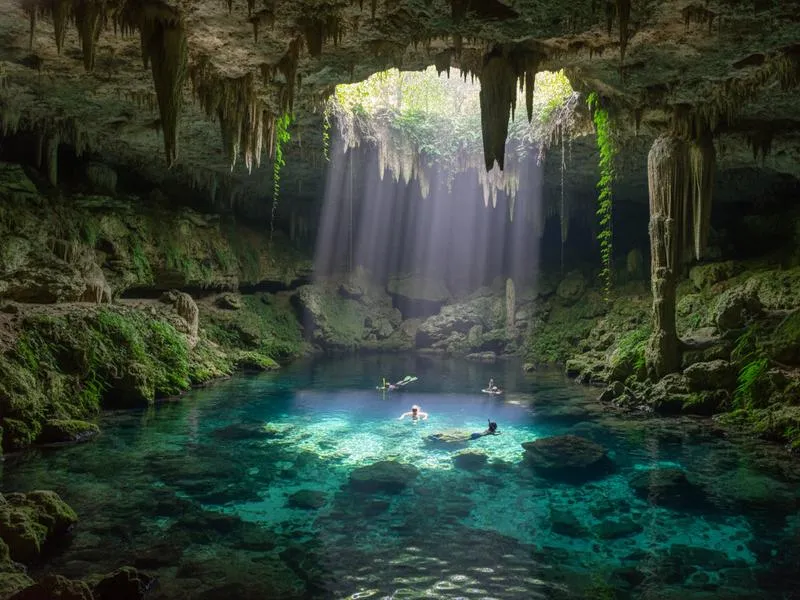
Mérida’s rainy season pattern: Mornings are typically clear and sunny. Rain arrives in the early-to-mid afternoon, usually as intense downpours lasting 1–2 hours. Evenings clear. This is very different from the Caribbean coast’s tropical storm pattern. You can have productive sightseeing in the morning and use the afternoon rain for lunch, museums, or cenote visits (underground cenotes are unaffected by rain).
The heat argument for rainy season: In May and June, the first rains drop temperatures from a brutal 38°C to a manageable 28–30°C almost overnight. Many travelers find a rainy-season Mérida morning (clear, 30°C, vibrant) more comfortable than a dry-season April afternoon (38°C, no cloud, punishing).
The budget argument is significant: Rainy season hotels in Mérida can run 40–60% less than peak season rates. The city is much less crowded — you’ll have major sites like Uxmal largely to yourself.
What you can’t do in rainy season: Extended outdoor ruins visits in the afternoon heat and rain combo. Sunrise hot air balloon rides (typically cancelled due to weather). The Dzibilchaltún equinox alignment (September — too much cloud cover for the optical effect).
May–October month-by-month:
- May: Transitional. First rains arrive (welcome). Still very hot. Prices drop fast.
- June: Rainy afternoons establish themselves. Comfortable mornings. Great cenote conditions. Flamingos at Celestún still accessible.
- July: Peak rainy season but manageable. Mornings clear. Prices at annual low.
- August: Similar to July. Rainy afternoons, clear mornings. Hurricane risk begins on the coast (not Mérida directly — it’s inland).
- September: Most hurricane risk period for the Yucatán coast. Mérida itself rarely affected directly, but coastal day trips to Progreso can be disrupted. Lowest prices of the year.
- October: Hanal Pixán (Day of the Dead Yucatán style) runs October 31–November 2. The rains begin easing. This is an underrated cultural travel month.
Flamingos at Celestún: When to Go
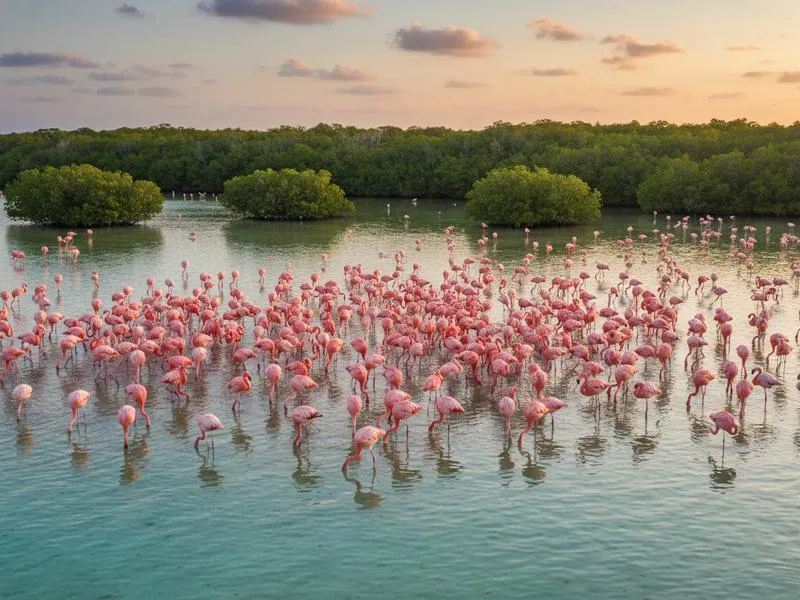
Celestún Biosphere Reserve — 90km west of Mérida, 90-minute drive — hosts one of the Western Hemisphere’s largest flamingo colonies: up to 40,000 birds at peak.
Important clarification most guides miss: Celestún flamingos are present year-round. They are not migratory. The question isn’t “when can you see them” but “when are conditions best.”
| Season | Flamingo Conditions |
|---|---|
| Nov–Apr (dry) | Water levels lower → birds concentrated in shallower feeding zones → easier to see in large groups. Clear skies. Better photography. ✅ Best |
| May–Oct (wet) | Higher water levels spread birds more widely. Still hundreds visible. Vegetation lusher (interesting context). More mosquitoes. ✅ Still worth it |
Practical advice: The 90-minute boat tour runs year-round from the Celestún embarcadero. Morning departures (before 10 AM) are better — birds are more active in cooler temperatures. The dry season gives you the classic “pink carpet” shot. Year-round, you’ll never be disappointed.
Ruins Timing: Chichén Itzá, Uxmal, and the Heat Factor
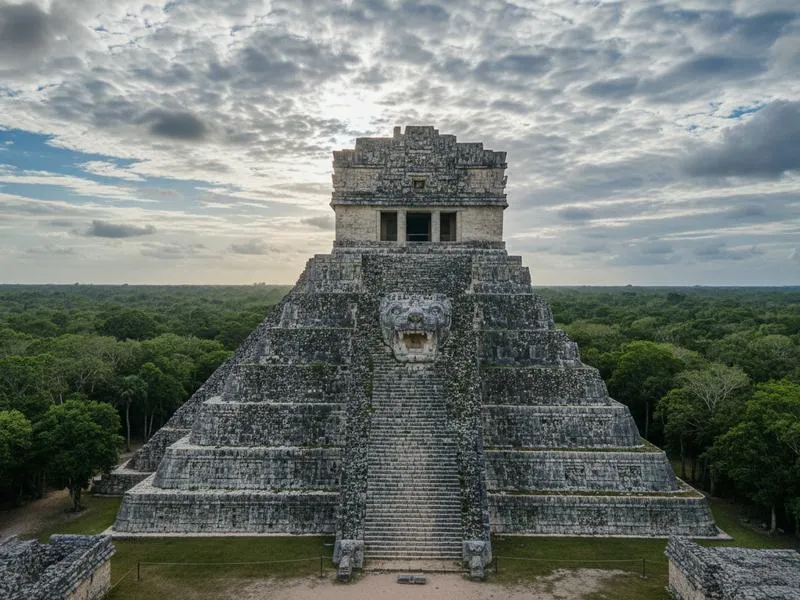
The Yucatán’s major archaeological sites are within day-trip range of Mérida. Heat is the primary planning factor.
Chichén Itzá (120km east — 1.5hr):
- Best months: November through February — manageable 28–32°C
- March: Fine if you arrive by 7:30–8:00 AM (ruins open at 8)
- April: Doable before 9 AM, brutal after
- May–October: Go at opening and leave by 11 AM
- Spring equinox (March 21): 40,000–50,000 visitors. Consider going March 14–20 for the same serpent shadow effect with far fewer people.
- Pro strategy: Mérida base, depart 6:30 AM, arrive 8:00 AM, leave by 11:00 AM before tour buses. Better than any tour from Cancún.
Uxmal (80km south — 1hr):
- Uxmal receives perhaps 1/10th of Chichén Itzá’s visitors — a dramatically better experience
- Best months: November–February
- The nightly light and sound show runs year-round (check local schedule for 2026 dates)
- Note: Uxmal is fully exposed with little shade — heat protection is critical
Ek Balam (190km east — 2.5hr, combine with Valladolid day trip):
- Still climbable (unlike Chichén Itzá since 2006 and Tulum since 1994)
- Best months: November–March
- Combined with Cenote Hubiku (3km away) and Valladolid for a full day
Progreso Beach: The Local Escape
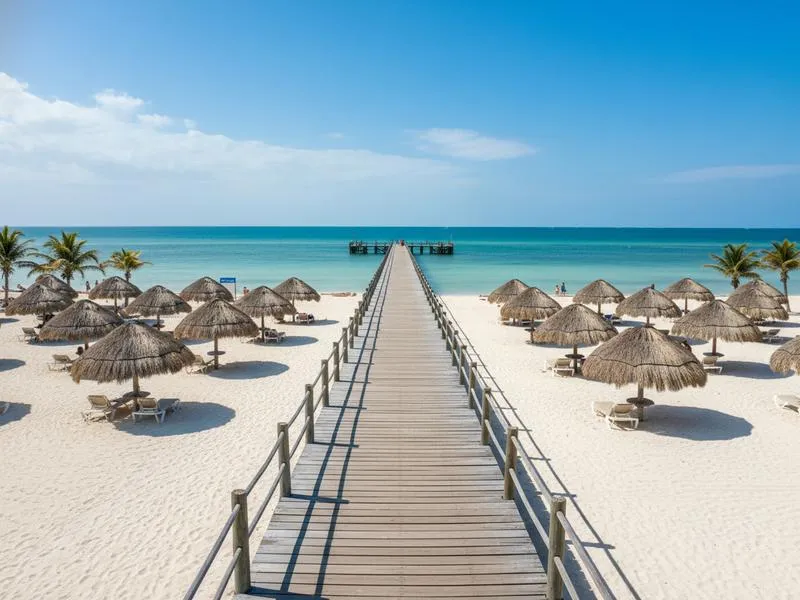
Mérida doesn’t have its own beach — the city is 33km inland from the Gulf of Mexico. Progreso is where Meridanos go on weekends, especially in the extreme summer heat.
Key distinctions from Caribbean beaches:
- Gulf of Mexico coast = no sargassum (completely different from the Caribbean sargassum belt)
- Water is calm, warm (27–30°C June–September), and family-friendly
- Zero international tourist infrastructure — this is a local Mexican beach town
- Best months: June–September (when Mérida heat is strongest, Progreso crowds are highest, water is warmest)
- Winter: Agua Fría (“cold fronts”) occasionally sweep through October–February, dropping Gulf temperatures and making swimming uncomfortable for a day or two
If you want genuinely beautiful beaches near Mérida, consider Celestún (clean beach + flamingos, 90km west) or Sisal (smaller, quieter, 45km).
Mérida Weather by Month
| Month | Avg High °C | Avg Low °C | Rain Days | Gulf Water Temp | Notable |
|---|---|---|---|---|---|
| January | 28°C | 16°C | 1 | 24°C | Coldest month, clear, perfect |
| February | 30°C | 17°C | 1 | 24°C | Carnival season possible |
| March | 33°C | 19°C | 2 | 25°C | Equinox March 21, heat building |
| April | 38°C | 22°C | 3 | 27°C | Hottest dry month, avoid midday |
| May | 40°C | 24°C | 8 | 29°C | Hottest overall, first rains |
| June | 35°C | 24°C | 15 | 30°C | Daily rains bring relief |
| July | 34°C | 24°C | 17 | 30°C | Consistently wet afternoons |
| August | 34°C | 24°C | 17 | 30°C | Peak wet season |
| September | 32°C | 23°C | 18 | 29°C | Most rain, hurricane risk on coast |
| October | 31°C | 21°C | 12 | 28°C | Rains ease, Hanal Pixán |
| November | 29°C | 18°C | 5 | 26°C | Excellent — transition month |
| December | 27°C | 16°C | 2 | 25°C | Perfect (avoid Dec 23–Jan 1) |
Mérida vs Cancún: Which Is Right for Your Trip?
| Criteria | Mérida | Cancún |
|---|---|---|
| Best months | Jan–Feb, Nov–Dec | Feb, Nov–Dec |
| Sargassum risk | None (no direct beaches) | Apr–Oct moderate-high |
| Beach access | Progreso (33km, Gulf) | Hotel Zone directly |
| Heat peak | April–May (38–40°C) | May–Jun (31–33°C — less extreme) |
| Cultural depth | Very high (Maya + colonial) | Low (resort city) |
| Food | Yucatecan cuisine (unique, excellent) | Mostly resort/tourist food |
| Ruins access | Uxmal close, Chichén Itzá equal | Chichén Itzá, Tulum, Cobá |
| Budget | More affordable overall | Expensive Hotel Zone |
| Wildlife | Flamingos (Celestún year-round) | Whale sharks (Jun–Sep) |
| Spring break impact | Minimal (tourist traffic at Chichén Itzá) | Very high (Hotel Zone transforms) |
Choose Mérida if you want: colonial architecture, authentic Yucatecan food, flamingos, cenotes, Uxmal, and cultural events.
Choose Cancún if you want: beach + resort + party + Caribbean water + Hotel Zone convenience.
Best of both: Mérida base (4 nights) + Cancún beach side trip (2 nights) with Valladolid midpoint.
Events & Festivals Calendar
| Event | When | Notes |
|---|---|---|
| FIME (Festival Internacional de la Mérida) | Early January | Free outdoor concerts, cultural events, Plaza Grande |
| Día de la Candelaria | February 2 | Masses, processions, tamales — tamale obligation from January 6 |
| Carnival (Carnaval Mérida) | February–March (varies) | Smaller than Mazatlán/Veracruz but colorful |
| Spring Equinox, Chichén Itzá | March 21 | 40,000+ visitors — go March 14–20 instead |
| Semana Santa | March 29–April 5 (2026) | High prices, domestic crowds, Ley Seca Good Friday |
| Festival de las Almas | May | Cultural festival, free concerts |
| Noche Mexicana | All year (Saturdays) | Free dance shows on Paseo de Montejo |
| Bici-Ruta | All year (Sundays AM) | Paseo de Montejo closed to cars, cyclists take over |
| Hanal Pixán (Day of the Dead) | Oct 31–Nov 2 | Yucatán’s version — distinct from Oaxaca tradition |
| Festival de Música Antigua | October | Early music, colonial venues |
| Christmas Posadas | December 16–24 | Barrio Santa Ana neighborhood is best |
Best Time by Activity
| Activity | Best Months | Notes |
|---|---|---|
| Flamingos at Celestún | Nov–Apr | Dry season = concentrated birds, clear water |
| Cenotes (all types) | Year-round | Constant 24°C — unaffected by season |
| Chichén Itzá | Nov–Feb | Best heat and crowd balance |
| Uxmal ruins | Nov–Feb | No shade — heat protection essential |
| Ek Balam (climbable) | Nov–Mar | Before heat peaks |
| Progreso beach | Jun–Sep | Warmest water, locals swimming |
| Food markets | Year-round | Lucas de Gálvez and Santa Ana both excellent |
| Bici-Ruta cycling | Nov–Feb | Most pleasant temperatures |
| Cultural festivals | Jan, Feb, Oct | FIME (Jan), Hanal Pixán (Oct) |
| Budget travel | Jun–Sep | 40–60% lower hotel rates |
| Equinox at Chichén | Mar 14–20 | Same effect as March 21, 1/10th the crowd |
Best Time by Trip Goal
| Trip Goal | Recommended Months | Why |
|---|---|---|
| First-time visitors | January-February | Best weather, easiest walking conditions, strongest first impression of the city |
| Lowest-cost trip | June-September | 40-60% lower hotel rates, lighter crowds, rain usually arrives after lunch |
| Flamingos at Celestún | November-April | Dry-season conditions keep the birds more concentrated and photos cleaner |
| Ruins and day trips | November-February | Best heat balance for Uxmal, Chichén Itzá, and long outdoor days |
| Food-focused city break | November-March | Better market-and-street-walking weather and active event calendar |
| Family trip | January-February or July | Cooler winter weather, or summer when Progreso works as a beach escape |
| Digital nomad stay | October-March | More comfortable daily routine for cafés, coworking, and evening walks |
| Holiday atmosphere | First half of December | Decorations and events without the late-December price spike |
| Shoulder-season compromise | November | Good weather, lighter crowds, and strong value before holiday demand ramps up |
Common First-Timer Mistakes
- Assuming dry season always means good weather. In Mérida, dry season includes April, and April is one of the toughest months to visit because the heat is so punishing.
- Planning Chichén Itzá or Uxmal for midday. Even in good months, those sites are better before 11 AM. In April and May, late-morning heat drains the fun fast.
- Treating Progreso like a Caribbean beach destination. It is a practical local beach escape, not a white-sand resort zone like Cancún or Tulum.
- Thinking rainy season means all-day washouts. In most of summer, rain usually hits in short afternoon bursts, so mornings still work well for sightseeing.
- Underestimating mosquitoes in the wet months. June through September can be great for value, but the tradeoff is heavier humidity and more mosquitoes around mangroves, estuaries, and evening outdoor plans.
- Booking late for Christmas, New Year, or Semana Santa. Those are the periods when Mérida stops feeling like a value destination.
What to Skip in Mérida
| Avoid | When | Why |
|---|---|---|
| April heat + Semana Santa combo | April | 38–40°C + peak prices + peak crowds = unpleasant |
| Ruins at midday | April–September | Heat + sun exposure + no shade at most sites |
| December 23–January 6 | Late December | Highest prices + most crowded of the year |
| Chichén Itzá on March 21 exactly | March | 50,000 people for the equinox serpent — go a week before/after |
| Progreso in “winter” (Nortes season) | Oct–Feb | Gulf cold fronts (“Nortes”) bring choppy water and wind |
Budget Guide by Season
| Season | Budget | Mid-Range | Comfort | Notes |
|---|---|---|---|---|
| Peak (Dec 23–Jan 6, Semana Santa) | $50–70/day | $100–150/day | $200+/day | Book 2–3 months ahead |
| Shoulder High (Jan–Mar, Nov–Dec) | $40–55/day | $80–120/day | $150–250/day | Best value in this tier |
| Shoulder Low (Oct–Nov) | $35–50/day | $70–100/day | $120–180/day | |
| Low Season (Jun–Sep) | $30–45/day | $60–90/day | $100–160/day | 40–60% below peak |
Includes accommodation, food, transport, and 1–2 activities/day. Cenote day trips add $20–40 USD. Celestún flamingo boat $25–35 USD/person.
Planning Your Trip to Mérida
Getting there: Mérida International Airport (MID) has direct flights from Houston, Miami, Dallas, Atlanta, and Mexico City. From Cancún, the ADO bus takes 4 hours (240 MXN); rental car is 3.5 hours on Highway 180D.
Getting around: Uber is fully operational in Mérida (unlike Tulum or San Cristóbal). Taxis are abundant and metered. For cenotes and day trips, a rental car (MXN 500–800/day) gives maximum flexibility.
How long to stay: 3 nights minimum, 5 nights ideal. Day trips to Celestún, Uxmal, and Chichén Itzá each warrant a full day.
Best add-on pages: Pair this guide with our Mérida travel guide, things to do in Mérida, day trips from Mérida, where to stay in Mérida, and Mérida airport transportation so you can match the right month with the right base plan.
More Yucatán Planning Guides
- Mérida Travel Guide 2026
- Things to Do in Mérida
- Day Trips from Mérida 2026
- Where to Stay in Mérida
- Mérida Airport Transportation
- What to Eat in Mérida
- Best Time to Visit Mexico: All 12 Months
- Best Time to Visit Cancún
- Best Time to Visit the Yucatán
- Best Time to Visit Tulum
- 7 Days in Yucatán Itinerary
- Chichén Itzá Guide 2026
- Day Trips from Mérida