Best Time to Visit Cancun (2026): Best, Cheapest, and Worst Months
The best time to visit Cancun is February for the best mix of dry weather, clear water, lower crowd pressure, and manageable hotel prices. Late January is the best-value pick, while November and early December are the best shoulder-season months if you want warm beach weather without peak-season rates.
If you only need the fast answer:
- Best overall month: February
- Best for good weather and lower prices: late January or early November
- Best for whale sharks: June to August
- Worst for crowds: late March during Spring Break
- Worst for weather risk: September and October
- Main sargassum window: roughly April to October
Most pages stop at “December to April” and leave out the details that actually decide whether your trip feels worth the money. In Cancun, the right month depends on whether you care most about beach weather, avoiding Spring Break, dodging seaweed, swimming with whale sharks, or getting a cheaper all-inclusive rate.
This guide breaks down the best, cheapest, and worst months to visit Cancun, then walks through the year month by month.
Quick Answer: Which Month Fits Your Trip?
| If you want… | Go in… | Why |
|---|---|---|
| Best overall weather | February | Dry, warm, clear water, and not as chaotic as March |
| Lowest prices with decent odds | Late January / early November | Good value without peak hurricane risk |
| Whale shark season | June to August | Best access to tours from Cancun and Isla Mujeres |
| Fewest crowds | May, September, early November | Lower visitor volume, especially outside holidays |
| Lowest seaweed risk | December to March | Best odds of clean Caribbean beaches |
| Months to avoid for most first-timers | Late March, September, October | Either Spring Break chaos or peak storm risk |
Month-by-Month Cancun Guide
| Month | Weather | Sargassum | Crowds | Prices | Marine Life | Rating |
|---|---|---|---|---|---|---|
| January | ☀️ Dry, 26–28°C | ⬜ None | High (early Jan) → Medium | High → Lower | Nurse shark diving | ⭐⭐⭐⭐ |
| February | ☀️ Dry, 27–28°C | ⬜ None | Low-Medium | Lower | Nurse shark diving | ⭐⭐⭐⭐⭐ |
| March | ☀️ Dry, 28–29°C | 🟡 Starting | VERY HIGH (Spring Break) | PEAK | Nurse shark diving | ⭐⭐ (⭐⭐⭐⭐⭐ weather only) |
| April | ☀️ Dry/hot, 29–30°C | 🟡 Building | High (Semana Santa) | High | Sea turtle nesting starts | ⭐⭐⭐ |
| May | 🌦️ Warm, 30–31°C | 🟠 Moderate | Low | Lower | Whale sharks arriving | ⭐⭐⭐⭐ |
| June | 🌦️ Humid, 31–32°C | 🔴 Heavy | Low | Low | Whale sharks peak | ⭐⭐⭐⭐ (for whale sharks) |
| July | 🌧️ Rainy, 31–32°C | 🔴 Heaviest | Low-Medium | Low | Whale sharks peak | ⭐⭐⭐ |
| August | 🌧️ Rainy, 31–32°C | 🔴 Heavy | Low-Medium | Low | Whale sharks + turtles | ⭐⭐⭐ |
| September | ⚠️ Hurricane risk, 30°C | 🟠 Easing | Very Low | Lowest | Turtles hatching | ⭐⭐ |
| October | ⚠️ Hurricane risk, 29°C | 🟡 Easing | Low | Lowest | Turtles hatching | ⭐⭐ |
| November | ☀️ Improving, 27–28°C | 🟡 Minimal | Low-Medium | Medium | — | ⭐⭐⭐⭐ |
| December | ☀️ Dry, 26–27°C | ⬜ Minimal | High (Christmas) | High (late Dec) | — | ⭐⭐⭐⭐ (avoid week of Dec 25) |
Dry Season (December–April): The Classic Choice
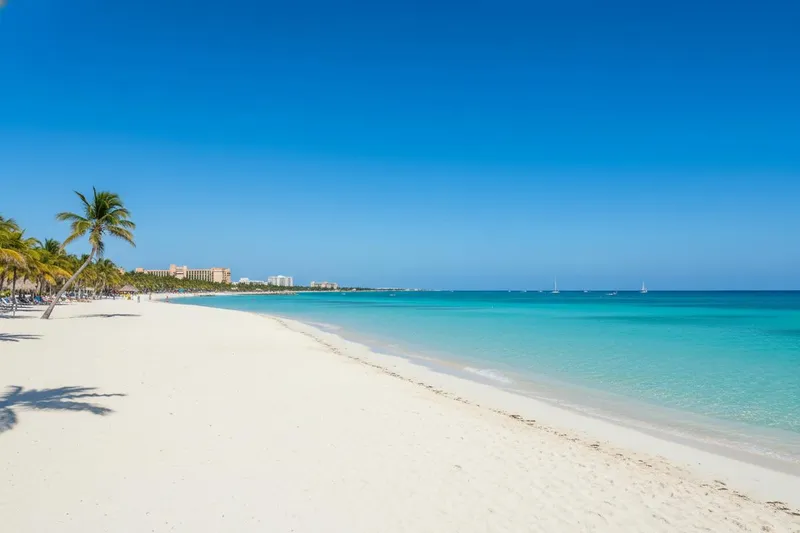
The dry season in Cancun runs December through April. Days are reliably sunny, humidity is manageable, and rain is rare. This is when the Caribbean sea achieves its famous postcard turquoise color — the same water exists year-round, but the clarity is best when rain is absent.
The practical breakdown:
December (excluding Christmas week): Decent value — the holiday premium disappears after January 5. First two weeks of December are genuinely excellent: dry, clear, quieter than peak. Christmas week (December 20–January 5) is packed and expensive.
January (post-January 5): After the holiday crowd leaves, Cancun enters its least-crowded dry season window. Hotel prices drop significantly from their Christmas highs. Weather is perfect. February is the continuation of this.
February: The sweet spot. Best combination of weather, prices, and crowd levels in the entire year. Book 4–6 weeks ahead for good hotel rates; any later and options narrow.
March (the warning): Weather is peak-perfect — 28–29°C, minimal rain, clear water. But March is Spring Break, and Cancun is one of North America’s top Spring Break destinations. The last two weeks of March are the busiest, loudest, and most expensive of the year. If this is what you want — the party atmosphere, the energy, the pool scenes — March is ideal. If not, visit in February.
April: Semana Santa (Holy Week, typically late March–early April) brings Mexican domestic tourists in large numbers. After Semana Santa, April quiets considerably. The weather remains excellent but sargassum begins appearing by mid-April on some beaches.
Spring Break: What to Actually Expect
If you are visiting Cancun in the last two weeks of March, you are walking into one of the largest annual tourism events in the Americas.
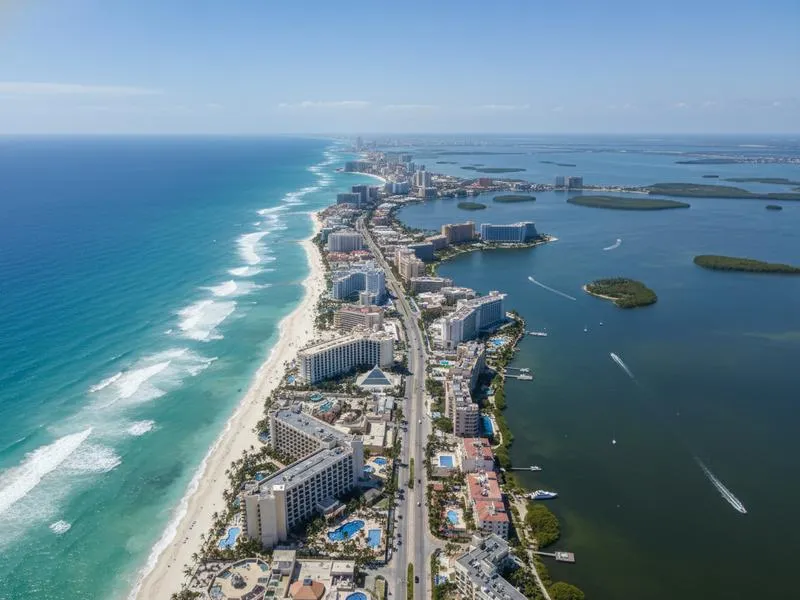
The Hotel Zone transforms: rooftop pool parties, beach concerts, DJs until 4 AM at major resorts, and the street scene on Kukulcán Boulevard is dense with groups of college-age tourists. This is not a hidden phenomenon — Cancun’s spring break reputation is 40+ years old and fully institutionalized.
If you want the spring break experience: Book at least 6–8 weeks ahead. Hotels sell out. Prioritize resorts with large pool areas (Hyatt Ziva, Riu Palace, Hard Rock) over boutique hotels. Budget for elevated pricing — rooms can be 2–3× regular rates.
If you want to avoid it: Fly in the first week of March (before Spring Break starts), or visit in February. Alternatively, base yourself in Playa del Carmen or Tulum, which attract a slightly older demographic and have a less concentrated spring break scene.
Sargassum: The Question Every Cancun Guide Should Answer Better
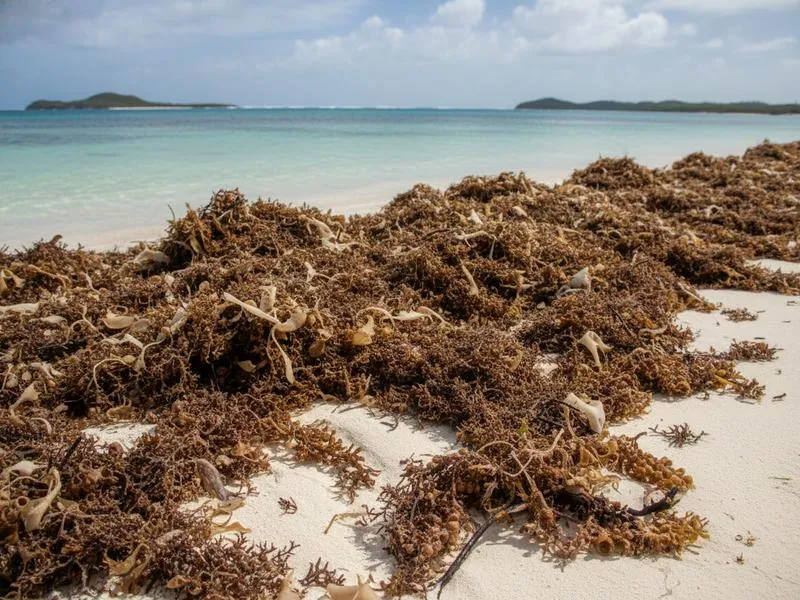
What it is: Sargassum (Sargassum natans and S. fluitans) is a type of brown macro-algae that blooms in the central Atlantic Ocean and drifts west into the Caribbean. Since 2014, unprecedented blooms have been washing ashore on Caribbean beaches every year from approximately April through October.
Why it matters: Heavy sargassum accumulation covers the beach and makes the water murky, brown, and odorous as the seaweed decomposes. On bad days at affected beaches, it is genuinely unpleasant — not the Caribbean experience the brochures show.
What to do about it:
-
Check the forecast: UNAM’s oceanography department publishes monthly sargassum arrival forecasts. See our full 2026 sargassum guide for Mexico — including the USF forecast showing 2026 could be a record year.
-
Choose the right beaches: Cancun’s Hotel Zone beaches face northwest — they receive significantly less sargassum than south-facing Caribbean beaches like those at Playa del Carmen or Tulum. The northern Hotel Zone (Playa Delfines, Playa Langosta) is generally cleaner than the southern stretch.
-
Resort sargassum management: Major all-inclusive resorts employ crews to remove seaweed from their beach sections overnight. Check recent reviews (within 2–4 weeks of your visit) on TripAdvisor or Google Maps specifically mentioning seaweed conditions.
-
Cenotes don’t have sargassum: If beach seaweed is a concern, shifting some beach days to cenote swimming provides a beautiful freshwater alternative entirely unaffected by seaweed.
-
The best escape: Isla Holbox, 145km northwest of Cancun, is in the Gulf of Mexico (not the Caribbean) and receives almost no sargassum. It is the best fallback option during heavy seaweed periods.
Hurricane Season: The Honest Assessment
Hurricane season is June 1–November 30. September and October carry the highest statistical risk. But “hurricane season” and “high hurricane risk every day” are not the same thing.
The reality:
- Cancun has taken direct hits from major hurricanes perhaps 4–5 times in the past 40 years. The catastrophic impacts of Hurricane Wilma (2005, Category 5) and Emily (2005) are real but statistically rare.
- The more common scenario in September–October is tropical storms or tropical depressions — significant rain and wind for 12–36 hours, then clearing. Inconvenient, not catastrophic.
- June and July are technically hurricane season but historically mild in the Cancun area. The statistical risk only rises materially in August, and especially September–October.
If traveling in hurricane months:
- Book hotels with written hurricane guarantee policies (free rebooking/refund if Category 3+ threatens the area)
- Purchase travel insurance with hurricane coverage
- Monitor NOAA’s National Hurricane Center (nhc.noaa.gov) starting 5–7 days before your trip
- September travel is the highest risk; if you go, keep flexibility in your return date
The upside of hurricane season: Hotel rates drop 40–60% from peak. Cancun’s beach infrastructure is well-built and recovers quickly from anything short of a direct major hit.
Marine Life Calendar: The Reasons to Visit in “Bad” Months
The marine life calendar is the main reason to consider Cancun in its “off-peak” months:
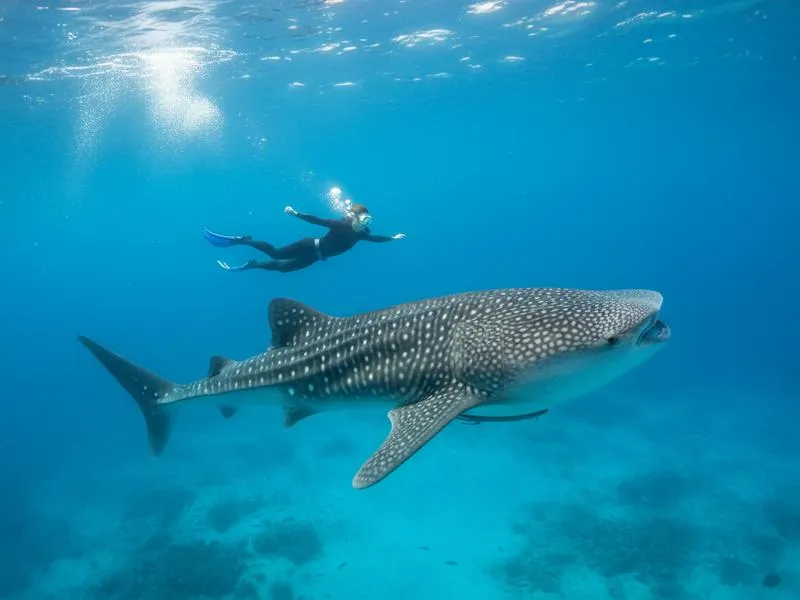
Whale Sharks (June–September, peak mid-June to mid-August): The world’s largest fish aggregates to feed in the warm surface waters off Isla Holbox and Isla Mujeres every summer. Swimming with whale sharks in Mexico — alongside 8–12 meter gentle filter feeders — is one of the Caribbean’s extraordinary wildlife experiences. Tours depart from Cancun, Isla Mujeres, and Holbox from approximately $120–180 USD per person. Book at least a week ahead in peak weeks.
Sea Turtles (May–October): Three species of sea turtle nest on the beaches of the Riviera Maya — loggerhead, leatherback, and hawksbill. Nesting occurs May–October; hatching (when hatchlings emerge and race to the water) peaks July–October. Guided night turtle watches operate at Xcacel beach (protected reserve, ~80km south of Cancun) and Playa del Secreto. No flash photography; follow guide instructions.
Bull Shark Diving (November–March): Playa del Carmen (45 minutes south of Cancun) offers documented bull shark dives at Playa del Carmen’s reef during the winter months. This is a controlled experience with experienced divemasters — not as dangerous as it sounds. Not for beginners; requires a couple of dives beforehand.
Bioluminescence (year-round, best in darker months): Holbox and several spots in the Yucatan have bioluminescent waters visible on moonless nights. The phenomenon is present year-round but most visible in summer and fall.
Cancun vs Riviera Maya: Different Timing Considerations
The “Cancun” search often means different things:
| Cancun Hotel Zone | Playa del Carmen | Tulum | |
|---|---|---|---|
| Vibe | Resort/party beach | Boutique/cosmopolitan | Hipster/eco-luxury |
| Sargassum impact | Lower (NW facing) | Higher (S-facing) | Higher (S-facing) |
| Spring break intensity | Very high | Moderate | Low |
| Best season | Dec–Feb | Nov–Feb | Nov–Feb |
| Cenote access | Good (day tours) | Better | Best |
Tulum and Playa del Carmen are 45–90 minutes south of Cancun airport. If your goal is cenotes and boutique hotels rather than all-inclusive resorts, staying in the Riviera Maya rather than Cancun proper changes some of the calculus — the sargassum risk is higher, but the June–September whale shark and turtle experience pairs well with a Tulum or Playa base.
For the best cenotes close to Cancun: our best Mexico cenotes guide and Cenote Dos Ojos guide cover the top swimming holes. For the broader Riviera Maya: best excursions in Riviera Maya.
Budget Timing: When Prices Are Lowest
| Period | Room Price vs Average | Notes |
|---|---|---|
| Late Jan – Feb | −20 to −30% | Post-holiday quiet, dry weather, excellent value |
| May | −25 to −35% | Spring Break gone, summer not yet |
| June–August | −35 to −50% | Sargassum + rain trade-off; lowest prices |
| September–October | −40 to −60% | Hurricane risk period; lowest of year |
| Mid-November | −15 to −25% | Hurricane season ending; great value window |
| March (Spring Break) | +50 to +200% | Peak premium |
| Christmas week | +100 to +200% | Maximum pricing |
The best value trip to Cancun: late January or early February. Full dry season weather, post-holiday prices, minimal crowds. The worst value: Christmas week and Spring Break.
For broader Mexico travel budget planning, see the Mexico travel cost guide.
Planning Your Cancun Trip
How far ahead to book:
- February (best month): 4–6 weeks
- Spring Break (last 2 weeks of March): 8–12 weeks minimum
- Whale shark season (June–Aug): 2–4 weeks for tours; hotels flexible
- Christmas: 3–4 months
Cancun in the broader Mexico context: Cancun is most travelers’ entry point to the Yucatan Peninsula — but it is the beginning of a trip, not the whole trip. For everything else you need to plan your trip — neighborhoods, beaches, day trips, food, safety, and budget — see our complete Cancun Travel Guide 2026. Build out from Cancun into the Yucatan’s archaeological and natural sites, or combine with inland cultural destinations. Our 2-week Mexico itinerary Route 2 covers the full Cancun → Mérida → Caribbean coast loop. For the full peninsula timing picture — including Mérida, Celestún flamingos, Chichén Itzá equinox, and Gulf coast beaches — see our Best Time to Visit Yucatan guide.
For the spring break decision specifically, our Spring Break Mexico guide covers the Cancun vs alternatives tradeoff in detail.
The Best Time to Visit Mexico guide covers timing for all major regions if you’re comparing Cancun against Oaxaca, Mexico City, or the Yucatan for your travel dates.
Conclusion: The Simple Answer
- Best month: February
- Best value month: Late January or early November
- Go for whale sharks: June–August (accept the trade-offs)
- Avoid if you hate crowds: Last 2 weeks of March, Christmas week
- Hurricane concern: September–October only (June–July are statistically mild)
- Sargassum concern: April–October (check forecast; choose north-facing beaches; major resorts manage it)
Cancun rewards timing intelligence more than most destinations because the gap between February (near-perfect conditions, reasonable prices) and March Spring Break (same weather, triple the price, five times the people) is unusually large. Pick your window, book ahead, and check the seaweed forecast before you finalize. Once your dates are set, browse Cancún tours on Viator for snorkeling, ruins excursions, and island day trips.
For the best-value month of the year, see Cancun in May 2026 — whale shark season opening, 30-45% below peak prices, and the driest weather before summer rains. For a full breakdown of Cancun in June — whale shark season, sargassum strategy, World Cup 2026 atmosphere, and summer pricing — see our dedicated Cancun in June guide. For Cancun in July — peak whale shark season (400-800 sharks), World Cup knockout rounds, and family-peak pricing — see our Cancun in July guide. For Cancun in August — peak whale sharks plus sea turtle nesting season and bioluminescence — see the Cancun in August guide. For Cancun in September — the cheapest month of the year, Mexico’s Independence Day on Sep 16, final whale sharks, and the honest hurricane risk — see the Cancun in September guide. For Cancun in October — hurricane season winding down, sargassum finally clearing, prices still low, Day of the Dead building — see the Cancun in October guide. For Cancun in November — hurricane season over, sargassum minimal, perfect temperatures returning, Day of the Dead November 1-2, and Cozumel bull shark season opening — see the Cancun in November guide. For Cancun in December — peak season prices meet the best weather of the year: dry, warm, sargassum minimal, Christmas posadas, and New Year’s Eve fireworks on the beach — see the Cancun in December guide.