Mexico Sargassum 2026: Live Map & Safe Beaches
If you need the current Mexico sargassum map before booking, start with the live beach report, then use the 2026 worst-months pattern to choose a safer beach. Cancún, Playa del Carmen, Puerto Morelos, and especially Tulum can see heavy seaweed arrivals from June through August, while the Pacific coast, Holbox, Bacalar, Isla Mujeres, and Cozumel’s west coast stay clear or far more manageable.
Where is sargassum in Mexico right now? Check the daily Sargassum Monitoring map first. That is the fastest way to see whether the exact beach you want in Cancún, Playa del Carmen, Puerto Morelos, or Tulum is currently clear, manageable, or ugly.
The fastest booking answer: if your trip depends on swimmable beach days, book November through March on the Riviera Maya or switch to Puerto Vallarta, Los Cabos, Holbox, Bacalar, Isla Mujeres, or Cozumel’s west coast for summer.
The fastest pre-booking routine: use the daily Sargassum Monitoring map for beach-level conditions, check the University of South Florida Sargassum Watch System for the wider monthly pattern, then confirm with Google Maps or TripAdvisor photos from the last 7 days for your exact hotel beach.
Sargassum in Mexico in 30 Seconds
| Question | Fast answer for 2026 |
|---|---|
| Where should I check current sargassum? | Use the daily Sargassum Monitoring map first, then confirm with photos from the last 7 days for your exact hotel beach. |
| Which Mexico beaches get hit? | The Caribbean side: Tulum, Playa del Carmen, Puerto Morelos, and parts of Cancun. |
| When is it worst? | June, July, and August are the highest-risk months. |
| Where should I book instead? | Pacific coast beaches, Holbox, Bacalar, Isla Mujeres, or Cozumel’s west coast. |
| Should I cancel a Riviera Maya trip? | Usually no. Move beach expectations toward protected beaches, cenotes, ruins, or a cleaner backup base. |
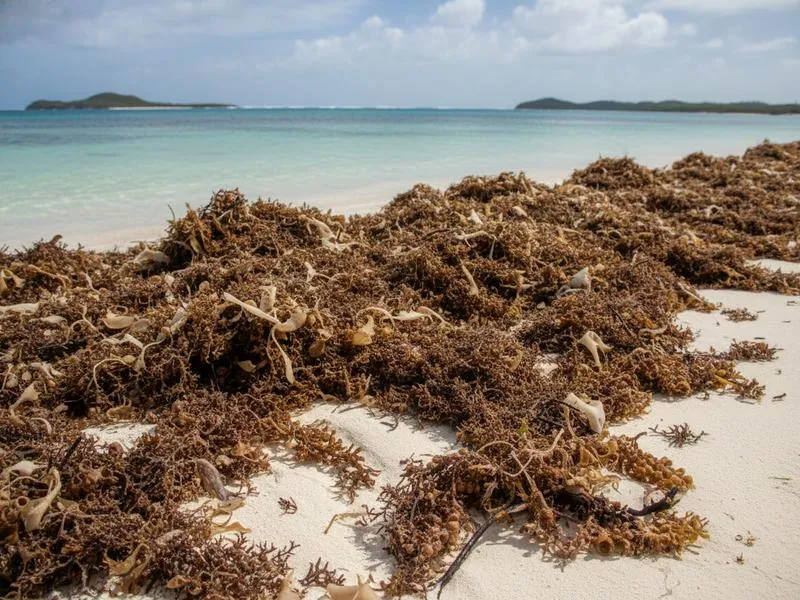
Sargassum is the brown seaweed that washes onto Mexico’s Caribbean beaches from the Great Atlantic Sargassum Belt, a mass of free-floating algae that has grown dramatically since 2011. For 2026, satellite monitoring from the University of South Florida and operational Riviera Maya trackers both point to an early, above-average season rather than a normal year.
This guide gives you the direct answer first, then breaks down the live-map routine, the 2026 forecast, worst months, current-condition checks, safest beach picks, and the smartest alternatives if you still want a Mexico beach trip without gambling on daily cleanup conditions. If you are still deciding between the Riviera Maya and a cleaner backup, compare this with our guides to best time to visit Cancún, best time to visit Playa del Carmen, and Cancún vs Puerto Vallarta.
Sargassum in Mexico 2026: Quick Answer
| If you’re asking… | Short answer |
|---|---|
| Will Mexico have sargassum in 2026? | Yes, on the Caribbean coast from roughly April to October. |
| What are the worst months? | June, July, and August. |
| Where is it worst? | Tulum first, then Playa del Carmen and the south end of Cancún’s Hotel Zone. |
| What is the safest Riviera Maya base? | Isla Mujeres first, then Cozumel west coast, then Cancún’s north Hotel Zone. |
| Where can you avoid it? | Pacific coast beaches, Holbox, Bacalar, Isla Mujeres, and Cozumel’s west coast. |
| Best strategy for a summer trip? | Switch to the Pacific or book a non-beach Riviera Maya trip built around cenotes and day trips. |
Sargassum in Mexico 2026: Quick Reference
| Season | April–October (Caribbean coast only) |
| Peak months | June, July, August |
| 2026 forecast | Record or near-record year (USF Optical Oceanography Lab) |
| Worst affected | Tulum, Playa del Carmen, Cancún Hotel Zone south end |
| Lowest sargassum-risk alternatives | Pacific coast, Cozumel west, Isla Mujeres, Holbox, Bacalar |
| Best alternatives | Puerto Vallarta, Sayulita, Cozumel, Holbox, cenotes |
| Safe months to book Caribbean | November–March |
| Best live check before booking | Daily map + last-7-day beach photos |
What Has Already Happened in 2026
| 2026 signal | What it means for your trip |
|---|---|
| January and March arrivals showed up earlier than usual | Do not assume winter-style beach conditions will hold through spring this year. |
| USF’s early 2026 outlook pointed to a record or near-record Atlantic belt | June through August deserves more caution than a normal Riviera Maya summer. |
| Beach conditions still vary sharply by orientation and cleanup effort | North-facing Cancún, Isla Mujeres, Cozumel’s west coast, Holbox, and Bacalar remain much safer bets than Tulum’s open coast. |
| Daily conditions can change within 24 to 48 hours | Check the live map and fresh traveler photos right before you book, not just generic destination headlines. |
Best Live Sargassum Check Before You Book
| If you need… | Best check | Why it matters |
|---|---|---|
| Today’s beach-by-beach reality | Sargassum Monitoring daily map | Best for spotting which exact beaches are getting hit right now. |
| The bigger monthly trend | USF Sargassum Watch System | Best for seeing whether you are traveling in a lighter or heavier overall window. |
| The truth about one hotel beach | Google Maps and TripAdvisor photos from the last 7 days | Best way to see whether cleanup crews are actually keeping up. |
| The safest summer backup | Isla Mujeres, Cozumel west coast, Holbox, Bacalar, or the Pacific | Best way to avoid turning one beach headline into a ruined trip. |
In 2026, the live check matters more than usual because beaching started early and conditions can flip fast. Use the monthly outlook to choose a region, then the daily map and recent photos to choose the exact beach.
Where Is Sargassum in Mexico Right Now?
The honest answer is that there is no single countrywide condition. Sargassum in Mexico right now is usually a beach-by-beach problem, not an all-of-Mexico problem. One Tulum hotel beach can look rough while Isla Mujeres, Holbox, Bacalar, Cozumel’s west coast, and the Pacific stay clear.
Use this shortcut before you book:
| If the live map shows… | What to do |
|---|---|
| Heavy arrivals in Tulum or south Playa del Carmen | Switch to Isla Mujeres, Cozumel west, Holbox, Bacalar, or the Pacific if beach time matters most. |
| Mixed or moderate conditions in Cancún | Favor the north Hotel Zone, Isla Mujeres, or a resort with serious cleanup crews and barriers. |
| A mostly clear week in Riviera Maya | Still check fresh traveler photos for your exact beach before paying for a non-refundable stay. |
| Confusing headlines but no fresh map data | Trust the last 7-day photos and your hotel’s current answer more than a generic article. |
If you are asking this because your trip is already booked, the best move is usually to keep the trip and adjust your beach plan, not panic-cancel the whole vacation.
Should You Still Book Cancún, Playa del Carmen, or Tulum in 2026?
| Destination | Worth booking in 2026? | Best for | Main catch |
|---|---|---|---|
| Cancún | Yes, with more caution in summer | Travelers who want resorts, direct flights, and a realistic backup plan | The south Hotel Zone is far riskier than the north end from June to August. |
| Playa del Carmen | Sometimes | Travelers who care more about restaurants, walkability, and ferry/day-trip access than perfect beach days | The beach itself is less reliable in peak sargassum months than Cancún north or Cozumel west. |
| Tulum | Only if the beach is not the whole trip | Cenotes, ruins, jungle hotels, wellness stays | Tulum has the worst open-coast exposure and the weakest summer beach bet. |
If you still want the Riviera Maya in 2026, the safest order is usually Isla Mujeres first, Cozumel west coast second, Cancún north Hotel Zone third, Playa del Carmen fourth, and Tulum last for a beach-first trip.
Best Beach Choice by Trip Window
| If you’re traveling… | Best move | Why |
|---|---|---|
| November to March | Book Cancún, Playa del Carmen, or Tulum normally | This is the clear season, with the lowest sargassum risk. |
| April to May | Favor Cancún north end, Isla Mujeres, or Cozumel | Early arrivals are possible, but these areas stay easier to manage. Compare Cancún in June before locking a shoulder-season beach trip. |
| June to August | Switch to Puerto Vallarta, Los Cabos, Holbox, or Bacalar | These are the peak sargassum months on the Caribbean coast. |
| September to October | Check recent beach photos before locking in Riviera Maya hotels | Conditions usually improve, but some years still see late pulses. |
| Already booked Tulum in summer | Plan beach time early, then build your trip around cenotes and ruins | Tulum is the highest-risk beach zone, but the inland trip still works. Use cenotes near Tulum and best time to visit Tulum to reset expectations. |
Best Sargassum-Free Backup by Trip Style
| If you wanted… | Better backup in 2026 | Why it is safer |
|---|---|---|
| Cancún-style resort convenience | Puerto Vallarta | Big-resort feel, strong flight access, no Caribbean seaweed problem. |
| Caribbean-looking water | Isla Mujeres | Playa Norte is naturally sheltered and stays much clearer. |
| Snorkeling or diving | Cozumel | West-coast beaches stay protected from the main sargassum flow. |
| Calm shallow beach days | Holbox | Gulf-facing and structurally outside the Riviera Maya sargassum problem. |
| Clear water without the ocean risk | Bacalar | Freshwater lagoon, no seaweed arrivals at all. |
| A surf or beach town summer trip | Puerto Escondido or Sayulita | Pacific coast, so the whole sargassum question disappears. |
Should You Cancel a Mexico Caribbean Trip Because of Sargassum?
Usually, no, but you should change where you stay and what you expect.
- Do not cancel if you are visiting Cancún, Playa del Carmen, or Tulum between November and March. That is the clear season.
- Re-think your exact beach if you are traveling between April and October, especially June through August.
- Switch destinations if your whole trip depends on perfect swimmable beach days and you are considering Tulum in summer.
The most practical way to think about 2026 is this: the Caribbean coast is still worth visiting, but summer travelers need a stronger Plan B. That usually means booking Isla Mujeres, Cozumel’s west coast, Holbox, Bacalar, or swapping the Riviera Maya for the Pacific coast.
What Is Sargassum?
Sargassum (Sargassum fluitans and S. natans) is a genus of brown macroalgae that lives free-floating in the open Atlantic Ocean. It is naturally occurring and has existed in the Caribbean for centuries — historical records of Columbus encountering the Sargasso Sea date to 1492.
The problem accelerated after 2011. Scientists believe the combination of Saharan dust (iron fertilizer), Amazonian runoff (nitrogen and phosphorus from deforestation and agriculture), and warmer ocean temperatures from climate change created conditions for explosive growth. Since 2011, annual arrivals on Mexico’s Caribbean coast have been roughly 50–80× larger than pre-2011 averages.
The seaweed itself is not toxic. It is a critical habitat for juvenile sea turtles, fish, crabs, and over 100 species of marine life in the open ocean. The problem is when it arrives in massive quantities on beaches:
- It decomposes rapidly in tropical heat, releasing hydrogen sulfide (H₂S) — the rotten egg smell
- Large accumulations turn beaches brown and make swimming unpleasant (entanglement, smell)
- Hotels spend millions annually on cleanup operations
What sargassum is not: It is not dangerous to swim in. It is not red tide. It does not sting. It does not cause illness unless you’re breathing concentrated decomposing fumes (sulfur) from enormous beach piles in very hot conditions.
2026 Sargassum Forecast: What the Data Shows
The University of South Florida’s Optical Oceanography Laboratory publishes monthly satellite monitoring data on sargassum concentrations in the Atlantic and Caribbean. Their early 2026 data showed:
- Record concentrations in the eastern Atlantic (off West Africa) in January–February 2026
- Above-average belt width of the Great Atlantic Sargassum Belt
- Early arrival of seaweed to Caribbean waters, approximately 3–4 weeks ahead of 2024 timing
The practical implications:
| Metric | 2024 | 2025 | 2026 (Forecast) |
|---|---|---|---|
| Peak month | July | July | June–July |
| Early season start | May | May | April |
| Tulum worst weeks | Jul 15–Aug 31 | Jun 20–Aug 20 | Jun 1–Sep 15 (est.) |
| Cancún Hotel Zone severity | Moderate | Moderate-High | High |
| Pacific coast affected? | No | No | No |
The bottom line: If you have flexibility on timing or destination, 2026 is the year to visit the Pacific coast of Mexico instead of the Caribbean — or to time your Caribbean trip for November through March.
Best Mexico Beaches to Book in 2026 if You Hate Sargassum
| Traveler type | Best pick | Why it works in 2026 |
|---|---|---|
| You want a beach resort like Cancún | Puerto Vallarta | Big-resort infrastructure, direct flights, no Caribbean seaweed risk. |
| You still want turquoise Caribbean water | Isla Mujeres | Playa Norte stays far clearer than east-facing Riviera Maya beaches. |
| You want snorkeling and diving | Cozumel | West coast water is usually the safest reef-focused backup when mainland beaches are messy. |
| You want quiet, shallow water | Holbox | Gulf-facing island with no true sargassum season. |
| You do not need the sea | Bacalar | Freshwater lagoon, no ocean seaweed at all. |
| You already booked Tulum or Cancún in summer | Cenotes near Tulum or cenotes near Cancún | Gives you clear-water days even when the beach turns brown. |
Sargassum Season: Month-by-Month Guide
January–March: Clear Season ✅
The best months for Mexico’s Caribbean coast. Minimal to no sargassum. Water is clear, beaches are clean, and the northeast trade winds push most seaweed away from the coast.
Recommended: Cancún, Tulum, Playa del Carmen, Cozumel, Bacalar. Book Cancún hotels and Tulum accommodations for this window.
Weather: warm (25–28°C), low humidity, occasional cool fronts (nortes). Best time to visit Cancún = January–March.
April: Early Season ⚠️
2026 will see earlier-than-usual sargassum arrivals. Expect light to moderate accumulations in southern areas (Tulum, Playa del Carmen south end) beginning in April, possibly mid-month. Cancún’s Hotel Zone and north-facing beaches will still be mostly clear in early April.
Cancún beach guide for April: Playa Delfines (wind-cleared), Playa Las Perlas (northern Hotel Zone, generally clearer), San Miguelito beach inside the Mayan archaeological zone.
May: Building Season ⚠️–🟡
Sargassum builds throughout May. Tulum and the southern Riviera Maya will see regular arrivals. Hotels with good barrier and cleanup systems can maintain clear beaches. Cancún Hotel Zone north end still generally manageable.
Best strategy: Book resorts with documented sargassum cleanup operations. Ask hotels directly.
June–August: Peak Season 🔴
The worst months. In 2026, expect significant accumulations across Tulum, Playa del Carmen, and the southern Hotel Zone of Cancún. The northern end of Cancún Hotel Zone (near Puerto Cancún/Zones 1–3) and Playa Delfines fare better due to wind patterns.
Tulum specifically: Southeast-facing beaches receive the worst accumulations in all of Mexico. The Tulum Hotel Zone can see near-daily arrivals during peak weeks. This is not the sargassum horror show social media sometimes shows — hotels clean continuously — but you may encounter it in the mornings or during heavy accumulation events.
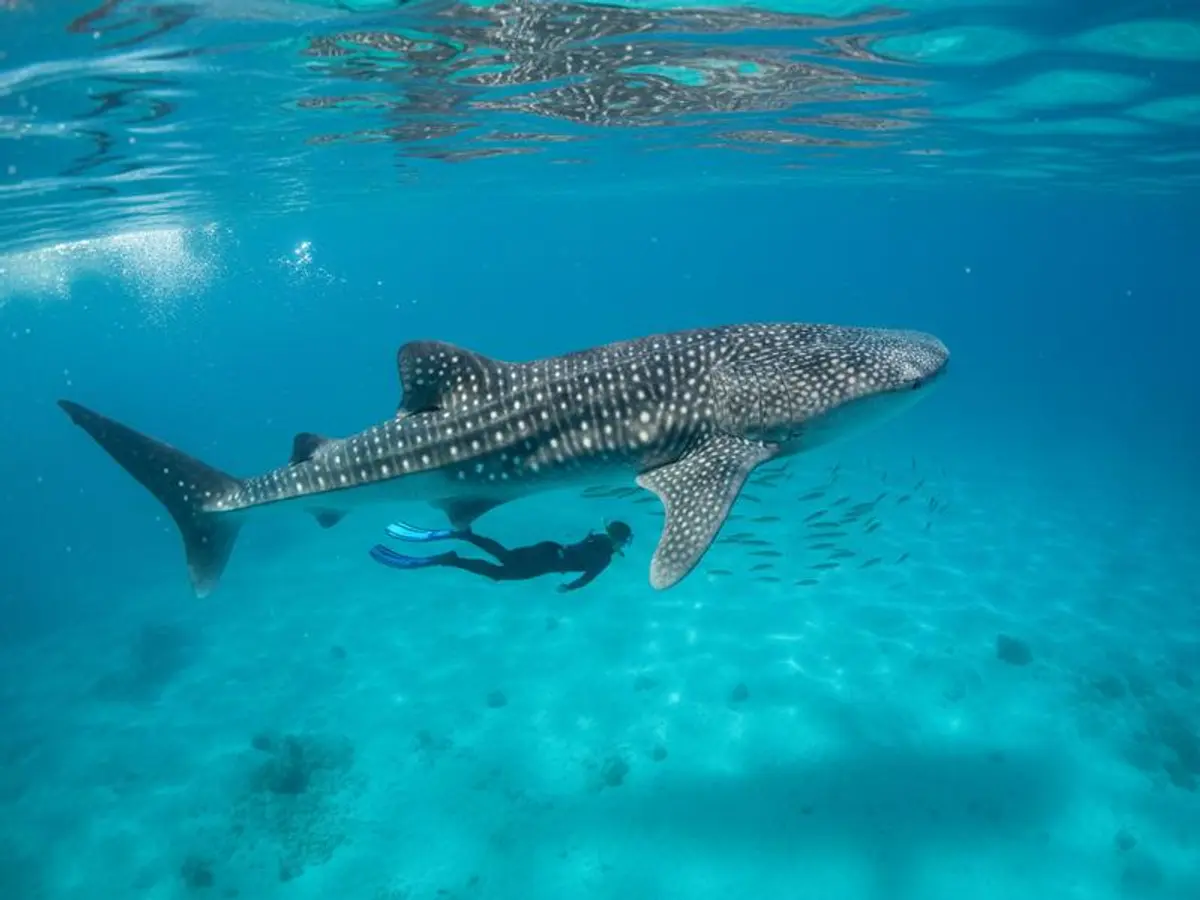
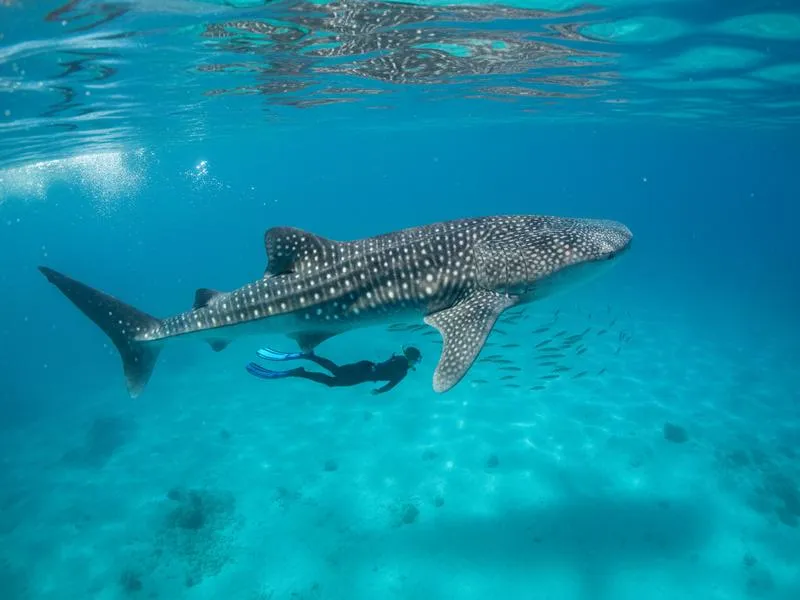
What to do in June–August in Mexico instead: Cenotes, ruins, colonial cities, Guelaguetza festival (July 20 + 27 in Oaxaca), whale shark season begins (June in Holbox and Isla Mujeres).
September–October: Declining Season 🟡
Sargassum arrivals slow as waters cool slightly and currents shift. Some years see a secondary pulse in October. Generally improving conditions through October.
November–March: Clear Season ✅
The cycle resets. November is arguably the best month in Mexico — sargassum is gone, tourist crowds are low, prices drop 30–40%, and weather is excellent. See Mexico in November and Mexico in December.
Sargassum by Beach: Where to Go
If you only care about the fastest booking decision, use this rule:
- Book freely: Pacific coast, Holbox, Bacalar, Cozumel west coast, Isla Mujeres
- Book with checks: Cancún north Hotel Zone, Puerto Morelos, Playa Delfines
- Book only if the hotel has serious cleanup operations: Playa del Carmen beaches and Cancún south Hotel Zone in summer
- Avoid for a beach-first summer trip: Tulum Hotel Zone from June through August
🔴 High Risk: Avoid in June–September
| Beach | Location | Why High Risk |
|---|---|---|
| Tulum Hotel Zone | Tulum, QRoo | Southeast-facing, worst currents in Riviera Maya |
| Playa del Carmen (south of Calle 38) | PDC, QRoo | Southeast-facing, moderate-high April–October |
| Cancún Hotel Zone (south end, Zones 13–20) | Cancún, QRoo | Higher exposure than north zones |
| Akumal Bay | South of PDC | Southeast-facing, notable summer accumulations |
🟡 Moderate Risk: Check Before Booking
| Beach | Location | Notes |
|---|---|---|
| Cancún Hotel Zone (north end, Zones 1–5) | Cancún, QRoo | Better wind clearing than south end; varies by year |
| Playa del Carmen (north of Calle 38) | PDC, QRoo | Slightly better than south end |
| Playa Delfines | Cancún | Strong winds help clear it quickly |
| Puerto Morelos | Between CUN and PDC | Offshore reef provides some protection |
✅ Sargassum-Free Year-Round
Cozumel West Coast
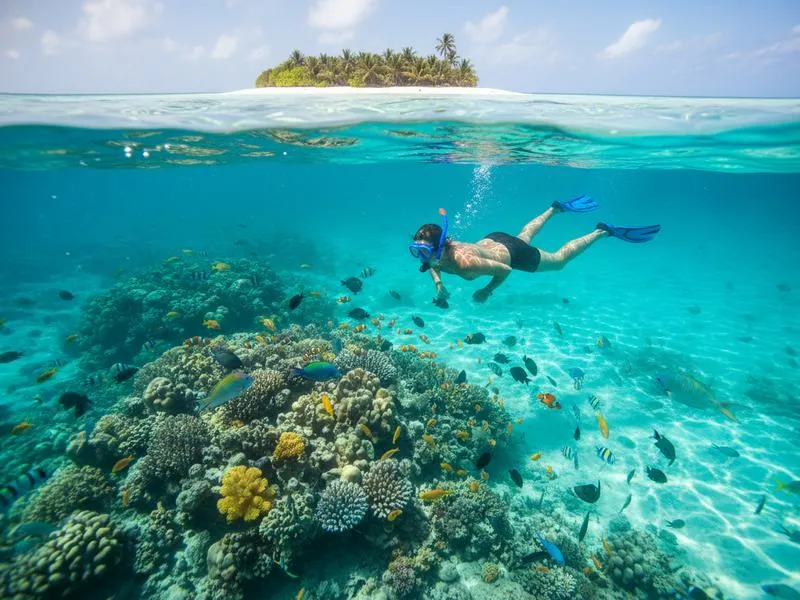
Cozumel island physically blocks sargassum from reaching its western beaches — the seaweed currents flow north along the eastern edge of the island and never round the western coast. The main dive sites and beach clubs on Cozumel’s west coast (Playa San Francisco, Playa Palancar, Santa Rosa beach) are much less exposed than the mainland, though wind and currents can still change day-to-day conditions.
The sargassum escape route: Playa del Carmen → Cozumel ferry (40 min, 260 MXN). When PDC beaches are covered, Cozumel is often the best quick backup. See Playa del Carmen to Cozumel ferry guide.
Isla Mujeres (Playa Norte)
Playa Norte faces north-northwest — completely outside the path of Caribbean sargassum currents. This 400-meter stretch of flat, calm water has been consistently rated one of Mexico’s best beaches for over a decade, and the northwest orientation is exactly why it stays clear even in record sargassum years.
Isla Mujeres guide | Cancún to Isla Mujeres ferry
Holbox Island
Holbox Island sits in the Gulf of Mexico, not the Caribbean Sea. The Gulf is not connected to the Atlantic sargassum current system. Holbox’s north-facing beaches (the main beach, Punta Cocos, Punta Mosquito) are structurally sargassum-free. The water is shallow, clear, and calm year-round.
Note: Holbox has natural jellyfish (June–September) — bring a rash guard. This is different from sargassum.
Bacalar (Laguna de Bacalar)
Bacalar is a freshwater lagoon 200km south of Tulum. It is completely sargassum-free by definition — no seaweed grows in fresh water. The Lagoon of Seven Colors has some of the clearest freshwater in Mexico, with visibility to 10+ meters in the dry season.
Bacalar travel guide | Cancún to Bacalar
The Entire Pacific Coast
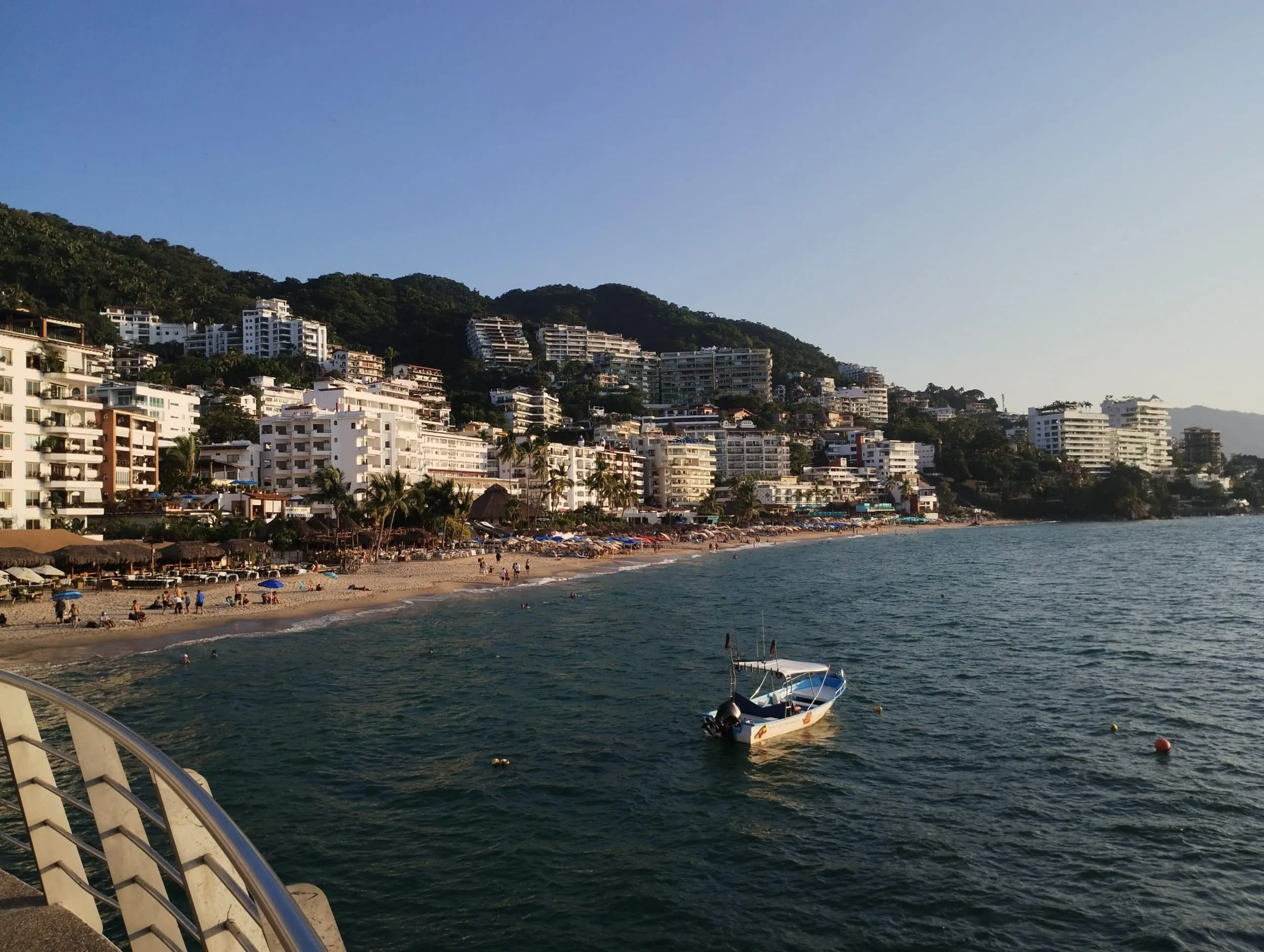
Sargassum is a Caribbean/Atlantic phenomenon. It does not affect the Pacific Ocean. Every beach on Mexico’s Pacific coast is sargassum-free 365 days a year:
- Puerto Vallarta — Banderas Bay, clear year-round
- Sayulita — gentle surf beach, always clear
- Puerto Escondido — world-class waves, zero sargassum
- Mazatlán — Gulf of California, unaffected
- Los Cabos — Sea of Cortez, completely clear
- Huatulco, Ixtapa, Manzanillo — all Pacific coast, all clear
The best alternative to Cancún in 2026: Puerto Vallarta. Direct flights from most US cities, no sargassum ever, better whale watching (December–March), and 40–60% lower prices than Cancún. See Cancún vs Puerto Vallarta comparison.
Cenotes: The Sargassum-Proof Alternative
Even if you’re staying in the Riviera Maya during peak sargassum season, Mexico has thousands of cenotes — freshwater underground caves and sinkholes with perfect visibility regardless of ocean conditions.
| Cenote | From | Entry | Notes |
|---|---|---|---|
| Gran Cenote | Tulum (~4km) | 500 MXN | Popular near-Tulum option |
| Dos Ojos | Tulum (25km) | 500 MXN | Cave diving system |
| Cenote Chaak-Tun | Playa del Carmen (2km) | 200 MXN | In-town, closest |
| Río Secreto | Playa del Carmen (8km) | 1,050 MXN | Underground river experience |
| Cenote Ik Kil | Chichen Itza (3km) | 180 MXN | Open-air cenote, stunning |
| Cenote Suytun | Valladolid (4km) | 200 MXN | Famous photo spot |
Full guide: Cenotes near Tulum | Cenotes near Playa del Carmen | Cenotes near Cancún
How Hotels Deal with Sargassum
Premium resorts on affected beaches spend millions annually managing sargassum:
Floating barriers (booms): Long floating tubes anchored 50–200m offshore catch seaweed before it reaches the beach. Effective in light-moderate conditions; overwhelmed during heavy accumulations.
Daily cleanup crews: Most resorts deploy teams starting at 4–5 AM to remove seaweed from the sand before guests wake up. Some resorts can clear moderate accumulations entirely by 8 AM; others fall behind during record events.
What to look for when booking:
- Ask the hotel directly: “Do you use sargassum barriers?” and “What is your daily cleanup schedule?”
- Check recent photos on TripAdvisor sorted by “Most Recent” — far more reliable than the hotel’s own photos
- All-inclusive resorts with private beach sections generally maintain better conditions than public or shared-access beaches
- Higher-budget resorts (Le Blanc, Hyatt Ziva, Nizuc) invest more in mitigation than budget options
Red flag: A hotel that says “sargassum is never a problem at our beach” in June–August is almost certainly lying.
How to Check the Live Sargassum Map and Real Conditions Before You Book
The pages ranking best for this topic usually help travelers make a booking decision, not just explain the science. The smartest check is to combine a daily beach map, a regional forecast, and beach-specific recent photos.
1) Check the live beach map first
Use the Sargassum Monitoring daily map when you want the fastest read on which exact beaches are rough right now. It is better for near-term decision-making than a generic destination article because conditions can change within a day or two.
2) Check the regional outlook
Use the University of South Florida Sargassum Watch System to see whether the wider Atlantic and Caribbean are running below average, average, or above average. This tells you whether you are heading into a light year or a heavy one.
3) Check the exact beach, not just the destination
“Cancún” can mean very different beach conditions depending on where you stay. The same goes for Tulum and Playa del Carmen.
- Search recent Google Maps photos for the exact hotel or beach club
- Sort TripAdvisor photos by Most Recent
- Look for photos from the last 7 to 14 days, not last season
4) Message the hotel directly
Ask two simple questions:
- Do you have floating sargassum barriers?
- How early does your cleanup crew start?
If the answer is vague, assume the beach experience will be inconsistent during peak season.
5) Build a backup plan before you arrive
If you book the Riviera Maya in summer, line up a few clear-water alternatives in advance:
- Cenotes near Cancún
- Cenotes near Playa del Carmen
- Cenotes near Tulum
- Cancún to Isla Mujeres ferry
- Playa del Carmen to Cozumel ferry
That way, one rough beach day does not ruin the trip.
Sargassum vs. Red Tide: What’s the Difference?
Two distinct phenomena often confused:
| Sargassum | Red Tide (HAB) | |
|---|---|---|
| What it is | Brown seaweed | Harmful algal bloom (microscopic) |
| Color | Brown/golden-brown | Red, brown, or green discoloration of water |
| Smell | Rotten eggs (H₂S, when decomposing) | Fishy or no smell |
| Danger | Generally not harmful; H₂S from large piles can irritate | Some blooms produce neurotoxins; can cause respiratory irritation, shellfish poisoning |
| Mexico frequency | Annual, seasonal (Caribbean) | Occasional; most common in Gulf Coast areas |
| What to do | Avoid breathing near large decomposing piles; find another beach | Don’t swim; avoid area; check local advisories |
Best Mexico Beach Trips to Avoid Sargassum in 2026
Option 1: Go in November–March
The simplest solution. Mexico in November through Mexico in March offers clear Caribbean waters, lower prices, and the best overall conditions.
Option 2: Switch to Cozumel
Same Yucatán Peninsula, 40-minute ferry from Playa del Carmen. The Cozumel west coast has some of the best snorkeling and diving in Mexico plus much lower sargassum risk than the mainland. Stay in San Miguel de Cozumel and take the ferry to PDC for day trips.
Option 3: Go to Holbox for Whale Sharks
June–September is peak sargassum season on the Caribbean — but it’s also peak whale shark season at Holbox and Isla Mujeres. Swim with whale sharks in Holbox (June–September, 2,000–2,800 MXN/person) while avoiding the sargassum-affected Caribbean coast entirely.
Option 4: Choose the Pacific
Puerto Vallarta, Puerto Escondido, Sayulita, Mazatlán, Los Cabos — all Pacific coast, all sargassum-free, all year. June–August is actually low season on the Pacific with lower prices.
Option 5: Inland Mexico
Oaxaca for the Guelaguetza festival (July 20 + 27), Mexico City, San Miguel de Allende, the colonial circuit, and Copper Canyon — none of these are affected by sargassum.
Practical Tips: Visiting Mexico Caribbean During Sargassum Season
If you’re committed to the Caribbean coast despite sargassum:
-
Book north-facing or west-facing beaches. Playa Norte in Isla Mujeres and Cozumel’s west coast are far better protected. Within Cancún, the north end of the Hotel Zone (Zones 1–5) fares better than the south.
-
Check photos from the actual week. Use TripAdvisor photos sorted by “Most Recent” — you’ll see real conditions from the past week, not marketing shots.
-
Stay near cenotes. Even if the ocean beach is covered, the cenotes are always perfect. Staying in Playa del Carmen gives you access to Chaak-Tun (2km away), Río Secreto (8km), and the Dos Ojos system (25km toward Tulum).
-
Early mornings are best. Hotels clean overnight. If you’re at the beach at 7–8 AM, conditions are at their best for the day.
-
Get an ocean view room, not a beach room. The ocean view from elevation looks beautiful even with sargassum on the shoreline.
-
Choose an all-inclusive with sargassum barriers. Ask specifically: “Do you deploy floating barriers?” and “Can you send photos from last week’s beach conditions?”
Sargassum Resources
- Sargassum Monitoring daily map — daily beach-level map for current conditions
- University of South Florida Sargassum Watch System — official satellite monitoring, updated monthly
- Sargasso Sea Alliance — research and conservation context
- HowIsTheSargassum.com — real-time beach reports crowdsourced from visitors
Planning your Mexico trip? See our related guides:
- Best Beaches in Mexico 2026 — ranked with sargassum risk for each
- Best Time to Visit Cancún — month-by-month weather and sargassum guide
- Best Time to Visit Playa del Carmen — when beach conditions are easiest
- Cancún in June 2026 — whale sharks, sargassum strategy, summer pricing
- Cancún vs Puerto Vallarta — sargassum as the deciding factor
- Best Time to Visit Tulum — honest sargassum calendar
- Isla Mujeres Travel Guide — best Caribbean escape when Riviera Maya beaches are rough
- Holbox Island Travel Guide — Gulf-side beach alternative with no sargassum season
- Cenotes Near Tulum — the sargassum-proof alternative
🌍 Book guided tours in Mexico via Viator
Read our Mexico travel insurance guide