Holbox Island Travel Guide 2026: Ferry, Hotels, Best Time & Things to Do
Holbox is worth it if you want a laid-back island for whale sharks, bioluminescence, flamingos, and long shallow beaches, not if you want easy logistics or clear turquoise snorkeling water. Expect a 2.5 to 3 hour trip from Cancún to Chiquilá, a 30-minute ferry, sandy streets, golf carts instead of cars, and better wildlife experiences than Isla Mujeres or Tulum.
30-Second Answer
| Question | Short answer |
|---|---|
| Is Holbox worth visiting? | Yes, if wildlife and slow-island atmosphere matter more to you than convenience or perfect Caribbean water color. |
| How do you get there? | Go to Chiquilá first, then take the 30-minute passenger ferry. Start with our Cancun to Holbox guide. |
| Best time to visit? | November to April for drier weather, June to September for whale sharks and bioluminescence. |
| How long should you stay? | 3 nights is the sweet spot for a first trip. |
| Best base? | Stay near the beach west of downtown for sunsets, or near the plaza if you want cheaper hotels and easier ferry logistics. |
| Biggest mistake? | Coming for turquoise-water snorkeling. Holbox is about wildlife and atmosphere, not reef clarity. |
Quick Facts
| Location | Northern Yucatán Peninsula, Quintana Roo |
| Size | 42 km long × 1-2 km wide |
| Population | ~2,000 permanent residents |
| Transport | Golf carts only — no cars, no paved roads in town |
| Ferry from Chiquila | 30 minutes |
| Drive from Cancún | 2.5-3 hours to Chiquila ferry terminal |
| Whale shark season | June–September |
| Bioluminescence | June–October |
| Best time | Nov–Apr (swimming) or June–Sept (wildlife) |
| Safety | Quintana Roo: US Level 2 — generally safe |
What Holbox Actually Is
Most Mexico Caribbean islands promise clear turquoise water. Holbox doesn’t. The island sits where two bodies of water meet — the Gulf and the Caribbean — and the resulting mix runs greenish-tan, full of nutrients that attract whale sharks, manta rays, and flamingos, but not suitable for the kind of visibility snorkeling you’d get at Cozumel.
What Holbox trades in visibility, it gains in wildness. The island has been discovered by international travelers over the past decade, but it retains a genuine remoteness — unpaved streets, limited ATMs, no chain restaurants, irregular electricity in some parts, and a strict no-cars policy that forces the entire population (residents and tourists) to share the same sandy lanes on foot or golf cart.
The town — also called Holbox — occupies the island’s western third. The eastern two-thirds are uninhabited mangrove lagoon, Yucatán scrub forest, and beach. Several lagoons along the south coast are seasonally inhabited by roseate spoonbills and flamingos. The north shore faces the open Gulf with long stretches of flat, shallow water — you can walk 300 meters out and still be waist-deep.
For broader Yucatán planning, see our best time to visit Yucatán guide and best Mexico cenotes guide.
Book Holbox tours and activities on Viator.
Getting to Holbox
Holbox requires more effort than Isla Mujeres or Cozumel, which is part of what keeps it from becoming a day-tripper magnet. See the full breakdown: Cancun to Holbox: Ferry, Bus & Driving Guide
Step 1: Reach Chiquila ferry terminal
Chiquila is a tiny fishing port at the end of a road in northern Quintana Roo, 2.5-3 hours from Cancún.
- By ADO bus: From Cancún’s ADO terminal (downtown) — direct buses to Chiquila, 2.5 hours, departures vary by season but usually 6-8 per day, ~200 MXN
- By shuttle: Multiple services run Cancún Airport → Chiquila directly; 400-700 MXN per person; 2.5-3 hours
- By rental car: Drive north from Cancún on Federal Highway 180 to Puerto Morelos, then northwest on the Cancún-Mérida toll highway, exit toward Nuevo Xcan, and follow signs to Chiquila. Parking at Chiquila: 100-150 MXN/day. Compare rental car prices on RentCars
Step 2: Take the ferry from Chiquila to Holbox
- Duration: 30 minutes
- Cost: 80-100 MXN each way (exact cash preferred)
- Frequency: Approximately every 30-60 minutes from 5 AM to 10 PM, with some late departures
- Note: Your car stays in Chiquila — no vehicles on the island. Park in the guarded lots (100-150 MXN/day).
Getting Around the Island
Golf carts: The primary transport for anything beyond the immediate town center. Rentals run 600-900 MXN/day for a 4-seat cart. If you’re exploring Punta Mosquito (flamingos) or the far east beaches, a cart is essential — it’s 8+ km of sandy track.
Bikes: 150-200 MXN/day — good for town and the near beaches, harder work for longer trips in soft sand.
Walking: The town center is 10-15 minutes end-to-end on foot. From the ferry pier, the main beach (Punta Cocos area) is about 3 km west — walkable in 35-40 minutes along the beach.
Taxis/moto-taxis: Available for fixed fares; most trips in town 20-50 MXN.
Best option by trip style:
- First visit, 2-3 nights: Walk + taxi is usually enough
- Photographers / beach hoppers: Rent a golf cart for 1 day
- Budget travelers: Bike during daylight, taxi at night if needed
- Rainy-season trip: Expect deeper puddles and slower cart rides on sandy roads
Whale Shark Tours
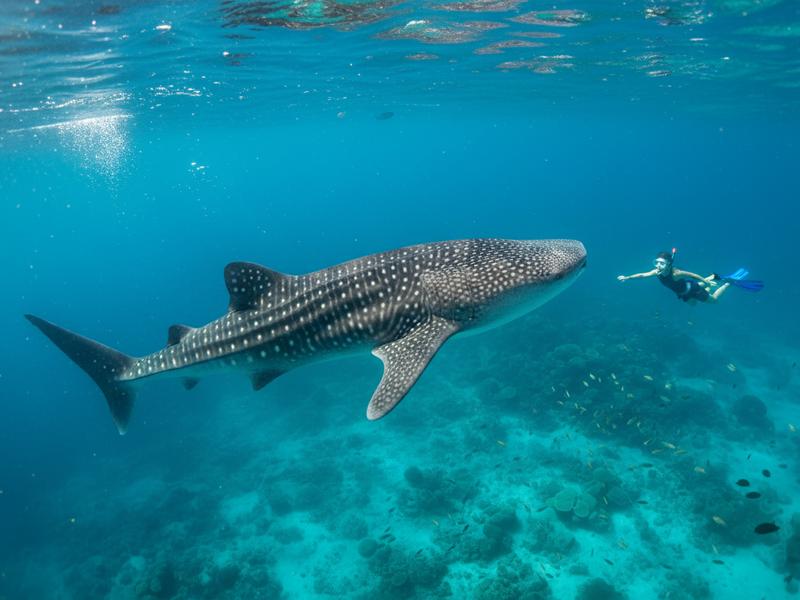
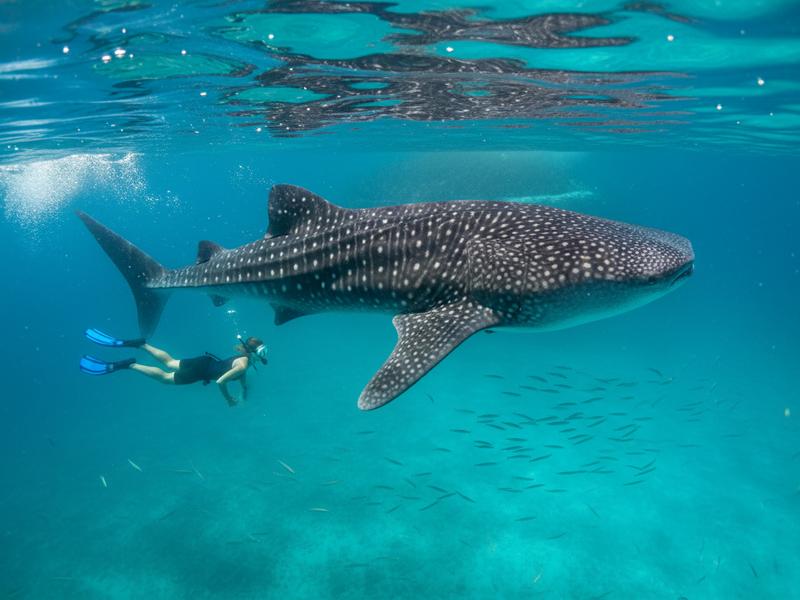
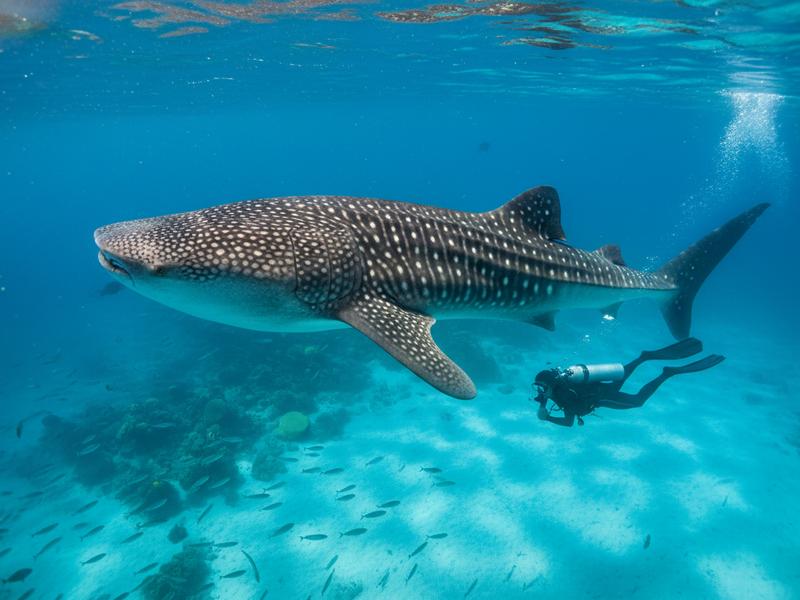
Holbox is one of the primary departure points for the annual whale shark aggregation that occurs in the waters between the Yucatán’s northern coast and open Gulf from June through mid-September. Our Mexico whale shark guide compares Holbox with Isla Mujeres and La Paz, including each destination’s season and tour conditions.
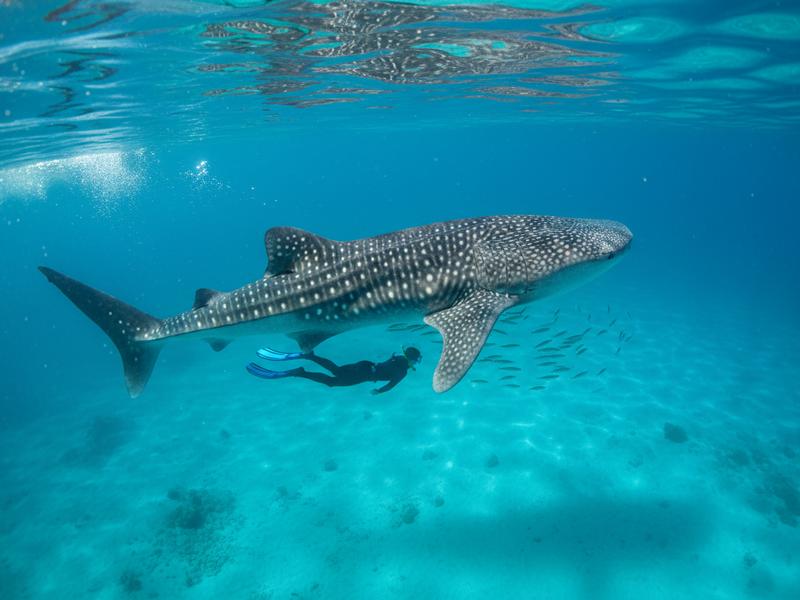
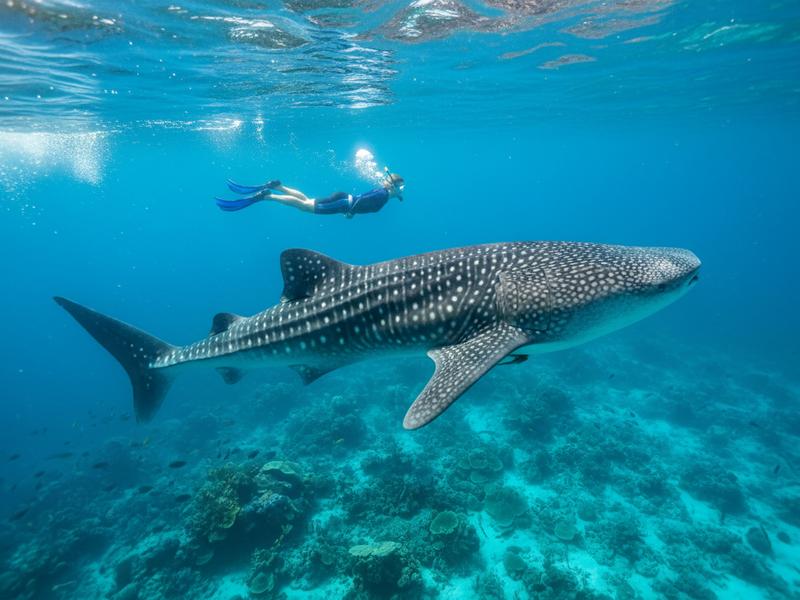
Whale sharks — the world’s largest fish, reaching up to 12-14 meters — gather in the area called Afuera to feed on the spawn of little tunny fish. The aggregation can number 400-800 individual sharks in peak weeks.
What to expect:
- Tours depart 6-7 AM, return 12-2 PM
- Open-water swimming — depths of 25-35 meters beneath you
- Enter in pairs with a guide; strict 2-meter distance rule from the shark
- No touching, no flash photography
- Sighting guarantee on most reputable operators (or your money back / free return trip)
- Season: mid-June through mid-September; peak weeks are mid-July to mid-August
Tour prices from Holbox:
- 1,400-2,200 MXN per person for standard tours
- Premium small-group tours (max 8-10 swimmers): 2,500-3,500 MXN
Who shouldn’t book:
- Anyone with serious motion sickness (rough open-water crossing possible)
- Non-swimmers (open water at depth; no reef structure)
- Children under 8 at most operators
Booking tips: Reserve 2-4 weeks in advance in peak season. Check that your operator is CONANP-certified (required for whale shark tours since 2020). Book whale shark tours from Holbox on Viator.
For whale shark and whale watching context across Mexico, see our whale watching Mexico guide.
Punta Mosquito and the Flamingo Lagoon
Eight kilometers east of town (golf cart required), Punta Mosquito is a sand spit where the northern coast curves south, creating a sheltered lagoon that functions as a seasonal habitat for roseate spoonbills, herons, and — the main draw — flamingos.
Flamingo viewing at Punta Mosquito:
- Flamingos are present year-round but most numerous from November through March during dry season
- The birds feed in the shallow lagoon, visible from the beach without approaching them (use binoculars)
- Getting close on foot is possible slowly and quietly; approach from downwind
- No barriers, no guides required — just golf cart to the end of the sandy track and a short walk
The flamingos here are American flamingos (Phoenicopterus ruber) — the brightest pink of the four flamingo species. A flock of 50-200 birds feeding in flat water at sunrise is one of the more photogenic wildlife scenes in the Yucatán Peninsula.
The sand spit also has one of the longest, least-visited stretches of beach on the island — worth the cart ride for that alone.
Bioluminescent Plankton
From June through October, the shallow water around Holbox contains bioluminescent dinoflagellates — single-celled organisms that emit blue-green light when physically disturbed. On moonless nights, swimming or kayaking through this water produces a glowing wake that trails behind every movement.
How to experience it:
- Night kayak tours: Most reliable method. Tours run 9-11 PM on new-moon nights, 2-3 hours, 500-900 MXN per person. Guide paddles you into the lagoon where concentrations are highest.
- Swimming off the beach: Walk into the water from the beach on a dark night and wave your hands — if dinoflagellates are present, you’ll see it immediately.
- Peak nights: New moon phase (moonless nights) is critical — even a half-moon washes out the effect
- Peak months: August and September have highest dinoflagellate concentrations
Managing expectations: The bioluminescence is real and impressive but not the Hollywood underwater glow-pool it looks like in edited photos. In person, it’s more like a blue-green shimmer in your wake — beautiful, but you need dark-adapted eyes to appreciate it fully.
Book a Holbox bioluminescence kayak tour on Viator.
Punta Cocos: Hammocks in the Sea
Punta Cocos, 2 km west of the town center, has several palapa restaurants that extend wooden platforms and rope hammocks into the shallow Gulf water. You order a drink from a water-walking waiter and lie in a hammock submerged to chest level in warm, flat water while looking at the horizon.
This is Holbox’s most photographed experience and genuinely as pleasant as it looks. Best times:
- Sunset: West-facing hammocks catch direct sunset over the Gulf — the light is extraordinary 5:30-7 PM
- Midday: Hot but the water temperature is refreshing (28-30°C in summer)
- Early morning: Empty hammocks, no crowds — 7-9 AM is the most peaceful window
Restaurants charge for the hammock use by requiring drink purchases (beer, coconut, agua frescas — 60-150 MXN each) — no flat hammock fee.
Yalahau Freshwater Cenote
Accessible only by boat (10-15 minutes from the Holbox town pier), the Yalahau cenote is a freshwater spring in the middle of the saltwater lagoon — a circular, crystal-clear pool surrounded by mangroves and limestone, fed by underground aquifer water that stays cool (24-26°C) year-round.
According to local Mayan tradition, Yalahau water has medicinal properties — in any case, it makes for a striking contrast to swim in perfectly transparent freshwater while the surrounding lagoon is opaque green saltwater.
Tours: Most snorkel and island day tours include Yalahau. Standalone boat trips from town: 200-350 MXN per person roundtrip.
Beaches
Holbox Town Beach (north shore in town): Wide, flat, and somewhat littered compared to the rest of the island. Good for sunset watching; less good for swimming due to seagrass patches.
East of town (1-4 km east): The best swimming beaches on the island. Fewer people, cleaner water, shallower entry. Golf cart required.
Punta Mosquito beach: Undeveloped, long, and remote. The eastern side faces the Gulf with stronger wind and choppier conditions.
Note on water quality: Holbox’s water is consistently warmer, greener, and less clear than the Caribbean waters at Isla Mujeres, Tulum, or Cozumel. This is a feature (whale sharks, nutrient-rich ecosystem) and a limitation (not for serious snorkelers or those who need Instagram-perfect blue water).
Holbox vs Isla Mujeres vs Tulum: Honest Comparison
| Holbox | Isla Mujeres | Tulum | |
|---|---|---|---|
| Water clarity | Low (murky green) | High (clear turquoise) | High (clear Caribbean) |
| Beach quality | Wide, flat, but variable | Playa Norte = exceptional | Good but seaweed variable |
| Whale sharks | Yes (June-Sept, 1hr boat) | Yes (June-Sept, 1hr boat) | No |
| Bioluminescence | Yes (June-Oct) | No | Limited |
| Flamingos | Yes (nearby) | No | No |
| Cenotes nearby | Yalahau (saltwater lagoon) | No | Excellent cenotes (40+) |
| Snorkeling/diving | Limited (murky water) | Good (Garrafón reef) | MUSA, reefs |
| Nightlife | Minimal (low-key bars) | Low-key | Extensive |
| Crowds | Medium (growing) | High (day-trippers) | High |
| Getting there | 3 hrs from Cancún | 30 min from Cancún | 1.5 hrs from Cancún |
| Price level | Mid | Mid | Mid-High |
Choose Holbox if: Wildlife experiences are your priority — whale sharks, flamingos, bioluminescence — and you’re comfortable with less-developed infrastructure and murky water.
Choose Isla Mujeres if: You want the best Caribbean beach (Playa Norte), clearer water, and easy access from Cancún. Overnight on a tight schedule.
Choose Tulum if: You want cenotes + beach in combination, better restaurant scene, and less of a remote-island commitment.
See our Isla Mujeres travel guide and Tulum travel guide for full comparisons.
Where to Eat
Seafood: Holbox has excellent fresh fish and seafood. The island’s fishing cooperative supplies local restaurants with fish, conch, lobster, and shrimp caught the same day.
Best cheap eats: Market stalls near the central plaza — tacos de pescado (fish tacos) at 25-40 MXN each, ceviche de concha (conch ceviche), tikinxic (Mayan-style marinated whole fish grilled over charcoal).
Mid-range: Several seafood restaurants around the main plaza and north beach. Order whatever was caught that day — menus written on chalkboards indicate freshness.
Upscale: A handful of restaurants cater to the international crowd with fusion menus, natural wines, and prices that approach Mexico City standards (500-1,000 MXN per person).
Coffee: El Chapulim on the main plaza is consistently recommended for breakfast and strong coffee.
Where to Stay
If you are choosing a hotel now, start with our dedicated best hotels in Holbox guide. For a first trip, the most important decision is beach access vs ferry convenience.
Best area to stay in Holbox by trip style
| Area | Best for | Tradeoff |
|---|---|---|
| Downtown / near the plaza | Short stays, budget hotels, easy ferry arrival, quick food access | Less beachy feel, noisier at night |
| Beach zone west of downtown | First-timers, sunset lovers, boutique stays, easier beach days | Higher prices, longer walk to the ferry |
| Punta Cocos side | Quiet stays, couples, sunset atmosphere | Farther from the plaza, carts/taxis help |
| Far east / remote stretches | Seclusion and empty sand | More effort, fewer services, less convenient in bad weather |
Budget (500-1,000 MXN/night): Basic posadas, shared facilities, ceiling fans only. Several good options 2-4 blocks from the main plaza. Booked quickly in peak season.
Mid-range (1,200-2,500 MXN/night): Small hotels with AC, wifi, and proximity to the beach. Some include breakfast.
Boutique (3,000-7,000 MXN/night): Several beautifully designed properties on or near the beach with pools, rooftop terraces, and breakfast. Book 2-3 months in advance for July-August.
Key note: Holbox has unreliable electricity — brownouts are common during peak demand hours, particularly in July-August. Most hotels have generators or inverters but confirm before booking if AC is a priority.
Budget Table
| Expense | Budget | Mid | Comfort |
|---|---|---|---|
| Hotel (per night) | 500-900 MXN | 1,200-2,500 MXN | 3,000+ MXN |
| Golf cart rental (per day) | 600-750 MXN | 750-900 MXN | 900+ MXN |
| Meals (per day) | 200-400 MXN | 400-700 MXN | 800+ MXN |
| Whale shark tour | 1,400-1,800 MXN | 1,800-2,500 MXN | 2,500-3,500 MXN |
| Other activities (daily avg.) | 200-400 MXN | 400-700 MXN | 1,000+ MXN |
| Ferry (round-trip) | 160-200 MXN | 160-200 MXN | 160-200 MXN |
| Daily total (no whale shark) | ~1,500-2,500 MXN | ~2,500-4,500 MXN | 5,000+ MXN |
Rates as of Feb 2026; USD rate ~17-18 MXN
Practical Tips
- Cash only: Holbox has limited ATMs (2-3 on the island) that frequently run out. Bring sufficient cash from Cancún or Chiquila (ATM at the ferry terminal parking lot).
- Jellyfish: Common from June–September. Buy a rash guard or light wetsuit. Most stings are minor but uncomfortable.
- Sunscreen: Reef-safe only — enforce yourself even if signs aren’t everywhere. The island’s ecosystem is what makes it worth visiting.
- Mosquitoes: The mangrove-rich environment breeds them. DEET repellent in the evenings is non-negotiable.
- Sand: The island’s streets are literally sand. Your shoes, bags, and everything else will fill with it. Accept this.
- Phone signal: Telcel works across most of the town; patches of no signal in the eastern island sections.
- Safety: Extremely safe for tourists. The isolation works in its favor — crime is low because the community is small and interconnected.
- Travel insurance: travel insurance should include water-sports related medical treatment and emergency medical, useful for whale shark and kayak activities.
- For state-level safety context, see our Mexico travel advisory 2026 guide.
Common First-Timer Mistakes on Holbox
- Expecting Isla Mujeres water color. Holbox is greener and shallower, which is exactly why the wildlife is so good.
- Booking only 1 night. You lose too much time getting in and out for such a short stay.
- Not bringing enough cash. ATMs run out, especially in busy months.
- Assuming every hotel has reliable AC and power backup. Check before paying boutique prices.
- Coming in peak whale shark season without prebooking. July and August sell out faster than travelers expect.
- Skipping the moon phase check. Bioluminescence is much better around darker nights.
How Many Days Do You Need?
2 nights (3 days): Enough for the main experiences — whale shark tour (1 day), flamingo lagoon (half day), Punta Cocos hammocks, Yalahau cenote, and the town center. Tight but doable.
3 nights (4 days): The comfortable version — adds a bioluminescence kayak tour, a properly lazy beach day, and enough time to discover the better restaurants by trial and error.
4+ nights: Appropriate if you’re pairing Holbox with El Cuyo (2 hours west) for a northern Yucatán loop, or if whale sharks and deep relaxation are genuinely your priorities. See our El Cuyo Yucatán guide for that combination.
Final Thoughts
Holbox is a commitment. Three hours from Cancún, cash-only, murky water, sandy streets, occasional power cuts. The kind of island you have to decide you want before you get there.
What you get in return: whale sharks 20 minutes offshore, flamingos 8 km east, bioluminescence in the lagoon at night, hammocks hanging over a flat Gulf sunset, and genuine fishing-village character that most Caribbean islands traded away a decade ago for resort infrastructure.
If your Mexico trip can absorb 3 days of inconvenience in exchange for wildlife experiences that don’t exist anywhere else in the country, Holbox earns every hour of the journey.
Book Holbox Island tours on Viator — whale shark tours, bioluminescence kayak, flamingo lagoon, and day packages all bookable in advance.
More Holbox Guides
- 25 Things to Do in Holbox 2026 — full activity guide: whale sharks, bioluminescence, flamingos, kitesurfing, Cabo Catoche
- Best Time to Visit Holbox — month-by-month guide: whale shark calendar, bioluminescence peak, jellyfish season, budget timing
- Mexico in June 2026 — Holbox whale shark logistics in context: June opening week, Holbox vs Isla Mujeres comparison, Pacific alternatives