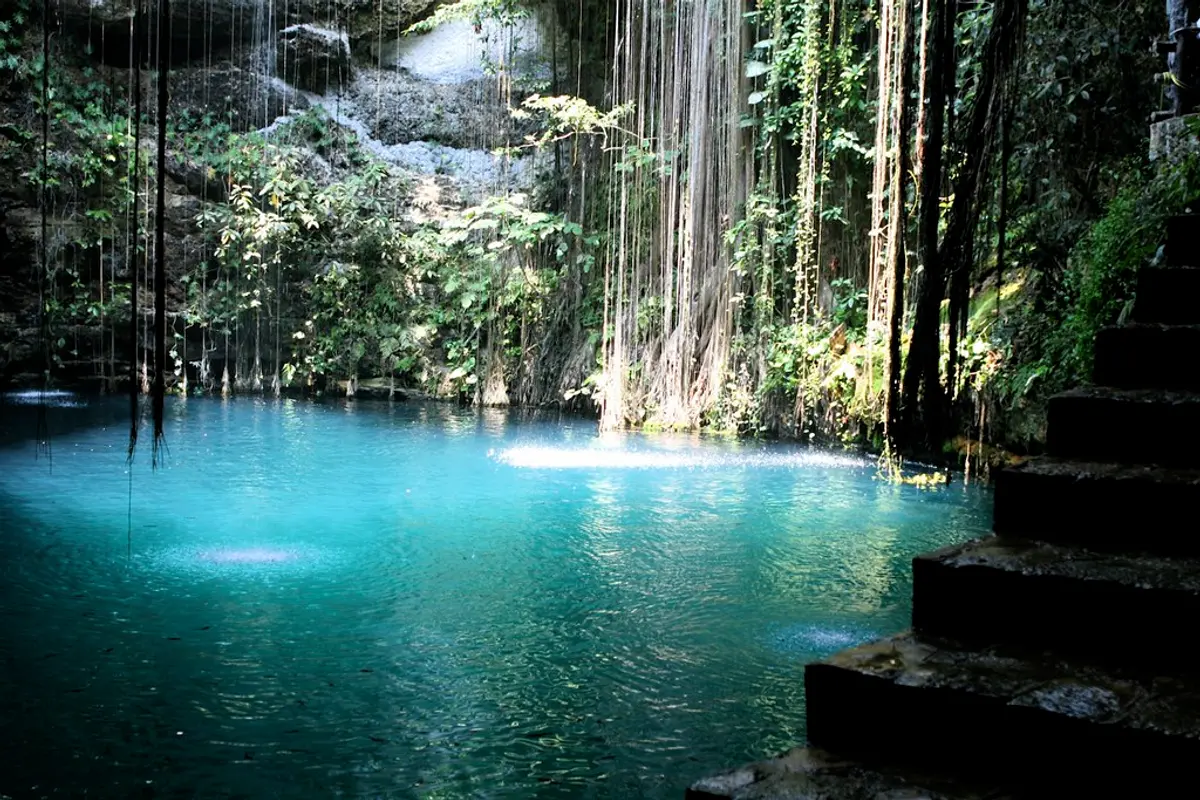
Best Cenotes in Mexico 2026: 27 Top Picks by Location
Updated for 2026: if you only have time for a few cenotes in Mexico, start with these top picks by location: Gran Cenote for easy Tulum snorkeling, Dos Ojos for cave diving, Ik Kil for a Chichén Itzá day trip, Cenote Azul in Bacalar for a deep open-water swim, and Suytun for the most photogenic Valladolid stop. Those five cover the main traveler intents behind this search.
Mexico has over 6,000 cenotes, almost all of them in the Yucatán Peninsula. They were sacred to the Maya, who called them dzonot (well), and today they are one of the biggest reasons travelers build a trip around Tulum, Valladolid, Bacalar, and the Riviera Maya.
This guide covers the 27 best cenotes in Mexico, organized by location so you can choose the right one faster instead of bouncing between random listicles. Use it if you want the best cenote for swimming, snorkeling, diving, photos, families, or a first cenote stop near Tulum, Playa del Carmen, Valladolid, or Bacalar.
Best Cenotes in Mexico by Location in 30 Seconds
| If you want… | Go here | Why it wins |
|---|---|---|
| The best first cenote near Tulum | Gran Cenote | Easy access, great snorkeling, beginner-friendly cave + open sections |
| The best cenote in Mexico for diving | Dos Ojos | Famous cave system, serious dive credentials, still workable for snorkelers |
| The best cenote for photos | Suytun | Famous platform, light-beam look, easy Valladolid pairing |
| The best cenote for families | Cristalino | Easy swim, simpler logistics, calmer first-time feel |
| The best cenote with a Chichén Itzá day trip | Ik Kil | Classic combo stop, polished facilities, easy tour pairing |
| The best cenote for adventure | Selvatica | Zip lines, jungle setting, full activity-day energy |
| The best open cenote in southern Quintana Roo | Cenote Azul (Bacalar) | Dramatic deep-blue water and less Riviera Maya crowd pressure |
One rule before you go: check the operator’s current visitor policy. Product rules vary from biodegradable-only to no sunscreen or skin products at all. Arrive product-free, shower as instructed, and use physical sun protection between swims.
Types of Cenotes in Mexico
Not all cenotes look alike. There are four main types:
| Type | Description | Best For |
|---|---|---|
| Open (pit) | Completely exposed, sky visible, large pool | Swimming, snorkeling, families |
| Semi-open | Partially covered, natural skylights | Snorkeling, photography (light beams) |
| Cave | Fully enclosed cavern | Diving, spelunking, adventure |
| Underwater | No air pocket — accessed by diving only | Technical diving only |
Most visitors swim in open and semi-open cenotes. Cave cenotes require a guide and, for underwater sections, a diving certification.
Quick Reference: Best Cenotes by Use
| Cenote | Best For | Distance from Tulum | Entry (MXN) |
|---|---|---|---|
| Gran Cenote | Snorkeling, families | 4 km | 500 |
| Dos Ojos | Scuba diving | 22 km north | From ~400 |
| Cenote Azul (Bacalar) | Swimming, cliff diving | 3 hr (Bacalar) | 100 |
| Ik Kil | Day-trip combo (Chichen Itza) | 2.5 hr | 250 |
| Selvatica | Zip lines + cenote | 1.5 hr (Cancun) | 1,800+ (combo) |
| Angelita | Advanced diving (H₂S cloud) | 17 km south | ~300–350 site fee |
| Suytun | Photos, Valladolid combo | 2 hr (via Valladolid) | 300 |
| Cristalino | Easy swim, families | ~40 km | US$25 adult |
| Tajma Ha | Halocline photography | 25 km | 200 |
| Casa Cenote | Snorkeling, proximity to beach | 11 km north | ~250–300 |
Cenotes Near Tulum (within 30 km)
Tulum sits at the heart of cenote country. You can visit 4–5 cenotes in a single day by renting a bike or hiring a driver.
1. Gran Cenote — Best Overall for Snorkeling
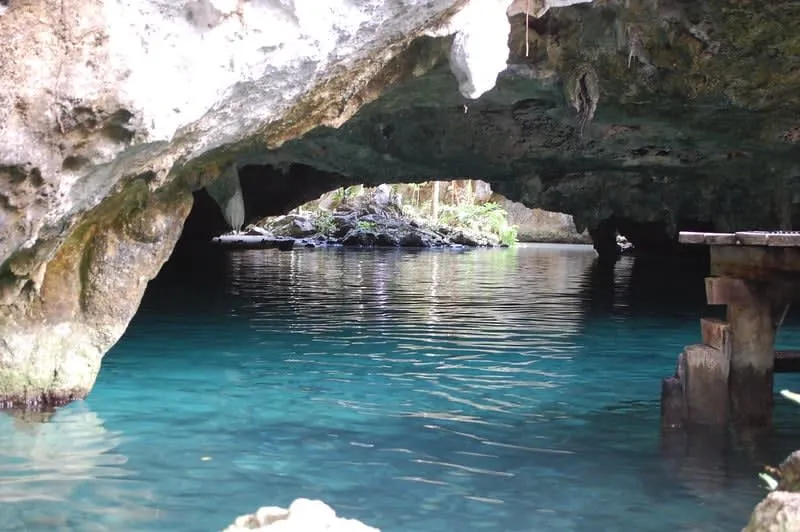
Gran Cenote is about 4km from Tulum on the road toward Cobá. It combines open swimming with cave-like sections and limestone formations.
Maximum depth is 10 meters, making it safe for snorkelers and beginner divers. The morning light flooding through the cave opening creates spectacular photographs. Arrive before 9 AM to beat tour buses from Cancun.
Facilities include parking, restrooms, and snorkel-equipment rental. Entry: 500 MXN.
Gran Cenote is reachable from Tulum by bicycle or taxi. The road is exposed and hot, so start early and confirm the current rental or taxi price locally.
2. Dos Ojos — Best for Scuba Diving
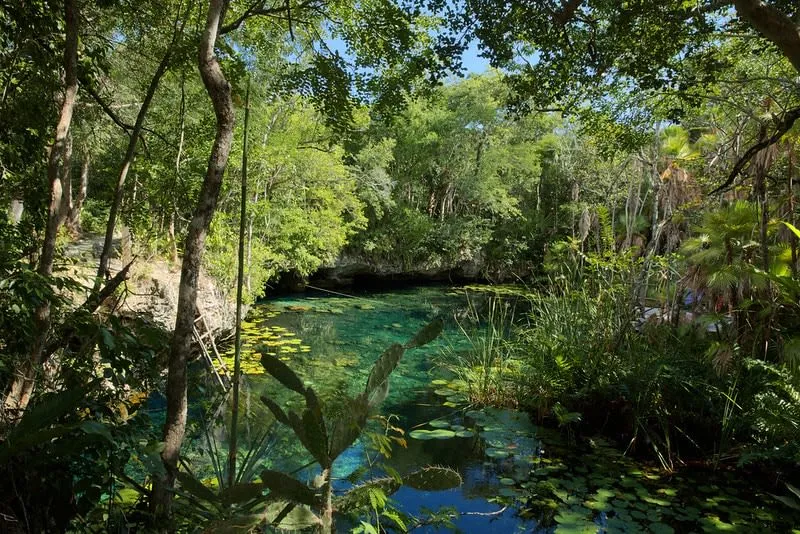
Dos Ojos (“Two Eyes”) is about 22km north of Tulum, named for the two sinkholes that form its openings. It connects to the Sac Actun cave system and is a major cavern- and cave-diving site.
Non-divers can snorkel in the Bat Cave section (no certification needed, guide included). Certified cave divers can go deep into the system for an otherworldly experience.
Entry: from about 400 MXN; guided snorkeling and diving packages cost more. Confirm the current option directly.
3. Cenote Calavera (Temple of Doom) — Best for Cliff Jumping
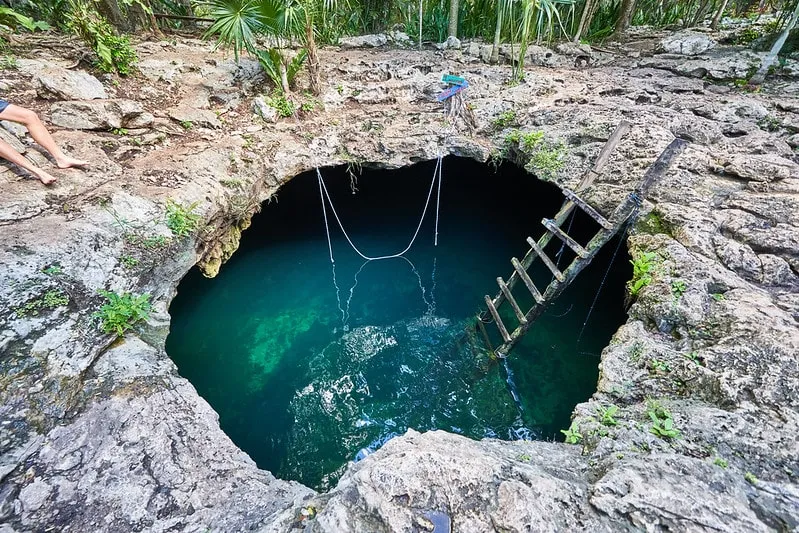
Cenote Calavera (“Skull” or “Temple of Doom”) is on the road between Tulum and Cobá. It has three holes in the limestone ceiling — the largest for swimming, two smaller ones for jumping. The thrill of leaping through a skull-shaped hole into a 10-meter-deep cave pool is hard to describe.
The three openings and ladder access make it visually distinctive, and bats may be visible in the cave. Entry: about 250 MXN; confirm before visiting.
4. Cenote Crystal (Naharon) — Best for Families with Kids
A wide, shallow open cenote 3 km south of Tulum on Highway 307. Maximum depth is 5 meters — great for children and new swimmers. Palm trees surround a pool that looks like it was placed there by a miraculous hand.
Two-meter platform for diving, hammocks for shade. Open 8 AM–5 PM. Entry: 100 MXN ($6 USD).
5. Cenote Escondido — Best Combo with Cenote Crystal
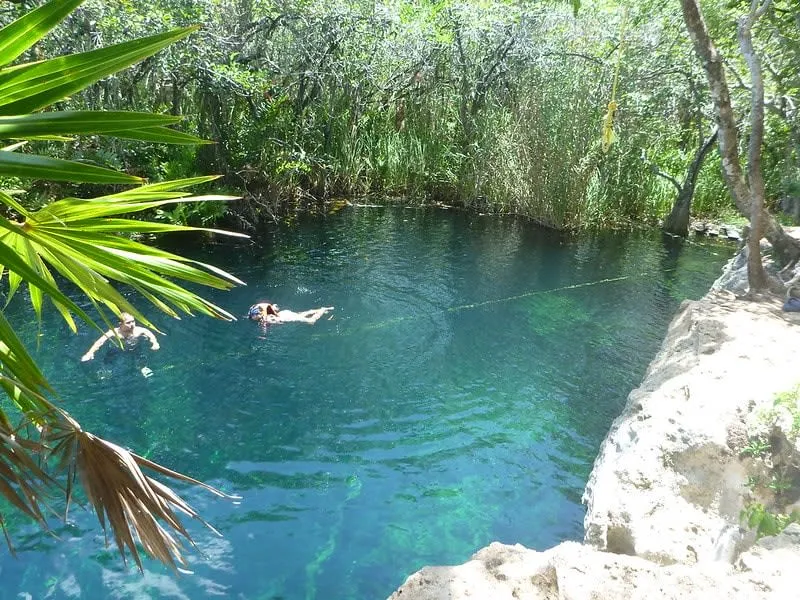
Five minutes from Cenote Crystal, many visitors do both in one morning. Cenote Escondido (“Hidden”) is a broad pool protected by cliffs up to 4 meters tall, with freshwater turtles and colorful fish. Wooden platforms extend over the water.
A 1 km jungle walk from the road adds to the adventure. Entry: 100 MXN ($6 USD).
6. Angelita — Best for Advanced Diving
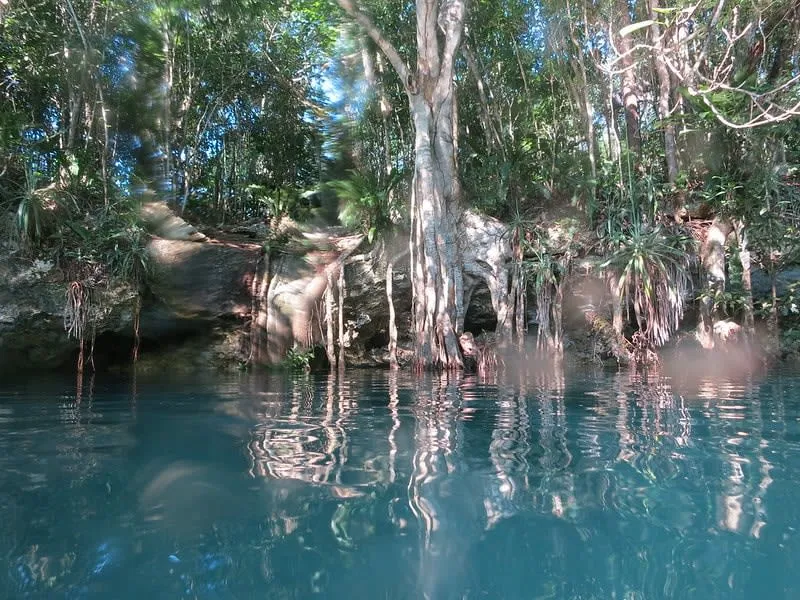
Angelita is about 17km south of Tulum and is an advanced dive, not a casual swimming or snorkeling stop. At roughly 27–30m, a hydrogen-sulfide cloud creates the visual effect of an underwater river.
This is one of the most surreal diving experiences in the region. Advanced Open Water certification is normally required. The site fee is commonly around 300–350 MXN; guided dive packages cost extra.
7. Cenote Zacil-Ha — Best for Family Facilities
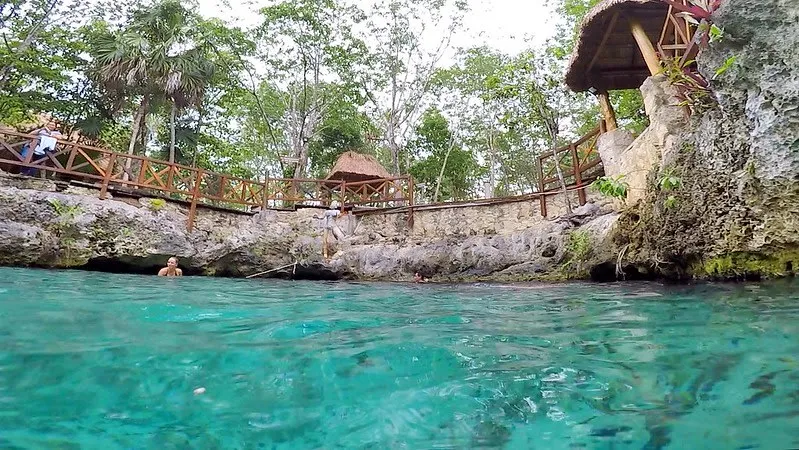
At km 8 of the Tulum–Cobá highway, Zacil-Ha is compact but has restrooms, changing rooms, food service, and a short zip line. The infrastructure makes it a comfortable family stop, but current admission is no longer a budget price. Entry: about 400 MXN; confirm before visiting.
8. Tak Be Ha — Best for Rock Formations
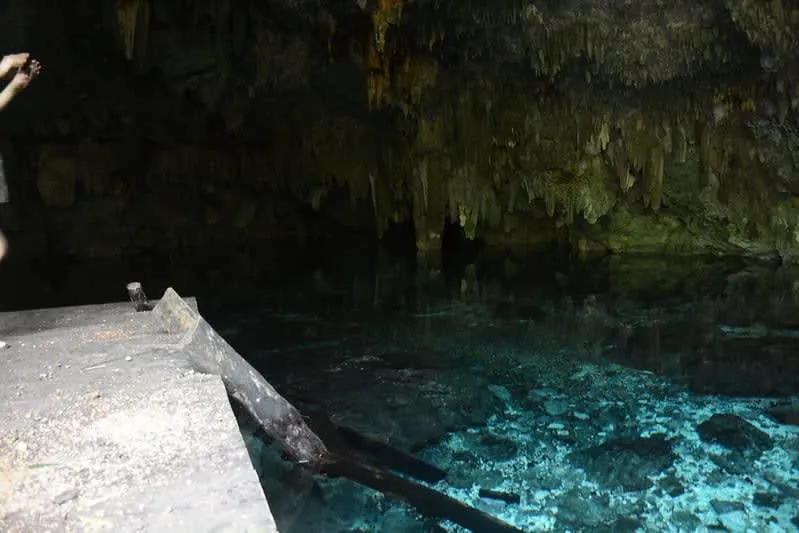
Fifteen minutes from Tulum and 30 minutes from Playa del Carmen, Tak Be Ha has one of the most impressive cavern ceilings — stalactites pointed downward like stone spears over crystalline water. Well maintained and not overcrowded. Swimming and snorkeling allowed. Entry: 100 MXN ($6 USD).
9. Casa Cenote — Best for Kayaking
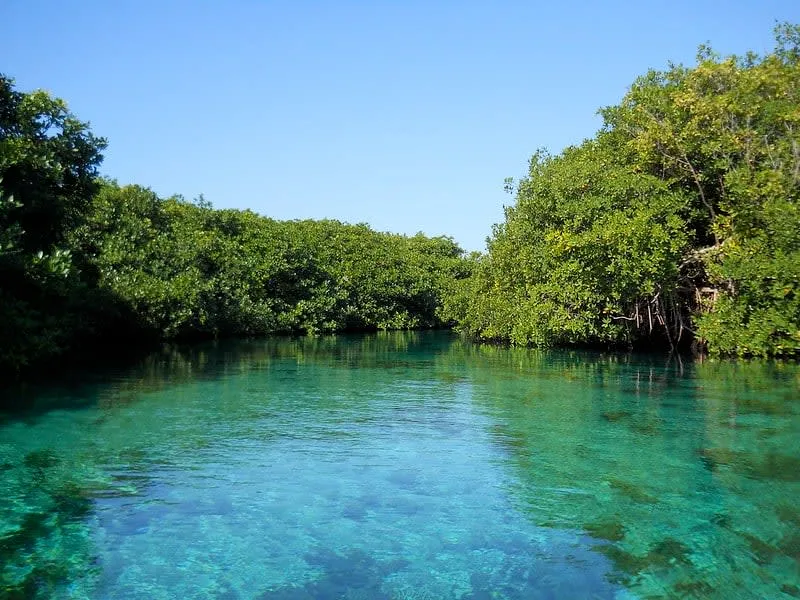
Casa Cenote in the Tulum municipality is a long, meandering channel that connects to the Caribbean Sea through mangroves. The transparently clear water looks shallower than it is. Ideal for kayaking the full length and snorkeling where the cenote meets saltwater.
Access is commonly around 250–300 MXN; confirm the current price before visiting. Casa Cenote is about 11km north of Tulum near Tankah Bay.
Cenotes Near Playa del Carmen (25 km north of Tulum)
10. Tajma Ha — Best for Halocline Photography
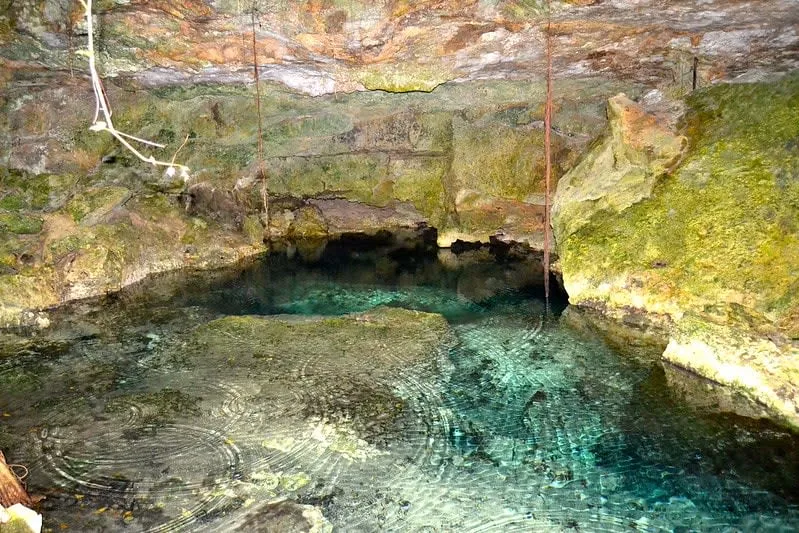
Tajma Ha is 25 km south of Playa del Carmen on Highway 307. Named for its phonetic resemblance to the Taj Mahal, it is best known for haloclines — visible columns of layered water where fresh and salt water meet at different densities, creating a shimmering visual distortion that makes photos look alien.
Natural light filtering deep into the cave adds to the effect. Entry: 200 MXN ($12 USD).
11. Rio Secreto — Best for Cave Adventure
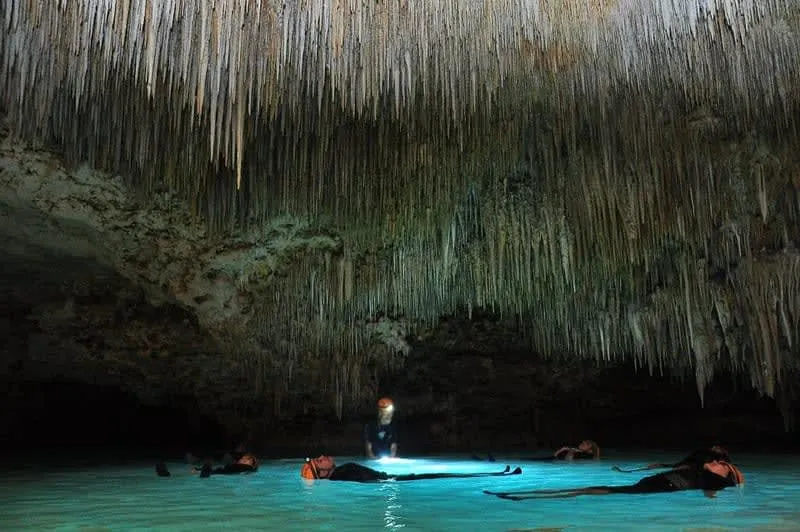
Rio Secreto is less than 20 km from Playa del Carmen, accessed from the Chetumal–Puerto Juarez Federal Highway. It is a subterranean river system — not a traditional cenote — with approximately 600 meters of accessible cavern.
Your guide provides a wetsuit, helmet, and headlamp. You wade and swim through the underground river among stalactites and stalagmites. The experience lasts about 2 hours. The official basic tour starts at US$89; package prices vary.
12. Cristalino — Best Easy Option Near Playa del Carmen
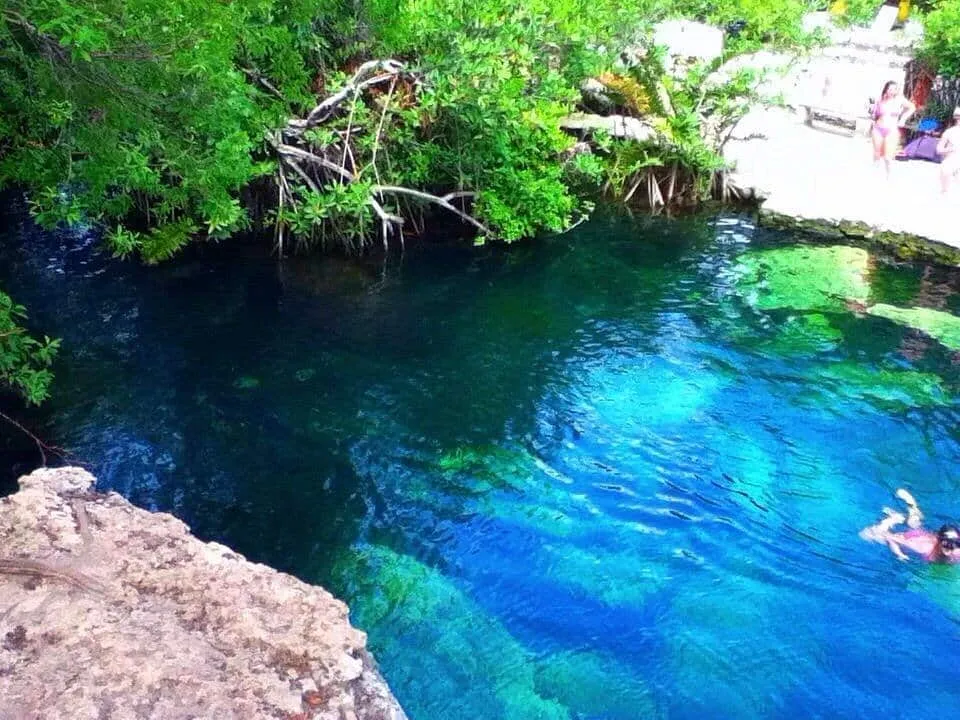
Cristalino is close to Cenote Azul of Playa del Carmen (not to be confused with the Cenote Azul of Bacalar) just past Aktun Chi Park on Highway 307. It looks like a large natural pool filled with multicolored fish swimming in transparent water.
Suitable for a range of swimming abilities, with basic visitor facilities. It is about 25km south of Playa del Carmen on Highway 307. See the cenotes near Playa del Carmen guide for transport details. Entry: US$25 adults; US$15 ages 5–12; under 5 free.
13. Chaak Tun — Best Dual-Cave Experience
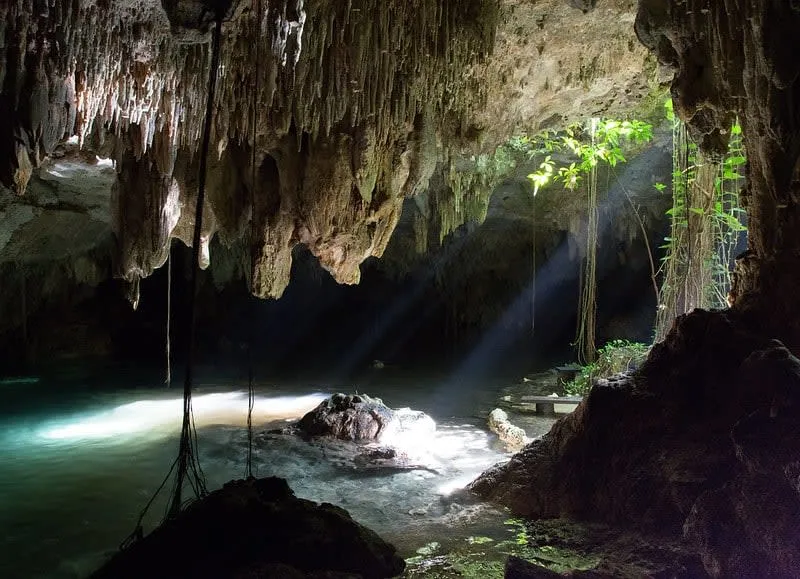
Chaak Tun near Playa del Carmen (accessed from Juarez Avenue) is actually two connected caverns. The smaller one is lit artificially; the larger has a natural opening in the ceiling where a tree grows from the rocks. Sunlight filters through branches into the water — genuinely beautiful in the morning.
Visits are guided and include required safety equipment. Check current prices and transport options on Chaak Tun’s official booking page.
Cenotes Near Puerto Morelos (Between Cancun and Playa del Carmen)
14. Selvatica — Best Adventure Combo
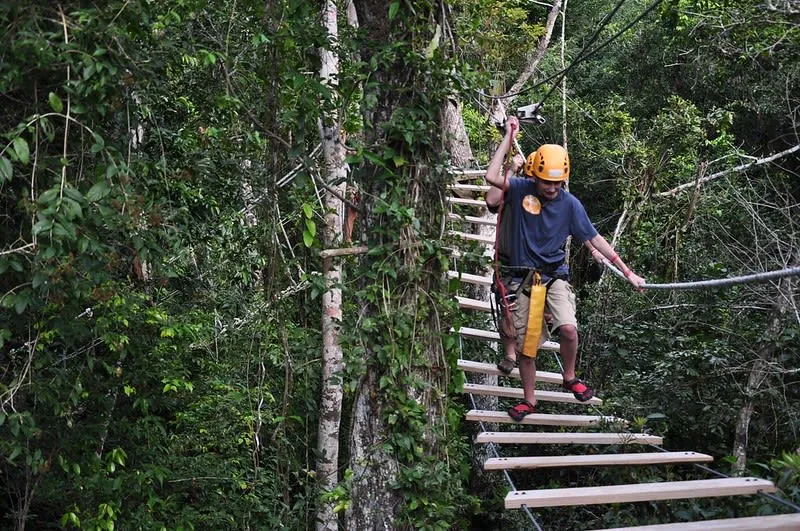
Selvatica is at km 18 of the Puerto Morelos–Leona Vicario highway, about 25 km from Cancun. It combines cenote swimming with zip lines over the water, hanging bridges, bungee jumps, and ATV rides — an eco-adventure park where the cenote is the centerpiece.
If you want to jump, fly, and swim on the same day, Selvatica delivers. Entry: from 1,800 MXN for the combo package (~$105 USD).
15. Cenote Siete Bocas — Best for Avoiding Crowds
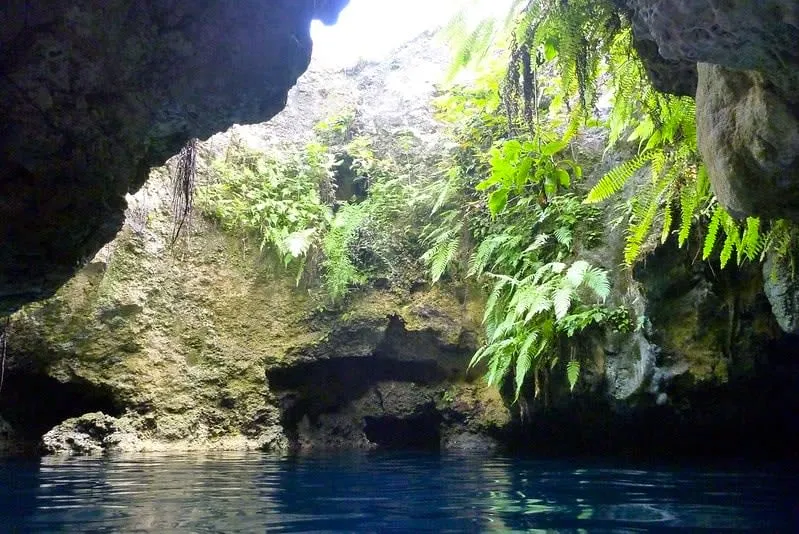
At km 15 of the Cenotes Route near Puerto Morelos, Siete Bocas (“Seven Mouths”) has seven ceiling openings through which sunlight enters and reflects beautifully in the water.
It is less visited than cenotes on the main highway — no restaurant, limited infrastructure. Bring your own snorkel gear. The trade-off: real tranquility. Entry: 100 MXN ($6 USD).
16. Chac Mool — Best for Beginner Divers
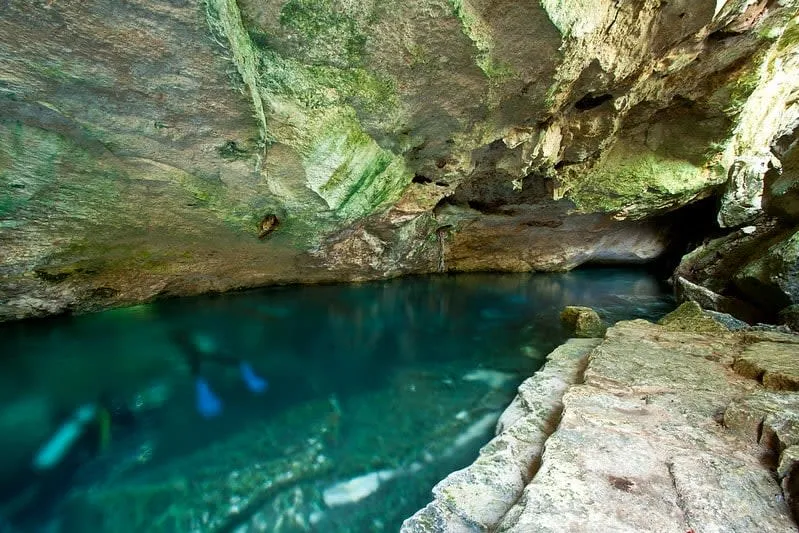
Chac Mool on the Quintana Roo cenote route is shallow enough for beginner divers to experience cave passages without going into abyssal depths. Passages filled with stalactites, stalagmites, columns, and preserved ancient tree roots run through the cavern.
When sunlight enters from above, it illuminates the whole formation. Guides required for the underwater sections. Entry: from 200 MXN; guided cave dive from 1,200 MXN.
17. Ponderosa (Garden of Eden) — Best Open-Water Swim
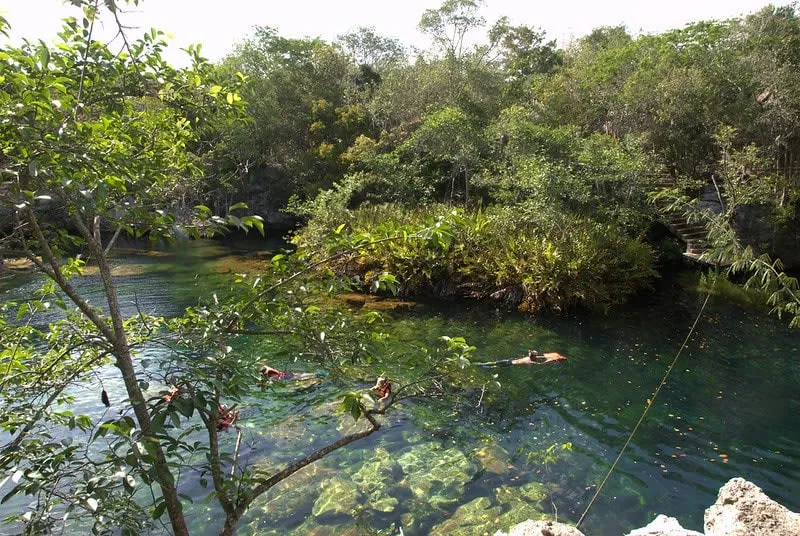
Ponderosa is another name for Jardín del Edén, a large open cenote near Puerto Aventuras, about 25km south of Playa del Carmen. The water is clear and cool, with fish visible in the swimming area.
Equipment options vary. Entry: around 300 MXN; confirm the current price and opening days before travel.
Cenotes Near Valladolid (Yucatan)
Valladolid, a colonial city 2 hours from Cancun, has some of the most photogenic cenotes in Mexico. They make an excellent stop on the road between Cancun and Chichen Itza.
18. Cenote Suytun — Most Photographed Cenote in Mexico
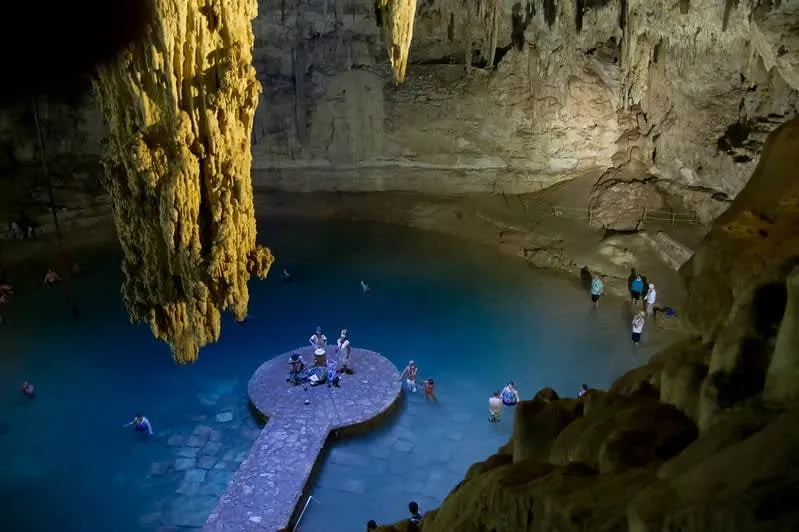
Cenote Suytun is a few minutes from Valladolid. It has a stone walkway extending into the center of an underground lake — one of the most photographed cenote images in Mexico. When sunlight hits through the small ceiling opening, the effect is almost supernatural.
Hundreds of fish visible in the shallow water. The walkway lets non-swimmers enjoy the full spectacle. Open: 9 AM–6 PM. Entry: 300 MXN ($18 USD).
19. Cenote Oxman — Best Swimming Near Valladolid
Near the Hacienda San Lorenzo Oxman, about 4 km from Valladolid. The cenote has a dramatic 20-meter drop from the hacienda grounds to the water, with thick vines and tree roots hanging down like ropes. Rope swings, wooden platforms, and a refreshing swim after the hacienda tour.
The hacienda itself — a converted sugar mill — is worth visiting for the cenote alone. Full guide to Cenote Oxman here. Entry: 150 MXN ($9 USD).
Cenotes Near Chichen Itza
20. Cenote Ik Kil — Mexico’s Most Famous Day-Trip Cenote
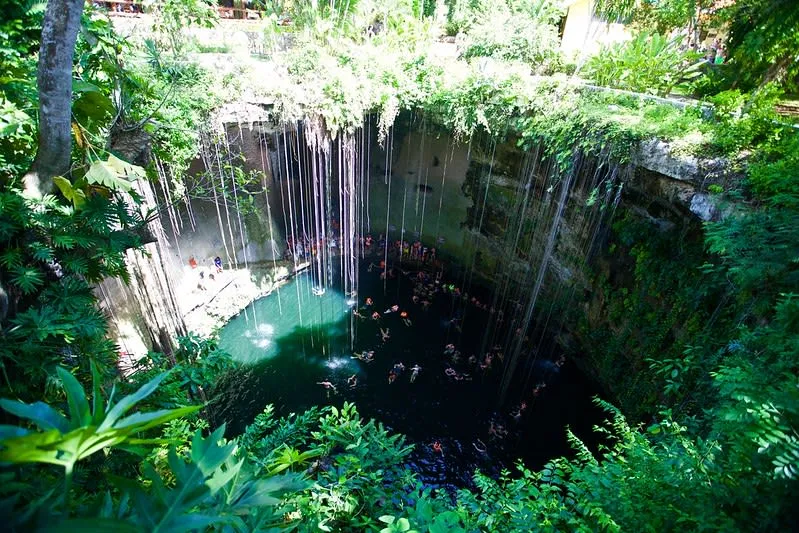
Ik Kil is the most spectacular cenote near Chichen Itza — a circular, open pit 26 meters deep with hanging vines cascading into turquoise water. The Maya considered it a portal to the underworld and held ceremonies here.
Most tour operators include Ik Kil in Chichen Itza day trips from Cancun and Playa del Carmen. Arrive before 11 AM — it gets crowded fast. Entry: 250 MXN ($15 USD).
21. Cenote Nohoch Nah Chich — Largest Cave System
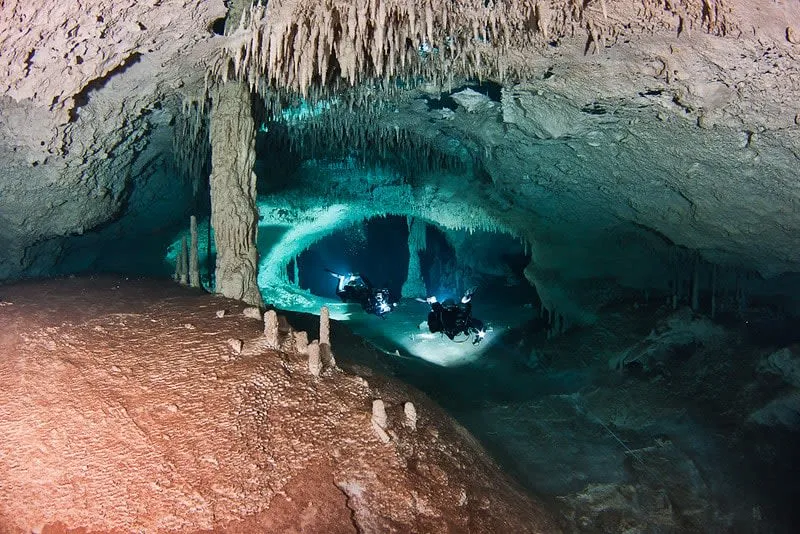
“The Giant Bird” in Mayan — this cenote connects to the longest known underwater cave system in the world. The main pool has a maximum depth of 9 meters with water temperature of 25–28°C. You can dive, snorkel, or descend by rope or wooden ladder.
Bring your own equipment or rent on-site. Entry: 200 MXN ($12 USD).
Cenotes Near Bacalar (Quintana Roo South)
22. Cenote Azul (Bacalar) — Most Dramatic Open Cenote
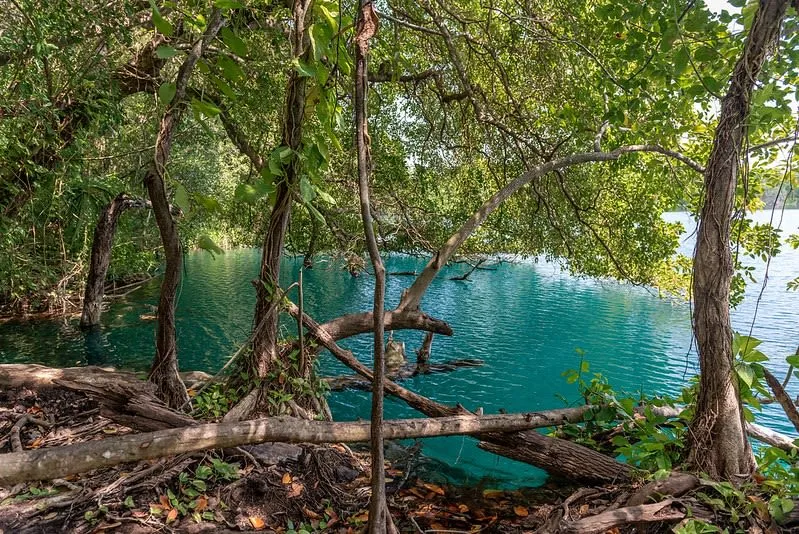
Next to the famous Bacalar seven-color lagoon, Cenote Azul is one of the largest open cenotes in Mexico — 360 meters long and up to 90 meters deep. The scale is staggering. Diving in the main cave requires a guide, but most visitors swim in the open sections.
Located approximately 1 km from the Barceló Hotel along the federal highway. Surrounded by near-virgin jungle. Less crowded in the mornings. Entry: 100 MXN ($6 USD).
Cenotes in the Riviera Maya (Ecoparks)
23. Uch-Ben-Ha — Best Family Ecopark Cenote
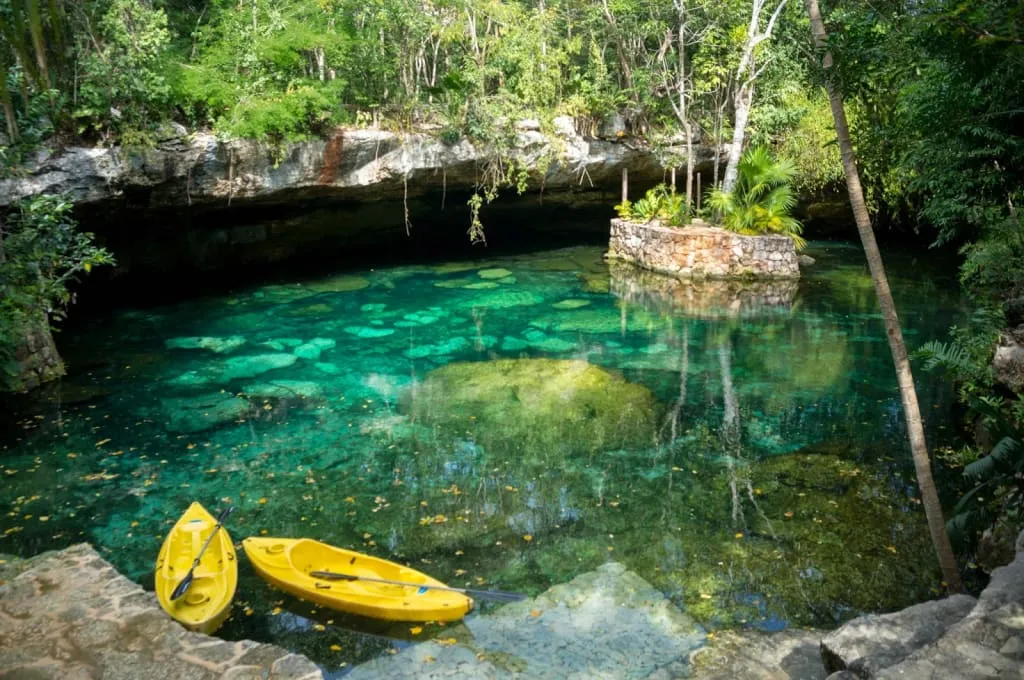
One of four cenotes inside Kantun Chi Ecopark in the heart of the Riviera Maya. Uch-Ben-Ha is open-air, slightly warmer than cave cenotes because of sun contact. Small fish, hammock islands, and a tropical jungle where spider monkeys live.
The park’s other three cenotes (Kantun Chi, Sas Ka Leen Ha, Zacil Ha) let you explore different cenote types in one visit. Entry: from 600 MXN per person for the full park.
24. Aktun Chen — Best Preserved Cave System
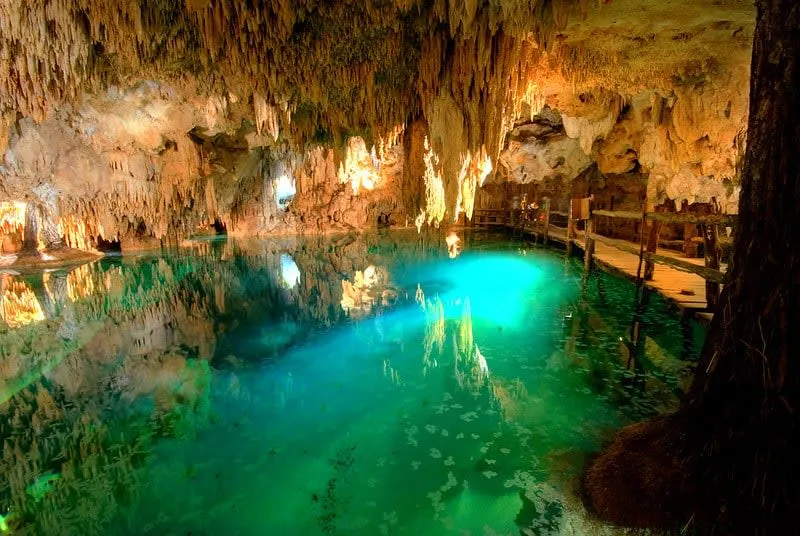
Aktun Chen is an ecological park 16 km from Tulum and just over 100 km from Cancun. Swimming is not allowed at the main cenote — it sits inside a cave with a 7-meter-thick calcium carbonate layer that took hundreds of thousands of years to form. Entering the cave itself (via a staircase carved into rock) and witnessing the formations under natural and artificial light is the attraction.
Accessed through a road bordered by tropical jungle. Entry: from 800 MXN for the cenote cave tour.
25. Cenote Dos Ojos (Southern Pool) — Best Snorkel for Non-Divers
Separate from the main cave diving area, the southern pool of Dos Ojos allows non-certified snorkelers to explore the bat cave section with a guide. The underwater visibility is extraordinary — 100 meters is common.
If you have a full day near Tulum, combine Dos Ojos in the morning with Gran Cenote or Cenote Calavera in the afternoon.
26. Cenote Tajma Ha (Playa del Carmen) — Best Halocline Dive
Already listed above under Playa del Carmen. The halocline visual effect here is among the best in the Yucatan. When you push through the thermocline, your buddy’s face distorts like you are looking through frosted glass — unforgettable for photographers.
27. Cenote Samulá (Near Valladolid) — Best Light Show
Near Valladolid, Cenote Samulá is a semi-open cavern where morning light creates dramatic rays through the ceiling opening, illuminating the roots of a massive tree that has grown down into the cave. Best visited between 11 AM–1 PM when the sun is highest. Entry: ~180 MXN.
Cenote Tips: What You Need to Know Before You Go
Sunscreen and Skin-Product Rules
Policies vary by operator. Some sites allow only biodegradable products after a shower; others prohibit all sunscreen, repellent, makeup, and lotions before swimming. Arrive product-free, shower as instructed, and use a rash guard or hat between swims.
Best Time to Visit Cenotes
- Early morning (7–10 AM): Best light, fewest people. Gran Cenote and Ik Kil fill up fast.
- Weekdays: Significantly fewer crowds than weekends and Mexican holidays.
- December–April: Dry season — water levels highest, clearest visibility.
- May–October: Rainy season — some cenotes have higher water from rainfall.
What to Bring
- UV rash guard and hat; apply sunscreen only after your final swim or where the operator permits it
- Water shoes or sandals (rocky entry points at most cenotes)
- Cash — most cenotes don’t accept cards (budget 100–500 MXN per cenote)
- Waterproof bag or dry bag for phone and wallet
- Snorkel and mask if you have them (saves equipment rental fees)
- Small towel
What to Leave Behind
- Insect repellent on your skin before swimming
- Glass bottles
- Food (many cenotes ban outside food)
Safety Rules
- Never dive without a guide in cave cenote sections
- Floatation devices are often provided — use them if unsure of depth
- Alcohol before diving: obvious but worth saying
- Children must stay in supervised shallow sections at cave cenotes
How to Get to Cenotes from Cancun or Tulum
From Cancun
- Cenotes Route (Puerto Morelos): 45 minutes south on Highway 307. Renting a car gives the most flexibility.
- Ik Kil + Chichen Itza: Full-day tour from Cancun, 2.5 hours each way. Many operators run this.
- Colectivo from Playa del Carmen: Take ADO or colectivo to PDC, then local taxi or rental car.
From Tulum
- Gran Cenote and Calavera: Bike or taxi from town on the Cobá road. Dos Ojos is about 22km north and normally requires a northbound colectivo plus a local transfer, a car, or a tour. Cristal and Escondido are south of town on Highway 307.
- Valladolid cenotes (Suytun, Samulá): 2 hours by colectivo via ADO bus from Tulum.
From Playa del Carmen
- Highway 307 corridor: Rent a car or use southbound colectivos for Cristalino, Jardín del Edén, and other Puerto Aventuras-area sites. Chaak Tun is inland on Avenida Juárez and is easier by taxi or booked transfer.
- Organized tours: Most dive shops offer half-day cenote snorkel or dive combos. You can also browse cenote tours on Viator for options with hotel pickup and free cancellation.
Related Guides
Ready to plan your trip around the cenotes?
- Best Time to Visit Yucatan Peninsula (2026) — When cenote visibility is best, sargassum guide, wildlife calendar
- 7 Days in Yucatan Itinerary — Day-by-day route with cenote stops built in
- Tulum Travel Guide — Base for exploring the best cenotes near Tulum
- Valladolid Mexico Guide — Colonial city with Suytun and Samulá within 5 km
- Cenotes Near Playa del Carmen — Faster pick if you want the best cenote close to Playa instead of a whole-country list
- Cancun Mexico — Gateway to the northern cenote routes
- Bacalar Travel Guide — For Cenote Azul, the south’s most dramatic sinkhole
- Cenote Dos Ojos guide — Full dive planning for the world’s longest cave system
- Cenote Suytun guide — Complete visit guide for the most photographed cenote
- Puerto Morelos — Base for the northern cenote route near Cancun
- Best Time to Visit Cancun — Peak season, sargassum, and cenote visibility by month
- Spring Break in Mexico 2026 — Cenotes during peak spring break season
- Mexico Packing List 2026 — Including water shoes, a rash guard, and cenote-specific gear
- Mexico Entry Requirements for US Citizens 2026 — Visas, passports, and what to know before you fly