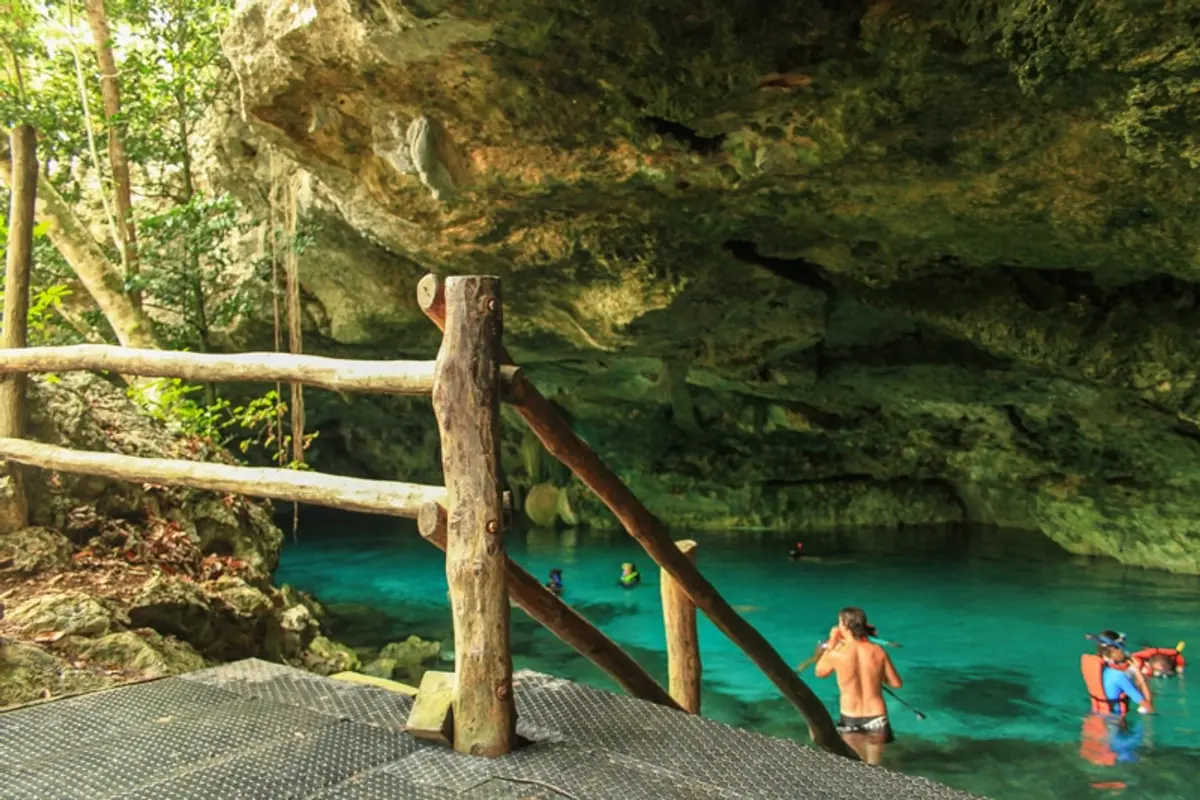
Tulum, Mexico Travel Guide (2026): Costs & Best Things
This Tulum, Mexico travel guide gives you the decision first: stay in Tulum Pueblo for better value, or pay Beach Zone prices only if waking up by the sand matters enough to justify the premium. For most first-time trips, the best things to do are the coastal ruins, cenotes, and Sian Ka’an. Budget carefully for taxis, beach clubs, and sargassum timing—those three details can change whether Tulum feels worth the cost.
Tulum is a coastal town in Quintana Roo, Mexico, 130 km south of Cancun on the Riviera Maya. It borders the Sian Ka’an UNESCO Biosphere Reserve (528,000 ha) and sits above the Sac Actun cave system — the world’s longest underwater cave network at 347 km — making it the region’s cenote diving capital.
Tulum has a split personality problem. There’s Tulum Pueblo — the actual town where locals live, colectivos cost 15 MXN, and you can eat excellent fish tacos for $3. And there’s Tulum Beach Zone — where beach club cocktails start at $20, “eco-chic” villas charge $400 a night, and the Instagram aesthetic has entirely consumed the travel experience.
Both are real Tulum. The version you experience depends entirely on where you stay and how much you budget.
This guide gives you both — plus the logistics information that most Tulum guides gloss over: how ride availability and taxis work, how bad the sargassum can get, when the ruins are manageable, and which cenotes fit different kinds of trips.
Tulum Travel Guide in 30 Seconds
| If you want… | Best move |
|---|---|
| The classic Tulum beach look | Stay in the Beach Zone, but only if you’re comfortable paying beach-club and boutique-hotel prices. |
| A better value first trip | Stay in Tulum Pueblo, then bike or taxi to the ruins and beach. |
| The best odds of clear beaches | Go December to March, when sargassum risk is lowest. |
| The best reason to choose Tulum over Cancun or Playa | You want cenotes + the coastal ruins + Sian Ka’an in one base. |
| The biggest mistake to avoid | Booking the Beach Zone without budgeting for taxis, beach clubs, and restaurant prices. |
If you’re mainly after a swimmable Caribbean beach with easier logistics, Playa del Carmen is usually simpler. If you want quieter water and lower prices, Bacalar is often the better fit. Tulum works best when cenotes, ruins, and the beach aesthetic all matter to you.
Tulum Quick Facts
| State | Quintana Roo |
| Location | 130 km south of Cancun; 60 km south of Playa del Carmen |
| Airport | Cancun (CUN) — 2 hours. Tulum has a new airport (TQO) with limited service. |
| Population | ~60,000 (city); rapidly growing |
| Time zone | UTC-5 year-round (Eastern Standard Time, no DST) |
| Currency | Mexican peso (MXN). Beach Zone prices often quoted in USD. |
| Language | Spanish. English very widely spoken in tourist areas. |
| Uber | Listed as available; check live pickup and keep a taxi/colectivo fallback |
| Best beach season | December–March (dry, lower sargassum) |
| Cenote season | Year-round, though rainy season can affect visibility |
| Sargassum risk | Moderate–High (June–October), Low–Moderate (Dec–Mar) |
Where Tulum Is
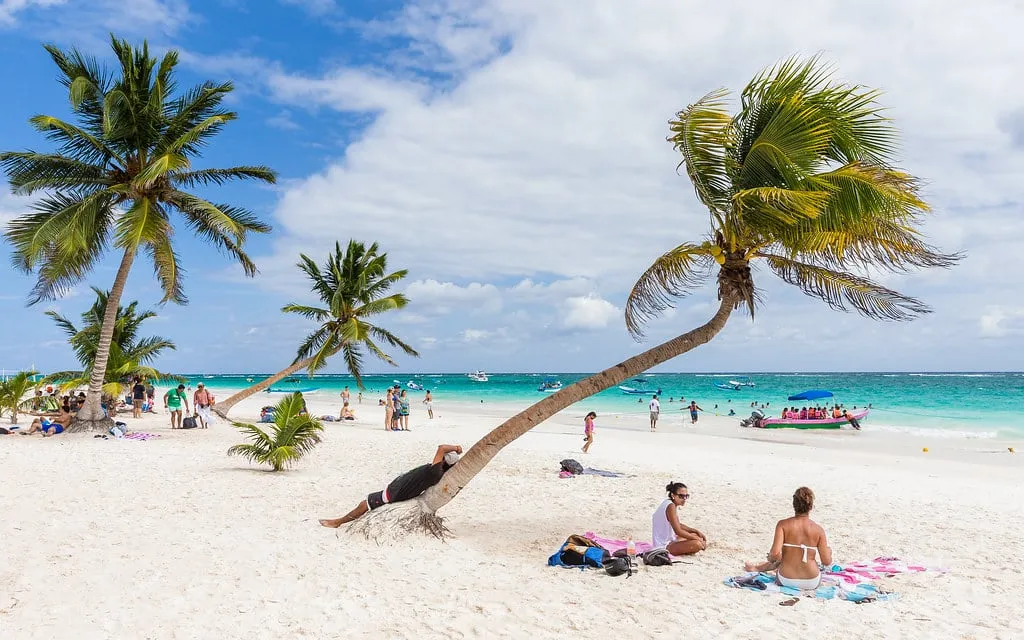
Tulum sits on the Yucatan Peninsula’s Caribbean coast, in the state of Quintana Roo. It’s 2 hours south of Cancun and 1 hour south of Playa del Carmen via Highway 307. The Yucatan Peninsula to the north, the Sian Ka’an Biosphere Reserve directly to the south.
The Tulum Archaeological Zone sits on a cliff above the Caribbean — the only Maya city built on a coastal promontory. The Tulum Zona Hotelera (beach zone) stretches 4 km along the coast south of the ruins. Tulum Pueblo (the town) sits 3 km inland from the beach, along the main road (Avenida Tulum).
Tulum’s Two Zones
Understanding this divide will save you money and set realistic expectations.
Tulum Pueblo (Downtown)
The town where people actually live. Where supermarkets, pharmacies, bus stations, local restaurants, and colectivo stops are. Accommodation ranges from $25-80/night for guesthouses and small hotels. You can eat three meals for $20/day. The main avenida has banks (with ATMs), local food stalls, and hardware stores — real Mexico.
What Pueblo lacks: beachfront access, the Instagram bohemian aesthetic, proximity to the ruins (3 km away — taxi or bike ride).
Who should stay here: Budget travelers, anyone planning multiple day trips (Coba, Bacalar, Valladolid), travelers who want to explore the Yucatan beyond the beach strip. Valladolid is 1.5 hours from Tulum — cenotes, colonial architecture, and Chichen Itzá access make it one of the best inland day trips in the region.
Tulum Beach Zone (Zona Hotelera)
The beach road running 4 km from the ruins south through the hotel and restaurant strip. The bohemian luxury aesthetic that defines Tulum’s global image. Cenotes on the jungle side of the road, Caribbean on the other.
Prices here are higher than Cancun’s Hotel Zone: boutique eco-villas: $200-600/night. Beach clubs: $20-40 minimum consumption. Restaurant meals: $25-50/plate. A single cocktail at a beach club: $15-25.
Limited road capacity and sandy roads in parts: getting around the beach zone can be slow and expensive. Uber currently lists service, but availability varies; check the app or confirm a registered-taxi fare before leaving.
Who should stay here: Couples on honeymoon or romantic trip where the eco-villa aesthetic is part of the experience, and who have the budget for it without resentment.
Best Area for Your Trip Style
- Stay in Tulum Pueblo if: this is your first trip, you want lower prices, you plan day trips to Cobá or Valladolid, or you hate paying resort premiums for basics.
- Stay in the Beach Zone if: you want sunrise-on-the-sand access, you’re treating the hotel itself as part of the trip, and you’re fine with restaurant and taxi costs stacking up fast.
- Split your stay if: you want 2 nights of beach atmosphere without paying Beach Zone prices for the whole trip.
If you have already decided which side of Tulum fits your trip, compare live hotel rates before you book — Beach Zone pricing swings fast, and Pueblo value disappears quickly around winter weekends and holiday periods.
Use Booking strategically: search Beach Zone if you want sunrise-on-the-sand access and will actually use the hotel as part of the trip, or compare Pueblo stays if you want lower nightly rates and easier food, pharmacy, and bus access. The gap is often big enough that a short split stay makes more sense than paying Beach Zone prices for your whole trip.
Fastest booking shortcut: price Tulum Pueblo hotels with a pool and a/c first so you know your real comfort baseline, then only reopen the Beach Zone adults-only or boutique search if waking up on the sand is worth the extra hotel, taxi, and restaurant spend for your dates.
| If your Tulum stay looks like… | Search this first | Why |
|---|---|---|
| 4 to 6 nights where value and easy logistics matter most | Tulum Pueblo hotel with pool and air conditioning | Best way to lock your real base-hotel price before the Beach Zone distorts the whole trip budget |
| 2 to 3 nights where the hotel itself is part of the trip | Tulum Beach Zone adults-only boutique hotel | Cleaner when the whole point is beach-club access, design, and waking up on the sand |
| 5 to 7 nights where you want both | Tulum Pueblo hotel with pool + Tulum Beach Zone beachfront hotel | Best split-stay check when you want a cheaper base plus 1 to 2 nights of beachfront splurge |
The Tulum Archaeological Zone
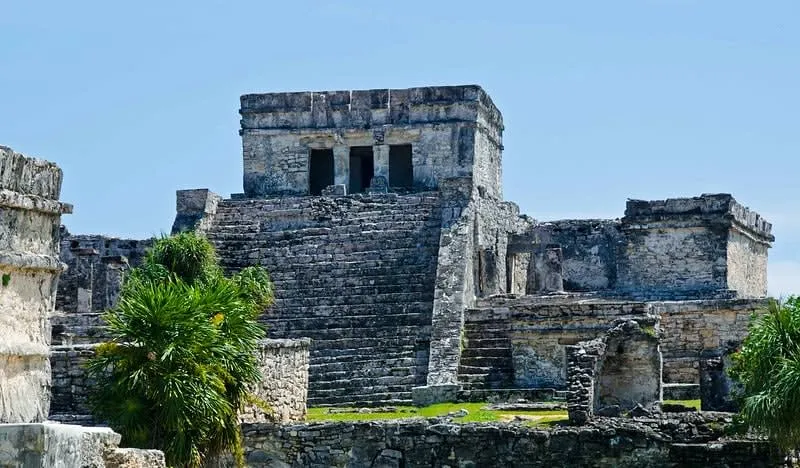
Tulum ruins is genuinely extraordinary — no other archaeological site in the Americas puts ancient stone pyramids directly above turquoise Caribbean water. El Castillo, the main structure, sits 12 meters above the sea on a limestone cliff. In calm conditions, the water below is a vivid blue-green that the Maya called “the color of jade.”
But it’s also small and overcrowded. The fenced perimeter contains about a dozen structures. By 10 AM, the main platform is shoulder-to-shoulder tourists trying to photograph the same view. By noon in summer, it’s miserable.
Ruins Logistics
| Opening hours | 8:00 AM – 5:00 PM daily |
| Entry fee | 95 MXN (approx. $5) for the site + 33 MXN state fee |
| Best arrival time | 8:00 AM at opening — you’ll have 30-45 minutes before tour buses arrive |
| Worst time | 10 AM – 2 PM (peak crowds) |
| From Pueblo | Taxi: 100 MXN. Bike rental: 20 minutes cycling. Colectivo to ruins entrance junction: 15 MXN then 5-10 min walk |
| From Beach Zone | Bike from hotels south of ruins: 10-20 minutes cycling |
| Parking | Large lots, 80 MXN. Don’t bother if coming from Pueblo. |
| Beach access | There is a small beach inside the ruins site — you can swim if you bring a suit. Limited, rocky, but swimming at the Maya ruins is special. |
What to see:
- El Castillo — the main pyramid. Temple of the Descending God at the top (the upside-down figure is a rain deity or bee god, debated)
- Temple of the Frescoes — the most ornate structure, with Postclassic Maya murals still partially intact (behind glass)
- Temple of the Wind — circular structure on the cliff edge. The light through its portal guides boats into the cove
- El Castillo beach cove — the blue water directly below the ruins where travelers swim during low tide
Skip if: You’ve already seen Coba, Chichen Itza, or Monte Alban. Tulum’s ruins are historically minor compared to those sites — their value is purely aesthetic (the sea view). The ruins themselves are not as architecturally or culturally significant as the UNESCO sites.
→ Full ruins guide: Tulum Ruins 2026: Entry Fee, What to See & When to Go
Cenotes Near Tulum
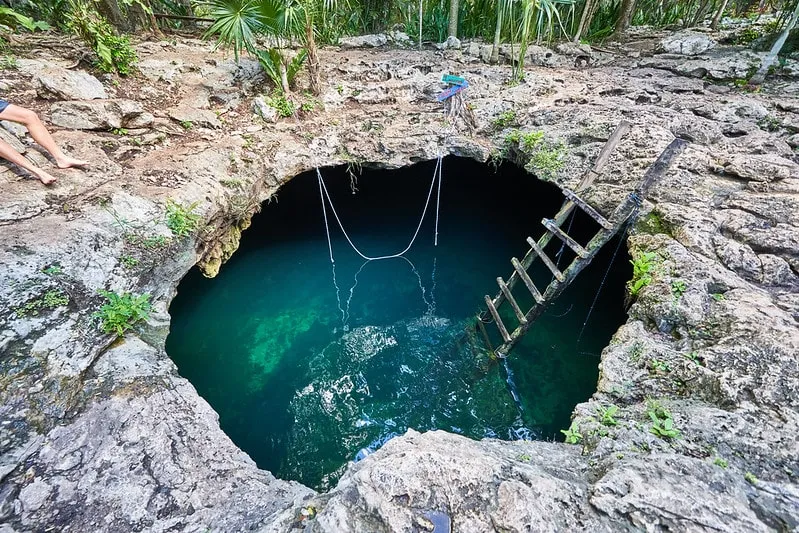
The cenotes around Tulum are the main reason to visit. The Sac Actun cave system — the longest underwater cave system in the world at 347 km — runs under this entire region. Where the cave ceiling collapses: cenote. The water is extraordinarily clear and cool (24°C year-round).
Cenote product rules vary: Some operators allow only biodegradable products after a shower; others prohibit sunscreen, repellent, makeup, and lotion before swimming. Arrive product-free, shower as directed, and use a rash guard or hat between swims.
Cenote Dos Ojos
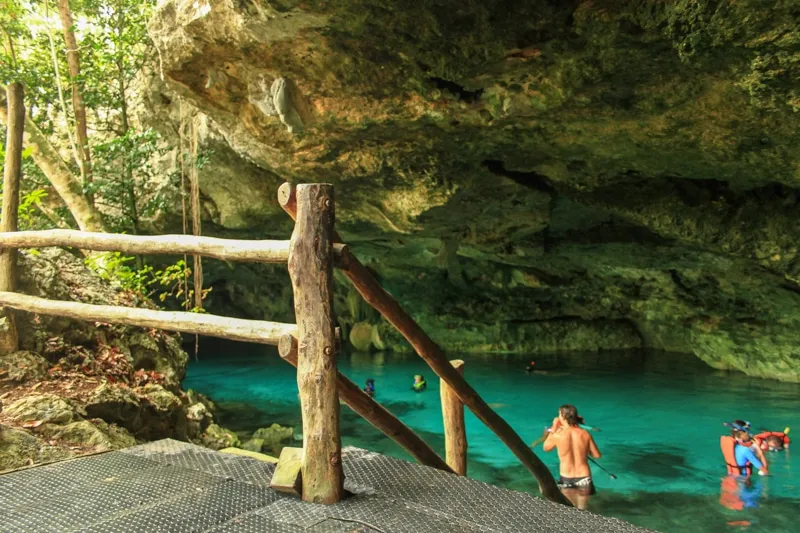
Named for its two connected cave “eyes” — the surface entry points into a vast underwater cave system. Entry: 350 MXN ($17). Two systems available: the “Bat Cave” system (cavern snorkeling, no certification needed) and the “Barbie Line” (cave diving, certification required). Visibility is 60+ meters. Located 12 km north of Tulum Pueblo on Highway 307. Full guide to Cenote Dos Ojos →
Gran Cenote
Gran Cenote is about 4km west of Tulum Pueblo on the road to Cobá. It combines open swimming with cave-like sections, and freshwater turtles may be visible. Current admission is 500 MXN; confirm the price and hours before traveling and arrive early for lighter crowds.
Cenote Calavera (Temple of Doom)
A vertical sinkhole with three openings: a large one for swimming and two smaller round holes (the “skull eyes”) for jumping. Entry is commonly about 250 MXN; confirm before visiting. Follow staff instructions for jumping and ladder access.
Cenote Aktun Chen
A cave system west of Tulum with a combination of dry cave stalactite sections and swimming cenotes. Entry: 250 MXN ($12). Guided tours only. More scenic cave architecture than Dos Ojos surface section, but less cave diving access.
Cenote Angelita
The most unique cenote near Tulum — a deep sinkhole with a hydrogen sulfide cloud layer at 30 meters that looks like a “river flowing through the cenote floor.” A diving-only cenote (PADI Open Water minimum). Entry: 650 MXN. This is genuinely one of Mexico’s most surreal dive sites. Best cenotes in Mexico →
Tulum’s Beaches
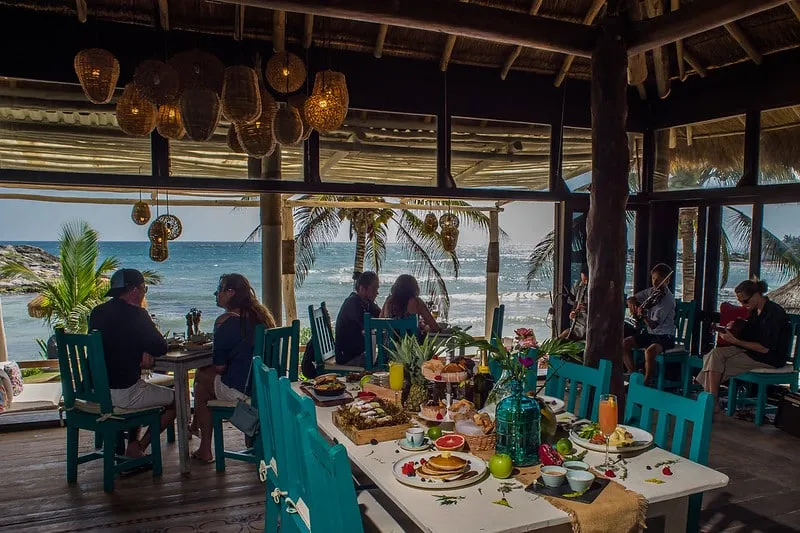
The beach zone’s 4 km of coastline faces southeast. The Caribbean current and prevailing winds deliver sargassum directly to this coastline — it’s why Tulum often has worse sargassum than Cancun, which faces northwest.
In good conditions (December–March typically): powder-white sand, turquoise water, picture-perfect. In sargassum season (peak June–September): brown seaweed can pile meters deep on the beach, smelling of sulfur as it dries.
Beach Zone access reality: Most beach is fronted by hotel properties. Public beach access exists but the lounge chair culture means you need beach club minimums ($20-40/person, applies to drinks/food) to sit at most spots.
Best beach club value: Look for spots on the northern beach zone closer to the ruins — slightly less exclusive, lower minimums, just as beautiful when the sea is clear.
Playa Paraíso: The famous beach directly below the ruins access road. Small, protected cove, calmer water than the southern beach zone. Palapas, food vendors. Full Playa Paraíso guide →
→ For a month-specific beach read before booking, see best time to visit Tulum, Cancun in October, and Mexico rainy season.
Sian Ka’an Biosphere Reserve
Directly south of the Tulum beach zone begins one of Mexico’s most spectacular UNESCO World Heritage Sites. The Sian Ka’an (“Origin of the Sky” in Yucatec Maya) covers 528,000 hectares of tropical forest, wetlands, mangroves, and 100+ km of Caribbean coast.
What’s inside Sian Ka’an:
- Manatees in the lagoons
- American crocodiles (sizeable population)
- Jaguar, puma, ocelot (rarely seen but resident)
- Muyil archaeological site (Maya canal system still visible)
- Boca Paila lagoon (world-class fly fishing for bonefish, tarpon, and permit)
- 320 bird species including jabiru stork, roseate spoonbill, and flamingos
How to visit: Tours depart from Tulum daily (400-800 MXN/person for group tours; private: 1,500-3,000 MXN). Tours typically include: boat through the canal, floating in the current, Muyil ruins visit, lagoon snorkeling for manatees. No infrastructure inside the reserve for independent travelers — tours are the only realistic option. Browse Tulum tours on Viator for vetted Sian Ka’an operators with English guides.
Coba: The Climbable Pyramid Day Trip — Full Cobá Ruins Guide →
Cobá is about 45km northwest of Tulum. Its main attraction, the 42m Nohoch Mul pyramid, reopened to climbers in December 2025 using a new wooden staircase. Check current INAH access conditions before leaving because conservation rules can change.
The jungle setting — surrounded by lakes and deep forest, no coastal bleaching — makes Coba feel more mysterious than Tulum or Chichen Itza. The site is enormous (80 km² total), accessed by walking or renting bikes to explore the sacbé network.
- Entry: 90 MXN
- Bike rental on-site: 60–80 MXN
- Best time: Arrive at opening (8 AM) before midday heat
- From Tulum: Colectivo from Tulum ADO station area: 60–80 MXN, ~45 minutes. Car: 45 minutes on Highway 109. Full transport guide: Tulum to Cobá →
Tulum Food Guide
Tulum Pueblo: Real Prices
The town has a functioning local food scene completely separate from the beach zone.
- Antojitos at the market (Mercado Municipal): Handmade tortillas, tamales, panuchos (fried tortilla with black bean paste), poc chuc — 40-80 MXN/plate
- Taquerías on Avenida Tulum: Fish tacos, cochinita pibil tacos, carnitas — 20-35 MXN/taco
- Comida corrida (set lunch): Soup, main, side, agua fresca — 70-100 MXN
- Restaurant meal in Pueblo: 150-300 MXN/person
Beach Zone: What You’re Actually Paying For
The beach zone has some genuinely excellent restaurants — but the pricing reflects real estate costs, imported organic ingredients, and the captive audience dynamic.
- Breakfast: 200-400 MXN/person
- Lunch at a beach club: 500-800 MXN/person minimum consumption
- Dinner: 500-1,200 MXN/person at mid-range beach restaurants
What’s worth paying for: Fresh fish ceviches and aguachile (better quality than Pueblo versions because of fresher supply chain). Local Yucatecan specialties done well (cochinita, poc chuc). The wine selection. The experience of eating 5 meters from the Caribbean.
What’s not worth paying for: Pasta, pizza, vegan bowls — the same food in Playa del Carmen or Mérida costs 60% less. Best Tulum restaurants → | What to eat in Tulum →
Getting to Tulum
From Cancun Airport (CUN)
| Option | Price | Time | Notes |
|---|---|---|---|
| ADO bus (airport → Tulum) | 270 MXN (~$13) | 2.5 hrs | Direct, buy at airport terminal |
| ADO via Playa del Carmen | 130 + 60 MXN | 3 hrs | Change buses, more frequent |
| Rental car | ~$30-50/day | 2 hrs | Best for Coba/Sian Ka’an/Bacalar trips |
| Private transfer | $80-120 USD | 2 hrs | Expensive — only if split 4+ people |
| Taxi | 2,000-3,000 MXN | 2 hrs | Not worth it |
From Mexico City
Fly MEX→CUN (1h40m from 800 MXN), then bus or colectivo south. Total door-to-door: 3.5–4.5 hours. See our Mexico City to Tulum guide for all options including the new Tulum Airport (TQO) and Maya Train from CUN.
From Cancun City / Hotel Zone
Multiple options depending on budget and luggage. See our complete Cancun to Tulum transport guide for all 6 options with real 2026 prices — including the colectivo two-leg route (140 MXN total), Maya Train, and whether it’s worth renting a car to stop at cenotes along the way.
From Playa del Carmen
ADO bus: 60 MXN, 1 hour. Colectivo (shared van from 5th Avenue): 40-50 MXN, 1-1.5 hours. Both run frequently. Playa del Carmen travel guide →
From Mérida
ADO direct bus: 300–480 MXN, 3.5–4 hours from the CAME terminal. Rental car via Valladolid: 3–3.5 hours with the option to stop at Chichen Itza (120km mark) and Valladolid (190km mark) along the way. Maya Train also runs direct via Valladolid. Full guide: Mérida to Tulum 2026 →
Leaving Tulum for Mérida
Doing the Yucatán circuit west? By rental car, the Tulum–Mérida drive is about 230km via Valladolid and Chichen Itza. ADO and Maya Train schedules and fares change, so check the operator directly. For an early departure, prearrange transport to the station rather than relying on a last-minute app pickup. Full guide: Tulum to Mérida 2026 →
Tulum’s Own Airport (TQO — Felipe Carrillo Puerto)
The new Tulum International Airport opened in December 2023. It’s 15 km south of the town. As of 2026, it has limited service — some seasonal charter flights and a few routes from Mexico City (Volaris). Check availability for your dates; if operating, it eliminates the Cancun transfer entirely.
Common First-Timer Mistakes in Tulum
- Booking the Beach Zone without checking total trip cost. The room is only the start, food, taxis, and beach clubs can easily double your daily spend.
- Assuming Uber works here. It doesn’t. Plan around bikes, colectivos, rental cars, or expensive taxis.
- Ignoring sargassum season. Tulum’s southeast-facing coast usually gets more seaweed than Cancun.
- Showing up to the ruins mid-morning. The best version of Tulum ruins is right at opening, before the buses and heat peak.
- Treating Tulum like an all-beach trip. The strongest version of a Tulum itinerary mixes beach time with cenotes, Cobá, or Sian Ka’an.
Getting Around Tulum
Getting Around: App Rides, Colectivos, Taxis, and Bikes
Uber currently lists on-demand rides in Tulum, but live availability and pickup conditions vary. Check the app for the current product and fare, and keep another option for time-sensitive trips.
Colectivos: Shared vans that run the main highway (Pueblo → Playa del Carmen: 40 MXN; Pueblo → Coba junction: 30 MXN; Pueblo → Cancun: 100 MXN). Stand at the side of the highway and flag them down. Very reliable, very cheap.
Taxis: Fixed zone rates — no meters, but every taxi has a rate sheet. Standard rates:
- Pueblo → beach zone: 100-150 MXN
- Pueblo → ruins: 100 MXN
- Ruins → beach zone southern end: 200 MXN
- Negotiate before getting in. Prices quoted to foreigners can be 50-100% above official rates — it’s worth knowing and saying “¿cuánto a la zona hotelera en tarifa oficial?”
Bicycle rental: The most logical transport for the beach zone. Most hotels and several Pueblo shops rent bikes for 50-80 MXN/day. The beach zone road is flat, the distances are short (ruins to south end is 5 km), and the jungle road is genuinely beautiful. Bring a lock. Theft is common.
Moped/scooter rental: 500-800 MXN/day. Good if you’re doing multiple cenote visits in one day. Avoid if you’ve never ridden one — the beach zone has no street lights and road conditions are rough in sections.
Where to Stay in Tulum
Tulum Pueblo — Best Budget Options
| Budget | Nightly Rate | What You Get |
|---|---|---|
| Hostel | $15-30 | Dorm beds, good for solo travelers, social |
| Guesthouse | $30-60 | Private room, fan, basic breakfast sometimes included |
| Small hotel | $60-100 | A/C, pool, 10-min taxi from beach |
The Pueblo area around Avenida Satélite and Av. Sol Oriente has the highest concentration of budget accommodation. You’ll need a taxi or bike rental to reach the beach (15-20 min, 100-150 MXN taxi one-way).
Tulum Beach Zone — Eco-Villa Pricing
| Tier | Nightly Rate | What You Get |
|---|---|---|
| Entry-level beach zone | $150-250 | Garden casita, shared beach access, basic amenities |
| Mid-range | $250-400 | Private villa, beach access, a/c (often), beach club |
| High-end | $400-800+ | Clifftop suite, private pool, beach butler, jungle views |
The high-end of Tulum beach zone competes with luxury Caribbean resorts at comparable prices — but without the all-inclusive food/drink component. Budget for 3-4x the food and transport costs of Pueblo accommodation.
Simplest booking rule: price Tulum Pueblo first to set your realistic floor, then reopen the Beach Zone only if waking up on the sand is worth the extra hotel, taxi, and restaurant spend. For a lot of first trips, the best answer is still 4-5 nights in Pueblo plus 1-2 nights in the Beach Zone instead of paying beach-club prices every day.
If you are actively choosing where to sleep, do not compare all of Tulum as one blob. Search Pueblo if low friction, cheaper meals, and day-trip flexibility matter more; search the Beach Zone only if you know the hotel itself is part of the experience you are paying for.
One more filter that actually matters: in Pueblo, compare hotels that already solve the heat and transport problem with a pool plus strong A/C. In the Beach Zone, compare smaller boutique stays separately from bigger beach-club properties so you do not confuse a design-forward hotel with a party-heavy one.
Fastest Tulum Booking Paths
| If your real plan is… | Start with this search | Why |
|---|---|---|
| 4 to 5 nights, cenotes, ruins, and cheaper meals | Tulum Pueblo hotel with pool and air conditioning | Gives you the realistic comfort baseline before Beach Zone pricing distorts the trip budget |
| 1 to 2 nights where the hotel is the experience | Tulum Beach Zone beachfront hotel | Better fit if sunrise-on-the-sand access is the reason you are paying Tulum Beach Zone prices |
| A split stay with one splurge finish | Pueblo first, Beach Zone last | Keeps most nights affordable while still giving you the signature beach-hotel part of the trip |
If you are debating a split stay, lock in the Pueblo base first and only then compare the Beach Zone beachfront stay for the final 1 to 2 nights. That keeps the expensive part tied to the exact part of the trip that actually needs it.
Best order of operations: price the 4- to 5-night Pueblo base first, then compare a 1- to 2-night Beach Zone splurge separately. That way you are deciding whether to add the beachfront premium, not accidentally paying it across the whole trip.
Tulum vs. Cancun vs. Playa del Carmen
| Tulum | Cancun Hotel Zone | Playa del Carmen | |
|---|---|---|---|
| Beach quality | Excellent (when sargassum-free) | Excellent | Small town beach |
| Sargassum risk | Higher (faces SE) | Moderate (north-facing) | High |
| Price level | Most expensive | Mid (budget options in El Centro) | Mid |
| Authenticity | Pueblo only | Downtown only | 5th Ave is tourist strip |
| Ruins | Coastal Maya site (small) | San Miguelito | None nearby |
| Cenotes | Best access (10 min–1 hr) | 45 min–1.5 hrs | 20 min–1 hr |
| Transport | Uber listed; availability varies; taxis/colectivos useful | Uber + ADO | Uber + ADO + colectivos |
| Day trips | Coba, Sian Ka’an, Bacalar, Valladolid | Chichen Itza, Holbox, Isla Mujeres | Same as Tulum + Cozumel |
| Nightlife | Boutique beach parties | Major clubs | 5th Avenue bar scene |
| Best for | Cenotes + bohemian beach experience | First-timers, all-inclusive | Walkable base, couples |
Tulum Budget Guide
| Category | Budget (Pueblo base) | Mid-Range | Beach Zone |
|---|---|---|---|
| Accommodation | $25-60/night | $80-150/night | $200-500/night |
| Meals | $15-25/day | $35-60/day | $80-150/day |
| Transport | $5-10/day (colectivos) | $15-25/day | $20-40/day (taxis + bike) |
| Activities | $10-30/day (1 cenote) | $40-80/day | $60-120/day |
| Daily total | $55-125 | $170-315 | $360-810 |
The Tulum budget hack: Stay in Pueblo, day-trip to the beach on bikes or colectivos. Same access to cenotes, ruins, and beaches at 30-40% of beach zone accommodation cost.
Safety in Tulum
Tulum’s tourist areas are generally safe. The primary concerns travelers face:
Taxi overcharging: The biggest “scam” in Tulum. Ask for the official rate before getting in. “¿Cuánto es la tarifa oficial a…?” If they refuse to show you or quote obviously inflated prices, decline and wait for the next one.
Beach zone security: Petty theft from beach bags is the most common crime. Don’t leave valuables unattended on the beach.
Sinkholes/swimming safety: Some cenotes have strong currents in cave sections. Always follow guide instructions. Don’t enter cave diving sections without proper certification.
Drug culture: Tulum has a persistent reputation for drug use at beach parties. If that’s not your scene, it’s easy to avoid — it’s not pervasive in daytime tourist areas.
Emergency: 911. Tourist police: operate in the beach zone daily.
Wondering about safety in more detail? Read our complete guide: Is Tulum Safe in 2026? for an honest breakdown of risks, safe zones, no-Uber transport realities, and what the sargassum-and-safety intersection actually looks like.
Best Time to Visit Tulum
| Month | Weather | Sargassum | Crowds | Relative Price |
|---|---|---|---|---|
| December | ⭐⭐⭐⭐⭐ Dry, 27°C | Low | High (holiday peak) | Expensive |
| January | ⭐⭐⭐⭐⭐ Dry, 26°C | Low | Moderate | Mid |
| February | ⭐⭐⭐⭐⭐ Dry, 27°C | Low | Moderate | Best value in peak |
| March | ⭐⭐⭐⭐ Dry, 28°C | Low | Very high (Spring Break) | Expensive |
| April | ⭐⭐⭐⭐ Dry, 29°C | Moderate start | High | High |
| May | ⭐⭐⭐ Humid, 30°C | Moderate | Low | Good value |
| June | ⭐⭐ Rainy, 30°C | High | Low | Cheap |
| July | ⭐⭐ Rainy, 31°C | Very high | Moderate (European summer) | Mid |
| August | ⭐⭐ Rainy, 31°C | Very high | Moderate | Mid |
| September | ⭐ Hurricane risk | High | Very low | Cheapest |
| October | ⭐⭐ Hurricane risk | Moderate | Very low | Cheap |
| November | ⭐⭐⭐⭐ Drying out | Low-moderate | Low | Good value |
Our recommendation: February for the combination of perfect weather, low sargassum, and post-Christmas prices before Spring Break. November is the best value month — dry season arriving, very low crowds, lowest annual prices.
For the full month-by-month breakdown with sargassum forecasting, cenote clarity by season, and wildlife calendar, see our Best Time to Visit Tulum guide.
Useful Links for Planning
- Semana Santa in Tulum 2026 → — crowds, costs, cenotes open all week, no Ley Seca, sargassum reality
- Tulum to Cancun Airport → — bus, shuttle & CUN airport transfer guide
- Tulum to Mexico City → — fly via CUN or check Tulum’s new TQO airport
- Tulum to Playa del Carmen → — colectivo, ADO, Maya Train & private transfer
- Tulum to Valladolid → — 100km via Cobá (Highway 109), 1.5 hrs by rental car — the ruins circuit route
- Tulum to Cozumel → — 2-step ferry route via Playa del Carmen: no direct crossing exists, colectivo + UltraMar ferry
- Tulum to Bacalar → — ADO bus 180–260 MXN, 2 hours south to the Lagoon of Seven Colors
- Day Trips from Tulum → — 15 best excursions: Coba, Gran Cenote, sea turtles at Akumal, Sian Ka’an, Chichen Itza
- Things to Do in Tulum → — 25 activities ranked: ruins, cenotes, Coba, Sian Ka’an, beach clubs
- Tulum Nightlife 2026 → — evening venues and practical late-night transport planning
- Playa del Carmen vs Tulum — which should you pick? →
- Tulum vs Bacalar 2026 → — Caribbean beach vs freshwater lagoon: complete comparison of prices, sargassum, and who each suits
- Cancun Travel Guide 2026 → — for the full Caribbean Mexico context
- Best Cenotes Near Tulum → — 15 swimming holes ranked: Gran Cenote, Dos Ojos, Angelita, Car Wash, Zacil Ha
- Gran Cenote Tulum Guide → — hours, 500 MXN entry, rules, and best arrival time
- Best Cenotes in Mexico →
- Cenote Dos Ojos Guide →
- Playa Paraíso Tulum →
- Best Tulum Restaurants →
- What to Eat in Tulum → — cochinita pibil tacos, aguachile, panuchos, salbutes, and the Pueblo vs Hotel Zone price reality
- 7 Days in Yucatan Itinerary →
- Best Time to Visit Cancun →
- Mexico Entry Requirements →
- Mexico Packing List 2026 →
- Is Tulum Safe? →
- Is Mexico Safe? →
- Mexico Travel Budget →
- Playa del Carmen 5th Avenue →
- Solo Female Travel in Mexico →
Ready to book activities? Browse all Tulum tours on Viator — cenote trips, Sian Ka’an tours, Coba ruins, and ruins + snorkeling combos. Renting a car for day trips? Compare Cancun rental car prices on RentCars — pickup at CUN airport, drive direct to Tulum.