Tulum Ruins Guide 2026: Entry Fee, Hours, What to See & When to Go
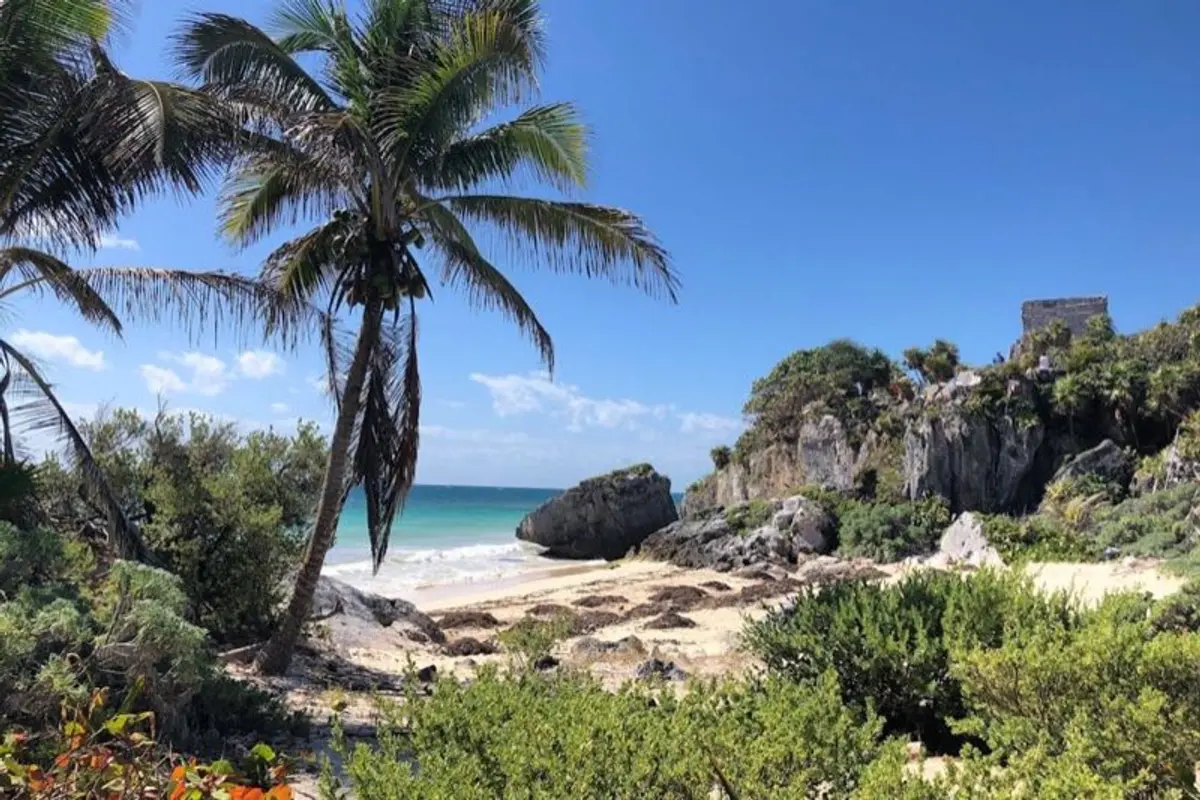
Tulum Archaeological Zone sits on a 12-meter limestone cliff directly above the Caribbean Sea in Quintana Roo. It is the only major fortified Maya city built on a coastal cliff in Mexico — which is the entire reason to come. The ruins themselves are modest compared to Chichen Itza or Palenque. The setting is extraordinary. Entry: 95 MXN ($5 USD). Open 8 AM–5 PM daily.
The Most Important Thing: Go at 8 AM
Tulum ruins receive 1 million+ visitors per year and sits 90 minutes from Cancun. Cruise ships dock at Cozumel daily. Tour buses from Cancun depart at 7 AM and arrive by 10 AM. Between 11 AM and 2 PM, the site is at full capacity — crowds on every path, queues to see El Castillo, no peaceful moment anywhere.
The solution is straightforward: arrive at 8 AM when the gates open. From 8:00–10:00 AM:
- El Castillo is photographable without people in frame
- The beach below the ruins is quiet
- Temperatures are 5°C cooler (critical in March–November)
- You finish before the day-trip crowds arrive
If you’re staying in Tulum Pueblo, the 8 AM opening is easy — take a taxi (100–150 MXN) or rent a bike (50–80 MXN/day) the night before. If coming from Cancun, you need to leave by 6:30 AM to beat the tour buses — most organized tours won’t depart that early.
Bottom line: Visit Tulum ruins in the first 2 hours, or don’t visit at all.
Entry Fee & Practical Information
| Item | Detail |
|---|---|
| Entry Fee | 95 MXN (~$5 USD) per person |
| Tren Maya shuttle fee | 29 MXN (optional — from parking to gates) |
| Hours | 8 AM – 5 PM (last entry 4:30 PM) |
| Days Open | 365 days/year including holidays |
| Payment | Cash and cards accepted |
| Time Needed | 2–3 hours |
| Guided Tour | Available at entrance — English guide ~400–600 MXN for private, 100–150 MXN/person group |
| Photography | Allowed everywhere in the ruins (including drones with permit) |
| Swimming | Yes — beach inside the zone |
What’s NOT included in entry:
- Sunscreen and a hat for the exposed archaeological zone; for cenote or reef stops, follow the operator’s product rules and use a rash guard where sunscreen is prohibited
- Water (buy before entering — expensive inside)
- Lockers (none available — leave valuables in your hotel)
Getting There
From Tulum Pueblo (town)
- Taxi or app ride: Uber currently lists Tulum service, but live availability varies. For a street taxi, use a marked vehicle and confirm the complete fare before entering.
- Bicycle: 50–80 MXN/day rental. The ruins are 3–4 km from the town center on a flat road. Takes 15–20 minutes each way.
- Walk: Possible but not recommended — 45 minutes each way in heat.
From Tulum Beach Zone (hotel zone)
- Taxi: 80–120 MXN. Note: the beach zone has its own taxi stands, separate rates from Pueblo.
- Bicycle: Many beach hotels rent bikes. The road from the hotel zone to the ruins is flat.
From Cancun (day trip)
- ADO bus + local taxi: ADO from Cancun to Tulum (~200–280 MXN, 2 hours), then taxi to ruins (100–150 MXN). Total: ~300–430 MXN each way.
- Organized tour: ~$45–85 USD from Cancun, includes transport and guide. Most tours combine ruins + cenote + lunch. See Viator options below.
- Rental car: ~90 minutes via Highway 307. Parking at the ruins: ~50 MXN.
From Playa del Carmen
- Colectivo + taxi: Colectivo from Playa del Carmen to Tulum (50–80 MXN, ~1 hour), then taxi to ruins (100–150 MXN).
- Organized tour: ~$35–65 USD from PDC. Shorter drive than Cancun tours.
What You’ll See: The Main Structures
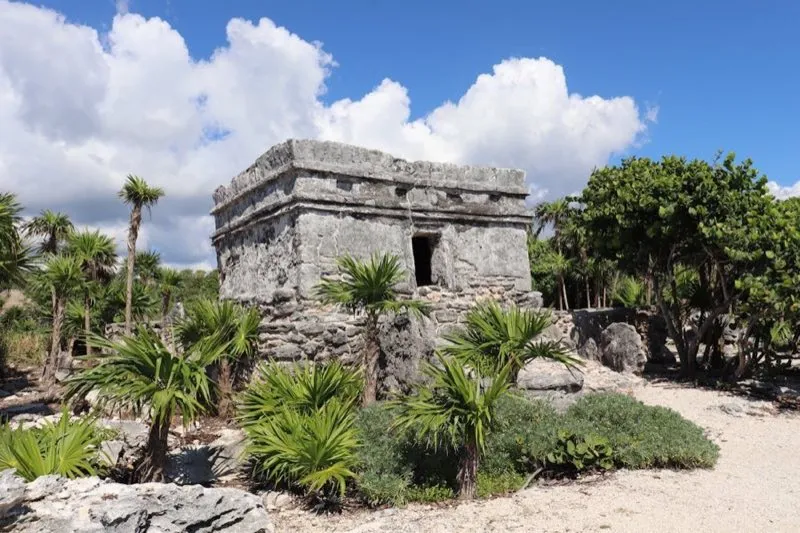
The Tulum Archaeological Zone covers about 4 hectares. The site is small compared to Chichen Itza — you can walk every path in under 2 hours. Here are the key structures:
El Castillo (The Castle)
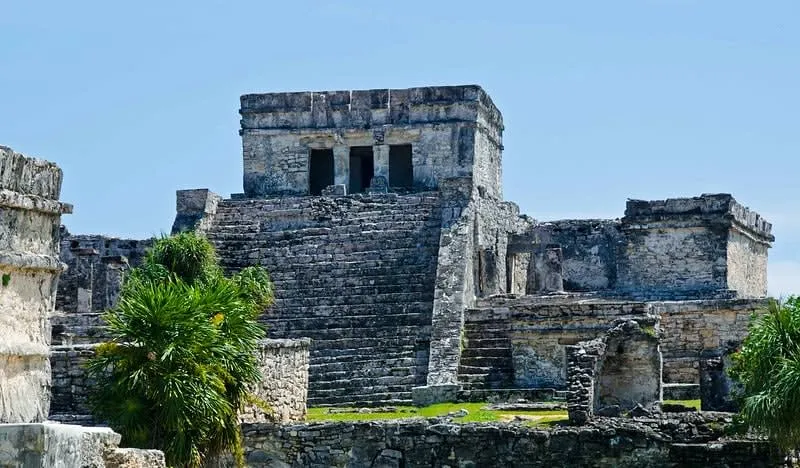
The dominant structure at Tulum — a 7.5-meter pyramid sitting directly on the edge of the coastal cliff. It served as a lighthouse: a candle in a window would guide Maya canoe traders through the reef break below. The east-facing view from the base of El Castillo over the turquoise water is the photograph every visitor comes to take.
El Castillo cannot be climbed (no structures in Tulum are climbable — roped off since 1994). But the view from the plaza in front of it is the genuine spectacle.
Temple of the Frescoes
A two-story structure near the center of the site with some of the best-preserved murals at Tulum. The upper level has carved masks on the corners (Diving God/descending deity). The interior frescoes depict Maya deities and cosmic symbols in blue, black, and red — protected from sun and rain by the architecture, which is why they survived. Photography from the exterior; the interior is roped off.
Temple of the Diving God
A small but striking temple with a carved figure of the “Diving God” above the doorway — a deity shown headfirst in a diving position. This descending figure appears throughout Tulum and is associated with the Venus cycle and the bee god Ah Muzen Cab. The temple is one of the most photographed at the site due to its unusual bas-relief.
The Palace (El Palacio)
A long, multi-room structure on the north side of the main plaza. Served as residential and administrative space for the elite class that governed Tulum. The building is well-preserved, showing the typical Tulum architectural style: sloping walls, small windows, and narrow doorways.
The Watchtowers & The Wall
The site is named after its protective wall — “Tulum” derives from the Mayan word for wall or fence. The 5-meter-high wall runs on three sides; the fourth side is the sea cliff. Only 5 narrow gateways pierce the wall. This design made Tulum one of the most defensible Maya cities. The watchtowers at the corners offered sightlines over approaching land threats and sea lanes.
The Beach
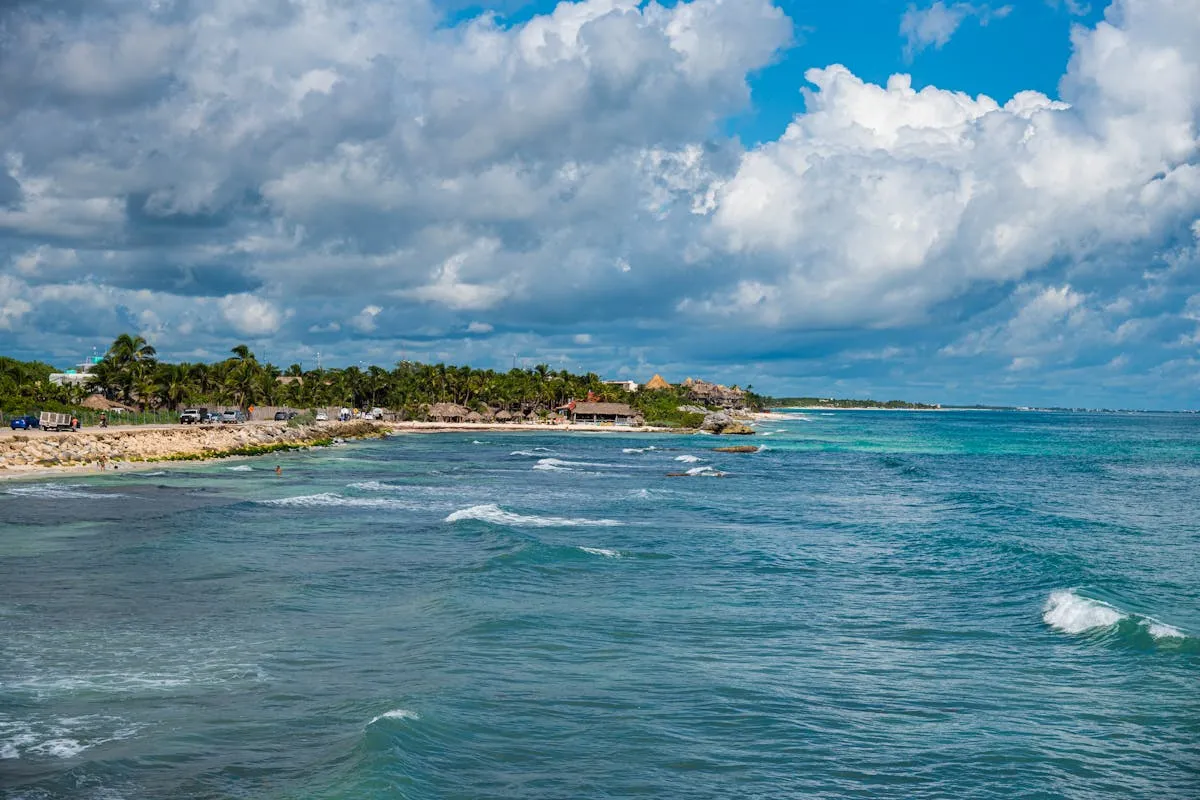
Inside the archaeological zone, a path leads down the cliff to a small beach. This beach — accessible only to ticket holders — has calm, clear water. Swimming is permitted. You’ll share it with iguanas, pelicans, and other visitors, but the experience of swimming below the ruins is genuinely memorable. Bring a dry bag for your valuables.
Best time on the beach: 8–9:30 AM (cool, few people, golden light on the ruins above).
Ruins Comparison: Tulum vs. Other Yucatan Sites
| Site | Entry Fee | Can Climb? | Time Needed | Crowd Level | Setting |
|---|---|---|---|---|---|
| Tulum | 95 MXN | ❌ No | 2–3 hrs | 🔴 Very high | Coastal cliff — unique |
| Chichen Itza | 646 MXN (571+75) | ❌ No | 3–4 hrs | 🔴 Very high | Flat jungle |
| Cobá | 210 MXN foreign / 105 MXN Mexican INAH fee | ✅ Yes — 42m | 2–3 hrs | 🟡 Moderate | New wooden staircase |
| Ek Balam | INAH + CULTUR charges; verify total | Check current access | 2–3 hrs | 🟢 Low | Deep Yucatán |
| Uxmal | 566 MXN | ❌ No | 3–4 hrs | 🟡 Moderate | Puuc hills |
| Dzibilchaltun | 75 MXN | ❌ No | 1–2 hrs | 🟢 Low | 16km from Merida |
If you want to climb a pyramid: Go to Cobá, about 45 minutes from Tulum. Nohoch Mul is 42m high and reopened with a wooden staircase in December 2025. Check the current access condition and fee before leaving.
If you want fewer crowds: Go to Ek Balam (2 hours from Tulum via Valladolid). Also climbable, far fewer tourists.
How Long to Spend at Tulum Ruins
2–2.5 hours is the right amount of time. This lets you:
- Walk every path at a leisurely pace (45 minutes)
- Spend time at El Castillo and the coastal view (20 minutes)
- Visit the beach and swim (30–45 minutes)
- Browse the Temple of Frescoes and other structures (30 minutes)
- Enjoy the early morning quiet before crowds arrive (priceless)
You do not need a full day at Tulum ruins. The site is small. 3+ hours is excessive unless you’re an archaeology enthusiast. Plan to finish by 10:30 AM and spend the rest of the day at a cenote or the beach zone.
Best Time to Visit Tulum Ruins
By Time of Day
- 8–10 AM: Best. Manageable crowds, cool temperatures, best light for photography.
- 10 AM – 2 PM: Worst. Tour buses from Cancun, cruise ship transfers, full sun.
- 3–5 PM: Better than midday but still crowded. Heat is still intense April–October.
By Month
| Month | Crowds | Temperature | Notes |
|---|---|---|---|
| Jan–Feb | Medium | 25–28°C | Best overall — dry season, manageable crowds |
| Mar | High | 27–29°C | Spring break builds week by week |
| Apr | Very high | 28–30°C | Spring break + Easter (Semana Santa) = peak |
| May | Medium | 29–31°C | Crowds drop post-Easter but hot |
| Jun–Aug | Medium-low | 30–33°C | Rainy season — afternoon storms clear the site |
| Sep–Oct | Low | 29–32°C | Hurricane season, fewest tourists |
| Nov | Medium | 26–29°C | Excellent — dry season returns, low crowds |
| Dec | High | 24–27°C | Christmas/NYE surge |
Best month for Tulum ruins: November or February. Low crowds, ideal temperatures, no Easter surge.
Semana Santa (Easter) warning: During Holy Week (2026: March 29–April 5), Tulum is at full capacity. Ruins entry queues start at 7:30 AM. If visiting during Semana Santa, arrive 20 minutes before the 8 AM opening.
Combining Tulum Ruins With Other Stops
The most common combination is ruins + cenote + afternoon beach. Here are the three best circuits:
Circuit 1: Ruins + Gran Cenote
- 8 AM: Tulum ruins (arrive for opening)
- 10:30 AM: Taxi to Gran Cenote (4 km, 100–150 MXN)
- 11 AM–1 PM: Gran Cenote — swim and snorkel (entry 500 MXN)
- 1:30 PM: Lunch in Tulum Pueblo
- 3 PM: Tulum beach zone
Why this works: Gran Cenote is the closest quality cenote (4 km), with cave snorkeling, freshwater turtles, and a natural skylight opening. Go after the ruins before it gets packed.
Circuit 2: Ruins + Cobá
- 8 AM: Tulum ruins (arrive for opening)
- 10:30 AM: Rent a car or take a colectivo to Cobá (45 km, 45 minutes)
- 11 AM–1 PM: Cobá ruins — climb Nohoch Mul if current access permits; verify the official admission fee before travel
- 2 PM: Lunch at Cobá village
- Drive back to Tulum or onward to Valladolid
Why this works: You get two of the Yucatan’s best archaeological experiences — the unique coastal setting at Tulum plus the climbable pyramid at Cobá — in one day.
Circuit 3: Ruins + Cenote Dos Ojos
- 8 AM: Tulum ruins
- 10:30 AM: Drive or taxi to Cenote Dos Ojos (16 km from ruins, 130 MXN entry)
- 11 AM–1 PM: Dos Ojos — the best cenote cave system in Mexico, two connected pools
- Afternoon: Tulum beach zone
Why this works: Dos Ojos is the premier cenote diving/snorkeling site in the Riviera Maya. The cave swim is a category-different experience from Gran Cenote — darker, longer passages, more dramatic light effects.
Guided Tour or Self-Guided?
| Option | Cost | Best For |
|---|---|---|
| Self-guided | 95 MXN entry | Repeat visitors, photographers, independent travelers |
| Licensed guide at entrance | 400–600 MXN (private, 1–8 people) | First-time visitors wanting historical context |
| Organized tour from Cancun | $45–85 USD | Day-trippers from Cancun who want seamless transport |
| Organized tour from PDC | $35–65 USD | Day-trippers from Playa del Carmen |
Independent travelers: An English-language audio guide app (izi.travel — free) or a guidebook covers the main structures well. The site is small enough to navigate without a guide.
First-timers who want context: Hire a licensed INAH guide at the entrance. Rates are fixed by the government. A 1–1.5 hour guided tour covers all the key structures, gives the historical background (Tulum thrived 1200–1521 CE — one of the last Maya cities still occupied when Spaniards arrived), and explains the astronomical alignments.
What to Bring
- Sun protection — hat, lightweight covering, and sunscreen for the exposed ruins; follow separate operator rules before entering cenotes or reef water
- Water (bring 1.5L minimum — the vendors inside are expensive)
- Cash for entry (cards accepted but cash backup recommended)
- Swimwear under clothes if you plan to swim the beach
- Dry bag or waterproof bag for valuables on the beach
- Hat and light shirt — shade is limited, sun is intense April–October
- Comfortable walking shoes — the paths are paved/flat
What You Won’t Find at Tulum Ruins (Honest)
Tulum is not a ruin for archaeology enthusiasts. It is a ruin for the setting. To manage expectations:
- The structures are modest compared to Chichen Itza, Uxmal, or Palenque. Tulum was a trading port, not a ceremonial capital. The pyramids are small.
- You cannot climb anything. Climbing has been banned since 1994 after structural concerns. Every structure is roped off.
- The murals in the Temple of Frescoes are faded — don’t expect Sistine Chapel-level detail. They’re historically significant, not visually overwhelming.
- The site is crowded. Even at 8 AM in February you’ll share it with hundreds of people. In April, thousands.
What you will find: an extraordinary natural setting, one of the most photographed archaeological sites in the Western Hemisphere, and the experience of swimming in the Caribbean below a 1,000-year-old Maya city.
Tours & Tickets
Browse Tulum ruins tours on Viator — including combined ruins + cenote day trips from Cancun and Playa del Carmen, and private guide options.
If you’re renting a car to reach Tulum ruins independently: Compare car rental prices via RentCars (Highway 307 from Cancun to Tulum is easy driving).
Related Guides
- Tulum Travel Guide 2026 — full guide: where to stay, neighborhoods, costs, cenotes, beaches
- Things to Do in Tulum 2026 — 25 activities beyond the ruins
- Best Cenotes Near Tulum — Gran Cenote, Dos Ojos, Angelita ranked
- Day Trips from Tulum — Cobá, Sian Ka’an, Chichen Itza, Bacalar
- Coba Ruins Guide 2026 — the tallest climbable pyramid in Mexico (45 min from Tulum)
- Cancun to Tulum — 6 ways to get there (bus, Maya Train, driving)
- Playa del Carmen to Tulum — colectivo, ADO, rental car options