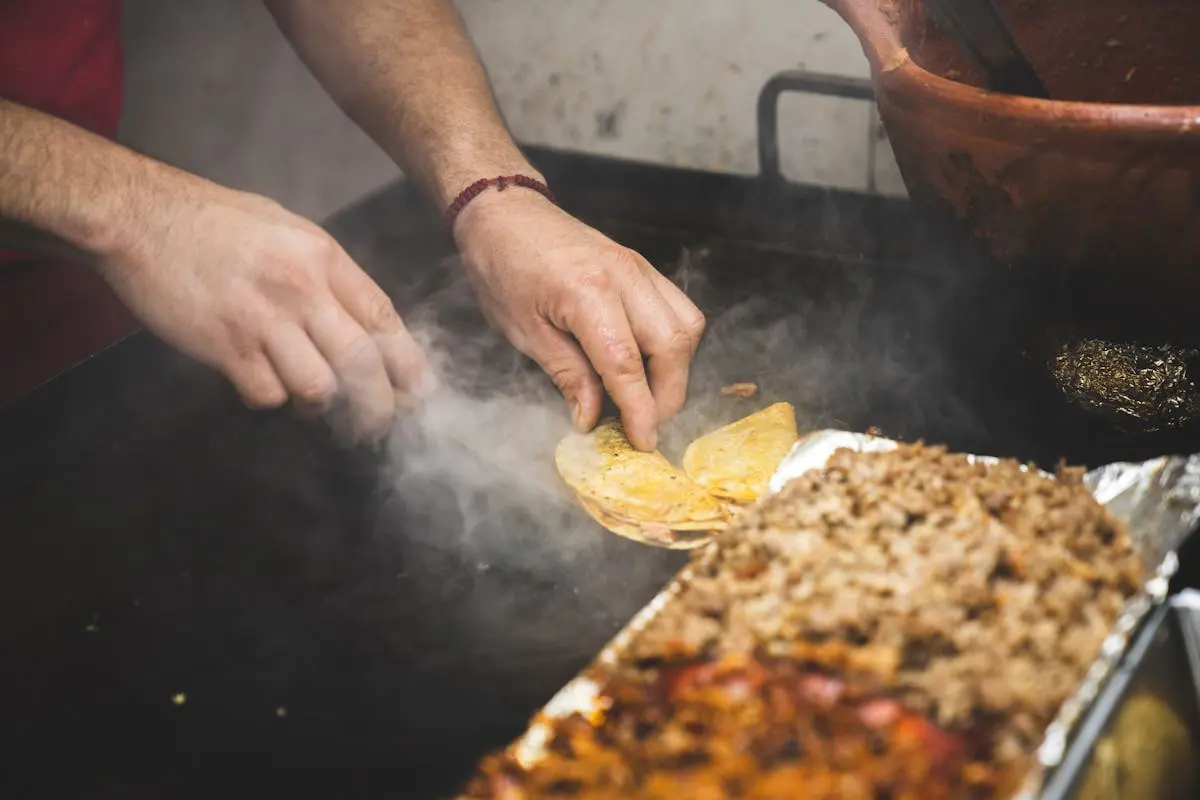
Things to Do in Tulum 2026: 25 Best Activities, Ruins & Cenotes Ranked
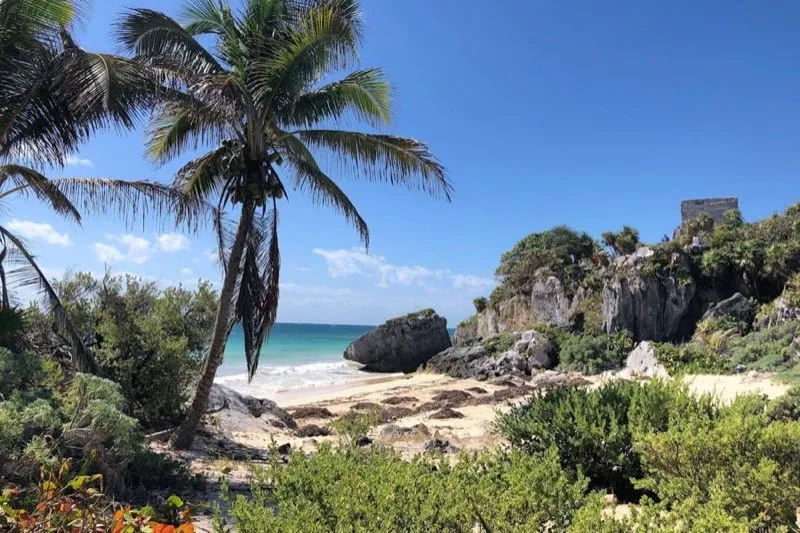
Tulum is a municipality in Quintana Roo, Mexico, on the Caribbean coast of the Yucatán Peninsula — 130 km south of Cancún and 60 km from Playa del Carmen — with a Maya archaeological zone, 12 km of beach, three UNESCO-recognized areas, and the densest concentration of cenotes in Mexico.
Most first-timers spend 90% of their time in beach clubs and miss the things that make Tulum genuinely extraordinary. The ruins at 8 AM. The cenote with the underwater river of hydrogen sulfide. The UNESCO biosphere reserve that starts right where the Hotel Zone ends. This guide covers all 25 activities honestly — including what’s overrated, what’s overpriced, and what’s actually worth your time.
For the full Tulum overview including where to stay, getting there, and practical logistics, see the Tulum Travel Guide 2026. For the full Riviera Maya picture, use a broader Riviera Maya planning guide before you lock transport and day-trip logistics.
Quick Activity Overview
| Category | Best Option | Cost | Time |
|---|---|---|---|
| Archaeological site | Tulum Ruins (8 AM) | 90 MXN + 85 MXN INAH | 1.5–2 hrs |
| Cenote swimming | Gran Cenote or Dos Ojos | From 400–500 MXN | Half day |
| Biosphere reserve | Sian Ka’an lagoon tour | $80–120 USD | Full day |
| Climbable pyramid | Cobá (45 min drive) | 210 MXN foreign / 105 MXN Mexican INAH fee | Half day |
| Beach access | Public Tulum beach | Free | Any time |
| Snorkeling | Cenote snorkel tour | $40–70 USD | Half day |
| Diving | Cenote dive (2 tanks) | $90–130 USD | Full day |
| Food | Tulum town tacos | 40–80 MXN | Lunch |
| Nightlife | Papaya Playa Project | Free–500 MXN cover | Evening |
The Tulum Ruins: Go at 8 AM
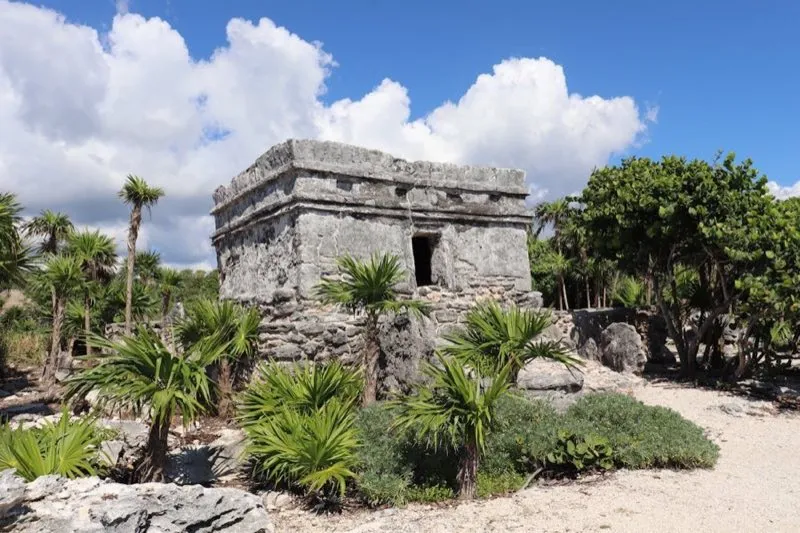
Tulum’s Maya ruins are the most photographed in Mexico for one reason: they sit on a 12-meter limestone cliff above the Caribbean Sea. The castle (El Castillo), the Temple of the Descending God, and the Temple of the Frescoes are dramatically positioned — sea behind, jungle ahead.
What you need to know:
- Open 8 AM–5 PM daily. Arrive at 8 AM sharp. Tour buses from Cancún and Playa del Carmen start arriving at 10–11 AM. The difference is a different experience entirely.
- Entry: 90 MXN (municipality) + 85 MXN (INAH federal). Total
175 MXN ($9 USD). Cash or card. - You cannot climb any structures — conservation rule since 2018. El Castillo is viewable from ground level and from a cliff walkway above the cove below.
- The site has a small beach inside (Playa Ruinas). You can swim here before the crowds arrive — usually empty until 10 AM.
- Time needed: 1–1.5 hours for the full site; 30 extra minutes if you swim the cove beach.
The Temple of the Descending God has an inverted deity figure in stucco that appears above the doorway — one of the most distinctive iconographic elements in Maya art, only found in a handful of sites.
The Temple of the Frescoes has the best-preserved internal murals in Tulum — three panels depicting Maya deities and the three levels of the Maya cosmos. The murals are fragile and viewed through a protective fence, but the detail visible is remarkable.
→ Full ruins guide: Tulum Ruins 2026: Entry Fee, What to See & When to Go
For those who want to climb a Maya pyramid near Tulum: Coba is 45 minutes away and Nohoch Mul pyramid (42 meters) is still open to climbers. See the Coba section below.
Cenotes Near Tulum: The Complete Comparison
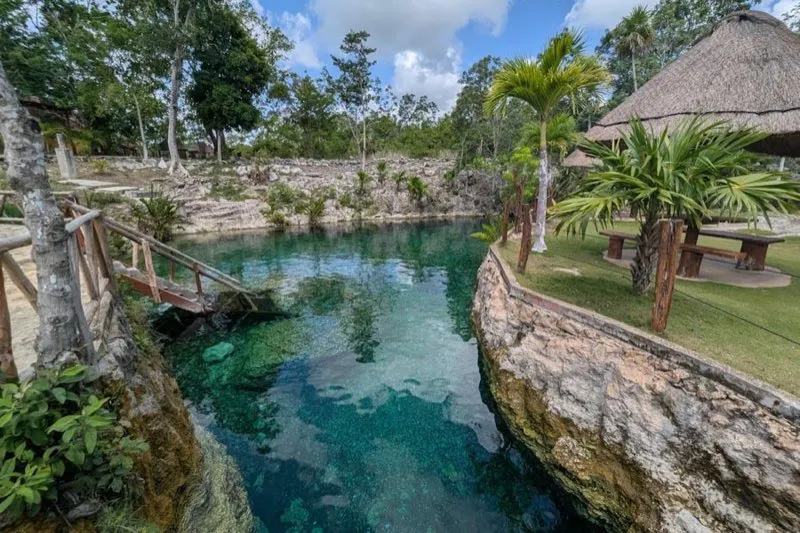
Tulum sits above the world’s longest known underwater cave system. The cenotes here aren’t swimming holes with a cave above — they’re windows into an interconnected 347km system called Sistema Sac Actun. Here’s how they compare:
| Cenote | Distance | Entry | Best For | Notes |
|---|---|---|---|---|
| Gran Cenote | 4km west | 500 MXN | Beginners, snorkeling | Most popular, easiest by bike/taxi |
| Dos Ojos | ~22km north | From ~400 MXN | Snorkeling, cavern and cave diving | Packages and guide rules vary |
| Cenote Calavera | ~3km west | ~250 MXN | Jumping, swimming, diving | Three openings and ladder access |
| Casa Cenote (Tankah) | ~11km north | ~250–300 MXN | Open water, mangroves | No ceiling — good if claustrophobic |
| Cenote Angelita | ~17km south | ~300–350 MXN site fee | Advanced diving only | Hydrogen-sulfide cloud at depth |
| Aktun-Ha (Car Wash) | ~8km west | ~250–300 MXN | Open swimming, diving, lily pads | On the Cobá road |
Gran Cenote is the default recommendation for first-timers. The water is crystal clear, turtles swim past regularly, and a short cavern passage is accessible without diving equipment. Peak crowd time: 11 AM–2 PM. Beat it by arriving at opening (8 AM) or after 3 PM.
Cenote Angelita deserves its own mention: at 30 meters depth, a layer of hydrogen sulfide (H₂S) creates what looks like an underwater river — a halocline with a cloud of sulfur gas drifting between the fresh water above and saltwater below. Dead leaves and branches float on its surface like a real river. It’s one of the most surreal natural phenomena in the Yucatán. Diving only (no snorkeling at depth), with a registered operator required.
Lower-cost alternative: Aktun-Ha, commonly called Car Wash, is about 8km west of Tulum on the Cobá road. Admission is commonly around 250–300 MXN, so it is cheaper than Gran Cenote but not free.
Cenote day-trip packages: Operators sell different combinations with transport and equipment. Compare the live itinerary, included admission, guide requirements, and total price before booking.
Sian Ka’an Biosphere Reserve
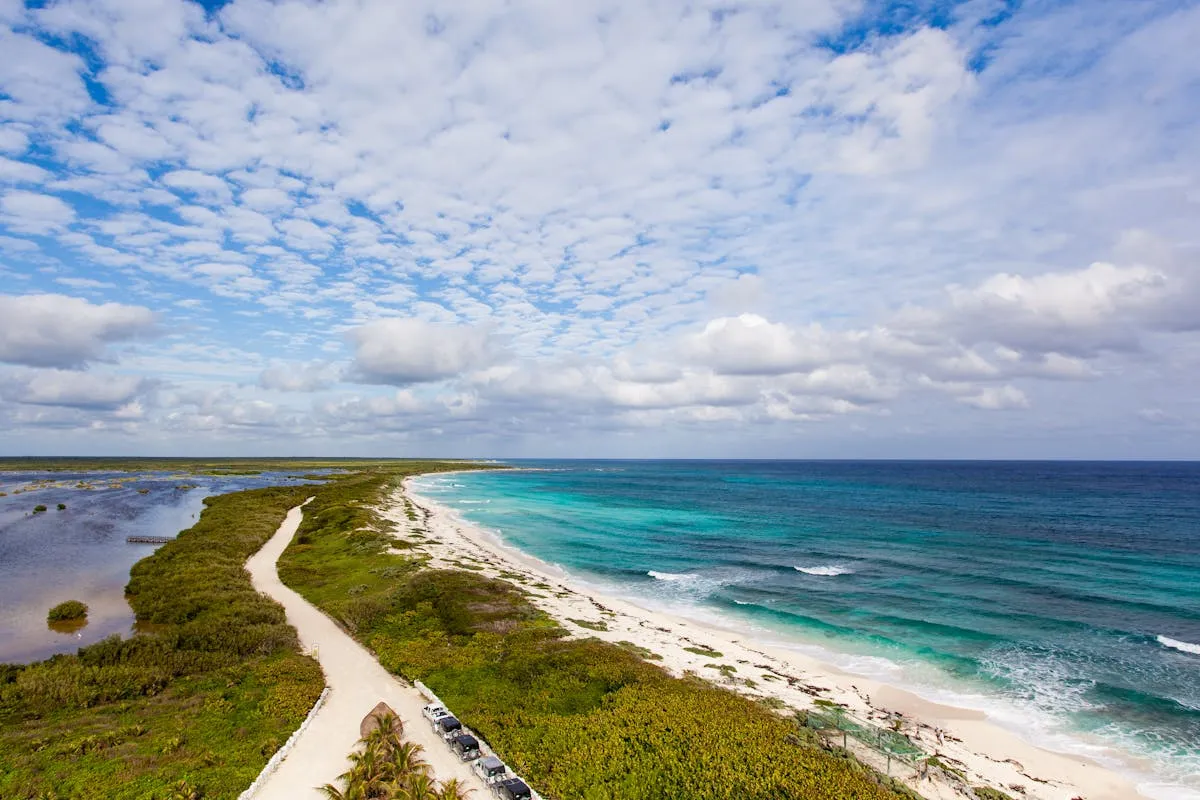
Sian Ka’an means “where the sky is born” in Yucatec Maya. The reserve covers 5,280 km² of tropical forest, wetlands, and coastal lagoons — a UNESCO World Heritage Site since 1987. It begins where the Tulum Hotel Zone ends.
What’s inside:
- Lagoon boat tours: The main tourist activity — 2–3 hour boat tours through channels and lagoons built by the ancient Maya. You drift on the current (no paddling needed) through jungle waterways. Manatees, dolphins, and hundreds of bird species live here. Tour cost: $80–120 USD per person from Tulum.
- Muyil archaeological zone: A free-entry Maya site (no INAH fee) inside the reserve, connected to the canal system. You can kayak from the ruins directly into the lagoon. Combine with a boat tour.
- Boca Paila: A barrier peninsula inside the reserve — flat water on one side, open Caribbean on the other. Fly fishing, kayaking, bird watching. Very few tourists.
- Punta Allen: A remote fishing village at the tip of the peninsula — 55 km of unpaved road from the reserve entrance. The hardest-to-reach destination near Tulum, which is exactly the point. Lobster directly from fishermen, bioluminescence at night.
Day trip vs multi-day: A day tour covers the Muyil ruins + lagoon drift. A multi-day trip (staying in Punta Allen or near Boca Paila) reveals what makes Sian Ka’an genuinely extraordinary. This is Mexico’s largest and best-protected coastal biosphere.
For a Tulum day trip, book Sian Ka’an early — tour capacity is limited by the reserve’s permit system and popular tours fill weeks ahead in high season.
Coba: The Climbable Pyramid 45 Minutes Away
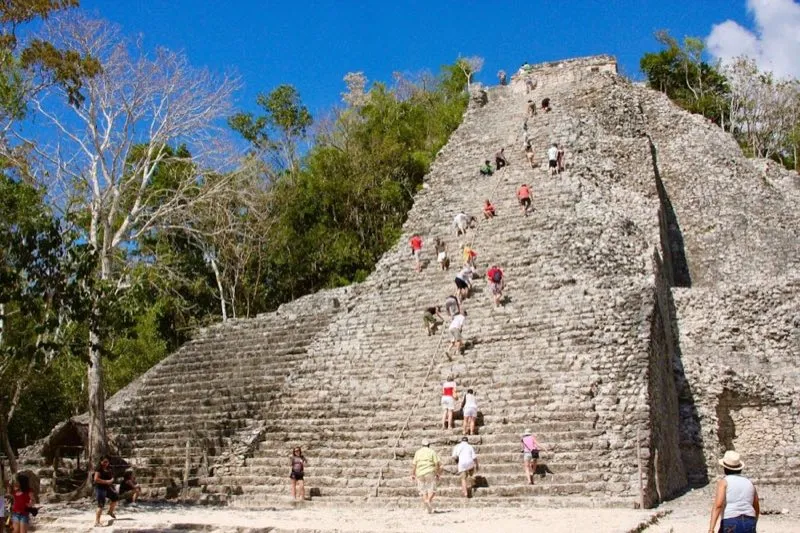
Coba is the single most underrated day trip from Tulum. While Chichen Itza gets 5,000+ visitors a day and charges $646 MXN, Coba is 45 minutes away with a fraction of the crowds, a genuinely enormous site, and — crucially — you can still climb the pyramid.
Nohoch Mul (42 meters / 138 feet) is the tallest climbable pyramid in the Yucatán Peninsula. From the top, unbroken jungle stretches to the horizon in every direction. On a clear day you can see for 30+ km.
What you need to know:
- Entry: 90 MXN (municipality) + 85 MXN (INAH). Total ~175 MXN.
- Open 8 AM–5 PM. Arrive early — the pyramid climb is best before midday heat.
- Rent a bike (50–80 MXN) or hire a bicycle taxi (100–150 MXN one-way) to get between the groups — the site is spread across 70 km² of jungle.
- The main pyramid is a 15-minute walk from the entrance; the largest groups of structures are 1.5–2 km apart.
- Site time needed: 2–3 hours minimum.
Getting there from Tulum: ADO bus (Playa Express/Maya Oro) — 85 MXN, 40 minutes. Colectivo toward Valladolid stops near the Coba turnoff. Rental car or Uber (Tulum town only, not Hotel Zone) gives the most flexibility.
Coba Lake (Lago Macanxoc): The site was built around several large lakes. The lakes still exist and are visible from certain platforms — a reminder that this was a major Maya city of 50,000 people at its peak.
Beach Clubs: What They Actually Cost
Tulum beach clubs are famous on Instagram. The reality:
- Cover charges: $20–100 USD per person, depending on the club and day
- Minimum spend: Almost universal — $50–150 USD per person in food and drinks, deducted from cover
- Drinks: $10–20 USD cocktails, $5–8 USD beers, $15–25 USD smoothies
- Advance booking: Required at top clubs (Papaya Playa Project, Mia Beach Club, Ahau) for weekend and high season
The math on beach clubs: A couple spending a full day at a mid-tier club will spend $200–350 USD total including food and drinks. This is the price point. It is what it is.
Free beach alternative: Tulum’s Hotel Zone beach is public by Mexican law. You can access the beach between properties at multiple points — look for small access paths. Playa Paraiso (near Km 8) has public access with a few palapa restaurants at normal prices.
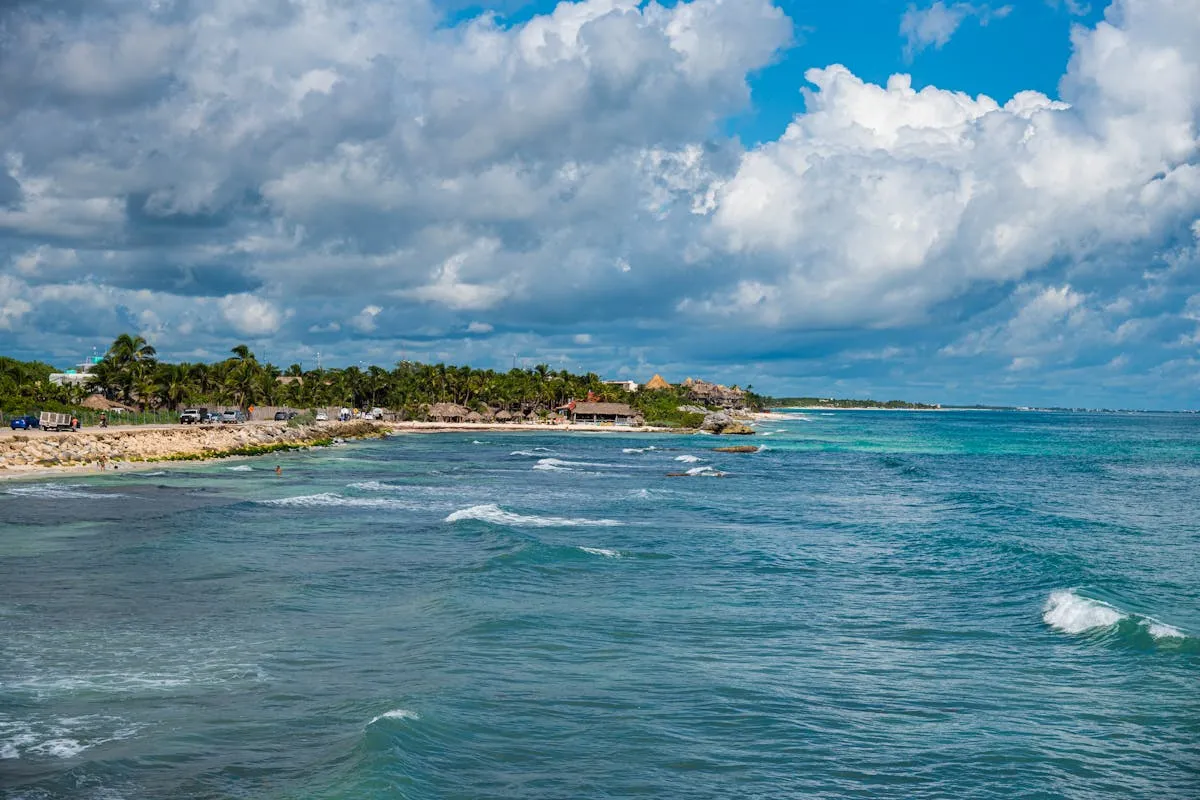
Best value beach clubs for the experience without the $100+ cover: Ahau (known for its pool vibe), Papaya Playa Project (weekdays cheaper than weekends), and smaller places between Km 6–10 that have no minimum spend for day visitors.
Tulum Town: Where the Real Food Is
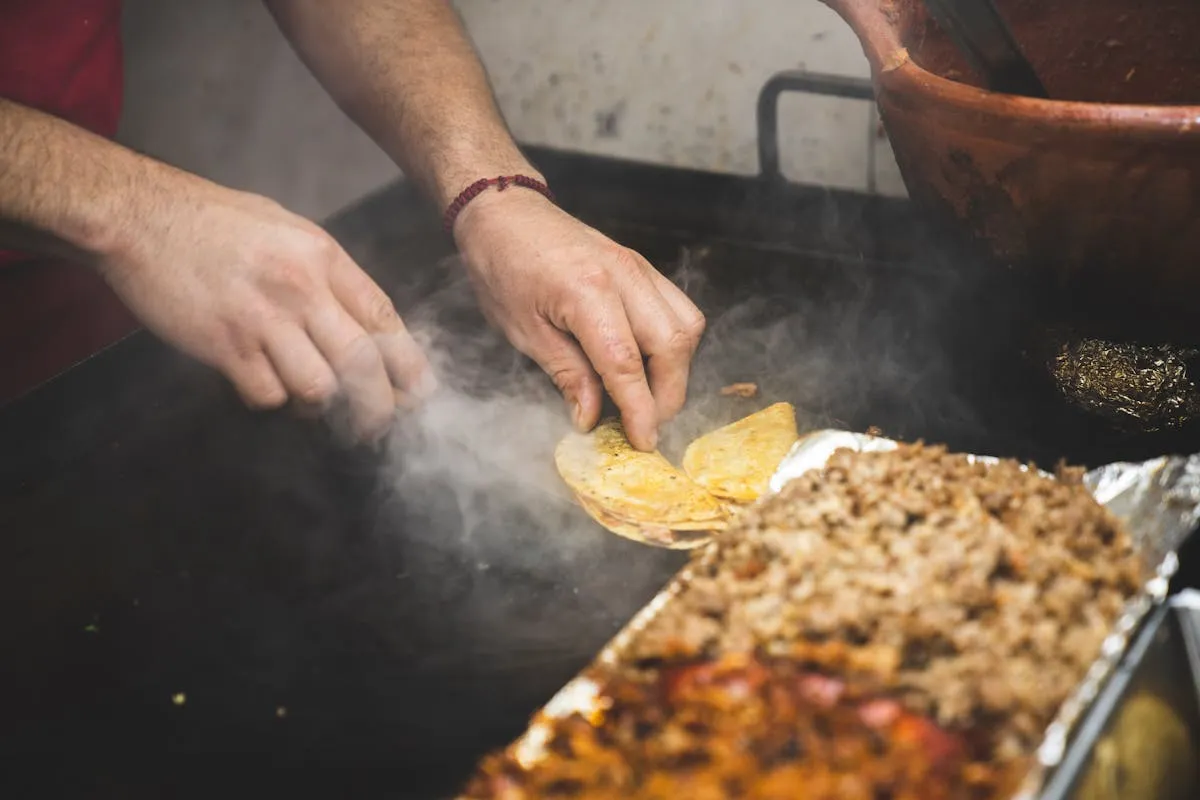
The price gap between Tulum town and the Hotel Zone is staggering. The same fish taco that costs 180 MXN at a beach club costs 35–50 MXN in town.
Best eating in Tulum town (Avenida Tulum and surrounding streets):
- Taquería El Camello Jr. — Fish and shrimp tacos, queueing locals = the right sign. 40–60 MXN/taco.
- El Pequeño Buenos Aires — Grilled meats, Argentine influence, large portions, reasonable prices
- Taquería Honorio — Cochinita pibil tacos, Yucatecan style. 35 MXN. Outstanding.
- Mercado Municipal — The town market on Calle Alfa — produce, prepared food stalls, cheap breakfasts
- La Eufemia — Slightly upscale but still town prices. Mexican creative menu, mezcal.
The food quality in Tulum town competes with anywhere in the Riviera Maya. The beach zone restaurants are not better — they’re just more expensive and prettier. For the complete food breakdown, compare town taquerias, beach-zone restaurants, and the Pueblo vs Hotel Zone price reality before planning every dinner on the beach road.
Snorkeling and Diving
Cenote snorkeling: The most popular water activity for non-divers. Tours run from Tulum to Gran Cenote + Dos Ojos + one more (typically Casa Cenote or Calavera) for $40–70 USD with gear included.
Cenote diving: Tulum is a world-class cave and cavern diving destination. The Sistema Sac Actun caves draw divers from around the world specifically for their formations. Cavern dive (no certification required, guided only): $90–130 USD for 2 tanks. Full cave diving: requires certifications and is a different category of experience entirely.
Reef snorkeling: The reef near Tulum Hotel Zone is part of the Mesoamerican Barrier Reef system. Visibility is generally excellent. Boat snorkeling tours to the reef run $40–60 USD. Follow the marine operator’s current product rules and use a rash guard where sunscreen is restricted.
Sea turtles at Akumal: 15 km north of Tulum, Akumal Bay has a permanent population of green sea turtles grazing on seagrass. You can snorkel with them directly from the beach (self-guided, 50–100 MXN for gear rental) or join a guided tour. Go early (8–9 AM) before boats arrive, and confirm current access rules before you go.
Bioluminescence and Night Activities
Bioluminescent bays: Tulum proper doesn’t have a reliable bioluminescent bay, but tours run to Laguna Muyil (inside Sian Ka’an) in the right conditions. Peak bioluminescence: June–October (less light pollution, warmer water). The experience is kayaking in darkness through water that glows blue-green with every paddle stroke.
Night cenote: Cenote Calavera and a few others offer night diving and snorkeling tours — a completely different experience with underwater lights. Book through a certified dive operator.
Tulum nightlife: The beach club scene transitions to nightlife after 10 PM. Papaya Playa Project’s Thursday full-moon parties are the most famous — 1,500–2,000 people, international DJs, on the beach. Vagalume is the local favorite for music without the tourist markup. Batey in town — cash only, good rum, no pretension.
Kiteboarding and Water Sports
Tulum’s beach faces east — open Caribbean, moderate winds, good for water sports.
Kiteboarding: Best at Playa Chen Rio (near Boca Paila) and Playa Paraiso during November–March when north winds (nortes) push through. Multiple kite schools operate from Tulum with beginner lessons at $100–150 USD for a 3-hour intro session.
Paddleboarding (SUP): Multiple rental options on Tulum beach — 200–400 MXN/hour. The lagoon side of the Sian Ka’an peninsula (calm water) is better for paddleboarding than the open beach.
Surfing: Tulum does not have surf. The reef breaks any wave before it reaches shore. For surf near the Yucatán, you need the Pacific coast: Sayulita, Puerto Escondido, Mazatlán, or another Pacific beach town.
ATV and Jungle Tours
Multiple operators run ATV tours through the jungle behind Tulum — 1–2 hours through dirt tracks, cenote stops, Maya ruins along the route (smaller unmaintained sites inside the jungle, not the main zone). Cost: $60–100 USD per person.
These are popular with groups and couples. Quality varies enormously by operator — book through your hotel or a well-reviewed agency rather than the street operators at the ruins entrance.
The Free Activities
| Activity | Cost | Notes |
|---|---|---|
| Tulum beach access | Free | Use access paths between properties |
| Aktun-Ha cenote | ~50 MXN parking | Open water, lily pads |
| Watching the Tulum ruins from the beach below | Free | Access via the beach south of ruins |
| Walking Avenida Tulum (town) | Free | Good street food and market stalls |
| Sunrise at the ruins (from outside the fence) | Free | The ruins are visible from the road at dawn |
| Muyil ruins (with your own transport) | Free entry | No INAH fee — only biosphere entry |
The view of Tulum ruins from the beach below (accessed from the south end of Ruinas beach via a walkway) is genuinely good — you see El Castillo above the cliff the way it was meant to be seen, from the sea.
Day Trips from Tulum
For activities further afield, Tulum is a strong base for the southern Yucatán and Riviera Maya:
| Destination | Distance | Time | Highlight |
|---|---|---|---|
| Coba | 45 km | 45 min | Climbable pyramid, jungle |
| Akumal | 15 km | 15 min | Sea turtle snorkeling |
| Bacalar | 150 km | 2 hrs | Lagoon of Seven Colors |
| Valladolid | 100 km | 1.5 hrs | Colonial city, Suytun cenote |
| Chichen Itza | 170 km | 2 hrs | Most famous Maya site |
| Sian Ka’an | 10–55 km | Day trip | UNESCO reserve, boat tours |
| Playa del Carmen | 60 km | 45 min | 5th Avenue, Cozumel ferry |
Use the route table as a first filter, then verify full logistics for each destination, including transport costs and the colectivo network.
Tulum Activities: Budget Guide
| Budget Style | Daily Activity Spend | What You Get |
|---|---|---|
| Budget ($40–70/day total) | Ruins + 1 cenote + town food + public beach | The essential Tulum experience |
| Mid-range ($100–180/day total) | Cenote tour + good restaurant + 1 beach club visit | Comfortable, most activities covered |
| Luxury ($250+/day total) | Private tours, top beach clubs, fine dining | Curated, no-wait, premium version |
The ruins and cenotes alone — the things that make Tulum unique — cost under 500 MXN ($25 USD) combined. The beach club experience is a separate, optional purchase. You can do Tulum extremely well on $50–70 USD/day for activities.
Practical Notes
Tulum to cenotes without a car: Gran Cenote is about 4km west on the Cobá road and works by bike or taxi. Dos Ojos is about 22km north on Highway 307; take a northbound colectivo to the park turnoff and arrange the local transfer, or use a tour or car.
High season: December–April (dry, minimal sargassum on north-facing beaches). Sargassum is worst June–October on Tulum’s east-facing coastline — some years more than others.
Best 2-day Tulum activity itinerary:
- Day 1 morning: Tulum ruins (8 AM) → ruins beach swim → Tulum town lunch. Afternoon: Gran Cenote or Dos Ojos cenote.
- Day 2: Full day Sian Ka’an biosphere tour, OR Coba pyramid + cenotes combo. Evening: dinner in town, Papaya Playa if timing is right.
3-day: Add Akumal sea turtles + Bacalar or Valladolid on Day 3.
For travel insurance that covers adventure activities (diving, ATVs, kiteboarding), especially in a remote biosphere reserve:
For the full planning picture including where to stay, sargassum guide, and how to get to Tulum from Cancún and Playa del Carmen, see the Tulum Travel Guide 2026. Visiting during Holy Week? Expect higher prices, heavier crowds, no dry law in normal tourist areas, and stronger reasons to plan cenotes early. Wondering when to go? Our Best Time to Visit Tulum guide covers sargassum by month, cenote clarity, and season-by-season wildlife. Planning excursions outside Tulum? Prioritize Coba, Sian Ka’an, Akumal sea turtles, Valladolid, and Chichen Itza depending on how much road time you want. For cenotes, compare Gran Cenote, Dos Ojos, Calavera, Casa Cenote, and Cenote Angelita by distance, crowd level, and whether you want easy swimming or cavern diving. For the complete Yucatán destination picture, pair this with the Tulum guide and nearby Valladolid, Chichen Itza, and Riviera Maya planning notes.