Day Trips from Tulum 2026: 15 Best Excursions Ranked
Tulum is one of Mexico’s best-positioned travel bases. Within 3 hours, you have ancient pyramids you can still climb, underwater cave systems spanning 300km, a UNESCO biosphere reserve with manatees and Maya canals, colonial cities, flamingo lagoons, and the most famous archaeological site in the Americas. The problem is that most visitors end up stuck in the overpriced beach zone, not knowing how to get anywhere.
This guide covers the 15 best day trips from Tulum — ranked by ease and impact — with honest transport information, exact costs, and timing advice that tour operators won’t tell you.
Key facts: Uber currently lists on-demand rides in Tulum, but live availability and pickup conditions can vary. For time-sensitive day trips, colectivos, registered taxis, tours, or a rental car are more predictable. Cenotes fill up early — arrive before 10 AM for the best experience.
At a Glance: 15 Day Trips from Tulum
| Destination | Distance | Travel Time | Entry Cost | Best For |
|---|---|---|---|---|
| Gran Cenote | 4km | Bike / taxi | 500 MXN | Popular half-day cenote |
| Cobá Ruins | 45km | 1 hr | 210 MXN foreign / 105 MXN Mexican INAH fee | Climbable pyramid |
| Akumal | 30km | 25 min | Free | Sea turtle snorkeling |
| Cenote Dos Ojos | 25km | 20 min | 600 MXN | Cave snorkeling/diving |
| Sian Ka’an | 30km | 45 min | Tours $60–120 USD | UNESCO wildlife |
| Muyil Ruins | 23km | 30 min | 80 MXN | Free ruins, birdwatching |
| Punta Allen | 55km | 1.5 hr | Free (tours extra) | Remote, lobster, birds |
| Playa del Carmen | 68km | 1 hr colectivo | None | 5th Avenue, nightlife |
| Cenote Angelita | 14km | 20 min | Tours ~$80 USD | Advanced diving |
| Chichen Itza | 240km | 2.5–3 hr | 646 MXN | Must-see ruins |
| Ek Balam | 200km | 2.5 hr | INAH + CULTUR charges; verify total | Climbable Acropolis |
| Valladolid | 160km | 2 hr | Free (cenotes extra) | Colonial town, food |
| Cenote Ik Kil | 250km | 3 hr | 180 MXN | Combine with Chichen |
| Bacalar | 230km | 3.5 hr | None (tours extra) | 7-color lagoon (overnight better) |
| Cozumel | 90km + ferry | 2.5 hr total | Ferry 280–350 MXN | Diving, reef snorkeling |
Getting Around from Tulum
Important: Uber officially lists on-demand rides in Tulum, but live availability and pickup locations can vary. Keep these reliable alternatives in mind:
| Transport | Best For | Cost | Notes |
|---|---|---|---|
| Colectivo (shared van) | PDC, Akumal, Playa | 40–80 MXN | Depart from Tulum town’s ADO station area |
| Taxi | Gran Cenote, Dos Ojos | 80–250 MXN | Negotiate before getting in — no meters |
| Rental car | Coba, Sian Ka’an, Chichen | $25–45 USD/day | Best for flexibility, pick up at CUN |
| Organized tour | Chichen Itza, Sian Ka’an | $40–120 USD | Easiest, guide included, hotel pickup |
The colectivo to Playa del Carmen departs from the ADO area in Tulum town every 15–20 minutes (60–80 MXN, 45 minutes). For Akumal, take any northbound colectivo and ask to be dropped at the Akumal turnoff on Highway 307.
1. Gran Cenote — 4km Away, Worth Every Peso
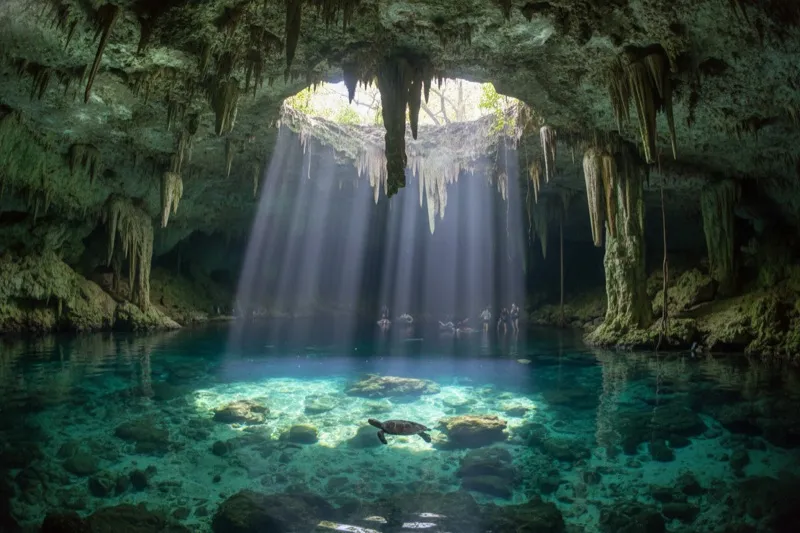
At 4km from Tulum town, Gran Cenote is so close it barely counts as a day trip. The cenote has both an open-air section and a cave section with stalactites, limestone columns, and green light filtering through submerged openings.
What makes it special: Freshwater turtles may be visible, while the open and cave-like sections offer clear water and striking limestone formations.
- Hours: Typically 8 AM–4:45 PM, with last entry around 4:15 PM; confirm before visiting
- Entry: 500 MXN; confirm before visiting
- Snorkel gear: Confirm what is included or available when you arrive
- Transport: Bike or registered taxi from town; confirm the complete taxi fare before boarding
Best time: Arrive near opening on a weekday for the best chance of lighter crowds.
2. Coba Ruins — Climb Nohoch Mul Again Complete Cobá guide →
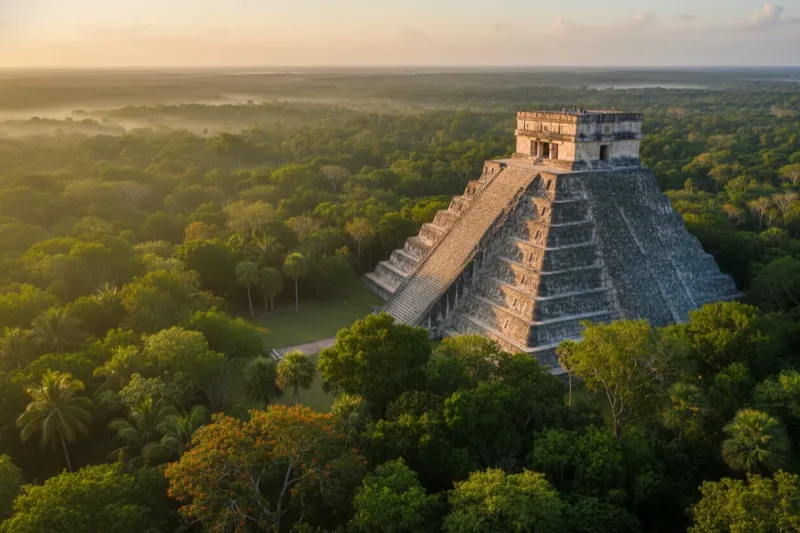
Cobá’s Nohoch Mul pyramid stands 42 meters high and is climbable again. INAH reopened access in December 2025 using a new wooden staircase designed to protect the original stone steps. Check the current access conditions before traveling because conservation rules can change.
How to get there independently: Full transport guide: Tulum to Cobá →
- Colectivo from Tulum ADO station area: 60–80 MXN, ~45 min (cheapest option — no ADO direct bus)
- Rental car: 45 min on Highway 109 (most flexible — add Valladolid loop)
- Taxi: 200–350 MXN one way from Tulum Pueblo
- Tours from Tulum run $40–80 USD including transport and guide
On-site: The site is large — rent a bike at the entrance (60–80 MXN) or take one of the tricycle taxis (100–150 MXN) to the main pyramid. Wear proper shoes for the climb. No handrails on the steepest section.
- Hours: 8 AM – 5 PM daily
- Entry: 90 MXN (about $5 USD)
- Time needed: 2–3 hours for the full site
- Best time: Open at 8 AM — the pyramid is in shade until around 10 AM
Insider note: The lake views from the Nohoch Mul summit on a clear morning are genuinely stunning. Come early, skip the midday heat when the pyramid turns into a solar oven.
3. Akumal — Snorkel with Wild Sea Turtles
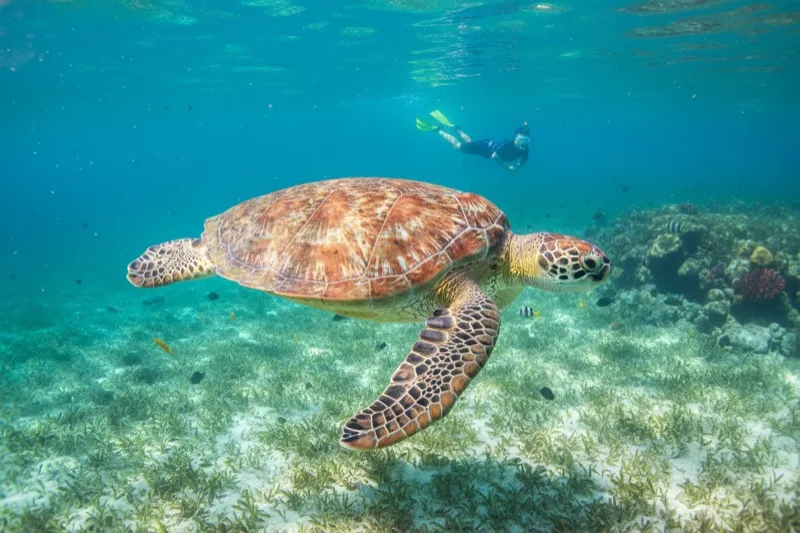
Thirty kilometers north of Tulum, Akumal Bay offers one of the most consistently reliable sea turtle encounters in Mexico. Green turtles and loggerhead turtles feed on the seagrass beds in the shallow, calm bay every single morning.
Key logistics:
- Take any northbound colectivo from Tulum town (40–50 MXN) and ask for the Akumal turnoff
- Walk 10 minutes from the highway to the beach
- Entry to the main beach is free
- Snorkel gear rental: 150–250 MXN
- Arrive before 10 AM on weekdays for the best turtle encounters with smaller crowds
The honest assessment: Akumal has gotten crowded in recent years. The volume of snorkelers can stress the turtles. If you see a turtle, keep 1.5 meters distance, don’t touch, and don’t block its path to the surface for air. The beach clubs have regulated guide areas that help manage crowds — consider booking a guided snorkel ($25–40 USD) rather than the chaotic free-for-all in the middle of the bay.
Hidden option: Half Moon Bay, just north of main Akumal, is calmer and has fewer people. It’s a short walk or quick taxi from the Akumal entrance.
4. Cenote Dos Ojos — The Cave Snorkel You Won’t Forget
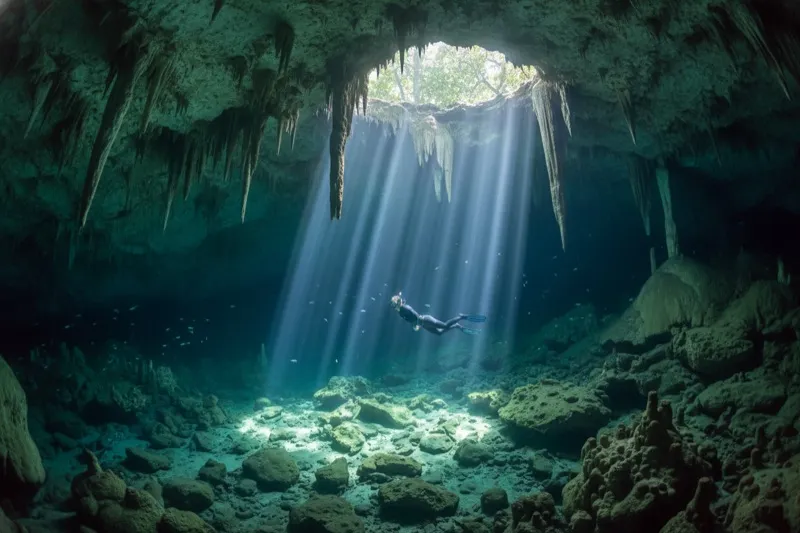
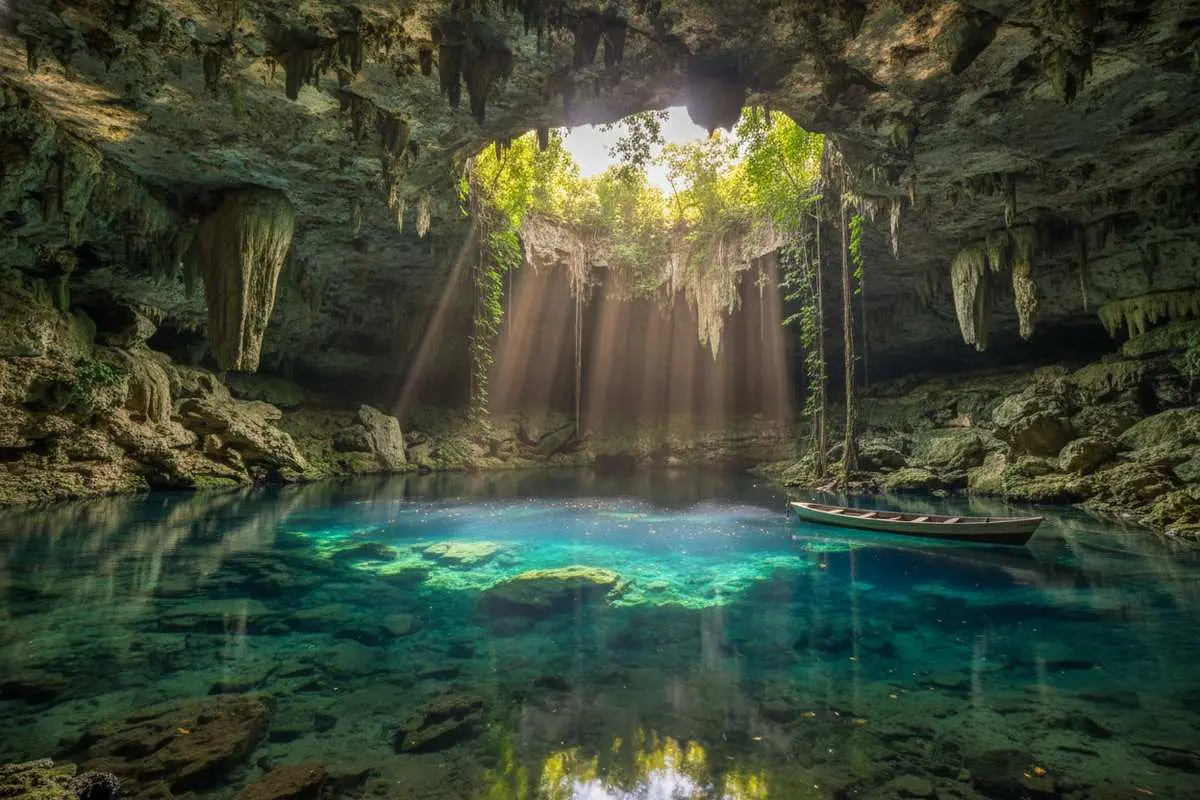
Cenote Dos Ojos (“Two Eyes”) is named for its two sinkholes connected by an extensive cave system — part of the 300km Sac Actun system, the longest underwater cave system ever mapped. The two cenotes themselves are stunning: one has a bat cave entrance, the other opens into a cathedral-like cave with shafts of sunlight piercing clear water.
- Distance from Tulum: 25km north (20–25 min by car or taxi)
- Entry: 600 MXN for snorkel access, includes guide inside the cave sections
- Open: 8 AM – 5 PM
- Gear rental: Snorkel 100 MXN, wetsuit 100 MXN (recommended — water is 24°C)
For divers: Dos Ojos is a legendary dive site. The cave system requires certification (cavern/cave diving specialty). Multiple dive shops in Tulum offer guided dives here — budget $80–120 USD for a cenote dive package.
Getting there: Taxi from Tulum costs about 200–250 MXN each way. No public transport stops at the cenote entrance. Car rental is the easiest option for combining Dos Ojos with Gran Cenote and Coba in one day.
5. Sian Ka’an Biosphere Reserve — UNESCO Wilderness
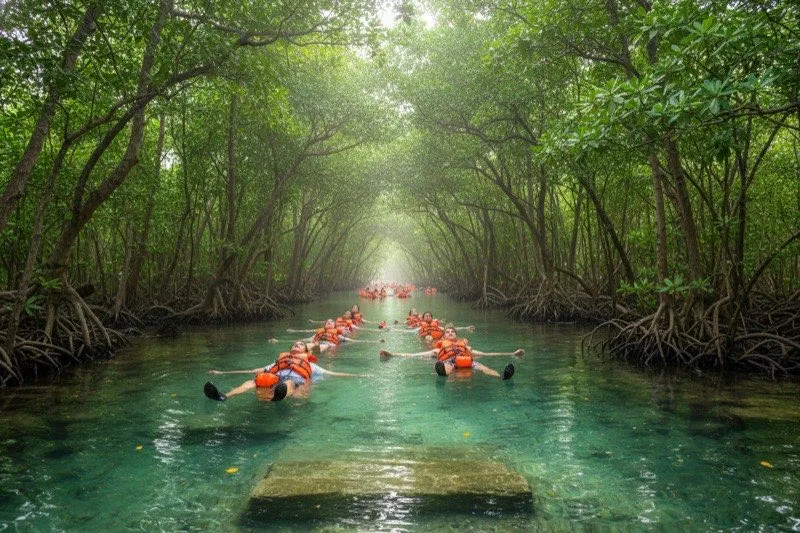
Sian Ka’an is not just a day trip — it’s a world. The 1.3-million-acre biosphere reserve covers tropical forests, wetlands, mangroves, and 110km of Caribbean coast. It shelters jaguars, manatees, crocodiles, spider monkeys, over 300 bird species, and ancient Maya canals that pre-date the Spanish conquest.
The signature experience: Floating down ancient Maya channels through mangrove tunnels on a life jacket. The canals were built by the Maya as trade routes — you drift the same paths they paddled 1,000 years ago, the jungle closing above you, birds erupting from the mangroves.
Getting there: There is no bus service into the reserve. Your options:
- Organized tour from Tulum: $60–120 USD, 5–8 hours, includes transport, guide, snorkel stop, floating. Book the night before — popular tours sell out.
- Rental car: Drive south on the Tulum coastal road (Boca Paila Road) about 30km. You can access the reserve entrance, see wildlife, and arrange local guides at the entrance for less than a Tulum-based tour.
What to see:
- Muyil Ruins (included in some Sian Ka’an tours) — small Maya site at the reserve edge, 80 MXN, serene compared to big sites
- Boca Paila lagoon system — manatee sightings common at dawn
- Punta Allen at the tip of the peninsula — remote fishing village, famous lobster, the last road before wilderness
Wildlife timing: Dawn is the golden hour for birds and manatees. Most tours run 8 AM–2 PM. Mosquito repellent is essential — the reserve has serious mosquitoes, especially near mangroves.
6. Muyil — Free Ruins Inside Sian Ka’an
Muyil is the easiest overlooked gem near Tulum. This ancient Maya city sits 23km south of Tulum on the edge of Sian Ka’an, with temples rising 17 meters above the forest floor and a wooden boardwalk leading to a viewpoint over Laguna Muyil.
- Distance: 23km south of Tulum
- Entry: 80 MXN (about $4 USD)
- Hours: 8 AM – 5 PM
- Transport: ADO bus toward Chetumal (60 MXN) or taxi (150–200 MXN each way)
- Time needed: 1.5–2 hours
Why go: It’s rarely crowded, the jungle setting is atmospheric, and the boardwalk view over the lagoon is beautiful. Combine with a Sian Ka’an tour stop for a full day, or visit independently as an affordable morning trip.
7. Playa del Carmen — Shopping, Beach Clubs, 5th Avenue
Sixty-eight kilometers north of Tulum, Playa del Carmen is Tulum’s busier neighbor — with the full urban infrastructure that Tulum deliberately lacks (proper supermarkets, pharmacies, hospitals, nightlife, ATMs that actually work). Fifth Avenue (Quinta Avenida) runs 20+ blocks of restaurants, boutiques, street performers, and beach clubs.
- Transport: Colectivo from Tulum town (60–80 MXN, 45 min), runs constantly
- Or: ADO bus (around 100 MXN), faster and air-conditioned
- What to do: Walk 5th Avenue, day pass at a beach club ($30–80 USD including food credit), take the ferry to Cozumel (190–220 MXN each way, 30 min)
- Local transport: Playa del Carmen is walkable, and Uber currently lists service there; check the app for live availability or use a registered taxi
Best for: A break from Tulum’s remote-but-expensive vibe. PDC has better value restaurants, more ATMs, and the Cozumel ferry departure point.
8. Chichen Itza — The Obligatory Bucket List Ruins
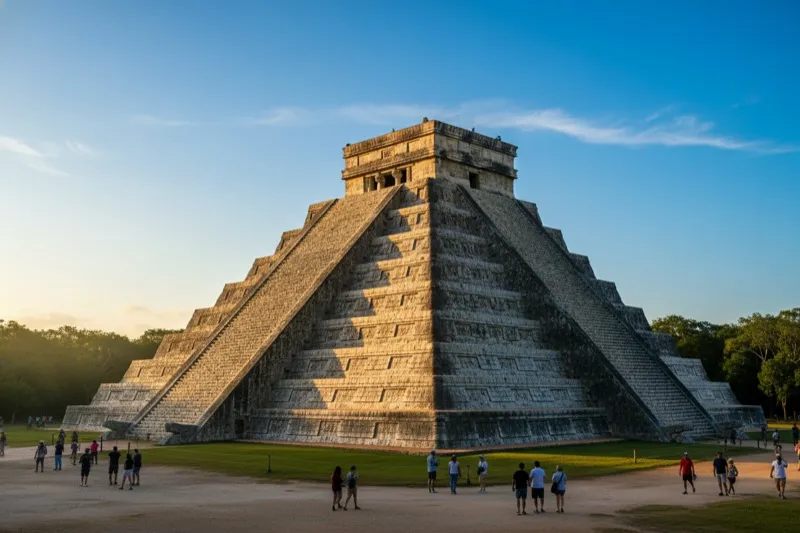
At 240km from Tulum, Chichen Itza is a serious commitment — 2.5 to 3 hours each way. But it’s genuinely one of the great sites on Earth: El Castillo’s 365 steps encode the solar calendar, the 168-meter Ball Court has whisper acoustics that carry sound end to end, and the Sacred Cenote received offerings for centuries. It was the most powerful city in the Maya world for 400 years.
How to visit from Tulum:
| Option | Cost | Pros | Cons |
|---|---|---|---|
| Organized tour | $60–120 USD | Hotel pickup, guide, transport | Late arrival (10–11 AM), group pace |
| Rental car | $25–45 USD/day + 646 MXN entry | Total timing control, leave by 6:30 AM | Long drive, parking fees |
| ADO bus | ~250 MXN each way | Cheap | Fixed schedule, leaves midday |
The non-negotiable rule: Arrive at 8 AM (opening). Tour buses from Cancun arrive at 10–11 AM — before them, the site is magical. After them, it’s a hot, crowded shuffle. If you’re on an organized tour that arrives at 10:30 AM, you are doing it wrong.
Best combination: Chichen Itza (8 AM) → Cenote Ik Kil (3km away, 180 MXN, arrive before 11 AM) → lunch in Valladolid colonial center → back to Tulum by 6 PM.
Full transport guide: See Tulum to Chichen Itza for rental car route, Maya Train schedule, colectivo combo, and organized tours — including the equinox window strategy.
Entry: 571 MXN state fee + 75 MXN INAH federal fee = 646 MXN total (about $32 USD)
9. Ek Balam — The Smarter Ruins Choice
At 200km from Tulum (2.5 hours), Ek Balam has the best pyramid-to-crowd ratio in the Yucatan. The Acropolis pyramid is 32 meters high and still climbable. The carved Beehive mouth doorway at the top is considered one of the finest examples of Maya stucco work ever found — mostly because Ek Balam was buried under construction and preserved better than other sites.
- Entry: 247 MXN (about $12 USD) — half the price of Chichen Itza
- Crowds: A fraction of Chichen Itza on any given day
- Cenote Xcanche: 2km from site entrance, rope swing, rappel, zipline over the cenote (150 MXN entry + activity fees)
- Transport: Best done by rental car via Highway 109 through Cobá (1.5 hrs direct) — see Tulum to Ek Balam guide for all options; organized tours are less common and thus smaller group sizes
Combine with: Valladolid for lunch (30 min from Ek Balam), Cenote Zaci in Valladolid center (50 MXN, in the town itself), and back to Tulum via Highway 307. Full day perfectly managed.
10. Valladolid — Colonial Town with Cenotes Inside the City
Valladolid (160km northwest of Tulum, 2 hours) is the best base for Yucatan ruins — but it’s also worth visiting as a day trip. The city has a gorgeous central plaza, a 16th-century convent, the Calzada de los Frailes colonial street, and Cenote Zaci sitting right inside the city limits.
Why go from Tulum:
- Cenote Zaci: 50 MXN, swimming in a massive open cenote in the middle of a city
- Cenote Suytun: 200 MXN, famous for its platform rising from the water (book in advance — 30-person group limit per slot)
- Food: Sopa de lima, longaniza vallisoletana, papadzules at Mercado Municipal for 40–80 MXN
- Base for Chichen Itza + Ek Balam if combining ruins on one day
Transport: ADO bus from Tulum (about 150 MXN, 2 hours). Or by car via Highway 307 north then cut west. Colectivos to Valladolid are less direct from Tulum; ADO is easier.
11. Cenote Ik Kil — Best Combined with Chichen Itza
Cenote Ik Kil sits 3km from Chichen Itza — making it the obvious combine. The cenote is 60 meters wide, 26 meters deep, and has vines hanging from the rim to the water surface. It’s one of the most photographed cenotes in Mexico for a reason.
- Entry: 180 MXN (includes locker, towel rental extra)
- Hours: 8 AM – 6 PM
- Crowds: Massive from 11 AM onward. Get there by 9 AM maximum for a decent experience
- The reality: The cenote is genuinely beautiful but extremely popular. At peak times (11 AM–2 PM), it’s a crowded swimming pool situation. First thing in the morning, it’s otherworldly.
Getting there from Tulum without a car: Only practical via organized tour. No direct bus routes stop at Ik Kil.
12. Bacalar — Better Overnight, But Worth the Trip
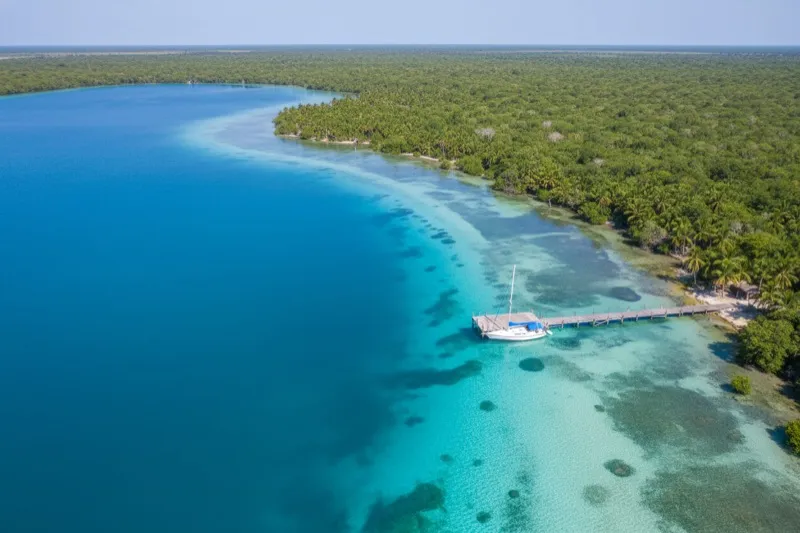
Bacalar’s Lagoon of Seven Colors is 230km south of Tulum — that’s 3.5 hours by bus or car. The lagoon genuinely shows seven distinct shades of blue and turquoise depending on water depth, and it’s home to stromatolites: living rock structures built by cyanobacteria, among the oldest life forms on Earth.
The honest assessment: Every travel writer who has done Bacalar as a day trip recommends staying overnight instead. Three and a half hours there, 3 hours at the lagoon, 3.5 hours back = an exhausting, rushed version of what deserves two nights. That said, if your schedule is firm:
- ADO bus: Tulum → Bacalar approximately 3.5 hours, 400–450 MXN
- Car: 3.5 hours via Highway 307 south
- What to do in limited time: Cenote Esmeralda (free, small green cenote at the lagoon edge), Fuerte San Felipe fortress (small history museum), rent a kayak on the lagoon (150–200 MXN/hour)
Our recommendation: Plan a proper overnight in Bacalar. The town is affordable, the lagoon is best at sunrise and sunset, and the stromatolite snorkel requires early morning calm water.
13. Cozumel — Island Diving from Tulum
Getting to Cozumel from Tulum takes more logistics than from Cancun — you’ll need to reach Playa del Carmen first (68km, 1 hour by colectivo), then take the Winjet or Ultramar ferry (30 minutes, 190–220 MXN each way). Total journey: 2.5 hours minimum each way.
Worth it if: You’re a diver or serious snorkeler. Cozumel sits on the Mesoamerican Barrier Reef (the world’s second largest), and the water visibility regularly exceeds 30 meters. Palancar Reef is one of the top 10 dive sites in the world.
Not worth it as a day trip if: You just want a nice beach — Tulum has those right next door.
Best cenote-to-Cozumel day: Spend the morning at Gran Cenote or Dos Ojos, take the colectivo to PDC by noon, catch the 1 PM ferry to Cozumel, snorkel at Chankanaab or El Cielo (starfish), ferry back by 6 PM.
Full routes: Tulum to Cozumel — complete 2-step guide (no direct ferry) | Cozumel Travel Guide
14. Punta Allen — The End of the Road
Punta Allen sits at the tip of the Boca Paila Peninsula, 55km south of Tulum by road — but that road is notorious. The last 30km are unpaved, potholed, and slow. Expect 1.5–2 hours from Tulum. No buses go here; you need a rental car (4WD preferable after heavy rain) or a tour from Tulum.
Why go: Punta Allen is a remote fishing village of about 500 people with no chain restaurants, no beach clubs, and no crowds. The surrounding Sian Ka’an waters are protected, meaning visibility and marine life are exceptional. Spiny lobster is what the village lives on — lobster season runs August to February.
What to do:
- Book a fishing or snorkel tour from the village (negotiate on arrival, roughly $40–80 USD for half day)
- Walk the long, wild beach — usually deserted
- Birdwatching (frigate birds, pelicans, roseate spoonbills)
The road: Check with your rental car company about the Punta Allen road — most standard vehicles handle it fine in dry season. After heavy rain, a 4x4 or high-clearance vehicle is safer.
15. Cenote Angelita — For Advanced Divers Only
Cenote Angelita (“Little Angel”) is 14km south of Tulum — practically next door. It’s famous for one thing: a hydrogen sulfide layer at 30 meters depth that appears as a misty “underwater river,” complete with fallen trees and leaves suspended below the cloud. It’s one of the most photographed dive images from Mexico.
- For divers only: Not a snorkel cenote. Requires advanced open water certification minimum; cave certification for full exploration.
- Entry: Via dive shop packages ($70–120 USD including equipment and guide)
- Visibility: Exceptional above the hydrogen sulfide layer; the layer itself appears as a dense fog
- Depth: The signature halocline effect is at 28–33 meters
Multiple Tulum dive shops run Angelita trips daily. Book the night before; morning departures only (best light through the opening).
Best Day Trip Combinations from Tulum
| Combination | Time Needed | Highlights |
|---|---|---|
| Gran Cenote + Coba | Full day | Best cenote + best climbable ruins |
| Dos Ojos + Akumal | Half day | Cave snorkel + sea turtles |
| Chichen Itza + Ik Kil + Valladolid | Full day | Bucket list ruins + cenote + colonial lunch |
| Ek Balam + Cenote Xcanche + Valladolid | Full day | Fewer crowds, equally impressive |
| Sian Ka’an + Muyil | Full day | UNESCO nature + small Maya ruins |
| PDC + Cozumel ferry | Full day | Shopping + reef snorkel |
Booking Tours from Tulum
Most Tulum hotels and hostels have tour desks that book the same excursions at similar prices. For the cheapest rates, walk to the tour operators in Tulum town center (Calle Centauro near the ADO terminal) and negotiate directly rather than booking through your hotel.
Viator is worth checking for complex excursions (Sian Ka’an, Chichen Itza, Ek Balam) where a licensed guide significantly improves the experience:
Browse Tulum Excursions on Viator →For day trips requiring a car (Coba, Sian Ka’an independently, multiple cenotes), RentCars compares agencies including local Tulum operators and Cancun airport pickup:
Compare Rental Car Prices for Tulum →Practical Tips for Tulum Day Trips
Cash is king: Many cenotes and small sites don’t take cards. Bring MXN. The ATMs in Tulum beach zone charge high fees and run out of money on weekends — stock up at a Citibanamex or BBVA in Tulum town.
Follow each cenote’s skin-product rules: Policies range from biodegradable-only to no sunscreen, repellent, makeup, or lotion before swimming. Arrive product-free, shower as directed, and use a rash guard or hat between swims.
Water: Tap water is not safe to drink. Cenotes usually have water stations. Carry 1.5 liters for any outdoor excursion — the Yucatan heat is serious.
Altitude note: Tulum is essentially at sea level. No altitude adjustment needed, unlike Oaxaca or Mexico City.
Travel insurance: If you’re diving, snorkeling, or visiting remote areas like Punta Allen, travel insurance with medical evacuation coverage is worth it. travel insurance starts at $56/28 days and can work for travel in Mexico.
More Tulum and Riviera Maya Guides
- Tulum Ruins Guide 2026 — entry fee, hours, what to see, and the 8 AM strategy
- Tulum Travel Guide 2026 — complete guide to staying, eating, and navigating Tulum
- Best Time to Visit Tulum — sargassum calendar, cenote clarity by season, wildlife timing
- Things to Do in Tulum — 25 best activities ranked
- Riviera Maya Travel Guide — the full 130km Caribbean breakdown
- Day Trips from Cancun — 15 excursions ranked from the northern hub
- Best Cenotes in Mexico — the top 27 cenotes across all regions
- Cancun vs Tulum — which destination is right for you
- Cozumel Travel Guide — diving, snorkeling, and island life
- Bacalar Travel Guide — the Lagoon of Seven Colors
- Chichen Itza Guide — everything you need before you go
- Valladolid Travel Guide — the best base for Yucatan ruins
- Things to Do in Playa del Carmen — 28 activities north of Tulum