Valladolid Yucatán: The Complete Travel Guide (2026)
Valladolid is a colonial city of approximately 80,000 people in the heart of the Yucatán Peninsula, founded in 1543 and located 160 kilometers east of Mérida and 43 kilometers west of Chichen Itzá. The city sits at the geographic center of the peninsula, within 2 hours of Cancún, Tulum, and Mérida — which makes it the most strategically positioned base for Yucatán travel.
Quick Facts
| Location | Eastern Yucatán Peninsula, Yucatán State |
| Population | ~80,000 |
| Founded | 1543 |
| Distance from Cancún | 160 km (2 hours by road) |
| Distance from Mérida | 160 km (2 hours by road) |
| Distance from Chichen Itzá | 43 km (40 minutes) |
| Distance from Tulum | 100 km (1.5 hours) |
| Hotel cost/night | $25-60 USD |
| Meals | $3-8 USD |
| Safety level | Yucatán State Level 2 (US) — generally safe |
| Best time | November–April |
The Case for Basing in Valladolid
Everyone heading to the Yucatán faces the same geometry problem: Chichen Itzá and Ek Balam are in the interior, the main cenotes are scattered across the peninsula, Mérida is west, Tulum is south, and Cancún — where most flights land — is on the coast. If you stay in Cancún, you spend two hours each way driving to Chichen Itzá. Stay in Tulum and Mérida is three hours. Stay in Mérida and the eastern ruins require long drives.
Valladolid solves this. It sits at the center.
- Chichen Itzá: 43 km, 40 minutes by car or ADO bus (100 MXN). Leave at 7:30 AM, arrive before the tour buses from Cancún (which show up around 10 AM). This alone is worth staying in Valladolid — you get a fundamentally different experience at the site.
- Ek Balam ruins: 30 km, 30 minutes. Still climbable, far fewer visitors than Chichen Itzá.
- Cancún airport: 2 hours — manageable.
- Tulum: 100 km, 1.5 hours.
- Mérida: 160 km, 2 hours.
And you save money while being better positioned. Hotel rooms run $25-60/night in Valladolid vs $80-200+ in Cancún for equivalent quality. Meals at the mercado cost 50-80 MXN vs 200+ MXN at Cancún tourist restaurants.
For full Yucatán trip planning, see our Yucatán 7-day itinerary — Valladolid fits naturally as a Days 4-5 base after Mérida.
Book Valladolid cenote tours and day trips on Viator.
Cenotes In and Around Valladolid
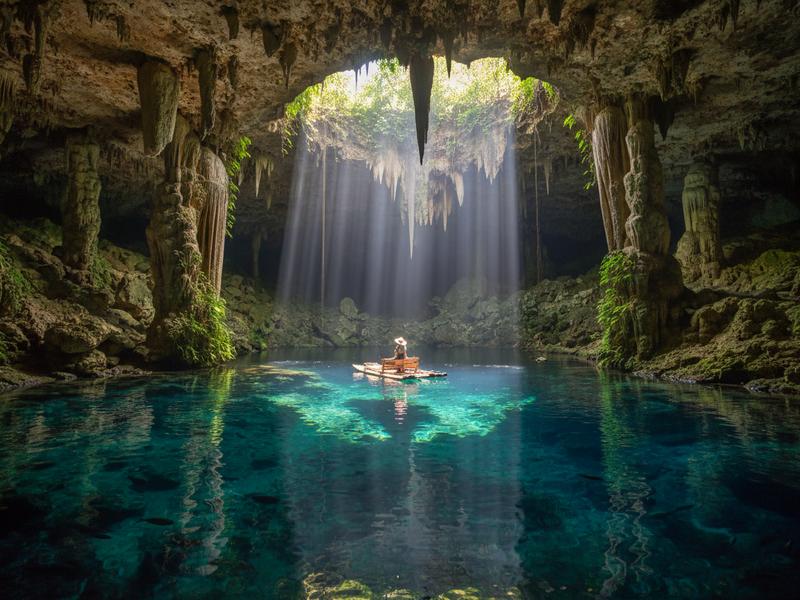
Valladolid has a higher concentration of accessible cenotes within a short radius than almost anywhere else in the Yucatán. Four distinct cenote experiences, each different:
Cenote Zaci — Urban, Open-Air
Right in the city, two blocks from the main plaza. A large natural limestone bowl open to the sky, filled with green water. Entry: 50 MXN.
Freshwater turtles live in the cenote — they’re used to humans and often swim toward snorkelers. The site has changing rooms, lockers, and a basic restaurant with hammocks. It’s the most convenient option if you only have an hour, and the turtle interaction alone makes it worthwhile.
Hours: 8 AM–6 PM daily.
Our Valladolid cenotes guide covers all four in more detail.
Cenote Suytun — Instagram Famous, Worth It
12 km from Valladolid, about 20 MXN by colectivo or 150 MXN by taxi. Entry: 200 MXN.
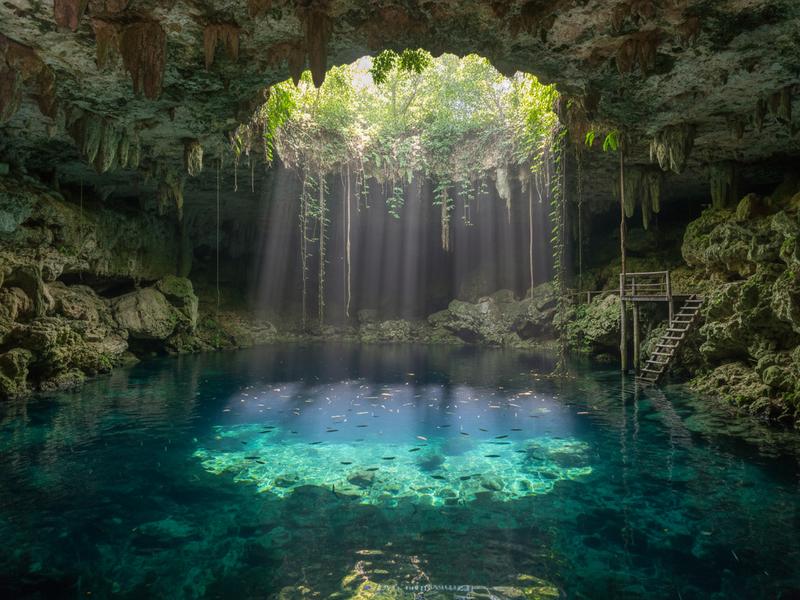
A flooded sinkhole with a narrow stone walkway extending into the center of the water. Around 10 AM, when the sun hits the skylight opening directly above, a column of light illuminates the walkway and the water below. That’s the photo you’ve seen. It takes about 15 minutes to reproduce it.
Beyond the photo: the cenote itself is beautiful — clear water, stalactites at the edges, fish visible at depth. Swimming is allowed. Book the morning time slot specifically for the light beam effect; afternoon visits are fine for swimming but miss the phenomenon.
See our complete Cenote Suytun guide for timing and logistics.
Cenote Samula and Dzitnup — Sacred Cave Cenotes
4 km west of Valladolid on Highway 180 (taxi: 50-70 MXN). Entry: 150 MXN each, or 250 MXN for both.
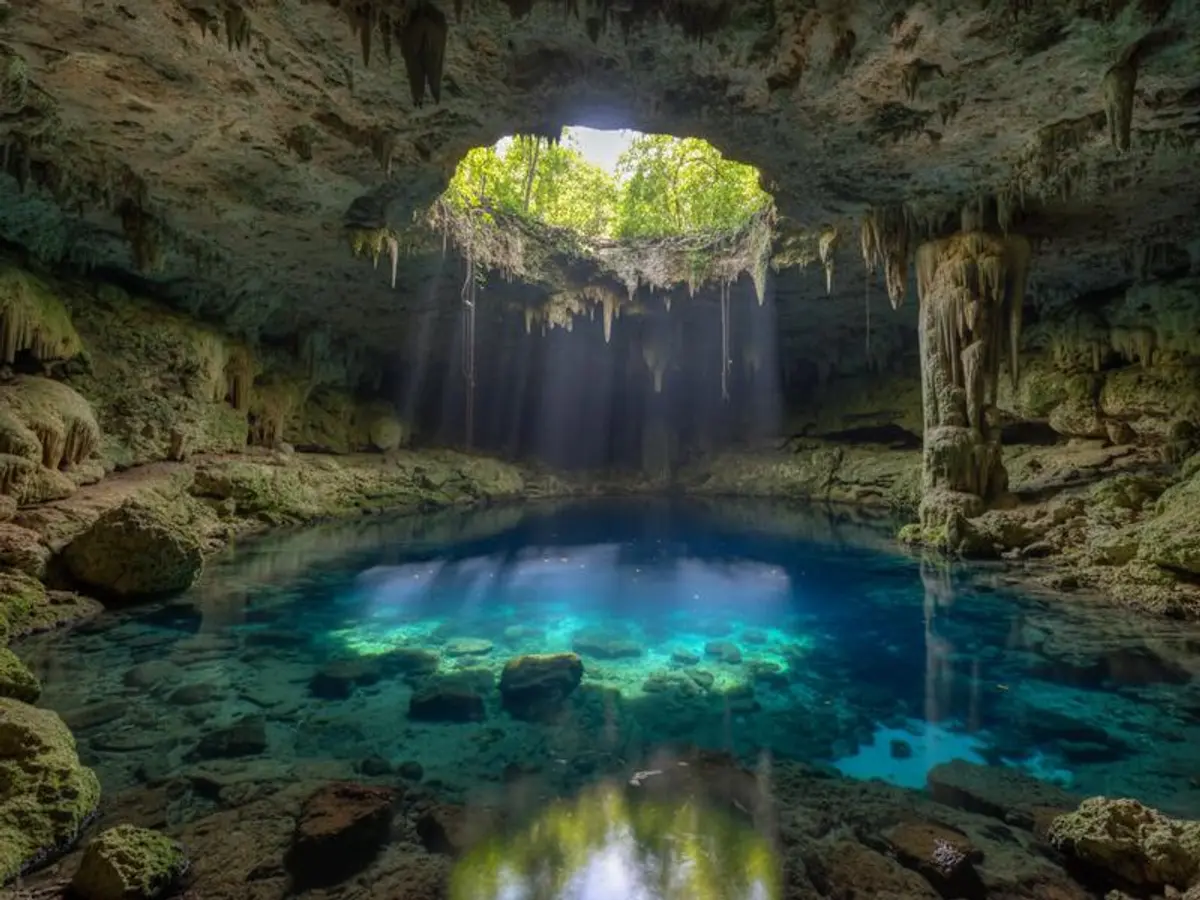
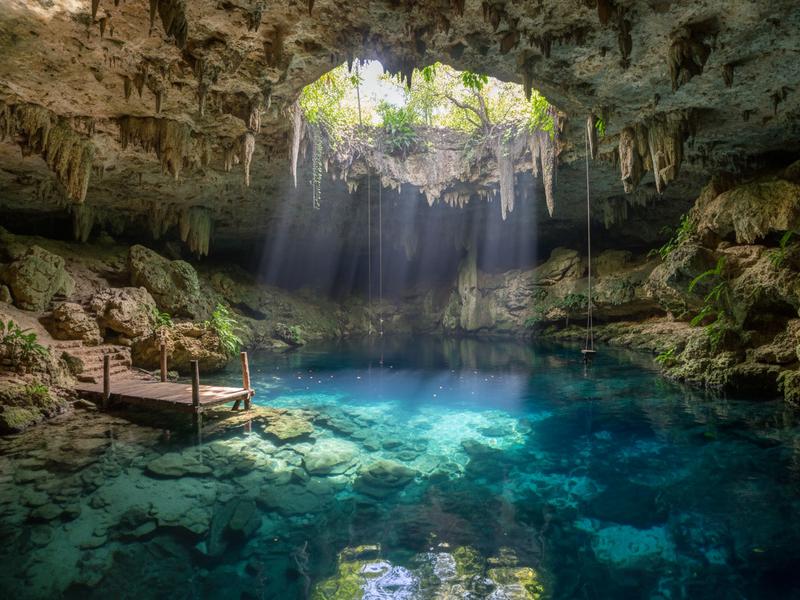
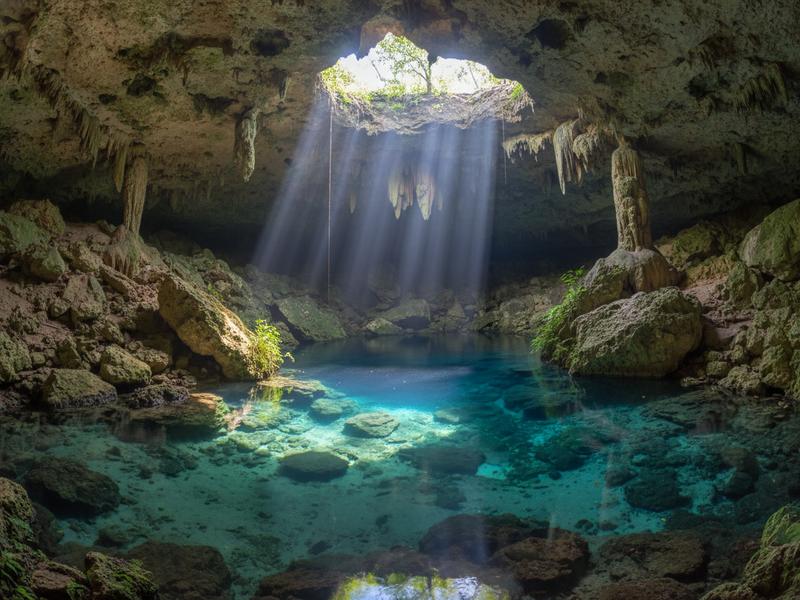
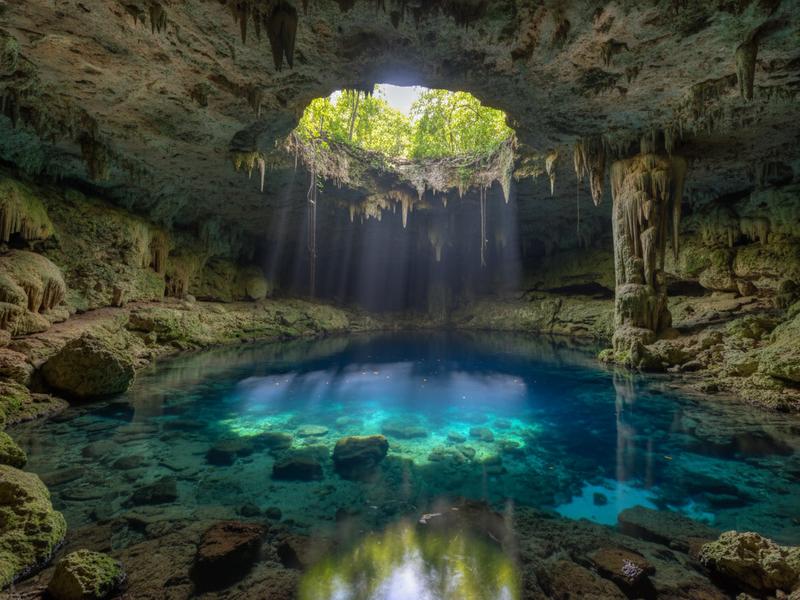
Two flooded cave cenotes, each requiring a descent into the earth. Dzitnup is the more dramatic — a dome cave with a circular opening at the top that lets a column of light into the water. Stalactites hang from the ceiling. The water is cold and crystalline, with tree roots descending from above.
Samula next door has a different geometry — longer chamber, more dramatic root systems, a massive ancient tree whose roots reach 30 meters down into the water.
These are classified as sacred Mayan cenotes, used ceremonially before the Spanish arrived. The atmosphere is genuinely different from a swimming hole.
For broader cenote context across the peninsula, see our best Mexico cenotes guide and Riviera Maya cenotes guide.
Colonial History and Architecture
Valladolid was founded in 1543, making it one of the older Spanish colonial settlements in the Yucatán. The Spanish built it on top of an existing Mayan city called Zací — the cenote in town is named after it.
Convento de San Bernardino de Siena
Built 1552. One of the oldest active convents in Mexico. The Franciscan complex includes the main church, a cloister, and — unusually — a cenote inside the grounds (Cenote Zaci precedes the convent). Entry to the grounds is free; the interior of the church is open during mass hours.
Our San Bernardino de Siena Convent guide covers the architecture and history in detail.
Calzada de los Frailes
The cobblestone street connecting the convent to the main plaza. Lined with yellow and orange colonial facades, flowering trees, and small shops. The classic Valladolid photo.
Best at sunrise (6:30-7:30 AM): no vehicles, no tourists, long shadows. By 9 AM there’s light foot traffic; by noon it’s busy. If you’re staying in the historic center, set one alarm and walk it before breakfast.
Cathedral of San Gervasio
The main church facing Parque Zaci (the main plaza). 18th-century baroque with the characteristic Yucatecan facade. The plaza itself is the social center of the city — in the evenings, locals fill the benches and the surrounding restaurants with outdoor seating. A very different energy from the tourist-zone feeling of Cancún or Playa del Carmen.
Our Valladolid Mexico guide covers the full historic center walking route.
Where to Eat in Valladolid
Valladolid’s food scene is anchored in Yucatecan tradition — not the Americanized version you get in Cancún hotel restaurants, but the real version that evolved here over 500 years.
Signature Dishes to Order
Sopa de lima: Valladolid’s signature. Shredded chicken in a clear lime-spiked consommé with fried tortilla strips. Every restaurant has a version; every version is different. Order it three times and compare.
Longaniza vallisoletana: A local pork sausage, reddish with achiote and spices, unique to Valladolid. Usually served with eggs for breakfast, or as a taco filling. Don’t leave without trying it.
Poc chuc: Thin-sliced pork marinated in sour orange and grilled. A Yucatán staple, but better here than in most tourist areas.
Papadzules: One of the oldest Yucatecan dishes — hard-boiled egg tacos in a pumpkin seed sauce, topped with tomato sauce. Mild, earthy, and unlike anything in central Mexican cuisine.
For broader Yucatecan food context, our best Yucatán foods guide covers the full regional cuisine.
Where to Eat
Mercado Municipal: On Calle 32 near the main plaza. Breakfast and lunch only, 8 AM–3 PM. Sopa de lima, panuchos, and longaniza from market stalls: 40-80 MXN for a full meal. The most authentic and cheapest option in town.
Restaurantes on Calzada de los Frailes: Several sit-down restaurants line the cobblestone street. Higher price points ($8-18 per dish) but solid Yucatecan food with the colonial setting. Good for a dinner after the morning rush.
El Atrio: Near the convent. Known for poc chuc and consistent quality. Mid-range pricing.
Day Trips from Valladolid
Chichen Itzá
43 km, 40 minutes. ADO bus from Valladolid (100 MXN, 45 minutes) or taxi (300-400 MXN round trip for a group). See our complete Chichen Itza guide for the full breakdown of fees, structures, crowd strategy, and the equinox phenomenon.
The logistics argument for staying in Valladolid: buses from Cancún arrive at Chichen Itzá around 10-11 AM with groups of 50-100 tourists per bus. If you leave Valladolid at 7:30 AM, you arrive when the site opens, walk the main causeway to El Castillo pyramid with almost no other visitors, and finish the main circuit before the first Cancún buses pull in.
The heat matters too — by 11 AM in peak season it’s 35°C+ in the open archaeological zone with no shade. Early entry makes it tolerable.
Practical: admission is 619 MXN (Mexicans) or 619 MXN (foreigners — INAH standardized prices in 2024). Plus 100 MXN state fee. No extra charge for El Cenote Ik Kil nearby (separate entrance, ~90 MXN).
Book Chichen Itzá guided tours from Valladolid on Viator — guided options include transport, so you don’t need a rental car.
Ek Balam
30 km north of Valladolid. Taxi ~200 MXN, or colectivo from the main plaza area for 30 MXN.
The main reason to go: Ek Balam’s main pyramid (Acropolis) is still climbable to the top at 32 meters. Chichen Itzá hasn’t allowed climbing since 2006. The view from the top of Ek Balam covers miles of flat Yucatán jungle. The site has elaborate stucco monster-mouth tomb entrances unlike anything at the more famous Mayan sites.
Entry: 270 MXN. About 30 minutes from the city. Fewer than 200 visitors on a typical day (vs 5,000+ at Chichen Itzá). Spend 2 hours and you’ll have covered most of the site.
Our Ek Balam guide covers the full visit.
Cenote Hubiku
Between Valladolid and Ek Balam. A large semi-open cenote with a developed swimming area, restaurant, and zip line. More recreational than sacred — good for families. Entry: ~100 MXN.
Izamal
100 km west, 1.5 hours. The “Yellow City” — a colonial town where every building is painted the same warm ochre. A Franciscan convent built directly on top of a Mayan pyramid. Good for a half-day cultural stop if you’re driving to Mérida. Our Izamal guide has the details.
Getting to Valladolid
From Cancún: ADO bus from Cancún’s ADO terminal on Tulum Avenue. Approximately every 30-60 minutes, 2 hours journey, 200-250 MXN. Arrives at Valladolid’s ADO station on Calle 37, 5 minutes walk from the center. See our full Cancún to Valladolid transport guide for bus prices, Maya Train options, and the rental car itinerary that covers Chichen Itza + Ek Balam + Valladolid in one day.
From Tulum: The direct route is via Highway 109 through Cobá — 100km, 1.5 hours by rental car. By colectivo in two stages (Tulum→Cobá, then Cobá→Valladolid): 120–160 MXN, 2–2.5 hours. There is no direct ADO bus via this route. See our Tulum to Valladolid transport guide for the full breakdown including the Cobá stopover itinerary.
From Playa del Carmen: ADO bus via Cancun or occasional direct service — 2 to 2.5 hours, 150–220 MXN. By rental car via Cobá (Highway 109, no tolls): 1.5 hours. The Cobá route saves tolls and lets you climb the only major climbable pyramid in the Yucatán en route. See our Playa del Carmen to Valladolid transport guide for full options.
From Mérida: ADO bus, ~2.5 hours, 200-250 MXN. Or drive Highway 180 toll road (~160 km).
By car: If driving from Cancún, take the cuota (toll) road 180D. Tolls are around 150 MXN each way. Faster and safer than the free road (Highway 180 libre, which passes through many small towns).
Compare car rental prices on RentCars — a rental car from Cancún airport gives maximum flexibility for cenote stops and Ek Balam, which have limited colectivo service.
For broader getting-around logistics, see our Cancún travel guide for airport orientation and Tulum travel guide for the southern Yucatán base comparison.
Where to Stay in Valladolid
The historic center has most of the good options — choose anything on or within 3 blocks of Parque Zaci and you can walk everything.
Budget ($25-40/night): Several small posadas and guesthouses run clean rooms at this price. Hostel Candelaria and similar basic hotels serve budget travelers well.
Mid-range ($40-70/night): Hotel Meson del Marques is the best-known colonial hotel — facing the main plaza, rooms with high ceilings and courtyard. Casa Tía Micha is a boutique option on a quieter street, excellent breakfast.
Splurge ($80-150/night): Hacienda Sacnicté outside the city center — converted hacienda, pool, more space. Worth it if you’re in the Yucatán for a special occasion.
Best Time to Visit Valladolid
November–April: The dry season. Temperatures 22-30°C during the day. Low humidity by Yucatán standards. This is when cenotes are clearest — less surface runoff means better visibility. Peak tourism in December–January, but Valladolid handles crowds better than Cancún because most tourists don’t stay here.
May–June: Heating up (32-36°C), not yet raining. Fewer tourists. Cenotes are still good.
July–October: Rainy season and hurricane season. Afternoon thunderstorms are reliable from July through September. The ruins and cenotes stay open, but outdoor time gets compressed to mornings. October has the highest hurricane risk.
For timing your Yucatán trip around weather patterns, see our best time to visit Yucatán guide — it covers cenote conditions, Chichen Itzá crowds, and hurricane probability month by month.
Valladolid vs Mérida vs Cancún: Where to Base
The classic Yucatán dilemma. Here’s the honest breakdown:
| Valladolid | Mérida | Cancún | |
|---|---|---|---|
| Hotel cost/night | $25-60 | $40-90 | $80-200+ |
| Chichen Itzá drive | 43 km / 40 min | 120 km / 2 hrs | 180 km / 2.5 hrs |
| Tulum drive | 100 km / 1.5 hrs | 270 km / 3.5 hrs | 130 km / 2 hrs |
| Food scene | Local Yucatecan | Best overall | Tourist-facing |
| Cenote access | Walking distance | Day trip | Day trip |
| Nightlife | Minimal | Good | Extensive |
| Airport access | 2 hrs to Cancún | 1 hr to Mérida | Direct |
| Cultural depth | High | Highest | Low |
Choose Valladolid if: You want central access for archaeology and cenotes, hate overpaying for hotels, and don’t need nightlife.
Choose Mérida if: You want the best food scene, more architecture to explore, and primarily want to see the western Yucatán (Uxmal, Campeche).
Choose Cancún if: You’re mainly there for beach, all-inclusive, or have very limited time and want the direct airport access.
The Mérida travel guide and day trips from Mérida are useful if you’re splitting time between the two cities. Valladolid is the natural halfway stop on the Mérida to Tulum route — either by rental car, ADO bus, or Maya Train.
Practical Tips
Walking the city: Everything in the colonial center is walkable. Cenote Zaci is 10 minutes from the main plaza. The ADO bus station is 5 minutes. Calzada de los Frailes is 10 minutes.
Colectivos: Shared vans run from the main plaza area to Dzitnup/Samula cenotes, Ek Balam, and nearby villages. 20-40 MXN per person. Ask at your hotel for the pickup spots — they’re not always obvious.
ATMs: Several in the historic center. Banamex on the main plaza is most reliable. Carry some cash for mercado and colectivos.
Spanish: More useful here than in Cancún. Mercado vendors, colectivo drivers, and off-the-beaten-path restaurants won’t speak English. Basic phrases get you far.
Photography at cenotes: Most cenotes charge an extra 30-50 MXN for professional camera equipment. Phone cameras are always included. The Suytun light beam requires arriving at 9-11 AM specifically.
Travel insurance: travel insurance covers medical evacuation and emergency care — useful even for a low-risk destination like Valladolid if you’re swimming in multiple cenotes daily.
Why Valladolid Works
There’s a version of Yucatán travel where you stay in Cancún, pay $180/night, rent a car, and spend two hours each way driving to the ruins you actually came to see. That version is common, functional, and expensive.
Valladolid is the other version. Stay central, pay less, spend the money you saved on the things that actually matter — better food, an extra day trip, a nicer cenote. You arrive at Chichen Itzá before the rush. You wake up and walk to a cenote in 10 minutes. The mercado is four blocks away.
It doesn’t have Cancún’s beach. That’s the trade-off.
If you’re building a Yucatán itinerary, our Yucatán 7-day itinerary shows exactly how Valladolid fits as a base for Days 4-6. The best time to visit Yucatán guide helps you time your cenote visits for maximum water clarity.
Book Valladolid cenote tours and Chichen Itzá day trips on Viator. Compare rental cars for Cancún–Valladolid flexibility on RentCars.
More Valladolid Guides
- Things to Do in Valladolid 2026: 25 Best Activities — full activities breakdown including the cenote circuit
- Valladolid Cenotes Guide — Suytun, Samula, Dzitnup, Zaci in depth
- Chichen Itzá Guide 2026 — full breakdown including equinox and crowd strategy
- Mérida to Valladolid 2026 — buses, rental car, and Chichen Itzá stopover strategy
- Valladolid to Mérida 2026 — all options for the westbound journey
- Cancún to Valladolid 2026 — from the coast to the cenote region
- Valladolid to Cancún 2026 — ADO bus, Maya Train direct to airport, and the Chichen Itza stopover
- Valladolid to Chichen Itza 2026 — colectivo 35-50 MXN, the 8 AM strategy, and the Ek Balam combo day
- Chichen Itza to Valladolid 2026 — return options, Cenote Ik Kil stop, and what to do in Valladolid after the ruins