Merida, Mexico: Best Things to Do & Day Trips
Mérida, Mexico, is worth visiting for 3 to 4 days if you want a safe, culture-first city with excellent food, cenotes, and Maya ruins within easy day-trip range. The best things to do include walking Plaza Grande and Paseo de Montejo, eating at Mercado Lucas de Gálvez, and taking day trips to Uxmal, Homún-area cenotes, or Celestún. Stay in Centro or Santa Lucía, use mornings for markets or ruins, take a midday pool break, and save evenings for Mérida’s free weekly events and Yucatecan food.
It works because Mérida solves several trip-planning problems at once. It is one of Mexico’s safest big cities, it gives you easy access to Uxmal, Chichén Itzá, Celestún, and Homún-area cenotes, and it has enough real city life that the trip does not feel like a hotel bubble. If your trip style is beaches first, skip it. If you want a culture-first Yucatán trip with smarter day-trip logistics, Mérida is usually the right call.
This page is the fast first-timer version. For deeper planning, you can jump straight into our guides on where to stay in Mérida, what to eat in Mérida, day trips from Mérida, Mérida airport transportation, and the best time to visit Mérida.
Mérida in 30 Seconds
| Question | Quick answer |
|---|---|
| Is Mérida worth it? | Yes, if you want food, colonial streets, cenotes, and easy ruins day trips more than beach time. |
| How many days do you need? | 3 to 4 nights is the sweet spot. 2 nights is rushed, 5 to 7 works if you add several day trips. |
| Best area to stay? | Centro / Santa Lucía / Santa Ana for first-timers. Paseo de Montejo works better for chain-hotel comfort than atmosphere. |
| Best day trip? | Uxmal for most travelers, Chichén Itzá only if seeing the iconic pyramid matters more than crowds. |
| What catches people off guard? | The heat. Even good months feel hotter here than Mexico City or Oaxaca, and May to September is punishing. |
| Best for | First Yucatán culture trip, food lovers, couples, older family trips, digital nomads, and travelers who want a calm base. |
| Less ideal for | Travelers who want swimmable beaches outside the hotel, walkable nightlife until 3 AM, or a one-stop resort trip. |
Best Mérida Plan by Trip Style
| Trip style | Best move |
|---|---|
| First Yucatán trip | Stay in Centro, do Uxmal, one cenote day, and one evening built around the serenata or Bici-Ruta. |
| Food-first trip | Stay near Santa Lucía or Santa Ana, eat breakfasts at Lucas de Gálvez, and keep nights free for longer dinners. |
| Ruins and history | Use Mérida as a base for Uxmal + Ruta Puuc, then decide if Chichén Itzá is worth the extra push. |
| With kids or older parents | Prioritize a shaded boutique hotel with a pool in Centro and pair city mornings with cenotes or Celestún afternoons. |
| Digital nomad / slower stay | Look at García Ginerés or north-of-centro areas for calmer cafés and longer-stay comfort. |
Mérida Quick Facts
| State | Yucatán |
| Airport | Manuel Crescencio Rejón International (MID) — direct flights from Dallas, Miami, Houston, Atlanta, Mexico City |
| Population | ~1.1 million metro |
| Language | Spanish. Yucatec Maya spoken in surrounding communities. English in tourist areas. |
| Time zone | UTC-6 year-round (Central Standard Time, does NOT observe DST) |
| Currency | Mexican peso (MXN). USD accepted in some tourist restaurants and hotels but at poor rates. |
| Safety level | Yucatán state: US Level 1 — Exercise Normal Precautions |
| Best time | November–February |
| Worst time | May–September (extreme heat, humidity, rainy season) |
| Chichen Itza | 120 km east (1.5–2 hrs) |
| Uxmal | 80 km south (1 hr) |
| Celestún flamingos | 90 km west (1–1.5 hrs) |
Why Mérida? What Makes It Different
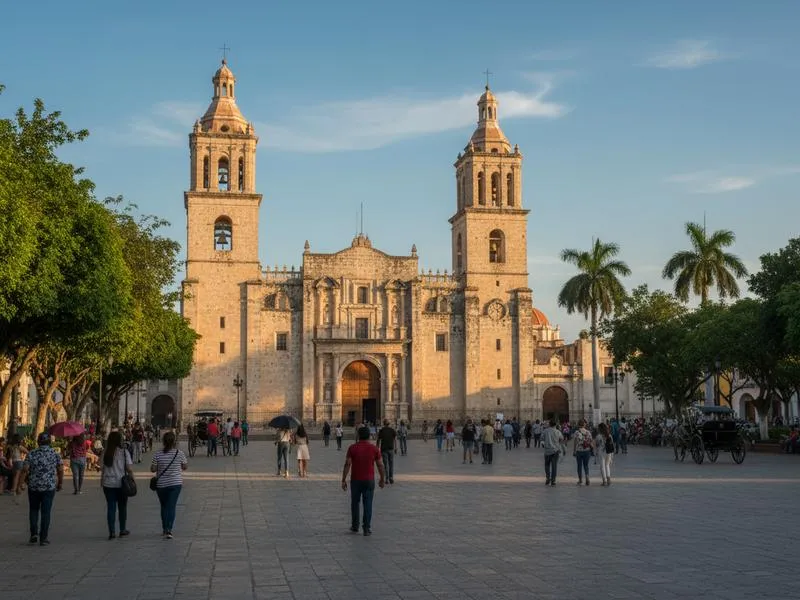
Mérida is the oldest continuously occupied city in Mexico (founded 1542 on the ruins of the Maya city T’ho). The Spanish conquistadors built their city using Maya limestone, which is why the colonial buildings have a different texture and color from anywhere else in Mexico — that distinctive cream-white stone that gives Mérida its nickname.
The city is the undisputed cultural capital of the Yucatan Peninsula. It has 80+ museums, the best Maya archaeology museum in Mexico (Gran Museo del Mundo Maya), a world-class gastronomic scene anchored by Yucatecan cuisine, and a calendar of free weekly cultural events that locals take for granted and visitors find remarkable.
It’s also one of the few large Mexican cities that’s genuinely walkable and genuinely safe — a combination rare enough to have driven a substantial expat migration.
Mérida’s Neighborhoods
Centro Histórico
The historic center — roughly a dozen blocks around Plaza Grande — is where most visitors spend the majority of their time. The streets follow the original Spanish colonial grid, named by numbers rather than names (Calles 60, 62, 64 running north-south; Calles 59, 61, 63 east-west). The colonial mansions, converted into boutique hotels, restaurants, and cultural centers, are the architectural heart of the city.
The main plaza (Plaza Grande): Flanked by the Cathedral of San Ildefonso (the oldest cathedral in mainland America, completed 1598), the Palacio Municipal with its famous murals of Mérida’s history, and the Casa de Montejo (the 16th-century conquistador mansion now housing a bank — the façade with figures of conquistadors standing on the heads of Maya warriors is one of Mexico’s most remarkable colonial sculptures).
Paseo de Montejo
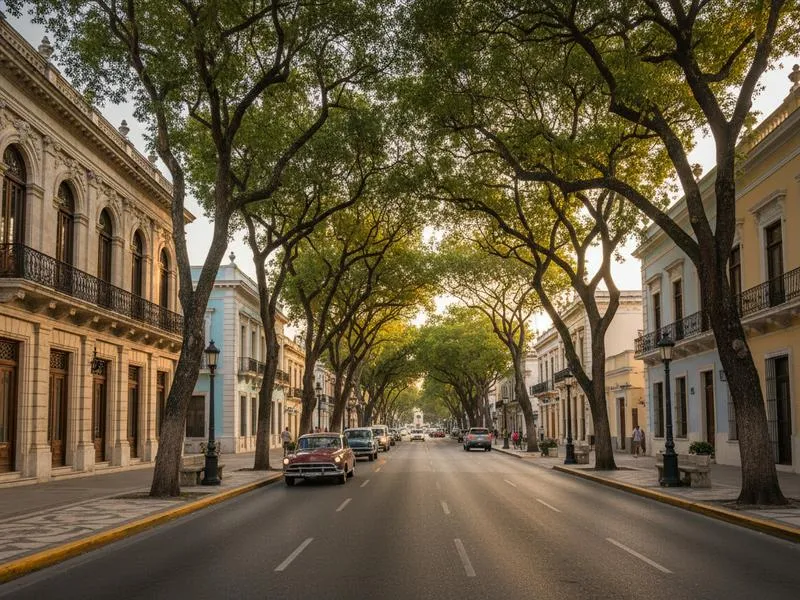
The grand boulevard modeled on the Champs-Élysées, built when Yucatecan henequen barons were among the wealthiest people in the Americas (early 1900s). Two kilometers of wide, tree-lined avenue flanked by French-influenced mansions. Today it houses the Museo Palacio Cantón (Anthropology Museum), several embassies, upscale restaurants, and boutique hotels. The best spot for a Sunday morning walk.
Santa Ana, Santiago, and Santa Lucía
The barrios immediately surrounding the historic center. Less polished than the centro but increasingly restaurant-dense. Santa Lucía has one of Mérida’s prettiest smaller plazas, host to the Thursday serenata. Good for budget guesthouses and local breakfast spots.
Colonia García Ginerés
A residential neighborhood 10 minutes south of the centro — broad streets, beautiful examples of 1950s-70s Mérida modernism, and a calmer atmosphere. Where many expats and long-term visitors prefer to stay.
The Mérida Weekly Events Calendar
This is what many visitors miss — Mérida has a structured weekly calendar of free cultural events that transform the streets throughout the year.
| Day | Event | Time | Location |
|---|---|---|---|
| Sunday | Bici-Ruta — entire centro closed to cars, cycling/walking | 8 AM–12 PM | Paseo de Montejo & Centro |
| Sunday | Sunday Market — artisans, local food, hammocks, live music | 9 AM–2 PM | Plaza Grande |
| Monday | Vaquería — traditional Yucatecan dance in regional dress | 9 PM | Plaza Grande |
| Tuesday | Big Band Jazz | 9 PM | Plaza de Santiago |
| Wednesday | Student Performance Night | 9 PM | Plaza de Santa Lucía |
| Thursday | Serenata Yucateca — trova music in traditional white guayaberas | 9 PM | Plaza de Santa Lucía |
| Friday | University Cultural Performances | 9 PM | Universidad Autónoma de Yucatán |
| Saturday | Noche Mexicana — regional dance performances | 8 PM | Paseo de Montejo |
The Thursday serenata is the must-see — it’s genuinely local, attended by Meridanos of all ages, completely free, and a window into Yucatecan cultural identity that no paid tour can replicate. Arrive by 8:30 PM to get a good seat.
The Sunday Bici-Ruta is extraordinary for a city of 1 million people: Paseo de Montejo, Calle 60, and the entire historic center close to cars. Rent a bicycle at the corrals (30-50 MXN/hour) and ride freely through colonial streets that are normally choked with traffic.
Yucatecan Food Guide
Yucatecan cuisine is one of Mexico’s most distinct regional cuisines — Maya in origin, modified by Spanish, Caribbean, and Lebanese influences (a large 19th-century Lebanese immigration left permanent marks on the food).
The Essential Dishes
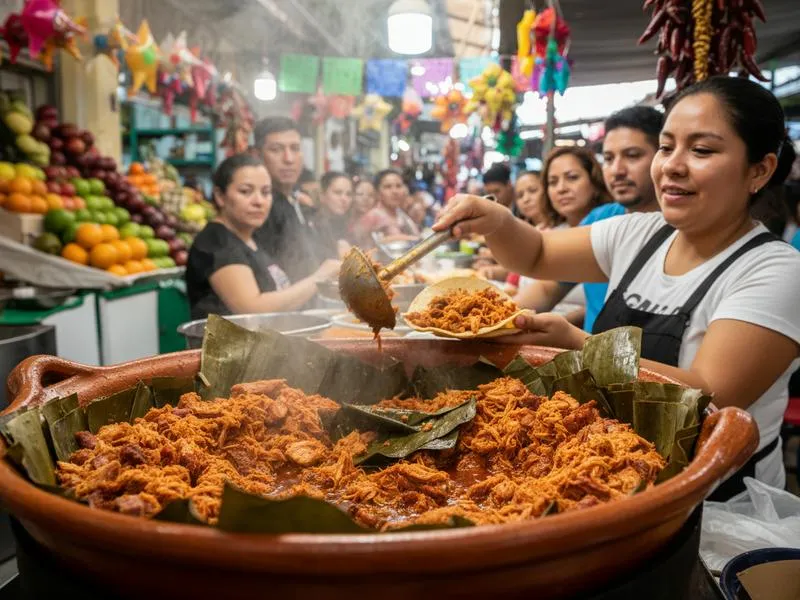
Cochinita pibil: The defining Yucatan dish. Pork marinated in achiote (annatto) and bitter orange juice, wrapped in banana leaves, and slow-roasted in an underground pit (pib). The result is extraordinarily tender, with a distinctive orange-red color. Served in tacos or on a plate with black beans and pickled red onions (cebollas moradas). The best cochinita is served for breakfast/lunch — most vendors sell out by 2 PM. Lucas de Gálvez market and the surrounding streets are ground zero.
Sopa de lima: Mérida’s signature soup — chicken broth with fried tortilla strips, chicken, tomato, pepper, and most importantly: lima (a Yucatecan citrus distinct from regular lime, slightly sweeter). The lima is the key ingredient. Available everywhere; restaurant versions vary from transcendent to mediocre.
Poc chuc: Thin pork loin marinated in bitter orange juice and grilled over wood fire. Served with pickled onions and black beans. Simple but excellent when done right.
Huevos motuleños: Mérida’s breakfast claim. Fried eggs on tortillas with black bean paste, fried plantain, peas, ham, and cheese — all on one plate. Named for the town of Motul, northwest of Mérida.
Panuchos and salbutes: The Yucatan’s answer to tacos. Panuchos: fried tortillas stuffed with black bean paste, topped with cochinita, chicken, or turkey. Salbutes: puffed, deep-fried tortillas with the same toppings. Different textures, same Yucatecan soul.
Queso relleno: Dutch Edam cheese filled with ground pork, olives, capers, and spices, then braised in tomato sauce. A direct legacy of 19th-century European trade connections.
Marquesitas: Mérida’s street food icon — crispy rolled wafer (eggroll-shaped crêpe) filled with Edam cheese and your choice of sweet filling (Nutella, cajeta, strawberry). The hot cheese melts into the sweet filling. Get them on Calle 60 in the evenings.
Xtabentún: The Yucatan’s traditional liqueur — honey and anise, infused with the flower of the xtabentún vine. Sweet, herbal, 30% ABV. Sip as a digestivo or mixed with rum over ice.
Where to Eat in Mérida
The Lucas de Gálvez market (Calle 56 x 67) is the best food experience in the city — breakfast at the market fondas (food stalls) is the authentic version of everything on the list above, at 1/3 the restaurant price. Go early (before 11 AM) for maximum selection.
For restaurants: concentrate on the streets north of Plaza Grande (Calle 60, Calle 62 between calles 53-47). This corridor has the highest density of quality options at various price points. Full restaurant guide → | What to eat in Mérida → — 18 essential dishes, where locals eat, kibis and the Lebanese-Yucatecan fusion explained | What to eat in Yucatan → — 20 essential Yucatecan dishes from cochinita pibil to marquesitas
Top Things to Do in Mérida
Gran Museo del Mundo Maya
The best Maya archaeology museum in Mexico — purpose-built for the 2012 Mayan calendar end-of-cycle celebrations, with a collection spanning 2,000+ years of Maya culture. The building itself is spectacular — a crystalline structure meant to evoke a ceiba tree (the sacred Maya tree). Entry: 200 MXN. North of the centro; take a taxi (60-80 MXN).
Casa de Montejo
The 16th-century mansion of Francisco de Montejo “El Adelantado,” who founded Mérida. Now a Banamex bank branch — but the entrance is completely free and the colonial interior is beautifully preserved. The façade sculptures of conquistadors standing triumphant on the heads of Maya warriors are historically provocative and visually extraordinary. Open bank hours.
Cenotes Near Mérida
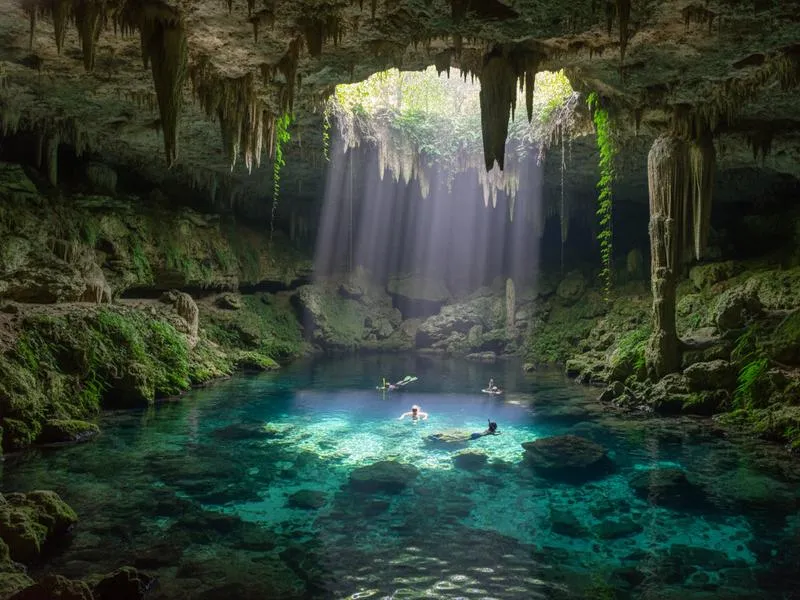
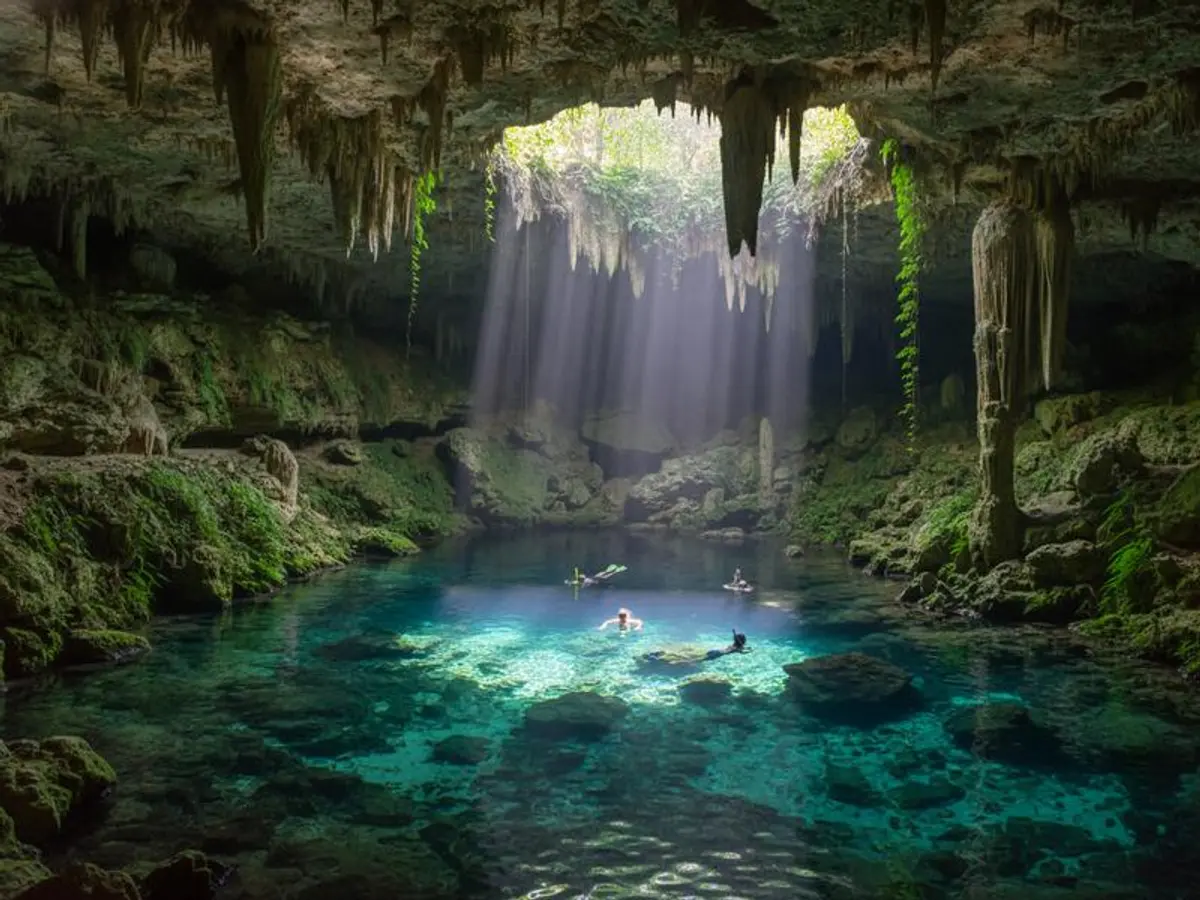
The cenotes circuit within 45-90 minutes of Mérida gives access to some of the Yucatan’s most beautiful swimming holes without the Tulum crowds. See the full cenotes near Mérida guide for entry fees, transport, and combination day-trip routes.
Cuzamá cenotes: 40 km southeast. Three linked cenotes accessible by traditional horse-drawn rail cart (the Maya railways used for henequen transport, now repurposed for tourism). Entry: ~180 MXN including the cart ride. The cenotes here are cave-style, with dramatic stalactite formations.
Cenotes Cuzamá, Chelentún, Chacsinicché: A cluster accessible from the town of Homún. Mix of open and cave cenotes. Less commercialized than the Tulum cenotes.
Hacienda Sotuta de Peón: A working hacienda that still produces henequen (the agave-like plant that was the source of Yucatan’s wealth). Tour includes the henequen process + swimming in the hacienda’s cenote. Entry: 500 MXN.
Dzitnup (X’keken and Samulá): Near Valladolid, 1.5 hours east. Among the Yucatan’s most photographed cenotes — cathedral-like cave with a hole in the ceiling letting in a shaft of light.
Palacio Municipal Murals
Inside Mérida’s city hall (facing Plaza Grande), Fernando Castro Pacheco’s murals depict the entire history of the Yucatan Peninsula — from Maya civilization through the Spanish conquest, the caste war, and independence. Free entry during business hours. One of Mexico’s most significant public art works.
Mercado Lucas de Gálvez
The main public market — food, hammocks, guayaberas, Panama hats, Yucatecan handicrafts. Chaotic, authentic, and far cheaper than the curated craft shops near the centro. For hammocks specifically: the henequen hammocks from Yucatán are among the best in Mexico. Negotiate on price — starting prices for tourists are typically 2x what locals pay.
Day Trips from Mérida
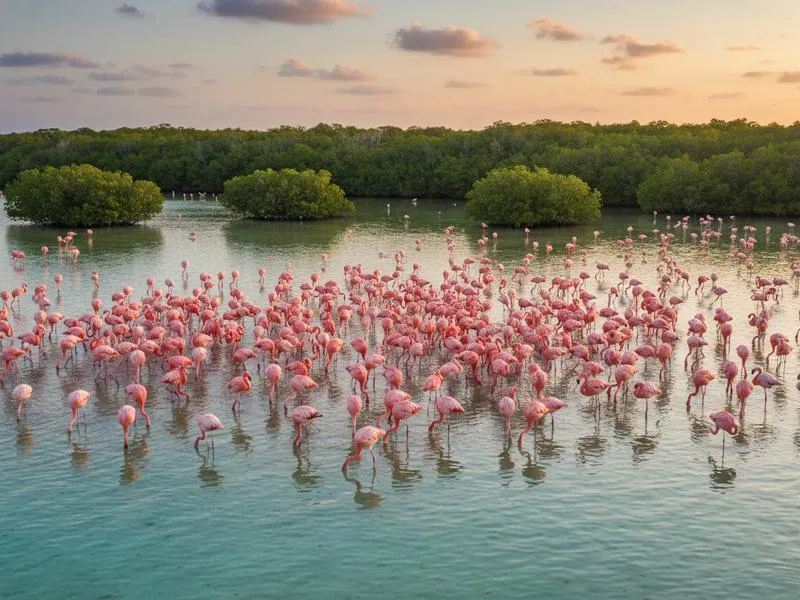
Celestún Flamingo Lagoon (90 km west, 1.5 hours)
The Celestún Biosphere Reserve protects the largest flamingo population in the Yucatan — up to 20,000+ American flamingos during peak season (November–April). The flamingos feed on the brine shrimp and algae in the estuary. Boat tours: 200-300 MXN/person for a 2-hour tour through the mangroves, flamingo feeding areas, and freshwater springs. The town of Celestún has excellent fresh seafood restaurants (arrive for lunch after the morning boat). Prefer a guided day trip from Mérida? Browse Mérida day tours on Viator — including Celestún, Uxmal, and cenote packages.
Chichen Itza (120 km east, 1.5 hrs)
The most visited archaeological site in Mexico — El Castillo pyramid, the Sacred Cenote, the Great Ball Court. More spectacular than Uxmal but vastly more crowded. If going from Mérida: depart before 7 AM to arrive at opening (8 AM) before the buses from Cancun and Playa del Carmen arrive. Entry: 614 MXN + 33 MXN state fee. Best months: October–February (cooler, drier). Best time to visit Yucatan → — and see our complete Chichen Itza guide for everything on the site itself, equinox crowds, and why Valladolid beats Mérida as an overnight base for this trip.
Uxmal (80 km south, 1 hr) — Our Top Recommendation
Uxmal is arguably Mérida’s best day trip. At 80 km vs Chichen Itza’s 120 km, it’s significantly closer. Crowds are a fraction of Chichen Itza’s. And the Puuc architectural style — elaborate stone mosaics covering entire building facades, advanced corbeled arches, the iconic rounded Pyramid of the Magician — is different from anything at Chichen Itza.
The Nunnery Quadrangle is Uxmal’s masterpiece: a complex of four buildings enclosing a great court, their upper facades covered in thousands of individually carved stone mosaic pieces depicting serpents, masks of Chaac the rain god, and geometric lattice work. This is one of the finest Maya architectural achievements anywhere.
The practical case for Uxmal: Leave Mérida at 8 AM, arrive by 9, explore all morning with manageable crowds, lunch in Santa Elena or Ticul (local Yucatecan food), return by 4 PM. A more relaxing, less exhausting, and arguably more beautiful day than the Chichen Itza rush. Entry: 566 MXN. See the complete Uxmal ruins guide → for structures, Puuc Route circuit, and transport options. For getting there: Mérida to Uxmal — bus, car & Puuc Route guide →
Izamal — The Yellow City (70 km east, 1 hr)
One of Mexico’s strangest and most beautiful Pueblo Mágico towns. Izamal is entirely painted yellow — buildings, churches, streets, all in ochre yellow — by decree. The Franciscan monastery sits on top of a leveled Maya pyramid (the base is still visible). The town has no traffic lights and moves at a pace you don’t believe exists in 2026. Horse-drawn carriages are the main transport. Excellent for a half-day.
Sisal — Gulf Coast Beach (50 km northwest, 45 min)
The closest beach to Mérida — a small Gulf fishing town with calm, warm water and an almost-complete absence of tourists. Not the Caribbean turquoise of Cancun (the Gulf of Mexico has different clarity and color), but genuinely relaxed, genuinely local, and excellent fresh fish. The hacienda Katanchel is nearby for a luxury lunch.
Getting to Mérida
By Air
Manuel Crescencio Rejón International Airport (MID) receives direct flights from:
- USA: Dallas/Fort Worth (American), Miami (American), Houston (United), Atlanta (Delta), Chicago, New York (seasonal)
- Canada: Toronto (seasonal charters)
- Mexico City: 1.5 hours (Aeroméxico, Volaris, VivaAerobus — multiple daily). See Mexico City to Mérida guide → for full options including the Maya Train route.
Once you land, getting from MID to the city is easy — fixed-rate taxis run 300–400 MXN, the ADO bus costs ~25 MXN, and Uber works with a 5-minute walk to the main road. See the Mérida Airport Transportation guide → for every option with honest prices.
By Bus from Cancun
ADO bus: 300-380 MXN standard, 500-600 MXN ADO Platinum. 4-4.5 hours. Buses run throughout the day; buy online for best prices. The ADO terminal in Mérida is at Calle 70 x 69, walking distance or a 50 MXN taxi from the centro. See all transport options: Cancun to Mérida guide → | Mérida to Cancun guide → | Mérida to Playa del Carmen guide →
By Car from Cancun
320 km via the autopista (Highway 180D with tolls, ~300 MXN total) takes 3.5 hours. The free road via Valladolid is slower (4-4.5 hours) but passes through interesting small towns. Renting a car in Cancun and returning in Mérida is possible with one-way fees. Compare Cancun–Mérida rental car prices on RentCars.
Getting Around Mérida
Walking
The historic center is entirely walkable. Most major sites and restaurants are within a 15-minute walk of Plaza Grande.
City Buses (Tranvías)
The red Mérida city buses cover most of the city for 10-12 MXN. Routes are somewhat confusing for first-time visitors; useful for reaching the Gran Museo Maya and Paseo de Montejo hotels from the centro.
Taxis
Taxi stands throughout the centro. Fixed zone rates inside the city: 80-150 MXN for most centro trips. Negotiate before entering.
Uber and InDriver
Uber operates in Mérida, unlike Tulum and Los Cabos. InDriver (a bid-based ride service) is also popular and sometimes cheaper. Both work reliably throughout the city. Standard centro trip: 50-100 MXN via Uber.
Bici-Ruta Bikes
On Sunday mornings, free or nearly-free bicycle rentals are available at several corrals along the Bici-Ruta route. First-come basis.
Where to Stay in Mérida
Best area to stay in Mérida
| If you want… | Stay here | Why |
|---|---|---|
| The easiest first trip | Centro / Santa Lucía / Santa Ana | Walkable plazas, best food density, easiest access to nightly events, and the strongest boutique-hotel choices. |
| Colonial hotel feel with a pool | Centro Histórico | Mérida’s signature stay is still a restored mansion with a courtyard and plunge pool. |
| Chain-hotel comfort | Paseo de Montejo | Better for predictable service, parking, and business-style stays than neighborhood atmosphere. |
| A quieter longer stay | García Ginerés | More residential, calmer streets, and better fit for slower trips or repeat visitors. |
Centro Histórico — Boutique Hotels (Best Option)
The converted colonial mansions are Mérida’s signature accommodation. Many have interior courtyards, plunge pools, and architecture you cannot find anywhere else in Mexico. For most first-time visitors, paying a bit more to stay inside the centro is worth it because the city works best when you can walk to dinner, Plaza Grande, the serenata, and the market without negotiating taxis in the heat.
| Budget | Type | Nightly rate |
|---|---|---|
| Budget | Guesthouses, small hotels | $25-60 |
| Mid-range | Boutique colonial hotels | $70-150 |
| Upscale | Design hotels, full-service | $150-300 |
Best streets for convenience: around Plaza Grande and north toward Santa Lucía and Santa Ana. That gives you the fastest access to food, culture, and a nicer evening atmosphere.
Paseo de Montejo — Chain Hotels
The international brands (Hyatt, Marriott, Westin) cluster around Paseo de Montejo. Professional service, predictable quality, and easier parking, but less of the neighborhood feel that makes Mérida memorable. It is the better choice for business trips, one-night stopovers, or travelers who care more about chain comfort than character.
For most first trips, the best booking decision is Centro Histórico vs Paseo de Montejo. Stay in the centro if you want to walk to dinner, plazas, and evening events; choose Paseo only if you care more about chain-hotel comfort, parking, or a short business stop.
Once you pick the neighborhood, the next practical filter is usually pool + air conditioning. Mérida’s heat changes the trip fast, especially from late morning through early evening, so a colonial boutique stay with a shaded pool often works better than the cheapest room that looks fine on photos.
Fastest Mérida Booking Paths
| If your real stay looks like… | Start with this search | Why |
|---|---|---|
| First trip built around walkable food + plazas | Merida Centro Historico hotels | Keeps dinner, Plaza Grande, Santa Lucía, and evening events on foot instead of in taxis |
| Colonial boutique stay that can handle the heat | Merida boutique hotel with pool | Pool + strong A/C is usually the difference between a charming centro stay and a punishing hot-weather base |
| Longer stay, quieter nights, or parking matters | Garcia Gineres Merida hotel with pool and parking | Better fit for slower trips, rental-car stays, and travelers who want Mérida comfort without sleeping in the busiest blocks |
If you already know you want the calmer residential version of Mérida instead of a plaza-first trip, run that search separately. Centro boutique hotels and García Ginerés longer-stay hotels solve different problems, and combining them too early usually muddies the decision.
Mérida Budget Guide
Mérida is significantly more affordable than Cancun or Los Cabos — and even more affordable than Oaxaca or Mexico City for equivalent quality.
| Category | Budget | Mid-Range | Comfortable |
|---|---|---|---|
| Accommodation | $25-50/night | $70-130/night | $150-280/night |
| Meals | $10-20/day (market + local) | $25-50/day | $60-100/day |
| Transport | $5-10/day (Uber + walking) | $10-20/day | $20-40/day |
| Activities | $5-20/day (events are free) | $30-60/day | $60-120/day (Uxmal/Chichen) |
| Daily total | $45-100 | $135-260 | $290-540 |
The value case: The weekly cultural events (serenata, Bici-Ruta, Sunday market) are completely free. Most museums are 50-200 MXN. Day trips to Uxmal (80 km, 350 MXN entry) or Celestún flamingos (200-300 MXN boat tour) are genuinely affordable. Mérida is one of the best-value week-long destinations in Mexico.
Mérida Safety
Yucatán state has a US State Department Level 1 rating — the same as most of Western Europe. In practical terms:
- Mérida’s tourist areas (centro histórico, Paseo de Montejo) are safe day and night
- The city has a much lower violent crime rate than Cancun’s tourist zones
- Petty theft (pickpocketing in crowded markets) is the main concern
- The north of the city (toward the periférico and industrial areas) has less police presence — stay in tourist zones for evening activities
Mérida has a large enough expat community that resources for English-speaking travelers in need are readily available. The expat Facebook groups (Mérida Expat Community) are a useful resource for real-time safety information.
Best Time to Visit Mérida
November–February: The peak season and for good reason. Temperatures 22-28°C, minimal rain, outdoor events comfortable in the evenings. Book accommodation 4-8 weeks ahead for the December holiday period.
March–April (Holy Week): Dry but heating up (28-35°C). Semana Santa (Easter week) is Mérida’s second-busiest period — processions at the Catedral, the candlelit Procesión del Silencio on Good Friday, and the Izamal pilgrimage (36 km east) draw visitors across Yucatán. Yucatán has no Ley Seca — bars and restaurants stay open the entire week. See the complete Semana Santa in Mérida guide for the 2026 schedule and Izamal logistics.
May–September: Avoid if heat-sensitive. Mérida regularly hits 38-42°C with humidity during peak summer. The rainy season (June–September) brings daily afternoon showers but doesn’t reduce the heat. The city goes about its business; outdoor events continue but are uncomfortable.
October: The shoulder sweet spot. Dry season begins, crowd levels drop sharply, hotel prices fall. October temperatures (30-33°C) are manageable with early scheduling. Good value.
Useful Links for Planning
- Day Trips from Mérida →
- Best Restaurants in Mérida →
- Where to Stay in Mérida →
- Things to Do in Mérida →
- Best Time to Visit Mérida →
- Best Time to Visit Yucatan →
- 7 Days in Yucatan Itinerary →
- Cancun vs Mérida 2026 → — Beach vs culture: 16-factor comparison and the case for doing both
- Oaxaca vs Mérida 2026 → — Two UNESCO colonial cities compared: food, ruins, cenotes, and which one is right for you
- Cancun Travel Guide →
- Tulum Travel Guide →
- Mérida to Tulum 2026: All Options →
- Mérida to Chichen Itza 2026 →
- Mérida to Valladolid 2026 →
- Mexico Entry Requirements →
- Is Mexico Safe? →
- Mexico Travel Budget →
- Best Time to Visit Mexico →
Ready to book? Browse all Mérida tours on Viator — guided Chichen Itza day trips, Uxmal + Ruta Puuc, Celestún flamingos, cenote circuits, and city food tours.