What to Eat in Yucatan: 20 Essential Dishes (Merida and Beyond)
What to eat in Yucatan is not a chapter from a Mexican food guide. It is a separate book entirely.
Yucatecan cuisine runs on ingredients and techniques that don’t appear anywhere else in the country: achiote paste ground from annatto seeds, sour orange juice (naranja agria) that tastes nothing like a regular orange, habanero peppers served as a condiment rather than cooked into every dish, banana leaf wrapping, pit-roasting in underground ovens, and Dutch Edam cheese that arrived on trade ships 300 years ago and never left.
The roots go three directions at once. Ancient Maya cooking gives the region papadzules, panuchos, salbutes, and the practice of wrapping food in banana leaves. Spanish colonial influence introduced pork, cheese, and stewing techniques. Then in the 1880s, a wave of Lebanese immigrants brought kibbeh and shawarma, which the Yucatan absorbed and made its own.
If you are planning a trip to the peninsula, start with our Yucatan 7-day itinerary for logistics, or go straight to the Merida travel guide since Merida is the undisputed food capital of the region. This guide covers what to eat, where to find it, and what the tourist menu won’t tell you — from Merida’s best restaurants to market stalls in Valladolid and beyond.
The Essential Yucatecan Dishes
1. Cochinita Pibil — The Sunday Ritual
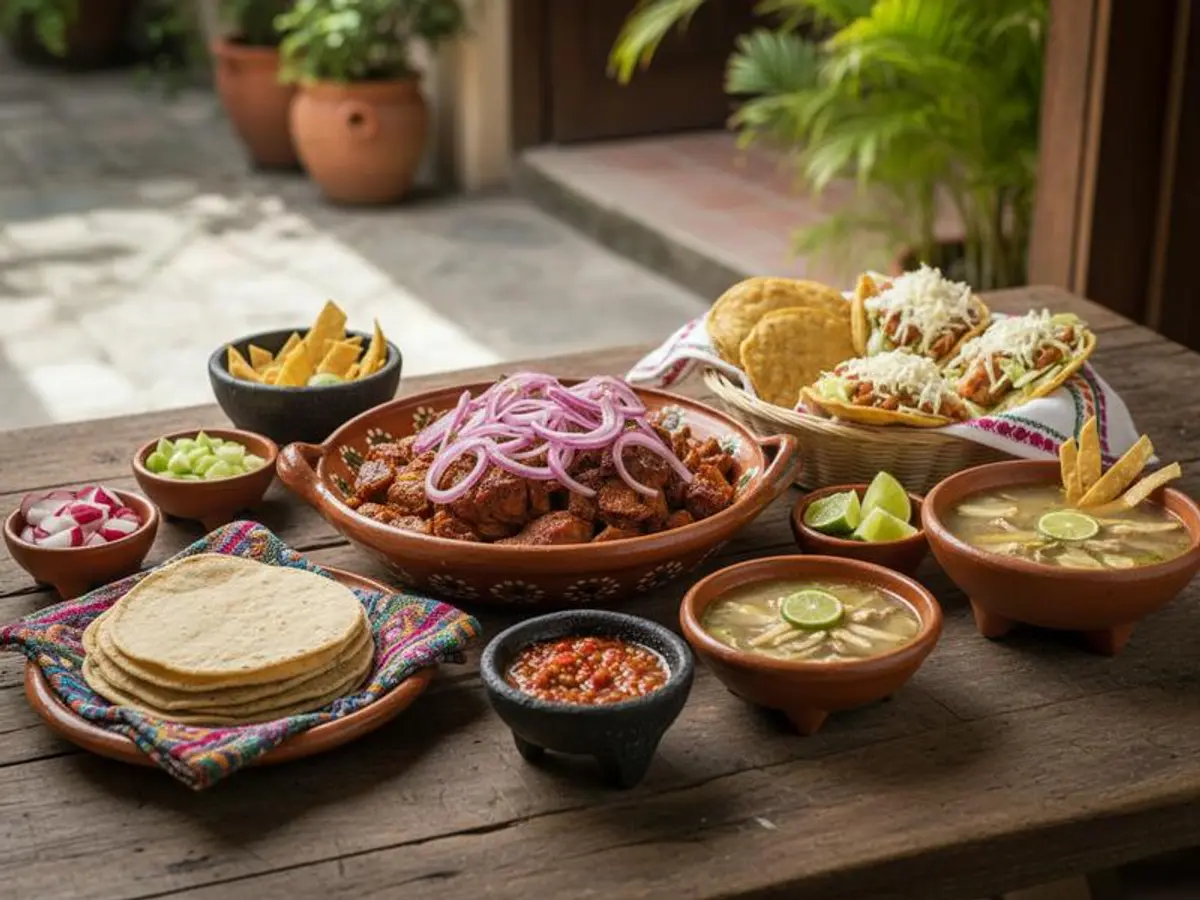
Cochinita pibil is the dish. Everything else on this list is excellent, but if you eat one thing in Yucatan, this is it.
The preparation: a whole pork shoulder is rubbed with recado rojo — a paste of achiote (annatto) seeds, garlic, black pepper, oregano, cumin, and sour orange juice. It gets wrapped in banana leaves and slow-cooked for 8 to 12 hours. Traditionally, the cooking happens in a pib, an underground pit oven lined with hot stones and sealed with earth. The banana leaves keep the pork moist while the achiote stains everything a deep brick-red.
The result is pork so tender it shreds with a fork, slightly sweet from the achiote, tangy from the naranja agria, and smoky from the banana leaf. It arrives at your table with pickled red onion (cebolla morada), habanero salsa, and warm tortillas.
The Sunday rule: Cochinita pibil is available any day of the week at restaurants, but Sunday morning is when families across the Yucatan make it fresh. Markets open early — by 7 AM, the cochinita vendors at Lucas de Galvez in Merida and Parque de Santa Lucia are serving. By noon, the best stalls sell out. If you are in Merida over a weekend, set an alarm.
Price: 25-50 MXN per taco (roughly 1.50-3 USD), 80-150 MXN for a full plate with beans and tortillas.
If you want the full Merida restaurant rundown, our guide to the best restaurants in Merida covers everything from market stalls to fine dining.
2. Sopa de Lima — Not What You Think
Sopa de lima is chicken broth with lime. That sounds simple. It is not.
The “lima” in sopa de lima is not a Key lime and not a Persian lime. It is the lima agria — a sour, aromatic citrus native to the Yucatan Peninsula that tastes more like a bitter grapefruit crossed with a lime leaf. This citrus is what gives the soup its distinctive fragrance. Restaurants outside the Yucatan that make sopa de lima with regular limes are making a different dish.
The broth is chicken-based, simmered with roasted tomato, onion, and sweet pepper. Shredded chicken goes back in. Fried tortilla strips get scattered on top for crunch. A squeeze of lima agria finishes it at the table.
Every sit-down restaurant in Merida and Valladolid serves sopa de lima. It is almost always good. The test of quality: does it smell like a perfumed citrus garden, or does it smell like regular chicken soup with a lime squeezed in? If the first, they used real limas. If the second, skip it and try the panuchos instead.
Price: 60-120 MXN at restaurants, 40-70 MXN at market stalls.
3. Panuchos vs. Salbutes — The Great Debate
These two dishes are Yucatan’s answer to the taco, and locals have strong opinions about which is better.
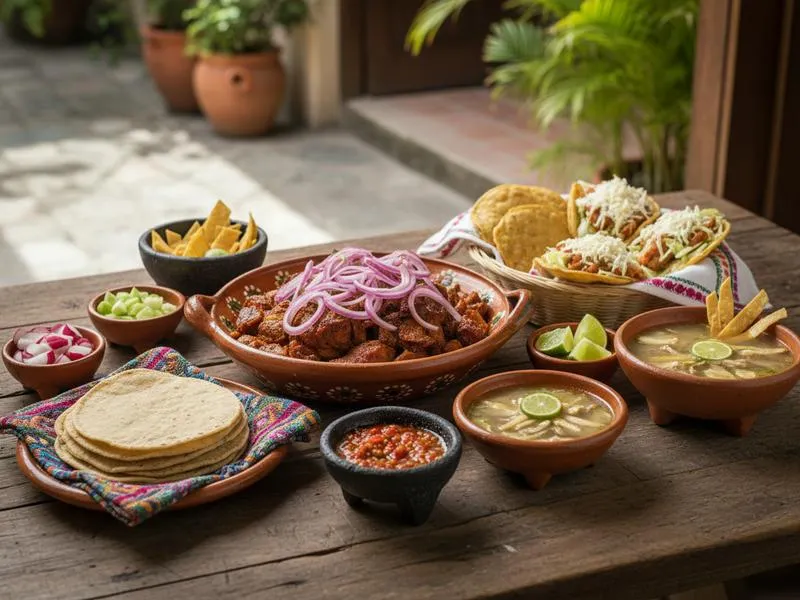
Panuchos: A corn tortilla is sliced open to create a pocket, stuffed with refried black beans, sealed shut, and fried until crispy on the outside. It gets topped with shredded turkey or chicken (or cochinita pibil), pickled red onion, avocado slices, and habanero salsa. The bean layer inside makes it denser, more substantial, and gives every bite that black bean earthiness.
Salbutes: Fresh masa is shaped into a thick tortilla and dropped into hot oil, where it puffs up into a light, airy disc. Same toppings as panuchos — meat, pickled onion, avocado — but the base is softer and lighter. No beans inside.
The verdict among locals: Panuchos win by a wide margin. The bean pocket is what makes them uniquely Yucatecan rather than just “a fried tortilla with stuff on it.” Salbutes have their fans, but at market stalls across Merida, panuchos outsell salbutes roughly three to one.
Both are served at virtually every market food stall, street cart, and traditional restaurant in the state. Price: 15-30 MXN each. Order at least two of each, because one is never enough.
You can find excellent panuchos and salbutes at the nightly food stalls at Parque de Santa Ana in Merida — a spot covered in our things to do in Merida guide.
4. Poc Chuc — The Underrated Grill
Poc chuc gets overshadowed by cochinita pibil, which is a mistake.
Thin-cut pork is marinated in sour orange juice, grilled over open flame, and served with a tomato-habanero salsa called chiltomate, pickled onions, refried black beans, and rice. The name comes from Mayan: “poc” (to toast or char) and “chuc” (charcoal).
The key to good poc chuc is the char. The pork should have blackened edges from the grill while staying juicy inside. If it arrives looking steamed or pale, the kitchen did not make it correctly.
Poc chuc is the ideal order for anyone who finds cochinita pibil too rich. The sour orange marinade keeps the meat light and citrusy. The grilling adds smokiness without heaviness. It is also one of the dishes most likely to be made well at smaller, less-known restaurants — unlike cochinita pibil, which requires overnight cooking and a proper setup, poc chuc can be executed quickly by any decent cook with a grill.
Price: 90-160 MXN at restaurants, 60-90 MXN at market fondas.
5. Papadzules — The Pre-Hispanic Original
Papadzules predate the arrival of the Spanish by centuries, making them one of the oldest continuously prepared dishes in the Americas.
Hard-boiled eggs are chopped and rolled inside corn tortillas. The tortillas are covered in a vivid green sauce made from toasted pumpkin seeds (pepitas) ground with epazote, a pungent Mexican herb. On top goes a drizzle of tomato-habanero salsa and a slick of pumpkin seed oil that the cook extracts by squeezing the ground pepitas.
The pumpkin seed sauce is what makes papadzules unique. It has a creamy, nutty flavor that doesn’t exist in any other Mexican cuisine. The green color is entirely natural — no food coloring, just ground pepitas and epazote. The egg filling is simple, almost austere, which lets the sauce be the star.
Papadzules are also one of the few traditional Yucatecan dishes that are vegetarian by default (the egg filling, no meat). If you are a vegetarian traveling through the Yucatan, this is your anchor dish.
Price: 70-130 MXN at restaurants.
The Colonial and Immigrant Dishes
6. Queso Relleno — The Dutch Cheese That Stayed
This is one of the strangest dishes in Mexican cuisine, and one of the most rewarding.
A whole ball of Dutch Edam cheese (queso de bola) is hollowed out. The cavity is stuffed with pork picadillo — ground pork cooked with olives, capers, raisins, almonds, and spices. The cheese is sealed back up, wrapped in cloth, and steamed until the Edam softens and the pork filling cooks through. It is served sliced, with two sauces: a white flour-based sauce (kol) and a tomato sauce.
Why Dutch cheese? In the 1700s, Yucatan’s economy ran on henequen, a fiber plant used for rope. The henequen was exported to Europe through Caribbean trade routes, and European goods came back on the return ships. Edam cheese, with its protective wax coating, survived the long ocean voyage without refrigeration. It became a staple in Yucatecan kitchens and never left.
Queso relleno is not an everyday dish. It takes hours to prepare and is typically served at celebrations, holidays, and special-occasion dinners. In Merida, La Chaya Maya and Manjar Blanco serve it regularly. Expect to pay 180-280 MXN for a portion.
For more on where to find queso relleno and other traditional dishes, see our Merida restaurant guide.
7. Escabeche — The Spanish Contribution
Escabeche is the Yucatecan version of a Spanish pickling and braising technique. Turkey or chicken is simmered in a broth seasoned with oregano, black pepper, garlic, and onion, then served with pickled red onion and sliced habanero.
The dish is gentler than most Yucatecan food — no achiote, no heavy spice. The flavor is clean and herbal. It is often served at family meals and as a lighter alternative on restaurant menus that lean heavily on pork.
Escabeche oriental, from the eastern part of the state near Valladolid, is considered the best version. The town of Tizimin holds a yearly escabeche festival.
Price: 80-150 MXN at restaurants.
8. Lebanese Influence: Kibbeh and Shawarma Yucateco
In the 1880s, a wave of Lebanese immigrants arrived in the Yucatan Peninsula. They brought kibbeh (ground meat and bulgur wheat croquettes) and shawarma (spit-roasted meat). Over the next century, these dishes fused with local ingredients and became something entirely new.
Kibbeh yucateco (also spelled kibí) is made with ground beef or pork mixed with bulgur wheat, shaped into torpedoes, and deep-fried. The filling often includes hard-boiled egg, and the kibbeh is served with habanero salsa and lime — ingredients the Lebanese originals never included. You find them at market stalls and street carts throughout Merida.
Shawarma yucateca uses pork instead of lamb, seasoned with achiote and sour orange rather than Middle Eastern spices, and served in a pita-like bread with pickled onion and habanero. It is essentially a Yucatecan taco wearing Lebanese clothes.
This fusion is not a modern chef’s invention. It has been part of daily Yucatecan eating for over a century. At Lucas de Galvez market in Merida, kibbeh vendors sit next to panucho vendors, and nobody considers either one “foreign food.”
Price: Kibbeh: 15-25 MXN each. Shawarma: 50-80 MXN.
9. Relleno Negro — The Dark Side
Relleno negro is Yucatan’s most intense dish. Turkey is stewed in a sauce made from recado negro — a paste of charred dried chiles, burned tortilla, and spices ground into a jet-black paste. The result is a deeply smoky, complex, almost bittersweet sauce that looks dramatic on the plate.
Inside the turkey, a stuffing called “but” (Mayan for “stuffing”) is made from ground pork, hard-boiled egg, and the recado negro paste, formed into a ball and cooked inside the bird.
This is not a dish for beginners. The flavor is powerful — somewhere between mole negro and barbecue char, but uniquely Yucatecan. If you have eaten your way through cochinita pibil, poc chuc, and papadzules and want something that will challenge your palate, relleno negro is the next step.
Price: 120-200 MXN at restaurants. Rarely found at market stalls — this is a restaurant dish.
Street Food and Snacks
10. Marquesitas — The Night Snack You Cannot Skip
Marquesitas are Merida’s signature street dessert, and they are non-negotiable.
A thin batter is poured onto a hot circular griddle and spread into a paper-thin crepe. It cooks until crispy — not soft like a French crepe, but crunchy and shattering. While still warm, it gets filled with shredded Edam cheese (queso de bola) and cajeta (goat’s milk caramel), then rolled into a tight cylinder.
The combination sounds improbable. Crispy wafer. Melting salty cheese. Sweet caramel. It works perfectly. The warmth of the crepe partially melts the Edam, creating a sweet-salty contrast that is addictive.
Modern fillings include Nutella, strawberries, ham, and condensed milk. The traditional filling — Edam and cajeta — is the correct order.
Where: The marquesita carts around Parque Santa Lucia on weekend evenings are the standard. Look for the carts with the longest lines — they have been operating for decades. Marquesita carts also appear nightly near most major plazas in Merida and Valladolid.
Price: 30-50 MXN each.
11. Empanadas de Cazón — Shark in a Tortilla
Empanadas de cazón are fried tortilla pockets filled with shredded dogfish shark (cazón), seasoned simply with tomato and epazote. They are a coastal Yucatecan specialty, more common in Campeche but available throughout the peninsula.
If you are taking a day trip from Merida to the coast — say, to Progreso or Celestun — the beachside restaurants serve empanadas de cazón fresh. Inland, they show up at market stalls and fondas.
Price: 20-40 MXN each.
12. Tamales Colados — The Yucatecan Tamale
Yucatan’s tamales bear little resemblance to the tamales you know from central Mexico. Tamales colados are made from a strained corn masa (hence “colados” — strained), filled with chicken or pork in a tomato-based sauce, wrapped in banana leaves rather than corn husks, and steamed.
The banana leaf wrapping gives them a distinctive aroma, and the strained masa has a smoother, more delicate texture than the coarser masa of central Mexican tamales. They are often served at celebrations and on Dia de Muertos, but market stalls in Merida sell them year-round.
Price: 20-35 MXN each.
13. Lomitos de Valladolid
Lomitos is pork tenderloin braised in a tomato sauce with habanero, onion, and sometimes xpelon (a local bean variety). It is the signature dish of Valladolid, the colonial city roughly two hours east of Merida and a common base for visiting Chichen Itza.
Restaurants around Valladolid’s central plaza serve lomitos alongside rice and tortillas. The sauce is milder than most Yucatecan preparations — the habanero provides warmth rather than fire. If you stop in Valladolid on your way to or from Chichen Itza, lomitos is the mandatory order.
Price: 80-140 MXN at fondas, 120-180 MXN at restaurants.
14. Longaniza de Valladolid
Valladolid also claims its own sausage — longaniza vallisoletana. This is a pork sausage seasoned with achiote, spices, and sour orange, then smoked and dried. It is grilled and served with pickled onion and tortillas.
The longaniza has a firm, dry texture and a deeply concentrated pork-and-achiote flavor that intensifies with grilling. Street vendors in Valladolid sell it by weight, and the Tizimin cattle market (about 50 km north) is another source for exceptional longaniza.
Price: 30-60 MXN for a serving with tortillas.
If you are building a Valladolid itinerary, combine longaniza tasting with a visit to the nearby cenotes.
Drinks of the Yucatan
15. Agua de Chaya — The Mayan Green Water
Chaya is a leafy green plant native to the Yucatan Peninsula with more protein than spinach, more iron than most greens, and a mild, slightly grassy flavor. Agua de chaya is the plant blended with water, lime juice, and a touch of sugar — a bright green drink that tastes clean and vegetal.
Every traditional Yucatecan restaurant serves it. At La Chaya Maya in Merida (the restaurant literally named after the plant), it is the default drink recommendation for first-time visitors. If you see it on a menu, order it before you order a beer.
Price: 25-45 MXN.
16. Horchata and Jamaica
These are available all over Mexico, but in the Yucatan they are made with subtle regional differences. Horchata here often includes a rice-and-coconut base rather than the pure rice version common in central Mexico. Jamaica (dried hibiscus flower water) is served ice-cold and intensely tart.
Both are sold in plastic bags with a straw from street vendors and market stalls for 15-25 MXN — the cheapest refreshment in the heat.
17. Xtabentun
Xtabentun (shah-tah-ben-TOON) is a Yucatecan anise liqueur made from fermented honey and anise seed. It is sweet, aromatic, and distinctly local. The name comes from a Maya legend about a flower. It is served straight, over ice, or in coffee.
Not every visitor loves it — the anise flavor is polarizing. But if you enjoy anise-forward spirits like ouzo or sambuca, xtabentun is worth trying. A bottle makes an excellent souvenir that you cannot find outside the Yucatan Peninsula.
Price: 30-60 MXN for a glass at bars, 120-250 MXN for a bottle.
Where to Eat: The Market Guide
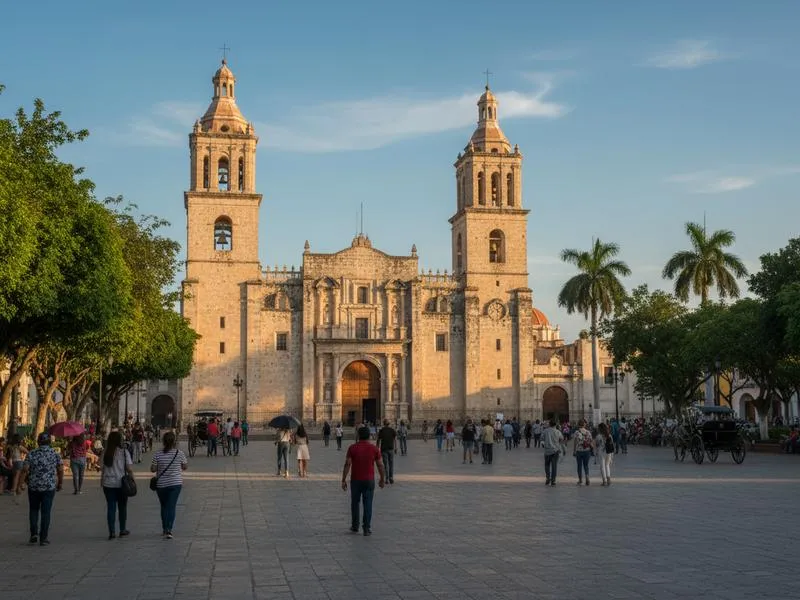
Lucas de Galvez — Merida’s Main Market
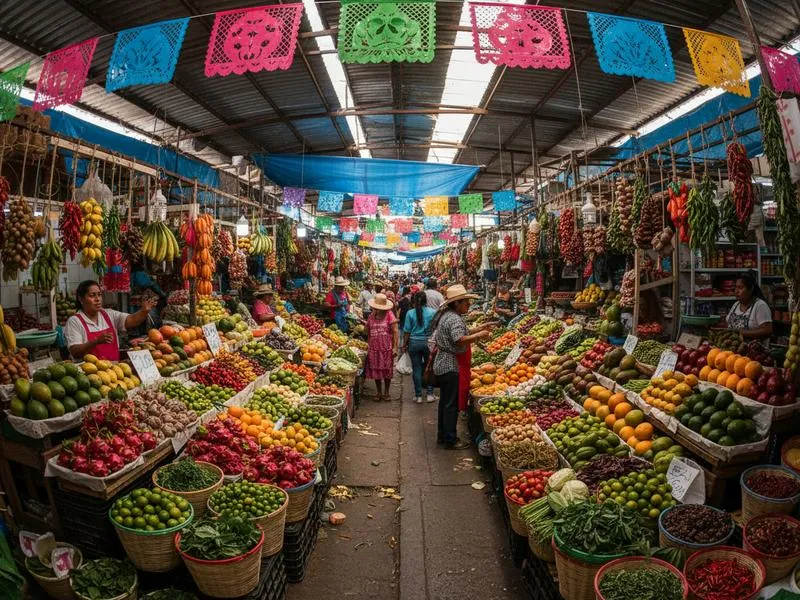
Lucas de Galvez is Merida’s central market and the single best place to eat Yucatecan food on a budget. It is large, loud, and chaotic. The food section occupies the second floor and the surrounding side streets.
What to eat there: Cochinita pibil (especially Sunday mornings), panuchos, salbutes, tamales colados, kibbeh, sopa de lima, and fruit plates with chile and lime.
How to order: Walk through the stalls, look at what other people are eating, and sit down at whichever stall looks busiest. Point at what you want if the noise level makes Spanish difficult. Stall operators are accustomed to foreign visitors. Most dishes cost 40-80 MXN.
When to go: 7-11 AM for breakfast. The cochinita pibil stalls are busiest between 8-10 AM on Sundays.
Lucas de Galvez is about a 10-minute walk south from Merida’s main plaza. For getting around Merida and general orientation, our Merida city guide has transport details.
San Benito Market — The Locals’ Alternative
San Benito is smaller and significantly less touristed than Lucas de Galvez. The food is comparable in quality — some Meridanos argue it is better because the vendors are not adjusting dishes for foreign palates.
San Benito specializes in prepared foods: takeaway cochinita by the kilo, fresh tortillas, and ingredients for home cooking. It is also the better market for buying recado rojo (achiote paste), chaya leaves, and habanero peppers to bring home.
Valladolid Markets
Valladolid’s central market, near the main plaza, is smaller than Merida’s but has its own specialties. Longaniza vallisoletana (the local smoked sausage) is the star. The sopa de lima in Valladolid often uses a slightly different preparation than Merida versions, with more lime and less tomato.
If you are passing through Valladolid on the way to Chichen Itza from Merida, budget an hour for the market before driving to the ruins.
The Vegetarian Situation
Yucatecan cuisine is heavily meat-focused, but vegetarians have more options here than in most of Mexico.
Dishes that are vegetarian or easily made vegetarian:
- Papadzules — Egg and pumpkin seed sauce, no meat (the default preparation)
- Salbutes or panuchos with avocado and bean — Ask for “sin carne” and they will serve them with just beans, pickled onion, and avocado
- Agua de chaya — The signature green drink
- Marquesitas — Cheese and cajeta filling, no meat involved
- Tamales de elote — Sweet corn tamales available at some stalls
- Kibis de queso — Some vendors make cheese-filled kibbeh
The lard issue: Traditional Yucatecan cooking uses lard (manteca de cerdo) in tortillas, beans, and many preparations. If you are strictly vegan, this is a real obstacle. Ask “sin manteca?” (without lard?) at market stalls — some vendors have lard-free options, but not all.
Merida’s expat community has pushed the city toward more vegetarian-friendly dining. Our Merida restaurant guide highlights specific vegetarian options at each restaurant.
Regional Variations Beyond Merida
Yucatecan food varies by city and even by neighborhood. If your trip extends beyond Merida, here is what to seek out.
Valladolid
Valladolid’s food identity centers on longaniza vallisoletana and lomitos. The sopa de lima is tangier. The street food scene around the central plaza is smaller than Merida’s but more concentrated — you can eat your way through the highlights in a single evening walk. Our Valladolid travel guide covers the full city.
Tizimin
About 50 km north of Valladolid, Tizimin is cattle country. The weekly market (Wednesdays and Sundays) sells longaniza, fresh cheese, and meat cuts at prices well below Merida. If you are driving between Valladolid and El Cuyo, the Tizimin market detour is worth the stop.
Izamal
The yellow city of Izamal is a popular day trip from Merida. The food options in Izamal are more limited than Merida or Valladolid, but the town’s market serves reliable panuchos, salbutes, and poc chuc. Several small restaurants around the main convent plaza serve traditional dishes at lower prices than Merida.
Coastal Towns
At Progreso and Celestun on the coast, seafood takes over. Ceviche, fried fish, and empanadas de cazón dominate. The Yucatan beaches are not where you go for the best cochinita pibil — but they are where you go for the freshest fish tacos and lime-drenched shrimp cocktails.
A Practical Eating Strategy
If you have limited time in the Yucatan, here is the priority order.
Day 1 (Merida): Arrive and head to Parque de Santa Ana for evening street food — panuchos, salbutes, and marquesitas. This is your introduction. See our best time to visit Merida guide for seasonal context.
Day 2 (Merida morning): Sunday market cochinita pibil at Lucas de Galvez (or any morning if not Sunday — it is still good, just not transcendent). Follow with sopa de lima at La Chaya Maya or a restaurant of your choice from our Merida restaurant list.
Day 3 (Merida): Sit-down lunch for poc chuc, papadzules, and queso relleno at a traditional restaurant. Evening: marquesitas at Parque Santa Lucia (again — you will want them again).
Day 4 (Valladolid): Drive east to Valladolid. Longaniza and lomitos in the plaza. Afternoon at the cenotes near Valladolid. If you’re heading to Chichen Itza, the Merida to Chichen Itza route passes directly through Valladolid.
Day 5+ (Coast or extended Merida): Fresh seafood in Progreso, deeper exploration of Merida’s market scene, or a day trip from Merida to Izamal with a lunch stop.
For the full trip planning framework, our Yucatan 7-day itinerary ties all of this together with accommodation and transport logistics. If you are still deciding when to go, the best time to visit Yucatan guide covers weather, crowds, and pricing by month.
What to Skip (and What Tourists Get Wrong)
Skip the hotel restaurant Yucatecan menu. Hotels in Merida and the Riviera Maya serve sanitized versions of Yucatecan dishes that remove the habanero, reduce the achiote, and add ingredients (like cheddar cheese) that have no place in this cuisine. Eat at markets and dedicated Yucatecan restaurants instead.
Do not order cochinita pibil on a Tuesday evening. The fresh Sunday batches are gone by Monday afternoon. Mid-week restaurant cochinita is often reheated. If you can only eat it once, make it Sunday morning.
The “Yucatecan sampler plate” is fine for beginners but not for learning. The plato yucateco that many restaurants offer gives you small portions of five or six dishes. It is useful as an introduction, but the portions are too small to actually evaluate any individual dish. Better strategy: order one or two full dishes per meal and work through the list over multiple days.
Habanero is on the side for a reason. First-time visitors sometimes dump the habanero salsa onto their cochinita thinking it is a mild table salsa like salsa roja in Mexico City. It is not. Yucatecan habanero salsa is several orders of magnitude hotter. Taste it on the tip of a spoon first.
Staying Safe and Healthy
Street food and market food in the Yucatan is generally safe. The turnover at popular stalls is high — food does not sit around long. Standard precautions apply: eat where locals eat, avoid stalls with food sitting uncovered in the heat, and drink agua embotellada (bottled water) rather than tap water.
If you have a sensitive stomach, start with cooked dishes (sopa de lima, poc chuc, cochinita pibil) before moving to raw preparations like ceviche. Give your stomach a day or two to adjust to the local bacteria.
For general safety information about traveling in the Yucatan, our is Merida safe guide covers the city, and the broader Yucatan Peninsula guide addresses the region.
Bringing Yucatecan Flavors Home
If you want to recreate Yucatecan dishes at home, the two ingredients you absolutely need are recado rojo (achiote paste) and sour orange juice. Both are sold at every market in the Yucatan and are light enough to pack in a suitcase.
Recado rojo is a brick of ground annatto seeds, spices, and vinegar. It keeps for months unrefrigerated. A single brick costs 15-30 MXN at any market and is enough for multiple batches of cochinita pibil.
Naranja agria (sour orange juice) is harder to transport as a liquid, but many vendors sell it in concentrated paste form. In the United States, you can approximate it with a mix of fresh orange juice, grapefruit juice, and lime juice — but the real thing is better.
Habanero peppers are widely available outside Mexico, so those are easy to source at home. Dutch Edam cheese is found at most international grocery stores.
The Bottom Line
Yucatecan food rewards the curious and the specific. Do not come expecting “Mexican food” in a general sense. Come expecting a distinct culinary tradition shaped by Maya, Spanish, and Lebanese influences over centuries, built on ingredients you won’t find in any other Mexican kitchen, and best experienced at 7 AM on a Sunday morning at a market stall in Merida with a plate of fresh cochinita pibil in front of you.
For a Mérida-specific food breakdown — 18 dishes, the Lebanese-Yucatecan fusion explained, where locals eat, and food by neighborhood — see what to eat in Mérida. For trip planning, start with the Merida travel guide and our Yucatan 7-day itinerary. For accommodations, see best hotels in Merida or where to stay in Merida. For transport from other parts of the peninsula, we have guides for Cancun to Merida, Merida to Tulum, and Merida to Cancun. Heading to Tulum? See what to eat in Tulum for the full breakdown of cochinita tacos, aguachile, and the Pueblo vs Hotel Zone price reality.
Eat the panuchos. Drink the chaya water. Respect the habanero. That is what to eat in Yucatan.