Is Mérida Safe in 2026? Honest Traveler Guide
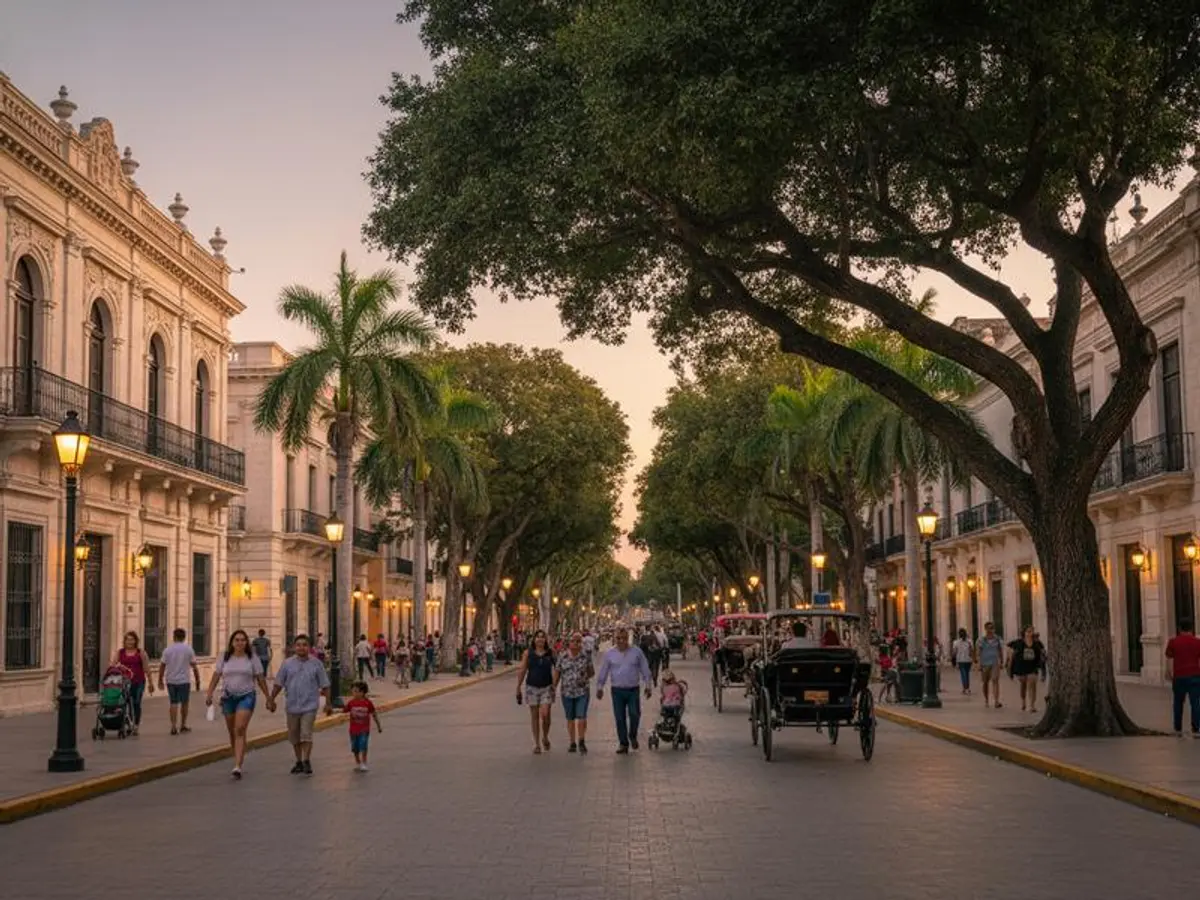
Mérida is safe for tourists in 2026, especially in the historic centro, Paseo de Montejo, Santa Ana, Santiago, and the main hotel areas. Yucatán holds the only Level 1 “Exercise Normal Precautions” advisory in Mexico from the US State Department, and Mérida is widely treated as the safest large city in the country. The main tourist risks are not cartel violence or random street crime; they are pickpocketing in crowded markets, brutal April-May heat, and choosing the wrong outskirt area late at night.
If you want the shortest useful answer: Mérida is one of the easiest Mexican cities to recommend to safety-conscious travelers. You still need normal city awareness, but the risk profile is closer to a calm regional capital than a resort-party city.
Mérida Safety in 30 Seconds
| Traveler Question | Practical Answer |
|---|---|
| Is Mérida safe for tourists? | Yes. Centro, Paseo de Montejo, Santa Ana, Santiago, and Santa Lucía are safe for normal sightseeing, dinner, and evening walks. |
| Is Mérida safer than Cancun or Tulum? | Yes. Mérida sits in Yucatán, a Level 1 advisory state, while Cancun and Tulum are in Quintana Roo, a Level 2 advisory state. |
| What is the main tourist risk? | Petty theft in crowded markets and heat exhaustion in April-May, not violent crime in the tourist core. |
| Can you walk at night? | In the centro and Paseo de Montejo corridor, yes. Use Uber or DiDi late at night if you are going farther out. |
| Who should choose Mérida? | First-time Mexico travelers, solo women, families, retirees, and anyone who wants culture without a heavy nightlife-security tradeoff. |
The Short Answer: Is Mérida Safe?
Yes — unreservedly.
The US State Department assigns Yucatán a Level 1: Exercise Normal Precautions advisory. In all of Mexico, this is the only state at Level 1. Every other Mexican state is Level 2, 3, or 4. Yucatán stands alone at the top of the safety spectrum.
Mérida has been named the safest large city in Mexico in multiple years’ rankings. Citizens’ security studies and academic crime analyses consistently put it at or near the top for a city of its size (about 1 million people in the metro area) not just in Mexico but in all of Latin America.
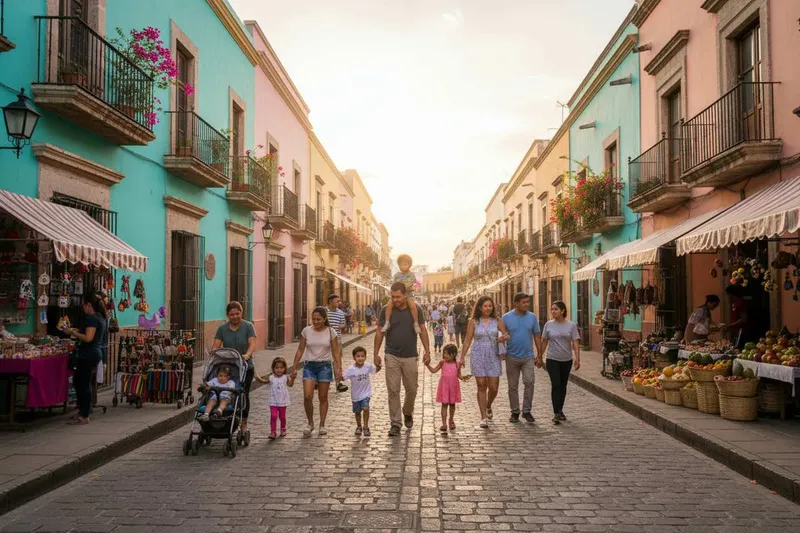
The practical reality: you can walk through the historic centro at 11pm, eat at an outdoor restaurant on Paseo de Montejo, visit the Sunday market at Plaza Grande, and take a late-night Uber back to your hotel without anything resembling genuine danger.
What tourists actually experience in Mérida: Heat (especially April-May), occasional minor pickpocket attempts in crowded markets, and the very real possibility of trying so many regional Yucatecan dishes in one trip that you run out of stomach before you run out of options.
Check our full Mexico safety guide for the national context.
What Makes Mérida So Safe?
This question is worth answering seriously, because understanding it helps you calibrate — and because it’s genuinely interesting.
1. Different Historical Relationship with Organized Crime
The cartel dynamics that affect much of Mexico have not taken hold in Yucatán the way they have in states like Guanajuato, Sinaloa, Michoacán, or Tamaulipas. There are no major cartel-controlled corridors through Yucatán. The drug trade moves through other routes. This isn’t luck — it’s partly geography (the peninsula is a terminus, not a transit route to the US) and partly the state government’s proactive stance.
This doesn’t mean Yucatán is crime-free. Local gangs and petty crime networks exist. But the high-violence organized crime activity that generates headlines elsewhere in Mexico has not established the same foothold here.
2. Strong Mayan Cultural Identity and Community Cohesion
Yucatán has a distinct regional identity, strong community bonds rooted in Mayan heritage, and a sense of collective pride in the state and city. This isn’t romanticization — social scientists who study crime consistently find that community cohesion correlates with lower crime rates. Neighborhoods where people know each other and look out for each other have lower crime than transient or atomized communities.
Mérida has historically had strong neighborhood (barrio) identity. The comisarías (village communities) surrounding the city maintain traditional governance structures. This social fabric is real and affects crime rates.
3. Federal and State Security Investment
Yucatán’s proximity to major US tourist destinations (Cancún, Tulum) and its own tourism economy have made it a priority for federal security attention. The state government has consistently invested in policing infrastructure, and Mérida’s municipal police force is considered one of the better-trained in Mexico.
This isn’t just federal politics — it reflects local political economy. Tourism is enormously important to Yucatán’s economy, and maintaining safety is an economic imperative.
4. Strong Middle-Class Infrastructure
Mérida has a large, established local middle class — professionals, business owners, academics, medical professionals. This creates stable social institutions: schools, civic organizations, neighborhood associations. Economic stability at the community level correlates with lower crime.
What Tourists Should Still Watch
Being safe doesn’t mean being oblivious. Mérida is a city with real city dynamics. Here’s what actually matters for tourists:
Petty Theft at Markets
This is the primary tourist-facing crime in Mérida. The Mercado Lucas de Gálvez (the main market) and the Mercado de Santa Ana are busy, crowded, and the standard environment for pickpockets.
Practical rules:
- Keep your wallet in a front pocket or a cross-body bag worn in front
- Don’t bring a day’s worth of cash — bring what you’ll spend
- Camera bags attract attention; keep cameras out of sight when not in use
- Don’t put your phone on the table at market stalls
This is the same precaution you’d take at any market in Barcelona, Rome, or Bangkok. It’s not unique to Mexico and it’s not a reason to avoid markets — the Mérida markets are genuinely excellent and worth visiting.
Heat Exhaustion: The Real April-May Risk
If you’re visiting between April and May, heat is a genuine health concern. Mérida in peak dry season regularly reaches 40-43°C (104-109°F) with high humidity. Heat stroke hospitalizes tourists every year during this period.
Practical rules:
- Hydrate aggressively — more than you think you need
- Do outdoor activities before 10am or after 4pm
- Carry water at all times
- Know the signs of heat exhaustion: heavy sweating, weakness, nausea, headache. Seek shade and fluids immediately.
- Heat stroke (confusion, no sweating, hot skin) is a medical emergency — get to shade and call for help
The best time to visit Mérida for weather: November-February. You’ll have comfortable temperatures (25-28°C), low humidity, and all the cultural richness without the brutal heat.
Outskirt Areas at Night
Mérida’s centro and established middle-class neighborhoods are consistently safe. Some peripheral neighborhoods — particularly toward the southern and eastern outskirts — have higher crime rates and are best visited with local knowledge or not at all at night.
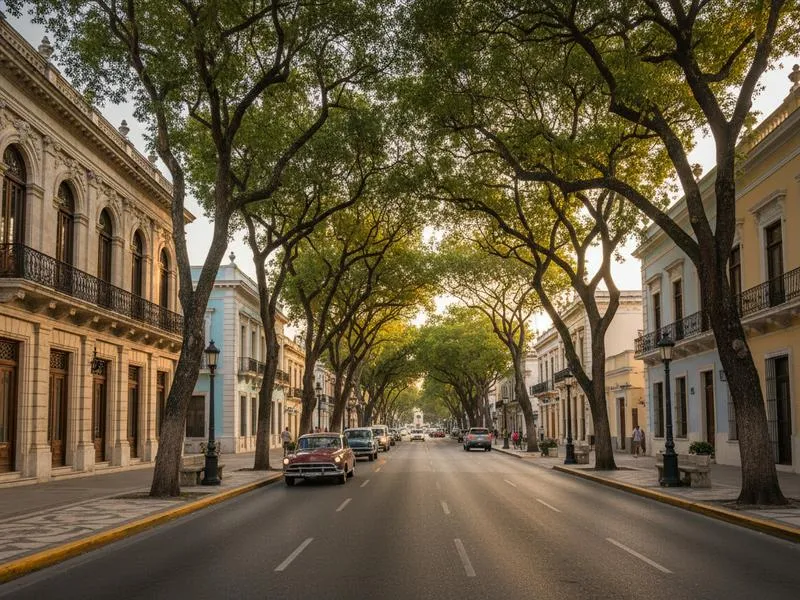
This is standard urban geography. The tourist-relevant areas of Mérida are all in the safe zone: centro, Santa Ana, Santiago, Colonia García Ginerés, Paseo de Montejo corridor.
Mérida Safety by Area: A Practical Table
| Area | Safety Level | Notes |
|---|---|---|
| Centro Histórico | Very safe | Heart of tourist Mérida, busy day and night |
| Paseo de Montejo | Very safe | Well-lit, patrolled, excellent restaurants |
| Santa Ana / Santiago | Safe | Charming residential neighborhoods, generally calm |
| Barrio Santa Lucía | Very safe | Tourist-oriented, well-maintained |
| Colonia García Ginerés | Safe | Middle-class residential, quiet |
| Cholul / Dzityá | Use caution | Outskirt communities, fine during day |
| Southern outskirts | Standard caution | Stick to main roads if driving |
The neighborhoods marked “Very safe” cover 95% of what tourists want to see and do in Mérida. You would have to actively seek out the less-safe areas to end up there accidentally.
Crime Statistics vs. Perception
Mérida’s safety reputation sometimes works against it in an unexpected way: people don’t believe it.
The headlines about Mexico safety tend to focus on states like Tamaulipas, Sinaloa, Michoacán, and Guanajuato — all genuinely more dangerous for different reasons. This colors the entire perception of “Mexico.” When someone has seen those headlines, saying “Mérida is one of the safest cities in Latin America” sounds like marketing.
It’s not. The data is consistent:
- Yucatán has a homicide rate roughly 1/10th the national average
- Mérida’s robbery rate is among the lowest for any Mexican city of its size
- Tourist incidents — beyond petty theft — are rare enough that they generate local news when they occur
This doesn’t mean you should be naive. But it does mean that the fear you might bring from reading general Mexico news is not the appropriate calibration for Mérida. Adjust your risk assessment accordingly.
Women’s Safety in Mérida
Mérida is one of Mexico’s better cities for solo women travelers.
What the data and traveler experience shows:
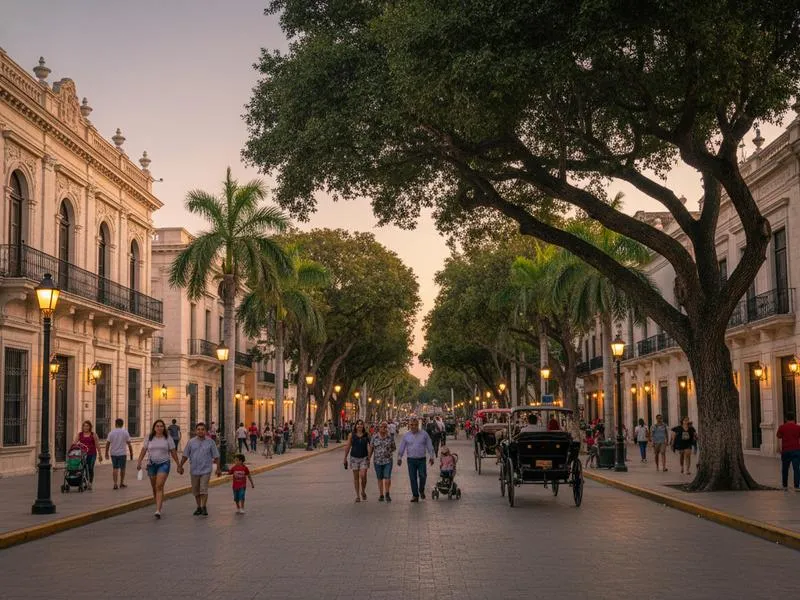
- The centro and Paseo de Montejo are comfortable to walk at night, including alone
- Catcalling exists but is generally less aggressive than in resort towns like Cancún or Cabo San Lucas (which are oriented toward nightlife culture)
- The local population is accustomed to international tourists and expats, and solo women are unremarkable guests
- A significant expat community (particularly from the US) means there are established social networks, including for solo women travelers
Practical notes:
- Use Uber or DiDi for late-night transport rather than hailing street taxis
- Mérida has an active cultural calendar — theater, concerts, gallery openings, street markets — that provides natural evening activities in safe, populated settings
- The Sunday market around Plaza Grande draws thousands of locals with families; it’s a genuine community event, not just a tourist one
For our full guide on solo travel safety in Mexico, see solo female travel in Mexico.
Comparing Mérida to Other Mexican Cities on Safety
Let’s put Mérida’s safety in direct context:
| City | State Advisory | Rough Safety Context |
|---|---|---|
| Mérida | Level 1 | Safest large city in Mexico |
| Campeche | Level 2 | Very safe colonial city |
| Oaxaca City | Level 2 | Safe tourist zone, some state concerns |
| San Miguel de Allende | Level 2 | Safe, large expat community |
| Guadalajara | Level 3 (Jalisco) | Tourist zones safe; more complex state |
| Puerto Vallarta | Level 3 (Jalisco) | Resort zone safe, state issues elsewhere |
| Cancún | Level 2 (Q. Roo) | Specific no-travel zones within city |
| Mexico City | Level 2 | Tourist zones safe; typical big-city crime |
The gap between Mérida (Level 1) and Cancún (Level 2 with no-travel zones within the city limits) is larger than the adjacent advisories suggest. Mérida is categorically different in its safety profile from Cancún, which is the most common comparison tourists make given both are in the Yucatán Peninsula region.
If you’re making a base-camp decision for exploring the Yucatán Peninsula — Chichén Itzá, Uxmal, cenotes, Gulf coast flamingos — Mérida offers the safest urban base with the richest cultural experience.
Mérida vs. Cancún: The Safety Comparison Tourists Need
This comparison comes up constantly, so it deserves direct treatment.
Cancún is in Quintana Roo (Level 2). More specifically, the State Department has issued “Do Not Travel” advisories for specific areas within Cancún city limits — parts of the city where tourists don’t typically go, but which are geographically within the city boundaries. This nuance matters: Cancún’s hotel zone (Zona Hotelera) is generally safe; parts of Cancún city are not.
Mérida has no such internal no-travel zones. The entire city, including its outskirts, functions under Yucatán’s Level 1 advisory. This is a meaningful difference.
For a Mexico trip focused on culture, history, food, and cenotes rather than beach nightlife, Mérida is the more interesting and more thoroughly safe base.
Medical Care in Mérida
Mérida has good medical infrastructure for a city of its size.
Hospital Star Médica Mérida is the best private hospital in the city with English-speaking staff and modern equipment. It handles everything from routine care to serious emergencies.
Centro Médico de las Américas is another strong private option with international patient experience.
Public hospitals (IMSS, ISSSTE) serve local residents well but are not oriented toward international patients. Stick with private hospitals as a tourist.
Medical care in Mérida is genuinely good quality and less expensive than in Los Cabos or Cancún — but it’s not free, and it’s not cheap without insurance. A hospital stay runs 300-1,000 USD per day at private facilities before treatment costs.
2026 Updates: Yucatán Maintains Level 1
As of early 2026, Yucatán maintains its Level 1 “Exercise Normal Precautions” advisory — the only state in Mexico at this level.
There have been no significant security incidents affecting tourist areas in Mérida. The state government has continued its security investment and the crime statistics that support Mérida’s reputation remain consistent.
Notable 2026 context: The Tren Maya (Maya Train) connecting Mérida with Cancún, Tulum, Bacalar, and Palenque began full operations in 2024 and has become a significant travel infrastructure element. The train itself is safe and represents a comfortable way to travel between Yucatán cities without driving. This also means more tourist traffic to Mérida, which brings economic activity and continued incentives to maintain security.
See our Mexico travel advisory guide for 2026 for the current full advisory breakdown.
Quick Safety Summary: Mérida
Safety level: Highest in Mexico — Level 1 Yucatán, safest large city in the country.
Safe areas: Centro Histórico, Paseo de Montejo, Santa Ana, Santiago, García Ginerés — all very safe, day and night.
Watch out for: Petty theft at Lucas de Gálvez market, heat exhaustion April-May, some outskirt neighborhoods at night.
Women’s safety: Among Mexico’s best cities for solo women.
Medical: Hospital Star Médica Mérida for serious care. Get travel insurance.
Vs. Cancún: Significantly safer by every metric. Better cultural base for Yucatán Peninsula exploration.
Plan Your Mérida Trip
- Mérida Travel Guide — Everything You Need to Know
- Safest Cities in Mexico: 2026 Rankings
- Solo Female Travel in Mexico: Honest Guide
- Is Mexico Safe? Complete 2026 Guide
- Mexico Travel Advisory 2026: State-by-State
Explore Mérida with a Local Guide
The best way to understand Mérida’s food, history, and neighborhoods is with someone who actually knows it. Viator has vetted Mérida tours — cenote day trips, street food walks, Chichén Itzá excursions, and Uxmal ruins visits — from operators with verified reviews and clear safety standards.
Mérida is special. It’s one of the few places in Mexico where you can fully exhale and just be in the city. Go.