Things to Do in Valladolid Yucatán 2026: 25 Best Activities, Cenotes & Day Trips
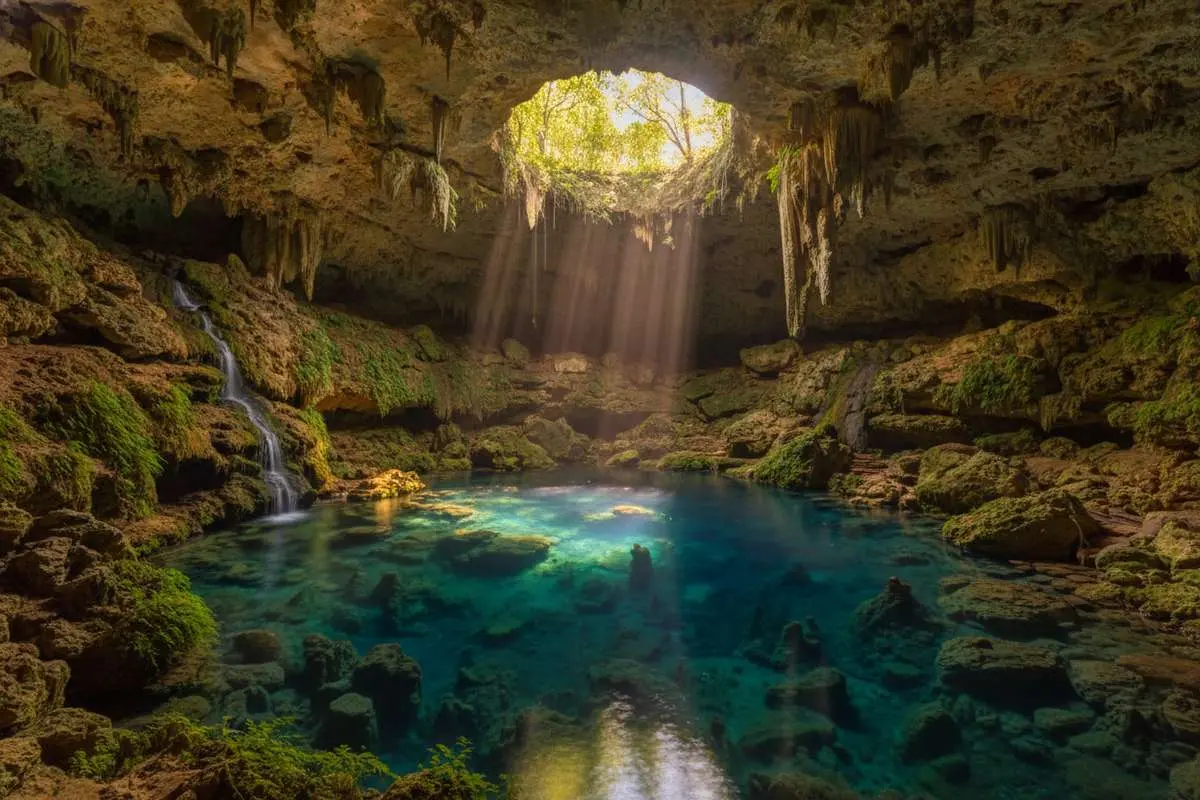
Valladolid is a colonial city of 80,000 people sitting at the geographic center of the Yucatán Peninsula — 43 km from Chichen Itzá, 30 km from Ek Balam, and within 2 hours of Cancún, Tulum, and Mérida. It has four distinct cenotes within 15 km of the main plaza, some of the cheapest authentic Yucatecan food anywhere, and an almost complete absence of the tourist-zone feel that dominates the coast. This guide covers 25 things to do, from the cenote circuit to early-morning ruins strategy to where locals actually eat.
Activity Overview
| # | Activity | Category | Cost (approx.) | Time Needed |
|---|---|---|---|---|
| 1 | Cenote Zaci — in-town swimming | Cenote | 50 MXN (~$3) | 1–2 hrs |
| 2 | Cenote Suytun — iconic platform | Cenote | 200 MXN (~$10) | 1–2 hrs |
| 3 | Cenote Samula — flooded cave | Cenote | 150 MXN (~$8) | 1 hr |
| 4 | Cenote X’keken (Dzitnup) — light shaft cave | Cenote | 150 MXN (~$8) | 1 hr |
| 5 | Cenote Hubiku — semi-open + zip line | Cenote | ~100 MXN | 1–2 hrs |
| 6 | Chichen Itzá early arrival | Ruins | 646 MXN total (~$32) | Half day |
| 7 | Ek Balam Acropolis — check current climbing access | Ruins | INAH + CULTUR charges | Half day |
| 8 | Ek Balam Cenote Xcanché | Cenote | ~150 MXN | 1 hr add-on |
| 9 | Convento de San Bernardino de Siena | History | Free (church open hours) | 45 min |
| 10 | Calzada de los Frailes at sunrise | Sightseeing | Free | 30 min |
| 11 | Parque Zaci evening stroll | Sightseeing | Free | 1 hr |
| 12 | Palacio Municipal murals | Culture | Free | 20 min |
| 13 | Mercado Municipal breakfast | Food | 50–80 MXN | 1 hr |
| 14 | Sopa de lima comparison | Food | 80–150 MXN/bowl | 1–2 hrs |
| 15 | Longaniza vallisoletana | Food | 60–100 MXN | 30 min |
| 16 | Poc chuc & papadzules | Food | 80–120 MXN | 30 min |
| 17 | Hammock shopping | Shopping | 200–800 MXN | 30–60 min |
| 18 | Huipil embroidery shopping | Shopping | 300–1,500 MXN | 30–60 min |
| 19 | Colectivo cenote circuit | Adventure | ~150 MXN transport | Half day |
| 20 | Bicycle cenote circuit | Adventure | 100–150 MXN/day rental | Half day |
| 21 | Izamal Yellow City day trip | Day Trip | Transport only | Full day |
| 22 | Cenote Ik Kil (near Chichen Itzá) | Cenote | 180 MXN | 1 hr |
| 23 | Mezcal & regional spirits tasting | Food/Drink | 100–300 MXN | 1–2 hrs |
| 24 | Traditional Yucatecan cooking class | Culture | $40–80 USD | 3–4 hrs |
| 25 | Sunrise photography walk | Free | Free | 1 hr |
Cenotes
Valladolid’s defining characteristic is the density of accessible cenotes. Four distinct types — open-air urban, illuminated platform, flooded cave, and natural-light cave — sit within 15 km of the main plaza. No other city in Mexico gives you this variety without driving 45+ minutes between sites.
1. Cenote Zaci — Urban Open-Air Swimming
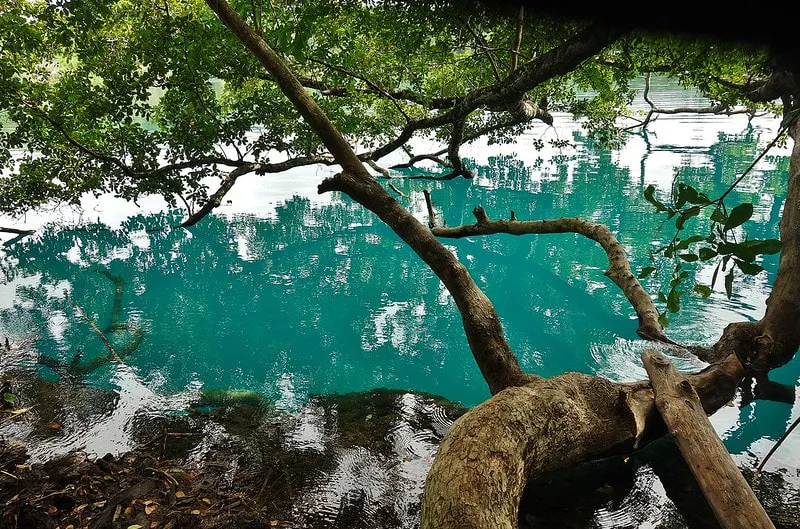
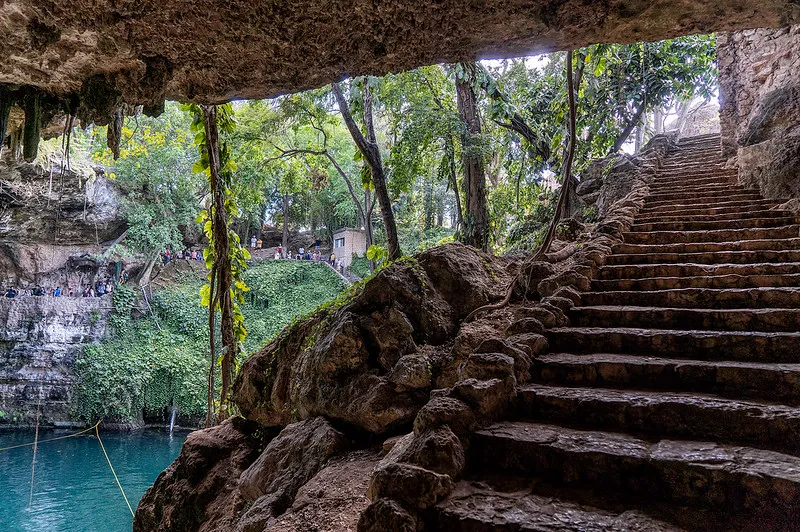
The most accessible cenote in Valladolid sits two blocks from the main plaza, inside a city park. It’s a large natural limestone bowl open to the sky — no cave claustrophobia, no long drives. The water is clear enough to see the bottom in the shallows, and the walls above are lined with hanging roots and vegetation.
Entry: 50 MXN (~$3). Hours: 8 AM–6 PM daily. Getting there: Walk from Parque Zaci, follow the signs on Calle 36. What to know: Arrives with local Yucatecan families on weekends. Cooler water than the coastal cenotes. The park has changing rooms, bathrooms, and a small restaurant. Best on weekday mornings before tour groups arrive.
2. Cenote Suytun — The Iconic Platform
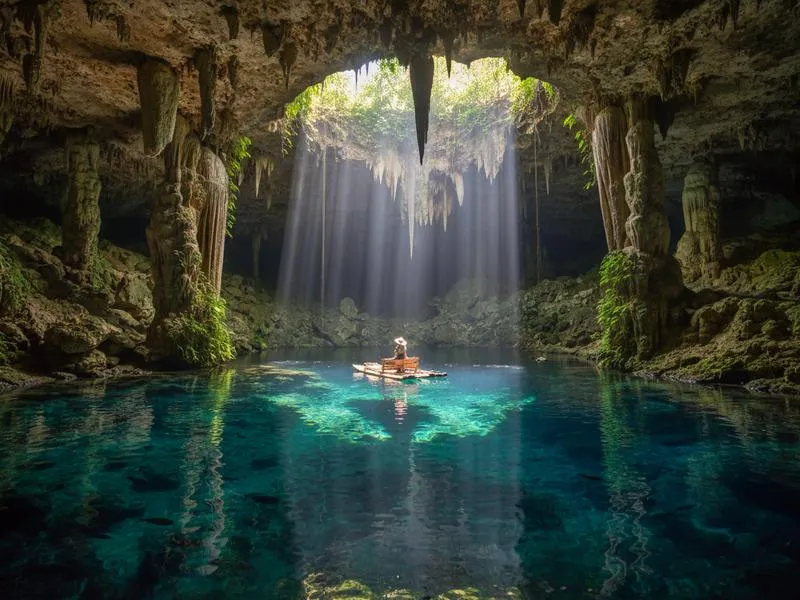
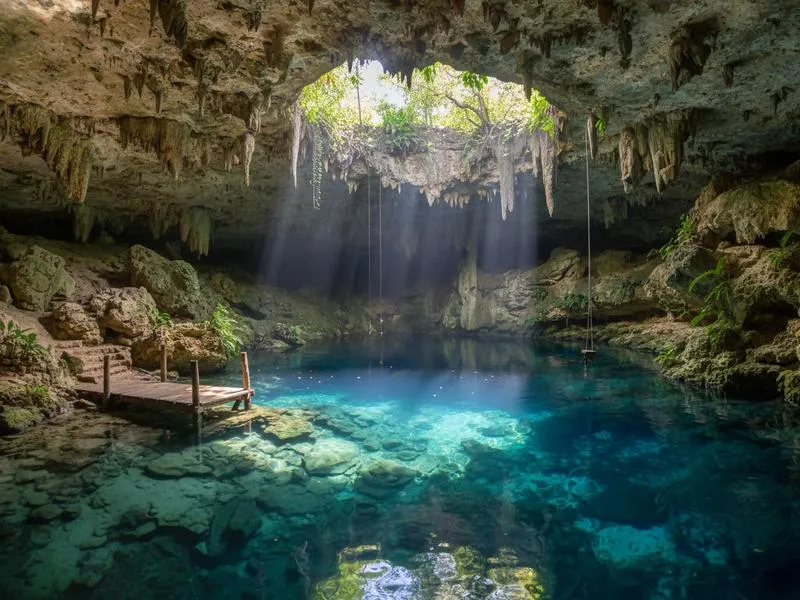
Cenote Suytun has one specific feature that photographs better than almost anything in the Yucatán: a narrow stone walkway that extends from the cave entrance over the water, with a round platform at the end illuminated by a natural light shaft from above. The visual — turquoise water, stalactite ceiling, beam of light — has appeared on a thousand travel accounts.
Entry: 200 MXN (~$10). Location: 12 km south of Valladolid. Getting there: Colectivo from Calle 39 (~20 MXN) or taxi (150-200 MXN round trip). What to know: The platform gets crowded by 10 AM — go at opening (8 AM) for the photo without people. Swimming is allowed. Water temperature stays around 24°C year-round. Don’t confuse with Cenote Samula or Dzitnup — they’re different and located in the opposite direction.
3. Cenote Samula — Flooded Cave with Hanging Roots
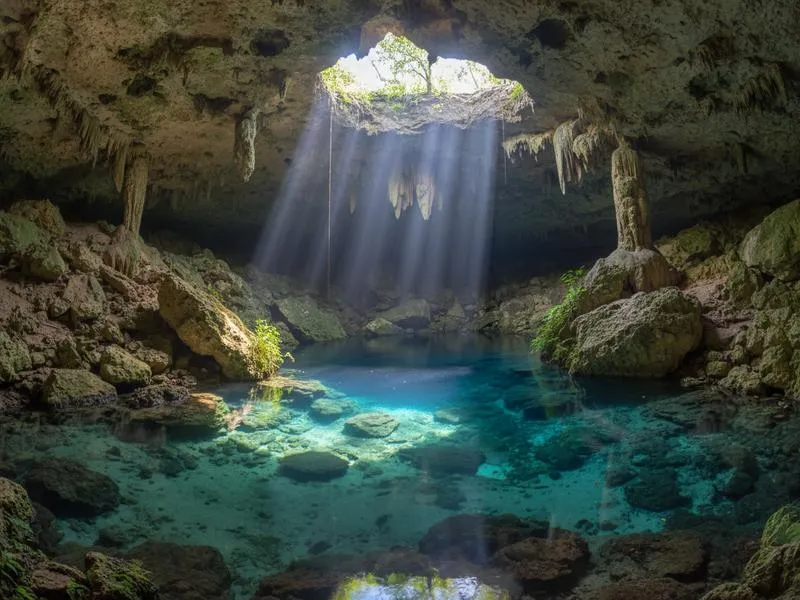
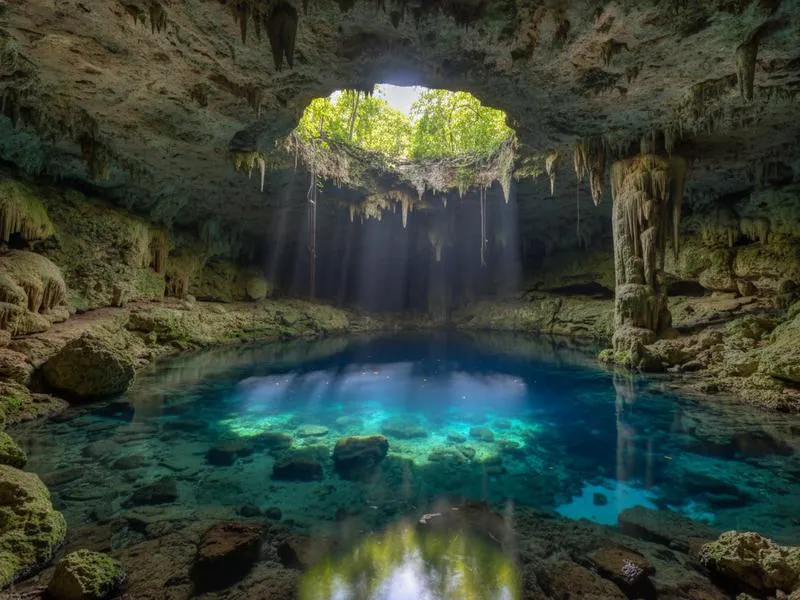
Four kilometers west of Valladolid on Highway 180, Cenote Samula is a fully enclosed cave cenote. The ceiling is high and dramatic, stalactites hang overhead, and tree roots from the surface descend through the cave opening into the water — some reaching 15+ meters. The visual is extraordinary: sunlight filters through the entrance opening, lighting the roots from above.
Entry: 150 MXN (~$8). Hours: 9 AM–5 PM. Getting there: Taxi from city center (50-70 MXN), or ADO 2nd-class bus toward Mérida (ask to stop at Dzitnup junction, 5 min ride). What to know: A combo ticket with Cenote X’kekén may be available; confirm the current price directly. Photography is allowed without flash. Arrive without sunscreen or repellent on your skin and follow the operator’s shower rules.
4. Cenote X’keken (Dzitnup) — Natural Light Cathedral
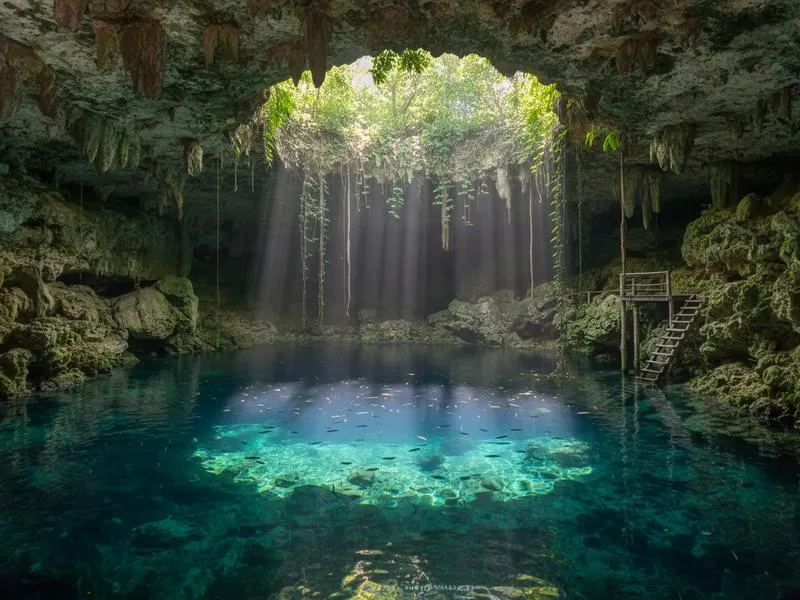
50 meters from Cenote Samula (walking distance), X’keken is a different experience: a perfectly round underground cave with a single dramatic column of natural light dropping from a circular opening in the ceiling. The effect is cathedral-like — the whole underground chamber glows. Stalactites ring the ceiling. The water is luminous turquoise.
Entry: 150 MXN standalone or 250 MXN combined with Samula. Hours: 9 AM–5 PM. What to know: The light shaft is best in the late morning (10–11 AM) when the sun is directly overhead. Earlier visits are cooler and less crowded. Bring shoes you don’t mind getting wet — the path to the water can be slippery.
5. Cenote Hubiku — Semi-Open with Zip Line
Twenty-five kilometers north of Valladolid on the road to Ek Balam, Cenote Hubiku is more developed than the others — there’s a zip line that launches you over the water, a restaurant, and a small pool area alongside the natural cenote. The cenote itself is semi-open: partly under a cave overhang, partly open to the sky. More recreational than the others, but the zip line is genuinely fun.
Entry: ~100 MXN. Zip line extra (~100 MXN additional). Hours: 9 AM–5 PM. What to know: Naturally pairs with an Ek Balam visit — on the same road, 10 minutes beyond. Go to Ek Balam first (beat the heat on the pyramid), then Cenote Hubiku to cool off.
Archaeological Sites
6. Chichen Itzá — The Early Arrival Strategy
Chichen Itzá is the most visited archaeological site in Mexico, and the experience depends almost entirely on when you arrive. From Valladolid (43 km, 40 minutes), an 8 AM arrival is easy and transforms the visit. The site opens at 8 AM; tour buses from Cancún (180 km away) don’t typically arrive until 10–10:30 AM. That 2-hour window is the difference between walking freely around El Castillo and sharing it with 2,000 other tourists.
Entry: 571 MXN state fee + 75 MXN INAH fee = 646 MXN total (~$32). Foreign nationals pay the combined amount; state fee only applies once per day. Getting there: ADO bus from Valladolid (100 MXN, 45 minutes, runs from 7 AM). Car: 43 km on Federal Highway 180 (toll road, about 35 MXN toll). What to see: El Castillo pyramid (the famous stepped structure), Ball Court (largest in Mesoamerica, 168 meters), El Caracol astronomical observatory, Temple of Warriors, Sacred Cenote. See our complete Chichen Itza guide for structures, crowd strategy, and the equinox phenomenon. Important: Combine with Cenote Ik Kil (3 km from the site, 180 MXN entry) — a massive open cenote with hanging vines. Arrive at Ik Kil before 11 AM for the best light and fewer people.
Book Chichen Itza + Cenote tours on Viator
7. Ek Balam — The Climbable Pyramid
Thirty kilometers north of Valladolid, Ek Balam is a medium-sized Maya site centered on the 32m Acropolis, which is currently climbable. Its elaborate stucco façade is the archaeological highlight. Confirm current climbing access and total INAH/CULTUR charges before travel because conservation rules and fees can change.
Entry: 400 MXN (~$20) combined state + INAH. Hours: 8 AM–5 PM. Getting there: Taxi from Valladolid (~200 MXN one way), or colectivo from near the ADO terminal (30-50 MXN, less frequent). No direct ADO service. Why here vs Chichen Itzá: Fewer people, climbable pyramid, better-preserved carving detail, lower cost. The site takes 2 hours vs 3-4 at Chichen Itzá. Ek Balam first, Chichen Itzá for the full day — that’s the ideal two-day ruins split. Tip: Cenote Xcanché is a 15-minute walk from the Ek Balam parking area — a natural cenote in the jungle where you can swim and zip line after the ruins.
8. Cenote Xcanché at Ek Balam
A 1.5 km walk or bike ride from the Ek Balam ruins entrance (bike rental available at the site), Cenote Xcanché is a circular jungle cenote with a zip line into the water. Less developed than Cenote Hubiku and less visited than the Valladolid cenotes — this is one of the quieter swimming spots in the Yucatán. Entry approximately 150 MXN additional to the ruins ticket.
Colonial History & Architecture
9. Convento de San Bernardino de Siena
Built in 1552 by Franciscan friars, San Bernardino de Siena is one of the oldest active churches in Mexico. The complex includes the main church, a cloister, and a covered atrium (used for outdoor indigenous mass before Mexican converts were allowed inside). The architecture is fortress-like — thick walls, narrow windows — typical of early colonial religious construction when Franciscans expected resistance.
Entry: Free. The grounds and exterior are open during daylight hours. Interior access during mass times. What to know: The convent was built adjacent to — and partially over — a natural cenote (Cenote Sisal), which provided water for the community. The Franciscan influence on Yucatecan Maya culture is visible in everything from ceramics to calendar traditions. The full visitor guide to the convent has the detailed history. Time: 30–45 minutes is enough for the exterior, garden walk, and church interior.
10. Calzada de los Frailes at Sunrise
The cobblestone street connecting the Franciscan convent to Parque Zaci is Valladolid’s most photographed spot — a straight run of yellow, ochre, and orange colonial facades with flowering trees, a small chapel at the far end, and almost zero traffic. The street looks best at 6:30–7 AM when it’s completely empty and the morning light hits the facades directly.
Cost: Free. Best time: Sunrise, before 7:30 AM. What you’ll see: 400-year-old buildings in continuous use as homes and small guesthouses, traditional wooden doorways, flowering vines on colonial walls. The neighborhood beyond the main street is quiet and residential — worth 15 minutes of wandering. Photography tip: Stand at the convent end and shoot toward the chapel. Arrive before the street carts set up (usually around 8 AM).
11. Parque Zaci — Evening Social Center
The main plaza of Valladolid functions as a different place at different times of day. In the morning, it’s quiet — locals crossing with coffee. In the afternoon, it fills with vendors and the occasional tour group. By evening (5–8 PM), it becomes the social center of the city: families on benches, teenagers, ice cream carts, live music on weekends, and the cathedral facade lit up.
Cost: Free. Best time: 5–8 PM any day; Sunday evenings for local music. Surrounding streets: Calle 39 and Calle 41 have the highest concentration of restaurants with outdoor plaza-facing seating. This is where you’ll eat well for 100-150 MXN for a full Yucatecan meal.
12. Palacio Municipal Murals
On the north side of Parque Zaci, Valladolid’s city hall contains murals depicting the history of the region — the Maya world, Spanish conquest, the Caste War of Yucatán (a major Maya rebellion in 1847 that devastated the peninsula), and modern Yucatecan life.
Cost: Free. Hours: Business hours, weekdays. What to know: The Caste War mural is particularly striking — Valladolid was one of the epicenters of the 1847 uprising, when Maya residents massacred much of the Spanish-descended population. The city’s colonial population was reduced by 90% within months. The history is on the walls; most visitors walk past it without realizing.
Food & Drink
Valladolid’s food scene is anchored in traditional Yucatecan cooking — sopa de lima, longaniza, papadzules, poc chuc — at prices that are 40-60% below what you’ll pay for the same dishes in Cancún or Playa del Carmen.
13. Mercado Municipal Breakfast
On Calle 32, one block from Parque Zaci, the municipal market runs breakfast and lunch only (8 AM–3 PM). Market stalls serve sopa de lima, panuchos (fried tortillas with black beans and turkey), papadzules (rolled tortillas in pumpkin seed sauce), and longaniza with eggs from 50-80 MXN for a full meal. There are no menus — walk through, see what’s hot, point at what looks good.
What to order:
- Sopa de lima: Shredded chicken in a clear consommé flavored with Yucatecan lima (a variety of lime with distinct flavor — not the lime you know from margaritas). Fried tortilla strips added tableside. Every market stall has a version.
- Panuchos con cochinita: Fried masa discs with black bean paste, shredded turkey or cochinita pibil, pickled red onion, and habanero salsa. 15-20 MXN each.
- Huevo con longaniza: Scrambled eggs with the local smoked sausage, red rice, and black beans. 60-80 MXN.
14. Sopa de Lima — Three-Restaurant Comparison
Valladolid is arguably the spiritual home of sopa de lima — the dish originated in Yucatán State and every restaurant in the city has its own version. Order it in three places and you’ll notice the differences: broth clarity, lime intensity, whether they use lime juice or sliced lima, how the chicken is shredded. Good restaurants: El Mesón del Marqués (colonial courtyard, higher price but excellent), La Palapita (casual, local favorite), and any market stall at Mercado Municipal.
Cost: 80-150 MXN per bowl depending on venue.
15. Longaniza Vallisoletana
Valladolid has its own distinctive sausage — longaniza vallisoletana — that differs from longaniza in other Mexican regions. It’s a smoked pork sausage with recado negro (a charred chile paste used in Yucatecan cooking), thinner than chorizo and drier-cured. Eaten at breakfast with eggs, or as a taco filling with pickled red onion and habanero.
Where to find it: Any market stall at Mercado Municipal, or look for street carts on Calle 41 near Parque Zaci from 7 AM.
16. Poc Chuc, Papadzules & Yucatecan Sweets
Poc chuc is a Yucatecan grilled pork dish — thin-cut pork marinated in sour orange juice and recado blanco, grilled over charcoal, served with black beans and pickled red onion. It’s one of the easiest Yucatecan dishes to eat and one of the most distinctly regional.
Papadzules are rolled corn tortillas filled with hard-boiled egg and covered with green pumpkin seed sauce (pepita), then topped with tomato sauce. Pre-Hispanic dish, still commonly eaten for breakfast or lunch.
Yucatecan sweets: At the market, look for cocoyol (palm fruit in syrup), acitrón (crystallized cactus), and merenguitos (small crisp meringues). Sweet shops near the market sell regional candy unavailable in the tourist zones.
Shopping
17. Hammock Shopping — Genuine Yucatecan Hammocks
Yucatán is the hammock capital of Mexico — the sleeping hammock (not the camping hammock) is an actual cultural object here. Valladolid has several hammock workshops selling directly: cotton hammocks in varying widths, nylon hammocks for outdoor use, and silk hammocks for indoors. Prices range from 200 MXN for a basic single to 800+ MXN for a wide family hammock.
What to look for: Hand-woven (tejido a mano) vs. machine-made. Cotton (algodón) is traditional and breathable for sleeping; nylon lasts longer outdoors. The width matters more than length — a double-wide (doble) hammock is comfortable for one person sleeping diagonally, as Yucatecans do. Ask the vendor to demonstrate. Where to shop: Artisan market stalls on Calzada de los Frailes, or shops on Calle 39 near the convent.
18. Huipil Embroidery Shopping
The huipil is a traditional Mayan tunic — white rectangular cloth with intricate floral embroidery, worn by indigenous women throughout the Yucatán Peninsula. The embroidery is done by hand; a well-made huipil can represent weeks of work. Valladolid sells genuine huipiles at the market and artisan stalls, alongside embroidered tablecloths, napkins, and blouses.
Price guide: Machine embroidery: 150-400 MXN. Hand embroidery: 600-2,000 MXN. Museum-quality piece: 3,000+ MXN. Ask specifically if something is hecho a mano (hand-made). The stitching on hand-embroidered pieces shows slight irregularity that machine work doesn’t have. What to avoid: Mass-produced imports from central Mexico passed off as Yucatecan. The genuine Yucatecan embroidery style uses specific flower and vine patterns from the peninsula.
Active & Outdoor
19. Colectivo Cenote Circuit
The cheapest way to visit multiple cenotes in a day: take colectivo vans from points near the main plaza. Direction west (toward Mérida): colectivos stop at the Dzitnup/Samula junction (5 MXN, 5 minutes). Direction south (toward Tulum): colectivos pass near Cenote Suytun (20 MXN, 15 minutes). A full circuit — Suytun in the morning, Samula + X’keken in the afternoon — runs under 50 MXN total in transport.
What to bring: A rash guard or hat, water shoes, a towel, and a light bag. Arrive without sunscreen or repellent on your skin, shower as directed, and follow each cenote’s posted product rules. Cost estimate: Check the current transport and admission prices directly before travel; older fixed-price totals can quickly become misleading.
20. Bicycle Cenote Circuit
Several rental shops near Parque Zaci rent bikes for 100-150 MXN per day. The Samula/Dzitnup cenotes are 4 km on a flat road — 15-minute bike ride. Cenote Suytun is 12 km south — doable but warmer (bring water). The bike circuit is popular and the roads are manageable.
Best route: Start early (7:30 AM), bike west to Samula/X’keken (4 km), swim, bike back to town for market breakfast, then consider a taxi to Suytun in the afternoon. Tip: The road to Samula/Dzitnup is the old Highway 180 — not the toll road. Flat and easy, but watch for topes (speed bumps).
Day Trips
21. Izamal — The Yellow City
One hundred kilometers west of Valladolid (1.5 hours by car or ADO bus), Izamal is a colonial town where literally every building is painted the same warm ochre yellow — a Spanish colonial practice that has become the town’s identity. At its center, the Franciscan Convento de San Antonio de Padua was built in 1553 directly on top of a Maya pyramid — you can see the original stone base supporting the entire convent complex. The atrium is the second largest in the world after St. Peter’s in Rome.
Getting there: ADO bus from Valladolid (approximately 120 MXN, 1.5 hours). Car: 100 km on Federal Highway 180 toward Mérida. What to do: Walk the atrium of the convent, climb the small pyramid of Kinich Kakmó (the one not built over — good views of the yellow city from above), and have lunch at one of the restaurants on the main plaza. Half-day is enough. Return to Valladolid or continue to Mérida.
22. Cenote Ik Kil — Near Chichen Itzá
Three kilometers from Chichen Itzá’s parking lot, Cenote Ik Kil is a perfectly circular open cenote 26 meters deep with hanging vines dropping from the rim to the water. It’s the most dramatic swimming cenote near the ruins — deep blue water, waterfalls on the south side, vine curtains overhead.
Entry: 180 MXN (~$9). Hours: 9 AM–5:30 PM. Best time: Arrive before 11 AM. What to know: Naturally combined with a Chichen Itzá visit — do the ruins first (7:30–11 AM), then Cenote Ik Kil to cool down before the drive back. Busy after 11 AM when the tour buses discharge at the ruins and walk to the cenote. The swimming platform can get crowded; arrive early or wait for groups to cycle through.
23. Mezcal & Regional Spirits Tasting
Yucatán isn’t mezcal country — the peninsula’s traditional spirits are xtabentún (an anise and honey liqueur made from xtabentún flowers, unique to Yucatán, light and sweet) and balché (a fermented bark drink used in Maya ceremonies). Some bars and shops near the market in Valladolid sell both. For mezcal, Oaxacan imports are available at restaurants.
Where to try xtabentún: Look for artisan shops on Calzada de los Frailes or near the Mercado. Price: A small bottle of xtabentún runs 80-200 MXN — it’s a good gift from the region that’s hard to find outside the Yucatán.
Classes & Culture
24. Traditional Yucatecan Cooking Class
Several Valladolid hotels and tour operators run cooking classes focused on sopa de lima, papadzules, and cochinita pibil — all dishes where the technique matters and the ingredients (Yucatecan lime, achiote, habanero) are specific to the region. Most classes include a market visit at Mercado Municipal to buy ingredients, followed by 2-3 hours of hands-on cooking.
Cost: $40–80 USD including market visit and lunch. Operators: Check with your hotel or look for postings on Parque Zaci. Book in advance — most classes are limited to 6-8 people. Duration: 3–4 hours total.
25. Sunrise Photography Walk Through the Colonial Center
The light between 6:30–8 AM in Valladolid is exceptional — the facades face east on the main streets, which means direct morning light on Calzada de los Frailes, Parque Zaci, and the streets around the convent. There are almost no other tourists, street vendors haven’t set up, and cats patrol the empty plazas.
Free. Suggested route: Start at the convent (Calzada de los Frailes from the convent end, pointing east), walk the full length to the chapel, detour to Parque Zaci for the cathedral facade, then north 3 blocks to the empty residential streets. The market opens at 8 AM — time it right and you have coffee and sopa de lima immediately after.
Free Activities in Valladolid
| Activity | Cost |
|---|---|
| Calzada de los Frailes walk | Free |
| Parque Zaci evening | Free |
| Palacio Municipal murals | Free |
| Sunrise photography walk | Free |
| Cathedral de San Gervasio exterior | Free |
| Wandering colonial neighborhoods | Free |
| Sunday local market browse | Free |
| Watching hammock weaving at workshops | Free (buy optional) |
Seasonal Activity Calendar
| Month | Cenotes | Ruins | Weather | Notes |
|---|---|---|---|---|
| Nov–Feb | ✅ Clear water | ✅ Cool mornings | 22–28°C, dry | Best overall time |
| Mar–Apr | ✅ Good | ✅ Good | 28–34°C, dry | Hot but manageable, spring break crowds |
| May–Jun | ✅ Still good | 🟡 Hot by 10 AM | 32–38°C, humid | Arrive at ruins by 8 AM |
| Jul–Sep | 🟡 Some turbidity | 🟡 Rainy afternoons | 30–36°C, wet | Rainy season, morning ruins fine |
| Oct | ✅ Improving | ✅ Good | 28–33°C, light rain | Good value, fewer people |
Day Trips at a Glance
| Destination | Distance | Transport | Time |
|---|---|---|---|
| Chichen Itzá | 43 km | ADO bus (100 MXN) or car | 40 min |
| Ek Balam | 30 km | Taxi (~200 MXN) or colectivo | 30 min |
| Cenote Ik Kil | 46 km | Car recommended | 45 min |
| Cenote Hubiku | 25 km | Taxi or car | 25 min |
| Izamal | 100 km | ADO bus (~120 MXN) or car | 1.5 hrs |
| Tulum | 100 km | ADO bus or car | 1.5 hrs |
| Mérida | 160 km | ADO bus (~200 MXN) or car | 2 hrs |
Budget Guide
| Travel Style | Daily Budget | What You Get |
|---|---|---|
| Budget | $35–55 USD | Hostel or budget guesthouse, market meals, colectivos, Zaci cenote only |
| Mid-Range | $60–100 USD | B&B or boutique hotel, restaurant meals, taxi to cenotes, 2-3 cenotes |
| Comfort | $100–180 USD | Colonial boutique hotel, full cenote circuit, Chichen Itzá guided tour, nice dinner |
Cenote day: Budget 500–700 MXN for three cenotes (entry + transport) without a car.
Chichen Itzá day: 646 MXN entry + 100 MXN ADO bus + 180 MXN Cenote Ik Kil = 1,000 MXN ($50) total.
Meals: 50-80 MXN at the market, 100-150 MXN at sit-down restaurants, 200+ MXN at tourist-facing establishments.
Getting Around Valladolid
The historic center is walkable (everything within 1.5 km). For cenotes and day trips:
- Colectivos: Depart from various points near the ADO station and Parque Zaci. 5-30 MXN depending on destination.
- Taxis: Available at the main plaza, 50-200 MXN for local rides.
- Rental bikes: 100-150 MXN/day, good for the Samula/Dzitnup circuit.
- Rental cars: Available in Cancún or Mérida. Having a car unlocks Cenote Ik Kil, Ek Balam, and Izamal without dealing with colectivo timing. Compare insurance, deposits, tolls, and parking before you book.
- ADO buses: Connect Valladolid to Cancún (200-250 MXN), Mérida (200 MXN), Chichen Itzá (100 MXN), Tulum (150 MXN).
More Valladolid Guides
- Valladolid, Mexico Travel Guide — practical info, where to stay, and how the city works as a Yucatán base
- Cenote Suytun Guide — one of the easiest signature cenote side trips from Valladolid
- Convento San Bernardino de Siena: Visitor Guide — history and visiting details
- Chichen Itzá Guide 2026 — full breakdown including equinox and crowd strategy
- Chichen Itza to Valladolid — transport options between the ruins and town
- Ek Balam Ruins Guide — Valladolid’s quieter climbable pyramid day trip