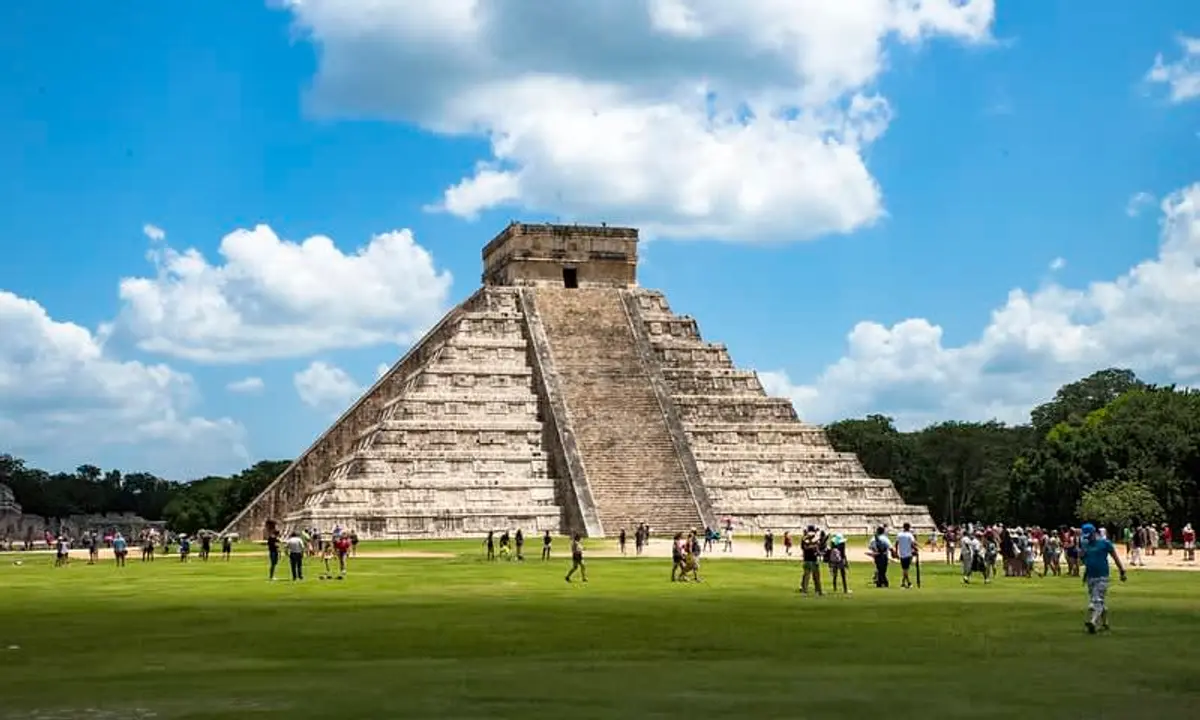
Chichen Itza Guide 2026: Tickets, Hours & Tips
Planning Chichen Itza in 2026 comes down to three decisions: arrive at 8 AM, budget 646 MXN per adult, and allow about three hours to see more than El Castillo. The site is open from 8 AM to 5 PM, with last entry at 4 PM, but Cancún tour buses begin arriving around 10 to 11 AM—so the first two hours are cooler, quieter, and far better for photos.
This Chichen Itza guide covers the practical details that decide whether the day feels remarkable or exhausting: tickets and opening hours, crowd timing, the must-see ruins beyond the pyramid, whether you can climb anything, where to stay, which cenotes to add, and when a tour is actually worth it. The archaeological zone is a pre-Columbian Maya city in the Yucatán Peninsula, built between the 9th and 12th centuries and covering approximately 5 square kilometers. It receives over 2 million visitors per year, making it the most-visited archaeological site in Mexico and one of the most visited in the world.
Chichen Itza Opening Hours 2026 in 30 Seconds
| What you need | Answer |
|---|---|
| Opening hours | 8 AM to 5 PM daily |
| Last entry | 4 PM |
| Best arrival time | 7:45 to 8:15 AM |
| Best crowd window | 8 AM to 10 AM before Cancún and Playa del Carmen buses stack up |
| Adult ticket price | 646 MXN total |
| Night show | Separate evening return, not part of the normal daytime visit |
| Best overnight base | Valladolid |
If you are comparing sources, these are the details that matter most in the current top-ranking results: open time, last entry, first-bus crowd timing, and whether the evening show changes the normal hours. For transport and overnight planning, pair this with our Cancún to Chichen Itza guide, Valladolid travel guide, and cenotes near Chichen Itza.
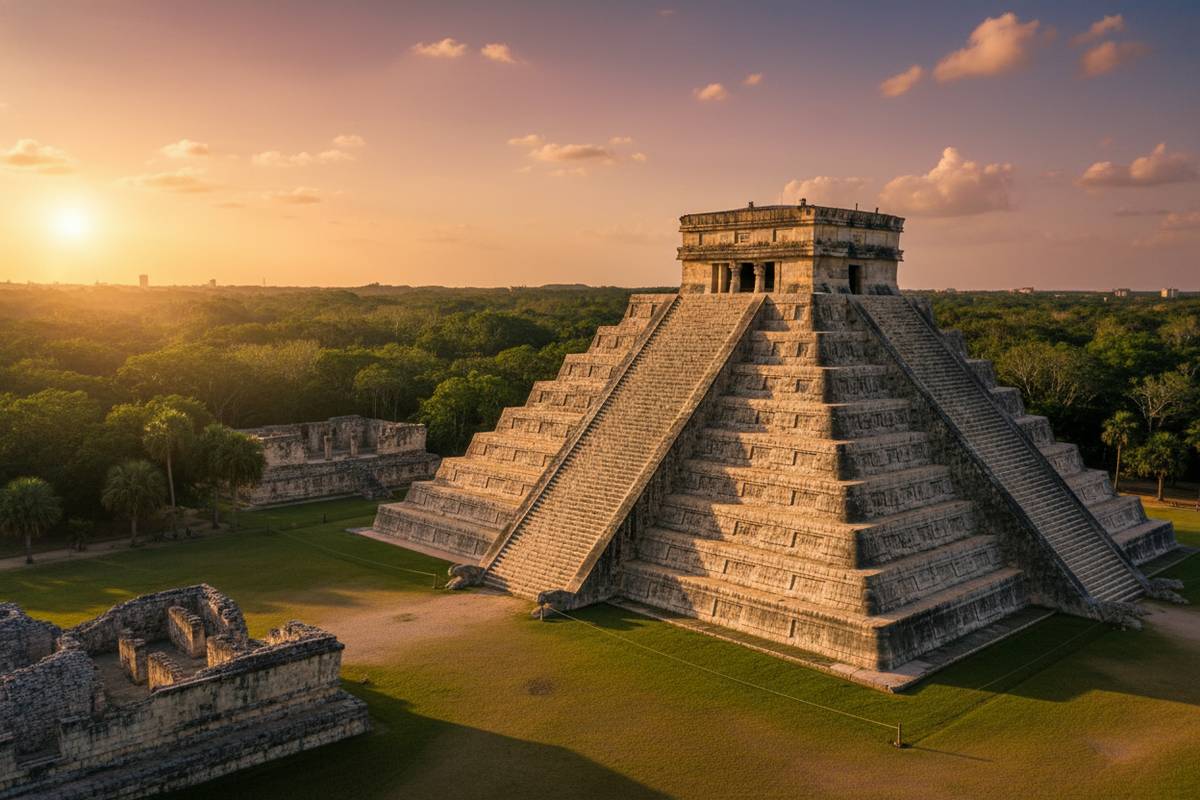
Quick Answer: What You Need to Know Before You Go
If you only need the essentials, here’s the short version:
- Go at 8 AM, not midday.
- Budget 646 MXN per adult for entry in 2026.
- Plan 3 hours inside if you want more than a rushed pyramid photo.
- Do not expect to climb El Castillo because climbing has been banned since 2006.
- Stay in Valladolid if you want the easiest, best-timed visit.
- Add Cenote Ik Kil or Ek Balam after if you want to turn the day into something memorable instead of a long in-and-out bus stop.
For travelers comparing the different site experiences, our things to do at Chichen Itza guide breaks down what is actually worth your time inside the park, and our cenotes near Chichen Itza guide covers the best post-ruins cooldown stops.
Quick Facts
| Location | Tinúm, Yucatán State, Mexico |
| Distance from Cancún | 195 km (2.5–3 hours) |
| Distance from Mérida | 120 km (2 hours) |
| Distance from Valladolid | 43 km (40 minutes) |
| Entry fee | 571 MXN (state) + 75 MXN (INAH federal) = 646 MXN total |
| Opening hours | 8 AM – 5 PM daily (last entry 4 PM) |
| Annual visitors | 2+ million |
| UNESCO designation | 1988 |
| New Seven Wonders | 2007 (global vote) |
| Climbing permitted? | No — El Castillo closed since 2006 |
| Best time to visit | 8 AM, November–February |
| Nearest base | Valladolid (recommended) or Pisté (1 km away) |
Best Chichen Itza Arrival Window by Trip Style
| If you can arrive… | What it feels like | Best for |
|---|---|---|
| 7:45 to 8:15 AM | Short ticket lines, coolest temperatures, cleanest El Castillo photos | First-timers, photographers, anyone driving from Valladolid or Pisté |
| 8:15 to 9:30 AM | Still very manageable, with enough time for the Ball Court and Sacred Cenote before the rush | Self-guided travelers who want the best overall experience |
| 10 AM to noon | Tour-bus crush, hotter walkways, much worse photos | Group tours where you do not control the schedule |
| 3 PM to 4 PM | Better light and easing crowds, but less total time inside before closing | Return visitors or travelers combining the site with another stop |
If you only change one thing about your plan, make it the arrival window. Chichen Itza is a much better site at 8 AM than it is at 11:30 AM.
What Makes Chichen Itza Different From Every Other Maya Ruin
A lot of people arrive expecting to be impressed by a pyramid and leave somewhat disappointed that they couldn’t climb it. The ones who leave genuinely moved understood what they were looking at.
Chichen Itza isn’t just a ruin — it’s an astronomical instrument at urban scale. Every major structure encodes precise astronomical alignments. El Castillo’s 365 steps (91 per staircase × 4 sides + top platform) match the solar calendar. El Caracol’s windows align with Venus’s movements to within fractions of a degree. The Great Ball Court’s acoustics were engineered to carry sound across 168 meters. The Maya built this city with knowledge of celestial mechanics that European astronomers wouldn’t match for another six centuries.
When you understand what you’re looking at, the experience changes.
El Castillo: The Mathematics in Stone
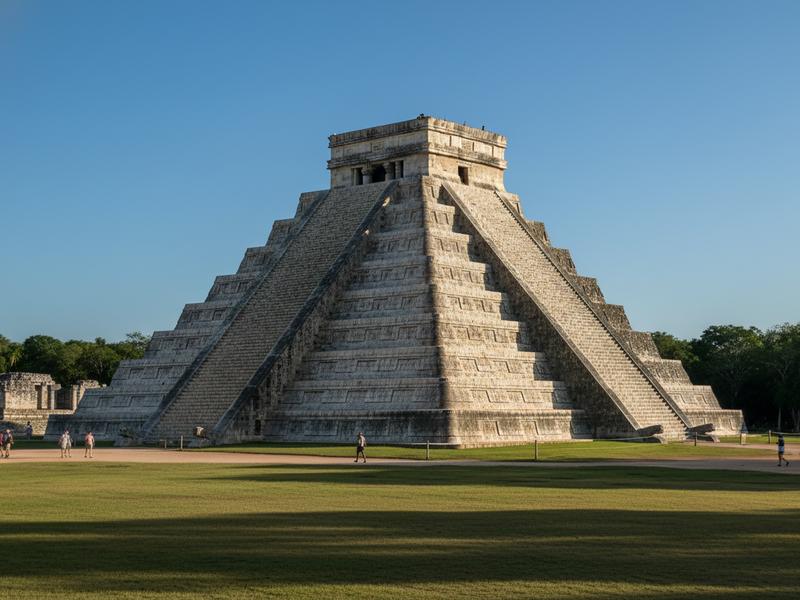
El Castillo (also called the Temple of Kukulcán) is a nine-level stepped pyramid standing 30 meters tall. The math embedded in the structure:
- 4 staircases, each with 91 steps
- 91 × 4 = 364 steps, plus the top platform = 365
- One step per day of the solar year
Each of the nine levels is divided in half by a staircase, creating 18 sections — the number of months in the Haab calendar.
The pyramid is oriented so that at the spring equinox (around March 21) and autumn equinox (around September 21), the setting sun creates triangular shadows on the northwest corner that form the body of a descending feathered serpent (Kukulcán). The shadow moves down the staircase as the sun drops, appearing to connect the serpent’s body in shadow to the carved serpent head at the base.
The accuracy of this alignment required the Maya to understand Earth’s orbital mechanics precisely. They managed it without metal tools, wheels, or a written number system.
You cannot climb El Castillo. The pyramid was closed to visitors in 2006 after a tourist fell to her death. The current experience is a walk around the base — still genuinely impressive, but worth knowing before you go.
The Equinox Crowds Problem — and How to Navigate It
The serpent phenomenon attracts roughly 50,000 people on March 21 and September 21. The site becomes a human traffic jam — you’ll be shoulder-to-shoulder for most of the site, queuing to see anything, and the photography is nearly impossible.
The practical solution: go the week before or after the equinox. The shadow effect is visible (if slightly less perfect) for 4-5 days on either side. On March 15, you’ll have maybe 3,000 people at the site instead of 50,000. You’ll actually be able to look at the structure.
If you must go on the equinox itself, arrive at 7:30 AM before the gates open at 8 AM and get as close to El Castillo as possible before the crowds reach critical mass.
The Other Structures You Shouldn’t Skip
Most visitors spend 90% of their time at El Castillo and rush through everything else. The other structures are remarkable.
The Great Ball Court
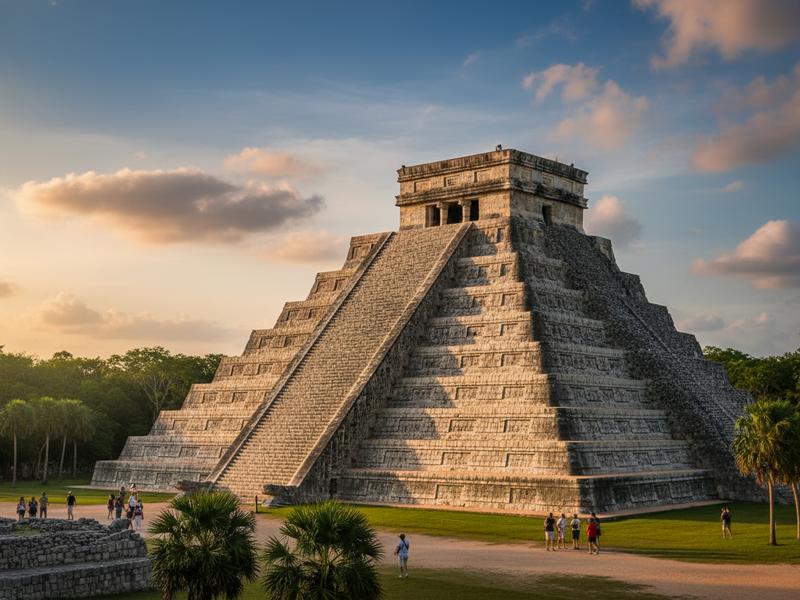
The Great Ball Court is the largest ball court in the Mesoamerican world: 168 meters long, 68 meters wide, with stone walls 8 meters high. Stone rings positioned 8 meters up the walls were the goals in a game archaeologists believe involved passing a rubber ball through the ring using only hips, elbows, and knees.
The acoustic engineering is extraordinary. Stand at one end of the court and speak in a normal voice. Someone at the far end — 168 meters away — can hear you clearly. Clap once and you’ll hear multiple echoes. The Maya designed this deliberately.
Carvings on the court walls depict the decapitation of the losing (or winning — scholars debate this) team captain, blood flowing in serpent form from the neck. The game was part ritual, part politics, part sport.
El Caracol Observatory
The circular tower with spiral interior staircase (the name means “snail” in Spanish) is one of the most sophisticated astronomical observatories in pre-Columbian America. Its windows align with specific celestial events, particularly the movements of Venus, which the Maya tracked to within fractions of a degree.
The Maya calendar system relied on Venus observations. El Caracol let Maya astronomers predict Venus’s appearances years in advance — which carried religious and agricultural significance.
Temple of the Warriors
A stepped pyramid fronted by an enormous colonnade of 1,000 columns — the structure’s common name comes from the warrior figures carved into each column. The temple mirrors Tula’s Pyramid B in central Mexico, suggesting direct cultural exchange between Chichen Itza and the Toltec civilization — a point of significant academic debate about exactly what relationship existed between the two cultures.
The Sacred Cenote
A natural sinkhole 60 meters in diameter, 27 meters deep, used for ceremonial offerings. Divers in the 20th century recovered gold, jade, pottery, and human skeletal remains from the bottom — the skeletal remains included children, suggesting ritual sacrifice. The Cenote is at the end of a causeway (sacbé) leading north from El Castillo.
You cannot swim here. It’s a viewing platform experience only.
The Crowd Problem: How to Actually See Chichen Itza
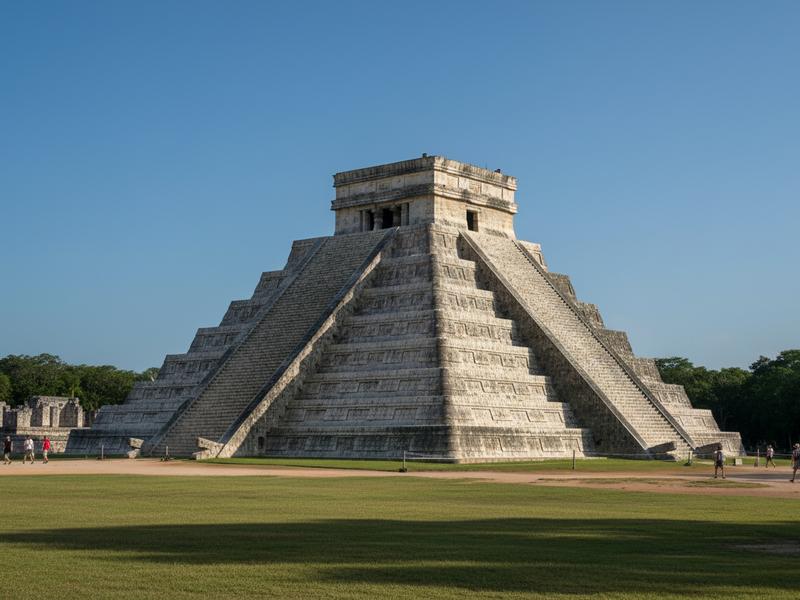
Tour buses from Cancún typically leave around 7-8 AM and arrive at Chichen Itza around 10-11 AM. They bring hundreds of visitors at once, and there are dozens of buses. By 11 AM the site is genuinely difficult to move through.
The solution is simple: arrive at 8 AM when the gates open. This requires either:
- Staying in Valladolid (43km away) — wake up at 7 AM, drive or take the ADO bus, arrive at 8 AM without having left at 4 AM
- Staying in Pisté (1km from the site) — the most convenient but an uninspiring town with nothing to do after the site closes
- Driving from Cancún — feasible but requires a 5 AM departure to arrive at 8 AM
The two-hour window between 8 and 10 AM is genuinely transformative. You can photograph El Castillo without a hundred tourists in frame. You can hear the acoustics of the Ball Court without competing noise. You can read the interpretation signs without a tour group breathing down your neck.
After 11 AM, the heat also becomes a serious factor. Chichen Itza is a completely exposed site — no shade except inside the ball court walls. By noon, temperatures regularly hit 35°C+ (95°F+) with direct sun. By 1 PM, the site becomes genuinely unpleasant.
Pack for the heat: wide-brim hat (ideally white — reflects sun), minimum 2 liters of water, sunscreen SPF 50+. Light-colored long sleeves protect better than tank tops despite the counterintuitive feel.
The 3 most common mistakes first-time visitors make
- Arriving at noon because the weather looks fine. The site is far harsher in direct sun than most people expect.
- Treating it like a one-photo stop. If you skip the Ball Court, Temple of the Warriors, and Sacred Cenote, you miss most of what makes Chichen Itza special.
- Basing yourself in Cancún for a rushed day trip when Valladolid is available. A Valladolid overnight turns the visit from logistical grind into an easy morning outing.
Entry Fees Explained
Two separate fees are collected at two separate booths:
| Fee | Cost | Who collects |
|---|---|---|
| Archaeological zone (state) | 571 MXN | Yucatán State (CULTUR) |
| INAH federal archaeology fee | 75 MXN | INAH (federal) |
| Total per person | 646 MXN (~$32 USD) | — |
| Children under 13 | Free | — |
The 571 MXN state fee includes admission to the evening light and sound show (usually 8 PM), though you must leave and return for it — you can’t stay inside after the 5 PM closing. The show is in Spanish; an English audio device is sometimes available.
Pay at the entrance booth in cash (MXN) or card. There are ATMs at the entrance area.
Note: Avoid the vendor approach starting 300 meters from the site entrance where unofficial “guides” try to charge for entry or tours. Enter only through the official gate.
Parking, guides, and on-site logistics
- Parking: Official parking is available at the archaeological zone entrance. If you’re driving, arrive before 8 AM for the easiest entry and shortest walk.
- Guides: Licensed guides wait near the entrance. A guide can be worth it if you want historical context, but it’s not mandatory if you prefer to move at your own pace with a good written guide.
- Bathrooms and vendors: You’ll find them near the entrance area, not spread evenly across the ruins. Use the facilities before you start the walking loop.
- Accessibility: The terrain is mostly flat but uneven, with long exposed walking sections on limestone paths. It is manageable for many travelers, but midday heat and distance are the real barriers.
Can You Climb the Ruins? The Full Honest Answer
El Castillo: Closed to climbing since 2006. No exceptions.
Cobá ruins (Nohoch Mul pyramid): Still climbable in 2026 — 43 meters, 120 steps, 45 minutes from Tulum. One of the only major Maya pyramids in Mexico where climbing remains permitted.
Ek Balam: The main pyramid is still climbable as of 2026. Ek Balam is 35km north of Valladolid (about 2 hours from Chichen Itza). The views from the top are spectacular, the site sees a fraction of Chichen Itza’s visitors, and the carved figures near the summit are better preserved than almost anything at Chichen Itza.
If climbing is important to your visit, Ek Balam is the answer. See our Ek Balam Ruins Guide 2026 for entry fees, the pyramid climb, cenotes, and transport — or our Yucatán itinerary for combining both in one trip.
Tulum’s El Castillo: Never climbable — it’s on a cliff edge with active conservation work.
Cenote Ik Kil: The Essential Stop After Chichen Itza
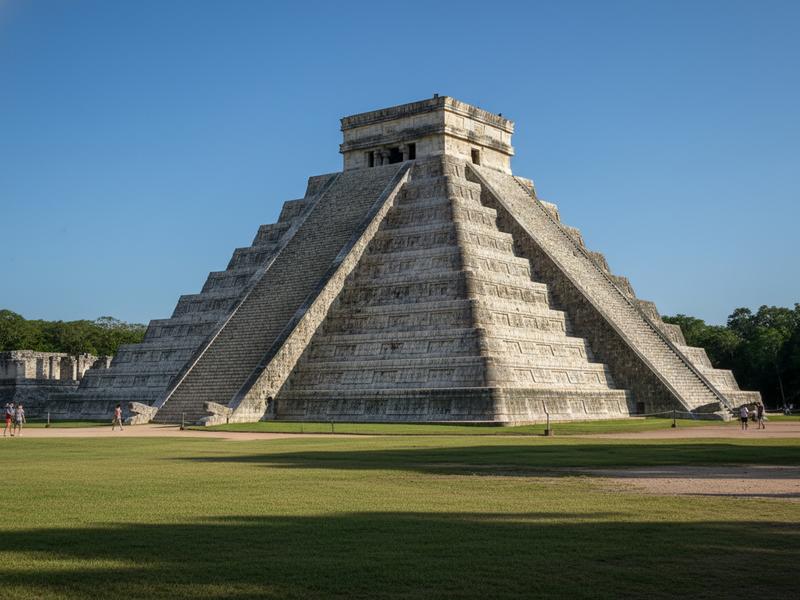
Cenote Ik Kil is 3km east of Chichen Itza on Highway 180. It’s considered one of the most photogenic cenotes in the Yucatán — possibly the most photographed.
The cenote is a circular vertical shaft dropping 25 meters to the water surface, with black vines hanging from the ceiling like a living curtain. The water is 40 meters deep, clear, and cold. You descend via stone steps carved into the rock wall. Swimming is allowed — it feels like swimming inside a cathedral.
Entry: 180 MXN. Locker rental: 30 MXN. Life jackets available.
Crowds: Ik Kil is on every Cancún day-trip itinerary, so it gets crowded at noon when the tour buses leave Chichen Itza. If you’ve arrived at Chichen Itza at 8 AM, you can be at Ik Kil by 10:30-11 AM, before the rush. After noon, the cenote becomes overcrowded and the photography is difficult.
What it’s not: A remote or wilderness cenote. The facilities are full tourist-grade — restaurant, parking lot, souvenir stalls. But the cenote itself is genuinely extraordinary.
For everything about Ik Kil — entry tips, crowd timing, stairs guide, and how to combine it with Valladolid — see our dedicated Cenote Ik Kil guide. For all cenotes in the area including budget options (Yokdzonot 60 MXN) and the hacienda cenote experience, see our cenotes near Chichen Itza guide. For cenotes further afield, see Valladolid cenotes and the broader cenotes near Tulum guide for the full Riviera Maya cenote circuit.
Chichen Itza vs. Other Yucatán Ruins: Which to Visit
| Site | Scale | Climbable? | Crowds | Drive from Cancún | Best For |
|---|---|---|---|---|---|
| Chichen Itza | Enormous | No | Very high | 2.5–3 hrs | First-time visitors, astronomical history, scale |
| Ek Balam | Medium | Yes | Low | 2.5 hrs | Climbing, intimate experience, less-touristed |
| Tulum | Compact | No (cliff) | Very high | 2 hrs | Coastal views, combining with beach days |
| Cobá | Large + jungle | ✅ YES | Medium | 2 hrs from Cancún | Tallest climbable pyramid, jungle views, bike rental |
| Uxmal | Large | Limited | Low | 4 hrs from Cancún, 1 hr from Mérida | Puuc architecture, serious archaeology fans |
If you have one day for ruins and you’re based anywhere in the Yucatán, Chichen Itza. If you have two days, add Ek Balam. If you’re based in Mérida rather than Cancún, Uxmal rivals Chichen Itza in quality and has far smaller crowds.
For the detailed case on each site and how to combine them, see our Mérida day trips guide.
Getting to Chichen Itza
From Cancún
| Method | Duration | Cost | Notes |
|---|---|---|---|
| ADO bus | 3 hours | ~300 MXN | Direct to Pisté (Chichen Itza entrance). Buses depart Cancún ADO terminal from 6 AM. |
| Rental car | 2.5 hours | from $25/day | Most flexible — stop at Ik Kil at your own pace. Compare rental cars for best rates. |
| Organized tour | 3 hours | $60–90 USD | Convenient but you’re on a group schedule with 40 other tourists. Limits morning arrival. |
| Taxi | 2.5 hours | ~1,500 MXN one way | Only makes sense if splitting between 4 people |
Full breakdown of every option with prices, times, and tips: Cancun to Chichen Itza Transport Guide
From Playa del Carmen
PDC is 125km from Chichen Itza — 50km closer than Cancun, making it one of the best bases for the trip. ADO bus (290–350 MXN direct to Pisté), organized tours ($40–120 USD), or rental car (1.5 hrs direct).
Playa del Carmen to Chichen Itza transport guide — all options with prices and the full-day road trip route.
From Mérida
| Method | Duration | Cost | Notes |
|---|---|---|---|
| ADO bus | 2 hours | ~200 MXN | Several daily departures from Mérida CAME terminal. |
| Rental car | 2 hours | from $20/day | Easy highway drive, most flexible. |
| Colectivo | 2–2.5 hours | ~100–120 MXN | From Parque de San Juan in Mérida. Cheaper but slower with stops. |
From Valladolid
| Method | Duration | Cost | Notes |
|---|---|---|---|
| Colectivo | 40–45 minutes | ~40–60 MXN | From Calles 54 & 37 near ADO terminal toward Pisté |
| ADO bus | 40 minutes | ~100 MXN | Multiple daily runs. First bus around 7 AM. |
| Car rental | 40 minutes | — | Simple highway drive, Hwy 180. |
| Taxi | 40 minutes | ~300–400 MXN | Negotiate in advance, ask your hotel. |
Getting from Cancun to Valladolid first? See our Cancun to Valladolid transport guide — bus and Maya Train options, plus the rental car itinerary that covers Chichen Itza + Ek Balam + Valladolid cenotes in a single day. Coming from Mérida? See Mérida to Valladolid — this is the best Chichen Itzá stopover route.
Where to Stay: The Honest Breakdown
Valladolid — Best Choice
43km from Chichen Itza. Colonial city with excellent cenotes, good local restaurants, boutique hotels at reasonable prices ($30–80/night). You can arrive at Chichen Itza at 8 AM by leaving at 7:15 AM. Valladolid also has Ek Balam 30 minutes away, making it the perfect 2-day ruin base.
See our complete Valladolid travel guide and 25 things to do in Valladolid — cenote circuit, Ek Balam strategy, and local food guide.
For cenotes specifically, our Valladolid cenotes guide covers Cenote Zaci, Suytun, Samula, and Dzitnup.
Pisté — Closest, Least Interesting
The village of Pisté is 1km from the site entrance. Accommodations are basic, cheap ($15–40/night), and the town has nothing to do after the ruins close. The advantage is proximity — you can be at the gate at 7:50 AM without an early car trip. For early-morning access without a long drive, Pisté works.
Cancún — Only If You Must
Staying in Cancún and day-tripping to Chichen Itza is the most common approach and the worst experience. You’ll need to leave by 6:30–7 AM to arrive at 8 AM opening, then deal with a 3-hour return drive in afternoon heat and traffic. It works, but a Valladolid overnight produces a fundamentally better visit.
Budget Breakdown
| Item | Cost |
|---|---|
| Entry (state + INAH) | 646 MXN (~$32) |
| ADO from Cancún (round trip) | |
| ADO from Mérida (round trip) | |
| Cenote Ik Kil entry | 180 MXN (~$9) |
| Rental car (Cancún, 1 day) | from $25 USD |
| Budget hotel in Pisté | $15–40/night |
| Hotel in Valladolid | $30–80/night |
| Food at site (basic) | 150–250 MXN |
| Guided tour (Cancún departure) | $60–90 USD |
Total day-trip cost from Cancún: approximately $65–80 USD per person (bus + entry + Ik Kil + food), or $80–100 USD on an organized tour.
Best Time to Visit Chichen Itza
November–February (Best)
Temperatures at the ruins drop to 25–28°C (77–82°F) during the day. Mornings can be genuinely cool. Dry season means no rain delays. This is the peak tourist season for the Yucatán, but Chichen Itza’s crowds are manageable if you arrive at 8 AM.
March–April (Good, Watch the Equinox)
Temperatures rising (30–33°C by April), still relatively dry. March 21 equinox = massive crowds. The week around spring break (mid-March) also brings more US visitors. Otherwise a good time, especially early March.
May–June (Acceptable, Hot)
Heat becomes significant (33–36°C). Rain starts in June. Still manageable with early arrival and shade strategy.
July–August (Avoid)
The combination of 38–40°C heat, high humidity, regular afternoon rain, and peak tourist season makes this the worst time. The ruins offer zero shade and the heat is genuinely dangerous for extended exploration.
September–October (Good Value, Humidity)
September equinox crowds (Sep 21). Otherwise: fewer tourists, lower hotel prices, and the rainy season means brief afternoon showers rather than all-day rain. The best value window for budget travelers who can handle the heat.
Day Trip vs. Overnight: Which Makes More Sense
Day trip from Cancún makes sense if:
- You’re on a 3-4 day Cancún beach trip and want one cultural day
- You’re joining an organized tour (convenient, but on their schedule)
- You have car rental and can leave by 6:30 AM
Overnight (Valladolid base) makes sense if:
- You have 5+ days in the Yucatán and are moving between cities
- You want to add Ek Balam or multiple cenotes
- You want the relaxed 8 AM arrival without a 5 AM wake-up
- You want to experience a genuine colonial Yucatán city beyond beach resorts
The experience gap between a rushed day trip and an unhurried 8 AM visit is significant. If your schedule allows, stay in Valladolid.
Practical Tips: What to Bring
- Wide-brim hat — the single most important item. White reflects heat best.
- 2 liters of water minimum — bring from outside, prices inside are 2-3× normal
- Sunscreen SPF 50+ — reapply every 2 hours
- Comfortable, closed walking shoes — the terrain is uneven stone
- Cash (MXN) — for entry fees, snacks, tips. Card accepted at entrance but cash is safer
- Camera — phones work fine, but a wide-angle lens helps capture the pyramid scale
- Light long-sleeved shirt — counterintuitive but more comfortable than bare arms in direct sun
Dress code: No formal restrictions, but modest clothing (covered shoulders) is recommended for general respect. The site is not a beach.
Tours From Cancún and Mérida
If you’d rather not navigate logistics independently, organized tours from Cancún typically include:
- Transport (air-conditioned bus)
- Guided tour of Chichen Itza
- Stop at Cenote Ik Kil
- Sometimes a buffet lunch
The trade-off: you arrive when the tour bus arrives (usually 10-11 AM, not at 8 AM opening), you move at the group’s pace, and you’re with 40 other tourists. Convenient for first-time visitors with limited time.
Book Chichen Itza tours on Viator — the Cancún departure tours with early morning departures are worth filtering for.
Chichen Itza and the Rest of the Yucatán
Chichen Itza sits at the center of the Yucatán Peninsula’s major attractions. Understanding how it fits into a broader trip:
- Cancún → Chichen Itza: The standard day trip, 2.5–3 hours. Most visitors do this. See our Cancún travel guide for base logistics.
- Chichen Itza → Cancún (return): Bus from Pisté 200–280 MXN, Maya Train direct to CUN T4, or rental car with Cenote Ik Kil and Valladolid stops. See the Chichen Itza to Cancun guide — includes the 3 PM bus timing warning most travelers miss.
- Mérida → Chichen Itza: 2 hours east. Mérida visitors often combine Chichen Itza with Uxmal for a ruins-focused Yucatán loop. See our Mérida travel guide and day trips from Mérida.
- Chichen Itza → Mérida (return): ADO bus 150–200 MXN (1.5 hrs), Maya Train, or rental car with Izamal Yellow City detour. See the Chichen Itza to Merida guide.
- Chichen Itza → Valladolid (return): Colectivo 35-50 MXN (43km, 45 min), ADO bus, or rental car with Cenote Ik Kil stop on the way. See the Chichen Itza to Valladolid guide.
- Valladolid → Chichen Itza: 40 minutes. The best base, as covered above. See our Valladolid guide for hotel and restaurant recommendations in the city.
- Tulum → Chichen Itza: 130km (closer than Cancún). 1.5–2 hours by rental car. See our complete Tulum to Chichen Itza transport guide for Maya Train, colectivo combo, and tour options — plus the 8 AM arrival strategy from the south.
- Chichen Itza → Tulum (return): Rental car (1.5–2 hrs with Ik Kil stop), Maya Train direct, or ADO via PDC. See the Chichen Itza to Tulum guide — includes the no-Uber Tulum arrival plan.
- Playa del Carmen → Chichen Itza: 125km (closer than Cancún). Tours, ADO bus, or rental car with Akumal turtles on the way back. See Playa del Carmen to Chichen Itza guide.
- Chichen Itza → Playa del Carmen (return): Maya Train direct or ADO via Valladolid. No Uber in PDC — plan your arrival. See the Chichen Itza to Playa del Carmen guide.
- Best time to visit the Yucatán overall: See our best time to visit Yucatán guide, which covers the equinox timing, seasonal rain, and how to plan around the major sites.
For a full Yucatán trip structure incorporating Chichen Itza, Ek Balam, Mérida, Tulum, and the cenote circuit, see our Yucatán 7-day itinerary. If you’re still deciding whether this site belongs in your route, our broader Yucatán Peninsula guide helps you compare the peninsula’s main stops in one place.
The Bottom Line
Chichen Itza deserves its reputation as one of the ancient world’s great sites. The problem is that most people experience it badly — arriving at the worst time of day, in the worst heat, with tour groups blocking every view.
The fix is simple: arrive at 8 AM. Stay in Valladolid the night before. Bring water and a hat. Give yourself 3 hours at the site before the heat and crowds arrive. Then drive 3km to Ik Kil and swim in a cenote before anyone from Cancún shows up.
That version of Chichen Itza is worth the trip. The noon-arrival, three-bus-groups-deep, sun-scorched version is survivable but barely memorable.
You get to choose which one you have.
Visiting in March? The spring equinox on March 21 brings 50,000 people — but the same shadow effect is visible with far smaller crowds the week before or after. See the Mexico in March guide for the full equinox strategy, plus Semana Santa and spring break logistics.