Things to Do at Chichen Itza: Best Route
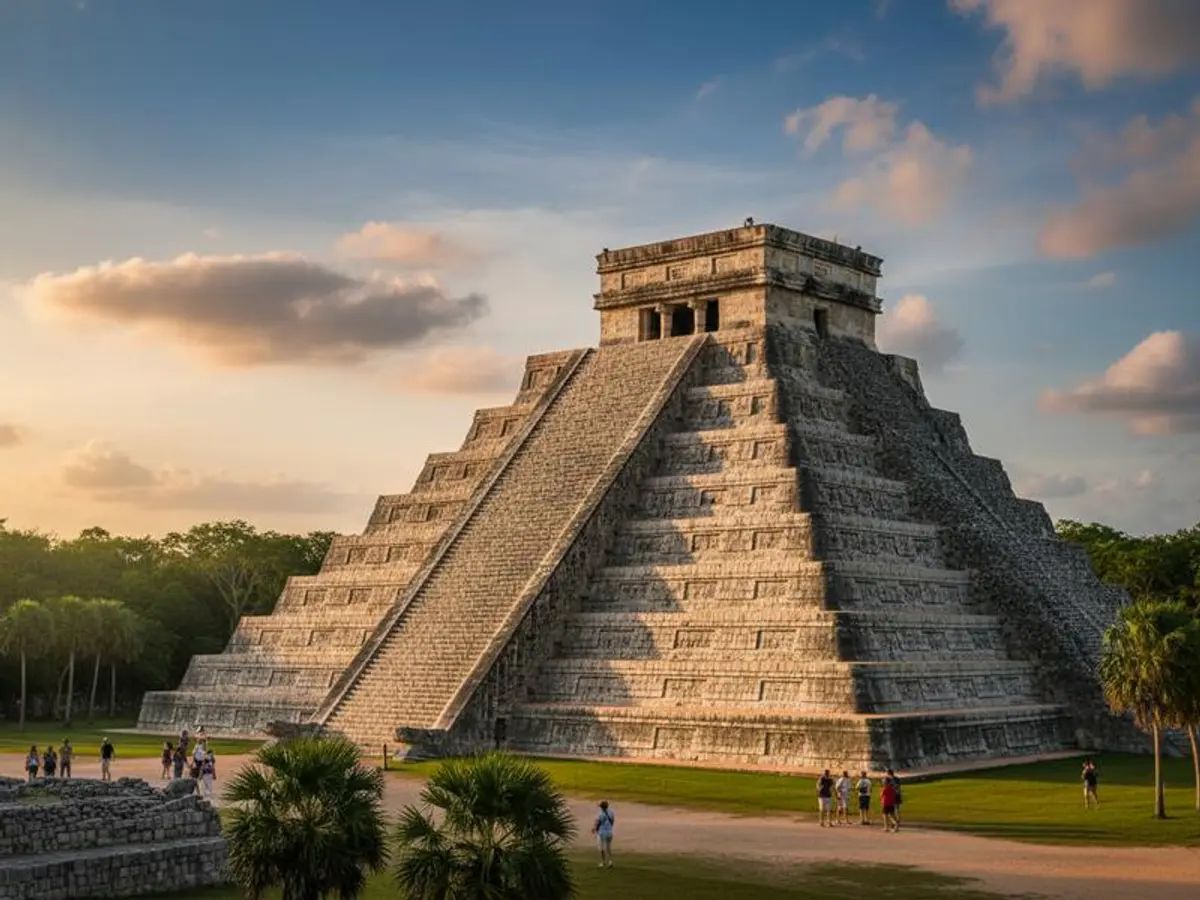
The best things to do at Chichen Itza are easiest when you see them in the right order. Start at 8 AM with El Castillo before the Cancún tour buses arrive, then use the cooler morning hours for the Great Ball Court, El Caracol, the Sacred Cenote, and the quieter carved temples most visitors rush past.
This guide gives you a practical site plan: what to see inside Chichen Itza, how long each stop deserves, current entry-cost expectations, and which cenotes, Valladolid stops, or Ek Balam side trips are worth adding after the ruins.
First: When to Arrive
Chichen Itza opens at 8 AM. Arrive at opening.
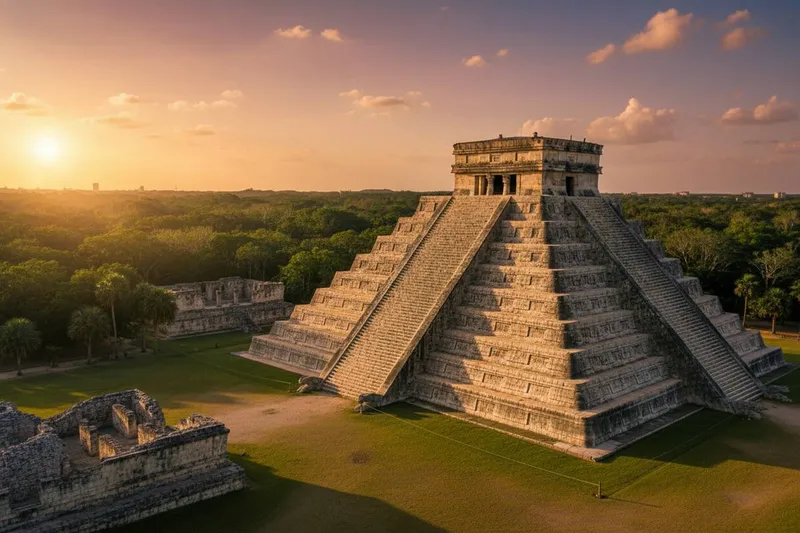
Tour buses from Cancún (3 hours away) typically arrive between 10 and 11 AM. From 10 AM onward, the site becomes significantly more crowded, the heat intensifies, and every main structure has lines of people waiting for photographs. The hours between 8 and 10 AM offer the ruins in low-angled morning light, with the site largely to yourself and howler monkeys occasionally audible from the surrounding jungle.
By noon, the sun is overhead, temperatures regularly exceed 35°C, and shade is limited. Most experienced visitors are leaving by 12:30 PM.
Entry fees: Two separate charges apply:
- Federal INAH fee: 75 MXN per person
- State archaeological zone fee: approximately 571 MXN
Total approximately 646 MXN per person (around 32 USD). Children under 13 free.
Inside the Park: What to See
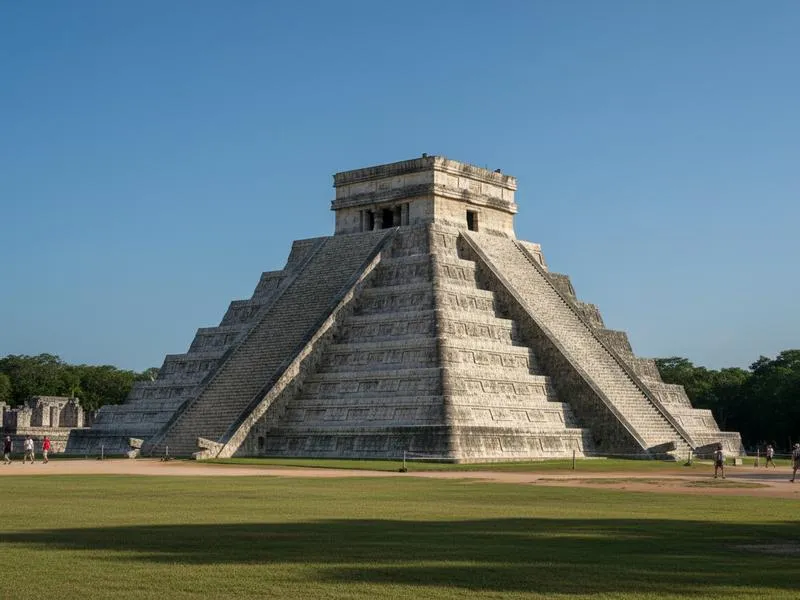
1. El Castillo Pyramid — The Reason You’re Here
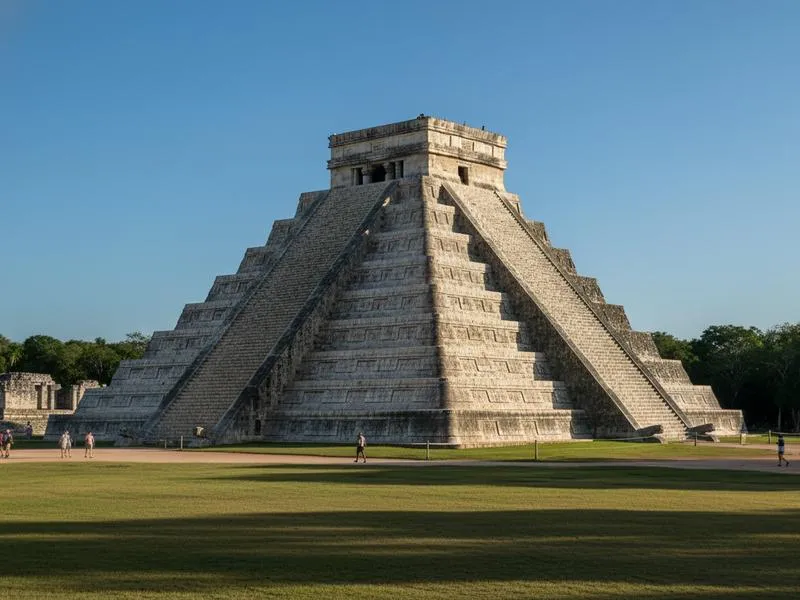
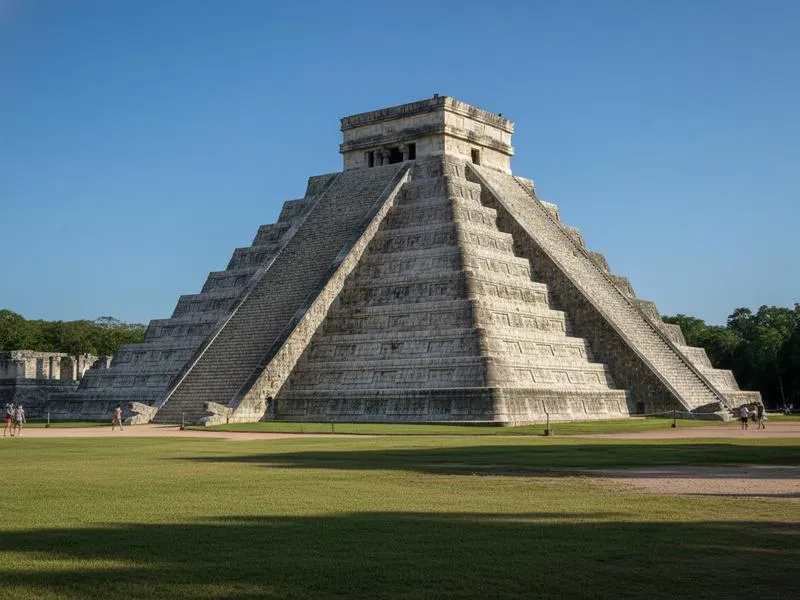
El Castillo (also called the Temple of Kukulcán) is a 30-meter pyramid built in stages between 800 and 1200 AD. You cannot climb it — the steps have been closed since 2006.
What to look for at ground level:
- The feathered serpent heads at the base of the northern staircase — where the equinox shadow terminates
- The construction counting: each of the four staircases has 91 steps, plus 1 shared top platform = 365 total (the solar year)
- The older pyramid inside: El Castillo was built over an earlier structure; a now-closed tunnel once allowed visitors to crawl inside to a red-painted jaguar throne
Walk all four sides before moving on. The western face is usually less photographed and shows erosion patterns that reveal the construction sequence.
2. The Great Ball Court — Acoustics Guide
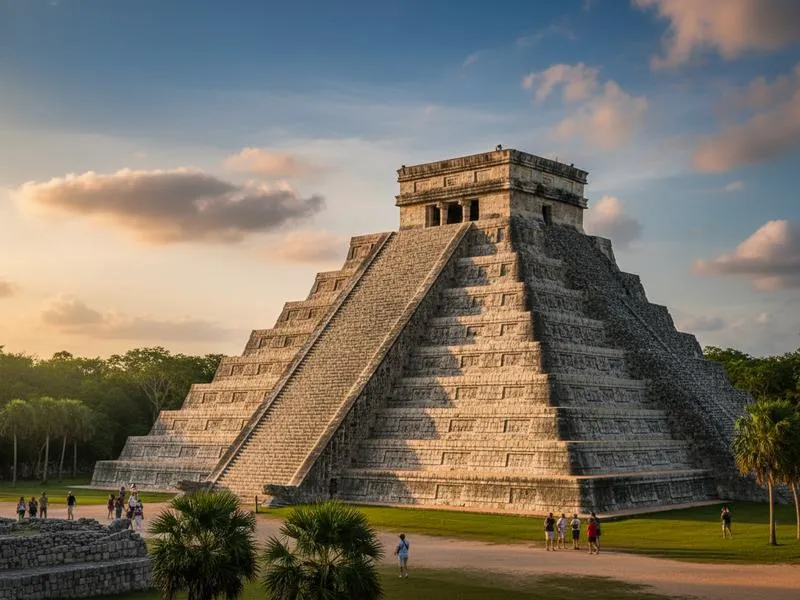
The Great Ball Court is 168 meters long and 70 meters wide — the largest ball court in Mesoamerica. Games here were ritual events, not casual sport. The carved panels on the lower walls show players with serpents emerging from necks where heads have been removed (the decapitation scenes indicate the loser, or in some interpretations the winner, was sacrificed).
The whisper effect: Stand at one end of the court and speak in a normal voice toward the wall. The sound carries through the parallel stone walls and can be heard clearly at the far end, 168 meters away. Clap once and count the echoes — the flat walls create repeated reflections. The acoustics are not accidental; the court was designed for specific sonic effects during ceremonies.
Two stone rings are mounted high on the side walls. Players were required to pass the rubber ball through these rings using only their hips, elbows, and knees — an extraordinarily difficult shot. The game likely lasted hours.
3. El Caracol — Venus Observatory
El Caracol is a circular tower with a spiral internal staircase (caracol means snail in Spanish, referencing the spiral). Built in approximately 900 AD, it served as an astronomical observatory — specifically aligned to track Venus cycles, which the Maya used for agricultural and ritual calendars.
The windows and alignments correspond to Venus’s position at key points in its 584-day synodic cycle. The building looks nothing like the rest of Chichen Itza’s Puuc-influenced architecture — it’s rounder, more unusual, and often overlooked by visitors rushing between the main structures.
4. Sacred Cenote — Skull and Jade Discoveries
The Sacred Cenote is a 60-meter diameter sinkhole connected to the main plaza by a 300-meter sacbe (raised stone road). The cenote is not swimmable — it’s 14 meters straight down to the water surface, then another 13 meters to the bottom.
Archaeological dredging in the early 20th century, funded by Harvard’s Peabody Museum, recovered: skulls of both adults and children (confirming sacrifice), jade masks, gold figures, obsidian blades, copal incense, and wooden objects. The artifacts are now in Harvard’s Peabody Museum and Mexico’s Museo Nacional de Antropología. The Maya considered the cenote a portal to the underworld and made offerings during drought and political crises.
5. Temple of Warriors and Chac Mool
The Temple of Warriors is a stepped pyramid surrounded by the Group of a Thousand Columns. At the summit sits a Chac Mool — a reclining figure with a bowl on its stomach used to receive offerings. The Chac Mool at the Temple of Warriors is the most famous in Mexico, though the original is now in the national museum (the one visible at the summit is a copy).
The approach through the columns gives a strong sense of the site’s scale. Columns that once supported wooden roofs over a market or ceremonial area stretch in rows — the “thousand columns” is hyperbole, but there are hundreds.
6. Platform of Eagles and Jaguars
Between El Castillo and the ball court, this low platform has carved panels alternating eagles and jaguars devouring human hearts. It’s easy to walk past without noticing. Stop and examine the carvings — they’re among the best-preserved detailed stone carvings on the site.
7. The Serpent Shadow — What to Expect vs. Reality
The equinox shadow phenomenon at El Castillo is real but frequently misrepresented in photographs.
What actually happens: On the spring and autumn equinoxes, the triangular shadow from El Castillo’s northwest corner staircase creates a diagonal pattern resembling a serpent body descending toward the carved serpent heads at the staircase base. The effect builds and recedes over about 40 minutes during late afternoon.
What the photos show: Long-exposure or telephoto shots make the shadow appear more dramatically defined than it looks to the naked eye. In person, you need to know what you’re looking for.
When to see it: March 21 (spring equinox) and September 21 (autumn equinox) draw 50,000 visitors each — severe overcrowding, long waits, and difficult sight lines. The effect is nearly identical in the 5–7 days surrounding each equinox, with a fraction of the visitors.
Nearby: What to Do After the Ruins
Most visitors finish the park between 11 AM and 12:30 PM. The afternoon is yours for the following:
Cenote Ik Kil (3km from Park, 180 MXN)
Cenote Ik Kil is 3km east of Chichen Itza on Highway 180. An open cenote (no cave ceiling) 26 meters deep, with a circular opening through which long vines hang to the surface and natural light filters in.
Arrive before 10 AM to enjoy it before tour groups arrive. Entry is 180 MXN and includes swimming. The descent to the water platform takes about 5 minutes via stairs.
The combination of the vines, the circular walls, and the blue water makes this one of the most photographed cenotes in Mexico. It earns the photos in the early morning. By noon, it’s crowded.
Valladolid for Lunch
Valladolid is 43km east of Chichen Itza — about 35 minutes by car. It’s a colonial city with an active food culture and restaurants significantly better than anything in the park’s overpriced restaurant zone.
Where to eat:
- Taberna de los Frailes: good regional Yucatan food (cochinita, sopa de lima) in a colonial setting
- El Mesón del Marqués hotel restaurant: reliable and central
- Mercado Municipal: cheap local food (45–80 MXN for a full meal)
Valladolid also has its own cenotes (Cenote Zací, free to enter and much less crowded than Ik Kil) and a worthwhile main square.
For more, see the Valladolid travel guide and things to do in Valladolid.
Ek Balam — Still Climbable, Far Fewer Tourists
Ek Balam is a Maya archaeological site 43km north of Valladolid (and approximately 43km from Chichen Itza via a different route). Its Acropolis pyramid is still climbable — all the way to the summit at 32 meters — making it one of the only major Maya sites in the Yucatan where you can ascend a large pyramid.
At the summit: a preserved stucco entrance in the form of a monster mouth (winged figures flanking a gaping jaw entrance), detailed human figurines, and a view across the jungle canopy. Entry is 95 MXN.
Ek Balam sees perhaps 200 visitors on a busy day compared to Chichen Itza’s 5,000+. Combining both in a single day is feasible with a car — Chichen Itza 8–11 AM, Cenote Ik Kil, lunch in Valladolid, Ek Balam 2–4 PM.
Cenote Suytun — The Photo
Cenote Suytun near Valladolid has a specific claim: the photograph of a person standing on a submerged walkway in the center of a circular cavern cenote, lit by a single shaft of light from above. That photo is from Suytun.
Entry: approximately 120 MXN. The cenote is in a private property 5km west of Valladolid. It’s a one-activity stop — you go, you see the cavern and the light effect, you leave. 45 minutes total.
The Market at the Park Entrance
The craft market at Chichen Itza’s main entrance is large and aggressive. Sellers approach immediately and prices are high. If you want regional crafts (embroidered textiles, jaguar figurines, obsidian carvings), you’ll find the same items 40–60% cheaper in Valladolid’s market or Mérida’s Mercado Lucas de Gálvez.
If you do buy at the park entrance: make a counter-offer at 40–50% of the asking price and walk away slowly if they don’t meet you. Most sellers will call you back within 5 steps.
Getting There
| Route | Transport | Cost | Time |
|---|---|---|---|
| From Cancún | ADO first-class bus | 180 MXN | 3 hours |
| From Cancún | Maya Train | 360–600 MXN | ~2 hours |
| From Mérida | ADO bus | 120 MXN | 1.5 hours |
| From Mérida | Colectivo (Noreste terminal) | 60 MXN | 1.5–2 hours |
| From Valladolid | Colectivo or ADO | 40–60 MXN | 35–45 min |
| Any route | Rental car | Gas only | Flexible |
From Cancún, ADO departs from the main terminal (Av. Tulum). First buses begin around 7 AM — take the first bus to arrive at the 8 AM opening.
What to Bring
- Water: minimum 1.5 liters per person — the site has no shade between structures
- Sunscreen: SPF 50+ minimum, the open plaza reflects heat
- Cash: for park entry, cenote entry, and market (some vendors accept cards, most don’t)
- Comfortable shoes: the ground is uneven stone
- Insect repellent: particularly useful in the wet season (May–October)
How to Buy Tickets
Tickets are sold at the park entrance — no advance online booking required (as of 2026). Lines at the booths open quickly at 8 AM. Two separate booths: the INAH federal fee booth and the state ticket booth. Pay both before entering.
Full Itinerary: Best Day at Chichen Itza
7:00 AM — Depart from Cancún or Mérida
8:00 AM — Enter Chichen Itza at opening
8:00–10:00 AM — El Castillo, Ball Court, El Caracol, Sacred Cenote, Temple of Warriors
10:00–11:00 AM — Remaining structures (Platform of Eagles, etc.)
11:00 AM — Exit before main tour group peak
11:30 AM — Cenote Ik Kil (avoid if arriving after 10:30 AM — go early or skip)
12:30 PM — Drive to Valladolid for lunch
2:00–4:00 PM — Ek Balam ruins (still climbable)
4:30 PM — Cenote Suytun (optional, 45 min)
5:30 PM — Return to Cancún or Mérida, or overnight in Valladolid
Tours from Chichen Itza
Organized tours from Cancún and Mérida typically combine Chichen Itza with Cenote Ik Kil in a single day. If you’re without a car, a guided tour handles logistics efficiently:
Browse Chichen Itza Tours on Viator →For travel insurance across Mexico, travel insurance covers medical costs if anything goes wrong.
Plan Your Visit
Read first:
- Complete Chichen Itza Guide — entry fees, hours, equinox dates, where to stay
- Valladolid Travel Guide — the best base for a Chichen Itza visit
- Things to Do in Valladolid — full Valladolid activities
- Best Time to Visit Yucatan — weather, crowds, seasonal guide
- Cancún to Chichen Itza — transport options and logistics
- Cenotes Near Chichen Itza — Ik Kil plus 6 alternatives ranked by price and experience
Chichen Itza rewards preparation. The visitors who get the most from it are those who arrive at 8 AM, know what they’re looking at before they get there, and leave by noon. The visitors who get the least are those who show up at 11 AM with a tour group and spend 45 minutes walking past structures they can’t identify.
The Ball Court acoustic demonstration alone is worth the early start.