Cancun Travel Guide 2026: Best Areas, Beaches & Costs
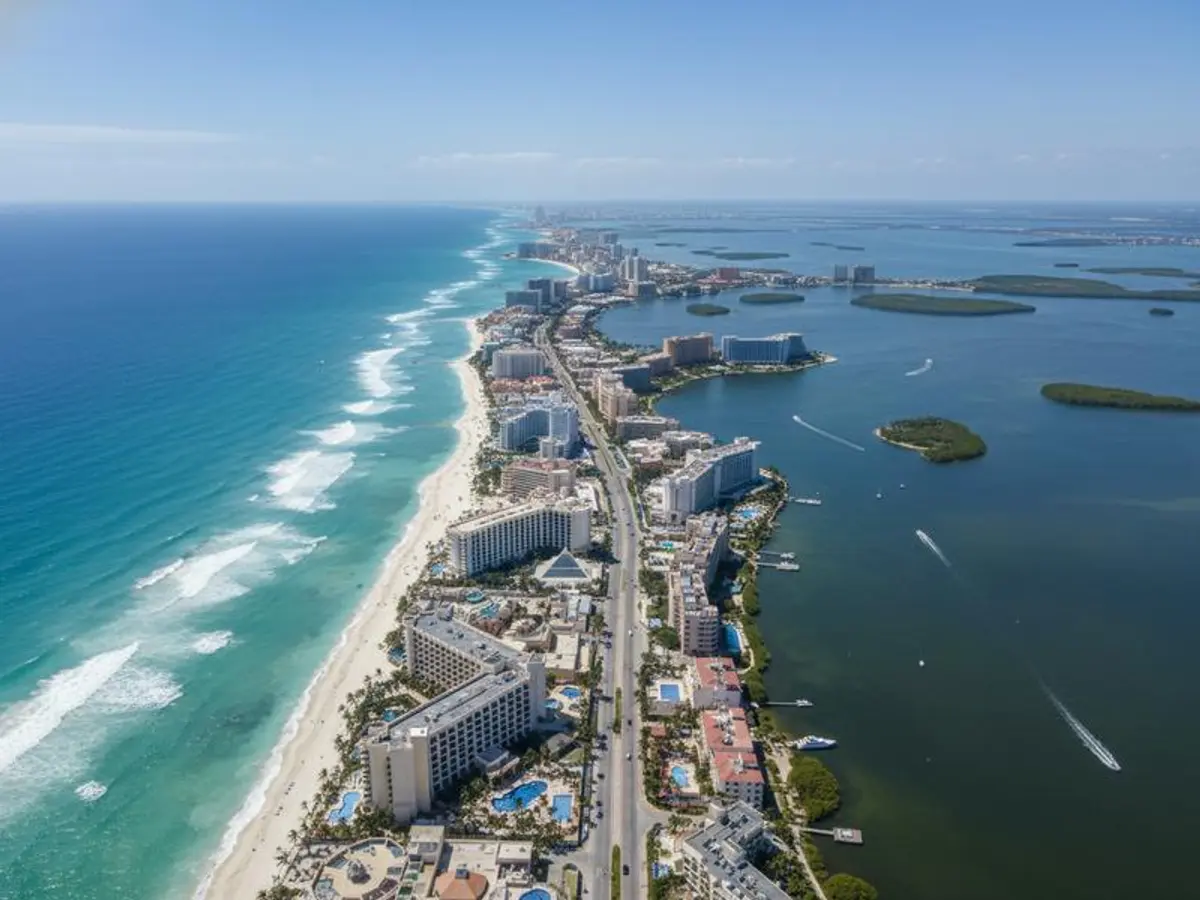
Cancún is a Caribbean coastal city in Quintana Roo, Mexico, on the northeastern Yucatan Peninsula — 1,700 km southeast of Mexico City. With approximately 900,000 residents and Mexico’s second-busiest international airport (CUN), it receives over 6 million visitors annually, making it the country’s most-visited beach destination.
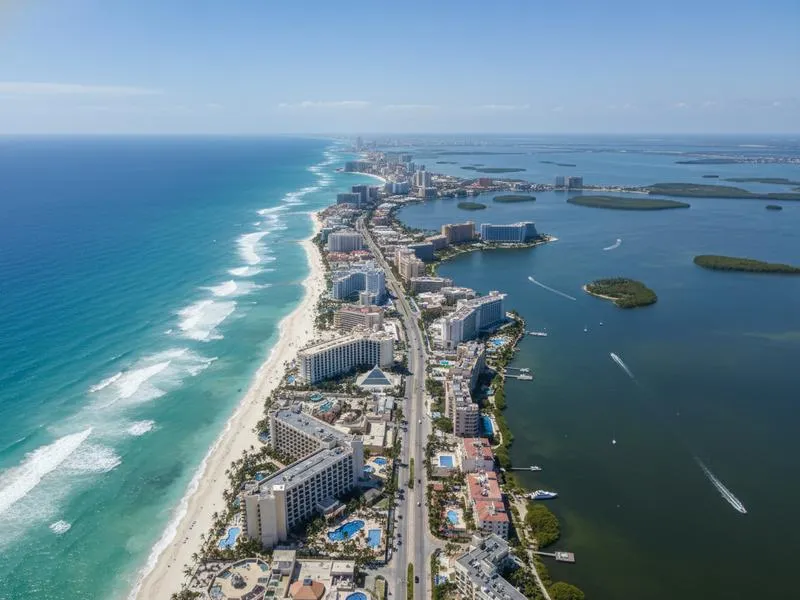
Cancun is two completely different places. There’s the Zona Hotelera — a 22-kilometer hotel strip on a sand bar between the Caribbean Sea and a lagoon, with all-inclusive resorts, spring break clubs, and a Walmart. And then there’s El Centro, the actual Mexican city of 900,000 people who cook your food, operate your tours, and go home to colonia Superanzanas at the end of their shift.
Most travelers see the first one. The best trips find the second.
This guide covers both. Whether you’re choosing between an all-inclusive or a boutique guesthouse downtown, trying to figure out the sargassum situation, or planning the Chichen Itza trip that most guides get wrong, this is what you actually need to know. For a deep dive on all-inclusive options across all of Mexico’s beach zones, see our Best All-Inclusive Resorts in Mexico 2026 guide.
30-Second Answer
| If you want… | Best Cancun choice |
|---|---|
| First trip with easy beach access | Stay in the Hotel Zone, especially the north or central section |
| Lower costs and better local food | Stay downtown Cancun and use the R1/R2 bus |
| Cleaner-water odds in sargassum season | Prioritize the north Hotel Zone, Isla Mujeres, or Cozumel day trips |
| Best overall weather | Visit December to April |
| Best-value shoulder season | Aim for May or late October to November |
| Best Cancun day trip | Isla Mujeres for a simple beach day, Chichen Itza for a big landmark, Puerto Morelos for a quieter beach alternative |
My honest take: Cancun works best when you choose the right base for your trip. Stay in the Hotel Zone if this is a beach-first vacation, stay downtown if you care more about price and food, and do not book blindly on the far south end in summer if sargassum will ruin the trip for you. If that is your concern, start with our Best Time to Visit Cancun, Cancun All-Inclusive Resorts, and Cancun Airport Transportation guides.
Cancun Quick Facts
| State | Quintana Roo |
| Airport | Cancun International (CUN) — Mexico’s second-busiest |
| Population | ~900,000 (city proper) |
| Time zone | UTC-5 year-round (Eastern Standard Time, no DST) |
| Currency | Mexican peso (MXN). USD widely accepted in Hotel Zone — but you’ll get worse exchange rates. |
| Language | Spanish. Extensive English in tourist areas. |
| Best beach season | December–April (dry, low sargassum) |
| Hurricane season | June–November (peak risk September–October) |
| Whale shark season | June–September (Holbox, 2.5 hours from Cancun) |
| Sea turtle nesting | May–October (Playa Delfines and beaches south of Hotel Zone) |
| US State Dept. rating | Level 2 — Exercise Increased Caution |
Getting to Cancun
By Air
Cancun International Airport (CUN) is Mexico’s second-busiest airport — you likely fly here directly from wherever you are. Direct routes operate from:
- USA: New York, Miami, Los Angeles, Chicago, Dallas, Houston, Atlanta, Denver, and 30+ more cities
- Canada: Toronto, Montreal, Vancouver, Calgary, Edmonton
- Europe: London, Madrid, Amsterdam (seasonal charters)
- Mexico City: 2 hours direct (Aeroméxico, Volaris, VivaAerobus, multiple daily) — see Mexico City to Cancun guide | Cancun to Mexico City guide
From the Airport to the Hotel Zone
| Option | Cost | Time | Notes |
|---|---|---|---|
| ADO bus | Check current fare | Varies | Service to Cancun city; continue to your hotel by local bus or taxi |
| Authorized airport taxi | Confirm before paying | About 25 min | Buy from an authorized airport provider |
| Uber app | Check live availability | Varies | Product and pickup point can vary; the app may offer a licensed taxi |
| Prebooked private transfer | Confirm when booking | About 25 min | Door-to-door; useful for groups or late arrivals |
| Shared shuttle | Confirm when booking | 45+ min | Shared van with multiple hotel stops |
The ADO bus is useful for travelers who are comfortable making an onward connection from Cancun city. If you want door-to-door service, compare an authorized airport taxi with a prebooked transfer. After landing, check the Uber app for the product and pickup point currently available rather than relying on a fixed pickup workaround.
→ Full breakdown: Cancun Airport Transportation 2026: All Options, Prices & The Taxi Scam to Avoid
Cancun’s Two Zones
The Hotel Zone (Zona Hotelera)
A thin peninsula — 22 km long, sometimes only 400 meters wide — connected to the mainland at each end. The Caribbean Sea on the east. Laguna Nichupté on the west. Every major resort sits somewhere on this strip, organized by kilometer markers (Km 1 at the north, Km 22 at the south tip, Punta Nizuc).
The Hotel Zone has: pristine Caribbean beaches, all-inclusive resorts, beach clubs, a mall (La Isla), a WalMart, the ruins of San Miguelito (yes, inside a shopping mall), and the party zones at Km 9. It does not have: authentic Mexican food, affordable restaurants, local character, or a sense of place that’s specific to Mexico.
Downtown Cancun (El Centro)
The grid-pattern city on the mainland. Supermarkets where locals shop, markets, taco stands where a plate of cochinita pibil with rice and tortillas costs 80 MXN ($4), and buses connecting everything. Several neighborhoods warrant exploration: Parque Las Palapas (the main square, with street food and weekend events), Mercado 28 (the craft market — better prices than Hotel Zone boutiques), and Avenida Yaxchilán (the main commercial strip, good for budget restaurants).
The divide is real: a taxi from El Centro to the Hotel Zone costs 150–200 MXN. Many budget travelers stay downtown and commute by the R1/R2 bus (15 MXN, runs the entire Hotel Zone strip).
Cancun’s Best Beaches
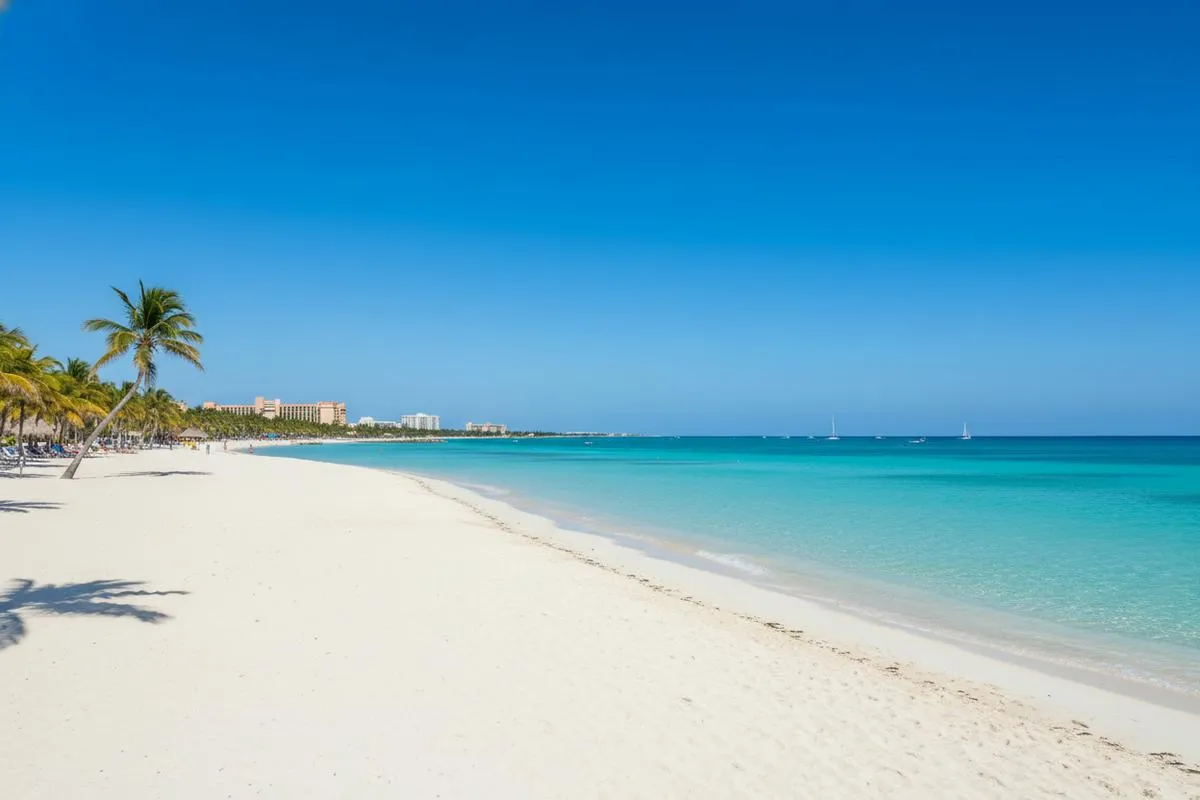
The Hotel Zone beaches face two different waters. The north-facing beaches (Playa Tortugas, Playa Langosta) face Bahía de Mujeres — calmer, protected, good for swimming. The east-facing beaches (Playa Delfines, Playa Marlin) face the open Caribbean — more wave action, more dramatic, and more prone to sargassum arrivals.
Playa Tortugas (Km 6–7)
The most social beach on the Hotel Zone’s north end. Beach clubs, volleyball, relatively calm water. Near the ferry terminal to Isla Mujeres. Popular with locals on weekends.
Playa Langosta (Km 5)
Calmer than Delfines, good for families with small kids. Less crowded than Tortugas. Backed by mid-range resorts.
Playa Marlin (Km 9–12)
The long central strip of the Hotel Zone. Where most large resorts sit. Broader beach, more waves, more people. The most photogenic stretch in good conditions.
Playa Delfines (Km 17–18)
The most photographed beach — the famous “Cancun” sign is here. Widest beach, biggest waves, and the most public beach in the zone (free access, large public parking). Also the beach most affected by sargassum when it arrives, but also the most dramatic when it’s clean. Sea turtles nest here May–October — nesting areas are cordoned off by volunteers.
Puerto Morelos (40 km south)
The best beach option near Cancun that most tourists miss. A sleepy fishing village on the edge of the Mesoamerican Barrier Reef — the second largest reef system in the world. Swimming with fish in calm, protected waters, a fraction of the crowds, and the genuine Mexican fishing village atmosphere Cancun once had. 45 minutes by ADO bus or colectivo ($2 USD). Full Puerto Morelos guide →
Top Things to Do in Cancun
For a full ranked list of all 30 activities — from MUSA snorkeling and Laguna Nichupté kayaking to Isla Contoy and the honest nightlife guide — see Things to Do in Cancun 2026.
San Miguelito Archaeological Zone (Free with Hotel Zone access)
Yes, there are actual Maya ruins inside the Hotel Zone — right next to a shopping mall. The San Miguelito site has 10 structures from the Post-Classic period (900–1200 CE), including a pyramid you can walk around. The adjacent Museo Maya de Cancun ($70 MXN) has one of the best Maya artifact collections in the Yucatan. Most tourists walk past it on the way to the beach. Don’t be most tourists.
Isla Mujeres Day Trip
The 25-minute ferry from Puerto Juárez (Hotel Zone north end) drops you on an island small enough to explore by golf cart ($15/hour rental). Playa Norte ranks as one of the most consistently beautiful beaches in Mexico — flat calm, turquoise, no sargassum problem due to the island’s position. Downtown has great fresh seafood and lobster restaurants. A perfect full-day escape from the resort strip. Isla Mujeres full guide → | Ferry prices & schedule →
Cenotes
The Yucatan Peninsula sits on a limestone plateau with no rivers — instead, the entire region drains through underground cave systems. Where the cave ceilings collapse, you get cenotes — sinkholes filled with crystalline fresh water. The nearest cenotes to Cancun are 45–90 minutes south (near Puerto Morelos, Tulum, and Valladolid). Best cenotes near Cancun → — 10 spots ranked from 25km to 195km away
Cenote Dos Ojos (near Tulum, 2 hours south): A cave diving system with surreal underwater geology. Full guide →
Cenotes near Valladolid (2 hours from Cancun): Cenote Zaci (in the city center, cheap, atmospheric) and Cenote Ik Kil (near Chichen Itza, the Instagram cenote with hanging roots).
Before swimming: Shower first and follow the rule posted by that cenote or protected area. Policies vary, and some operators prohibit all sunscreen immediately before entering the water; there is no single rule that applies to every cenote.
Punta Nizuc Reef (Km 22)
The southern tip of the Hotel Zone sits at the northern end of the Mesoamerican Barrier Reef — the same reef that runs all the way to Honduras. Snorkeling here means swimming alongside parrotfish, queen angelfish, sea turtles, and eagle rays in clear Caribbean water. The reef is accessible from the beach via watersports rental or tours. Punta Nizuc full guide →
Whale Sharks (June–September)
From June through September, the world’s largest congregation of whale sharks gathers in the open ocean north of Holbox and Isla Mujeres to feed on fish eggs. Cancun-based tour operators run whale shark tours daily ($130–180 USD, including lunch, snorkel gear, and the Isla Contoy stop). You swim alongside sharks up to 12 meters long — an experience unlike anything else in Mexico.
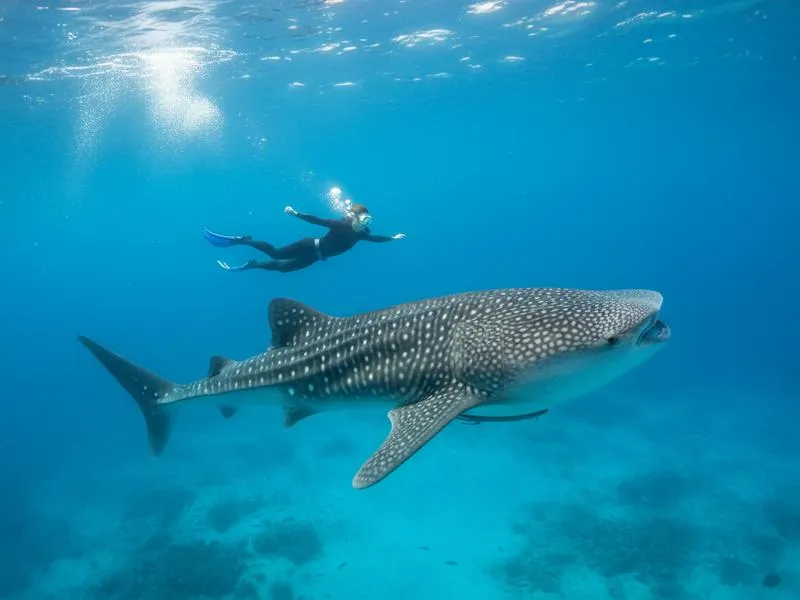
This is one of the genuine wildlife spectacles of the Western Hemisphere. Before booking, use our Mexico whale shark guide to compare Cancun, Isla Mujeres, Holbox, and La Paz seasons and tour rules. If you’re visiting June–September, book in advance — browse Cancun whale shark tours on Viator. Isla Contoy full guide →
Xcaret, Xel-Ha, and Xplor (The X Parks)
The X Parks are ecotourism mega-attractions — expensive ($80–130 USD per day), but comprehensively done. Xcaret combines an underwater river snorkel, Mayan ruins, a beach, a butterfly pavilion, a flamingo lagoon, and a nightly cultural show. Xel-Ha is a natural inlet turned giant snorkeling park. Xplor is zip lines, underground cave rafting, and amphibious vehicles.
They’re touristy, yes. They’re also genuinely impressive experiences if you have kids or want everything in one place. Book directly on their websites for 15–20% discounts over third-party booking sites.
The Sargassum Question
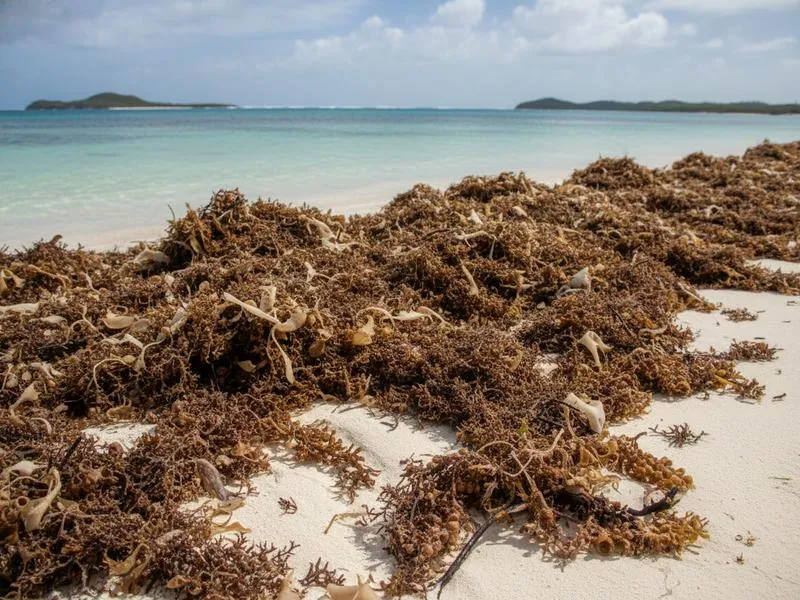
Every traveler researching Cancun eventually hits this question: will there be seaweed on the beach?
The honest answer: it depends on timing and luck.
Sargassum is brown algae that blooms in the Sargasso Sea and drifts west into the Caribbean on seasonal currents. The Atlantic-Caribbean region gets it; Pacific beaches (Puerto Vallarta, Mazatlán, Los Cabos) don’t. Here’s what you need to know:
| Season | Sargassum Risk |
|---|---|
| December–February | Low — best odds of clear beaches |
| March–April | Low to moderate |
| May | Moderate — arrivals increase |
| June–September | Highest risk — daily arrivals possible |
| October–November | Moderate — beginning to decline |
Which Cancun beaches fare better:
- North-facing Hotel Zone beaches (Tortugas, Langosta) get less sargassum than east-facing ones (Delfines, Marlin)
- Hotels at Km 1–7 (north tip) are generally cleaner than Km 15–22 (south)
- Hotel Zone hotels have daily sargassum removal crews — private beach fronts are usually cleared by 8 AM
- Public beaches (Delfines especially) are the last to be cleaned
What actually helps: UNAM publishes a sargassum early-warning forecast (mexsea.io) updated every 72 hours. Check it the week before you travel. If June–September is your only option, book a hotel on the north Hotel Zone and build a cenote day or Valladolid trip into your itinerary for when the beach is messy.
Day Trips from Cancun
Cancun’s location makes it one of Mexico’s best bases for day trips. Everything within a 2.5-hour radius is extraordinary. See our complete day trips from Cancun guide for all 15 options ranked by effort, cost, and value — including which ones are actually worth doing without a tour.
Chichen Itza (2.5 hours, ADO bus or car)
The most visited archaeological site in Mexico — one of the New Seven Wonders of the World. El Castillo (the Pyramid of Kukulcán) is the most photographed structure in Mexico. The UNESCO site covers 6.5 km² with a ball court (the largest in Mesoamerica), the Temple of the Warriors, the Sacred Cenote, and dozens of other structures. See our complete Chichen Itza guide for entry fees, crowd strategy, and whether to do a day trip or stay in Valladolid instead.
The critical logistics point: Chichen Itza gets 3,000+ tourists by midday. Go early. Full guide: Cancun to Chichen Itza — every transport option compared →
- ADO direct bus departs Cancun at 8:30 AM — buy tickets online
- By car: depart by 7 AM, arrive for opening (8 AM) before tour buses from Cancun and Playa del Carmen
- Best months to visit: November–February (cooler, less humidity)
- Entry: 614 MXN ($30 USD) for foreigners + Quintana Roo state fee
- The equinox serpent shadow effect (March 21 and September 21) draws 50,000+ visitors — book 6 months ahead for equinox visits
Stop in Valladolid on the way back: This colonial city 45 minutes east of Chichen Itza has the beautiful Cenote Zaci (right in the city center), excellent regional food, and a historic main plaza. Most Cancun tours skip it. You shouldn’t. Complete Valladolid travel guide → | 25 things to do in Valladolid →
Tulum (2 hours south)
The only Maya ruins on a cliff above the Caribbean — the view alone makes the trip worthwhile. The site is smaller than Chichen Itza or Coba, but the coastal setting is unique. Tulum town (5 km inland) has expanded dramatically; the famous beachfront hotels are increasingly expensive. Day trip from Cancun = ruins + cenote (Cenote Dos Ojos or Gran Cenote) + beach lunch. Complete Tulum travel guide → | How to get from Cancun to Tulum (all 6 options) →
Holbox Island (2.5 hours north)
Drive or take a colectivo to Chiquila, then a 20-minute ferry to Holbox. No cars, sand streets, hammocks over turquoise water, and the best flamingo watching in the region. June–September: whale shark tours depart daily. The island has exploded in popularity since 2019 — book accommodation months in advance.
Coba (2.5 hours south)
Coba has the tallest pyramid in the Yucatan (42 meters) — and unlike Chichen Itza, you can still climb it (as of 2026, though access is limited and changes). Deep jungle setting, less visited than Chichen Itza, connected by raised Maya causeways (sacbés). Combine with a cenote at the nearby Reserva de la Biosfera Sian Ka’an for a full day.
Cozumel (ferry from Playa del Carmen — 1.5 hours total)
Cozumel sits on top of the Mesoamerican Barrier Reef — the second-largest coral reef system on earth. The dive and snorkel sites here (Palancar Reef, Santa Rosa Wall, Columbia Wall) are among the best in the Caribbean. The west coast never gets sargassum, making it a reliable alternative when Cancun and PDC beaches are affected. From Cancun: ADO bus to Playa del Carmen (60-70 min, 232 MXN) + ferry to Cozumel (35-45 min, 250 MXN). Complete Cozumel travel guide →
Isla Contoy (1 hour by boat from Puerto Juárez)
A protected biosphere reserve — the nesting ground for frigatebirds, boobies, pelicans, and over 150 bird species. Only 200 tourists permitted per day. Combine with whale shark snorkeling in whale shark season. Isla Contoy guide →
Food in Cancun
Hotel Zone Reality
The Hotel Zone has decent food options but charges 3–5x what the same food costs downtown. A fish taco plate at a beachfront club: 300 MXN. The same plate at a market in El Centro: 80 MXN. If you’re staying all-inclusive, this doesn’t matter. If you’re not, factor it in.
Where to Eat Like a Local
El Centro (Downtown):
- Mercado 23: A working market — fresh produce, juice stalls, and food stands serving Yucatecan dishes. Very local, very cheap.
- Parque Las Palapas: The main plaza becomes a food market on evenings and weekends — elotes, tlayudas, aguas frescas, churros, and street antojitos.
- Avenida Yaxchilán: The main restaurant strip. Mix of chains and local spots. Look for places with handwritten menus on chalkboards — they’re usually better than the laminated ones.
Regional food to eat in Cancun:
- Cochinita pibil: Slow-roasted pork marinated in achiote and bitter orange — the Yucatan’s signature dish. Order it in tacos or as a plate. Look for places that make it fresh, not out of a steam tray.
- Poc chuc: Grilled Yucatecan pork, marinated in citrus and spices. Usually served with pickled onions and black beans.
- Fish tacos: In the Hotel Zone, these are usually deep-fried. Look for grilled (asado) versions. The best fish tacos near Cancun are actually in Puerto Morelos — the fishing village has fresh catch daily.
- Ceviches and mariscos: Cancun’s position on the Caribbean means excellent fresh seafood. Avoid the hotel zone ceviche (overpriced, often not fresh) — go to the marisquerías in El Centro.
For the complete dish-by-dish breakdown with prices and specific restaurant names, see our what to eat in Cancun guide.
Wildlife Calendar
| Activity | Best Time | Distance from Cancun |
|---|---|---|
| Whale sharks | June–September | 2.5 hours (Holbox) |
| Sea turtle nesting | May–October | Playa Delfines (Hotel Zone) |
| Sea turtle hatching | August–November | Hotel Zone beaches |
| Flamingos | Year-round | Celestun: 4.5 hours (day trip) |
| Frigatebirds & seabirds | Year-round | Isla Contoy: 1 hour by boat |
| Bull shark diving | November–March | Playa del Carmen: 1 hour south |
Where to Stay in Cancun
Hotel Zone — All-Inclusive Resorts
The dominant option. Prices include food, drinks, and usually a beach club. Quality varies enormously. In general: the mega-resorts (Moon Palace, Riu, Barceló) offer the best value per dollar because economies of scale lower costs. Boutique all-inclusives charge more for similar quality.
When all-inclusive makes sense: You’re traveling with kids, you value predictable costs, you want to not think about meals, or you’re visiting primarily to be on the beach.
When it doesn’t: You want to explore Cancun, take day trips, try local food, or you’re on a tight budget.
Best area by travel style
| Travel style | Best base | Why |
|---|---|---|
| First-timers who want easy beach logistics | North or central Hotel Zone | Best bus access, swimmable beaches, easiest restaurant and ferry connections |
| All-inclusive couples trip | Central to south Hotel Zone | Biggest resort selection and strongest resort-beach feel |
| Budget trip | Downtown Cancun | Far cheaper rooms and food, easy R1/R2 bus access |
| Quieter beach stay near the airport | Puerto Morelos | Smaller scale, reef access, less resort-strip feel |
| Trip built around day trips | Downtown Cancun or north Hotel Zone | Easier early departures for ferries, ADO, and pickup tours |
| Budget tier | Type | Avg nightly rate |
|---|---|---|
| Budget | Downtown guesthouses / Hotel Zone budget hotels | $30–60 USD |
| Mid-range | Hotel Zone 3-star, downtown boutique hotels | $80–150 USD |
| Mid-range all-inclusive | Hotel Zone (Riu, Barceló, Iberostar mid-tier) | $120–200 USD/night/person |
| Luxury all-inclusive | Grand Palladium, Moon Palace, Hyatt Ziva | $250–500 USD/night/person |
Downtown (El Centro)
Guesthouses and budget hotels at 30–60% of Hotel Zone prices. 20-minute R1 bus to the Hotel Zone. Best for: travelers who want to explore the Yucatan beyond the beach strip, solo travelers, budget travelers, and anyone staying more than 5 days.
Puerto Morelos (40 minutes south)
A genuine alternative to the Hotel Zone. Small hotels and boutique guesthouses in a real fishing village, on the reef, 30 minutes from the Cancun airport. Quieter, cheaper, and more authentic. Puerto Morelos guide →
If you want the easiest airport arrival, calmer water for reef trips, and a stay that does not feel like the Cancun resort strip, price out Puerto Morelos separately instead of assuming it behaves like the Hotel Zone.
If you already know you want the Hotel Zone, downtown, or Puerto Morelos, compare live rates before you book — Cancun pricing moves fast around winter peak weeks, spring break, and short-notice all-inclusive demand.
Use the search that matches the stay decision you are actually making: choose north / central Hotel Zone beachfront hotels if you want the easiest swimmable-beach setup plus ferry and restaurant access, adults-only Cancun Hotel Zone all-inclusive resorts if this is really a couples pool-and-dinner trip, south Hotel Zone all-inclusive resorts if you want a bigger resort compound and expect to spend most of the trip on-property, and Downtown Cancun hotels near the ADO / main bus zone if price and easy day-trip logistics matter more than waking up on the beach.
The north/central Hotel Zone is usually the safer first search for first-timers because the beach is easier for casual swim time and the logistics are simpler. Adults-only Hotel Zone searches work better once you know you want a quieter resort stay, while the south Hotel Zone makes more sense when you want a larger all-inclusive and do not care much about leaving the resort. Downtown works best if you plan to use buses, ferries, and cheap meals heavily.
| If you are really deciding between… | Search first | Why |
|---|---|---|
| Easy first-timer beachfront stay | North / central Cancun Hotel Zone beachfront hotels | Best swimmable-beach odds plus simpler restaurant and ferry logistics |
| Couples resort stay | Adults-only Cancun Hotel Zone all-inclusive resort | Filters out family-heavy results faster |
| Bigger on-property all-inclusive | South Cancun Hotel Zone all-inclusive resort | Better fit for resort-compound stays and quieter south-end beaches |
| Budget base for buses and day trips | Downtown Cancun hotel near ADO bus terminal | Easier early starts and lower room costs |
Getting Around Cancun
The R1/R2 Bus
Two public buses run the Hotel Zone from end to end, all day, for 15 MXN (less than $1). Bus stops every few hundred meters along Boulevard Kukulcán. The R1 goes from the Hotel Zone to El Centro (downtown). The R2 loops through downtown. This is how most budget travelers and many mid-range travelers get around — it’s perfectly safe and drops you at every major beach, restaurant zone, and mall.
Taxis
Official taxis in Cancun have fixed zone rates — there are no meters. Ask the fare before getting in. Standard trips within the Hotel Zone: 100–150 MXN. Hotel Zone to downtown: 150–200 MXN. Always negotiate before entering the cab. Never accept an offer from taxi drivers who approach you in tourist areas — use the official taxi stands.
Uber
App-based rides operate in Cancun, but the product and pickup point offered at CUN can change. Check the Uber app after landing; depending on the product, it may match you with a licensed taxi. If the app does not offer a suitable airport pickup, use an authorized airport taxi, ADO plus an onward connection, or a prebooked transfer. In town, confirm the vehicle and driver shown in the app and avoid escalating any dispute at taxi ranks.
Renting a Car
Makes sense if you’re doing multiple day trips — Chichen Itza, Tulum, Valladolid, and Coba are all much more flexible with your own wheels. Rentals start at $25–40 USD/day. Get full insurance (don’t risk it in Mexico). Major US cards’ car insurance benefits often exclude Mexico — verify before you assume you’re covered. Compare Cancun rental car prices on RentCars. Car rental guide →
Cancun Budget Guide
| Category | Budget | Mid-Range | Comfortable |
|---|---|---|---|
| Accommodation | $20–45 (downtown hostel/guesthouse) | $80–150 (Hotel Zone standard) | $200–400 (mid-range all-inclusive) |
| Meals | $10–20/day (local spots) | $30–50/day (mix of local + tourist) | $50–100/day (Hotel Zone restaurants) |
| Transport | $2–5/day (R1 bus + occasional taxi) | $10–20/day | $20–40/day |
| Activities | $0–20 (beach, San Miguelito, Parque) | $30–60/day (tours, cenotes) | $80–130/day (X Parks, whale sharks) |
| Daily total | $35–70 | $120–220 | $350–700 |
Note: All-inclusive resorts effectively combine accommodation + food + drinks into one number. A mid-range all-inclusive at $150–200/night/person includes everything you’d otherwise pay separately.
Cancun Safety
The Hotel Zone and central visitor areas have a visible security presence, but that is not a guarantee against crime or scams. The current US advisory places Quintana Roo at Level 2 and tells travelers to exercise increased caution, especially after dark and around nightlife areas.
Practical tips:
- Use Uber or official taxi stands at night — don’t hail random taxis
- Keep a second card and some emergency cash separate from your wallet
- Don’t accept drinks from strangers at clubs
- Book tours through hotel concierge or reputable operators (look for SECTUR-certified guides)
- Timeshare sales pitches at the airport and Hotel Zone are aggressive — a free breakfast means 90 minutes in a timeshare presentation; just say no
- The US Embassy’s Smart Traveler Enrollment Program (STEP) registration is free and useful
Emergency numbers: 911 (unified emergency). Tourist police: 998-885-2277.
For a deep-dive specifically on Cancun: Is Cancun Safe in 2026? →. For full Mexico-wide safety context: Is Mexico Safe → and Mexico Travel Advisory 2026 →.
Cancun vs. the Riviera Maya — Which to Choose?
Many first-time visitors treat these as the same destination. They’re not. For the full zone-by-zone comparison across all 130km of coast, see our Riviera Maya Travel Guide.
| Cancun Hotel Zone | Tulum | Playa del Carmen | |
|---|---|---|---|
| Vibe | International resort strip | Boutique bohemian | Mid-range European backpacker town |
| Beach access | Excellent (resort beaches) | Excellent (but more sargassum risk) | City beach + Playa Norte (smaller) |
| Nightlife | Major clubs (Coco Bongo, Mandala) | Low-key beach bars | La Quinta Avenida strip |
| Budget friendliness | Downtown cheapest; Hotel Zone expensive | Most expensive (eco-chic pricing) | Mid-range |
| Day trip access | Best — Chichen Itza, Holbox, Isla Mujeres | Cobá, cenotes, Sian Ka’an | Cozumel, Akumal, Tulum |
| Authenticity | Downtown only | Limited | 5th Avenue tourist strip |
Choose Cancun if: You want reliable beach infrastructure, the widest choice of resorts, and the best day-trip access to the whole Yucatan Peninsula.
Choose Tulum if: You want boutique hotels, eco-chic aesthetic, and you’re OK paying Tulum prices. Tulum full guide →
Choose Playa del Carmen if: You want a walkable town base, 5th Avenue for evening strolls, and easy Cozumel ferry access. Playa del Carmen travel guide → | How to get from Cancun to Playa del Carmen →
Best Time to Visit Cancun
For the detailed month-by-month breakdown with temperature tables, sargassum forecast context, festival calendar, and the whale shark timing guide, see our dedicated Best Time to Visit Cancun → guide.
Short version:
- December–February: Best overall (dry, warm, low sargassum, whale sharks departed but other wildlife active)
- March–April: Great weather, higher crowds and prices (Spring Break in March, Semana Santa March 29–April 5 = peak domestic travel week — see Semana Santa in Cancún)
- May: Shoulder season — a solid value month before humidity rises
- June–September: Rainy season + sargassum peak + hurricane risk, but whale sharks and sea turtle nesting
- October–November: Shoulder season — lower prices, improving conditions, Day of the Dead events
Cancun with Kids
Cancun is one of Mexico’s best family destinations. The Hotel Zone was essentially designed for families:
- Calm north-facing beaches (Tortugas, Langosta) safe for kids
- All-inclusive resorts with kids’ clubs (Moon Palace has one of the best)
- Xcaret — combines swimming, culture, and wildlife in a fully managed environment
- Interactive Aquarium on La Isla Shopping Mall
- Swim-with-dolphins programs (controversial but very popular)
- Sea turtle conservation programs during nesting season
Full guide to Cancun family resorts → | Cancun with Kids: Honest Family Vacation Guide →
Common First-Timer Mistakes
- Booking the far south Hotel Zone in summer without checking current sargassum conditions
- Assuming the airport bus goes hotel by hotel when it usually drops at the downtown ADO station or a limited Hotel Zone stop depending on route
- Staying in Cancun for a week and never leaving the resort strip even though Isla Mujeres, Puerto Morelos, cenotes, and Valladolid are easy wins
- Paying in USD everywhere instead of pesos and losing money on exchange rates
- Thinking every Cancun beach is equally swimmable, when north-facing beaches are calmer and east-facing ones get more wave action
Useful Links for Planning
- Mexico Entry Requirements for US Citizens →
- Mexico Packing List 2026 →
- Best Cenotes in Mexico →
- Is Cancun Safe in 2026? → — Hotel Zone safety, scams, what to avoid
- Is Mexico Safe? →
- Best Time to Visit Cancun → — full month-by-month sargassum, whale shark, and pricing calendar
- Cancun in June 2026 → — whale sharks, sargassum strategy, World Cup 2026 atmosphere, summer pricing
- Best Time to Visit Yucatan →
- 7 Days in Yucatan Itinerary →
- Mexico Travel Budget →
- Mexico Travel Advisory 2026 →
- Best Spring Break Destinations →
- Solo Female Travel in Mexico →
- Cancun vs Mérida 2026 → — Beach resort vs colonial culture: 16-factor comparison and the case for doing both
- Cancun vs Playa del Carmen 2026 → — Hotel Zone vs walkable town: which Riviera Maya base is right for you?
- Cancun vs Puerto Vallarta 2026 → — Full comparison with sargassum, prices, wildlife calendars
- Cancun vs Los Cabos 2026 → — Beaches, ruins, sportfishing, prices: which is right for you?
- Cancún vs Oaxaca 2026 → — Beach resort vs cultural capital: food, ruins, cost and who each city is for
- Cancun Nightlife Guide 2026 → — Coco Bongo, The City, Mandala: real prices and what’s worth it
- Best All-Inclusive Resorts in Cancun 2026 → — Hotel Zone zone guide, sargassum table, budget tiers, adults-only picks
- Cancun to Palenque 2026 → — Fly via Villahermosa (5–6 hrs total) or overnight ADO bus, Agua Azul timing guide
- Cancun to Oaxaca 2026 → — Fly via Mexico City (3–4 hrs), overnight bus, or drive via Palenque
- Oaxaca to Cancun 2026 → — Fly OAX→MEX→CUN, OAX airport no-Uber guide
- Cancun to San Cristóbal de las Casas 2026 → — Fly CUN→TGZ (1 hr) + Uber, or overnight ADO bus via Villahermosa
- Cancun to Guadalajara 2026 → — Direct-flight options and practical arrival planning
- Guadalajara to Cancun 2026 → — 2-hour direct flight on Volaris/VivaAerobus, prices from 800 MXN
- Cancun to Puerto Vallarta 2026 → — Direct-flight options, seasonal tradeoffs, and arrival planning
- Puerto Vallarta to Cancun 2026 → — Reverse route guide with CUN arrival options and a traveler picker
- Cancun to Los Cabos 2026 → — 2.5-hour direct flight; open-jaw routing strategy for doing both destinations on one trip
- Cancun to Monterrey 2026 → — 2.5-hour direct flight on VivaAerobus/Volaris/Aeromexico; Uber works at MTY
- Monterrey to Cancun 2026 → — Reverse route with current CUN arrival options
Ready to book? Browse all Cancun tours and experiences on Viator — whale shark swims, cenote day trips, Chichen Itza excursions, and Isla Mujeres ferries.