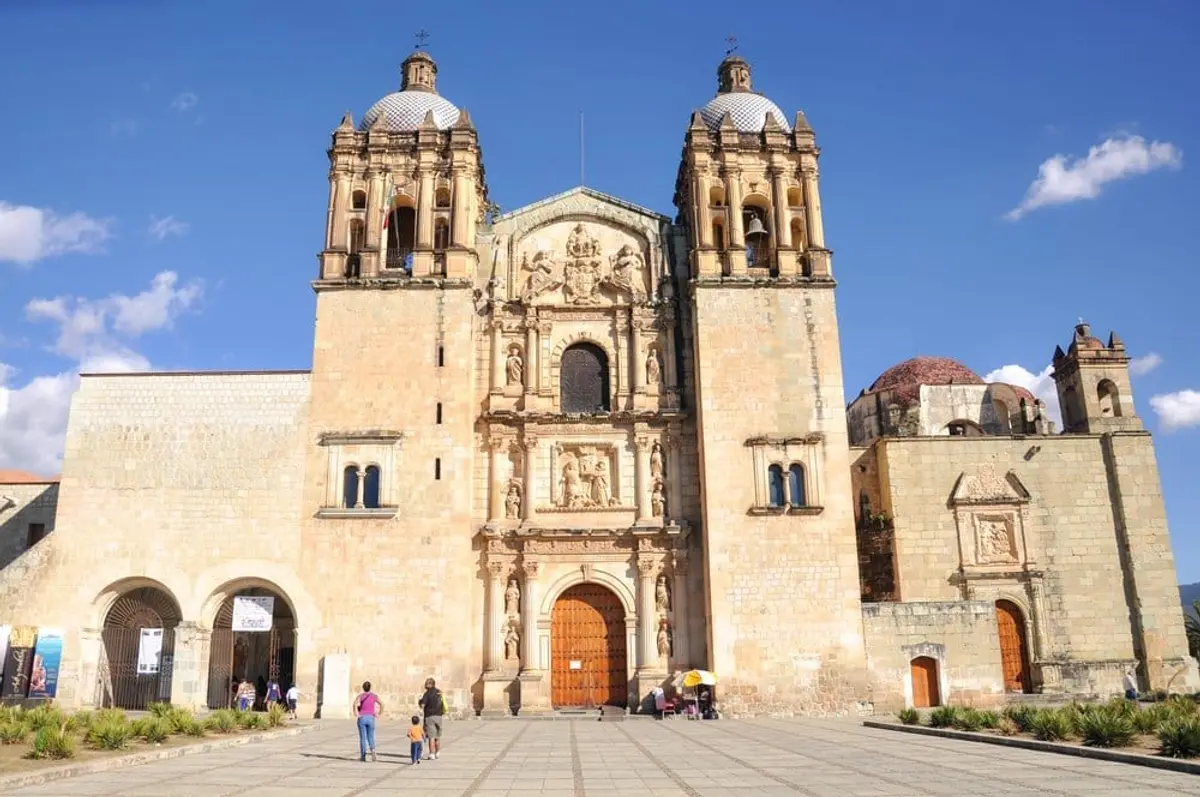
Cancún vs Oaxaca: Which Is Better for Your Mexico Trip in 2026?
If you want beaches, resort ease, and the simplest first Mexico trip, choose Cancún. If you want better food, deeper culture, easier ruins access, and a more memorable city, choose Oaxaca.
Cancún is a Caribbean beach resort. Oaxaca is a highland cultural capital. They are about 1,100 kilometers apart, share the same Level 2 US travel advisory, and represent two completely different versions of Mexico.
This guide breaks down the tradeoffs that actually matter so you can choose the right trip, not just the more famous destination.
30-Second Answer
| If you want… | Choose… | Why |
|---|---|---|
| A beach vacation with minimal planning | Cancún | Direct flights, resorts, swimmable Caribbean beaches, easier logistics |
| Food, culture, mezcal, and ruins | Oaxaca | Better cuisine, stronger cultural depth, cheaper trip, easier archaeology access |
| The easiest first trip to Mexico | Cancún | More English spoken, more nonstop flights, more tourist infrastructure |
| The best value | Oaxaca | Hotels, meals, drinks, and day trips cost far less |
| Big nightlife and group energy | Cancún | Clubs, all-inclusives, spring-break style atmosphere |
| A trip that feels more distinctly Mexican | Oaxaca | Markets, indigenous culture, mezcal, local food, historic center |
Best by Trip Style
- Choose Cancún for beaches, all-inclusives, family resort trips, and a low-friction first visit.
- Choose Oaxaca for food trips, culture-first itineraries, mezcal, crafts, and travelers who want more than a resort bubble.
- Do both if you have 10 to 14 days and want one beach stop plus one inland culture stop.
Cancún vs Oaxaca: At a Glance
| Factor | Cancún | Oaxaca |
|---|---|---|
| Type | Caribbean beach resort | Colonial cultural capital |
| Location | Quintana Roo coast, sea level | Southern highlands, 1,550m elevation |
| Advisory Level | Level 2 | Level 2 |
| Uber | Banned at airport; limited in city | Available in the city |
| Budget/day (mid) | $150–400 USD (Hotel Zone) | $60–100 USD |
| Best for | Beaches, resorts, nightlife, Riviera Maya access | Food, culture, ruins, mezcal, crafts |
| Sargassum | Seasonal problem (Apr–Oct) | N/A (no coast in city) |
| Ruins nearby | Chichen Itza 2.5 hrs, Tulum 1.5 hrs | Monte Albán 30 min, Mitla 1 hr |
| Food scene | International, good local in El Centro | Best in Mexico by wide consensus |
| Mezcal scene | Basic | Global center of production |
| Flying direct from US | Many daily flights | Limited (via MEX for most) |
| English spoken | Widely | Less common |
| Altitude | Sea level | 1,550m (altitude affects some visitors) |
| Rainy season | June–October | June–September |
Geography and Getting There
Cancún sits on Mexico’s Caribbean coast in the Yucatán Peninsula. The Cancún International Airport (CUN) is Mexico’s second-busiest, receiving dozens of daily nonstop flights from the US, Canada, Europe, and South America. Getting there is frictionless — book a flight, land, and you’re at your hotel within an hour.
Oaxaca is in southern Mexico’s highlands, about 1,550 meters above sea level. The Xoxocotlan Airport (OAX) has nonstop flights from Houston, Dallas, Los Angeles, Atlanta, and Mexico City — but fewer options than Cancún. Most international travelers fly via Mexico City (MEX) on a connecting flight that adds about 1.5 hours. Total travel time from the US East Coast runs 6–8 hours; from the West Coast, 4–6 hours via direct routes.
If ease of access is your primary concern, Cancún wins. If you can handle a connection (or live near a city with direct OAX routes), Oaxaca is absolutely reachable. For complete logistics, see our Oaxaca travel guide and Cancún travel guide.
Beaches
This is the most obvious category — and the most one-sided.
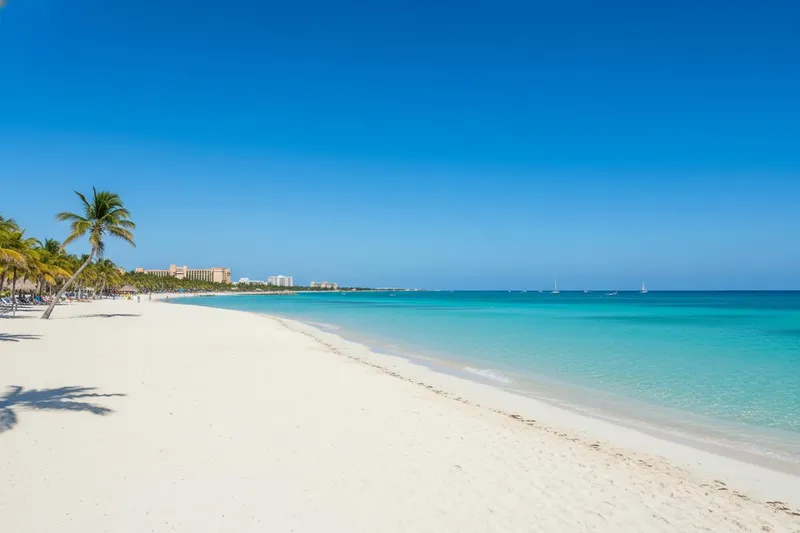
Cancún has some of Mexico’s best Caribbean beaches. The Hotel Zone sits on a barrier island between the Caribbean Sea and a lagoon. The water is turquoise-to-teal, warm year-round (27–29°C), and genuinely beautiful. Playa Delfines and the northern beaches are free and excellent. The reef is accessible — snorkeling and cenote diving are world-class. The region connects to the entire Riviera Maya — Tulum, Playa del Carmen, Cozumel, Holbox.
The caveat: sargassum. Cancún faces east and receives seasonal seaweed deposits from April through October. Some years are mild; others — particularly around 2019 and 2023 — covered beaches in thick brown mats. The problem has improved with FONATUR cleanup programs, but it remains a real risk. Check seasonal forecasts if you’re traveling April–October. Our Cancún travel guide has the current sargassum calendar.
Oaxaca City has no beach. The ocean is 200 kilometers and a winding mountain road away. The coast — Puerto Escondido, Huatulco, Mazunte — is spectacular, but it’s a separate trip. If you’re combining Oaxaca City with beach time, plan to fly (Puerto Escondido/Huatulco airports) or take a daytime bus via the new Highway 135D (3.5 hours from Oaxaca City — greatly improved from the old 7-8 hour journey). Our guide to the best beaches in Oaxaca covers the coast in detail.
Winner: Cancún — if beaches are your priority, there’s no comparison.
Food
This is where the comparison flips — dramatically.
Oaxaca’s food scene is the best in Mexico, and most serious food travelers rank it among the top five food destinations in the world. This is the home of the seven moles (negro, rojo, coloradito, amarillo, verde, chichilo, manchamanteles), the tlayuda (Mexico’s oldest tortilla format), the tejate (pre-Hispanic cacao drink), the most complex mezcal culture on Earth, and an indigenous market system still operating as it has for centuries. Tlacolula Sunday market, Benito Juárez market, and 20 de Noviembre covered market give you access to ingredients and dishes that exist nowhere else. See our things to do in Oaxaca guide for the full culinary picture.
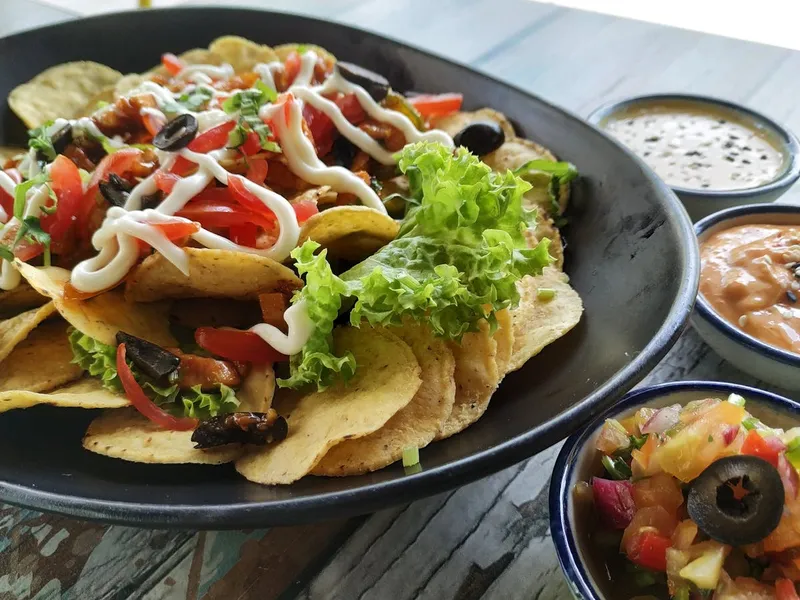
Cancún has good food, particularly if you venture out of the all-inclusive trap. El Centro (downtown Cancún) has excellent Yucatecan food — cochinita pibil, panuchos, sopa de lima, fresh seafood — at local prices that undercut the Hotel Zone by 80%. The Hotel Zone itself runs high-end international restaurants that are fine but not remarkable. For what to eat in Cancún, see our Cancún food guide.
The honest assessment: Cancún is a perfectly satisfying place to eat if you seek it out. Oaxaca is a destination where food is the primary reason to go.
Winner: Oaxaca — by a wide margin.
Ruins and History
Oaxaca is surrounded by archaeological sites. Monte Albán — a 2,500-year-old Zapotec city carved into a flattened mountaintop with views of the entire valley — is 30 minutes from the city center and costs about $5 USD to enter. Mitla has the finest geometric mosaic stonework in all of the Americas. The Central Valleys circuit connects 10+ sites within a 1-hour drive, including Yagul (UNESCO World Heritage for rock art with evidence of earliest corn cultivation in Mexico) and San José el Mogote (where the oldest writing in the Western Hemisphere, predating the Maya, was found). Our Oaxaca pyramids guide ranks all 12 sites with entry fees, distances, and climbing notes.
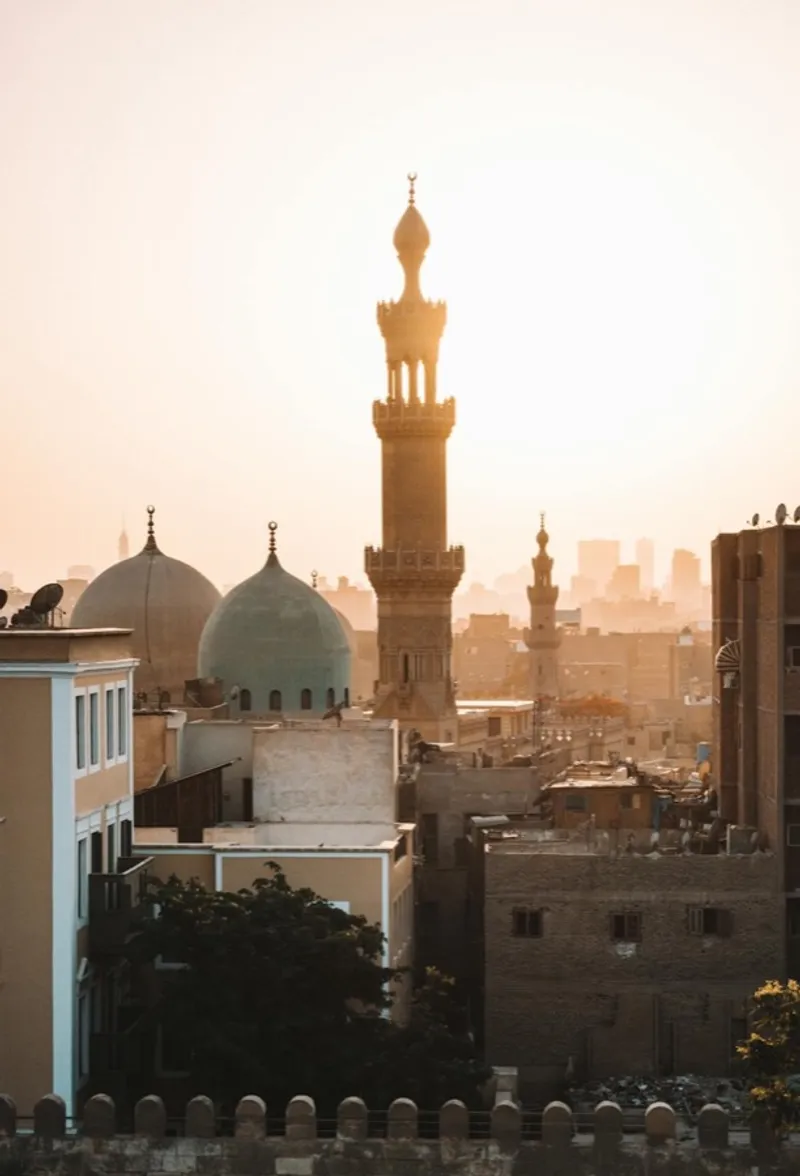
Cancún is the access point for some of Mexico’s most famous ruins — but none of them are in Cancún. Chichen Itza is a 2.5-hour drive (see our Cancún to Chichen Itza guide). Tulum ruins are 1.5 hours away on the cliff above the Caribbean — dramatic setting, limited content (see Tulum ruins guide). Cobá is 2 hours from Cancún and still climbable — its 43-meter pyramid is the only one in the Riviera Maya you can summit (see Cobá ruins guide). Ek Balam, Uxmal, and Dzibilchaltun round out the Yucatán ruins circuit, all reachable as day trips. They’re excellent — but you’re spending a lot of your Cancún time in a car.
Winner: Oaxaca — more numerous, more accessible, better value, and you can reach Monte Albán on your own in 30 minutes.
Mezcal and Nightlife
Oaxaca is the mezcal capital of Mexico — and the world. Santiago Matatlan alone has 200+ registered distilleries (palenques) producing traditional mezcal from dozens of agave varieties. In the city itself, In Situ bar, Mezcaloteca, and Archivo Maguey are world-class mezcal libraries where you can taste varieties that don’t exist outside this region. The combination of altitude (which sharpens flavors) and the sheer concentration of production knowledge makes Oaxaca an experience that cannot be replicated anywhere else.

Cancún has Mexico’s most famous nightlife scene in the Hotel Zone. Coco Bongo’s showclub format, The City (5,000-capacity club), Mandala, and Señor Frog’s represent the archetypal spring break experience. The scale is unmatched — nowhere else in Mexico has this concentration of large-scale clubs within walking distance. See our Cancún nightlife guide for specifics.
The tradeoff: Cancún nightlife is high-energy and high-cost ($50–100 USD cover charges). Oaxaca nightlife is more intimate — mezcalerías, rooftop bars, live música folklórica — and half the price.
Winner: Depends on your style. Wild party nightlife → Cancún. Craft drinks and cultural music → Oaxaca.
Budget and Cost
This comparison is stark.
| Expense | Cancún (Hotel Zone) | Oaxaca City |
|---|---|---|
| Budget hotel/hostel | $30–60 USD/night | $15–35 USD/night |
| Mid-range hotel | $100–250 USD/night | $50–120 USD/night |
| All-inclusive resort | $150–500 USD/night | N/A |
| Street food meal | $3–6 USD | $2–4 USD |
| Restaurant meal | $15–40 USD (Hotel Zone) | $8–20 USD |
| Day trip (ruins/excursion) | $40–150 USD | $10–30 USD |
| Total mid-budget/day | $150–400 USD | $60–100 USD |
Oaxaca is significantly more affordable across every category. The food markets — Benito Juárez, 20 de Noviembre, Tlacolula — serve full meals for 60–150 MXN ($3–8 USD) that rank among the best things you’ll eat anywhere. A great mezcal flight at a serious mezcalería costs $10–15 USD. A taxi to Monte Albán and back is $4 USD.
Cancún’s all-inclusive model is specifically designed to keep you inside the resort, which is why local food in El Centro costs a fraction of Hotel Zone prices. If you stay exclusively in the Hotel Zone and eat at resort restaurants, you’re paying 3–5× what Oaxaca costs for a comparable level of comfort.
Winner: Oaxaca — easily, by 50–75%.
Safety
Both Cancún and Oaxaca carry the US State Department’s Level 2 advisory (“Exercise Increased Caution”) — the same rating as France, Germany, and the UK. Neither city is dangerous for tourists. The specific risks differ:
Cancún’s risks:
- Taxi scams (always use ADO bus or authorized SITEUR taxis from the airport)
- Timeshare harassment in the Hotel Zone (extremely persistent)
- Drink spiking at clubs (documented; watch your drinks)
- Hurricane season (June–November; most storms miss, but risk exists)
Oaxaca’s risks:
- Bloqueos (highway blockades by teachers’ unions — can delay road travel 2–12 hours, not violent)
- Altitude (1,550m — some visitors get mild headaches in first 24 hours)
- Counterfeit mezcal (buy from licensed mezcalerias only)
- Road conditions (mountain roads to coast are dangerous at night)
For the full safety picture, see our dedicated guides: Is Cancún Safe? and Is Oaxaca Safe?.
Winner: Tie — both are safe at the tourist-zone level. Different risks, same overall safety profile.
Transportation
Cancún is easy to reach but less smooth on the ground. The Hotel Zone has no reliably useful Uber setup for most travelers. Airport pickups are still the biggest pain point, and many first-timers underestimate how much time they will spend moving between the airport, hotel zone, downtown, ferry terminals, and Riviera Maya day trips. For arrivals, the safest easy options are the ADO bus or prebooked transport. See our Cancún airport transportation guide and Cancún travel guide for logistics.
Oaxaca is harder to reach but simpler once you arrive. Most international travelers connect via Mexico City, but once you are in Oaxaca City, the Centro is walkable, taxis are manageable, and Uber works in the city. For Monte Albán, Mitla, and mezcal villages, logistics are straightforward compared with planning long Riviera Maya transfers. The airport still requires authorized taxis, not Uber.
Winner: Split decision. Cancún wins flight convenience. Oaxaca wins once-you’re-there simplicity.
Common First-Timer Mistakes
- Choosing Cancún when you actually want Mexico, not a resort. Cancún is easy, but much of the tourist experience is insulated from everyday Mexican life.
- Choosing Oaxaca when you really want ocean time. Oaxaca City is not a beach destination, and the coast is a separate leg.
- Underestimating Cancún costs. Hotel Zone food, transport, and tours add up fast.
- Underestimating Oaxaca logistics from abroad. Fewer nonstop flights means more planning, especially in peak periods.
- Ignoring seasonality. Cancún has sargassum and hurricane risk. Oaxaca has rainy-season afternoons and occasional road blockades.
- Trying to do too much. Both places deserve several full days, and rushing between them weakens the trip.
Who Should Choose Cancún
Choose Cancún if you want:
- A beach-first vacation. Warm Caribbean water, white sand, and genuine swimming beaches with minimal effort.
- An all-inclusive resort. The Hotel Zone is built for this. Nothing in Mexico competes.
- Riviera Maya access. Cancún is the hub for Playa del Carmen, Tulum, Cozumel, Holbox, and Isla Mujeres.
- Nightlife on a large scale. Coco Bongo and The City have no equivalent.
- Easy first trip. English everywhere, direct flights from almost every US city, zero planning required.
- Spring break or a group party trip. The infrastructure is built for it.
- Families with young children. All-inclusive resorts handle everything, beaches are calm.
Who Should Choose Oaxaca
Choose Oaxaca if you want:
- Mexico’s best food. There is no city in Mexico with a richer, more distinctive cuisine.
- Cultural depth. UNESCO historic center, living indigenous traditions, 16 distinct indigenous communities in the valleys.
- Ruins that blow Chichen Itza crowds away. Monte Albán at 8 AM with 10 other people is more powerful than CI with 5,000 tour buses.
- The world’s best mezcal scene. Self-explanatory for serious spirits drinkers.
- Handicrafts from the source. Alebrijes, black clay pottery, Zapotec wool rugs, hand-painted textiles — directly from the artisans.
- A slower pace. Café culture, afternoon naps, long mezcal-fueled dinners.
- Budget travel without sacrifice. Great food, comfortable hotels, and unforgettable experiences for $70–100/day.
- Day of the Dead in the actual source. Oaxaca’s November 1–2 celebrations are the real thing, not a tourist recreation.
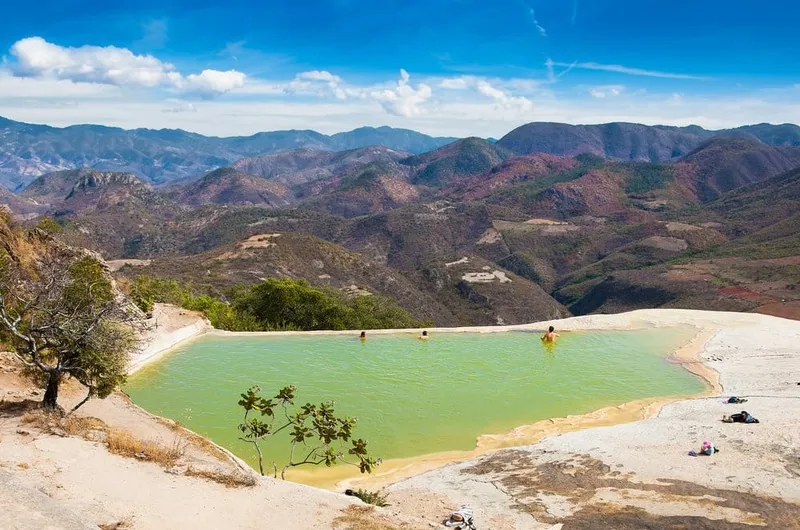
Do Both: The Classic Mexico Trip
A 10–14 day trip combining Oaxaca and Cancún is genuinely excellent. You get the cultural depth of Oaxaca in the first half, then decompress on the Caribbean coast.
Option 1: Culture-first (recommended)
- Days 1–6: Oaxaca City + Central Valleys + Sierra Norte
- Day 7: Fly Oaxaca → Cancún (direct or via MEX, ~2–4 hours total)
- Days 8–12: Cancún + Riviera Maya (Tulum, Playa del Carmen, Cozumel, Isla Mujeres)
Option 2: Beach-first
- Days 1–5: Cancún + Riviera Maya
- Day 6: Fly Cancún → Oaxaca (direct or via MEX)
- Days 7–12: Oaxaca City, Monte Albán, mezcal palenques, Hierve el Agua, coast option
Flights between Cancún and Oaxaca run through Mexico City (Aeromexico, VivaAerobus, Volaris), usually connecting for 4–6 hours total travel time and costing $80–200 USD depending on how early you book. See our Cancún to Oaxaca guide for options. You can also add Oaxaca to Mexico City for a three-city trip if your schedule allows.
Final Verdict
Choose Cancún if your trip is about the beach, resort comfort, and Caribbean access. It does those things better than anywhere else in Mexico. There’s no shame in that — Cancún’s beaches are genuinely beautiful.
Choose Oaxaca if you want to understand Mexico — its food, its history, its indigenous cultures, its mezcal. You’ll spend less money and remember more of it. Of all the places I could take a first-time international visitor to show them what Mexico really is, Oaxaca would be very near the top of the list.
Do both if you have 10–14 days. You’ll leave Mexico having experienced two completely different faces of the country — and already planning when to come back.
Plan Your Trip
- Oaxaca Travel Guide — Complete destination guide
- Cancún Travel Guide — Complete destination guide
- Things to Do in Oaxaca — 30 activities, ruins, markets
- Things to Do in Cancún — 30 activities, beaches, excursions
- Day Trips from Oaxaca City — 14 excursions ranked
- Day Trips from Cancún — 15 excursions ranked
- Cancún to Oaxaca — How to get between cities
- Is Oaxaca Safe? — Full safety guide
- Is Cancún Safe? — Full safety guide
- Best Time to Visit Oaxaca — Month-by-month guide
- Best Time to Visit Cancún — Month-by-month guide
- Oaxaca vs Mérida — Another cultural comparison
- Cancún vs Tulum — Riviera Maya comparison