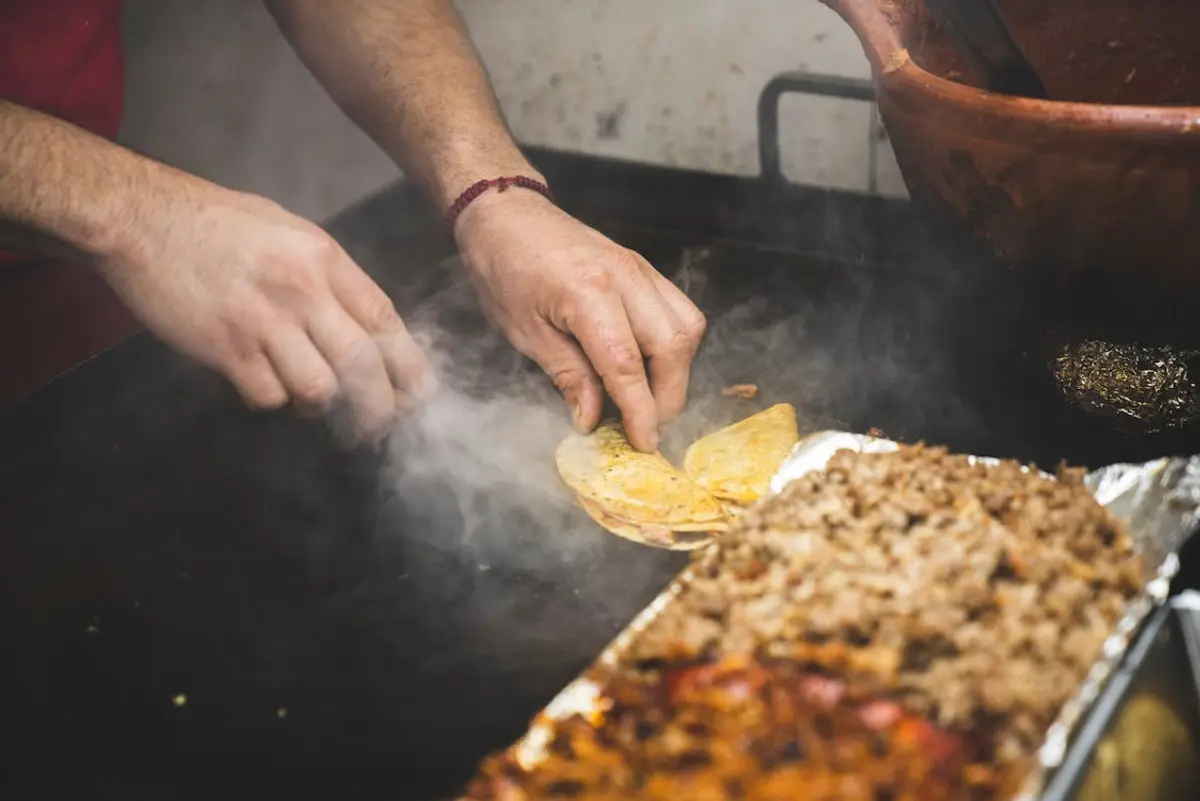
What to Eat in Cancun: 15 Dishes, Street Food & Where Locals Eat (2026)
Most tourists who visit Cancun never eat a real meal. They eat resort buffet versions of Mexican food — rubbery quesadillas, watered-down guacamole, “authentic” tacos that taste like they were assembled in a hotel kitchen 300 miles from any actual taqueria. Then they fly home and tell friends the food was fine.
It was not fine. They just never found the real thing.
What to eat in Cancun is a question that separates the tourists who stay trapped in the Hotel Zone from the ones who take a 20-minute Uber to downtown El Centro and discover that Cancun has one of the most underrated food scenes on the Caribbean coast. Over 900,000 people live here. They are not eating at the resort buffet. They are eating cochinita pibil panuchos at 30 MXN a pop, slurping aguachile negro that makes your eyes water, and standing at taco carts under fluorescent lights at midnight.
This guide covers all of it — the downtown spots locals actually frequent, the Hotel Zone exceptions worth your money, and the specific dishes you need to order. If you are planning your trip, our Cancun travel guide covers logistics, and our best restaurants in Cancun roundup gives the full sit-down restaurant breakdown. This article is about the food itself: what to eat, where to find it, and what to skip.
Visiting the broader region? The food guides for what to eat in Tulum and what to eat in Mérida explain how the food changes as you move deeper into the Yucatán Peninsula — which is worth knowing if you are making a circuit.
The Honest Truth About Resort Food in Cancun
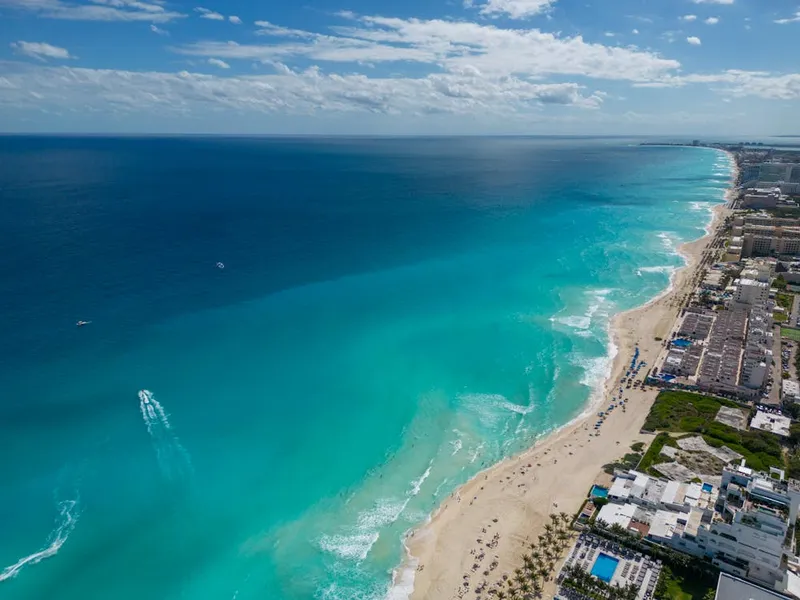
Let me be direct: if you are staying at one of the all-inclusive resorts in Cancun or one of the top all-inclusive resorts in Mexico, the included food is designed for volume, not flavor. The kitchen serves thousands of guests per day. Ingredients are sourced for shelf stability. The “Mexican restaurant” inside the resort is a theme, not a cuisine.
This is not a knock on Cancun’s best hotels themselves. The pools are excellent, the beaches are world-class, the service is solid. But food is the weak link in the all-inclusive model everywhere, not just Cancun.
What resort food typically gets wrong:
- Tortillas are commercial, not handmade
- Salsas are mild versions designed for international palates
- Seafood is often frozen, not fresh from the day’s catch
- Mole, when offered, is a simplified brown sauce instead of the 20-ingredient original
- Cochinita pibil (the Yucatan’s signature dish) is almost never cooked underground as tradition demands
The cost difference makes it worse. A dinner at a Hotel Zone restaurant outside the resort runs 300-800 MXN per person (15-40 USD). The same quality meal downtown costs 80-200 MXN (4-10 USD). When you factor in the 120 MXN round-trip Uber, downtown wins by a wide margin on both price and quality.
If you are visiting Cancun with kids or staying at a family-friendly resort, the buffet is convenient for quick meals with picky eaters. But plan at least two or three dinners downtown. Your trip will be better for it.
Downtown El Centro: Where 900,000 Cancun Residents Actually Eat
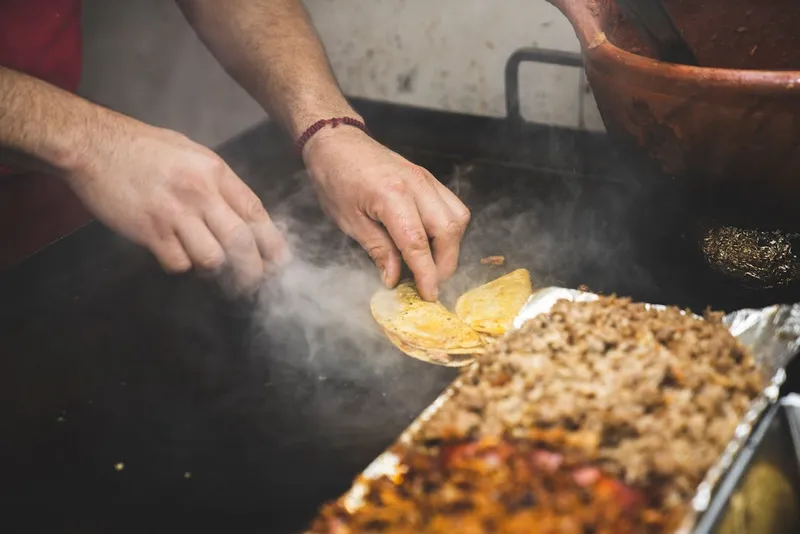
The Hotel Zone is a 23-kilometer strip of sand built for tourists. Downtown Cancun — El Centro — is where the actual city lives. This distinction matters enormously for food.
Getting there from the Hotel Zone takes 20-30 minutes by Uber (50-70 MXN one way) or you can take the R1 or R2 bus (12 MXN, exact change) from any stop along Boulevard Kukulcan. Our Cancun airport transportation guide covers all the transit options in detail if you need help navigating the system.
Mercado 23: The Real Market (Not Mercado 28)
This is the most important distinction in Cancun food tourism: Mercado 23 is the local market. Mercado 28 is the tourist market. Every blog will send you to Mercado 28 because it is larger, cleaner, and has more English signage. That is exactly why it charges more and delivers less.
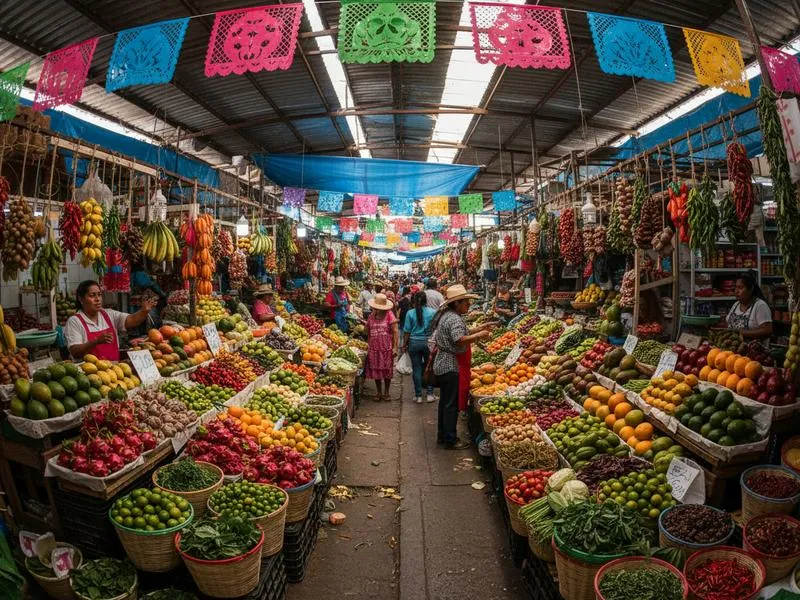
Mercado 23 is smaller, louder, and full of people who live here. The food stalls open early — breakfast tortas by 7 AM, fresh jugos (juices) for 25 MXN, tamales oaxaquenos wrapped in banana leaf for 20 MXN. By lunch, the cocina economica stalls serve comida corrida: a full meal with soup, rice, a main dish, and agua fresca for 60-80 MXN (3-4 USD).
What to order at Mercado 23:
- Tortas de cochinita pibil (the Yucatecan pulled pork sandwich, 35-45 MXN)
- Tamales de elote (sweet corn tamales, 20 MXN)
- Panuchos (fried tortillas stuffed with refried beans, topped with cochinita or turkey)
- Fresh-squeezed orange juice or a green juice with nopal, pineapple, and celery (25-35 MXN)
Go before noon for the best selection. By 2 PM, the popular stalls start running out.
Parque de las Palapas: The Night Food Scene
Starting around 6 PM, Parque de las Palapas transforms into an open-air food court. Carts and stands line the perimeter selling marquesitas (crispy rolled crepes filled with Nutella, cajeta, or Edam cheese), elotes preparados (corn on the cob with mayo, chile, and lime), esquites (corn cup with the same toppings), and churros.
This is not a gourmet experience. It is a street food experience, and it is exactly what you should do on at least one evening. Total damage for two people trying several things: 150-200 MXN (7-10 USD). The park is safe, well-lit, and packed with families. Check our Cancun safety guide if you want broader context on navigating downtown at night.
Loncheria La Habana: Poc Chuc and Cochinita at Taco Prices
Loncheria La Habana is a no-frills lunch counter on Avenida Tulum that serves Yucatecan food at prices that would be illegal in the Hotel Zone. Tacos of poc chuc (grilled pork marinated in sour orange and spices) and cochinita pibil run 30 MXN each. A plate of panuchos topped with shredded turkey costs 60 MXN. Salbutes — puffy fried tortillas topped with lettuce, tomato, and pickled onion — are 25 MXN.
The portions are generous and the salsas are properly spicy. This is the food that Cancun residents eat for lunch during the work week. If you only visit one downtown spot, make it this one.
Taqueria Los Arcos: Late-Night Al Pastor
Open late (some nights past 2 AM), Taqueria Los Arcos is the post-nightclub taco spot for downtown regulars. The al pastor trompo (the vertical spit of marinated pork) is visible from the street, and the tacos cost 20-25 MXN each.
Al pastor is not a Yucatecan dish — it came from Lebanese immigrants in Puebla who adapted shawarma to Mexican ingredients. But Cancun, as a city built by migration from across Mexico, does al pastor extremely well. The meat should be crispy on the edges, slightly charred, served on a small double tortilla with pineapple, cilantro, and onion. If the taqueria does not have a visible trompo, leave.
This pairs well with a late night out. Our Cancun nightlife guide covers the club scene in detail — and most of those clubs are conveniently close to the taqueria strip on Avenida Yaxchilan.
The Ceviche and Aguachile Deep Dive
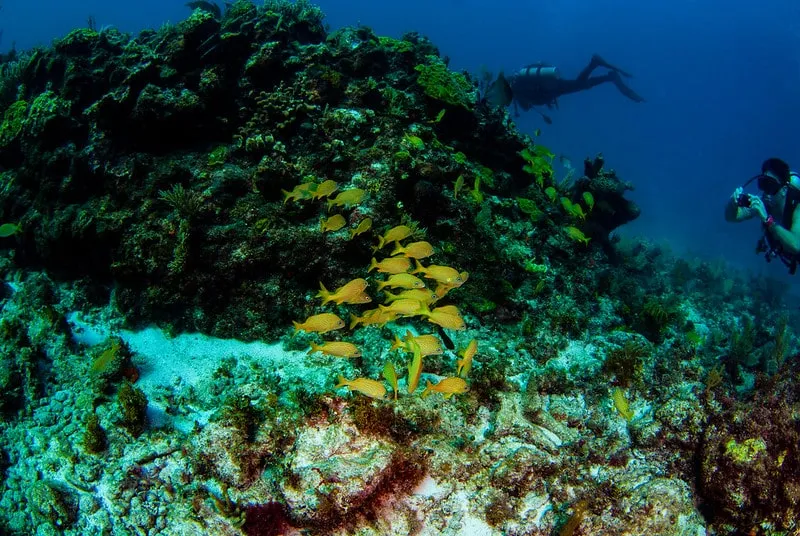
If you visit Cancun and do not eat ceviche at least three times, you have made a tactical error. This is Caribbean Mexico. The seafood is fresh, cheap, and prepared in ways that most visitors have never experienced.
Ceviche: The Acid-Cooked Classic
Ceviche is raw fish or shrimp cut into small pieces and submerged in fresh lime juice for 15-30 minutes. The citric acid denatures the proteins — the flesh turns opaque and firm, essentially “cooking” without heat. It is then mixed with diced tomato, white onion, cilantro, serrano or jalapeno chile, and usually a splash of orange juice. Served cold, often with sliced avocado on top and tostadas on the side for scooping.
The Cancun ceviche hierarchy:
- Ceviche de pescado (fish ceviche): The classic. Usually made with sierra, dorado, or robalo. Firm texture, clean flavor.
- Ceviche de camaron (shrimp ceviche): Slightly sweeter, chunkier. More popular with tourists.
- Ceviche mixto (mixed): Fish, shrimp, octopus, sometimes crab. The safest order if you cannot decide.
- Ceviche negro (black ceviche): Made with squid ink, giving it a dramatic dark color and a briny depth. Not common everywhere, but worth ordering when you see it.
A proper ceviche should taste bright, citrusy, and fresh. If it smells fishy or the liquid looks cloudy, the seafood is not fresh. Move on.
Aguachile: The Spicy, Raw Counterpart
Aguachile translates literally to “chile water,” and that tells you most of what you need to know. Unlike ceviche, the shrimp in aguachile is sliced thin and served immediately — no marinating time. The liquid is a blended sauce of lime juice, fresh green chiles (usually serrano or chile de arbol), cilantro, and sometimes cucumber. The shrimp stays translucent and the sauce is significantly hotter than ceviche.
Aguachile variations in Cancun:
- Aguachile verde (green): The original. Bright, spicy, herbaceous. Made with serrano chiles and cilantro.
- Aguachile rojo (red): Made with dried red chiles. Smokier, slightly less sharp heat.
- Aguachile negro (black): The star. Uses blackened dried chiles (often chile negro or pasilla) blended into a dark, intensely smoky-spicy sauce. Originally from Sinaloa, it has become hugely popular across Mexico’s coast. If the restaurant offers it, order it.
Aguachile is not for people who dislike spice. The heat level is real. But paired with a cold beer and tostadas, it is one of the best things you can eat in Cancun.
Where to Eat Ceviche and Aguachile
Mariscos Punta Allen (downtown): The best seafood spot in El Centro for ceviches and aguachile. A full ceviche order runs 90-130 MXN. The aguachile negro is excellent. Cash only, expect a wait on weekends.
El Fish Fritanga (borderline Hotel Zone/downtown): More polished than a typical marisqueria but still priced fairly. Good for visitors who want quality seafood without the full downtown plunge. Ceviche plates run 120-180 MXN.
Avoid: Ceviche from beach vendors in the Hotel Zone. The turnover is too slow, the product sits in the sun, and you will not enjoy the consequences. If you are spending time on the best beaches in Cancun, eat before or after, not from a cooler on the sand.
Mariscos: How to Navigate a Cancun Seafood Restaurant
Mariscos means seafood, and a marisqueria is a seafood restaurant. In Cancun, these range from plastic-chair open-air joints to proper sit-down restaurants. The good ones, regardless of decor, share one thing: the seafood arrived that morning.
The Essential Mariscos Orders
Camarones al coco (coconut shrimp): Whole shrimp coated in shredded coconut and fried. Served with a tamarind or chipotle dipping sauce. Sweet, crunchy, and a crowd-pleaser even for people who think they don’t like adventurous food. 120-160 MXN at a downtown marisqueria.
Tostadas de pulpo (octopus tostadas): Diced octopus on a crispy flat tortilla with avocado, salsa, and lime. The octopus should be tender, not rubbery. If it fights back when you bite, the cooking time was wrong. 30-45 MXN per tostada.
Coctel vuelve a la vida (comeback to life cocktail): A shrimp cocktail in a tomato-based sauce with lime, cilantro, onion, avocado, and often oysters or octopus added. The name refers to its reputation as a hangover cure. It works. 80-120 MXN.
Zarandeado-style fish: A whole fish (usually huachinango/red snapper or robalo/snook) butterflied and grilled over charcoal, basted with a soy-chile-mayo sauce. This preparation originated in Nayarit on Mexico’s Pacific coast but has spread everywhere. Whole fish: 180-280 MXN depending on size.
How to Order at a Tostada Shop
Tostada shops are fast-casual seafood counters — you walk up, choose your toppings, and eat standing at a counter or at plastic tables. They are one of the best lunch options in Cancun.
The standard order protocol:
- Choose your base: tostada (flat crispy tortilla) or vaso (cup)
- Choose your protein: camaron (shrimp), pulpo (octopus), jaiba (crab), ceviche mixto, aguachile
- Add toppings: avocado (5-10 MXN extra), extra salsa, extra lime
- Pay: 30-50 MXN per tostada
Three tostadas and a cold Modelo run about 120-160 MXN total. That is a full seafood lunch for under 8 USD.
Yucatecan Food in Cancun: The Regional Specialties
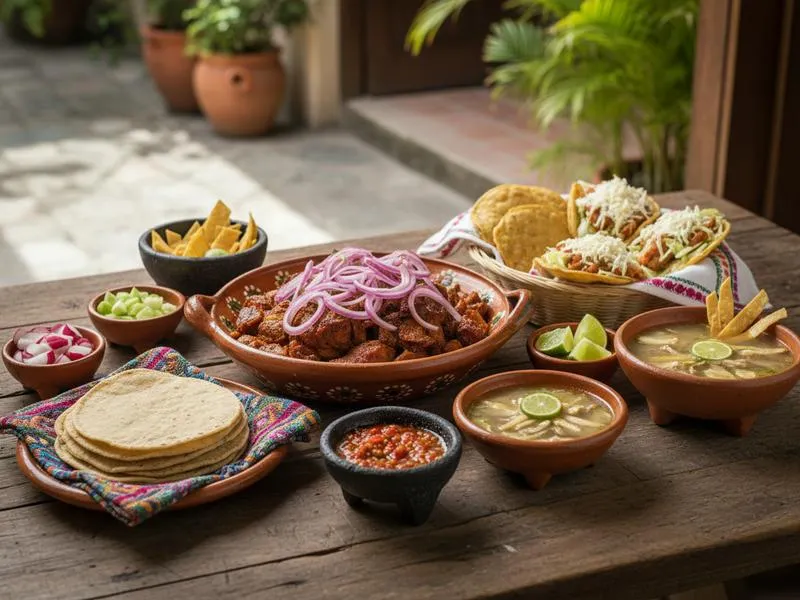
Cancun sits in Quintana Roo, but the dominant regional cuisine comes from neighboring Yucatan state. Yucatecan food is distinct from the rest of Mexico — it has Mayan roots, heavy citrus influence, and a unique spice profile built around achiote (annatto), habanero, and sour orange.
Cochinita Pibil: The Dish You Must Try
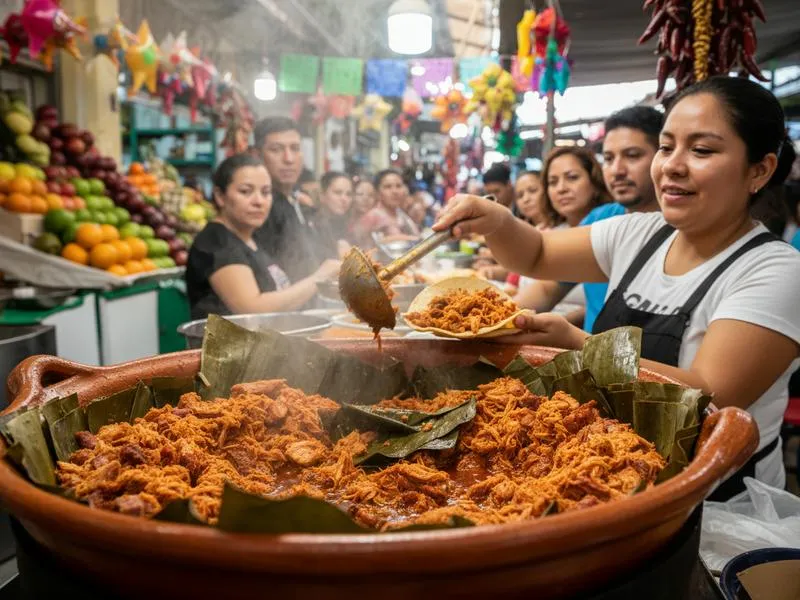
Cochinita pibil is pork marinated in achiote paste and sour orange juice, wrapped in banana leaves, and traditionally slow-cooked underground in a pit (pib) overnight. The result is impossibly tender, bright orange-red, slightly tangy pulled pork.
In Cancun, you will find cochinita everywhere — in tacos, tortas, panuchos, tamales, and even on pizza. The quality varies enormously. The best cochinita should be moist, shredded (not chopped), and topped with pickled red onion (cebolla morada en escabeche) and fiery habanero salsa.
Best cochinita pibil in Cancun:
- Loncheria La Habana (downtown): 30 MXN per taco, generous portion
- Mercado 23 stalls: Tortas for 35-45 MXN, available mornings only
- Any stand that sells out by noon — high turnover means it was made fresh that day
Panuchos and Salbutes
These two dishes are the workhorses of Yucatecan street food, and you need to know the difference:
Panuchos: A tortilla stuffed with refried black beans, fried until crispy, then topped with shredded turkey or cochinita, pickled red onion, avocado, and tomato. The bean layer inside gives it substance and a slight crunch.
Salbutes: A puffy fried tortilla (no bean filling) topped with the same ingredients. Lighter, softer, less filling.
Both cost 25-35 MXN each. Order two panuchos and one salbute to compare.
The Lebanese-Yucatecan Crossover
One of the most interesting food stories in Mexico is the Lebanese immigration to the Yucatan Peninsula in the early 1900s. Lebanese migrants brought kibbeh, tabbouleh, and shawarma. The Yucatecan kitchen absorbed and transformed these into local versions:
- Kibbeh (quibbe in local Spanish): Deep-fried bulgur shells stuffed with ground meat, now served with habanero salsa instead of tahini
- Tacos arabes: The direct ancestor of al pastor — marinated pork on a vertical spit, but served in pita-like bread instead of tortillas
- Brazo de reina: While not Lebanese in origin, the blending of Middle Eastern and Mayan techniques is evident throughout Yucatecan cooking
You will find kibbeh at many downtown Cancun restaurants that serve Yucatecan food. It is a menu item that confuses first-time visitors — “Why is there Middle Eastern food here?” — but it has been part of the local food tradition for over a century.
If the intersection of cultures and cuisine interests you, our day trips from Cancun guide includes Merida, the Yucatecan capital, which has the deepest Lebanese-Maya food fusion in the region.
Hotel Zone Restaurants Worth the Premium
Not everything in the Hotel Zone is a tourist trap. A few restaurants justify their higher prices with genuine quality, and knowing which ones saves you from expensive disappointment.
Puerto Madero: Argentine Steak Done Right
Puerto Madero is a chain, which normally I would not recommend. But their Cancun location on the lagoon side of the Hotel Zone is one of the best steak experiences in the city. The cuts are Argentine-sourced, properly aged, and cooked over a real parrilla (charcoal grill). The chimichurri is made fresh.
Expect to pay 400-700 MXN per person for a steak dinner with sides and a glass of Malbec. That is expensive by Cancun standards but competitive with any quality steakhouse internationally. If you want one splurge meal during your trip, this is a strong candidate. Reservations recommended, especially on Friday and Saturday evenings.
La Destileria: Tequila Museum With Actual Good Food
La Destileria doubles as a tequila museum and a restaurant, which sounds like a gimmick — and the museum part is. But the kitchen produces some of the best traditional Mexican dishes in the Hotel Zone. The chile en nogada (when in season, August through September) is properly made with picadillo filling and walnut cream. The mole negro is closer to the real thing than anything else on this strip.
The tequila and mezcal selection is genuinely impressive, with over 150 labels. If you are interested in understanding the difference between tequila, mezcal, and raicilla, this is a good classroom. Dinner runs 250-450 MXN per person.
El Fish Fritanga: Local Seafood Quality at Hotel Zone Proximity
El Fish Fritanga sits at the edge of the Hotel Zone, close enough to reach without a long taxi ride but priced more reasonably than the strip restaurants. The ceviches and aguachile are solid, the fried fish tacos use fresh catch, and the portions are generous.
This is the spot I recommend for visitors who want quality seafood but are not ready for the full downtown market experience. Lunch for two: 300-450 MXN including drinks.
For more detailed reviews and the complete restaurant landscape, check our best restaurants in Cancun guide.
The Budget Eating Guide: A Full Day Downtown for Under 300 MXN
Here is a realistic budget food day in downtown Cancun. Every price is what you actually pay, not a theoretical minimum.
Breakfast (7:30 AM - Mercado 23):
- Two tamales oaxaquenos wrapped in banana leaf: 40 MXN
- Fresh orange juice: 25 MXN
- Subtotal: 65 MXN (about 3.25 USD)
Mid-morning snack (10:30 AM - street cart):
- Elote preparado (corn on the cob with mayo, chile, lime, cheese): 25 MXN
- Running total: 90 MXN
Lunch (1:00 PM - Mariscos Punta Allen):
- Ceviche mixto: 100 MXN
- Two shrimp tostadas: 70 MXN
- Agua de Jamaica (hibiscus water): 20 MXN
- Running total: 280 MXN
Afternoon (optional - Parque de las Palapas food cart):
- One marquesita with Nutella and queso de bola: 35 MXN
Total for the day: 280-315 MXN (14-16 USD)
That budget covers breakfast, a snack, a proper seafood lunch, and a dessert. Compare that to a single Hotel Zone lunch, which starts at 200 MXN for a basic plate.
If you are visiting on a tight budget, our spring break Mexico budget guide has more strategies for affordable travel. And if you are deciding between destinations, our Cancun vs Tulum comparison covers the food scene differences between both cities.
What NOT to Order in Cancun
Not all Cancun food experiences are created equal. Here is what to avoid:
The Hotel Zone “Mexican Platter”: Any restaurant that offers a combination plate of tacos, enchiladas, rice, and beans for 250+ MXN is selling you a fantasy. This is not how Mexican food works. Mexicans do not eat combination platters. They eat one dish, done well.
Airport food: Cancun International Airport charges 3-4x downtown prices for mediocre food. Eat before you arrive or pack snacks. The only exception is the Oxxo convenience store for agua, chips, and sandwiches at normal prices.
Poolside nachos and “loaded” anything: Nachos are a Tex-Mex invention that bears no relationship to Mexican food. The resort version uses processed cheese, canned jalapenos, and charges 180+ MXN. You deserve better.
“Fresh” seafood from beach vendors: Walking vendors on Cancun’s beaches sometimes sell ceviche or shrimp cocktails from coolers. The turnover is too slow and the temperature control is nonexistent. Stick to established restaurants and market stalls.
Overpriced guacamole in the Hotel Zone: Tableside guacamole prepared with a molcajete and dramatic flair is a Hotel Zone specialty. It costs 150-250 MXN for what amounts to 50 MXN worth of avocados. The show is fine; the value is not.
If food safety is a concern, refer back to our Is Cancun safe guide, which covers stomach health and drinking water in detail. The short version: downtown food stands that serve hundreds of locals daily are safe. The risk is in low-turnover places, not busy ones.
Getting From the Hotel Zone to the Food
The biggest barrier between you and good food in Cancun is the 15-kilometer gap between the Hotel Zone and downtown. Here is how to cross it:
Uber: Works in Cancun (though officially banned from the airport). Hotel Zone to downtown: 50-70 MXN, 20-30 minutes depending on traffic. This is the easiest option.
R1/R2 Bus: The public bus runs the length of Boulevard Kukulcan through the Hotel Zone and continues to downtown. Cost: 12 MXN (exact change required). Frequency: every 5-10 minutes. This is the cheapest option and perfectly safe during the day.
Taxi: Official taxis from the Hotel Zone charge fixed rates. Expect 150-200 MXN to downtown — significantly more than Uber. Negotiate before getting in, or ask your hotel concierge for the standard rate.
For a comprehensive breakdown of all transit options, our Cancun airport transportation guide covers taxis, buses, shuttles, and rental cars.
If you are considering day trips from Cancun, the food scenes in surrounding towns are also excellent. Playa del Carmen has its own 5th Avenue food strip. Valladolid is the capital of Yucatecan street food. Isla Mujeres has some of the freshest seafood in the region.
Planning Your Cancun Food Trip: Timing and Strategy
The best eating strategy in Cancun depends on when you visit and how you structure your days.
Best months for food in Cancun: November through April. This is high season, which means more restaurants are fully staffed and the seafood supply chain runs at peak volume. It also aligns with the best time to visit Cancun for weather.
Best day structure:
- Morning: Breakfast at Mercado 23 or your hotel
- Midday: Uber to downtown for seafood lunch
- Afternoon: Beach time or activities in the Hotel Zone
- Evening: Parque de las Palapas food carts, or a splurge dinner at a Hotel Zone exception
If visiting during spring break: Downtown restaurants are actually less crowded during spring break because most visitors stay in the Hotel Zone. This works in your favor.
If combining with other destinations: The food gets even better as you move away from Cancun. Tulum has a strong farm-to-table scene. Holbox does lobster pizza and whole grilled fish on the beach. Cozumel has its own seafood traditions. Plan at least one food-focused day trip.
For the larger picture of what makes Mexico one of the world’s great food destinations, our Cancun vs Puerto Vallarta and Cancun vs Los Cabos comparisons cover how the food differs across Mexico’s major resort cities. Each region has its own culinary identity — Yucatecan in Cancun, Jalisciense in Puerto Vallarta, Baja Med in Los Cabos.
A Quick Cancun Food Glossary
These terms will help you navigate menus and food stalls with confidence:
- Antojitos: Street snacks — literally “little cravings.” The umbrella term for tacos, tostadas, sopes, gorditas, and similar items
- Achiote: A bright red spice paste made from annatto seeds, the base of cochinita pibil and many Yucatecan dishes
- Agua fresca: Flavored water made with fresh fruit, flowers, or seeds. Jamaica (hibiscus), horchata (rice and cinnamon), and tamarindo (tamarind) are the three classics
- Cochinita pibil: Slow-roasted achiote pork wrapped in banana leaves. The Yucatan’s signature dish
- Comida corrida: A set lunch menu, typically soup + rice + main dish + agua fresca for one fixed price
- Habanero: The default hot chile of the Yucatan. Much hotter than jalapeno. Used in most salsas downtown
- Loncheria: A casual lunch counter, usually family-run, serving comida corrida or specific regional specialties
- Marisqueria: A seafood restaurant
- Panucho: Fried tortilla stuffed with refried beans, topped with meat, pickled onion, and avocado
- Poc chuc: Grilled pork marinated in sour orange and spices, a Yucatecan specialty
- Salbute: Puffy fried tortilla (no bean filling) with toppings, lighter cousin of the panucho
- Trompo: The vertical rotating spit used to cook al pastor meat, borrowed from the Lebanese shawarma tradition
Mexico’s Food Belt: Cancun and Beyond
Cancun is your gateway to a food region that extends across the entire Yucatán Peninsula. Each city has its own version of the same ingredients, and the differences are worth exploring:
- What to eat in Playa del Carmen: Between Cancun and Tulum — the al pastor trompo culture is excellent, and the local food one or two blocks off 5th Avenue is genuinely cheap.
- What to eat in Tulum: Pueblo tacos at 20 MXN vs beach club ceviche at 450 MXN — the price gap is starkest here. Also the best high-end Yucatecan cooking at Cetli.
- What to eat in Mérida: The deepest Lebanese-Yucatecan fusion (kibis, shawarma served with habanero instead of tahini), and the region’s best cochinita pibil at Sunday morning markets.
- What to eat in Puerto Vallarta: Pacific coast food — pescado zarandeado, aguachile negro, birria from Jalisco. A completely different food tradition from the Yucatán.
If you are doing the Yucatan 7-day itinerary with multiple stops, the food changes noticeably between Cancun, Valladolid, and Mérida. The core ingredients are the same; the preparation and local obsessions differ.
The Bottom Line on What to Eat in Cancun
The difference between a forgettable Cancun food experience and an extraordinary one is about 15 kilometers and a 50 MXN Uber ride. Downtown El Centro has ceviches, aguachile, cochinita pibil, panuchos, and taco carts that rival anything in Mexico City or Oaxaca — at prices that make the Hotel Zone look absurd.
Go to Mercado 23 for breakfast. Eat aguachile negro at Mariscos Punta Allen for lunch. Stand at a taco cart on Avenida Yaxchilan at midnight. Skip the poolside nachos.
The food in Cancun is genuinely excellent. You just have to leave the resort to find it.
For complete trip planning, start with our Cancun travel guide, check out things to do in Cancun beyond eating, and consider adding a day trip to Chichen Itza or Isla Contoy for a look at the region beyond the plate. If you are still deciding on a destination, our comparison guides for Cancun vs Tulum, Cancun vs Los Cabos, and Cancun vs Puerto Vallarta can help you choose. And if Punta Nizuc is on your radar, the snorkeling there pairs perfectly with a seafood lunch downtown afterward.
Eat well. Leave the buffet behind.