Best Cancun Restaurants 2026: Hotel Zone, Seafood & Tacos
The best restaurants in Cancun are split between convenient Hotel Zone dining, downtown tacos, seafood spots, and local markets like Mercado 23. In 2026, the smart move is to use the Hotel Zone for a few view-driven dinners, then eat downtown for breakfast, mariscos, tacos, and Yucatecan dishes that cost much less.
Here’s the honest version: the Hotel Zone has a handful of restaurants that genuinely justify their prices. The rest charge tourist premiums for food you’d find better and cheaper around Mercado 23, Avenida Yaxchilan, and Cancun’s downtown seafood spots. Knowing which is which helps you pick the right meal by area, budget, and occasion.
For context on planning your Cancun visit, see our Cancun travel guide.
Best Restaurants in Cancun in 30 Seconds
| Need | Best Cancun choice | What to expect |
|---|---|---|
| Best overall strategy | Mix Hotel Zone dinners with downtown meals | Better food range and much lower daily spend |
| Best downtown food area | Mercado 23 and Avenida Yaxchilan | Breakfasts, tacos, loncherias, and local prices |
| Best Hotel Zone splurge | Harry’s | Lagoon views, steak, lobster, and special-occasion pricing |
| Best local seafood move | El Fish Fritanga or a downtown marisqueria | Ceviche, aguachile, whole fried fish, and less markup |
| Best market for food | Mercado 23 | More local than Mercado 28 and stronger for breakfast or lunch |
If you only have one free evening, take a taxi downtown instead of defaulting to the nearest resort restaurant. If you want one polished dinner with views, book a Hotel Zone splurge and treat it as the exception, not the daily plan.
The Honest Split: Hotel Zone vs. Downtown
Hotel Zone (Zona Hotelera) restaurants:
- Typical cost: 300-600 MXN per person for a full meal
- Breakfast: 150-250 MXN
- Strong point: location, views, AC, English menus, credit cards accepted everywhere
- Weak point: food quality rarely matches the price; supply chains favor volume over freshness
Downtown (Centro) restaurants:
- Typical cost: 80-200 MXN per person
- Breakfast: 50-90 MXN
- Strong point: the actual food is better, portions are bigger, it’s what Cancun residents eat
- Weak point: cash-preferred, less English spoken, you need a taxi or local knowledge to find the right spots
The math is simple: a 120 MXN taxi to downtown and back is still cheaper than the price difference on a single meal. If you’re staying in the Hotel Zone for a week, you can save 3,000-5,000 MXN on food by eating downtown for most meals.
Hotel Zone Picks Worth the Price
Harry’s
Harry’s is a steakhouse on the lagoon side of the Hotel Zone, and it’s the most legitimate fine dining option in the zone. The views of Laguna Nichupté are excellent, the steaks are properly sourced and cooked, and the service matches the price point. Expect 600-1,000 MXN per person for a full dinner with drinks.
This is the spot for a special occasion meal within the Hotel Zone. Reservations are recommended — it fills up, especially on weekends. Book directly through their website.
Best orders: Prime rib, live lobster (market price), any of the tequila-based cocktails.
Roland’s
Roland’s has been serving Italian food in Cancun’s Hotel Zone since 1979, which in Hotel Zone terms makes it practically ancient. The longevity is earned: the pasta is made in-house, the pizza uses a proper wood-burning oven, and the prices are significantly lower than the surrounding competition (200-350 MXN per person).
It doesn’t win on views or atmosphere — it’s a simple restaurant doing solid work. That’s exactly why it’s worth knowing. When you want a break from Mexican food and don’t want to pay four times what you should, Roland’s delivers.
La Habichuela Downtown
Despite the name, La Habichuela is not technically in the Hotel Zone — it’s in the downtown area, but it’s included here because it’s the most important restaurant in Cancun for Yucatecan cuisine and worth organizing a dinner around.
The signature dish is cocobichuela — Caribbean lobster and shrimp in a curry sauce served inside a coconut. That description sounds gimmicky. It isn’t. The restaurant has been operating since 1977 and the food has the kind of confidence that only comes from decades of doing the same thing right.
Prices: 350-600 MXN per person. Make a reservation. This is not a walk-in restaurant on a busy night.
Downtown Must-Eats
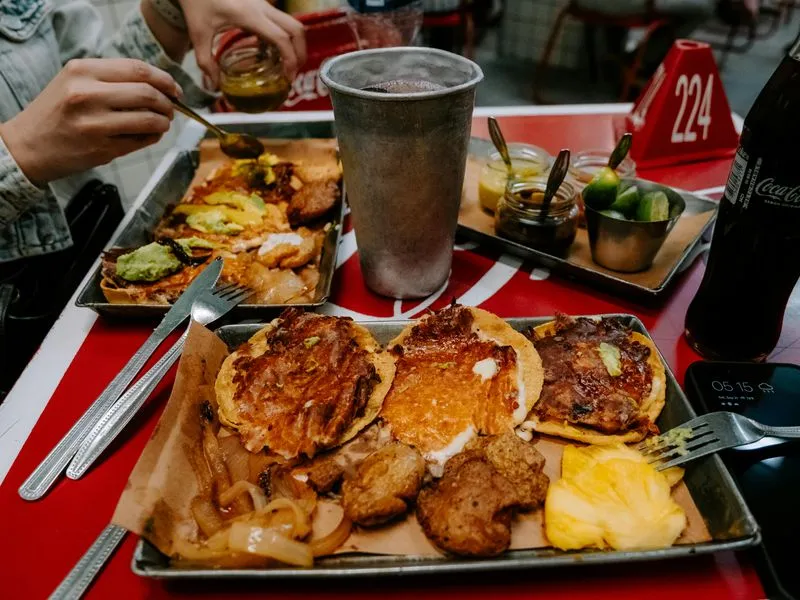
Mercado 23 (Breakfast and Lunch)
Mercado 23 is the local market — not the tourist market. Cancun residents come here for produce, household goods, and cheap, genuinely good food.
The food section is small but reliable: comida corrida (set lunch) runs 80-100 MXN for soup, main, and a drink. Breakfast plates (eggs, beans, tortillas, juice) cost 60-80 MXN. The huevos rancheros here are what the Hotel Zone is charging 200 MXN to approximate.
Location: Avenida Tulum, near the park. Open from 7am. Cash only.
El Fish Fritanga
Downtown seafood, loud and unpretentious. El Fish Fritanga does grilled fish, fried fish, ceviche, and aguachile in a market-style setting that feels nothing like the Hotel Zone. The ceviche is the right call: fresh lime-cured fish with chili, onion, and cilantro, served with tostadas for scooping.
Prices: 150-250 MXN for a full seafood meal. The aguachile negro (blackened chili version) is worth trying if you can handle heat.
Lonchería El Pocito
Small, lines out the door at lunch, entirely worth it. El Pocito is a lonchería — a small lunch counter serving set meals at low prices. The menu changes daily, but there’s always a soup, a protein, rice and beans, tortillas, and a agua fresca for around 80-100 MXN.
The food is home-style Yucatecan: sometimes a slow-cooked poc chuc (grilled citrus pork), sometimes relleno negro (turkey in black chili sauce), sometimes cochinita pibil. Whatever’s cooking, it’s the real thing.
Find it on Google Maps — it moves occasionally. Worth the search.
La Parrilla
La Parrilla is on Avenida Yaxchilán and it’s the most tourist-friendly of the downtown picks — English menus, mariachi music, souvenir-adjacent ambiance. It’s not where locals eat on a weekday, but the food is genuinely decent and the prices are honest: 150-250 MXN per person.
The mixed grill (parrillada) is good value and serves two people comfortably. The enchiladas are better than average. Go with reasonable expectations and it won’t disappoint.
Marisquería Punta Cancun
A proper seafood restaurant in the downtown area that specializes in the Gulf Coast tradition: whole fried fish, shrimp in garlic butter, ceviche, and caldo de mariscos (seafood broth). The huachinango frito (whole fried red snapper) runs 180-250 MXN and is the right order.
This is where Cancun’s fishing families eat. That’s a better endorsement than any guidebook.
Puerto Madero
The upscale option downtown. Puerto Madero is an Argentine-style steakhouse that’s become a Cancun institution — less flashy than Harry’s, somewhat cheaper, and with reliable quality. A full steak dinner with wine runs 500-800 MXN per person.
Worth knowing for the nights when you want quality meat without Hotel Zone markups.
Cancun Seafood Guide
The Yucatán Peninsula’s seafood culture is distinct from Pacific Mexico. Understanding what to order helps you avoid generic tourist dishes.
Ceviche: Raw fish or shrimp cured in lime juice. The lime effectively “cooks” the protein. Served with onion, cilantro, chili, and tostadas. Cancun’s best ceviche uses fresh Caribbean fish — tilapia, grouper, or mahi-mahi.
Aguachile: More aggressive than ceviche. Raw shrimp or octopus in a blended green or black chili, lime, and cucumber broth. The shrimp is barely “cooked” by the acid — it should be semi-translucent. If you’ve never tried it, start with the green version (less heat) before moving to negro.
Huachinango a la Veracruzana: Red snapper in a tomato, olive, caper, and chili sauce. A classic of the Gulf Coast that appears on menus throughout this region. At good restaurants, the snapper is whole — 300-400g, enough for one person.
Tikin xic: A Yucatecan grilled fish preparation using achiote (annatto) paste, orange juice, and chili. The fish is wrapped in banana leaf and grilled. Deeply regional, rarely found in tourist restaurants — worth ordering when you see it.
What to avoid: Any restaurant offering an “international seafood buffet” in the Hotel Zone is using frozen product. For fresh seafood, stick to dedicated marisquerías.
Market 28 vs. Market 23
Both markets get recommended in Cancun travel content. They’re very different.
Mercado 28: Larger, better known, tourist-facing. Excellent for souvenirs, embroidered goods, and hammocks. Has food options, but they cater to visitors. Worth a visit for shopping; not a food destination.
Mercado 23: Smaller, local, no tourist infrastructure. The food is the reason to go. Locals buy their groceries here, eat breakfast and lunch here, and generally don’t expect to see many foreigners. Cheaper and more authentic than anything in the Hotel Zone.
Where to Eat in Cancun: Navigating the Hotel Zone
The Hotel Zone is a 22km strip of hotels, shopping malls, and restaurants on a narrow barrier island between Laguna Nichupté and the Caribbean. The restaurant geography follows the hotel density — most concentrated between kilometers 9 and 14, near the major resort complexes.
What the Hotel Zone does well:
- Convenience (everything is walkable from your hotel)
- English menus, international credit cards, accommodating service
- Views — the lagoon-side restaurants have genuine sunset value
- International diversity (Japanese, Italian, American, Argentinean all represented)
What the Hotel Zone does poorly:
- Authenticity — the closer to the beach, the more the menu is simplified for tourist expectations
- Value — the rent premium passes directly to your bill
- Quality at the low end — mall food courts and “Mexican food” that is not remotely what Mexicans eat
Practical advice: If you’re in the Hotel Zone for a week, budget 2-3 meals there (at the worth-it places above), eat breakfast at your hotel if it’s included, and take the taxi downtown for dinner 3-4 times. Your food experience and your wallet will both be better for it.
Best Breakfast Spots
| Place | Location | Avg Price | Best Order |
|---|---|---|---|
| Mercado 23 stalls | Downtown | 60-80 MXN | Huevos con frijoles, chilaquiles |
| Lonchería El Pocito | Downtown | 70-90 MXN | Set breakfast with café de olla |
| El Café de la Familia | Downtown | 80-120 MXN | Panuchos, tamales, café |
| Hotel Zone buffets | Zona Hotelera | 200-350 MXN | Not recommended specifically |
The Hotel Zone breakfast option worth considering is your hotel’s buffet if it’s included in your room rate — not because it’s special, but because you’ve already paid for it. For anything à la carte in the zone, you’re overpaying by a wide margin.
Best Tacos in Cancun
The Hotel Zone has a few taquería stands, mostly serving gringo-adapted versions of al pastor. The real taco street in Cancun is Avenida Yaxchilán downtown, where multiple taquerías operate from early evening until 2am.
Tacos de canasta (basket tacos — potato, bean, or chicharrón, sold from a basket): 12-18 MXN each. Breakfast fuel. Look for vendors on main streets downtown in the early morning.
Tacos al pastor: Cancun’s al pastor doesn’t reach CDMX levels, but the spots on Yaxchilán are decent. 25-35 MXN each.
Cochinita pibil tacos: Yucatán’s contribution to Mexican taco culture. Slow-cooked pork in achiote and sour orange, served with pickled red onion and habanero. Several places on the downtown market circuit do this properly. 35-50 MXN per taco.
Vegetarian Guide
Cancun is not naturally vegetarian-friendly — the cuisine here leans heavily on seafood and pork. But options exist:
- Mercado 23 has several stalls serving quesadillas and bean-based dishes
- La Parrilla has a full vegetarian section on its menu
- Hotel Zone international restaurants universally accommodate dietary preferences
- Panuchos (Yucatecan fried tortillas with black bean filling) are naturally vegetarian
- Markets downtown will generally make huevos dishes without meat on request
For a week in Cancun, a vegetarian will find workable options but should set expectations accordingly. This is not a vegetarian destination.
Price Comparison: Hotel Zone vs. Downtown
| Meal Type | Hotel Zone | Downtown |
|---|---|---|
| Breakfast (eggs, coffee, juice) | 150-250 MXN | 60-90 MXN |
| Tacos (3 pieces) | 120-180 MXN | 50-90 MXN |
| Lunch/Comida Corrida | N/A | 80-120 MXN |
| Seafood main | 250-500 MXN | 150-250 MXN |
| Steak dinner | 450-900 MXN | 300-600 MXN |
| Beer (Modelo/Corona) | 80-150 MXN | 30-50 MXN |
| Margarita | 150-300 MXN | 80-120 MXN |
The taxi to downtown costs 80-120 MXN one way. Even accounting for transport, eating downtown is significantly cheaper on every category.
Yucatecan Specialties to Try in Cancun
Cancun sits in the Yucatán Peninsula, which has a distinct culinary tradition separate from central Mexico. You won’t find these dishes as readily in Mexico City or Guadalajara — this is your chance.
Cochinita pibil: The cornerstone of Yucatecan cooking. Pork marinated in achiote paste and sour orange, wrapped in banana leaf and slow-cooked underground (or in a modern oven). The result is deeply orange, tender, and citrus-forward. Served in tacos or as a plate with pickled red onion and habanero. Order it at El Turix-style Yucatecan spots in Cancun’s downtown.
Poc chuc: Grilled pork marinated in sour orange. Simpler than cochinita but equally regional. The acid keeps the pork light and citrusy despite being grilled.
Papadzules: An often-overlooked breakfast/lunch dish — corn tortillas rolled with hard-boiled egg, covered in a pumpkin seed sauce and topped with salsa de jitomate. Subtle and satisfying. Found at Yucatecan restaurants and better market stalls.
Sopa de lima: Chicken soup with lime and crispy tortilla strips. The Yucatecan soup. Light, aromatic, restorative. Should be found at every proper Yucatecan restaurant.
Panuchos and salbutes: Both are fried tortilla preparations. A panucho is stuffed with black beans before frying; a salbute is hollow and puffed. Both are topped with shredded turkey or chicken, pickled onion, and avocado. Street food, 20-35 MXN each.
If you’re spending time on the Yucatán Peninsula, understanding this cuisine makes every meal choice sharper.
Day Trips for Food Lovers Near Cancun
Cancun works as a base for food day trips into the peninsula:
Valladolid (2.5 hours west): A colonial city with excellent Yucatecan food at even lower prices than downtown Cancun. The Saturday market is one of the best on the peninsula.
Izamal (3 hours): Smaller, quieter. A yellow-painted colonial city with a handful of excellent local restaurants. Worth combining with a cenote stop.
Merida (3.5 hours by car or ADO bus): The capital of Yucatan state and arguably the best city in Mexico for pure Yucatecan cuisine — poc chuc, cochinita, papadzules, sopa de lima. If your Cancun trip is longer than four days, a Merida day trip is worth serious consideration.
The ADO bus from Cancun’s bus terminal to Valladolid runs 200-280 MXN each way. To Merida: 350-450 MXN. Both comfortable and reliable.
Book Cancun Food Tours
The best way to navigate Cancun’s food scene if you have limited time:
Browse Cancun food tours on Viator →
Good food tours take you to the downtown markets, taquería strips, and local spots you’d need days to find independently. For a first-time visitor, a three-hour food tour on day one pays for itself in orientation.
Also check our guides to things to do in Cancun and best hotels in Cancun for the rest of your trip.
Travel Insurance
For more on what to see and do around Cancun, read our full Cancun travel guide and our guide to the best time to visit Cancun.