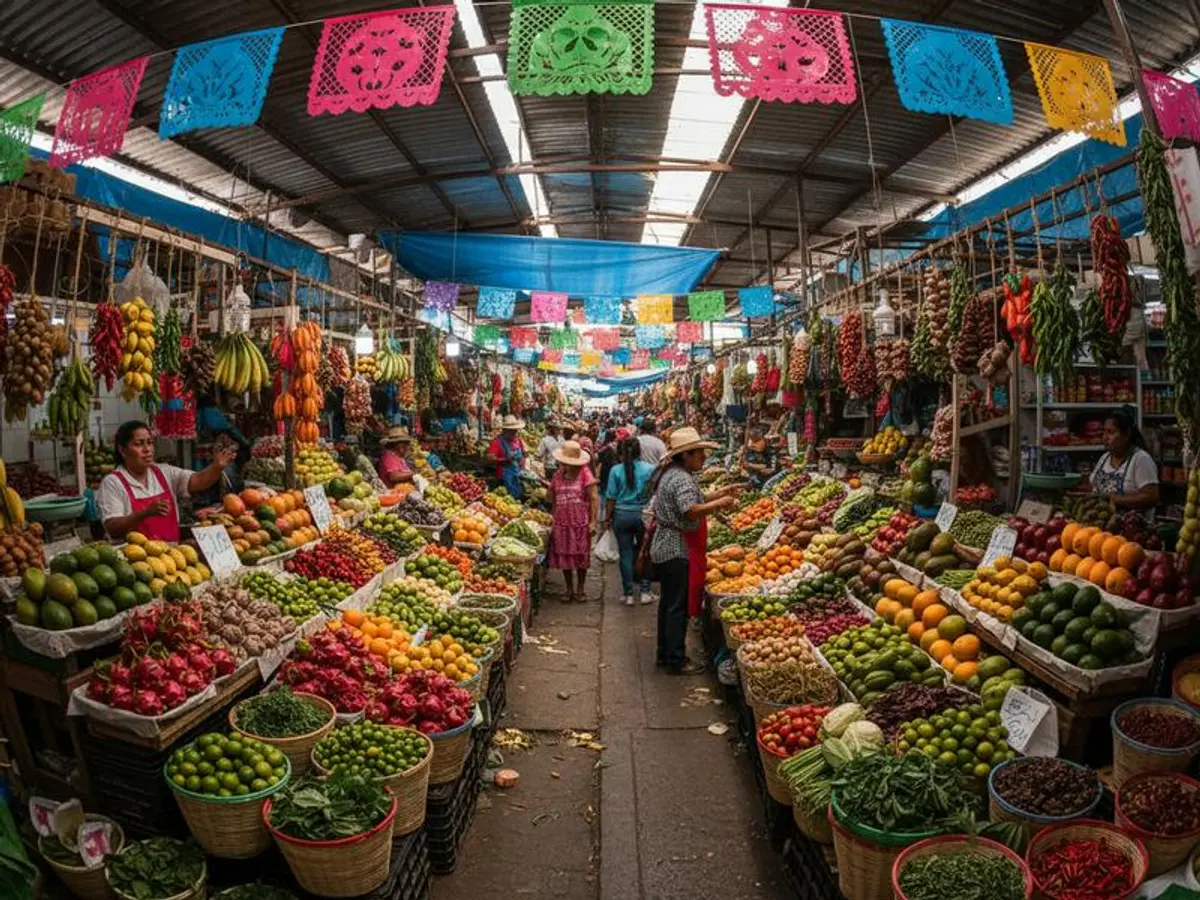
What to Eat in Tulum: The Honest Food Guide (Pueblo vs Beach Zone)
Tulum has two completely different food realities, and most travelers only experience one of them. In the Hotel Zone (the beach road), dinner at a jungle restaurant with fairy lights costs 600-1,200 MXN per person — and honestly, the food is often fine. In Tulum Pueblo (the town, 3km inland), cochinita pibil tacos cost 20-25 MXN each, and the mariscos are some of the best on the Riviera Maya.
This guide covers both — where to eat for each budget and purpose, 15 dishes you need to try, and the Yucatecan food tradition that makes this corner of Mexico distinct from anywhere else.
For trip planning context, our Tulum travel guide covers logistics, neighborhoods, and transport. For specific restaurant recommendations, best restaurants in Tulum has the full breakdown. This article is about the food itself.
The Honest Reality: Pueblo vs Hotel Zone Food
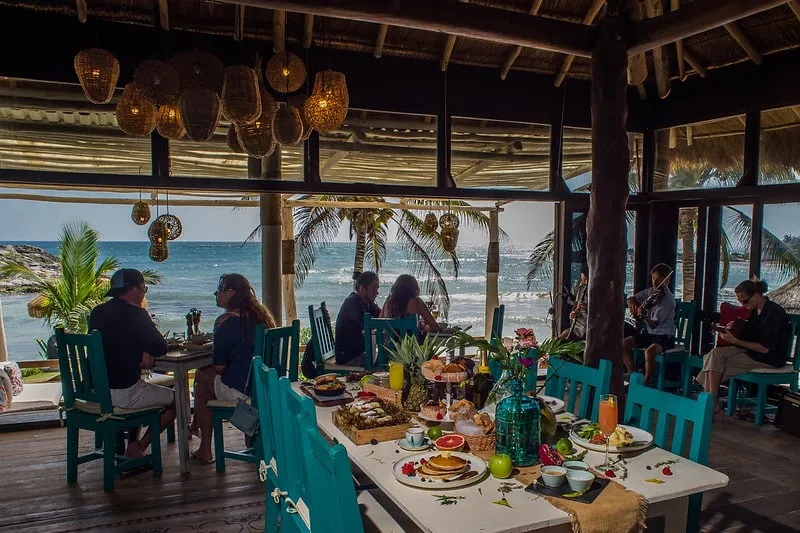
The first thing to understand about eating in Tulum is the price gap.
Tulum Pueblo (the town on the highway) is a working Mexican city of 35,000 people. Food prices are in line with the rest of Mexico: tacos at 20-35 MXN, a full mariscos lunch at 150-250 MXN, elotes and esquites from street carts at 25-40 MXN.
Tulum Hotel Zone (Carretera Tulum-Bocapaila, the beach road) is one of the most expensive dining destinations in Mexico. Ceviche: 280-450 MXN. Main courses: 350-700 MXN. A cocktail: 200-350 MXN. Dinner for two at a mid-range beach restaurant: 1,200-2,500 MXN, before drinks.
The Hotel Zone restaurants are beautiful — thatched roofs, fairy lights, jungle settings, occasionally a cenote or cabana-lined terrace. Some are genuinely excellent. But the prices reflect the aesthetic and the real estate costs, not necessarily the kitchen quality.
The honest recommendation: Eat most meals in Pueblo, especially breakfast and lunch. Reserve the Hotel Zone for one or two dinners where the setting is the experience as much as the food. Budget the difference for cenotes.
| Meal | Pueblo Price | Hotel Zone Price | Difference |
|---|---|---|---|
| Tacos (3) | 60-90 MXN | 180-350 MXN | 3-4× |
| Ceviche/Aguachile | 120-200 MXN | 280-450 MXN | 2-3× |
| Fish main course | 150-280 MXN | 350-650 MXN | 2-3× |
| Cocktail | 80-150 MXN | 200-350 MXN | 2× |
| Full dinner (2 people) | 400-700 MXN | 1,200-2,500 MXN | 3-4× |
15 Essential Tulum Foods
1. Cochinita Pibil Tacos
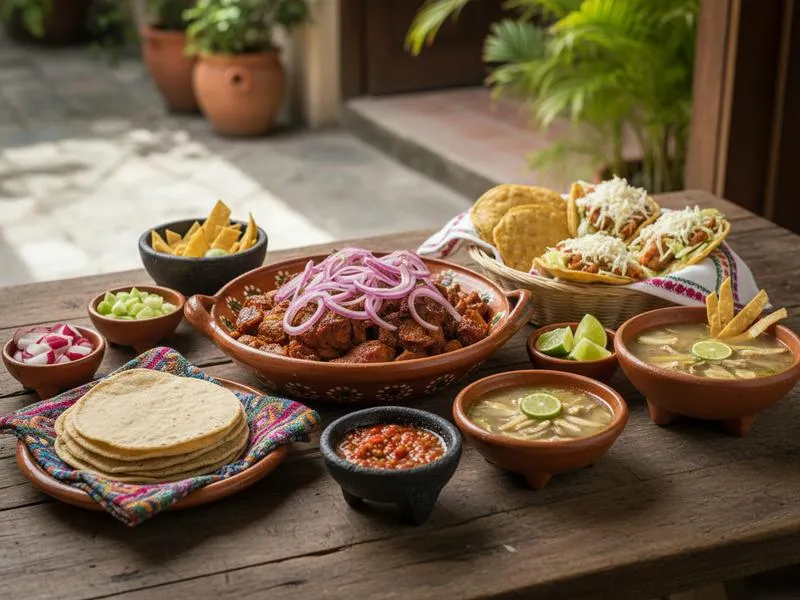
Tulum’s most essential dish. Pork marinated overnight in achiote (bright red annatto spice paste) and sour orange juice, wrapped in banana leaves, slow-roasted underground in a pib (pit oven) for 8-12 hours. The result: melt-apart pork with a deep reddish color, citrus fragrance, and earthy spice.
Served in soft corn tortillas with pickled red onion (cebolla morada) and habanero salsa on the side. The pickled onion is not decoration — it is essential. The acidity cuts the richness of the pork.
Price in Pueblo: 20-30 MXN per taco
Best spot: Antojitos la Chiapaneca (Avenida Tulum, Pueblo) or Taquería Honorio
2. Panuchos
Yucatán’s best street food: fried masa tortillas filled with refried black beans inside the pocket, then topped with shredded turkey or cochinita pibil, pickled red onion, tomato, avocado, and shredded lettuce. The fried pocket creates a structure that stays crispy even with the toppings.
Panuchos are morning food in Yucatán but eaten throughout the day in Tulum. Do not mistake them for simple tostadas — the stuffed interior is what makes them.
Price: 25-40 MXN each
3. Salbutes
The puffed sibling of panuchos. Instead of a filled pocket, salbutes are fried until they puff up like a pillow, then topped similarly. The texture is lighter and airier than panuchos — more like a fried dough pillow than a tortilla. The same toppings: cochinita or turkey, pickled onion, tomato, avocado.
Salbutes and panuchos are typically sold together. Order one of each to understand the difference.
Price: 25-40 MXN each
4. Aguachile Negro
Raw shrimp served immediately (no marinating time, unlike ceviche) in a spicy lime-chile sauce. The negro version uses blackened or charred dried chiles — guajillo or ancho — which give the sauce a dark, smoky heat rather than the fresh-green brightness of regular aguachile.
Tulum’s mariscos scene is heavily influenced by Sinaloa — the state that invented aguachile — and the beach-zone proximity creates a high-quality seafood market. El Camello Jr. in Pueblo does excellent versions at accessible prices.
Price: 150-250 MXN per serving
Warning: Genuinely spicy. Mention poco picante if you have sensitivity.
5. Ceviche de Pulpo (Octopus Ceviche)
The Riviera Maya’s proximity to fishing grounds means exceptionally fresh octopus. Unlike shrimp ceviche (quick lime cure), octopus ceviche requires the octopus to be cooked first (briefly boiled), then marinated in lime, tomato, onion, cilantro, and serrano chile.
Price: 150-250 MXN
Best with: A cold Modelo Clara at Pueblo mariscos spots
6. Poc Chuc
Thin-sliced pork marinated in sour orange juice, then grilled quickly over charcoal. The citrus marinade tenderizes the pork and adds a charred brightness. Typically served with black beans, pickled onion, and fresh tortillas.
Poc chuc is not usually sold from street carts — look for it in Yucatecan restaurants in Pueblo. Cetli (the fine-dining Yucatecan option from Claudia Pérez Rivas) does an outstanding version.
Price: 150-220 MXN for a plate
7. Sopa de Lima (Lima Soup)
One of Yucatán’s most distinctive dishes — a clear chicken broth intensely flavored with lima (not lime, but a specific Yucatecan citrus, slightly more floral). Served with shredded chicken, fried tortilla strips, and a squeeze of fresh lime at the table.
Lima is not the same as limón (lime). The flavor is distinct — more complex, less sharp, with a slight bitterness that the broth balances. This soup does not exist authentically outside Yucatán and Quintana Roo.
Price: 80-150 MXN
Best for: Hangover recovery or post-cenote lunch
8. Papadzules
A pre-Hispanic Yucatecan dish that rarely appears in tourist-oriented menus: corn tortillas filled with hardboiled egg, rolled, and topped with pumpkin seed sauce and a red tomato-chile sauce. The pumpkin seed sauce is dense, nutty, and earthy — nothing like any other Mexican sauce.
Papadzules is Yucatán’s answer to enchiladas, and vastly more interesting. Look for it in traditional Yucatecan restaurants.
Price: 80-130 MXN per order
9. Tacos de Canasta (Basket Tacos)
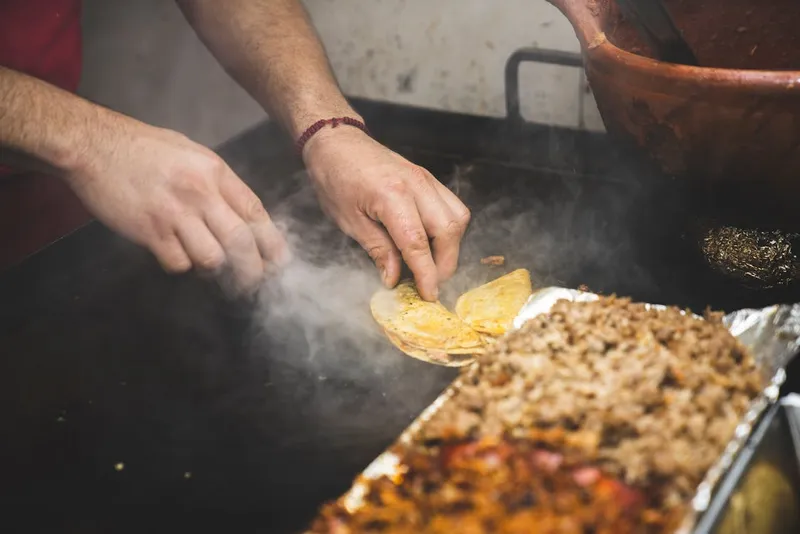
The Pueblan institution that has spread everywhere: small tacos pre-assembled and kept warm inside a cloth-covered basket (canasta). Fillings: chicharrón in red or green sauce, refried beans, potato with chorizo, adobo.
These are morning food — the basket is prepared at dawn and sold until it runs out, usually by 10-11 AM. Price: 10-15 MXN per taco. You will find vendors near the Puebla market and along the main highway in the early morning.
The freshness warning: eat these early. After noon, the condensation in the basket makes them soggy.
Price: 10-15 MXN each
Best time: 7-10 AM
10. Tlayuda (Oaxacan Connection)
Tulum has a significant Oaxacan community — migrants who came for construction work in the 1990s-2000s and built a small culinary foothold. You’ll find tlayudas (large, semi-crispy tortillas spread with black bean paste, asiento lard, quesillo string cheese, and your choice of meat) in several Pueblo spots.
Antojitos la Chiapaneca offers tlayudas despite the name. This Oaxacan-Yucatecan overlap is specific to Tulum’s food culture — you won’t find it in Cancún or Mérida the same way.
Price: 80-150 MXN depending on toppings
11. Pescado Tikin Xic
A Yucatecan fish dish: whole or filleted fish marinated in achiote and sour orange, then grilled wrapped in banana leaves. The banana leaf infuses a subtle vegetal smokiness. Tikin Xic is holiday food and festival food — more effort than daily cooking, which means it appears at proper Yucatecan restaurants.
Price: 200-350 MXN
Best at: Traditional Yucatecan restaurants in Pueblo
12. Elotes and Esquites
Universal Mexican street food but done particularly well in Tulum because of the corn quality. Elotes (grilled corn on the cob) are slathered in mayo, cheese, chile, and lime. Esquites (corn kernels in a cup with the same toppings plus optional epazote herb) are the spoonable version.
Find these from carts on Avenida Tulum starting around 4-5 PM. Perfect post-beach snack.
Price: 25-40 MXN
13. Margaritas de Tamarindo
Tulum’s Hotel Zone has elevated the margarita game beyond standard lime-salt. The tamarind version — sweet-sour tamarind pulp with tequila blanco and lime, served with a chili-salt rim — is the quintessential Tulum hotel zone cocktail.
This is the one Hotel Zone indulgence that justifies the price. At a beach bar at sunset, with your feet in the sand, a tamarind margarita at 200-280 MXN is the experience you came for.
14. Agua de Chaya
Chaya is a leafy plant native to Yucatán and extremely common in traditional cooking. The leaves are blended with water, lime, and sweetener into a green agua fresca. It tastes mild, slightly herbal, and freshly green. Consumed across the Yucatán Peninsula as daily hydration.
A glass of chaya agua fresca at a Pueblo lunch spot costs 15-25 MXN and is one of the most refreshing things you can drink in the heat.
15. Mezcal (with Context)
Tulum’s Hotel Zone has a sophisticated mezcal scene — the bohemian-spiritual aesthetic of the beach road combines naturally with artisanal agave spirits. Several Hotel Zone bars stock 30-50+ labels of mezcal, with knowledgeable staff.
Price in Hotel Zone: 150-350 MXN per pour. Price in Pueblo: 60-100 MXN. The selection in Pueblo is smaller but the spirit is the same.
Where to Eat in Tulum: Best Spots by Category
Best Budget Taco Spots (Pueblo)
Antojitos la Chiapaneca — The most-recommended spot among budget-savvy Tulum regulars. Despite the name suggesting Chiapas, they serve excellent cochinita pibil tacos, tlayudas, and Yucatecan antojitos. Located on Avenida Tulum in Pueblo. Cash only. Tacos 20-30 MXN.
Taquería Honorio — Family-run spot specializing in panuchos and salbutes. Particularly good cochinita. Breakfast and lunch hours. Street-facing with plastic chairs. 25-40 MXN per piece.
El Carboncito — Charcoal-grilled meats (carne asada, chorizo, longaniza) served in corn tortillas. The simple setup is the point — you order by weight or by taco, with homemade salsas and grilled onion. Evenings in Pueblo. 30-45 MXN per taco.
Best Seafood (Pueblo)
El Camello Jr. — The go-to mariscos spot for value and quality. Ceviche, aguachile negro, tostadas de pulpo, fresh fish. Covered outdoor space with basic tables. Lunch focused, closes mid-afternoon. Ceviche from 120 MXN, aguachile from 150 MXN.
Antojitos el Chaval — Known for tostadas de marlín (marlin tostadas) and fresh shrimp cocktails. Smaller and more casual than El Camello.
Best Mid-Range (Pueblo)
Cetli — Chef Claudia Pérez Rivas’s Yucatecan restaurant using traditional techniques and local ingredients. The most serious kitchen in Tulum for regional cuisine. Poc chuc, sopa de lima, and papadzules done properly. 250-450 MXN per main. Reservations sometimes needed.
El Asadero — Upscale taqueria with premium cuts (arrachera, costilla) and craft mezcal. The bridge between Pueblo pricing and Hotel Zone quality. 150-350 MXN per main.
Best Hotel Zone (Splurge-Worthy)
Hartwood — Open-fire cooking with local ingredients. No refrigeration, no electricity (historically). The menu changes daily. One of the most acclaimed restaurants in Mexico and internationally. 800-1,500 MXN per person. Book weeks in advance.
ARCA — Contemporary Mexican cuisine in a jungle setting. Well-executed tasting menus and à la carte. 700-1,200 MXN per person.
Gitano — The cocktail bar and restaurant where Tulum’s Hotel Zone aesthetic was born. Mezcal menu is excellent. Food ranges from good to very good. 600-1,000 MXN per person. Good for the full experience rather than the specific dishes.
Real Coconut — Known for the coconut-based menu (coconut tortillas, coconut-based drinks). More gimmick than substance, but genuinely popular and the coconut margaritas are legitimately good. 500-800 MXN per person.
Tulum Food by Budget
| Daily Food Budget | Where You’re Eating | What to Expect |
|---|---|---|
| Under 300 MXN/day | Exclusively Pueblo street food | Tacos, antojitos, elotes, agua fresca — excellent quality |
| 300-600 MXN/day | Pueblo restaurants + occasional Hotel Zone lunch | Sit-down mariscos, Yucatecan mains, one nice cocktail |
| 600-1,200 MXN/day | Mix of Pueblo and Hotel Zone mid-range | Daily seafood meals, evening beach cocktail, one nice dinner |
| 1,200-3,000+ MXN/day | Hotel Zone-focused | Full beach club dining, cocktails, tasting menus, Hartwood |
Getting from the Hotel Zone to Pueblo for Food
This is the question every Hotel Zone visitor eventually asks, because eating exclusively in the Hotel Zone is expensive and limiting.
The bike path is the best solution. Most Hotel Zone accommodations rent bicycles (100-200 MXN/day). The bike path runs 4-5 km from the Hotel Zone to Pueblo and takes 20-30 minutes. Cycling to Pueblo for lunch, then back for beach time, is the standard budget-conscious Hotel Zone move.
Taxis (150-250 MXN, one-way) are reliable and fixed-rate — there is no meter, always agree on price before entering. No Uber in Tulum.
Colectivos (shared vans, 20-30 MXN) run on the main Carretera between Pueblo and the Hotel Zone junction. Flag one down heading south.
For more on getting around, see the full guide to transport in Tulum.
Tulum Food: Seasonal Considerations
November-April (Dry Season): Best produce quality, clearest weather for outdoor eating. Hotel Zone restaurants are at full capacity — book in advance for Hartwood, ARCA, and popular beach clubs.
May-October (Rainy Season): Afternoon showers (usually 2-4 PM) create natural breaks for indoor dining. Restaurant prices in Hotel Zone drop 15-30%. Pueblo restaurants unaffected by season — just busier on weekends.
Semana Santa (Easter Week): Tulum is one of Mexico’s most popular Semana Santa destinations. Hotel Zone restaurants are fully booked. Pueblo is chaotic. If visiting during Holy Week, book Hotel Zone dinners weeks ahead and expect long waits everywhere.
No Ley Seca in Quintana Roo: Bars and restaurants in Tulum are exempt from Mexico’s Ley Seca (dry law). Drinks are served all through Semana Santa — a key differentiator from Jalisco (Guadalajara, Puerto Vallarta) and Guerrero (Taxco), where alcohol sales stop on Holy Thursday and Good Friday.
Tulum Food FAQs
Plan Your Tulum Food Trip
The best Tulum food experience combines both worlds: morning cochinita pibil tacos in Pueblo, afternoon cenote swim, sunset cocktail at a Hotel Zone beach bar, and one splurge dinner at Hartwood or ARCA.
For activities beyond eating, our things to do in Tulum guide covers cenotes, ruins, and day trips. For the full logistics guide including transport and accommodation, see the Tulum travel guide. If you started in Cancun, what to eat in Cancun covers how the food differs just 130km north. For the stretch in between, what to eat in Playa del Carmen covers the food scene in PDC with Yucatecan staples, local tacos, and the best spots away from 5th Avenue.
Plan your Tulum cenote and food tours — browse Tulum cooking classes and food experiences on Viator for market tours, mezcal tastings, and culinary experiences with local guides.