Oaxaca Travel Guide 2026: City, Ruins, Mezcal & the Coast
Oaxaca (pronounced wah-HAH-kah) is the capital city of Oaxaca state in southern Mexico, at 1,550 meters elevation in a highland valley surrounded by the Sierra Madre del Sur mountains, 460 km southeast of Mexico City. With 600,000 residents in the metro area and UNESCO World Heritage status for its historic center and Monte Albán, it’s Mexico’s most complex and rewarding state for travelers combining culture, food, archaeology, and nature.
Oaxaca requires more planning than most Mexico destinations. The state has three distinct travel zones — the city, the mountains, and the coast — that are geographically close but logistically separate. Getting from Oaxaca City to Puerto Escondido now takes 3-3.5 hours via the new Autopista Barranca Larga-Ventanilla — or 45 minutes by flight. Most visitors who come “to Oaxaca” see only one zone. The ones who plan well see two or three.
This guide covers all of it.
30-Second Answer
If it is your first trip, spend 4 to 5 nights in Oaxaca City and treat the coast as a separate add-on unless you have at least a full week. The best first-timer mix is Centro or Jalatlaco as your base, Monte Albán, one valley day trip (Hierve el Agua, Mitla, or the craft villages), one serious food and mezcal day, and then the coast only if you are happy giving up city time.
Oaxaca rewards travelers who pick one or two zones well instead of trying to do the city, Sierra Norte, Puerto Escondido, Mazunte, and Huatulco in one rushed trip. If you only have 3 days, stay in the city. If you have 7 to 9 days, combine Oaxaca City + the coast.
| If you want… | Best plan |
|---|---|
| Food, markets, mezcal, walkable culture | Base in Oaxaca City for 4 to 5 nights |
| Ruins + villages + easy day trips | Stay in Centro or Jalatlaco and rent a car for 1 day or book tours |
| Surf and beaches | Split time between Oaxaca City + Puerto Escondido |
| A slower beach trip | Skip the city add-ons and go straight to Mazunte/Zipolite or Huatulco |
| One week in Oaxaca state | Do 4 nights city + 3 nights coast |
Oaxaca Quick Facts
| State | Oaxaca |
| City elevation | 1,550 m (5,085 ft) |
| Airport | Oaxaca International (OAX) — Mexico City, Cancun, Guadalajara, some US routes |
| City population | ~600,000 metro |
| Time zone | UTC-6 (Central Standard Time, observes DST → UTC-5 summer) |
| Language | Spanish. 16 indigenous languages (Zapotec, Mixtec, Nahuatl among them). |
| UNESCO sites | Historic center of Oaxaca + Monte Albán (both on one designation) |
| Best time | October–May (dry season) |
| Semana Santa 2026 | March 22–29 — See Oaxaca Holy Week guide |
| Guelaguetza festival | Last 2 Mondays of July |
| Monte Albán | 8 km west of city |
| Hierve el Agua | 70 km east (2+ hours by car) |
| Puerto Escondido (coast) | 250 km (45 min flight, 3.5 hrs via new autopista) |
Oaxaca’s Three Zones
Understanding this geography is the most important thing to know before planning:
Zone 1: Oaxaca City & the Valleys
The colonial city and the archaeological/craft village circuit within 90 minutes. This is what most visitors mean when they say “Oaxaca.” 3-5 days minimum to do it justice.
Zone 2: The Mountains (Sierra Norte)
The cloud forests and indigenous Zapotec mountain villages north of the city — Cuajimoloyas, Lachatao, Benito Juárez, Llano Grande. Hiking, mountain biking, treetop zip lines, sleeping in indigenous-run ecolodges. Requires car or organized tour, 2-3 hours from city.
Zone 3: The Oaxacan Coast
Puerto Escondido (surf town, 340 days/year waves), Mazunte (eco-tourism, turtle nesting, nude beach at Zipolite), Huatulco (beach resort, national park bays), Chacahua (lagoons, crocodiles, Pacific beaches). Requires flight or very long drive from city. Plan 3+ days separately.
The key planning insight: The new autopista (fully open 2024) makes city-to-coast realistic without flying — 3.5 hours on a shuttle vs. the old 7-8 hour mountain slog. See our Oaxaca to Puerto Escondido transport guide for all options, including the new highway, shared shuttles, and the old mountain bus.
Oaxaca City
The Zócalo and Historic Center
The main plaza is the social heart of Oaxaca City — café terraces, political debates, marimba bands, and the ever-present mezcaleros selling artisanal mezcal from clay cups. The Zócalo is flanked by the Municipal Palace (with Diego Rivera-influenced murals of Oaxacan history) and faces the Cathedral of Oaxaca (1733).
One block north: Santo Domingo de Guzmán Church — arguably Mexico’s most ornate church interior. Built by Dominican friars between 1570-1608, the gold-leaf ceiling and baroque facade are extraordinary. The adjacent Museo de las Culturas de Oaxaca occupies the former monastery and houses Tomb 7 artifacts from Monte Albán (gold, obsidian, turquoise jewelry of the Mixtec elite — one of the most important pre-Hispanic treasure caches found in Mexico).
Mercado Benito Juárez & Mercado 20 de Noviembre
The city’s two central markets are separated by a narrow street and together form the best food experience in Oaxaca.
Benito Juárez: Produce, herbs, spices, quesillo cheese, chocolate, grasshoppers (chapulines), artisanal crafts. Essentially a compressed version of Oaxacan material culture in one building.
20 de Noviembre: The food market. Long corridors of comedores (food stalls) serving the full Oaxacan menu. The corridor of tlayudas (giant crispy tortillas layered with beans, asiento, Oaxacan cheese, and your choice of meat) is the essential lunch stop. For dinner: the grilled meat corridor, where smoke fills the narrow passage from charcoal grills and vendors fan the coals at full tables.
Market tip: Eat at 12-2 PM when the food is freshest and the stalls are at full operation. Bring cash.
Oaxacan Food: The Seven Moles
Oaxaca is called “the land of seven moles” — and unlike most culinary superlatives, this one is accurate. Mole (mo-leh) is a complex sauce with dozens of ingredients; Oaxacan versions predate the Spanish conquest and are UNESCO-recognized intangible cultural heritage.
| Mole | Color | Key Flavors | Typical Pairing |
|---|---|---|---|
| Negro | Dark chocolate-brown | Mulato/chihuacle negro chiles, chocolate, plantain | Turkey, chicken |
| Rojo | Deep red | Ancho, guajillo chiles, tomato | Chicken, pork |
| Coloradito | Red-brown | Ancho, mulato, tomato, chocolate | Chicken, enchiladas |
| Amarillo | Golden yellow | Chilhuacle amarillo, masa, tomatillo | Chicken, vegetables |
| Verde | Bright green | Tomatillo, pepita (pumpkin seed), hierba santa | Fish, chicken |
| Manchamanteles | Dark red | Ancho chile, pineapple, plantain | Pork, duck |
| Chichilo | Very dark | Chihuacle negro, mulato, avocado leaf, tomato | Beef, lamb |
Where to eat mole: The neighborhood fondas around the Mercado 20 de Noviembre are the authentic entry point. Restaurant Los Danzantes (Centro Histórico) and La Biznaga serve excellent contemporary Oaxacan mole dishes. For cooking context: many boutique hotels run morning mole-making workshops — worth the 3-4 hours. For a complete dish-by-dish breakdown with prices and restaurant recommendations, see our what to eat in Oaxaca guide.
Other Essential Oaxacan Dishes
- Tlayuda: A large 30cm corn tortilla, crisped on a comal, spread with asiento (pork fat) and black bean paste, topped with quesillo and grilled meat. The Oaxacan answer to pizza — better.
- Tasajo: Air-dried, thinly sliced beef marinated in lime and salt. Grilled to order. Different from cecina.
- Memela: An oval corn cake with black beans — street food, morning snack.
- Chapulines: Toasted grasshoppers with lime and chile salt. Crunchy, salty, slightly smoky. High protein. Sold in market by the gram or on tlayudas. The hesitation passes after the first bite.
- Chocolate: Oaxacan cacao is the basis of both the mole negro and the hot chocolate tradition. Chocolate caliente with milk, cinnamon, and almond paste — drunk with pan de yema (egg-yolk bread) for breakfast.
Monte Albán
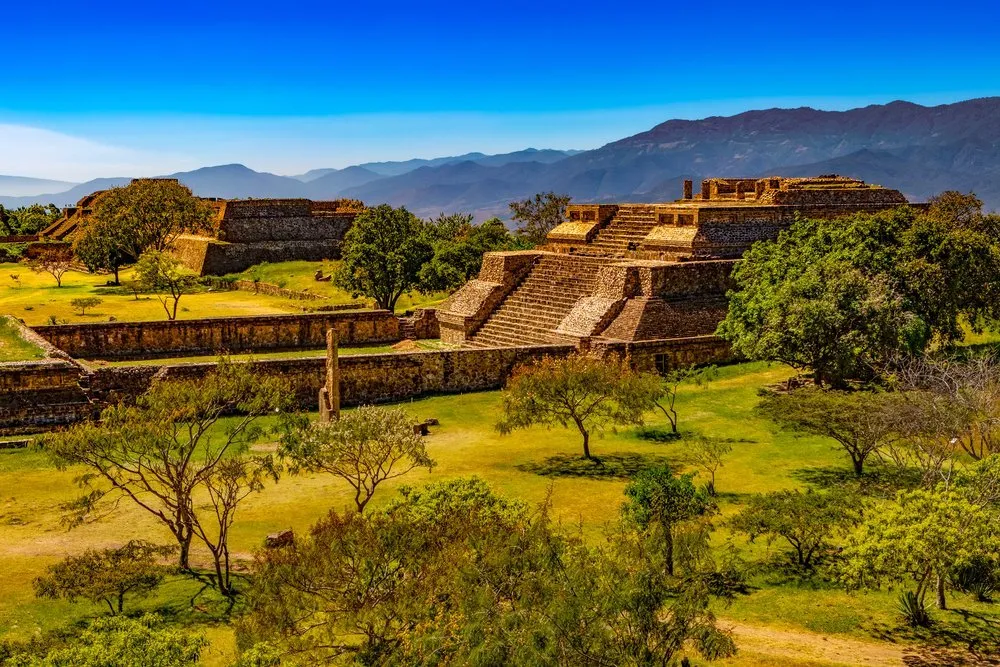
Monte Albán is one of the most important archaeological sites in the Americas — a Zapotec city founded around 500 BCE that became the capital of a regional empire controlling much of southern Mexico for over 1,000 years. At its peak (200-700 CE), it housed 25,000 people on a mountaintop that was artificially leveled and shaped over centuries.
What you see: A large central plaza flanked by two major pyramid platforms (North Platform and Main Platform), the Observatory (a diamond-shaped structure oriented to star positions), the Ball Court, the carved stone slabs of Los Danzantes (the “Dancers” — actually sacrificed captives from conquered peoples, displayed as trophies), and over 170 tombs cut into the mountain.
Why it’s different from Chichen Itza: Monte Albán gets far fewer tourists. You can walk freely on the platforms, enter the tomb passages, and stand on the Main Platform overlook with an actual sense of space. The views of the Oaxacan valley 400 meters below are extraordinary.
Practical logistics:
- Entry: 100 MXN + 33 MXN state fee (much cheaper than Chichen Itza’s 614 MXN)
- Hours: 8 AM – 5 PM daily
- Distance from city: 8 km west — taxi 100-130 MXN each way, or local bus from Mercado de Abastos (15 MXN)
- Best time: 8-11 AM before the heat and tour buses
- Duration: 2-3 hours for a thorough visit
- Museum: On-site; strong collection of tomb artifacts
Hierve el Agua
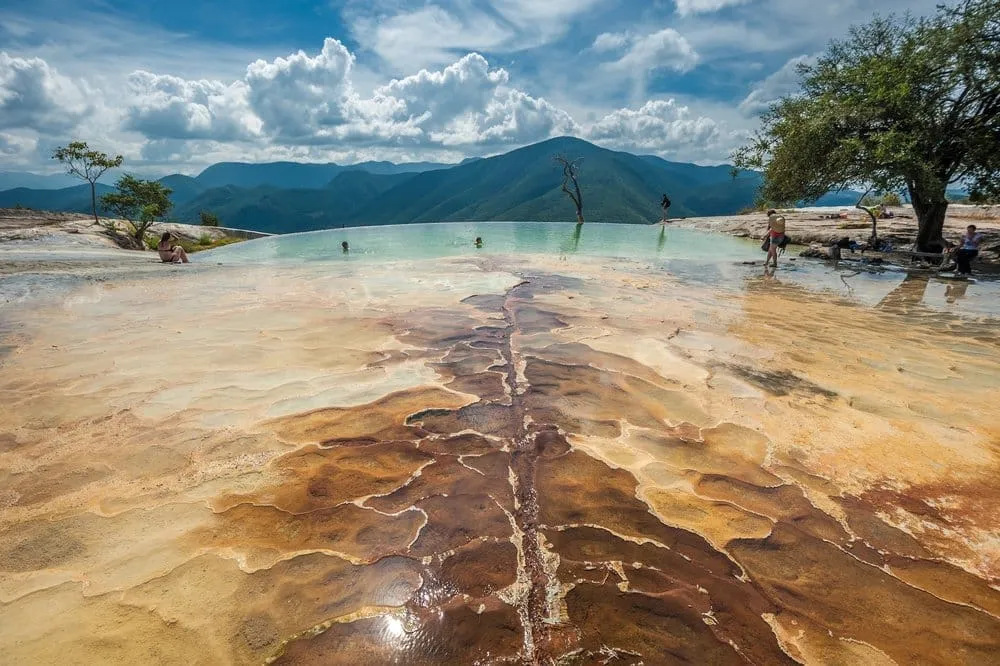
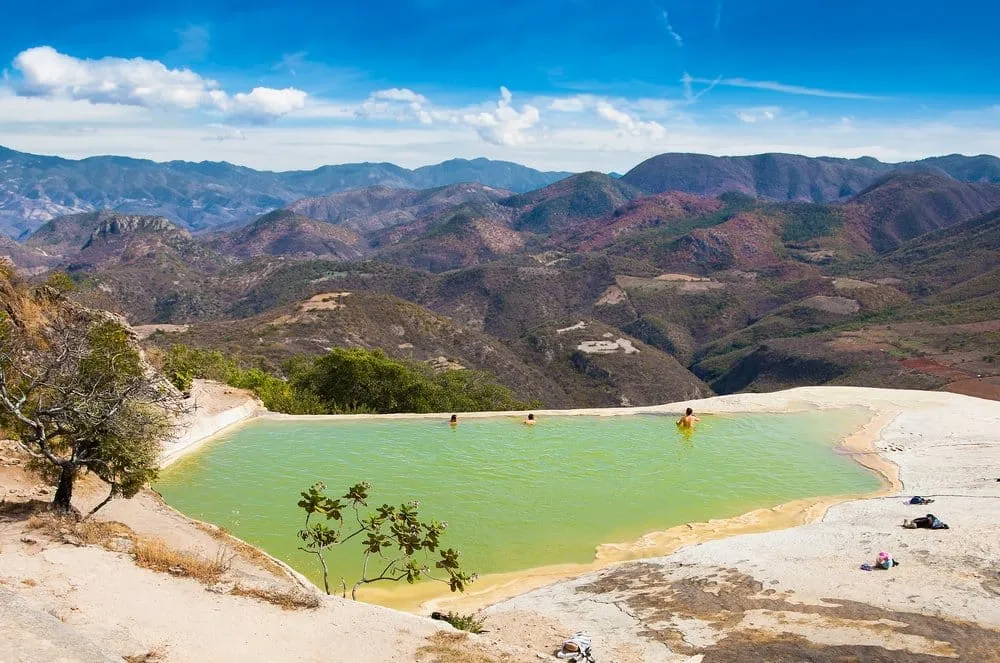
Hierve el Agua (“The Water Boils”) is one of Mexico’s most extraordinary landscapes: mineral-rich spring water overflows from natural cliff-edge pools, and over millennia the calcium carbonate deposits have formed frozen “petrified waterfalls” cascading down the rock face 50 meters to the valley below. The water isn’t actually boiling — the name refers to the bubbling of the spring water as it emerges from the rock.
Above the waterfalls: two natural infinity pools you can actually swim in, their water warm (not hot), with a turquoise-green tint from the minerals. The view from the pools over the Oaxacan highland valley is genuinely one of Mexico’s great landscapes.
Practical logistics:
- Distance from city: 70 km east (requires car or organized tour — no reliable public transport to the site itself)
- Road: First 50 km on Highway 190 (fast); last 20 km on a winding mountain road through Mitla
- Entry: 35 MXN
- Duration: 3-4 hours at the site
- Combine with: Mitla ruins (50 km east, on the same road) and Tlacolula market (Sundays)
Tip: Go on a Sunday and combine with Tlacolula market (the largest traditional market in Oaxaca — held every Sunday morning in the valley town of Tlacolula, 40 km east of the city). Then continue to Mitla ruins, then Hierve el Agua. A full Sunday circuit.
The Guelaguetza Festival
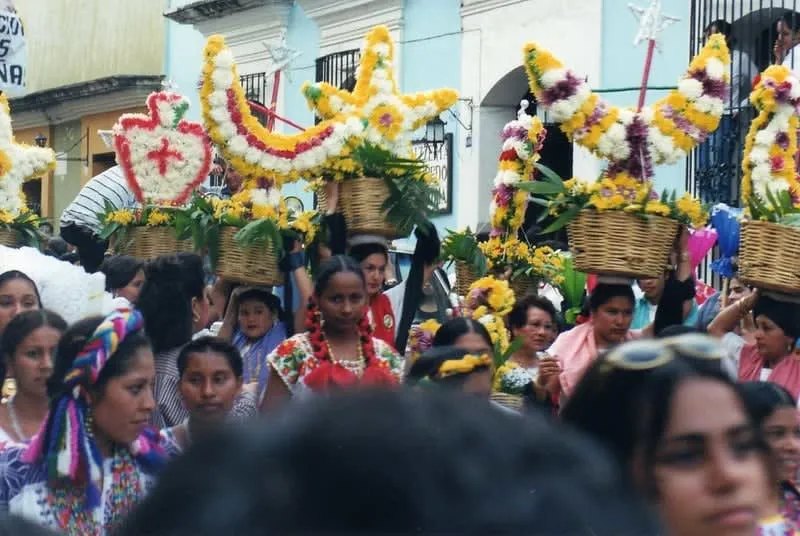
The Guelaguetza (from Zapotec: “offering” or “cooperation”) is Mexico’s most spectacular indigenous cultural event. On the last two Mondays of July, 16 ethnic groups from across Oaxaca state perform traditional dances, music, and rituals in full regional costume at the open-air Cerro del Fortín amphitheater.
The performances include:
- The Zapotec Jarabe del Valle — courtship dance in tehuana dress
- The Mixtec Danza de la Pluma — elaborate feathered headdress dance reenacting the Spanish conquest
- The Huave Danza de los Mixes — from the Isthmus coast
- Dances from Mazatec, Chatino, Triqui, and 10 other groups, each in their distinct regional costume
The atmosphere is unlike anything else in Mexico: 10,000 people in the open-air amphitheater, mountain backdrop, morning light, and performers who have been rehearsing for months. Unlike many Mexican festivals, this is primarily attended by Oaxacans, not tourists.
Ticket tiers: Free Gradas (upper section — arrive by 7 AM for a good spot); Palco (paid, 700-2,500 MXN; reserved seats with better views). Book paid tickets months in advance through the Oaxaca Tourism website.
Mezcal: Oaxaca’s Most Important Export
Oaxaca produces over 80% of Mexico’s mezcal. While tequila is industrially produced in Jalisco, traditional mezcal in Oaxaca is still made in small-batch palenques (distilleries) using techniques unchanged for centuries: roasting the agave piña in underground pits (which creates the distinctive smokiness), crushing in a stone tahona, fermenting in open wooden vats, and double-distilling in clay or copper pot stills.
The important distinction: Most mezcal in Oaxaca’s city bars and tourist shops is from large producers. The genuinely artisanal mezcal comes from small villages: San Agustín Amatengo, Sola de Vega, Miahuatlán, and especially San Dionisio Ocotepec and Matatlán — “the World Mezcal Capital.”
How to drink it properly: Room temperature, in a clay copita (not a shot glass), sipped slowly. The smokiness should be a note, not a hammer blow — if it tastes like liquid campfire, you’re drinking a lower-quality mezcal. Taste the agave variety beneath the smoke.
In Oaxaca City: Several excellent mezcal bars on Calle Murguía and near Santo Domingo. The bars will typically offer a cata (tasting flight) of 3-5 different agave varieties (espadín, tobalá, madrecuixe, tepextate) — a proper education in the variety.
The Craft Villages Circuit
Within 30-90 minutes of Oaxaca City, a circuit of villages specializes in artisanal traditions that have defined Oaxacan crafts for centuries:
| Village | Craft | Distance | Notes |
|---|---|---|---|
| Teotitlán del Valle | Hand-woven wool tapetes (rugs) | 30 km east | Zapotec-pattern wool rugs, natural dyes from cochineal and plants |
| San Bartolo Coyotepec | Black clay pottery (barro negro) | 10 km south | The famous matte-black ceramics of Oaxaca; founded by Doña Rosa |
| San Marcos Tlapazola | Red clay cookware | 20 km east | Working pottery tradition, cookware for Oaxacan kitchens |
| Atzompa | Green-glazed pottery | 8 km northwest | Traditional green-glaze ceramics, less touristed than Coyotepec |
| Arrazola | Alebrijes (carved wood animals) | 12 km southwest | Hand-carved and painted fantastical animal figures |
| San Martín Tilcajete | Alebrijes | 23 km southwest | More elaborate paintwork than Arrazola; workshops open for visitors |
A practical half-day circuit: Coyotepec (30 min from city by colectivo) + Arrazola (car, 15 min from Coyotepec) + return through Xoxocotlán. Or: Teotitlán del Valle + San Marcos (same direction, east). Most colectivos for the eastern circuit depart from Mercado de Abastos.
Buying authentically: Purchase directly from artisan families’ workshops — look for signs saying taller (workshop) or familia artesana. The pieces sold in city boutiques at premium prices come from these exact workshops at 40-60% markup.
The Oaxacan Coast
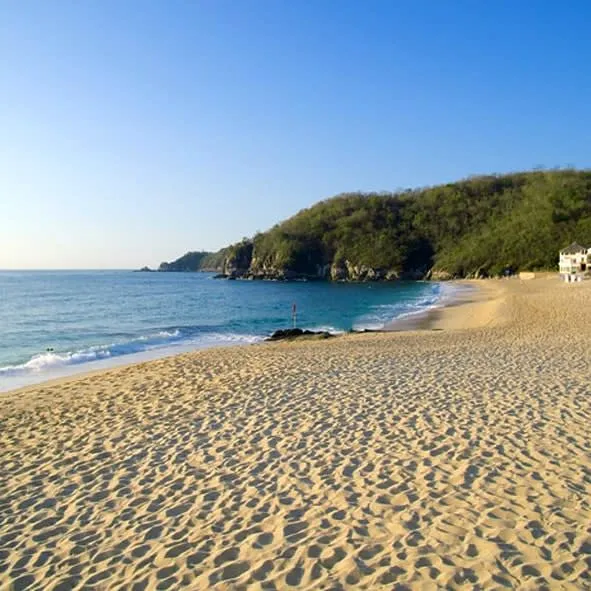
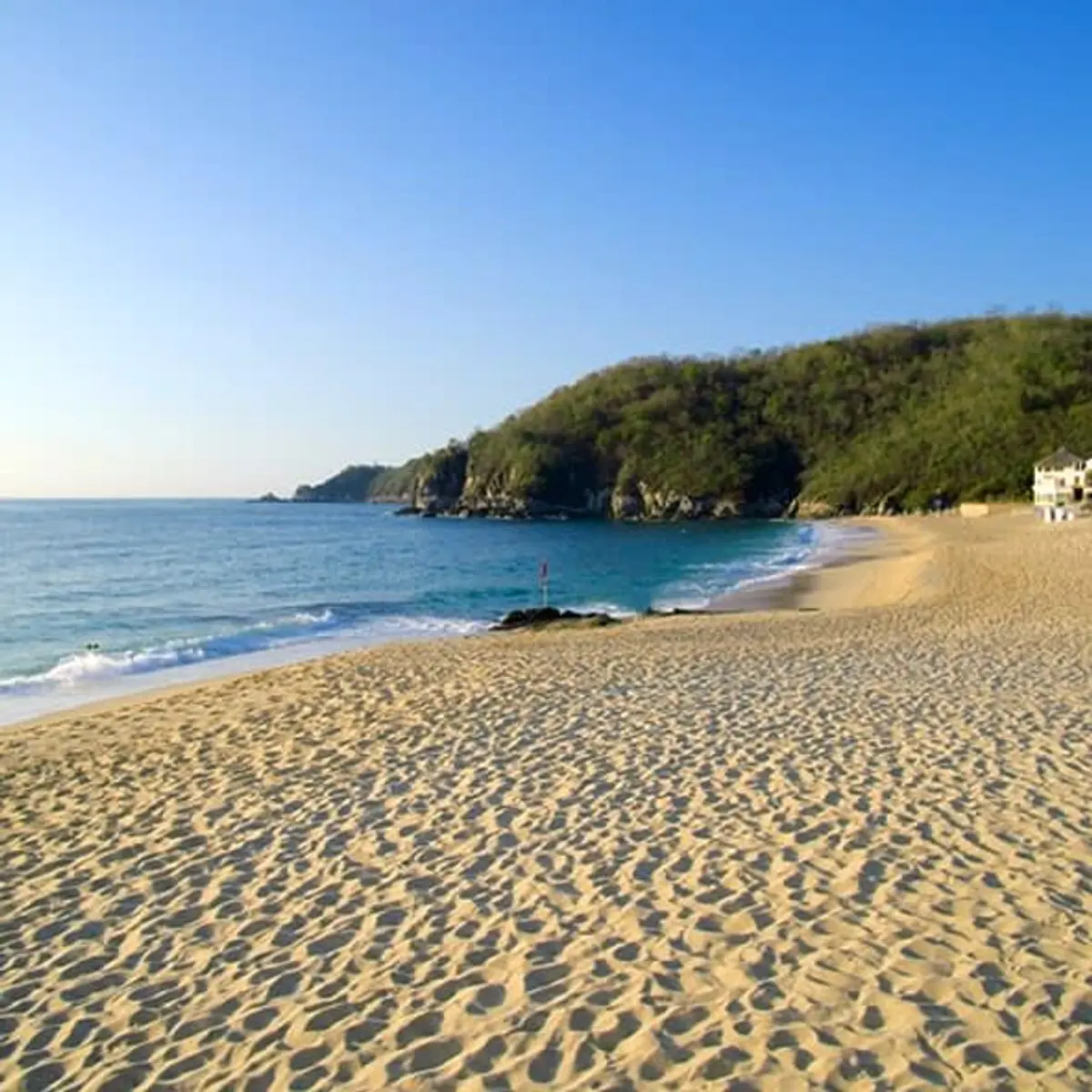
The Oaxacan coast is a completely different world from the city — Pacific beaches, tropical heat (30-35°C year-round), surf culture, and a dramatically different set of towns. Getting there is the challenge.
Puerto Escondido
The surf town. The open bay of Zicatela is home to one of Mexico’s most powerful waves — the Mexican Pipeline — breaking over a sand bar with tube rides that draw professional surfers globally. Non-surfers swim at La Punta (protected) or Playa Carrizalillo (small, sheltered, crystal water). Puerto Escondido has grown substantially but retains a genuine surfer/backpacker culture alongside increasingly upscale restaurants. Puerto Escondido guide → | Things to Do in Puerto Escondido →
Mazunte & Zipolite
40 km southeast of Puerto Escondido. Mazunte is an eco-tourism village built around turtle conservation (the Mexican sea turtle sanctuary is here — nesting season June-November). Zipolite, next door, is Mexico’s only legally nude beach. Both are hippie-backpacker havens with $10-30/night palm-thatch cabanas and mezcal bars that open at sunset.
Huatulco
50 km further southeast. Nine bays of the Santa Cruz Bay system, protected as a national marine park. More resort infrastructure than Puerto Escondido, less surf culture. Good snorkeling, boat tours of the bays, calm swimming. A more conventional beach resort with better hotel infrastructure. Full Huatulco travel guide →
Chacahua National Park
80 km northwest of Puerto Escondido. Lagoon system with crocodiles, bird watching (herons, roseate spoonbills, ospreys), and Pacific beach accessible only by boat. Chacahua guide →
Getting to Oaxaca
By Air
Oaxaca International Airport (OAX) is 8 km south of the city. Direct flights from:
- Mexico City: 1 hour, multiple daily (Aeroméxico, Volaris, VivaAerobus, Magnicharters)
- Cancun: 2.5 hours (seasonal/charter)
- Guadalajara: 1.5 hours via Mexico City (no direct GDL→OAX nonstop — all connect through MEX). See the Guadalajara to Oaxaca guide for prices and booking tips.
- US: Houston (United), limited routes; most US travelers connect through CDMX
By Bus from Mexico City
ADO Platinum/GL: 600–1,200 MXN, 6–7 hours. The overnight bus is genuinely comfortable — depart 10 PM, arrive 4:30–6 AM. Book at ADO.com.mx. See our complete Mexico City to Oaxaca transport guide for all options with real 2026 prices. Heading back? See the Oaxaca to Mexico City guide — TAPO terminal, overnight Platinum bus details.
By Bus from Puebla
ADO direct from CAPU terminal: 4.5–5.5 hours, 280–450 MXN. Buses run every 1–2 hours. The route passes through Tehuacán — worth a stop if you have time. See the Puebla to Oaxaca guide for full details including the Semana Santa booking warning.
By Car from Mexico City
430 km via Highway 135D (toll highway through the mountains). 6-7 hours. Scenic but tiring. Car rental makes the craft villages and Hierve el Agua much more convenient.
Getting Around Oaxaca City
Walking: The historic center is entirely walkable. Monte Albán is 8 km (taxi).
Taxis: Plentiful, metered or negotiated. City centro trips: 60-100 MXN. To airport: 80-120 MXN.
Uber: Works in Oaxaca City. Generally cheaper than taxis for medium-distance trips.
Colectivos: For the craft villages and day trips — shared vans depart from Mercado de Abastos and along Calle Mina. Very cheap (15-40 MXN), understand where you’re going before boarding.
Car rental: Essential for Hierve el Agua, the Sierra Norte villages, and exploring beyond the colectivo network. Available at the airport and in the city center.
Where to Stay in Oaxaca City
Best Area by Trip Style
| Trip style | Best base | Why |
|---|---|---|
| First trip, short stay, no car | Centro Histórico | Walk to Santo Domingo, markets, rooftop bars, and most hotel picks |
| Pretty streets, quieter nights, cafe-heavy stay | Jalatlaco | More residential feel, photogenic streets, still walkable to the center |
| Budget backpacker / longer stay | Centro edges or Xochimilco | Lower prices, guesthouses, still practical for walking and taxis |
| Driving day trips | Near Centro with parking | Easier morning departures for Monte Albán, Mitla, Hierve el Agua, and villages |
Historic Center (Best Base)
The colonial heart — boutique hotels in converted casas coloniales (colonial mansions) with interior courtyards. Walking distance to everything. Price range: $60-200/night mid-range boutiques; $200-400/night for top colonial properties.
Jalatlaco Neighborhood
The most beautiful residential neighborhood in Oaxaca — cobblestone streets, painted houses, artist studios, and excellent cafés and restaurants. 15 minutes’ walk from the Zócalo. Very popular boutique hotel zone, slightly quieter than the centro.
Budget Options
Hostels and guesthouses from $15-40/night in the historic center and surrounding neighborhoods. Oaxaca has a good hostel scene given the city’s popularity with independent travelers.
The hotel choice that matters most in Oaxaca is Centro Histórico vs Jalatlaco. Pick Centro if this is your first visit and you want the shortest walk to Santo Domingo, markets, and rooftop bars; pick Jalatlaco if you want prettier streets, quieter nights, and a boutique-stay feel while staying walkable.
If you already know the neighborhood, the next booking filter is usually courtyard boutique stay vs pool-and-parking convenience. In Oaxaca that matters more than it sounds: a shaded courtyard or small pool feels much better after Monte Albán, Hierve el Agua, or a hot afternoon in the markets, while parking matters if you are planning an early valley day trip.
Oaxaca Budget Guide
Oaxaca City is affordable by Mexican standards. The coast varies by destination.
| Category | Budget (city) | Mid-Range (city) | Comfortable (city) |
|---|---|---|---|
| Accommodation | $20-45/night | $70-150/night | $150-350/night |
| Meals | $10-20/day | $25-50/day | $60-120/day |
| Transport | $5-15/day | $15-30/day | $30-60/day |
| Activities | $5-20/day (markets, mezcal tastings) | $30-70/day (Monte Albán, craft villages) | $80-150/day (Hierve el Agua + car) |
| Daily total | $40-100 | $140-300 | $320-680 |
The mezcal budget note: The city’s quality mezcal bars charge 80-250 MXN/copa for artisanal mezcal. This is genuinely good value for the quality. Don’t skip it to save money — it’s a significant part of the Oaxacan experience.
Common First-Timer Mistakes
- Trying to do city + coast + Sierra Norte in 4 days. Oaxaca is one state, not one compact destination.
- Assuming Puerto Escondido is an easy day trip from the city. It is not, even with the new highway.
- Leaving Hierve el Agua and Monte Albán for midday. Start early, especially in the dry season.
- Booking Guelaguetza or Day of the Dead too late. July and late October fill up fast.
- Underestimating how food-focused the trip should be. Oaxaca is one of the few Mexico destinations where meals deserve real itinerary space.
Best Time to Visit Oaxaca
October–May: The dry season. October and November are excellent — dry, moderate temperatures (20-28°C), lower crowds than December. February-April: warm, dry, the prettiest season in the valley.
June: Humidity rises, rains begin in the late afternoon. June 21 is also the autumn equinox at Monte Albán — a significant Zapotec date worth visiting if in town.
July: Guelaguetza festival (last 2 Mondays). Also rainy season — afternoon showers, lush green valleys, spectacular light.
August: Continued rain, lower prices except during festival period.
December: Highest demand — Day of the Dead decorations still visible early December, Christmas markets, and Noche de Rábanos (Night of the Radishes, December 23) — an extraordinary Oaxacan tradition where the city’s main artisans carve elaborate scenes from giant radishes. Book months ahead.
Safety in Oaxaca
Oaxaca City and the main tourist sites are safe for most travelers. Context on the US State Department’s Level 2 rating:
- The principal concerns are in the Isthmus region (Tehuantepec/Juchitán area) and coastal highway corridors — not in the city or typical tourist zones
- The City, Monte Albán, Hierve el Agua, craft villages, and Tlacolula market are all low-risk for tourists
- The coast (Puerto Escondido, Mazunte, Huatulco) is generally safe; exercise normal precautions on beaches at night
- Use Uber or established taxi services in the city; avoid unmarked vehicles
For a complete safety breakdown including bloqueos, safe neighborhoods, and emergency contacts, read Is Oaxaca Safe in 2026?
Useful Links for Planning
- Oaxaca City Guide → — Historic center, markets, and neighborhoods in detail
- Monte Albán Guide →
- Hierve el Agua Guide →
- Guelaguetza Festival Guide →
- Best Oaxaca Beaches →
- Puerto Escondido Guide →
- Oaxacan Food Guide →
- What to Eat in Oaxaca → — 25 dishes you cannot miss: the 7 moles, tlayudas, chapulines, mezcal pairings, and where to find each one
- Things to Do in Oaxaca → — 30 activities ranked: ruins, markets, mezcal, craft villages, festivals
- Day Trips from Oaxaca City → — 14 best excursions: Monte Albán, Hierve el Agua, Tlacolula market, mezcal palenques, craft villages
- Oaxaca 5-Day Itinerary →
- Oaxaca vs Mérida → — Colonial cities compared: food, ruins, cenotes, climate, and who each one is right for
- Cancún vs Oaxaca → — Beach resort vs cultural capital: 14-point comparison
- 7 Days in Oaxaca → — the complete one-week itinerary: Monte Albán, Valley circuit, Hierve el Agua, Sierra Norte, mezcal route
- Oaxaca Pyramids & Ruins →
- Best Time to Visit Oaxaca →
- Mitla Oaxaca Guide →
- Chacahua National Park →
- Is Mexico Safe? →
- Mexico Travel Budget →
- Oaxaca vs San Cristobal: Which Should You Visit? → — detailed side-by-side comparison of food, culture, budget, and vibe
- Oaxaca to San Cristóbal de las Casas → — bus, shuttle, fly, and drive options explained
- Oaxaca Airport Transportation → — colectivo (135 MXN), taxi especial (490 MXN), car rental, transfers to Puerto Escondido
- Oaxaca to Puerto Escondido → — new autopista cuts drive to 3.5 hours
- Cancun to Oaxaca → — fly via Mexico City (3–4 hrs), overnight bus, or drive via Palenque
- Oaxaca to Cancun → — reverse journey, flight via MEX, OAX airport no-Uber guide
Ready to book tours? Browse Oaxaca tours on Viator — Monte Albán guided tours, mezcal distillery visits, Hierve el Agua day trips, Guelaguetza tickets, and craft village circuits. Need a car? Compare Oaxaca rental car prices on RentCars — essential for Hierve el Agua and the Sierra Norte.