5 Days in Oaxaca: The Best Itinerary (2026)
Five days in Oaxaca is enough time to understand why Mexico City locals take the overnight bus just to spend a long weekend here.
Oaxaca operates at a different speed. The cooking is more complex (seven distinct mole sauces, each a project in itself). The mezcal is produced at family-scale palenques with century-old clay pots. The ruins at Monte Albán sit on a hilltop with views of three valleys, and they’re less crowded than any comparable site in Mexico. The market at Tlacolula runs on Sundays and has been running continuously for over 500 years.
Five days lets you see the highlights without rushing. This itinerary covers them in the right order.
Getting to Oaxaca
By air (recommended if coming from far): Oaxaca International Airport (OAX) has direct flights from Mexico City (1 hour), Cancún, Guadalajara, and a few US cities (Houston, Los Angeles, Dallas via connecting). Aeromexico, Volaris, and Vivaaerobus all serve the route from CDMX. Typical fare: $40–100 USD one-way with luggage. The airport is 8 km south of the city center — taxis to the center cost approximately 180–220 MXN.
By bus (if coming from Mexico City): ADO buses from TAPO (eastern terminal) or TAPO Sur in Mexico City run to Oaxaca’s first-class bus station on the Calzada Niños Héroes — 6 hours, 400–500 MXN. Night buses (departure 10 PM, arrival 4–5 AM) are comfortable and let you save a hotel night. The bus station is 1 km from the historic center (10-minute walk, 50-MXN taxi).
From Puebla: ADO to Oaxaca takes 4.5 hours on the direct Puebla–Oaxaca route.
Day 1: Arrive — City, Markets, Mezcal
Morning/afternoon: Arrive, check in, and walk the historic center.
Start at the Zócalo — Oaxaca’s main plaza. Unlike Mexico City’s vast Zócalo, Oaxaca’s fits inside a few blocks and fills with tables from surrounding cafés. The 16th-century Cathedral of Oaxaca anchors the plaza’s north end. Sit, have a coffee, observe.
From the Zócalo, walk two blocks north to the Andador Macedonio Alcalá — the pedestrianized street connecting the cathedral to the Templo de Santo Domingo. This is Oaxaca’s cultural spine: galleries, bookshops, mezcal bars, and artisan cooperatives. The Templo de Santo Domingo at the northern end is one of the most elaborate Baroque churches in Mexico.
Mercado Benito Juárez (adjacent to the Zócalo): The everyday market. Fruit vendors, cheese stalls, tlayuda sellers, Oaxacan chocolate makers. Try a memela (oval masa with beans and cheese, different from the tlayuda) and a tejate (a cold pre-Hispanic cacao and corn drink). Don’t eat the full meal here — save appetite for Mercado 20 de Noviembre.
Mercado 20 de Noviembre (one block from Juárez): The most important food market in Oaxaca and arguably in southern Mexico. The rear section is the Corredor de Humo — a row of charcoal grills with butchers selling tasajo (dried beef), cecina enchilada (chile-rubbed pork), and chorizo by the gram. You buy your raw meat, a woman fans the grill, and 10 minutes later you have a plate of perfectly grilled Oaxacan meat with tortillas, chile paste, and beans. Approximately 150–200 MXN.
Evening: Oaxaca’s mezcal bars are concentrated in two areas. The Alcalá tourist strip has well-curated bars with extensive mezcal lists (In Situ, El Destilado). The Jalatlaco neighborhood — 15 minutes on foot from the Zócalo — has a more local mezcal scene with palenque-direct pours at lower prices.
How to drink mezcal in Oaxaca: sip it slowly, never in shots. Ask for single-village or single-producer mezcals. See our mezcal drinking guide for context on the categories.
Day 2: Monte Albán + Atzompa
This is the ruins day. Structure your schedule around the heat.
7:45 AM: Catch the shuttle bus from Hotel Rivera del Ángel (García Vigil, 6 blocks from the Zócalo). Shuttles run at 8:30, 9:30, 10:30 AM and continue hourly. The shuttle is 80–100 MXN round-trip and includes the Viveros cultural complex stop.
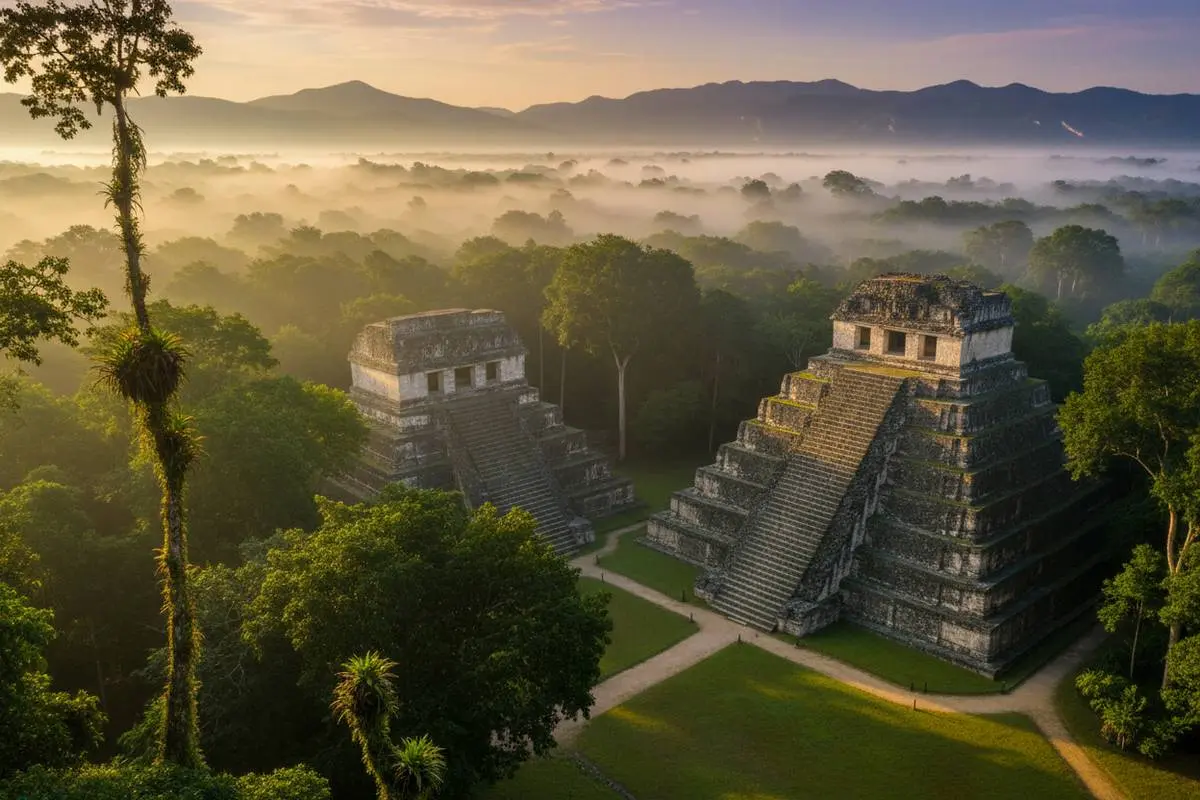
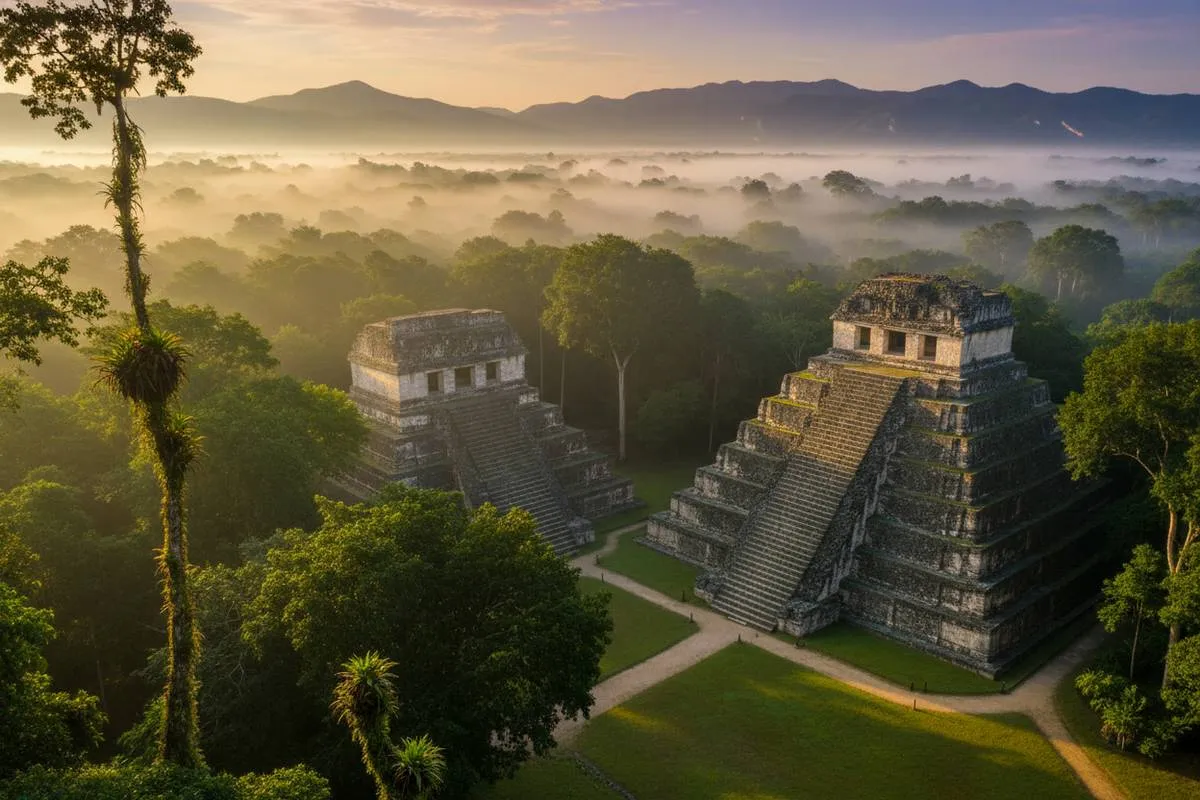
8:30–11:00 AM: Monte Albán. For full detail on each section of the site (Los Danzantes, Building J observatory, Tomb 104), see our complete Oaxaca ruins guide. In summary:
- The main plaza (300m x 200m, leveled mountaintop) before tour buses from Oaxaca arrive at 10–11 AM
- Los Danzantes: the carved stone slabs — contorted figures whose identity (ballplayers? sacrificed captives? medical cases?) archaeologists still debate
- Building J: the arrowhead-shaped astronomical observatory pointing toward specific star risings
- The Stele Gallery: carved warrior monuments along the platform base
- The site museum at the entrance has the best Zapotec artifact collection in the state
11:00–12:00: Drive or take a shuttle 3 km further west to Atzompa — Monte Albán’s satellite city on the same ridge. The site of origin for Oaxaca’s distinctive green-glazed pottery, Atzompa has three ball courts (one 45m — longest in the region) and sees almost no visitors. Compact site, 1 hour maximum.
Afternoon: Return to Oaxaca City. Afternoon: the Museo de las Culturas de Oaxaca (inside the former Convento de Santo Domingo) has the finest collection of Zapotec gold, jade, and funerary offerings outside a national museum. The jade bat god mask from Tomb 7, the gold pectoral with human skull imagery — this is the material culture that Monte Albán’s site museum refers to but cannot fully display. Entry ~90 MXN.
Evening: Cooking class or mezcal tasting. Oaxaca has more quality cooking schools per capita than almost anywhere in Mexico. A half-day market-to-table class covers mole negro or coloradito from scratch — 800–1,500 MXN depending on the school. Book in advance; the best classes fill weeks ahead. Browse Oaxaca cooking classes and tours on Viator for options with free cancellation.
Day 3: Valley of Oaxaca Circuit
Rent a car for this day. The Valley of Oaxaca circuit visits four destinations on the same road east of the city. Public transport covers most of it, but a car lets you control timing and stop at smaller villages along the way.
Route: Oaxaca City → Santa María del Tule (10 km) → Teotitlán del Valle (25 km) → Lambityeco (25 km) → Yagul (36 km) → Mitla (45 km) → return via Tlacolula
8:00 AM — El Árbol del Tule:
The Montezuma cypress at Santa María del Tule has the largest trunk circumference of any tree on Earth — 14.05 meters, measured officially. It is at least 2,000 years old (some estimates say 3,000). The tree stands in the churchyard of a small Zapotec village 10 km east of Oaxaca City.
What no guide tells you: the tree has anthropomorphic figures in its bark that locals identify by name — an elephant head here, a deer antler there, a crouching lion. A local guide (available at the churchyard for a small tip) will point them out; without a guide you’ll miss half of it. Entry ~30 MXN.
9:00 AM — Teotitlán del Valle:
A Zapotec weaving village 25 km east of Oaxaca. The weavers here use natural dyes — cochineal insects (red spectrum), indigo plants (blue/purple), marigolds (yellow), pomegranate rind (cream/beige) — a technique that predates the Spanish conquest. The dyed wool is hand-spun and hand-loomed into geometric patterns.
The difference between Teotitlán and a tourist artisan market: the work here takes weeks per piece, produced by families in their homes. Workshops are open to visitors; you can watch the full process from dyeing to finished rug. Prices are high compared to souvenir markets — because the work is genuine.
Two reliable workshops: Arnulfo Mendoza (named master weaver, works with designers internationally) and the cooperative Vida Nueva (fair-trade collective, guaranteed artisan wages).
10:30 AM — Lambityeco → Yagul:
See the Oaxaca ruins guide for detail on both sites. In brief: Lambityeco (25 km) is 45 minutes for the Pitao Cocijo rain god heads and the salt production story. Yagul (36 km) deserves 1–1.5 hours: excellent views from the fortress section, large ball court, UNESCO recognition.
12:30 PM — Mitla:
Mitla is the essential day trip from Oaxaca City — the mosaic panel facades of the Columns Group use a technique found nowhere else in ancient Mesoamerica. 1.5 hours minimum. Entry 70 MXN.
Nearby: The Sunday market at Tlacolula (12 km before Mitla on the return) is one of the largest regional tianguis in Oaxaca state — animal market, vegetables, textiles, prepared food, mezcal stalls. If your Day 3 falls on a Sunday, add 1–1.5 hours for Tlacolula and it becomes the best market day of your trip.
Afternoon return: Stop at a mezcal palenque near Santiago Matatlán on the return. The road back from Mitla passes through Matatlán, designated the “world capital of mezcal” — more mezcal is produced here than anywhere else on Earth. Palenques along the highway offer free tours and tastings for the cost of a bottle (~300–600 MXN for a good single-village agave).
Day 4: Hierve el Agua + San Bartolo Coyotepec
The logistics matter here more than any other day.
Hierve el Agua is a set of petrified waterfalls — mineral-rich water has flowed over cliff edges for centuries, building calcium carbonate formations that look like frozen cascades. Two pools sit at the cliff edge with views of the valley below; a trail descends to the cliff face.
Critical logistics:
- Hierve el Agua is approximately 75 km from Oaxaca City, 30 km beyond Mitla on the same road
- Drive: 1.5–2 hours from Oaxaca, the final section is dirt road requiring a high-clearance vehicle
- Tour buses arrive between 10 AM and noon. To have the pools to yourself, either go on a tour that departs at 7 AM or drive yourself arriving by 9 AM
- Closes in rainy season (June–October): When the rainy season fills the pools above safe capacity, the site closes. Check current status before planning in summer months
- Entry: ~100 MXN. The pools are cold year-round — bring a swimsuit
From Hierve el Agua: Return via Mitla road. Stop at San Bartolo Coyotepec (30 km from Oaxaca on the return route) — the village responsible for the jet-black barro negro pottery. Unlike most Mexican pottery traditions, barro negro gets its color not from firing but from polishing the raw clay before firing with a quartz stone — the friction creates a carbon seal that turns black in the kiln. The Doña Rosa workshop (where the technique was revived and popularized in the 1930s) is open to visitors; family descendants continue production.
Afternoon: Return to Oaxaca City. If time allows: San José El Mogote (17 km north) for the oldest archaeological site in the Valley of Oaxaca (3,500 BCE, one of the earliest writing systems in the Americas — see our ruins guide for context).
Evening: The Oaxaca City food scene is best explored slowly. Specific recommendations:
- Mercado 20 de Noviembre (again — the grilled meat corredor at night is a different atmosphere)
- Tlayuda de mole negro at a sit-down restaurant — the traditional Oaxacan pizza-sized tortilla with black beans, asiento (unrefined pork fat), and mole negro with turkey, chicken, or tasajo
- Chocolate en agua at Mayordomo or La Soledad chocolate shops — traditional Oaxacan-style chocolate, no milk, spiced with cinnamon and sometimes almonds. Wildly different from European chocolate.
See our complete Oaxacan food guide for dishes and markets.
Day 5: Sierra Norte OR Depart toward the Coast
On Day 5, you have two completely different options depending on what you want.
Option A: Sierra Norte (Pueblos Mancomunados)
The Sierra Norte is the pine-forested mountain range north of Oaxaca City, reaching over 3,000 meters. The Pueblos Mancomunados are eight Zapotec communities that jointly manage ecotourism in their shared forest territory — mountain biking, hiking, ziplines, and wildlife watching at altitude.
Cuajimoloyas (2,800m) is the most accessible village for a day trip — 90 minutes from Oaxaca City on the mountain road. From the village, trails lead to cloud forest viewpoints, a zipline over the valley, and in winter months, to La Nevería (an area where snow occasionally falls). See our Cuajimoloyas guide and how to get to Pueblos Mancomunados for logistics.
The Sierra Norte is also where Huautla de Jiménez sits — the Mazatec town made famous by María Sabina and the mushroom ceremony tradition. See our Huautla guide if that’s relevant to your interests.
Option B: Pacific Coast Departure
If your next stop is the Oaxacan coast — Puerto Escondido, Mazunte, Huatulco — Day 5 is the travel day.
- Puerto Escondido by shuttle (new highway, recommended): 3.5–4 hours via the Autopista Barranca Larga-Ventanilla (Highway 135D), fully open since 2024. Shared shuttles cost 500-700 MXN. This has replaced the old 7-8 hour mountain road as the best option for most travelers.
- Puerto Escondido by road (self-drive): 3–3.5 hours via the new autopista, 250-300 MXN in tolls. Excellent if you want to explore the coast at your own pace.
- Puerto Escondido by air: 45-minute flight on AeroCalafia. Add airport transfers and the total time is similar to the shuttle.
- By overnight bus (mountain road): OCC still runs the old Highway 131 route (7-8 hours, 280-420 MXN). Budget option. Book OCC tickets in advance.
See the complete Oaxaca to Puerto Escondido transport guide for full details and which option fits your trip.
For the coast, see our Puerto Escondido guide, Mazunte guide, and best Oaxaca beaches.
The Sunday-Centered Alternative Schedule
If your 5 days include a Sunday, consider restructuring around the Tlacolula market (one of the best in Mexico) and the Cuetzalan-style traditional Sunday experience in the Valley.
| Day | Activity |
|---|---|
| Saturday | Arrive Oaxaca, city walk, Mercado 20 de Noviembre dinner, mezcal |
| Sunday | Tlacolula market (morning) + Mitla + Yagul + Lambityeco + return via Teotitlán |
| Monday | Monte Albán (8 AM) + Atzompa + Santo Domingo Museum |
| Tuesday | Hierve el Agua + San Bartolo Coyotepec pottery |
| Wednesday | Sierra Norte (Cuajimoloyas) or departure toward coast |
Why Sunday works better for the Valley circuit: Tlacolula’s Sunday market fills the streets from 7 AM. The combination of the ruins circuit (Mitla, Yagul, Lambityeco) with the Tlacolula market on the same day creates the definitive Valley of Oaxaca experience — ancient Zapotec sites and living Zapotec market culture on the same road.
Budget Guide
| Category | Budget | Mid-Range | Comfortable |
|---|---|---|---|
| Accommodation (per night) | $20–40 (hostel) | $60–120 (boutique hotel) | $150–250+ |
| Food (per day) | $15–25 (markets) | $35–60 (mix market + restaurant) | $80–150 |
| Monte Albán entry | 95 MXN (~$5) | Same | Same |
| Day trip car rental | $30–45/day | $45–65/day | — |
| Hierve el Agua | 100 MXN + fuel | Same + guide | Guided tour (~$50) |
| Cooking class | — | 800–1,500 MXN ($40–75) | — |
| Mezcal tastings | 100–200 MXN | 300–600 MXN | Unlimited |
| Total 5 days (excl. flights) | $350–500 USD | $600–900 USD | $1,200–1,800 USD |
For full Mexico budget context, see our Mexico travel cost guide.
Practical Tips
Book Monte Albán shuttle in advance: During Guelaguetza season (July) and Day of the Dead week (late Oct/early Nov), the shuttle from Hotel Rivera del Ángel fills up. Arrive at the hotel by 7:30 AM. Entry tickets can be purchased online at INAH’s website to skip the queue.
Hierve el Agua closure risk: The site closes from roughly June 1 through September 30 (exact dates vary by year based on rainfall). If your trip falls in this window, the Valley circuit (Day 3) gains time but loses Hierve el Agua — add a second cooking class or extend Teotitlán.
Altitude: Oaxaca City sits at 1,555 meters (5,100 feet). Expect mild headache and fatigue on arrival day; drink extra water and go easy on mezcal the first evening. Cuajimoloyas (Day 5) is at 2,800m — bring a warm layer. For a trip that includes hiking at altitude and remote ruins, travel insurance is a smart investment — travel insurance should include emergency medical treatment and adventure activities in Mexico.
Guelaguetza timing: If your trip falls in the last two weeks of July, the Guelaguetza festival transforms the city. Hotels book out 3–6 months ahead; ticket prices for the main ceremony in the amphitheater run 500–3,000 MXN. See our Guelaguetza guide for what to expect.
Día de Muertos in Oaxaca: Late October/early November is one of the most visited periods. Day of the Dead in Oaxaca is distinct from the rest of Mexico — elaborate sand tapetes (carpets), candlelit cemetery vigils, and enormous ofrendas in the Zócalo. Book 2–3 months ahead.
Extending Your Trip
More time in the Valley: Our 7 Days in Oaxaca itinerary adds the Sierra Norte cloud forest, a full mezcal palenque route, and a day at Hierve el Agua — without feeling rushed.
Adding Mexico City: The CDMX–Oaxaca combination is one of the best 2-city pairings in Mexico. See our best time to visit Mexico City guide and Mexico City travel guide for the capital.
The 2-week Mexico trip: Our 2 Weeks in Mexico itinerary covers the full CDMX + Oaxaca + Chiapas route with day-by-day planning.
For the full Oaxaca state guide — city, mountains, and coast — see our Oaxaca Travel Guide 2026. For the complete list of 30 activities ranked by category, see Things to Do in Oaxaca →. For every excursion from the city — Monte Albán, Hierve el Agua, mezcal palenques, craft villages — see our Day Trips from Oaxaca City guide. For seasonal planning (when Hierve el Agua opens, festival timing, rainy season), see our best time to visit Oaxaca guide. For more Oaxacan food context, see our Oaxacan food guide. For the archaeological sites in detail, see our complete Oaxaca ruins guide.