Best Beaches in Oaxaca 2026: 24 Pacific Coast Spots Ranked by Zone
Oaxaca’s Pacific coast has zero sargassum. That one fact — structural to the Pacific Ocean — makes it one of the most reliable beach destinations in Mexico when the Caribbean coast is fighting brown seaweed season.
The 590km Oaxacan coastline divides into three distinct zones: Puerto Escondido (Mexico’s best surf and slow-travel hub), Mazunte / Zipolite / Puerto Angel (off-grid, hippie-rustic, turtles and cliffs), and Huatulco (9 bays, 36 beaches, the region’s only international airport). Each is a completely different experience.
Here are the 24 best beaches in Oaxaca, organized by zone.
Quick Reference: Oaxaca Beaches by Zone
| Zone | Best Beach | Best For | Sargassum | Getting There |
|---|---|---|---|---|
| Puerto Escondido | Carrizalillo | Swimming / families | None (Pacific) | OAX→PXM 45min fly or new Hwy 135D 3.5hrs |
| Puerto Escondido | Zicatela | Surfing | None | Same |
| Mazunte / Zipolite | Punta Cometa | Sunset / hiking | None | Colectivo from PE or Puerto Angel |
| Mazunte / Zipolite | Zipolite | Bohemian / nude beach | None | Same |
| Huatulco | Playa Chahué | Families / Blue Flag | None | HUX airport or ADO bus |
| Huatulco | Cacaluta Bay | Snorkeling / film location | None | Boat from Santa Cruz |
| Puerto Angel | Estacahuite | Snorkeling | None | Colectivo from Pochutla |
| East Coast | Chipehua | Sandboarding / quiet | None | Bus from Salina Cruz |
Key fact: All Oaxaca beaches face the Pacific Ocean — no sargassum, ever.
Puerto Escondido Beaches
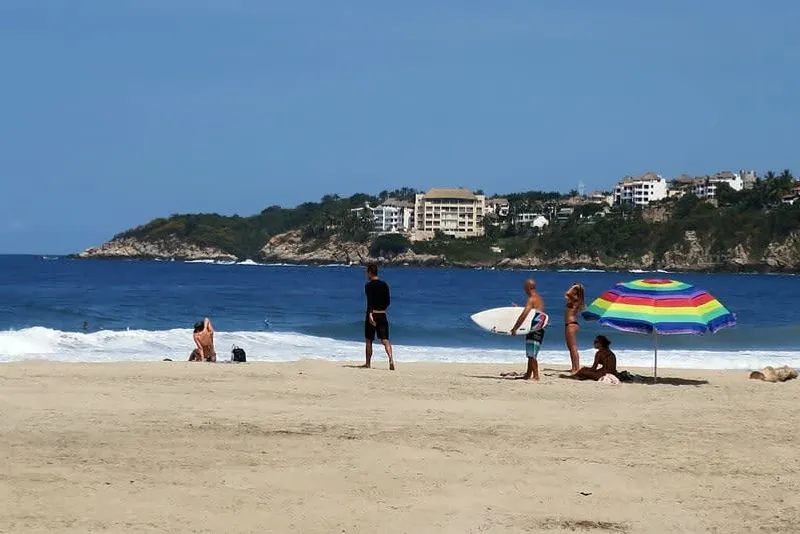
Puerto Escondido is the coast’s largest city and Mexico’s surf capital. It has six named beaches within walking distance — the key is knowing which ones are for swimming and which will drown you.
1. Zicatela Beach — World-Class Surf, Not for Swimming
Mexico’s most famous surf break, nicknamed “The Mexican Pipeline.” Annual November tournaments draw international surfers to compete in front of El Adoquín pedestrian street.
The green water is crystalline but the waves are dangerous — strong shore break and riptides. Families, beginners, and non-swimmers should stay on the sand. For a complete guide to surfing the break (wave mechanics, tide strategy, board rental), see surfing in Puerto Escondido.
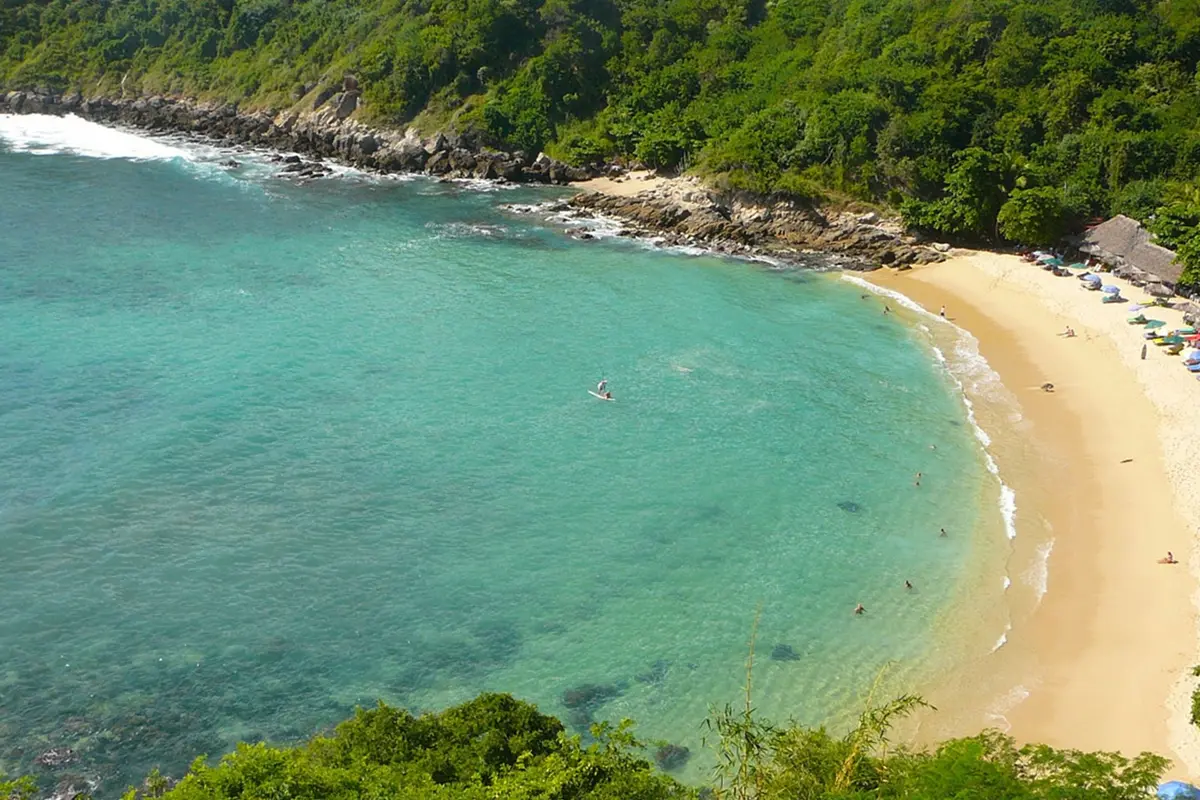
2. Carrizalillo Beach — Best for Swimming
The opposite of Zicatela: a protected cove with calm, shallow turquoise water. 200 steps down a stone staircase from the clifftop (or arrive by boat from the main beach). The most suitable beach in Puerto Escondido for families with children and inexperienced swimmers.
Snorkeling, diving, and equipment rental available at beach palapas.
3. Puerto Angelito Beach — Snorkeling and Sea Turtles
A small, warm bay 30 minutes’ walk from the main beach. Rocky promontories frame it on both sides. Sea turtles inhabit the bay and are often visible while snorkeling. Humpback whales are spotted offshore December through March.
Dolphin-watching tours and bay excursions depart from here.
4. Playa Marinero — Beginner Surf and the “Hand on the Rocks” Sculpture
200 meters long with moderate waves — the right level for first-time surfers and snorkelers. Strong sunset views, horseback rides on the sand, and the striking La Mano en las Rocas sculpture photographed by nearly every visitor.
Walk from Marinero along the coastal road to reach Zicatela to the southeast.
5. Playa Bacocho — Turtle Nesting Site
Waves are too intense for swimming, but Bacocho is one of Puerto Escondido’s sea turtle nesting sites. The Vive Mar camp monitors nests, protects eggs through the 60-day incubation period, and runs hatchling release ceremonies where visitors can participate.
Hotels line the clifftop above the beach.
6. Chacahua Beach — National Park and Bioluminescence
Playa Chacahua sits inside the 132.7km² Chacahua National Park, a Ramsar Wetland since 2008. Getting there requires driving to El Zapotalito, then boarding a small boat across the lagoon to the beach.
The park’s lagoons produce bioluminescence at night — microorganisms in the plankton convert chemical energy into visible blue-green light. Crocodile sanctuary, birdwatching, and sea turtle releases on the beach.
Mazunte, Zipolite, and Puerto Angel
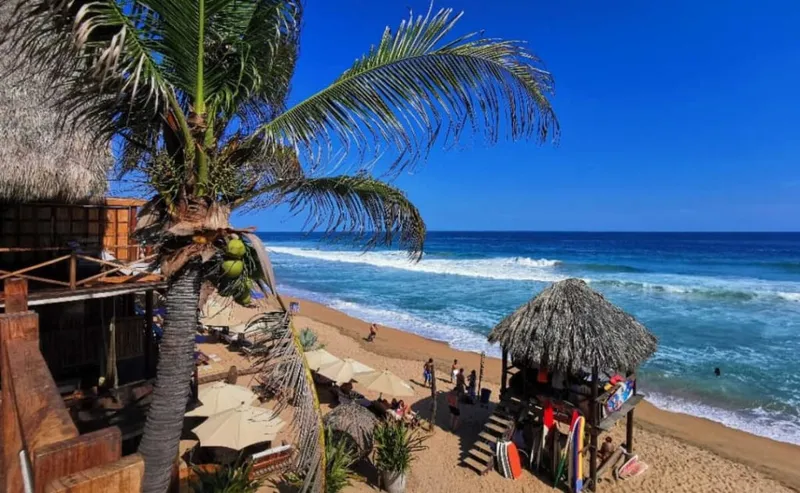
This 30km stretch between Puerto Escondido and Puerto Angel is the Oaxacan coast’s most raw and independent zone. Zero resort infrastructure, small fishing villages turned eco-tourism destinations, and some of Mexico’s most important sea turtle nesting sites.
Getting here: colectivos run from Pochutla (the nearest transport hub). From Puerto Escondido, shared taxis or colectivos go directly to all three towns.
7. Playa Mermejita — Nudist Beach and Leatherback Nesting
Between Playa San Agustinillo and Playa Chacahua, this isolated cove is considered Oaxaca’s second nude beach after Zipolite. Far less visited — often empty on weekdays.
More importantly: Mermejita is one of the rare Pacific nesting sites of the leatherback turtle (Dermochelys coriacea), the largest sea turtle in the world — up to 2.4 meters long and 900kg. Endangered.
The eastern promontory, Roca Torón, serves as a whale and dolphin spotting point November through March.
8. Punta Cometa — Southernmost Accessible Point in North America
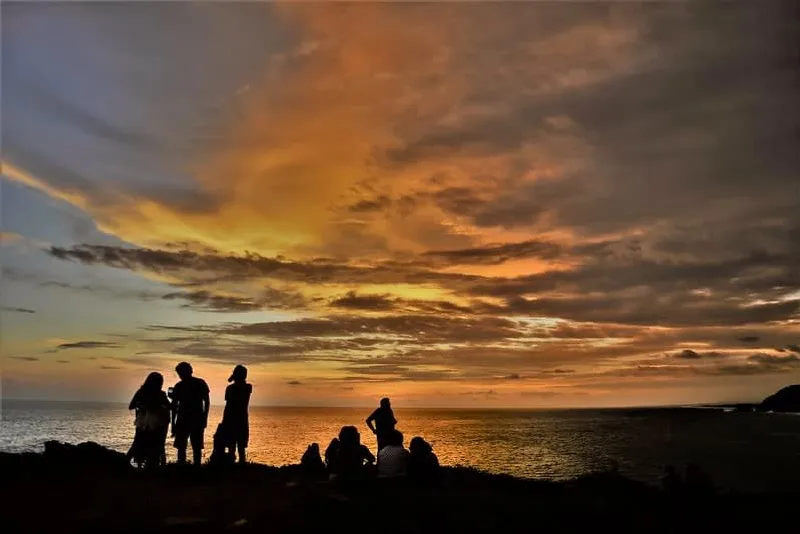
Not a beach — a mountainous cliff outcrop — but the essential Mazunte experience. A 2km trail leads to the plateau at the end of the point, where 360-degree Pacific views are among the most dramatic on the Mexican coast.
Punta Cometa is technically the southernmost accessible point on the North American mainland. Pre-Hispanic indigenous warriors built a defensive wall here (el corral de piedra). Spanish colonists and Pacific pirates used it as a lookout.
Whale watching November through March from the cliffs above the sea.
9. San Agustinillo Beach — Moderate Waves and Olive Ridley Nesting
Founded as a turtle-slaughter town in the 1960s, San Agustinillo closed its slaughterhouse in the 1990s and pivoted to eco-tourism. The town now runs boat tours for whale watching (November–March) and sport fishing.
Olive ridley turtles (Lepidochelys olivacea) nest on these beaches. The gentle curve of the bay has moderate waves — swimmable for confident adults, manageable for families in the calmer sections.
10. Zipolite Beach — Mexico’s Famous Nude Beach
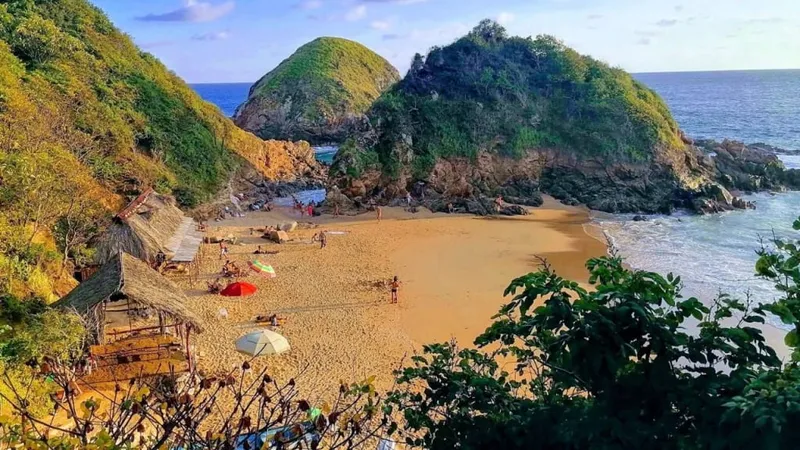
Mexico’s first and most famous nude beach, 1,700 meters of crescent sand between the cliffs of Mazunte and Puerto Angel. The indigenous word “Zipolite” means “place of the dead” — strong underwater currents have historically made this a dangerous swimming beach. A lifeguard service now operates, but currents intensify during the rainy season (June–October).
The town has grown into a genuine bohemian destination: hotels, restaurants, bars, and backpacker infrastructure line the clifftop above the sand. The vibe is relaxed and clothing-optional throughout the beach, not just in one section.
11. Playa del Amor — Hidden Cove at Zipolite’s End
A 50-meter cove tucked behind the rocky structure at Zipolite’s western end. The complete privacy created by the cliff walls made this the original nudist spot before the rest of Zipolite followed. No infrastructure — no chairs, palapas, or vendors. Calm to moderate waves. The most isolated beach experience in this section of coast.
12. Puerto Angel — Benito Juárez’s Port
Puerto Angel is a working fishing port founded mid-19th century by Oaxacan governor (later president) Benito Juárez, who wanted a Pacific shipping terminal. After flourishing at the end of the 1800s, it declined with the railway era.
Federal Highway 200’s construction in the 1970s revived it as a tourism base. The horseshoe bay contains several named beaches:
- Playa El Muelle — the main beach, directly accessible from town
- Estacahuite — 20-minute walk west, the best snorkeling near Puerto Angel
- Panteon — named for the cemetery nearby, 200 meters of clear blue-green water
13. Estacahuite Beach — Best Snorkeling near Puerto Angel
Warm, transparent water divided into three sections by rocky structures. Coral formations are visible by snorkeling 200m offshore. Dolphins, manta rays, and occasionally humpback whales pass during November–March.
Full snorkeling and diving equipment rental available at beachside restaurants. Lifeguard service and designated danger areas marked.
14. La Tijera Beach — Virgin Snorkeling, Difficult Access
The single best snorkeling beach near Puerto Angel — and one of the hardest to reach. By land: from Puerto Angel toward Pochutla to the town of Colorado, then 8.2km of dirt road through untouched vegetation to a small parking area. The road is passable after rainy season (June–October) upgrading — 4WD recommended.
By sea: boats from Playa Panteon take the simpler route. Bring all food and water — nothing sold at the beach.
Rich coral formations with the highest marine biodiversity in this section of the Oaxacan coast.
Huatulco Bays
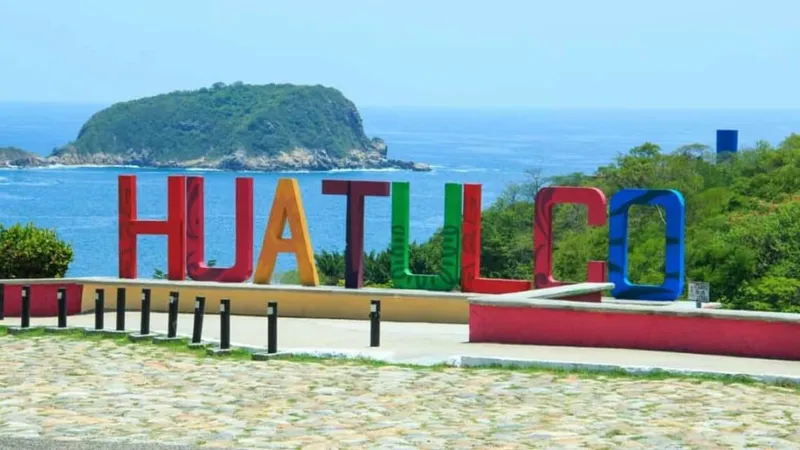
Santa María Huatulco is the most developed resort area on the Oaxacan coast: nine bays, 36 beaches, and an international airport (HUX) with direct flights from Mexico City, Guadalajara, Monterrey, and international origins.
The tradeoff with Puerto Escondido and Mazunte: Huatulco is more polished, more hotel-dominated, and more expensive. The tradeoff with the Caribbean: zero sargassum, and a national park protecting half the bays from development.
For the full Huatulco guide including transport, hotels, and day trips, see Huatulco Mexico Travel Guide.
15. Santa Cruz Bay — Cruise Ship Pier and Three Beaches
The most developed of the nine bays, with a pier for cruise ships, Santa Cruz town’s 3/4/5-star hotels, and three distinct beaches: Punta Santa Cruz (rocky, snorkeling), Yerbabuena (calm family beach), and La Entrega (snorkeling and diving).
Huatulco’s main nightlife zone — restaurants, bars, and clubs concentrated around the town square.
16. Chahué Bay — Blue Flag Certified
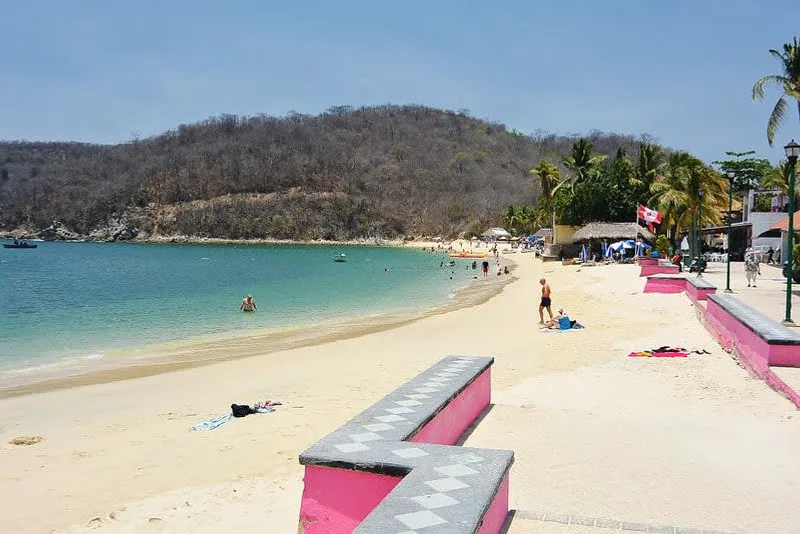
Chahué is the only beach in Oaxaca with the Blue Flag certification from the United Nations Environment Program — awarded based on water quality, safety standards, environmental management, and services. Only 35 beaches in all of Mexico hold this certification.
Three beaches (Chahué, Esperanza, Tejón), a long boardwalk, first-class restaurants, and calm conditions when the tide isn’t running high. 1km from Bahía Santa Cruz.
17. Conejos Bay — Family Beaches and Turtle Nesting
Three beaches (Playa Conejos, Punta Arena, El Tejoncito) at the eastern entrance to Huatulco’s bay system. White sand, soft waves, ATV tours, horseback riding on the beach, and wildlife-watching excursions. Punta Arena is a sea turtle nesting site.
A designated camping area on the beach makes Conejos one of the few places in Huatulco for stargazing overnights.
18. Cacaluta Bay — “Y Tu Mamá También” Film Location
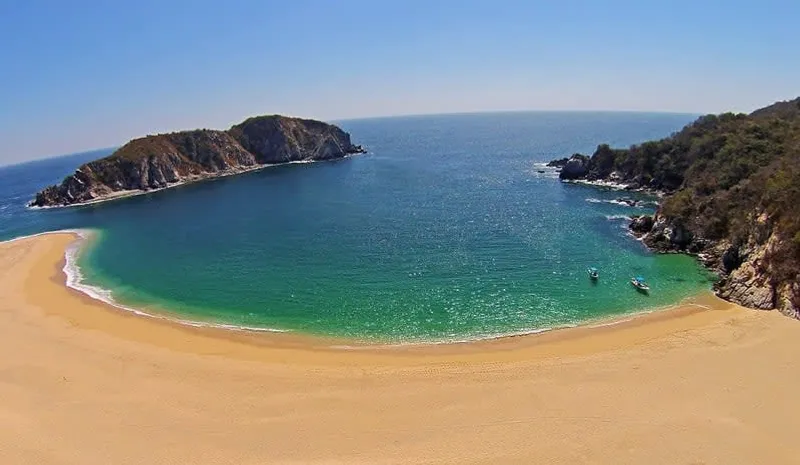
Two adjacent virgin beaches — Cacaluta and Arroyo — inside Huatulco National Park. The bay is the location where Alfonso Cuarón filmed Y tu mamá también (2001), one of the most celebrated Mexican films internationally.
Part of the 11,891-hectare protected area (54% terrestrial, 46% marine). No beach infrastructure — no chairs, no vendors, no restaurants. Access by sea from Santa Cruz Bay (20-minute boat ride) or on foot (20-minute walk from the park road).
19. Chachacual Bay — Most Remote in Huatulco
Two virgin beaches — Playa Chachacual and Playa la India — accessible only by sea. Boat: 15 minutes from Santa Cruz. Both beaches have turquoise water and moderate waves with no infrastructure whatsoever.
The surrounding vegetation includes mangroves, ficus, acacias, and ceibo trees. Excellent birdwatching and biodiversity observation.
20. Maguey and El Órgano Bays
Two adjacent bays so close they’re usually treated as one. Playa Maguey and Playa El Órgano: wide sandy beaches with calm turquoise water. Primarily reached by sea from Santa Cruz (15 minutes). Main activities: swimming, snorkeling, and bird/animal watching (pigeons, chachalacas, quails in the surrounding vegetation).
East Oaxacan Coast
These beaches lie east of Huatulco toward the Tehuantepec Isthmus — less visited and more raw.
21. La Boquilla — Hike-In or Boat-Access Snorkeling
Near Puerto Angel: walk a 3km mountain trail or arrive by boat from Zipolite or Puerto Angel. Small bays with warm green-to-turquoise water and coral reefs with colorful fish visible while snorkeling.
One ecological hotel with bungalows built into the hillside above the beach. Nearby: La Ventanilla mangrove reserve, rich in crocodiles and migratory birds.
22. Chipehua Beach — Sandboarding and Golden Dunes
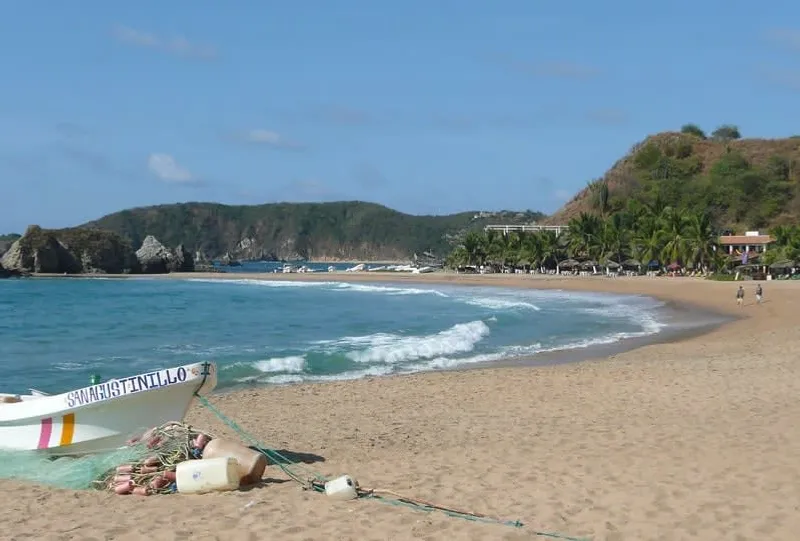
A fishing village 35km southwest of Salina Cruz with golden sand dunes — a rarity on the Oaxacan coast. Sandboarding equipment rental available (boards similar to snowboarding). Waves are smaller than Zicatela but still surfable for beginners.
Almost nobody visits Chipehua — making it one of the most genuinely isolated beach experiences on the Oaxacan coast.
23. El Venado Beach — Turtle Camp Volunteer Access
44km from Puerto Escondido on Highway 200, in the municipality of San Jacinto Tlacotepec. Home to the La Encomienda Cooperative, an environmental center collecting and hatching sea turtle eggs before releasing hatchlings.
Activities: yoga, hiking, surf, diving, snorkeling — and contributing to the turtle camp to observe the hatchling release process.
24. Playa Cangrejo (Crab Beach) — Near the Tehuantepec Isthmus
Municipality of Santo Domingo Tehuantepec, near Salina Cruz. Named for the moro crabs that inhabit the adjacent lagoon — though populations have declined by an estimated three-quarters due to habitat damage and capture.
Semi-pristine, blue water, average to intense waves, few visitors. Horseback riding on the beach is the main tourist activity. The local population is small and primarily fishing-based.
How to Get to Oaxaca’s Beaches
From Oaxaca City: The new Autopista Barranca Larga-Ventanilla (Hwy 135D) — fully open since 2024 — changed everything. Puerto Escondido is now 3–3.5 hours from the city, down from 7–8 hours on the old mountain road.
| Destination | Distance | Drive Time | Bus Time |
|---|---|---|---|
| Puerto Escondido | 257km | 3–3.5hrs | 7–8hrs (old route) |
| Puerto Angel | 234km | 3hrs | ~6hrs |
| Huatulco | 235km | 3hrs | ~5hrs |
| Zipolite | 259km | 3.5hrs | ~6hrs |
| Mazunte | 263km | 3.5hrs | ~6.5hrs |
Flying: OAX→PXM (Puerto Escondido airport) takes 45 minutes. HUX (Huatulco airport) has direct flights from Mexico City, Guadalajara, Monterrey, and international destinations. For the full transport guide, see Oaxaca to Puerto Escondido.
Between coast towns: Colectivos run frequently between Puerto Escondido, Puerto Angel, Mazunte, and Zipolite (30–60 MXN per leg). Uber does not operate on the Oaxacan coast.
Best Time to Visit Oaxaca Beaches
| Month | Conditions | Wildlife |
|---|---|---|
| Nov–Apr | Dry season, clear water, calm mornings | Humpbacks (Nov–Mar), gray whales offshore |
| Jun–Nov | Rainy but warm, afternoon showers only | Olive ridley turtles, whale sharks offshore, bioluminescence |
| Dec–Apr | Best snorkeling visibility | Humpback whales, good diving conditions |
| Jul–Oct | Biggest surf swells at Zicatela | Whale sharks, bioluminescence in lagoons |
Hierve el Agua note: Closed June–October (rainy season flooding). The coast is not affected — it’s the mountain falls near Oaxaca City that close.
For month-by-month coastal detail, see Best Time to Visit the Oaxaca Coast.
Oaxaca Beaches vs Caribbean Coast
| Factor | Oaxaca Pacific | Caribbean (Cancún/Tulum) |
|---|---|---|
| Sargassum | Zero — Pacific Ocean | April–October Caribbean seaweed |
| Waves | Strong at PE, calm in Huatulco | Gentle Caribbean swell |
| Crowds | Far fewer tourists | Mass tourism infrastructure |
| Cost | 30–40% cheaper | Premium pricing |
| Surf | World-class at Zicatela | Not a surf destination |
| Ruins | Closest: Monte Albán (3hrs) | Tulum ruins on the beach |
| Getting there | OAX or HUX airports | CUN airport, Maya Train |
No sargassum, lower prices, and better surfing — Oaxaca’s coast is underrated compared to the Caribbean.
Plan Your Visit
For snorkeling tours, boat trips across Huatulco’s bays, and turtle-watching excursions along the Oaxacan coast, browse Oaxaca tours on Viator.
Heading to off-grid spots like Mazunte, Zipolite, or Chacahua National Park? Make sure your travel insurance includes emergency medical care and evacuation for remote Pacific coast trips.
Driving the new Hwy 135D to the coast? Compare rental car rates on RentCars.
Related guides:
- Puerto Escondido Travel Guide
- Things to Do in Puerto Escondido
- Day Trips from Puerto Escondido
- Huatulco Mexico Travel Guide
- Oaxaca Travel Guide
- Surfing in Mexico Guide
- Best Beaches in Mexico