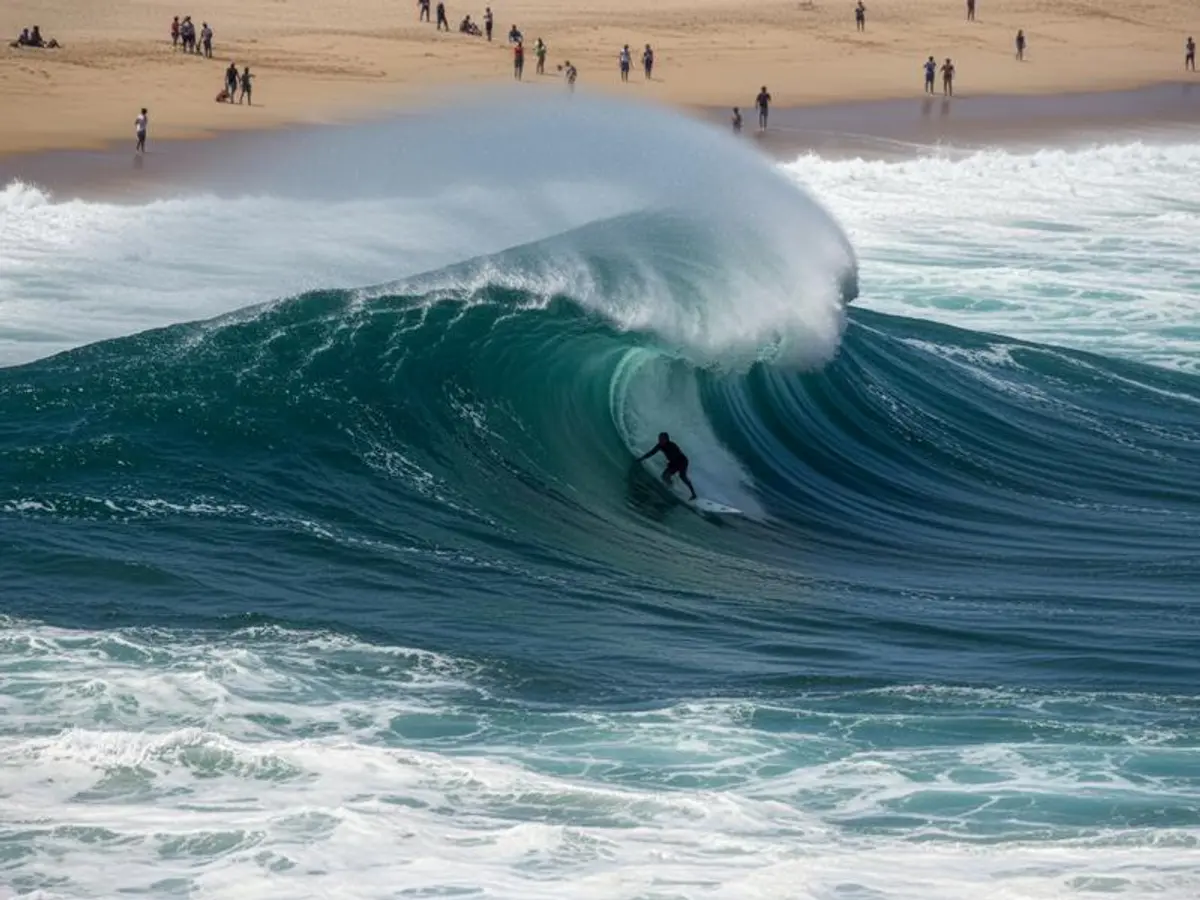
Best Surf Spots in Mexico 2026: The Complete Guide
The best surf spots in Mexico are on the Pacific coast, not the Caribbean. For most first-time surf trips, start with Sayulita if you are learning, La Punta or Carrizalillo in Puerto Escondido if you are progressing, Punta de Mita or Troncones if you want cleaner intermediate waves, and Zicatela only if you are an advanced surfer comfortable with heavy shore break.
As of 2026, Mexico’s reliable surf corridor runs from Baja California Sur through Nayarit, Jalisco, Guerrero, Michoacan, and Oaxaca. The key decision is not “Mexico or not Mexico”; it is choosing the right coast, season, and wave for your level. Cancun, Tulum, and Playa del Carmen are excellent for beaches and diving, but they are not real surf bases.
Surfing in Mexico in 30 Seconds
| If you want… | Start with | Best season | Skill level |
|---|---|---|---|
| First surf lesson | Sayulita | November-May | Beginner |
| Puerto Escondido without Zicatela risk | Carrizalillo or La Punta | November-April | Beginner to intermediate |
| Heavy barrels | Zicatela | May-October | Advanced only |
| Cleaner resort-adjacent waves | Punta de Mita | November-April | Beginner to intermediate |
| Quieter Pacific surf towns | Troncones, La Ticla, Barra de Nexpa | May-October for size, winter for cleaner days | Intermediate+ |
| Family beach trip with light surf | Sayulita or Punta de Mita | November-May | Beginner |
I have surfed Zicatela on a 6-foot day and it was the heaviest wave I have ever seen in person. The lip detonates onto dry sand. People have died there. Two hours south, Carrizalillo is a sheltered cove where beginners paddle around on longboards. That range, from lethal to mellow within the same state, is what makes Mexico one of the best surf destinations on the planet.
This guide covers every major surf spot on the Mexican Pacific, honest about skill requirements, and organized so you can find exactly the right wave for your level.
Mexico’s Three Surf Zones: Where the Waves Actually Are
Not all of Mexico’s coastline produces surf. The country borders three major bodies of water, and only one of them matters for surfers.
The Pacific Coast (The Only One That Counts)
Mexico’s western edge faces the open Pacific Ocean — thousands of miles of uninterrupted fetch where storm systems generate swells that travel for days before hitting the coast. From the tip of Baja down to the Oaxacan border with Chiapas, this is where every serious surf spot in the country lives. The coastline faces west and southwest, perfectly positioned to catch both north and south swells depending on the season.
The best beaches on the Mexican Pacific run the full spectrum: reef breaks, point breaks, beach breaks, shore breaks. Water temperatures range from 22°C in northern Baja winter to 30°C in Oaxaca summer. Board shorts and a rash guard are enough most of the year south of Mazatlan.
The Caribbean Coast (Skip It for Surfing)
If you’re reading this while planning a trip to Cancun, Tulum, or Playa del Carmen — don’t bring a surfboard. The Yucatan Peninsula’s Caribbean coast faces east into a mostly enclosed sea. The Mesoamerican Barrier Reef blocks what little swell does arrive. On the rare occasion a tropical storm or cold front pushes waves through, you might see waist-high slop at Puerto Morelos for a few hours. That is not a surf trip.
The Caribbean is world-class for snorkeling, diving, cenotes, and lying on white sand. For surfing, it is useless.
The Gulf of Mexico (Barely Worth Mentioning)
The Gulf coast from Tamaulipas to Tabasco occasionally gets wind-driven swell from nortes — cold fronts that push south from Texas. Veracruz sees small, messy waves a handful of days per year. Some local bodyboarders ride them. Nobody flies to Mexico for Gulf surf.
The bottom line: If you want to surf Mexico, buy a ticket to the Pacific coast. Everything below is about the Pacific.
How Pacific Swells Work: The Season Guide
Understanding Mexico’s swell patterns is the difference between scoring waves and staring at a flat ocean. Two distinct swell windows control the Pacific coast, and they come from opposite ends of the earth.
Summer: South Swells (May through October)
From May to October, storm systems in the Southern Hemisphere (off New Zealand, Antarctica, and southern Chile) generate massive groundswells that travel north across the equator. These swells arrive on Mexico’s Pacific coast with long periods — 15 to 22 seconds between waves — which means power. When a big south swell lights up, spots like Zicatela and Barra de Nexpa fire with overhead-to-double-overhead waves for days.
South swells favor south-facing breaks. That’s why Puerto Escondido’s Zicatela — which faces directly south — is a summer wave. It needs that south angle to wrap into the beach and create its famous Pipeline-style barrels.
This is also hurricane season. Tropical storms and hurricanes in the eastern Pacific can generate short-lived but enormous swells. A hurricane passing 500 miles offshore can produce the biggest waves of the year.
Winter: North Swells (November through April)
From November through April, storm systems in the North Pacific (the same Aleutian low-pressure systems that send waves to Hawaii) push swells south toward Mexico. These north swells tend to be shorter-period (10-16 seconds) but extremely consistent. You can check Surf-Forecast for Zicatela to see the swell models in real time.
North swells favor north-facing and west-facing breaks. Punta de Mita near Puerto Vallarta, the Nayarit coast, and parts of Baja California light up on north swell. This is also dry season — offshore winds in the morning, blue skies, no rain. For most surfers visiting Mexico for the first time, November through April is the sweet spot: consistent waves, good weather, less humidity.
Season-by-Season Breakdown
| Month | Swell Direction | Wave Size (avg) | Water Temp | Crowds | Best For |
|---|---|---|---|---|---|
| Jan-Feb | North | 4-8 ft | 24-26°C | Moderate | Sayulita, Punta de Mita, Baja |
| Mar-Apr | North (fading) | 3-6 ft | 25-27°C | Low | All-rounders, beginners |
| May-Jun | South (building) | 4-8 ft | 27-29°C | Low | Zicatela starts firing |
| Jul-Aug | South (peak) | 6-12+ ft | 28-30°C | Moderate | Zicatela, Barra de Nexpa, La Ticla |
| Sep-Oct | South + hurricane | 4-15+ ft | 28-30°C | Low | Big wave chasers, experienced surfers |
| Nov-Dec | North (building) | 4-8 ft | 26-28°C | High (holidays) | Sayulita, Troncones, Punta de Mita |
The Mexican Pipeline: Zicatela Beach, Puerto Escondido
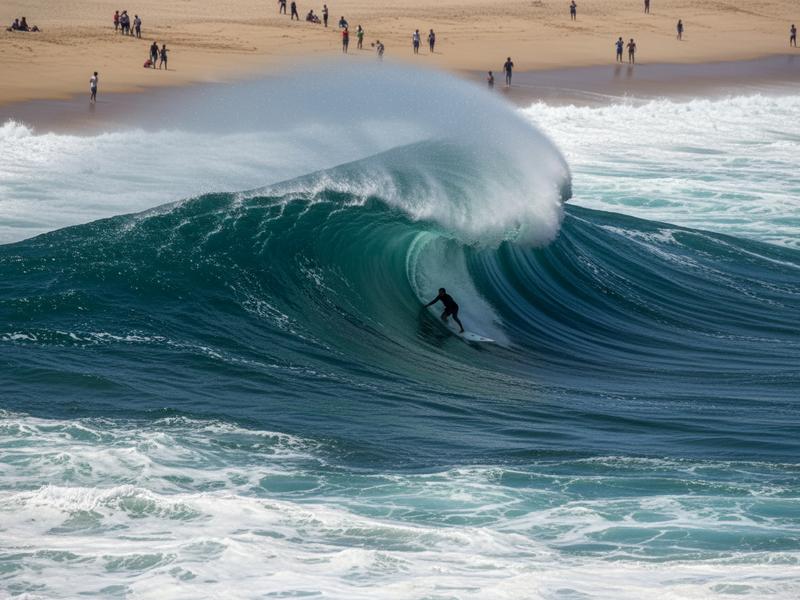
Zicatela is the reason Puerto Escondido appears in every serious surf conversation. It is a beach break — not a reef, not a point — where thick, powerful swells jack up over a shallow sandbar and detonate onto the shore. The wave is called the Mexican Pipeline because the barrel shape resembles Oahu’s Pipeline, but the comparison undersells the danger: at Pipeline in Hawaii, you wipe out onto a reef in deep water. At Zicatela, you wipe out onto wet sand in inches of water.
The wave is heaviest from May through October when south swells arrive with 16-20 second periods. On a solid day, Zicatela produces 8-to-12-foot barrels that close out with the force of a building collapse. The lip hits the trough so hard it shakes the beach. Lifeguards patrol constantly. Surfers have died here — experienced surfers, not just reckless tourists.
A direct warning: Do not surf Zicatela unless you are an advanced surfer comfortable in heavy, hollow waves. The shore break can snap boards, dislocate shoulders, and hold you under for multiple waves. If you are intermediate or below, watch from the beach and surf La Punta or Carrizalillo instead. This is not gatekeeping — it’s physics. The wave does not care about your ego.
For those with the skill level, Zicatela is a legitimate world-class wave. The annual Puerto Escondido Cup draws big-wave chargers from around the globe. Check MagicSeaweed’s Puerto Escondido report for current conditions. If you’re planning a trip specifically for Zicatela, our surfing Puerto Escondido guide has the full breakdown on tides, wind, and where to paddle out.
Getting there: Fly into Puerto Escondido airport (PXM) — direct flights from Mexico City on Volaris and VivaAerobus, typically 800-2,000 MXN one way. Or bus from Oaxaca City via the winding Highway 131 (6-7 hours by van, roughly 350 MXN). Full logistics in our Puerto Escondido travel guide.
Board recommendation: You will see local chargers on 5’8” to 6’2” shortboards. Visitors with less heavy-wave experience should ride something with more volume — a step-up or a gun if overhead-plus.
Sayulita: Mexico’s Best Beginner Surf Beach
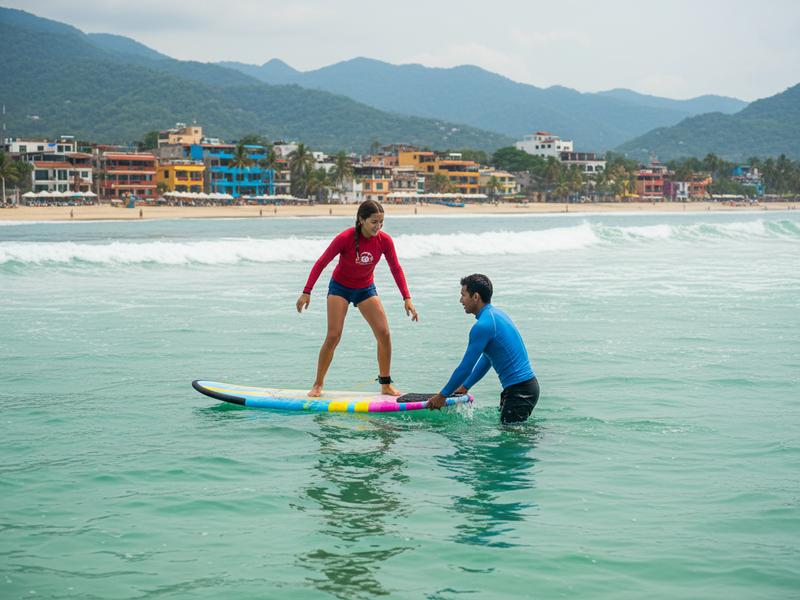
If Zicatela is Mexico’s heaviest wave, Sayulita is its most forgiving. This small town 40 kilometers north of Puerto Vallarta in the state of Nayarit has built its entire identity around accessible surfing. Slow, rolling waves break over a sandy bottom in waist-to-shoulder-high range most of the year. There is no reef to cut you. There is no heavy shore break to slam you. The wave peels gently to the left, giving beginners long rides and plenty of time to find their feet.
Dozens of surf schools line the beach. A 2-hour group lesson with board and rash guard runs 500-900 MXN ($25-45 USD). Private lessons cost 1,200-2,000 MXN ($60-100 USD). You can book lessons through Viator to lock in a slot during peak season. Board rental on its own is 200-350 MXN per hour — foam tops for beginners, fiberglass for anyone who knows what they’re doing.
The wave is surfable year-round. Winter north swells (November-April) bring slightly bigger, cleaner waves. Summer south swells are smaller at Sayulita because the beach faces west-northwest rather than south. Rainy season (July-October) means afternoon thunderstorms but warm water and fewer crowds.
The honest take: Sayulita has gentrified heavily over the last decade. Prices are higher than most Mexican beach towns. The beach gets crowded from December through March. But the wave itself remains excellent for learning, and the town has enough restaurants, bars, and character to keep you entertained between sessions. Our full Sayulita travel guide covers accommodation, food, and the gentrification reality. For wave-specific details including tide charts and seasonal forecasts, see surfing Sayulita. For activity planning beyond surfing, see things to do in Sayulita.
Getting there: Fly into Puerto Vallarta (PVR), then Uber or colectivo north on Highway 200. Uber costs 350-450 MXN (40-50 minutes). Colectivos run from the Walmart on Libramiento road for 60 MXN. For exploring the wider region, compare rental car rates here — useful if you want to check San Pancho and Punta de Mita too.
La Punta: Puerto Escondido for Intermediates
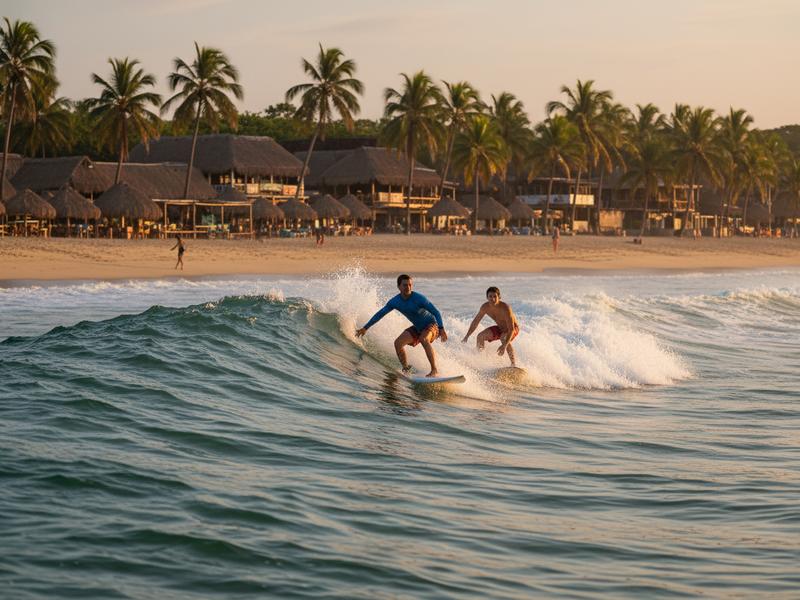
La Punta sits about 2 kilometers south of Zicatela along the coast road in Puerto Escondido, and it operates on completely different physics. Where Zicatela is a heavy, closed-out shore break, La Punta is a mellow beach break that produces both lefts and rights. The wave breaks further from shore, rolls in with less power, and gives you time to set up. This is where Puerto Escondido locals send visitors who aren’t ready for Zicatela — and where experienced surfers go on small days when the Pipeline isn’t breaking.
The crowd at La Punta skews toward intermediates and traveling surfers on longboards. You’ll see plenty of 8-foot softboards and minimal aggression in the lineup. On a good south swell day, the lefts at La Punta can be surprisingly long — 50 to 80 meter rides on a clean face.
La Punta is also the neighborhood where most budget travelers stay in Puerto Escondido. Hostels line the road behind the break. Palapa restaurants serve fresh ceviche and cold Pacificos within eyeline of the waves. The vibe is backpacker-surfer, not resort. For more on the full PE experience, read our things to do in Puerto Escondido guide.
Skill level: Solid beginner to intermediate. You should be able to paddle into waves on your own, pop up consistently, and handle waist-to-chest-high surf. If you’ve never surfed before, take a lesson here rather than renting a board and figuring it out — the current can pull toward Zicatela, which is not where you want to end up.
Board rental: 200-400 MXN per day for softboards and longboards at the beach shops. Shortboard rental available for 300-500 MXN.
Carrizalillo: Puerto Escondido’s Protected Beginner Cove
If even La Punta feels like too much, Carrizalillo is your spot. This small crescent-shaped cove sits west of central Puerto Escondido, accessed by a staircase cut into the cliff. You pay 35 MXN at the top to enter. The beach is sheltered on both sides by rocky headlands, which filter out the bigger swells and create a protected pool of small, clean waves.
Carrizalillo is where Puerto Escondido families take their children to swim. The waves rarely exceed waist-high. The sand is soft. The water is clear enough to see the bottom. For absolute beginners — people who have never stood on a surfboard — this is a better starting point than even Sayulita, because the cove eliminates currents and the crowd is tiny.
A few surf instructors operate here (400-600 MXN for a lesson), but it’s also a fine place to rent a foam board and teach yourself. The worst that happens is you fall in thigh-deep warm water.
When to go: Year-round. Carrizalillo is sheltered enough that even during big south swell season, the waves inside the cove stay manageable. Morning is best — the staircase faces east, so you get shade on the walk down before the sun hammers the sand.
Punta de Mita: The Point Break Near Puerto Vallarta
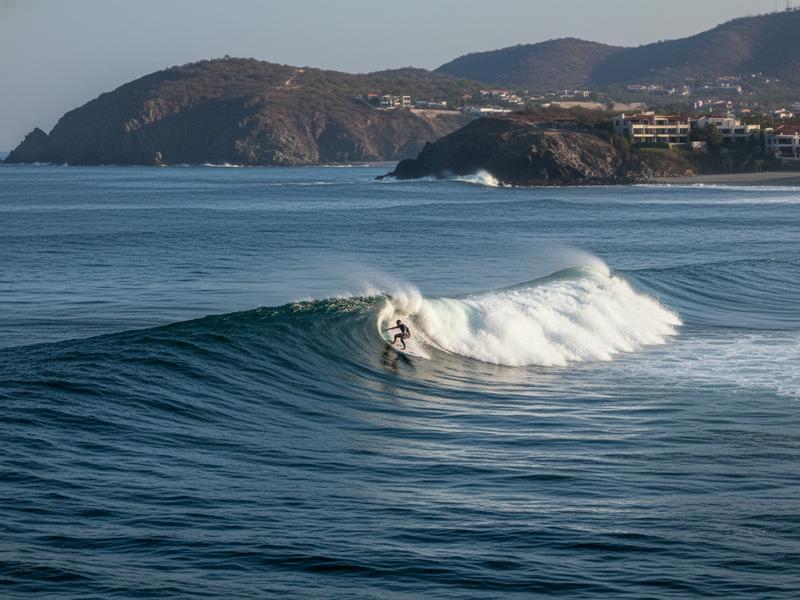
Punta de Mita occupies the northern tip of Banderas Bay in Nayarit, about 45 minutes northwest of Puerto Vallarta. Unlike Sayulita’s forgiving beach break, Punta de Mita is a proper point break — the wave wraps around a rocky headland and peels down the point, creating long, fast walls that reward surfers who can read the face and set a rail.
The break fires best on north swells from November through May. A solid 4-6 foot north swell produces head-high waves that peel for 100+ meters along the point. The takeoff zone is compact, which means the crowd can feel thick on good days. Local surfers have been riding this wave for decades and they know the pecking order. Respect the lineup.
Punta de Mita has also become a luxury destination. The Four Seasons and St. Regis sit on the peninsula. But the wave itself is public, and you don’t need to stay at a $1,000/night resort to surf it. Budget accommodation in the town of Punta de Mita village starts around 800 MXN ($40 USD) per night. You can also base yourself in Puerto Vallarta and drive or Uber to the break.
Skill level: Intermediate to advanced. Point breaks reward surfers who can bottom-turn, trim across the face, and handle localism. This is not a learning wave.
Nearby options: If Punta de Mita is flat or too crowded, La Lancha is a quick drive north — a reef break that works on similar swells but with a different crowd dynamic.
Troncones: The Pacific’s Best-Kept Surf Camp Scene
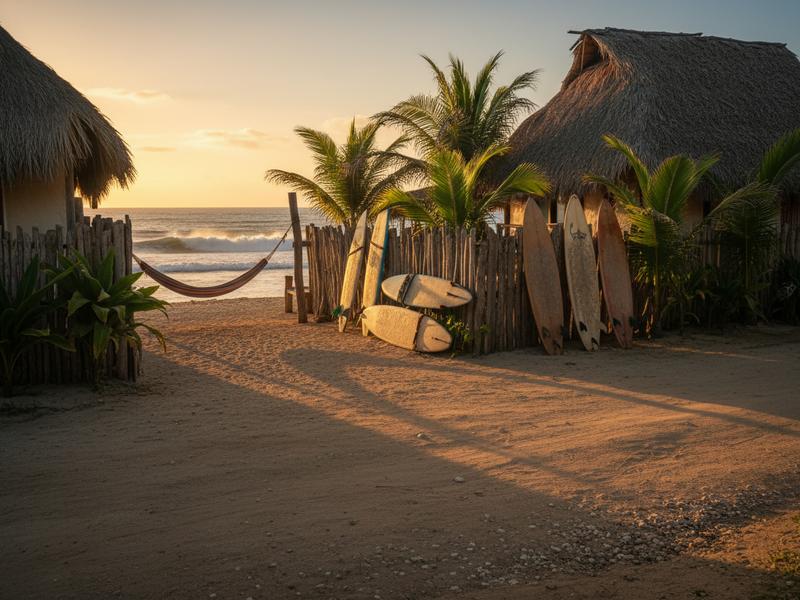
Troncones is a small fishing-village-turned-surf-town on the Guerrero coast, about 30 minutes northwest of Ixtapa-Zihuatanejo. It doesn’t have Sayulita’s name recognition or Puerto Escondido’s Instagram fame, and that’s exactly the point. The wave is a long left point break that wraps around a rocky headland at the south end of the beach, producing smooth, workable faces in the 3-6 foot range.
The surf camp scene in Troncones has grown steadily without blowing up. A handful of small surf camps and guesthouses line the unpaved beachfront road. You wake up, walk 30 seconds to the break, and paddle out to a lineup with maybe five other people. Compare that to Sayulita’s packed peak-season beach and the appeal is obvious.
The wave works best on south and southwest swells (June-October) but picks up enough north swell in winter to stay rideable most of the year. The point break rewards long, drawn-out turns — this is a longboard wave as much as a shortboard wave. The beach break north of the point is beachier and less consistent but works for beginners on small days.
What to know: Troncones has no ATMs and limited cell service. Bring cash. The nearest town with services is Ixtapa (30 min). Surf camp packages typically include lodging, meals, and guided surf sessions — expect 2,000-4,000 MXN ($100-200 USD) per night for the full package.
Getting there: Fly into Zihuatanejo-Ixtapa airport (ZIH), then taxi or arrange a pickup with your surf camp. Some camps include airport transfers.
Barra de Nexpa: Empty Michoacan Perfection
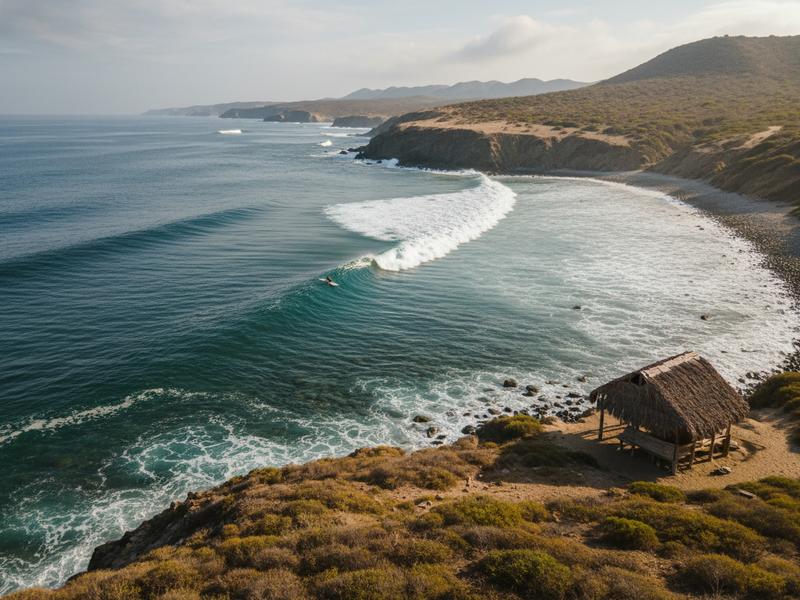
If you’ve been surfing for a while and you’re tired of crowded lineups and $15 acai bowls, Barra de Nexpa will reset your expectations. This tiny settlement on Michoacan’s coast — about 2.5 hours south of Manzanillo — sits at the mouth of a river where a long left point break peels over cobblestones for 200+ meters on a good swell.
The wave is mechanical. On a solid south or southwest swell, set after set wraps around the point with the kind of predictable, perfect form that makes you wonder why nobody else is here. And usually, nobody else is here. You might share the lineup with two or three surfers. Maybe none.
Accommodation is basic. Camping on the point costs around 80 MXN per night. A couple of palapa-roof guesthouses offer rooms for 400-700 MXN. There is no nightlife. There’s a small tienda that sells beer, eggs, and tortillas. The nearest proper town is Caleta de Campos, 20 minutes south. You come here to surf, eat, sleep, and surf again.
Getting there: Drive or take a bus to Caleta de Campos on Michoacan’s coast (Highway 200), then 20 minutes north to Barra de Nexpa. Having your own wheels is essentially mandatory — compare rental car rates here from Manzanillo or Lazaro Cardenas airports.
Skill level: Intermediate to advanced. The cobblestone bottom means falls are harder than at sandy beach breaks. The wave has power and a fast takeoff. You should be comfortable surfing overhead waves.
La Ticla: Remote Michoacan for Serious Surfers
Twenty minutes south of Barra de Nexpa on the same stretch of Michoacan coast, La Ticla is an even more remote point break that demands respect. The wave is a strong left-hander that breaks over rock and sand, producing fast, hollow sections when a south swell hits. On overhead-plus days, La Ticla barrels.
This is not a tourist spot. There are a few palapas for camping, a couple of simple restaurants, and not much else. The surfers who come here are either Mexican locals from Guadalajara or Morelia, or traveling surfers specifically chasing uncrowded waves. The vibe is communal — you’ll share fire-cooked fish with strangers and swap wave stories.
Skill level: Advanced. The takeoff is fast, the rocks are real, and there is no lifeguard. Know your limits.
San Pancho (San Francisco): Sayulita’s Quieter Neighbor
San Pancho sits 7 kilometers north of Sayulita on the Nayarit coast — close enough to share the same general swell window but far enough to feel like a different place. Where Sayulita is packed with surf schools and beachfront cocktail bars, San Pancho is a quieter town with a long, open beach break and fewer people in the water.
The wave is a beach break that produces both lefts and rights, generally a bit gentler than Sayulita’s main break. It works on the same north swells (November-April) and picks up residual south swell in summer. The beach is wider, the sand is darker, and the town behind it has an art-colony feel rather than a party-town feel.
San Pancho is a good option for surfers who want the Nayarit coast experience without Sayulita’s crowds and inflated prices. Accommodation is 20-30% cheaper. The beach is rarely crowded. And you can still Uber to Sayulita in 10 minutes if you want a night out.
Skill level: Beginner to intermediate. Similar to Sayulita but with less instruction infrastructure — bring or rent your own board rather than expecting surf schools on every corner.
Playa Matanchen Bay: The Longest Wave Claim
Near San Blas in northern Nayarit, Matanchen Bay has a claim that surfaces in every Mexico surf article: the longest rideable wave in the world. The Guinness record supposedly documents rides of up to 1.7 kilometers during specific swell events. The wave is generated when a south swell wraps into the long, crescent-shaped bay and creates a slow, mushy roller that just keeps going and going along the shoreline.
The reality: This wave breaks maybe a few times per year under very specific conditions. It is not consistent. Most days, Matanchen Bay is flat or barely rideable. And the “longest wave” rides require a longboard, perfect patience, and a wave that barely qualifies as a wave by most surfers’ standards — it’s ankle-to-knee-high mush that you pump along for an absurdly long distance.
It’s worth visiting San Blas for the town itself — old colonial port, mangrove boat tours, crocodile estuaries — but don’t plan a surf trip around Matanchen Bay unless you have flexible dates and a longboard mentality.
Todos Santos and El Pescadero: Baja’s Heavy Beach Break
Baja California Sur’s Pacific coast, between La Paz and Cabo San Lucas, produces a surf scene that’s completely different from mainland Mexico. Todos Santos and the nearby community of El Pescadero sit on an exposed stretch of coast that catches every north swell from the Pacific.
The beach break at Todos Santos is heavy — thick, powerful waves that break close to shore over coarse sand. On a big day, it resembles a Baja version of Zicatela: fast, hollow, and punishing. The water is also significantly colder than mainland Pacific spots — 18-22°C in winter, you’ll want a 3/2mm wetsuit from November through March.
El Pescadero, 15 minutes south, has a slightly more forgiving beach break and is where most of the surf instruction happens on this stretch of coast. Cerritos Beach at the south end of El Pescadero is Baja’s version of Sayulita — gentle waves, sand bottom, surf schools.
Why choose Baja over mainland? The desert-meets-ocean landscape is unlike anything on the mainland Pacific. The town of Todos Santos has an arts scene, good restaurants, and a Hotel California that may or may not be the Hotel California. It’s a good option for surfers based in Los Cabos who want real waves (the Cabo tourist beaches are generally too protected for good surf). Check our best beaches in Mexico guide for more on the Baja coastline.
Getting there: Fly into San Jose del Cabo (SJD), rent a car, and drive 1-1.5 hours north on Highway 19.
La Bocana: Puerto Escondido’s Secret Spot
About 20 minutes east of Puerto Escondido along the coast road toward Huatulco, La Bocana is a river-mouth break that most PE visitors never see. The wave breaks where the Rio Colotepec meets the Pacific, creating a sandbar setup that produces clean lefts and rights depending on the sandbar formation.
La Bocana requires local knowledge. The sandbar shifts with the river flow, so the wave moves around. Sometimes it’s excellent — long, peeling walls with no crowd. Sometimes it’s a closeout. Asking around at PE surf shops or hostels will get you current intel on whether it’s working.
Skill level: Intermediate. The wave itself isn’t dangerous, but the remote location means no lifeguards, no other surfers to help if something goes wrong, and a current at the river mouth that requires awareness. This is part of the broader Oaxacan beach network worth exploring if you’re in the region for more than a few days.
The Caribbean and Yucatan: Honest Truth About “Surfing” the East Coast
Every few months, someone asks online: “Can I surf in Cancun?” or “Are there waves in Tulum?” The answer is functionally no.
The Yucatan Peninsula’s Caribbean coast faces east into a relatively small, enclosed body of water. The Mesoamerican Barrier Reef — the second-largest reef system on earth — sits 500 meters to 2 kilometers offshore along most of the Riviera Maya, absorbing whatever minimal swell arrives. The result is the flat, calm, clear water that makes the Caribbean perfect for swimming and terrible for surfing.
Puerto Morelos, about 30 minutes south of Cancun, has a gap in the reef where small windswells occasionally push through during nortes or tropical weather events. A few local surfers ride these on longboards. On a good day, you might see chest-high, disorganized waves for a few hours. On most days, you see nothing.
If you are visiting the Yucatan and want surf, your only real option is to fly to Puerto Escondido (1.5-hour flight from Cancun) or Sayulita (via Puerto Vallarta). Don’t try to make the Caribbean work.
The 10 Best Surf Spots in Mexico: Quick Comparison
| Spot | Wave Type | Skill Level | Best Season | Crowd Level | Getting There |
|---|---|---|---|---|---|
| Zicatela (Puerto Escondido) | Heavy shore break / barrel | Advanced-Expert | May-Oct (south swell) | Moderate | Fly PXM or bus from Oaxaca |
| Sayulita (Nayarit) | Gentle beach break / left | Beginner | Year-round (best Nov-Apr) | High | Uber from PVR (45 min) |
| La Punta (Puerto Escondido) | Mellow beach break | Beginner-Intermediate | Year-round | Moderate | Walk from PE center |
| Punta de Mita (Nayarit) | Point break | Intermediate-Advanced | Nov-May (north swell) | Moderate-High | Drive from PVR (45 min) |
| Troncones (Guerrero) | Left point break | Intermediate-Advanced | Jun-Oct (south swell) | Low | Taxi from ZIH airport |
| Barra de Nexpa (Michoacan) | Left point break / cobblestone | Intermediate-Advanced | Jun-Oct | Very Low | Drive from Manzanillo (2.5 hr) |
| La Ticla (Michoacan) | Left point break / hollow | Advanced | Jun-Sep | Very Low | Drive from Manzanillo (3 hr) |
| San Pancho (Nayarit) | Beach break | Beginner-Intermediate | Nov-Apr | Low | Uber from PVR (50 min) |
| Todos Santos (Baja) | Heavy beach break | Intermediate-Advanced | Nov-Apr (north swell) | Low-Moderate | Drive from SJD (1.5 hr) |
| Carrizalillo (Puerto Escondido) | Sheltered cove / small waves | Absolute Beginner | Year-round | Low | Taxi from PE center |
What Skill Level Are You? Honest Self-Assessment
One of the biggest mistakes surfers make in Mexico is overestimating their ability. Zicatela doesn’t care that you “surf all the time” at your local beach break in San Diego. The wave is in a different category. Use this guide honestly.
| Your Level | You Can… | Surf These Spots | Avoid These Spots |
|---|---|---|---|
| Never surfed | Nothing yet — that’s fine | Carrizalillo, Sayulita (with instructor) | Everywhere else |
| Beginner | Pop up and ride whitewash | Sayulita, San Pancho, Carrizalillo | Zicatela, La Ticla, Punta de Mita |
| Intermediate | Catch green waves, basic turns | La Punta, Troncones, San Pancho, Cerritos (Baja) | Zicatela on any swell |
| Advanced | Comfortable in overhead surf, can duck dive | All spots including Zicatela on small days (4-6 ft) | Zicatela on double-overhead |
| Expert | Barrel riding, heavy wave experience | Zicatela on any day, La Ticla, Todos Santos | Nothing — but respect the ocean |
If you’ve been surfing less than two years, stay in the Beginner-Intermediate column. Mexico’s Pacific has powerful waves and strong currents that can punish overconfidence. There is no shame in surfing La Punta while Zicatela is firing two beaches over. You’ll have a better session and go home in one piece.
Best Surf Towns by Traveler Type
Not every surfer is the same person. Here’s where to go based on what you’re actually looking for.
| You Are… | Go To | Why |
|---|---|---|
| Budget backpacker | La Punta (Puerto Escondido) | 200 MXN/night hostels, 30 MXN street tacos, board rental under 400 MXN/day |
| Luxury traveler | Punta de Mita | Four Seasons, St. Regis, private point break access, world-class restaurants |
| Family with kids | Sayulita | Safe beach, shallow water, lesson infrastructure, kid-friendly town |
| Solo female traveler | Sayulita or Troncones | Established communities, surf camps with other solo travelers, safe feel |
| Digital nomad | Puerto Escondido (La Punta) | Co-working spaces, fast WiFi at cafes, cheap living (15,000-25,000 MXN/month), year-round waves |
| Wave hunter | Barra de Nexpa or La Ticla | Empty lineups, camping culture, raw Pacific coast, zero pretension |
| Intermediate improving | Troncones | Uncrowded point break, patient wave, surf camp coaching |
For solo travelers or anyone concerned about safety logistics, our Mexico packing list covers what to bring including surf-specific gear recommendations.
Surf Lessons in Mexico: What They Cost and Where to Take Them
If you’re learning to surf in Mexico, you have two main hubs: Sayulita and Puerto Escondido (La Punta). Both have established surf school operations with English-speaking instructors and proper equipment. For a detailed breakdown of lesson options, pricing, and what to expect, see our surf lessons Mexico guide.
Sayulita Lesson Costs (2026)
- Group lesson (2 hours): 500-900 MXN ($25-45 USD) — includes board, rash guard, and instructor
- Private lesson (2 hours): 1,200-2,000 MXN ($60-100 USD) — one-on-one instruction
- Board rental only: 200-350 MXN/hour for foam tops; 300-500 MXN/hour for fiberglass
- Multi-day packages: 5-day camps run 6,000-12,000 MXN ($300-600 USD) with daily lessons and video analysis
You can browse and book Sayulita surf lessons on Viator to compare operators and lock in dates during busy season.
Puerto Escondido Lesson Costs (2026)
- Group lesson at La Punta (2 hours): 400-700 MXN ($20-35 USD)
- Private lesson at La Punta (2 hours): 1,000-1,500 MXN ($50-75 USD)
- Board rental: 200-400 MXN/day for longboards and softboards
Puerto Escondido lessons are slightly cheaper than Sayulita and the town is significantly cheaper for accommodation and food. If you’re on a tight budget and want to learn, PE is the better value.
What to Look For in a Surf School
The International Surfing Association (ISA) certifies instructors worldwide. Ask if your instructor has ISA certification or equivalent lifeguard training. At minimum, your instructor should:
- Provide a rash guard and reef-safe sunscreen
- Start with a beach lesson on pop-up technique before entering the water
- Stay within arm’s reach during your first waves
- Know CPR and have a first aid kit on the beach
Practical Trip Planning
What to Bring
Mexican surf towns are not well-stocked for surf gear. Bring your own board if you’re intermediate or above — board bags fly free or cheap on most domestic Mexican airlines (check with Volaris and VivaAerobus for current fees, usually 500-1,000 MXN per board bag). Beginners can rent locally.
Essential packing for a Mexico surf trip:
- Rash guard or lycra top — the tropical sun at beach level will cook you faster than you expect
- Reef booties — for cobblestone breaks like Barra de Nexpa and rocky entries
- Reef-safe sunscreen — zinc-based, SPF 50. Reapply every 90 minutes in the water
- 3/2mm wetsuit — only needed for Baja from November through March. Mainland Pacific is boardshorts year-round south of Mazatlan
- First aid kit — reef cuts, sea urchin spines, and board dings are common. Include betadine, medical tape, and tweezers
Getting Around Between Surf Spots
Mexico’s Pacific surf spots are spread across 2,000+ kilometers of coastline. You have three options:
-
Rental car: Most flexible. Essential for Michoacan spots (Barra de Nexpa, La Ticla) and Baja. Compare rates here. Expect 500-1,200 MXN/day ($25-60 USD) depending on vehicle and insurance.
-
Domestic flights: Volaris and VivaAerobus connect Mexico City to Puerto Vallarta (for Sayulita, Punta de Mita) and Puerto Escondido. Book 2-3 weeks ahead for the best fares (800-2,500 MXN one way).
-
Buses: ADO and Estrella Blanca run along the Pacific coast. Useful for Puerto Escondido to Oaxaca and Puerto Vallarta to Sayulita corridor. Not practical for remote Michoacan spots.
Safety in the Water
Pacific waves are more powerful than what most visiting surfers are used to. A few rules:
- Never surf alone at remote breaks. Barra de Nexpa, La Ticla, and La Bocana have no lifeguards. Bring a buddy.
- Respect rip currents. If you’re being pulled out, swim parallel to shore — not against the current. Every Pacific beach has rips.
- Check conditions before paddling out. Watch the break for 15-20 minutes. Count the sets. Identify the channel. If you can’t identify the channel, you probably shouldn’t paddle out.
- Hydrate aggressively. Tropical sun plus saltwater plus physical exertion equals dehydration faster than you think. Drink 3-4 liters of water per day minimum.
The Bottom Line: Where Should You Actually Go?
Mexico’s surf is world-class, but only if you go to the right place for your level. Here’s the simplest possible summary:
First time surfing? Go to Sayulita. Take a lesson. Ride foam boards on gentle waves. Drink mezcal at sunset. Come back next year for more.
Intermediate and want to improve? Troncones or La Punta in Puerto Escondido. Uncrowded, forgiving waves with enough push to teach you about reading the ocean.
Advanced and want power? Zicatela during south swell season (May-October). Bring a step-up board and your A-game. Check Surf-Forecast obsessively before you book.
Want solitude? Barra de Nexpa. Bring a tent, a quiver, and low expectations for amenities. High expectations for waves.
Want the full package — waves, food, culture, nightlife? Puerto Escondido checks every box. Surf Zicatela in the morning, eat tlayudas at the market, watch the sunset from a rooftop bar. It’s the most complete surf town in Mexico.
The Pacific coast of Mexico rewards surfers who do their homework and match their ambitions to their actual skill level. It punishes those who don’t. Pick the right wave, paddle out with humility, and you’ll find some of the best surfing in the Americas — at a fraction of the cost of Costa Rica, Hawaii, or Indonesia.
Planning your Mexico surf trip? Start with our destination guides for Puerto Escondido, Sayulita, and Puerto Vallarta. For beach options beyond surfing, see our complete guide to the best beaches in Mexico.