Surfing in Sayulita 2026: Learn in Mexico's Best Beginner Town
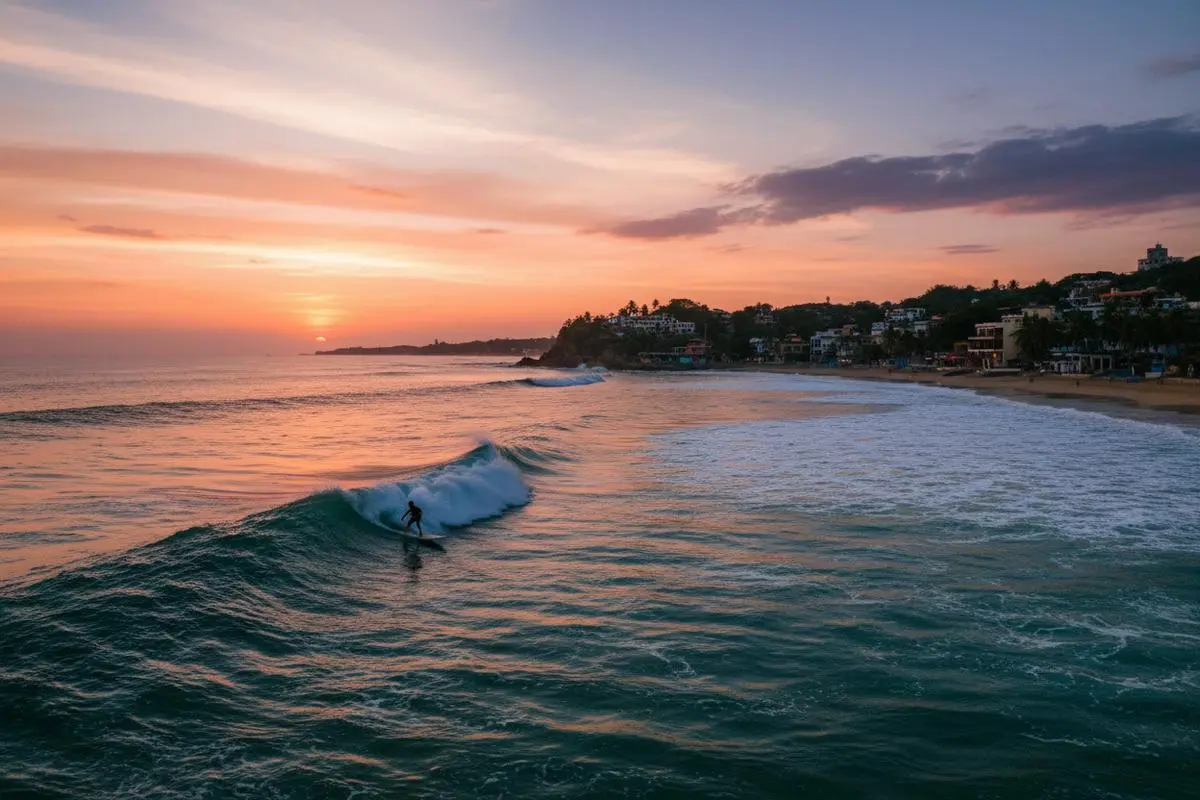
Sayulita sits at the top of every “learn to surf in Mexico” list for good reason. The main beach break produces slow, forgiving waves over a sandy bottom, more than a dozen surf schools line the shore, and the town runs on surf culture the way Tequila runs on agave. If you’ve never stood on a board, this is where you do it.
I’ve surfed Sayulita across multiple seasons — in clean November swells and sloppy August chop — and the consistency of the beginner conditions is what keeps people coming back. This guide covers the main break, nearby spots for when you progress, the best surf schools in 2026, board rental costs, and the honest seasonal breakdown. For a broader look at the country’s surf coast, start with our complete guide to surfing in Mexico.
Why Sayulita Is Mexico’s Best Beginner Surf Town
The geography does most of the work. Bahia de Banderas — the large bay to the south — blocks the heaviest Pacific swells before they reach Sayulita’s beach, filtering them into smaller, manageable waves. The result is a consistent 2-4 foot break that rolls in gently rather than crashing hard.
| Factor | Sayulita | Puerto Escondido | Troncones | Huatulco |
|---|---|---|---|---|
| Wave Size (avg) | 2-4 ft | 4-12 ft | 3-6 ft | 2-5 ft |
| Bottom Type | Sand | Sand (beach breaks) | Sand/rock mix | Sand/reef |
| Beginner Friendly | Excellent | Carrizalillo only | Moderate | Moderate |
| Surf Schools | 15+ | 8-10 | 3-4 | 2-3 |
| Water Temp | 24-28°C | 26-30°C | 25-29°C | 26-30°C |
The sandy bottom is the real differentiator. When you fall — and you will, dozens of times — you land on soft sand in waist-deep water. Compare that to reef breaks or the heavy shore pound at Zicatela, and the safety gap is obvious.
The sheer number of surf schools creates a built-in safety network. On any morning, 30-50 instructors are positioned across the main break. If something goes wrong, someone with rescue training is within shouting distance.
The Main Break: What to Expect
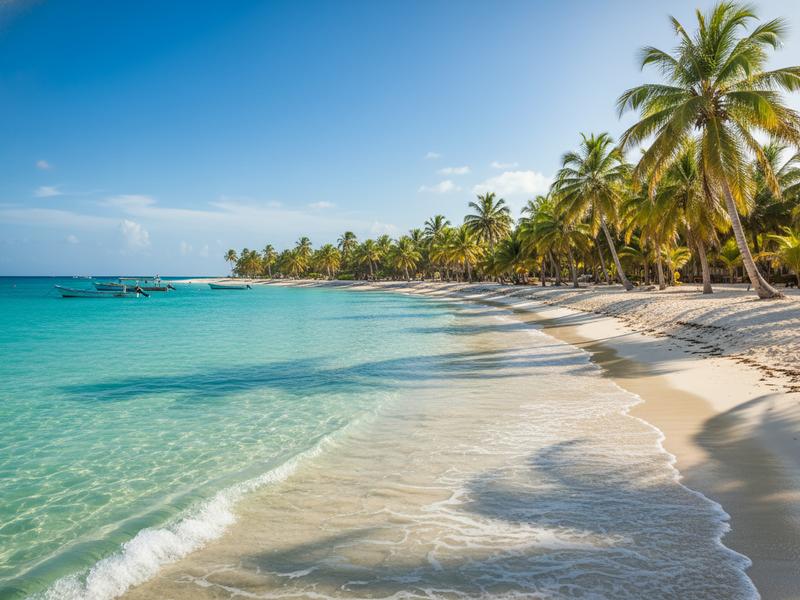
The primary break sits directly in front of town, between the river mouth (north end) and the rocky point (south). It produces both lefts and rights, works on small south swells and minor north swells, and delivers rideable surf almost every day of the year.
Speed: Slow — you get 3-4 seconds to stand up after catching the wave, compared to 1-2 seconds on faster breaks. That extra time transforms the learning curve.
Size: Typically 2-4 feet during dry season (November-May), 3-6 feet in wet season (June-October).
Depth: Waist to chest deep at the break zone. At low tide you can stand in knee-deep water at the takeoff point.
Best timing: Incoming tide, roughly 2-3 hours before high. Morning sessions (7-10 AM) get the calmest wind and glassiest water. By noon, onshore breeze chops things up.
River mouth warning: After heavy rains (June-October), the Rio Sayulita carries brown water into the north end of the lineup. Paddle south 50-100 meters and the water clears.
Surf Schools: Who to Trust
Sayulita has 15+ surf schools. Quality varies. Here are three with consistently strong reputations in 2026.
Sininen Surf
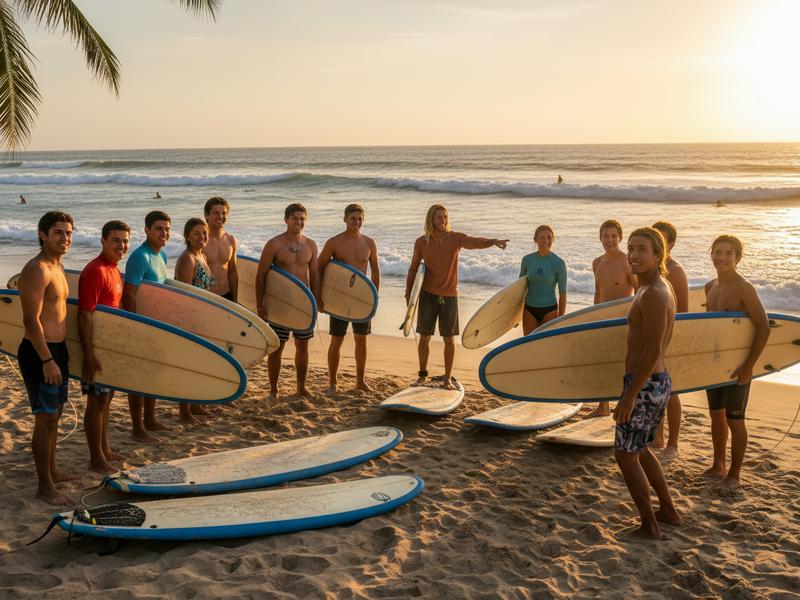
Finnish-Mexican instructors operating since 2016. All staff hold CPR/first-aid certifications. Lessons capped at 4 students per instructor. English, Spanish, and Finnish instruction. Multi-day packages include video analysis.
| Lesson Type | Price | Duration |
|---|---|---|
| Group | 800-900 MXN ($40-45 USD) | 2 hours |
| Private | 1,800-2,000 MXN ($90-100 USD) | 2 hours |
| 5-lesson package | 3,500 MXN ($175 USD) | 10 hours total |
Lunazul Surf School
Local favorite run by Mexican instructors. Lower prices without cutting quality. Great with families and kids.
| Lesson Type | Price | Duration |
|---|---|---|
| Group | 500-600 MXN ($25-30 USD) | 2 hours |
| Private | 1,200-1,500 MXN ($60-75 USD) | 2 hours |
Captain Hook Surf School
The longest-running school in Sayulita. They adapt to conditions — if the main break is crowded, they move you south to a quieter section. Board, rash guard, and water included.
| Lesson Type | Price | Duration |
|---|---|---|
| Group | 600-800 MXN ($30-40 USD) | 2 hours |
| Private | 1,400-1,800 MXN ($70-90 USD) | 2 hours |
What a Lesson Looks Like
Every school follows the same 2-hour format: beach theory (20-30 min) where you practice the pop-up on dry sand, shallow water drills (15-20 min), then catching real waves (60-75 min) with the instructor pushing you in and coaching your stance. In a group of 4-6 students, you’ll catch 8-15 waves per session. Most first-timers stand up at least once. By lesson three, most people paddle into waves on their own.
To lock in availability during high season (December-April), book certified surf lessons in Sayulita through Viator. For a broader look at surf lessons across Mexico, our dedicated guide covers every major region.
Board Rentals: Prices and What to Choose
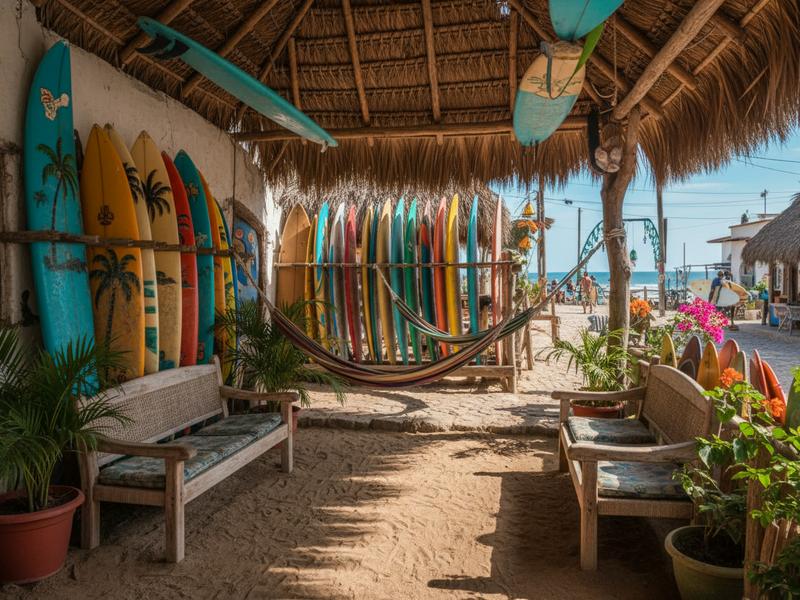
Rental shops line the streets between the plaza and the beach. Most schools include a board with lessons, but if you want to paddle out on your own, here’s the breakdown.
| Board Type | Daily Rate | Weekly Rate | Best For |
|---|---|---|---|
| Foam longboard (8-9 ft) | 300-400 MXN ($15-20 USD) | 1,500-2,000 MXN ($75-100 USD) | True beginners |
| Fiberglass longboard (9+ ft) | 400-500 MXN ($20-25 USD) | 2,000-2,500 MXN ($100-125 USD) | Intermediates |
| Funboard (7-8 ft) | 300-400 MXN ($15-20 USD) | 1,500-2,000 MXN ($75-100 USD) | Progressing beginners |
| Shortboard (5-7 ft) | 250-400 MXN ($12-20 USD) | 1,200-1,800 MXN ($60-90 USD) | Intermediate-advanced |
Never surfed? Get a foam longboard (“soft top”). The extra volume makes catching waves dramatically easier, and it’s forgiving when it hits you. Surfed 5-10 times? A fiberglass longboard or funboard gives more performance while staying stable. Intermediate or better? Grab a shortboard and head to La Lancha — the main break is too slow for shortboarding.
Negotiate the weekly rate upfront. Most shops drop 15-20% for 5+ day rentals, especially outside peak season. Expect a deposit of 200-500 MXN ($10-25 USD).
Beyond the Main Break: Nearby Surf Spots
La Lancha (3 km South)
Where intermediates and advanced surfers go when Sayulita gets too crowded or too easy. Faster, hollower waves break over a sand-rock bottom. On solid south swells, La Lancha produces head-high lefts that barrel on the inside section — a completely different animal from Sayulita’s gentle rolls.
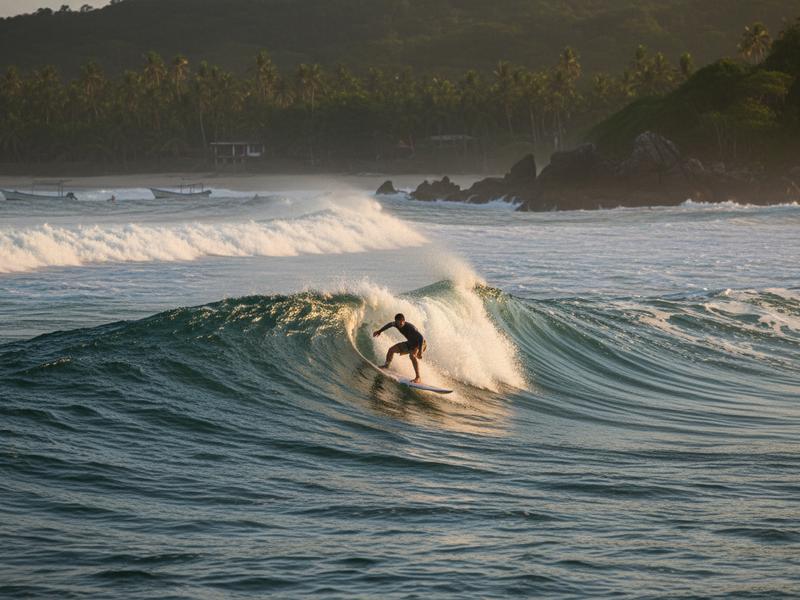
Getting there: Taxi or Uber (80-120 MXN / $4-6 USD each way), ATV rental (600-800 MXN / $30-40 USD per day), or rental car. No surf schools, no lifeguard. Solid intermediate skill required.
Punta de Mita (25 km South)
A true point break at the northern tip of Bahia de Banderas. Waves wrap around the headland and peel for 50-100 meters — long, smooth rides unlike anything Sayulita offers. Best November through May on north swells. Uber from Sayulita costs 200-300 MXN ($10-15 USD). If you’re exploring the Puerto Vallarta area, Punta de Mita makes an excellent surf day trip.
San Pancho (7 km North)
Sayulita’s quieter neighbor with a similar beach break but 80% fewer surfers. Only 2-3 surf schools operate here. Uber costs 60-100 MXN ($3-5 USD), or catch a colectivo for 15-20 MXN ($1 USD). San Pancho pairs well as a day trip from Puerto Vallarta.
When to Surf: Seasonal Breakdown
Dry Season: November - May (Best for Beginners)
Clean 2-4 foot waves, light offshore winds, sunny skies, water around 24-26°C (75-79°F). December-March is busiest — book lessons 2-3 days ahead. April-May is the sweet spot: same waves, 40-50% fewer tourists, prices drop 10-15%.
Wet Season: June - October (Bigger Swells)
South swells push heights to 4-8 feet. Intermediates thrive. Beginners may struggle with size and stronger currents. Expect afternoon rain daily (mornings usually clear). September-October occasionally delivers the biggest swells of the year, lighting up La Lancha and Punta de Mita.
After the Surf: Where to Eat and Drink
El Itacate — Birria that locals actually eat. Tacos de birria run 25-35 MXN ($1.25-1.75 USD) each, full plate with consomme 80-120 MXN ($4-6 USD). A few blocks back from the beach on Calle Marlin.
Rollie’s — Sayulita’s ceviche institution. Tostadas de ceviche 60-80 MXN ($3-4 USD), pescado zarandeado 180-250 MXN ($9-12 USD). Exactly what you want after two hours in saltwater.
DON Pedro’s — Sunset beers on the sand. A Pacifico or michelada costs 60-90 MXN ($3-4.50 USD). The view of surfers chasing fading light earns the tourist-level prices.
Our Sayulita travel guide covers accommodation and nightlife, while things to do in Sayulita goes deeper on non-surf days.
Getting to Sayulita From Puerto Vallarta
Most people arrive via PVR airport. The trip north takes 40-50 minutes on Highway 200.
| Transport | Cost | Time | Notes |
|---|---|---|---|
| Uber | 350-450 MXN ($17-22 USD) | 40-50 min | Most convenient, door-to-door |
| Airport taxi | 500-700 MXN ($25-35 USD) | 40-50 min | Fixed rate, negotiate at stand |
| Colectivo | 60 MXN ($3 USD) | 60-70 min | From Pitillal area, not airport |
| Rental car | Varies + 150-200 MXN/day ($7-10 USD) parking | 45 min | Best for multiple spots |
The colectivo hack: Take an Uber from PVR to Pitillal (100-120 MXN / $5-6 USD), then catch the northbound colectivo for 60 MXN ($3 USD). Total: 160-180 MXN ($8-9 USD) versus 350-450 MXN for a direct Uber.
Driving: Highway 200 north is straightforward and scenic past Bucerias. Parking near the beach runs 150-200 MXN per day ($7-10 USD). Our Puerto Vallarta travel guide covers airport logistics and transport along the full Riviera Nayarit coast.
Quick Tips for First-Time Surfers
- Sunscreen 30 minutes early — waterproof SPF 50 on face, ears, and neck. Two hours of reflected sun burns fast
- Bring cash — smaller shops and the best taco stands are cash-only. ATMs charge 30-50 MXN ($1.50-2.50 USD) in fees
- Respect the lineup — don’t drop in on someone already riding, even on a beginner wave
- Skip high tide — the wave closes out near shore. Time sessions around mid-rising tide
- Wear reef shoes in rainy season — debris washes in near the river mouth after storms
- Book ahead Dec-March — popular schools fill up 2-3 days in advance during peak season
Is Sayulita Worth It?
Sayulita is the best town in Mexico to learn to surf. The wave is patient, the instructors are experienced, the sandy bottom is forgiving, and the town makes surf culture accessible even if you’ve never touched a board.
If you already surf — if you can read a lineup and generate speed on an open face — the main break will bore you within a day. Use Sayulita as base camp and spend sessions at La Lancha or Punta de Mita instead. The wave in front of town is a classroom, not a playground, and that’s what makes it valuable for the right person.
A realistic one-week budget (5 group lessons, mid-range accommodation, food, transport from PVR) runs 10,000-16,000 MXN ($500-800 USD). For the full picture of Mexican Pacific beaches and where each break fits on the skill spectrum, our coast-by-coast comparison will help you plan right.